
In a society that prides itself on freedom and equality, the reality of prison labor in America paints a much darker picture. Fast food companies in Alabama and many other corporations across the country are utilizing what many call modern slavery—the prison labor system. But does this feel right?
Reporter: Does this feel like justice?
Incarcerated Woman: “I was just about to say, that is slavery. That is slavery. They took away the whips, but now you’ve got paperwork. They took away the masters, but put them in uniforms. Same difference. Same difference.”
This conversation, between a reporter and an incarcerated individual, highlights a system that has evolved from outright slavery into a more covert, yet equally insidious form of exploitation. The Alabama Department of Corrections sends inmates to work at hundreds of private companies and government agencies across the state, farming out labor for mere pennies while denying them true freedom.
It’s not just a broken system—it’s a profitable one.
The Profit Machine: Alabama’s Prison Labor System
The prison labor system is essentially a for-profit enterprise. In Alabama, like many states, private prisons and correctional facilities have contracts with the state that ensure beds are filled at a 95% occupancy rate. If this quota isn’t met, the state must reimburse these facilities, forcing law enforcement to keep prisons full. This isn’t just a policy oversight—it’s written into contracts that benefit private companies and state institutions alike. If you think that sounds outrageous, it’s because it is. Yet, it’s happening every day.
Take this grim fact: Alabama enjoys more than $450 million annually in benefits from prison labor. Yes, you read that correctly—$450 million in free labor profits. While inmates are allowed to leave for work-release programs, they are paid just pennies on the dollar, with the state taking a significant cut off the top. From each paycheck, the state takes a 40% cut before taxes, plus an additional $5 for transportation to their jobs, $15 a month for laundry, and more fees for restitution, court costs, and attorney fees. By the time an inmate receives their paycheck, after working an 80-hour week, they might see a mere $200 for their efforts. It’s not hard to see why this is being called modern slavery.
For instance, one woman incarcerated in Alabama worked as a kitchen manager at a Golden Corral, running the entire kitchen for 12-hour shifts, five days a week. Despite her hard work, she saw only a fraction of the money she earned, trapped in a cycle of debt and servitude.
How is This Legal?
You might be asking, How is this even legal? The answer lies in the 13th Amendment. While it abolished slavery after the Civil War, it included a loophole: forced labor is still allowed for those convicted of a crime. States quickly adopted this federal amendment, which allowed them to exploit prisoners for labor. Alabama, like many other states, has embraced this system, treating prisoners as a commodity.
This modern servitude is not unique to Alabama. Across the U.S., prisoners are farmed out to work for private companies. Fast food chains like McDonald’s have been known to use prison labor. Walk into certain locations in Alabama, and the person flipping your burger could be an inmate working for pennies, all while the state gets rich off their labor.
A Coordinated System
It appears that there is a coordinated system to protect this labor pipeline. The state’s refusal to grant parole to eligible inmates and its consistent efforts to fill prison beds points to a profit-driven motive. The goal is to keep people incarcerated, not for public safety, but for labor exploitation.
In 2023 alone, nearly one person per day died in an Alabama state-run prison. Nationwide, the statistics paint an equally horrifying picture. Inhumane living conditions, forced labor, and the threat of violence or punishment for those who refuse to work reveal the brutal nature of this system. It’s slavery by another name.
The System is Rigged
The system is undeniably rigged. Law enforcement, politicians, and corporations profit off the backs of incarcerated individuals. Even minor offenders are thrown into this cycle to meet the state’s 95% occupancy quota, ensuring these contracts with private prisons remain intact. Figures like Kamala Harris have even boasted about putting 1,500 men in jail over minor marijuana charges, showing how the system is manipulated for political gain.
What happens when people speak up against this injustice? Whistleblowers are threatened, assaulted, fired, or falsely accused. The government and those in power know exactly what they’re doing—exploiting prison labor for free work while keeping the masses in line.
Conclusion: A Call for Change
Modern-day slavery in the form of prison labor is a dark stain on America’s justice system. From Alabama to California, states are exploiting a loophole in the 13th Amendment to line their pockets with the blood, sweat, and tears of incarcerated people. It’s a system rigged against the poor, the vulnerable, and anyone who dares to question it.
We live in a world where power is abused, where justice is a facade, and where the most vulnerable are exploited for profit. The prison labor system isn’t about rehabilitation; it’s about keeping beds full, companies rich, and citizens enslaved. It’s time for a radical change—because no one should profit off the backs of others under the guise of “justice.”
About the author
In the realm of literature, few authors possess the power to challenge societal norms and break down stereotypes like A.L. Childers. Through her unique storytelling abilities, she has managed to leave a lasting legacy that has not only inspired her readers but also transformed the way we perceive the world.
A.L. Childers’ journey from poverty to success serves as a testament to the transformative power of writing. By overcoming adversity through her craft, she has become a beacon of hope for those facing similar challenges. Her ability to draw inspiration from small-town life has given her a unique perspective on writing, allowing her to create stories that resonate with readers from all walks of life.
Childers’ story is one of triumph over adversity. Raised in poverty, she faced numerous challenges that could have hindered her dreams. However, she discovered solace in writing, using it as a means to overcome her circumstances. By sharing her personal journey, Childers inspires others to rise above their own obstacles and unlock their true potential.
Writing, for Childers, is a powerful tool for connection. She explores human relationships in literature and delves into the intricacies of human emotions and experiences. Her stories serve as a bridge, connecting people from different walks of life, fostering empathy, and promoting understanding. In a world that often feels fragmented, Childers’ writing reminds us of our shared humanity.
A.L. Childers’ impact on breaking stereotypes through storytelling is a testament to her exceptional talent and unwavering dedication to her craft. Through her journey from poverty to success, her unique perspective on small-town life, her exploration of human relationships, her journey toward self-expression, and her ability to challenge societal norms, she has left an indelible mark on the literary world. Her work serves as an inspiration for aspiring writers, a source of connection for readers, and a catalyst for change in society. A.L. Childers’ legacy will continue to shape the future of literature, reminding us of the power of storytelling to break down barriers and create a more inclusive world.
Brilliantly written, startling, truthful, and utterly original. This is A.L. Childers at her absolute best. She sets an exciting new level of awareness for humanity. Unforgettable books that help you find that lost piece of yourself.
Being Human doesn’t make you weak, it makes you a warrior!
A.L. Childers
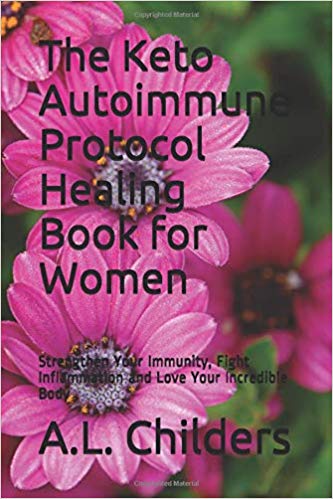
Food is thy medicine, right? Actually it can work one of two ways. Food can be thy medicine or food can be thy death. This book is a guide that will inform you from the perspective of a women. You will also be able to determine what areas in your life that may need a little bit of work and the skills needed to improve those issues along with some fabulous recipes to help get you started on how to eat KETO AIP. I will also help you understand how to fix your gut, strengthen your immunity and fight inflammation with an autoimmune approach. The Keto AIP removes all the common inflammatory food triggers that stimulate a possible autoimmune reaction in the body. We’re going to start resetting those adrenals, boosting that energy and doing a little booty kicking to those hormones that have decided to act like a wild college student and pull an all-nighter the day before final exams.
A Women’s Holistic Holy Grail Handbook for Hypothyroidism and Hashimoto’s: How I healed my Hypothyroidism and Autoimmune Disorder with Personalized Nutrition
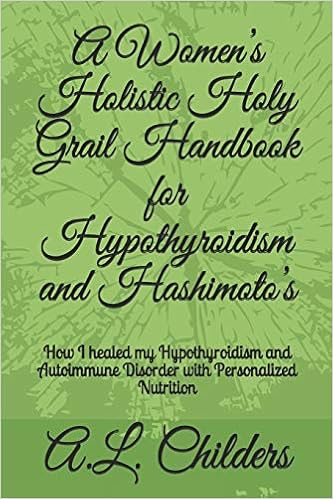
Food is thy medicine, right? Actually, it can work one of two ways. Food can be thy medicine or food can be thy death. This book is a guide that will inform you from the perspective of a women. You will also be able to determine what areas in your life that may need a little bit of work and the skills needed to improve those issues along with some fabulous recipes to help get you started on how to eat KETO AIP. I will also help you understand how to fix your gut, strengthen your immunity and fight inflammation with an autoimmune approach. The Keto AIP removes all the common inflammatory food triggers that stimulate a possible autoimmune reaction in the body. We’re going to start resetting those adrenals, boosting that energy and doing a little booty kicking to those hormones that have decided to act like a wild college student and pull an all-nighter the day before final exams.

Audrey Childers is a published author, blogger, freelance journalist and an entrepreneur with over a decade of experience in research and editorial writing. She is also the creator and founder of the website the hypothyroidismchick.com. Where you can find great tips on everyday living with hypothyroidism. She enjoys raising her children and being a voice for optimal human health and wellness. She is the published author of : A survivors cookbook guide to kicking hypothyroidism booty, Reset your Thyroid, The Ultimate guide to healing hypothyroidism and A survivors cookbook guide to kicking hypothyroidism booty: the slow cooker way. You can find all these books on Amazon. This blog may be re-posted freely with proper attribution, author bio, and this copyright statement.
Audrey Childers is a 10x published author, blogger, freelance journalist and an entrepreneur with over a decade of experience in research and editorial writing. She is also the creator and founder of the website the hypothyroidismchick.com. Where you can find great tips on everyday living with hypothyroidism. She enjoys raising her children and being a voice for optimal human health and wellness. She is the published author of : A survivors cookbook guide to kicking hypothyroidism booty, Reset your Thyroid, The Ultimate guide to healing hypothyroidism and A survivors cookbook guide to kicking hypothyroidism booty: the slow cooker way. You can find all these books on Amazon. This blog may be re-posted freely with proper attribution, author bio, and this copyright statement.
Disclaimer
The information and recipes contained in blog is based upon the research and the personal experiences of the author. It’s for entertainment purposes only. Every attempt has been made to provide accurate, up to date and reliable information. No warranties of any kind are expressed or implied. Readers acknowledge that the author is not engaging in the rendering of legal, financial, medical or professional advice. By reading this blog, the reader agrees that under no circumstance the author is not responsible for any loss, direct or indirect, which are incurred by using this information contained within this blog. Including but not limited to errors, omissions or inaccuracies. This blog is not intended as replacements from what your health care provider has suggested. The author is not responsible for any adverse effects or consequences resulting from the use of any of the suggestions, preparations or procedures discussed in this blog. All matters pertaining to your health should be supervised by a health care professional. I am not a doctor, or a medical professional. This blog is designed for as an educational and entertainment tool only. Please always check with your health practitioner before taking any vitamins, supplements, or herbs, as they may have side-effects, especially when combined with medications, alcohol, or other vitamins or supplements. Knowledge is power, educate yourself and find the answer to your health care needs. Wisdom is a wonderful thing to seek. I hope this blog will teach and encourage you to take leaps in your life to educate yourself for a happier & healthier life. You have to take ownership of your health. The highlighted links are affiliate links in my blogs.
This site is designed for educational purposes only and is not engaged in rendering medical advice, legal advice, or professional services. If you feel that you have a medical problem, you should seek the advice of your physician or health care practitioner. For additional information, please see Our full disclosure, terms of use, and privacy policy.
Our full disclosure, terms of use, and privacy policy. | thehypothyroidismchick
Discover more from thehypothyroidismchick
Subscribe to get the latest posts sent to your email.

