Daily Archives: December 6, 2024

A New Year’s Feast of Traditions: The Southern Story You’ve Never Heard

The New Year’s celebration in the Carolinas isn’t just a holiday—it’s a bridge between the past and the future, connecting us to our ancestors while laying the groundwork for prosperity and joy in the year to come. It’s about more than black-eyed peas and collard greens; it’s a deeply rooted tradition steeped in history, superstition, and survival.

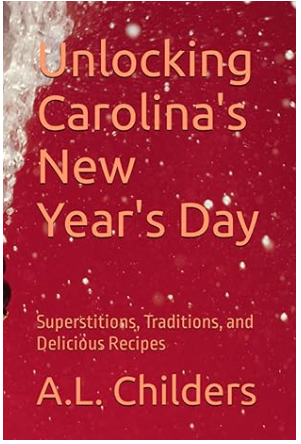
In my book, Unlocking Carolina’s New Year’s Day Superstitions, Traditions, and Delicious Recipes (available now on Amazon), I take readers on a journey through North and South Carolina’s most cherished traditions. But let me share a piece of that journey with you—a story that will make you see the New Year’s celebration in a whole new light.


The Legacy of James Dawkins: A Family’s Survival and Triumph

Every family has its legends, and mine begins with James Dawkins, my great-great-great-grandfather, who emigrated from Ireland to the United States just before the Great Irish Potato Famine. But James wasn’t just a farmer fleeing hunger—he was a man of conviction. During the U.S.-Mexican War, he joined the Saint Patrick’s Battalion, a group of Irish immigrants who famously fought for Mexico in defiance of the mistreatment they saw mirrored in both nations.

The Battalion’s story is one of bravery and sacrifice. As their flag—boldly emblazoned with “Erin go Bragh” (Ireland Forever)—fluttered in the Battle of Churubusco, these men, including Black Americans escaping slavery, made their final stand. Though many were captured or executed, their legacy lives on in both Ireland and Mexico, with annual commemorations and statues honoring their courage.

James Dawkins survived, eventually settling in North Carolina to start a family that would become deeply woven into the fabric of Southern history. His son George W. Dawkins and grand-daughter Martha Eva Shoemake of Gibson, NC, carried forward the family legacy of resilience and adaptability—traits that continue to shape my story today.


Southern New Year’s: A Tapestry of Superstition and Lore

Growing up in Marlboro County, South Carolina, I was surrounded by the rich traditions of Southern New Year’s celebrations. “What you do on New Year’s Day, you’ll do all year,” my grandmother often reminded me. Her words weren’t just advice—they were a way of life.

From avoiding laundry (to ensure you don’t “wash away” a loved one) to eating pork (to symbolize forward progress), every action was imbued with meaning. Fireworks, loud celebrations, and communal feasts weren’t just for fun—they were meant to chase away bad luck and invite prosperity.

Black-eyed peas represented coins, collard greens symbolized wealth, and cornbread stood for gold. Together, they formed a culinary trifecta designed to ensure good fortune in the year ahead. But these dishes weren’t just superstition—they were the soul of Southern cooking, passed down through generations as a testament to survival and ingenuity.


Soul Food: A Story of Survival in Every Bite

Southern food is more than comfort—it’s resilience on a plate. My ancestors didn’t have recipe books or expensive ingredients. They cooked with what was available, turning scraps into sustenance and hardship into hospitality.

When I think of my grandmother rolling out piecrust with arthritic hands or humming gospel hymns while stirring collard greens, I’m reminded that every dish tells a story. It’s a story of making do, of wasting nothing, of feeding not just the body but the soul. It’s why I believe Southern cuisine belongs to a region, not a race or ethnicity. It’s a shared heritage that connects us all.


A Cultural Anthropologist’s Take on New Year’s

As an author, I see myself as a “cultural anthropologist,” uncovering the stories hidden in our traditions. The Southern New Year’s celebration is a rich tapestry of influences—from the Irish and African diaspora to Native American practices and European customs.

For example, the idea of eating specific foods for luck isn’t unique to the South. In Japan, soba noodles are eaten for longevity, while in Spain, people eat 12 grapes at midnight for good fortune. Yet in the Carolinas, these global traditions blend with local superstitions to create something uniquely Southern—a celebration that honors the past while looking to the future.


A New Year’s Resolution to Remember

As I reflect on these traditions, I’m reminded of the importance of connection—to our heritage, to each other, and to ourselves. My New Year’s resolution this year is to embrace my roots while sharing them with the world. Through cooking, storytelling, and writing, I hope to inspire others to celebrate their own histories and create new traditions for the future.


Order Your Slice of Southern History

If you’re ready to dive deeper into the stories, recipes, and superstitions that make Southern New Year’s so special, I invite you to order my book, Unlocking Carolina’s New Year’s Day Superstitions, Traditions, and Delicious Recipes, on Amazon. It’s more than a cookbook—it’s a celebration of culture, resilience, and the power of family traditions.

Start your New Year with a feast for the soul and a celebration that will leave you inspired all year long.

Click here to order your copy today!

Unlocking the Magic of Southern New Year’s: Superstitions, Traditions, and Stories That Bind Generations

What if the way you spent your New Year’s Day could define the tone of your entire year? In the heart of the Carolinas, we believe just that. Southern New Year’s Day isn’t just a celebration—it’s a tapestry of superstitions, traditions, and stories that bind families together and carry the wisdom of generations forward. Whether you’re savoring black-eyed peas for luck or gathering around the dinner table to share stories of family history, every moment is steeped in meaning.

In my book, Unlocking Carolina’s New Year’s Day Superstitions, Traditions, and Delicious Recipes (available now on Amazon), I dive deep into the unique blend of culture, history, and cuisine that makes the Carolinas shine. But today, I want to take you on a journey—a personal exploration of my family’s rich legacy, the untold stories of resilience, and the flavorful traditions that have shaped my life.


A Legacy of Survival: The Dawkins Family Story

My family history reads like an epic novel, with twists and turns that take us from Ireland to Mexico and back to the Southern soil of North Carolina. My sixth-generation great-grandfather, James Dawkins, emigrated from Ireland to the United States before the Great Irish Potato Famine of 1845. His journey wasn’t just about survival—it was about taking a stand.

James Dawkins fought in the Battle of Churubusco during the U.S.-Mexican War, as part of the legendary Saint Patrick’s Battalion. This group of mostly Irish immigrants switched sides to fight for Mexico, drawn by parallels between the plight of Catholic Mexicans and their own struggles under British rule. Their defiance is commemorated in Mexico to this day, with statues of their leader, John Riley, and songs that celebrate their bravery. James survived this harrowing chapter and returned to North Carolina, where his story became part of my family’s lore—a tale of resilience and conviction.


From Laurel Hill to Marlboro County: A Southern Tradition of Connection

Fast forward to the North Carolina of the 19th and 20th centuries, where the Dawkins family flourished. My grandmother, Martha Eva Shoemake, was the matriarch who connected us all. Born in Scotland County in 1921, she embodied the spirit of Southern hospitality, her kitchen a haven of love and warmth.

I still remember the squeaky screen door announcing my arrival on Sunday afternoons after church. The smell of collard greens simmering, cornbread baking, and her soulful humming filled the air. My grandmother didn’t just cook food—she cooked memories. Each bite was a lesson in heritage, in making the most of what you had, and in sharing love through nourishment.


Why Southern Food Is a Story of Survival

Southern cooking isn’t just about flavor—it’s about ingenuity and resilience. Our ancestors made do with what they had, turning humble ingredients into soul-stirring meals. From scraps to sustenance, every dish tells a story.

Black-eyed peas symbolize prosperity, while collard greens represent wealth. Pork, a traditional New Year’s Day staple, signifies progress, as pigs root forward when they eat. In my book, I share not only these delicious recipes but also the cultural and historical significance behind them. These aren’t just dishes—they’re time capsules of our collective Southern identity.


Superstitions That Shape the Year

“Whatever you do on New Year’s Day, you’ll do all year long.” This saying has been passed down in my family like gospel truth. New Year’s superstitions in the South aren’t just quaint—they’re a roadmap for a prosperous future. From avoiding laundry (lest you “wash someone out” of your life) to ensuring the first guest of the year is a man (for good luck), these traditions are woven into the fabric of Southern life.


Why This Book Is a Must-Read

If you’ve ever longed to reconnect with the past or create meaningful traditions for the future, Unlocking Carolina’s New Year’s Day Superstitions, Traditions, and Delicious Recipes is your guide. With every page, you’ll discover the stories, rituals, and recipes that make New Year’s in the Carolinas unforgettable.

This isn’t just a cookbook—it’s a celebration of culture, a love letter to Southern resilience, and an invitation to carry these traditions forward. Whether you’re Southern by birth or simply by heart, this book will inspire you to embrace the joy of New Year’s Day in a whole new way.


Grab Your Copy Today!

Don’t let another New Year’s Day pass without embracing the magic of the South. Order your copy of Unlocking Carolina’s New Year’s Day Superstitions, Traditions, and Delicious Recipes on Amazon and step into a world of flavor, history, and heart. Make this New Year a celebration to remember—and pass these cherished traditions on to those you love.


Click here to order your copy now and start your journey into the soul of Southern New Year’s!

Unlocking Carolina’s New Year’s Day: Superstitions, Traditions, and Delicious Recipes

The Southern New Year Celebration

The Southern New Year Celebration is a worldwide celebration for the beginning of the New Year. These festivals are among the oldest and the most universally observed.  This book takes you on a journey of the Southeastern part of America, honoring two southern states called North and South Carolina and sharing its rich history of southern superstition, tradition, culture, and lore.

Many believe, including myself, that what you do on News Years Day, you will do all year-While most of these superstitions and traditions are meant to usher in good luck and keeping bad luck at bay, what you do can reflect how you’ll live in the coming year.

My 6th generation great-great-great grandfather James Dawkins emigrated to the U.S. 10 years before the Irish Potato Famine, also known as the Great Hunger, which began in 1845.

There is a story that has been passed down through the generations that James Dawkins was in The Battle of Churubusco.

 During the U.S. invasion of Mexico in 1846, 200 plus Irish immigrants from the U.S. formed the Saint Patrick’s battalion and joined the Mexican side. From mistreatments, the catholic Irish saw parallels between the mistreatment of catholic Mexicans with their own mistreatment buy the British.  Although it consisted of mostly Irish immigrants, it also included black Americans who escaped slavery. Their flag read “Erin go Bragh ” which means Ireland Forever.”  Many were eventually captured in the battle of Churubusco.

In their final act of defiance, 30 men cheered The Mexican flag before they were hung. This isn’t typically taught in a U.S. history book lesson.

 However, Irish descendants still sing songs to uphold the legacy. Mexico holds joint commemorations with Ireland every year to celebrate this history, and there are statues of John Riley around Mexico.

My great-great-great grandfather James Dawkins survived that battle and escaped to North Carolina where he was already the father of George W. Dawkins of Robeson, NC born in 1840, who later married Martha Dawkins (Butler) of Laurel Hill, NC born 1860. They were the grandparents of my grandmother Martha Eva Shoemake of Gibson, NC born in Scotland County 1921.

I am the living link to my family history. I will tell my children the stories of all the struggles waged at home and in foreign parts from generations past. Of the sacrifices made for our freedoms, the struggles, the lessons learned and will tell them my own story as well because everybody has a story to tell.  

 I was born and raised in the southern eastern part of South Carolina, in a county called Marlboro.

When I eat the food that my grandma used to make, instantly I feel transported back to a simpler time and families meant something to each other.  

The memories and sweet smells from my childhood are the ultimate reason why I keep my southern traditions. I remember visiting my grandmother on many humid and hot Sunday’s afternoon after church; all the windows were open. There was no sneaking up on my grandmother no matter how fast or slow I entered; the rusty hinges from that old wooden screen door squealed like fingernails scrapping across a dusty old school chalkboard. As the old wooden door would snap shut.

My grandmother would be in the kitchen, humming an old gospel song, rolling out piecrust with a wooden rolling pin, and crimping the edges of the pastry with the tips from her arthritic fingers.

Depending on which part of the south you are from, the cooking style and the ingredients can vary.

There is a rich history in southern superstition, tradition, and culture. Southerners have a strong sense of regional heritage, and this is why I believe southern food belongs to a region, not a race or ethnicity. Never forgetting our ancestry but started creating new methods, with minimal equipment and scarce resources; using every portion of edible scraps in the home—nothing ever went to waste. Southern style food is not only about how we nurture people with every mouthful, but it tells a story of survival from each ingredient. 

I love trying out new recipes and experimenting with different flavors. Cooking is not just about nourishment for me, but also a fun and creative outlet. There’s something so satisfying about seeing a dish come together and enjoying the result. Whether it’s trying out a new fusion cuisine or simply recreating a childhood favorite, food always makes for a fun activity.

I hope you all enjoy this book along with cooking a few recipes and sharing them generously with friends and family while keeping the Southern News Year’s Day superstition, tradition, culture and lore to be never forgotten.