
Per- and polyfluoroalkyl substances (PFAS), often referred to as “forever chemicals,” have emerged as a significant environmental and public health concern across the United States. These synthetic compounds are found in various consumer products and industrial processes, leading to widespread contamination of water sources. In North Carolina, communities have been particularly affected, with PFAS detected in drinking water supplies serving millions. This blog explores the extent of PFAS contamination, its health implications, and the communities most impacted.NC DPH Epidemiology+4The Guardian+4National Ground Water Association+4New York PostNC DPH Epidemiology+16NIEHS+16New York Post+16
PFAS Contamination in North Carolina
North Carolina has been at the forefront of PFAS contamination issues. The Cape Fear River Basin, for instance, has been identified as a significant hotspot. A study revealed that drinking water for at least 2.5 million North Carolinians contains PFAS at levels exceeding federal standards . Counties such as Cumberland, Bladen, Wake, Johnston, Henderson, and Pitt have reported elevated PFAS levels in groundwater, with some measurements far surpassing the Environmental Protection Agency’s (EPA) health advisories .NC DPH EpidemiologyThe Guardian+2New York Post+2People.com+2EWG+1Axios+1WRAL.com
Health Implications
Exposure to PFAS has been linked to various health issues, including increased risks of certain cancers. Research funded by the National Institute of Environmental Health Sciences (NIEHS) indicates associations between PFAS in drinking water and cancers affecting the digestive, respiratory, and endocrine systems . Another study estimates thousands of cancer cases annually in the U.S. attributable to PFAS exposure .Nature+2NIEHS+2PubMed+2News-Medical
PFAS Contamination Nationwide
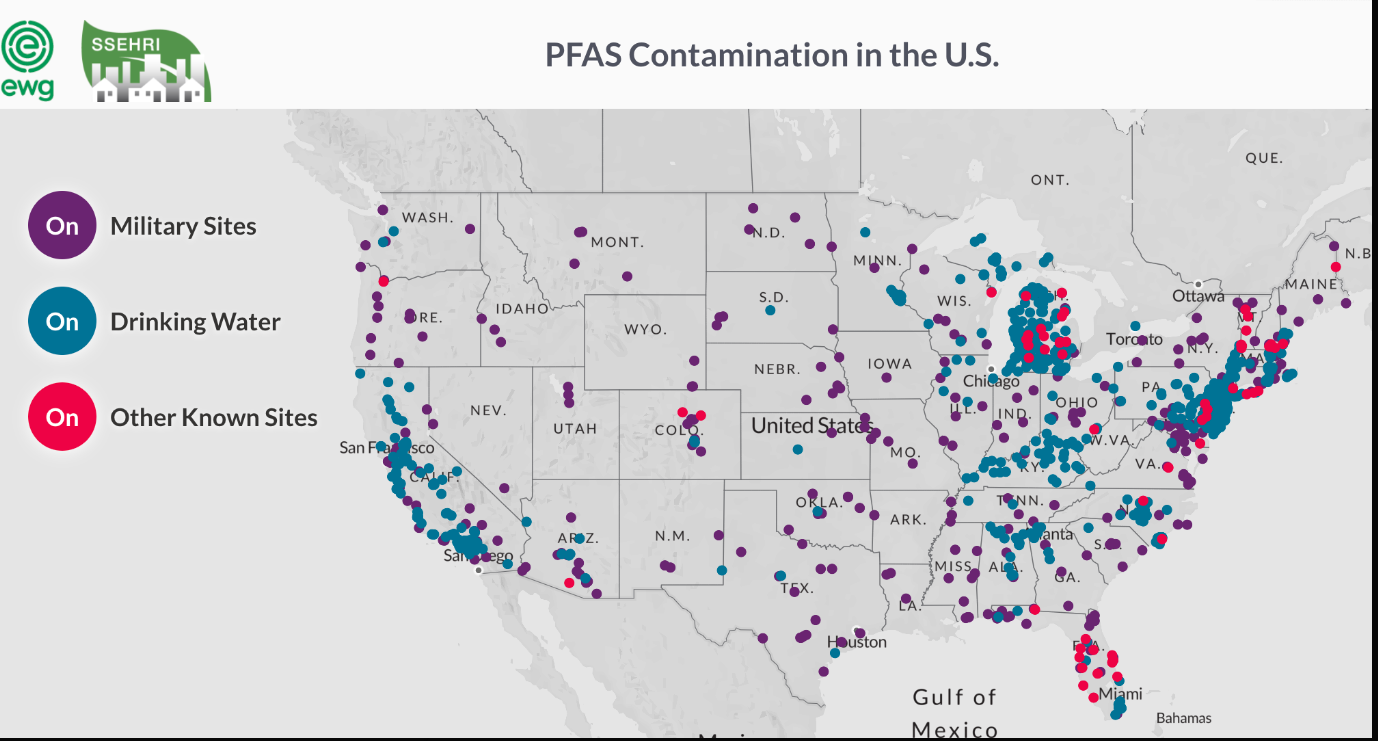
The issue of PFAS contamination is not confined to North Carolina. Across the United States, PFAS have been detected in water systems in all 50 states. The Environmental Working Group (EWG) reports over 8,800 sites with known PFAS contamination . States like Michigan, New Jersey, and California have identified numerous contaminated sites, prompting public health concerns and regulatory actions.EWG+1EWG+1AP News
Industrial Sources and Regulatory Challenges
Industrial facilities are significant contributors to PFAS pollution. In North Carolina, the Chemours Fayetteville Works plant has been under scrutiny for PFAS emissions, with reports indicating that contamination could persist in groundwater for decades . Despite efforts to regulate PFAS, challenges remain. For instance, proposed rules in North Carolina have been criticized for lacking enforceable limits and penalties, relying instead on voluntary compliance by industries .NC DPH Epidemiology+1The Guardian+1WRAL.com
Community Impact and Advocacy
Communities affected by PFAS contamination have expressed frustration over regulatory delays and insufficient action. Advocates in North Carolina have pushed for stricter state legislation in response to federal rollbacks on PFAS regulations . Public awareness and community engagement are crucial in addressing the PFAS crisis, ensuring that affected populations receive the necessary support and resources.North Carolina Health News
Conclusion
PFAS contamination represents a pressing environmental and public health issue in North Carolina and across the United States. The persistence of these chemicals in the environment and their associated health risks underscore the need for comprehensive regulatory measures, industrial accountability, and community advocacy. By staying informed and engaged, we can work towards mitigating the impact of PFAS and safeguarding our water resources for future generations.
Disclaimer: This blog is for informational purposes only and does not constitute legal or medical advice. If you believe you have been exposed to PFAS and are experiencing health issues, please consult with a qualified healthcare professional.


Discover more from thehypothyroidismchick
Subscribe to get the latest posts sent to your email.

