Monthly Archives: June 2025

Don’t Take the Bait: Protecting Your Peace in the Age of Online Outrage

By A.L. Childers

In a world where your attention is currency, rage has become a profitable business.

You’ve seen it: the outrageous headlines, the offensive comments, the divisive content that seems designed to ruin your mood before you’ve had your morning coffee. It’s not an accident. It’s called rage bait—and it’s everywhere.


What Is Rage Baiting?

Rage baiting is a form of digital manipulation where creators post inflammatory, shocking, or controversial content to provoke anger and engagement. It thrives on emotional reactivity. The more you comment, share, or argue, the more the algorithm rewards the post.

According to MIT Technology Review, emotional responses—especially anger—are more likely to go viral than calm, rational content. A 2017 study from Yale University also found that social media users tend to mimic the outrage they see online, escalating hostility in digital spaces.

Rage baiting didn’t just happen; it was designed. Social media platforms like Facebook, Twitter (X), and TikTok rely on engagement metrics to sell ads and keep users scrolling. The more time you spend reacting, the more money they make.


How Rage Bait Works

Rage bait follows a predictable formula:

  • Step 1: Post something shocking, misleading, or controversial.
    Example: “You’re not a real parent if you don’t spank your kids.”
  • Step 2: Trigger people emotionally.
    Use topics like politics, religion, parenting, race, gender roles, or celebrity drama.
  • Step 3: Let the audience do the work.
    The more people argue, the more the post gets pushed to new feeds.

Rage baiters don’t always believe what they post. Often, it’s pure manipulation to gain clicks, followers, and revenue. They trade in your peace for their profit.


Why You Should Protect Your Spirit

Let’s be real: the devil is busy, and he doesn’t always show up with horns. Sometimes, he shows up in your feed—disguised as drama, division, and distraction.

If you’re constantly being pulled into online fights, your peace suffers. Your energy goes toward defending yourself instead of developing yourself. What begins as “just one comment” turns into hours of emotional exhaustion and spiritual depletion.

Protect your spirit like your life depends on it—because in many ways, it does.


How to Avoid Rage Baiting

Here are 7 powerful ways to guard your heart and your attention:

  1. Pause Before You React
    Ask yourself: Is this post designed to inform or to provoke?
  2. Limit Time on Trigger-heavy Platforms
    Apps like X (formerly Twitter) and TikTok are built for outrage. Curate your feed or take breaks.
  3. Unfollow or Mute Accounts That Drain You
    Protect your peace by pruning your digital space.
  4. Report Obvious Rage Baiting
    Social media companies allow you to flag abusive or manipulative content.
  5. Respond with Grace—Or Not at All
    Not every comment deserves a reply. Sometimes silence is strength.
  6. Seek Out Uplifting Content
    Follow creators who nourish your mind, faith, and well-being.
  7. Set Boundaries with the Algorithm
    The more you engage with outrage, the more it shows up. Don’t feed the beast.

Final Thoughts

You were not created to live in constant combat with strangers on the internet. You were created for connection, purpose, and peace. Rage baiting may be loud, but peace is powerful. Don’t let evil hijack your energy.

Every day, you have a choice: react in rage or respond with wisdom.


Disclaimer

This article is for informational and inspirational purposes only. The views expressed are those of the author and are not intended as psychological or legal advice. Please seek professional support if online abuse or digital burnout is affecting your mental health.


About the Author

A.L. Childers is a passionate truth-teller, bestselling author, and advocate for emotional wellness in a world full of noise. With hundreds of published works across genres, she writes to awaken hearts, expose manipulation, and remind readers that peace is not a luxury—it’s a right. Follow her work to reclaim your story and your sanity.


The Real Luxuries in Life: Rediscovering What Truly Matters

In a world that glorifies hustle, speed, and accumulation, we often overlook the quiet treasures that make life deeply meaningful. We chase titles, luxury brands, and curated lifestyles—yet the richest among us may still yearn for things that money can’t buy.

The real luxuries in life aren’t found in shopping bags or exotic zip codes. They’re found in:

  • Time — uninterrupted, unscheduled moments to just be.
  • Health — a functioning body and a peaceful mind.
  • A quiet mind — the kind that doesn’t race to the next task.
  • Slow mornings — sipping coffee without urgency.
  • The ability to travel — not just in miles, but in freedom.
  • Rest without guilt — a true rarity in a society driven by performance.
  • A good night’s sleep — not interrupted by worry or deadlines.
  • Calm and “boring” days — which are, in truth, incredibly sacred.
  • Meaningful conversations — where we feel heard, seen, and understood.
  • Home-cooked meals — made with love, not convenience.
  • People you love — and more importantly, people who love you back.

As I reflect on these simple, powerful luxuries, I’m reminded of the chapters in my own life where I didn’t realize how rich I truly was. Sometimes, the most meaningful blessings come disguised as ordinary moments.

I invite you to slow down. To sit with your morning a little longer. To call someone just to say hello. To listen. To breathe. These are the luxuries that don’t depreciate over time—they deepen.


About the Author
A.L. Childers is an author, mother, and seeker of truth who writes with heart, grit, and a dash of rebellion. From exposing hidden histories to guiding others through healing and personal transformation, her work spans both nonfiction awakenings and emotional storytelling. She believes that life’s real treasures are not stored in banks, but in memories, health, and human connection.


Explore Her Books
Looking for stories and insights that can shift your perspective and nourish your soul?

📚 The Hidden Empire: A Journey Through Millennia of Oligarchic Rule – Uncover the truth they don’t teach in school.
📚 The Quantum Leap: Habits That Reshape Your Reality – A guide to rewiring your life with intention.
📚 Pawsitively Nourished – A heartfelt book for dog lovers, packed with healing recipes and love.

Find them on Amazon by searching “A.L. Childers” or visit TheHypothyroidismChick.com to join the journey.


Because at the end of the day, the true measure of wealth isn’t what’s in your wallet—it’s what’s in your heart, your home, and your peace.

Disclaimer:
The thoughts and reflections shared in this blog are for inspirational and educational purposes only. They are not intended to substitute professional advice in areas such as mental health, finance, or wellness. Every individual’s journey is unique, and what resonates with one person may not resonate with another. Please consult appropriate professionals when making decisions that impact your well-being. All content is the original work of A.L. Childers and may not be copied or reproduced without written permission.

What Happens When Culture, Technology, and Death Collide Without Ethics?

By A.L. Childers
Author | Truth-Seeker | Cultural Historian

“Progress” at What Cost?

In an age where we’re pushing boundaries faster than we can define them, we must stop and ask a chilling question:
What happens when culture, technology, and death collide—without ethics to guide them?

We now live in a world where the lines between respect for the dead, scientific advancement, and moral accountability are increasingly blurred. From the normalization of human composting to the concept of lab-grown human meat, we are teetering on the edge of a reality that once existed only in dystopian fiction.


🪦 The Rise of Human Composting: Turning People Into Soil

Thirteen U.S. states have legalized human composting as an alternative to burial and cremation. Marketed as “eco-conscious,” this process reduces a human body into nutrient-rich soil using controlled microbial activity over 30–60 days.

But where does this soil go?
In some cases, it’s returned to families. In others, it’s donated to forest restoration projects or land partners. The uncomfortable truth? We’ve entered a realm where the remains of a human being could theoretically nourish your next meal if sourced from a tainted farm or garden.

Composting has its place in the cycle of life—but when commodified without oversight, it risks becoming the first step toward dehumanization in the name of sustainability.


🍴 From Fiction to Flesh: The “Miracle Meat” Problem

In 2023, Channel 4 in the UK aired a mockumentary called “The British Miracle Meat,” where lab-grown meat was made from human cells. It was meant as satire—but satire is only funny when it feels impossible.

A real company, BiteLabs, once promoted a concept of creating edible salami from celebrity DNA. While it never went to market, the fact that it was taken seriously by media and investors should give us pause.

This isn’t Soylent Green anymore.
This is Silicon Valley meets Frankenstein.


🧬 Science Without a Soul

Let’s not forget what happens when we remove ethics from the conversation:

  • Human identity becomes productized.
  • The sacred becomes marketable.
  • Death becomes a transaction.

Science, at its best, serves life. But without a soul, without moral grounding, it becomes cold, calculated, and cruel.

What is the long-term psychological impact on a society that eats itself, literally or metaphorically?

What happens when generations grow up thinking human remains are just another resource to be recycled, sold, or consumed?


🧠 The Medical Consequences of Eating Human Flesh

Though this may seem far-fetched to some, it’s already been done in ancient cultures and during survival situations. And the consequences have been devastating:

  • Kuru, a fatal prion disease, wiped out entire tribes in Papua New Guinea due to ritual cannibalism.
  • Creutzfeldt-Jakob Disease, the human form of Mad Cow Disease, is fatal and incurable.
  • Toxic buildup in human tissues—metals, chemicals, and pathogens—make our flesh an unfit food source.

No lab process can yet eliminate these threats entirely.
But more importantly, should we even be trying?


🛑 This Is How It Starts

It starts with “eco-burials.”
Then with “DNA art” or “edible nostalgia.”
Then a lab-grown, celebrity-inspired sausage makes headlines.
Eventually, society no longer blinks when human DNA ends up in a lunchbox—or a luxury product.

Once the sacred boundary of what it means to be human is broken, everything becomes permissible. And when everything is permissible, nothing remains sacred.


⚖️ Where Do We Draw the Line?

We need to have this conversation now—not later.

  • Should death be a marketable industry?
  • Do we have a right to consume the image, remains, or DNA of another person—even if consensual?
  • Can society survive when reverence for the human body disappears?

These aren’t questions for the future.
They’re questions for right now.


✍️ Final Thoughts from the Author

As someone who studies history, science, and cultural manipulation, I’ve watched the slow erosion of human dignity through clever rebranding. Words like sustainability, innovation, and progress have become cloaks for things that—if stripped bare—would make our ancestors weep.

If we don’t reclaim the ethical spine of humanity, we’ll soon find ourselves in a world where people are no longer people—they’re property, products, and compost.

That’s not progress. That’s peril.


📌 Disclaimer:

This article is intended for educational and philosophical exploration. All references to companies or media are factual or satirical in nature. No part of this blog promotes illegal behavior or unverified conspiracy.

“Dead Wrong: How Human Composting and Lab-Grown Flesh Are Creeping Into Our Culture”

“Dead Wrong: How Human Composting and Lab-Grown Flesh Are Creeping Into Our Culture”

By A.L. Childers
Author, Researcher, and Truth Seeker


🕳️ The Slippery Slope We’re Not Talking About

There was a time when death meant burial, and food meant… well, food. But in today’s world of radical “sustainability” and technological overreach, those lines are blurring in ways that should alarm every conscious person. Human composting is now legal in over a dozen U.S. states. And if that weren’t strange enough, companies have publicly flirted with the idea of growing lab meat from celebrity DNA—yes, to eat.

This is not science fiction. It’s science rebranded as innovation, morality twisted into marketing.


🌱 Human Composting: Legal, Profitable, and Alarming

In states like Washington, Colorado, New York, and Oregon, human composting—or natural organic reduction—is now a legal burial option. It involves turning human remains into nutrient-rich soil over a 30–60 day period. Families receive this “soil” back to scatter or donate to forests.

Sounds noble, right? But here’s the catch:

  • There’s little transparency over where all the composted material goes.
  • Some facilities partner with land-use groups and urban gardens.
  • Are all consumers aware of the source of their topsoil or produce?

If you think that’s a reach, just remember: biosludge from sewage is already used in agriculture. And composted human remains are the next frontier.


🧬 The “Miracle Meat” Mockumentary… Or Prophecy?

In 2023, the UK aired a controversial mockumentary titled “The British Miracle Meat”—featuring a company that “grew” meat from human tissue. Though satirical, the show eerily mirrored a real proposal by a U.S. company called BiteLabs, which once promoted lab-grown salami made from celebrity DNA. Their targets included Kanye West, James Franco, and Jennifer Lawrence.

Their tagline? “Eat your favorite celebrities.”
It wasn’t a joke. It was a pitch. And while the company never launched real products, the concept ignited questions we can’t ignore:

What happens when culture, technology, and death collide without ethics?


⚠️ What Happens If You Eat Human Flesh (Even Artificially Grown)

Whether from survival cannibalism, dark rituals, or “DNA dining,” the risks are real:

  • Prion diseases – Fatal brain disorders like kuru and Creutzfeldt-Jakob
  • Toxic load – Human organs carry environmental pollutants, heavy metals
  • Microbial pathogens – Even lab-grown meat can harbor dangerous bacteria
  • Psychological trauma – Even if “consensual,” the mental impact is undeniable

There’s a reason nearly every culture, religion, and society has banned cannibalism. It’s not just about law—it’s about soul, identity, and human dignity.


🎬 What About Soylent Green?

The 1973 film Soylent Green depicted a future where processed food was secretly made from people. Though fictional, it’s become a cultural warning shot—one we’re now creeping dangerously close to manifesting.

In a world already struggling with food shortages, lab-grown meat, composted humans, and secretive tech labs, it begs the question: Was it prophecy disguised as cinema?


🧠 Final Thoughts: This Is How Normalization Begins

The rise of “green burials,” meat alternatives, and DNA-grown flesh isn’t accidental. It’s being framed as modern, eco-friendly, and progressive. But the implications of turning human beings into consumable products—whether for food or fertilizer—should deeply disturb us all.

We’re not saving the planet. We’re erasing the last traces of what it means to be human.


🔍 Want to Know More?


🛑 Disclaimer:

This blog is for educational and investigative purposes only. No part of this article promotes or encourages cannibalism, human meat consumption, or conspiracy. All claims are based on publicly available information, legal facts, or verified satire.


📚 About the Author:

A.L. Childers is a researcher and author of over 200 books, uncovering hidden truths, untold history, and cultural deception. Her work aims to empower readers to question what they’re told, protect what’s sacred, and preserve what’s real.

Explore her most recent books at Amazon Author Page or follow her blog at TheHypothyroidismChick.com.

“The Human Meat Market: How Death, DNA, and Deception Are Blurring Moral Lines”

🟢 1. Human Composting: Where It’s Legal

Human composting—also called natural organic reduction (NOR)—has been legalized in 13 U.S. states as of mid‑June 2025 orderofthegooddeath.com+6recompose.life+6en.wikipedia.org+6apnews.com+15us-funerals.com+15en.wikipedia.org+15. The process legally turns human remains into soil via controlled microbial decomposition.

✅ States where it’s legal now:

  • Washington (2019, effective May 1, 2020)
  • Colorado (April 2021, with services from August 2021)
  • Oregon (June 2021, effective January 2022)
  • Vermont (June 2022, effective January 2023)
  • California (law passed Sept 2022, implementation scheduled for 2027)
  • New York (signed Dec 2022, effective Aug 7, 2024)
  • Nevada (May 2023, effective Jan 1, 2024)
  • Arizona (April 2024, effective 2024)
  • Delaware (May 2024, effective immediately)
  • Maryland (May 2024, effective Oct 2024)
  • Minnesota (May 2024, effective July 2025)
  • Maine (Aug 2024, effective immediately)
  • Georgia (May 2025, effective July 2025) earthfuneral.com+7us-funerals.com+7en.wikipedia.org+7en.wikipedia.org

Note: California and Minnesota have not yet begun the service; California’s begins in 2027, Minnesota in July 2025.


🔍 2. Why People Choose Human Composting

  1. Environmental sustainability: It emits far fewer carbon emissions than cremation and saves land versus traditional burial apnews.com+2wired.com+2time.com+2.
  2. Cost-effectiveness: Typically cheaper than burial and sometimes even cremation.
  3. Family and ecological benefits: The resulting soil can be returned for planting trees or rehabilitating lands (e.g., Recompose partners with Forterra in WA) apnews.com+6en.wikipedia.org+6time.com+6.
  4. Philosophical/cultural reasons: Viewed by supporters as a natural cycle—“to dust we return.”

🏭 3. Providers and Where They Operate

Clients typically include eco-conscious individuals planning ahead, families choosing greener options, or people who want their remains to actively benefit the earth.


🍽️ 4. Cannibalism & Soylent Green References

Is Soylent Green (1973) based on real events?

No—“Soylent Green” is fiction: a dystopian film where processed food is secretly made from people. The novel “Make Room! Make Room!” inspired it. There is no real “Soylent Green” made from humans.


Satirical shows playing on it:


🍖 5. “Human Meat” Flesh-Growing Companies

  • BiteLabs (c. 2014): proposed lab-grown human-salami from celebrity tissue samples—but this remained a concept and never sold commercially yahoo.com+1latimes.com+1.
  • Human Meat Project: a conceptual art piece, claimed not real apnews.com.

No credible companies are currently growing and selling edible human-derived meat.


⚠️ 6. Risks of Eating Human Flesh

Although not practiced, theoretical harms include:

  • Prion diseases (like Creutzfeldt-Jakob): neurodegenerative disorders from misfolded proteins—humans are excluded from human composting precisely for this risk apnews.comrecompose.life.
  • Pathogens: bacteria, viruses, parasites could survive in underprocessed flesh.
  • Toxins/heavy metals: bioaccumulation in organs could poison consumers.
  • Ethical and legal consequences: cannibalism is illegal; mentally harmful; carries heavy criminal penalties.

🎯 7. Why This Shouldn’t Be Normalized

  • Moral repugnance: eating humans violates deep cultural/taboo lines.
  • Health hazards: prions, pathogens, toxins pose severe medical risks.
  • Legal status: cannibalism is illegal in all jurisdictions across the U.S.
  • Psychological trauma: moral harm to individuals and communities.

✅ Summary Table:

TopicReality
Human composting legal13 states (WA, CO, OR, VT, CA*, NY, NV, AZ, DE, MD, MN*, ME, GA*)
AvailabilityActive in many; CA/MN begin later
ProvidersRecompose, Earth Funeral, Return Home, The Natural Funeral
Soylent GreenFictional, not real
Human-salami companiesConcept only, no products on market
Health risksPrions, pathogens, toxins—extreme harm
CannibalismIllegal everywhere; cultural taboo

*CA effective 2027, MN July 2025, GA July 2025.


🧠 Final Thoughts

  • Human composting is a legal, environmentally friendly, respectful alternative in select states—with regulated and safe practices.
  • Cannibalism (including edible flesh, Soylent Green scenarios, or human meat products) is purely fictional or satirical, carries enormous health and legal risks, and morally unacceptable.

🛑 Disclaimer:

This blog is for educational and investigative purposes only. No part of this article promotes or encourages cannibalism, human meat consumption, or conspiracy. All claims are based on publicly available information, legal facts, or verified satire.


📚 About the Author:

A.L. Childers is a researcher and author of over 200 books, uncovering hidden truths, untold history, and cultural deception. Her work aims to empower readers to question what they’re told, protect what’s sacred, and preserve what’s real.

Explore her most recent books at Amazon Author Page or follow her blog at TheHypothyroidismChick.com.

“The Silent Symphony: A Flatulent Tale of Humor, Health, and Human Curiosity”By A.L. Childers, Author and Reluctant Gastronaut

Let’s clear the air—literally and figuratively.

Farting. We all do it. Yet for something so natural, it still manages to spark giggles, groans, and the occasional family exodus from the living room. I’m here today not just to toot my own horn (pun intended), but to share my bizarre, hilarious, and sometimes painful journey through the windy world of flatulence.

Yes, I enjoy farting. No, my body does not enjoy me back. After a single bowl of lima beans, I could fuel a small hot air balloon festival. My kids run for cover like I’m crop dusting them with mustard gas. (And to be fair—they’re not wrong.)

But what started as an embarrassing quirk quickly spiraled into an investigation: why does this happen? Is it normal? And wait—people get paid to sniff farts?


THE SCIENCE BEHIND FARTING

Farting, medically referred to as flatulence, is the release of gas from the digestive system through the rectum. It’s primarily caused by:

  • Swallowed air during eating or drinking
  • Breakdown of certain foods by gut bacteria
  • Food intolerances (looking at you, dairy)
  • High-fiber foods like beans, lentils, broccoli, and cabbage

According to the Cleveland Clinic, the average person toots between 14 and 23 times a day. So if you’re reading this with a judgey face—don’t. You’re no better than me. You’re just quieter.

Source: Cleveland Clinic on Flatulence


WHEN FARTS FIGHT BACK

In my case, it’s less of a gentle breeze and more of a gas-powered rebellion. Lima beans? Forget it. Chickpeas? That’s a week of discomfort and apologizing to the dog. What’s worse is when my body enjoys the ride while simultaneously betraying me with bloating, cramps, and the unmistakable panic of a silent-but-deadly moment in public.


CROP DUSTING 101

For those unfamiliar, “crop dusting” is the art of walking past someone while stealthily releasing a fart cloud. It’s immature, effective, and often used by children and emotionally stunted adults (me, on weekends). My kids call it “mom’s invisible war crime.”

They’ve begun retaliating by spraying Febreze every time I enter a room. I’m not even mad. That’s solid strategy.


SNORTING THE TRUTH: PEOPLE GET PAID TO SNIFF FARTS?

Believe it or not, some people really are paid to sniff farts. A few years ago, a report emerged from China that researchers were hiring professional fart-sniffers to detect gastrointestinal diseases through scent. This isn’t a joke. It’s science… and perhaps one of the worst job interviews ever.

Source: HuffPost – Chinese Scientists Hiring Fart Sniffers

There’s also an infamous entrepreneur who sold her farts in jars—yes, actual glass jars—and made tens of thousands of dollars until she was hospitalized for too much protein and beans. Humanity: unpredictable, gassy, and weirdly profitable.


IS YOUR FLATULENCE TRYING TO TELL YOU SOMETHING?

Here are some serious signs your farts aren’t just funny—they’re medical:

  • Chronic bloating or pain
  • Extremely foul-smelling gas
  • Sudden changes in frequency or urgency
  • Accompanied by diarrhea or constipation

If your body is staging a full-blown revolt, it might be time to consult a gastroenterologist.

Helpful Resource: Johns Hopkins Digestive Health Library


MY HEALING ERA (WITH HUMOR)

I’ve learned to manage some of my gas with a combo of:

  • Probiotics (try Lactobacillus or Bifidobacterium)
  • Digestive enzymes
  • Cutting back on dairy and certain legumes
  • Peppermint oil or teas (anti-spasmodic and anti-gas!)

Also, a daily dose of laughter. Because if you can’t laugh at your own rear-end soundtrack, what can you laugh at?


AUTHOR INFO

A.L. Childers is a bestselling author, health advocate, and unapologetic truth-teller based in North Carolina. She writes everything from historical exposés to health humor and loves helping others heal with honesty, wit, and the occasional fart joke. You can find her books on Amazon, including “Hashimoto’s Crockpot Recipes” and “Reset Your Thyroid.”

📚 Browse A.L. Childers’ Books on Amazon »

https://amzn.to/44dDaeo

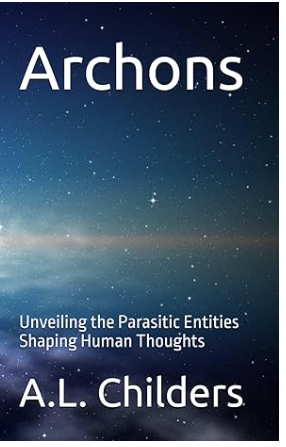
Archons: Unveiling the Parasitic Entities Shaping Human Thoughts


DISCLAIMER

This blog is meant for entertainment and general information only. I’m not a doctor, a fart whisperer, or a certified gastrointestinal ninja. Always consult a healthcare professional if your gut starts acting like a demonic brass section.

What If I Go Crazy? The Hidden Strength in Our Kryptonite Moments

What If I Go Crazy? The Hidden Strength in Our Kryptonite Moments

By A.L. Childers

There’s something hauntingly beautiful about taking a walk around the world to ease a troubled mind. It’s the kind of journey we often imagine in our darkest hours—not to escape life, but to find ourselves again after we’ve misplaced the pieces.

Many of us have had moments where we felt like we left our bodies lying in the sands of time, drifting through days on autopilot. We watch the world spiral—sometimes into chaos, sometimes into the shadows—and we wonder if there’s anything we can actually do.

This is the story of the quiet heroes. The ones who may not wear capes but still show up when the world goes dim.

We all have our Kryptonite—the hidden weight we carry. It might be trauma, anxiety, burnout, betrayal, or the heavy burden of always being the strong one. But strength isn’t in pretending it’s easy. It’s in having someone who stays, even when we don’t feel superhuman.

The real question is: If I go crazy, will you still call me Superman?

That lyric has never been just about romance or friendship. It’s about loyalty through madness, love through weakness, and presence through the unraveling.

It’s a reminder that being “crazy” isn’t the end of the story. In fact, that moment—the one where you feel unrecognizable even to yourself—might just be the chapter before you rise again.

We all stumble. We all fall. But the people who help us back onto solid ground? They are the gravity that keeps us from floating too far into the dark side of our own moon.

And when you’re the one who always shows up for others, remember this: even Superman needed someone to remind him who he was.


Sometimes your greatest strength is standing by someone who’s falling apart—even if that someone is you.

🏁 Still Racing at 85: Honoring the Legacy of Larry Ninneman

By A.L. Childers

There are people who race, and then there are people who are racing. Larry Ninneman is the second kind.

At 85 years young, Larry Ninneman—Wisconsin’s own motorsports trailblazer—isn’t just a retired driver. He’s a storyteller, a garage legend, a proud father, and a man whose passion for racing continues to ripple through generations. I recently had the honor of gathering his story, and let me tell you: it’s not just horsepower that built this legacy—it’s heart.

From Dreamer to Driver

Larry was born with a wrench in his hand and dreams under his feet. In the early days of Wisconsin’s local tracks, when dirt flew and the only sponsor you had was family, Larry was out there building his own cars, hauling them solo, and racing them full-throttle.

“I was obsessed with speed even back then,” Larry told me. And you could see it in his eyes—this man didn’t just love racing, he lived it.

Cream D Ninneman Motorsports: Built with Soul

Larry created Cream D Ninneman Motorsports with one goal: be the best without needing to be flashy. The “Cream D” stood for “Cream of the Crop,” and that’s exactly what he became. No big-money sponsors. No fancy trailers. Just pure mechanical skill, Midwest grit, and a team of people who believed in doing it right, even when it was hard.

“We had skill, family, and the will to win,” Larry said. That right there? That’s racing.

Tales from the Track

Larry’s racing memories are the kind you want to bottle up and pass down. From rain-soaked comebacks to last-lap passes, he’s seen it all. One of my favorite stories? He spun out on lap two—and still managed to win the whole race. “Sometimes racing is more about heart than horsepower,” he said with a grin.

Keeping the Wheels Turning

Today, Larry’s son Jeff is keeping the family fire burning. Jeff works alongside my husband at Freightliner, and they share more than a job—they share a love for the sport. With Dale Jr. and other racers now crossing paths with the Ninneman legacy, it’s clear: this family road doesn’t end—it evolves.

Questions That Keep the Legacy Alive

If you’re someone who documents family history or interviews local legends, here are some questions I used—and recommend:

  • What inspired you to race?
  • What was your first car?
  • What made Cream D special?
  • What was your most memorable race?
  • How does it feel seeing your legacy live on in your son?

Final Lap

Larry Ninneman’s story isn’t just a tale about racing. It’s a story about commitment, craftsmanship, and family. And in a world of fast fame and fleeting attention, his story is one that deserves a permanent place in our memory lanes.

🖋 About the Author

I’m A.L. Childers—a Southern-born author, blogger, and story-keeper. I write to preserve voices that matter. If you have a story that needs telling, let’s connect.

⚠️ Disclaimer

This blog is based on personal interviews, family insights, and available historical records. Some elements are anecdotal and intended to preserve the emotional truth of the subject’s experience. All views expressed are those of the author and do not reflect endorsements by any companies or racing entities mentioned.

🔥 Voyager’s Fiery Surprise: The Mysterious Wall at the Edge of Our Solar System

🔥 Voyager’s Fiery Surprise: The Mysterious Wall at the Edge of Our Solar System

By A.L. Childers | Science & Discovery Writer

In 1977, NASA launched the Voyager mission—two spacecrafts, Voyager 1 and Voyager 2—on a bold journey to explore the outer planets of our solar system. Originally expected to last only five years, the mission has now continued for nearly five decades, pushing beyond its original planetary tour to become a journey of cosmic proportions.

But what the Voyager probes found at the edge of our solar system left even the most seasoned scientists stunned: a mysterious “wall of fire.”

🌌 What Is the Heliosphere—and What Did Voyager Discover?

As the Voyager spacecrafts journeyed outward, they eventually approached the heliopause—the boundary where the solar wind from our Sun collides with the interstellar medium. This transitional region marks the end of the Sun’s influence and the beginning of interstellar space.

In 2018, Voyager 2 crossed this boundary, following its twin Voyager 1, which had done so in 2012. But rather than drifting peacefully into the great galactic unknown, Voyager encountered something astonishing: a dense, compressed “hydrogen wall”—a region glowing in ultraviolet light, which some scientists have dramatically nicknamed a “wall of fire.”

According to NASA and Johns Hopkins University Applied Physics Laboratory, this hydrogen wall is formed where interstellar hydrogen piles up against the heliopause due to pressure from both the solar wind and interstellar particles. This accumulation creates a glowing sheath of heat and energy, and the data was captured via Lyman-alpha emissions—a specific ultraviolet wavelength emitted by excited hydrogen atoms (NASA, 2018).

🔥 Why Is It Called a “Wall of Fire”?

While it’s not literal fire in the traditional sense—since fire requires oxygen—the term paints a vivid image of the invisible, yet powerful energy interactions at the edge of our solar system. The region is dense with hot, ionized particles, radiation, and light—making it metaphorically fiery to those observing it through data readouts and UV light analysis.

NASA researchers confirmed that Voyager’s instruments picked up a sudden change in particle density, temperature, and magnetic field strength—indicators that they had passed through a turbulent boundary layer, now thought to be the solar system’s outer shell.

🛰 What This Means for Humanity

The Voyagers are not just spacecraft; they are ambassadors of human curiosity. Each carries a Golden Record—a time capsule with greetings, music, and images from Earth, designed to introduce our species to any intelligent life that may one day find them.

The fact that these spacecraft are now communicating from beyond the edge of the Sun’s influence, through a chaotic and turbulent boundary, is nothing short of a technological and scientific miracle.

As NASA’s Jet Propulsion Laboratory reports, Voyager 1 is currently over 14.9 billion miles from Earth and counting (NASA JPL, 2025). Yet, its radio signals—transmitting at just 23 watts, about the same power as a refrigerator bulb—still reach us across the cosmos.

🔭 A New Chapter in Space Exploration

The hydrogen wall discovery is more than a scientific footnote; it raises questions about the true nature of our cosmic boundaries and how the Sun interacts with interstellar space. As future missions like the Interstellar Probe concept and NASA’s IBEX and IMAP missions continue to map this invisible frontier, we may discover that our solar system is surrounded by complex, dynamic forces far more intense than previously imagined.


💼 About the Author

A.L. Childers is a science and historical nonfiction writer with a passion for translating complex cosmic concepts into captivating narratives. With dozens of published works and a sharp journalistic eye, A.L. blends investigative depth with imaginative clarity. From hidden histories to space anomalies, she brings the universe to your screen—one powerful story at a time.

📬 For collaborations, ghostwriting inquiries, or science writing opportunities, please reach out.


📚 Books by A.L. Childers

  • The Hidden Empire: A Journey Through Millennia of Oligarchic Rule
  • Archons: Unveiling the Parasitic Entities Shaping Human Thought
  • Whispers in the Wires: Ancient Beings and Modern Tech
  • The Quantum Leap: Habits That Reshape Your Reality

Available on Amazon and select retailers worldwide.


📌 Sources & References

The Diva, the Death, and the Drama: Camille Monfort’s Eerie Legacy in the Amazon

“The Diva, the Death, and the Drama: Camille Monfort’s Eerie Legacy in the Amazon”

By A.L. Childers
Author of Nightmare Legends: Monsters and Dark Tales of the Appalachian Region
and The Hidden Empire: A Journey Through Millennia of Oligarchic Rule


Let me introduce you to Camille Monfort—opera singer, fashion rebel, and possible bloodthirsty vampiress.

No, seriously.

In 1896, when Belém, Brazil was bursting with rubber money, the wives of millionaire moguls were shipping their laundry to Europe (yes, actual laundry), and importing mineral water from London to bathe in. (Because local water is apparently fine for the peasants—but not for your delicate décolletage.) And while all that luxury was bubbling up in the Amazon, Theatro da Paz became the crown jewel of society.

Enter: Camille Monfort. French. Fabulous. Feared.

She wasn’t just talented—she was scandalous. This woman wore vaporous black gowns, danced half-naked in the rain, and took moonlit strolls by the river like she had nothing better to do—like sleep, or not become legend.

Rumors flew faster than parasols at a garden party. Some said she was the mistress of a wealthy rubber baron named Francisco Bolonha, and that he bathed her in imported champagne. (Which, to be fair, is still cheaper than a Bel Air mansion.) Others whispered she had been “attacked by vampirism” in London and brought a craving for human blood to the Amazon along with her soprano voice and corsets.

The real kicker? Concertgoers claimed to faint at her shows—not from the heat or the corsets, but from the spell of her voice. Young women reportedly fell asleep in her dressing room, only to wake up with strange dreams and, presumably, suspicious bruises.

Oh—and she could summon the dead.
(That little detail always seems to slip through the cracks.)

According to folklore, Camille hosted secret séances where spirits appeared in clouds of ectoplasmic mist, expelled from her own body. Because clearly, nothing says “encore” like a full-body exorcism in a drawing room.

Then, at the height of her strange fame, cholera struck. The glamorous diva? Dead by year’s end. Or so they say.

Her tomb, now in the Cemetery of Solitude, is equal parts haunting and poetic. Overgrown, crumbling, and shaded by a massive mango tree, it holds a bust of Camille and the inscription:

“Here lies Camila María Monfort (1869–1896)
The voice that captivated the world.”

But hold up—plot twist.
There are whispers that the tomb is empty. That her death was staged. That Camille faked her burial, ditched Belém, and fled back to Europe where—brace yourself—she may still be alive, allegedly now 154 years old. (You know what they say: red wine, laughter, and draining the blood of the innocent keeps you young.)


Final Notes from the Author:

Whether you believe she was a misunderstood artist or an immortal vampire sipping Chianti in a Parisian catacomb, Camille Monfort’s story shows us something simple:

Superstition. Scandal. Song.
The best tales always leave us asking… what if?

If you enjoyed this eerie tale, check out my other books, like Nightmare Legends, where I dive into dark folklore from the Appalachian region, or The Hidden Empire, a deep dive into the shadowy elites behind global events.


About the Author:
A.L. Childers is an award-winning researcher of forgotten legends, ancient conspiracies, and real-life paranormal rabbit holes. With over 200 published works, she blends storytelling with historical breadcrumbs to leave readers spellbound—and maybe a little paranoid.


Disclaimer: This blog blends folklore, historical references, and unverified claims for entertainment and storytelling purposes. Please do not attempt to exhume Camille Monfort’s grave. You may not like what you find. Or worse—you may like her too much.


Want more spine-tingling history and shadowy whispers?
📚 Visit TheHypothyroidismChick.com
💀 Follow A.L. Childers on Amazon & TikTok
🩸 And remember: not every legend stays buried.