Daily Archives: September 13, 2025

Monsters in the Mist: Why Appalachian Folklore Still Haunts Us

Deep in the winding hollers and misty peaks of the Appalachian Mountains, there lives more than just breathtaking beauty. The region is steeped in Appalachian folklore, ghost stories, cryptid legends, and dark tales passed down for generations. From eerie whispers of supernatural creatures to chilling campfire stories that make the hair on your arms stand up, Appalachia has long been a treasure trove of mystery and fear.

That’s exactly why I wrote Nightmare Legends: Monsters and Dark Tales of the Appalachian Region—a horror folklore anthology that brings these stories together in one haunting collection.

Nightmare Legends: Monsters and Dark Tales of the Appalachian Region

👻 Monsters of the Appalachian Mountains

From cryptids like the Mothman and the Flatwoods Monster to shadowy figures that lurk deep in the woods, the Appalachians are crawling with entities that defy explanation. Locals still swear by their encounters, and these stories are more than just entertainment—they are warnings and cultural markers of a land where survival has always depended on listening to both the people and the land.


📖 Appalachian Horror Stories & Dark Tales

This book isn’t just a retelling of the same legends you’ve heard before. It dives into 50 chilling stories that bring together the most spine-tingling Appalachian horror stories and lesser-known dark tales from Appalachia that rarely make it into mainstream collections. Every story is crafted to keep you turning pages late into the night, questioning what is real and what belongs to the supernatural.


🕯 Appalachian Ghost Stories & Folklore

Hauntings are woven into the very fabric of mountain life. From Appalachian ghost stories about spirits wandering old homesteads to mysterious lights in the forest that can’t be explained, this book pulls you into a world where folklore is just as alive as the people telling it. The folklore and legends of Appalachia are not just tales—they’re part of the culture, passed down as lessons, warnings, and shared fears.


💀 Why Nightmare Legends Belongs on Your Shelf

If you love:

  • Supernatural folklore books that go beyond the surface,
  • Scary Appalachian stories that chill you to the bone,
  • Appalachian cryptid legends like you’ve never heard before,
  • Or simply want a horror folklore anthology that blends culture, mystery, and storytelling…

…then this book is for you.

What makes it so great? It’s authentic, rooted in regional history, and packed with 50 unique tales you won’t find anywhere else. Whether you’re a fan of folklore, horror, or supernatural history, this collection will keep you captivated from start to finish.


📚 About the Author

I’m A.L. Childers, a storyteller with a lifelong fascination for folklore, history, and the supernatural. Growing up in the South, I was surrounded by tales that blurred the line between myth and truth. Nightmare Legends: Monsters and Dark Tales of the Appalachian Region is my way of preserving those Appalachian voices and passing them on to new readers.


🎃 Why You Should Purchase It

  • 50 spine-chilling tales in one collection.
  • A must-have for fans of Appalachian folklore books and supernatural horror anthologies.
  • Perfect for Halloween reading, campfire nights, or collectors of folklore.
  • A journey into the mystery, fear, and wonder of Appalachia like never before.

Step into the shadows of the Appalachian Mountains—if you dare.


Nightmare Legends: Monsters and Dark Tales of the Appalachian Region is available now on Amazon. Add it to your shelf and discover why these stories still echo through the mountains today.

Shadows in the Mountains: Why You’ll Love Nightmare Legends

The Appalachian Mountains have always been more than just a breathtaking landscape. Beneath their misty peaks and shadowy valleys lies a legacy of monsters, dark folklore, and spine-chilling tales passed down for generations. My book, Nightmare Legends: Monsters and Dark Tales of the Appalachian Region (A.L. Childers, 2023), captures this haunting heritage in 50 unforgettable stories that blur the line between myth and reality.

Nightmare Legends: Monsters and Dark Tales of the Appalachian Region

🌲 Why This Book Is Unlike Any Other

Folklore is the heartbeat of Appalachia, and nowhere else will you find such eerie legends, ghostly encounters, and terrifying creatures woven so deeply into daily life. This book isn’t just a collection of scary stories—it’s a journey into:

  • Local Monsters: From cryptids that stalk the hollers to unexplainable creatures whispered about in mountain towns.
  • Dark Tales & Lore: Supernatural stories that combine mystery, fear, and the region’s cultural roots.
  • The Appalachian Spirit: A place where faith, superstition, and survival intertwine—and where every shadow could hide a secret.

What makes it compelling? These stories are not just entertainment—they are oral history, warnings, and proof of the Appalachian people’s deep connection to the land.


👻 Why Readers Can’t Put It Down

If you love:

  • Folklore anthologies like those by Alvin Schwartz (Scary Stories to Tell in the Dark),
  • Regional ghost stories with deep cultural roots,
  • Or simply the thrill of the unknown…

…then this book will keep you turning pages late into the night. Readers have said it feels like sitting around a fire hearing real-life accounts of the supernatural—the kind of stories that stay with you long after the last page.


🖤 Why You Should Buy This Book

  • 50 chilling tales you won’t find anywhere else.
  • Perfect for Halloween nights, campfire storytelling, or late-night reading.
  • A deep dive into the mystery and magic of Appalachian culture.
  • Makes a unique gift for fans of horror, folklore, or the supernatural.

If you’re searching for something that goes beyond cookie-cutter horror and taps into the soul of Appalachia, this is the book for you.


📚 About the Author

I’m A.L. Childers, a writer with a passion for exploring the intersection of folklore, history, and the supernatural. Growing up in the American South, I was surrounded by stories passed down through family and community—tales that were as much a part of our culture as Sunday dinners and front porch swings.

Nightmare Legends was born from my fascination with the Appalachian region and its chilling oral traditions. I believe these stories deserve to be preserved, celebrated, and shared with anyone brave enough to read them.


⚠️ Disclaimer

The stories in Nightmare Legends: Monsters and Dark Tales of the Appalachian Region are drawn from folklore, cultural accounts, and regional storytelling traditions. While they capture the mystique and mystery of Appalachian legends, they are not intended as verified historical accounts. Readers should approach them as folklore—part history, part imagination, and all intrigue.


🔑 SEO Keywords

  • Appalachian folklore book
  • monsters of the Appalachian Mountains
  • Appalachian horror stories
  • dark tales from Appalachia
  • Appalachian ghost stories
  • folklore and legends of Appalachia
  • scary Appalachian stories
  • supernatural folklore books
  • Appalachian cryptid legends
  • horror folklore anthology


✨ Ready to face the shadows? Nightmare Legends: Monsters and Dark Tales of the Appalachian Region is available now—step inside the Appalachian night if you dare.

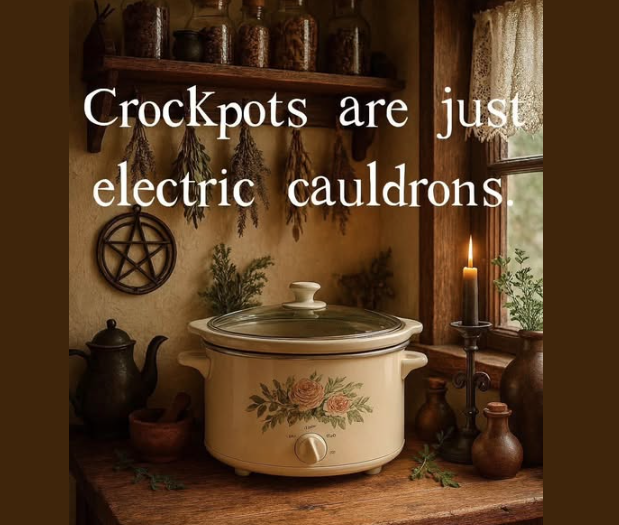
Crockpots Are Just Electric Cauldrons ✨”10 Recipes for Healing & Home Magic”

A blend of healing foods and witchy kitchen magic

There’s something magical about a crockpot. It hums quietly on the counter, turning the simplest of ingredients into warm, nourishing meals. Honestly—if you squint just right—it feels like an electric cauldron. And that got me thinking: why not use it both ways?

Today, I’m sharing 5 hypothyroidism-friendly crockpot recipes (simple, supportive, and delicious), followed by 5 witchy simmer pot blends to make your home smell like a sanctuary. Whether you’re here for health, a little bit of magic, or both—you’ll leave with recipes worth bookmarking.

🍲 5 Hypothyroidism-Friendly Crockpot Recipes

These recipes are designed with thyroid-friendly principles in mind: gluten-free bases, nutrient-rich vegetables, lean proteins, and anti-inflammatory touches.

1. Lemon Herb Chicken & Veggies

  • 4 chicken breasts
  • 1 zucchini, chopped
  • 1 cup carrots, sliced
  • 1 onion, chopped
  • 1 lemon (juiced)
  • 1 tsp rosemary, 1 tsp thyme
  • 1 cup low-sodium bone broth

How to use: Place everything in the crockpot on low for 6 hours. A light, clean dish packed with protein and antioxidants.


2. Sweet Potato & Lentil Stew

  • 2 sweet potatoes, cubed
  • 1 cup red lentils
  • 1 onion, diced
  • 1 tsp turmeric
  • 1 tsp cumin
  • 4 cups vegetable broth

How to use: Cook on low for 6–7 hours. Comforting, fiber-rich, and supportive for blood sugar balance.


3. Garlic & Ginger Salmon

  • 2–4 salmon fillets (wild-caught if possible)
  • 3 cloves garlic, minced
  • 1 tbsp fresh ginger, grated
  • 1 tbsp coconut aminos
  • ½ cup water

How to use: Wrap salmon in parchment, place in crockpot, cook on low 2–3 hours. Omega-3 rich and anti-inflammatory.


4. Coconut Curry Chicken

  • 4 chicken thighs
  • 1 can coconut milk
  • 2 tbsp curry powder
  • 1 onion, sliced
  • 1 cup cauliflower florets
  • 1 tsp turmeric

How to use: Low for 5–6 hours. Creamy, warming, and supportive for hormone balance.


5. Hearty Beef & Cabbage Soup

  • 1 lb lean ground beef (or turkey)
  • 2 cups shredded cabbage
  • 1 carrot, chopped
  • 1 cup mushrooms
  • 1 tbsp apple cider vinegar
  • 4 cups beef bone broth

How to use: Cook on low for 6 hours. Nourishing, grounding, and gut-friendly.


🔮 5 Witchy Crockpot Simmer Recipes

Think of these as modern-day “house spells.” Toss the ingredients into your crockpot (filled with water), set to low, and let the aromas do their magic.

1. Protection Blend

  • Orange peels
  • 2 cinnamon sticks
  • 5 cloves
  • Bay leaf

Magical use: Clears heavy energy, brings a protective shield to your home.


2. Abundance Simmer

  • Apple slices
  • Ginger
  • Basil leaves
  • A pinch of nutmeg

Magical use: Attracts prosperity, warms the heart, and invites good fortune.


3. Love & Harmony Brew

  • Rose petals (culinary safe)
  • Vanilla bean or extract
  • Chamomile
  • Honey (a spoonful added to the pot)

Magical use: Promotes peace, connection, and tenderness in relationships.


4. Cleansing & Clarity

  • Lemon slices
  • Rosemary sprigs
  • Sage leaves
  • Eucalyptus

Magical use: Clears away negativity, resets your mental space, sharpens intuition.


5. Cozy Hearth Simmer

  • Apple cider
  • Cinnamon sticks
  • Allspice
  • Pine sprigs

Magical use: Welcomes warmth, family togetherness, and the energy of home.


📚 About the Author

Hi, I’m A.L. Childers, author of multiple books blending natural healing, history, and a little bit of magic. Some of my works, like Fresh and Fabulous Hypothyroidism Body Balance and Nightmare Legends: Monsters and Dark Tales of the Appalachian Region, reflect my passion for healing, folklore, and witchy kitchen wisdom. I’ve always believed food and magic share the same root: the power to transform.


⚠️ Disclaimer

I am not a doctor or licensed healthcare provider. These recipes are based on my personal experience, research, and storytelling. Always consult your physician or a licensed practitioner before making changes to your diet, especially if you have hypothyroidism or other medical conditions. The magical simmer recipes are for aroma and atmosphere only—do not drink unless ingredients are marked as culinary-safe.


📖 Resources & References

  • Izabella Wentz, Hashimoto’s Protocol
  • Dr. Amy Myers, The Thyroid Connection
  • Scott Cunningham, Cunningham’s Encyclopedia of Magical Herbs
  • Rosemary Gladstar, Herbal Recipes for Vibrant Health

✨ Whether you’re simmering up a healing stew or enchanting your kitchen with a witchy blend, remember: your crockpot really is a little cauldron. Use it with intention, and you’ll nourish body, spirit, and home all at once.

The Magic of 3% Food-Grade Hydrogen Peroxide: 10 Recipes for a Cleaner Home and a Healthier You

Hydrogen peroxide has been a household staple for decades, but most people don’t realize there’s a safer, more natural option than the brown-bottle variety found at the drugstore. Food-grade 3% hydrogen peroxide—like the Essential Oxygen brand—is free from stabilizers and toxic additives, making it a versatile cleaner for both your home and your body.

Unlike higher concentrations (6%, 12%, or 35%), which must be diluted before use and can be dangerous, 3% is the perfect strength for everyday cleaning, oral care, and sanitizing. Below, you’ll find 10 simple recipes to put this natural wonder to work.


🏡 10 Recipes for Home & Body Use

1. Natural Mouth Rinse

  • Mix: 1 part 3% hydrogen peroxide + 2 parts water
  • Use: Swish for 30–60 seconds, spit, and rinse with water. Freshens breath, whitens teeth, and kills harmful bacteria.

2. Whitening Toothpaste

  • Mix: 1 tsp baking soda + a few drops of 3% hydrogen peroxide
  • Use: Brush gently once or twice per week. Helps whiten teeth without harsh chemicals.

3. Fruit & Veggie Wash

  • Mix: ¼ cup 3% hydrogen peroxide + ¾ cup water
  • Use: Soak produce for 5 minutes, rinse thoroughly. Removes pesticides and surface bacteria.

4. Countertop & Sink Spray

  • Mix: Straight 3% hydrogen peroxide in a spray bottle
  • Use: Spray directly on kitchen or bathroom surfaces, let sit 5 minutes, then wipe clean.

5. Carpet Stain Remover

  • Mix: Equal parts 3% hydrogen peroxide + water
  • Use: Spray on stain, let sit for 5 minutes, blot with a clean towel. Test first on colored fabrics.

6. Laundry Brightener

  • Mix: Add 1 cup of 3% hydrogen peroxide directly to your washing machine with whites.
  • Use: Brightens whites and removes odors without chlorine bleach.

7. Cutting Board Sanitizer

  • Mix: Straight 3% hydrogen peroxide
  • Use: Pour or spray on cutting boards after use, let sit 10 minutes, rinse thoroughly.

8. Foot Soak for Athlete’s Foot

  • Mix: ½ cup 3% hydrogen peroxide + 1 gallon warm water
  • Use: Soak feet 10–15 minutes to fight odor and fungus.

9. Toothbrush Cleaner

  • Mix: Straight 3% hydrogen peroxide
  • Use: Soak toothbrush for 5 minutes, rinse before brushing.

10. Shower Mold Spray

  • Mix: Straight 3% hydrogen peroxide in a spray bottle
  • Use: Spray moldy tiles or grout, let sit 30 minutes, scrub clean.

⚖️ Why Choose 3% Food-Grade Instead of Regular Peroxide?

Most drugstore hydrogen peroxide is stabilized with chemicals like phenol, acetanilide, or sodium stannate to extend shelf life. These stabilizers aren’t intended for ingestion and can be irritating if used in oral care.

Food-grade peroxide contains no additives—just hydrogen and oxygen suspended in purified water—making it safer for cleaning fruits, rinsing your mouth, or using around pets and children.

Essential Oxygen Food Grade Hydrogen Peroxide, Natural Cleaner, 3% USP, White, 16 Ounce


⚠️ Precautions

  • Use only 3% food-grade hydrogen peroxide for home and body recipes.
  • Do not swallow or ingest.
  • Store in a cool, dark place away from children and pets.
  • Avoid use on colored fabrics without spot-testing first.
  • For oral care: always dilute; never use straight on gums daily.

📚 Resources

  • Essential Oxygen Food-Grade Hydrogen Peroxide (3% USP)
  • U.S. National Library of Medicine: Hydrogen Peroxide Safety
  • Environmental Working Group (EWG): Safer Cleaning Solutions

📜 Disclaimer

This blog is for informational purposes only and does not substitute for professional medical advice. Always consult with your healthcare provider before starting new health practices. Use products responsibly and follow safety guidelines.


✍️ About the Author

A.L. Childers is an author, researcher, and wellness advocate passionate about natural living and exposing hidden toxins in everyday products. After struggling with hypothyroidism and autoimmune issues, she turned to natural remedies—including food-grade hydrogen peroxide—for safer solutions that support both health and home. Her books and blogs inspire readers to take charge of their well-being with knowledge, history, and practical tools.


✨ With these recipes, you’ll see why 3% food-grade hydrogen peroxide is more than just a bottle in your cabinet—it’s a natural cleaning powerhouse and a safer alternative for you and your family.

Awakening Beyond the Walls: Seeing Through the Illusion

“The awakening isn’t in tearing down the walls—it’s in realizing the walls were illusions all along.”

Walls have always symbolized control. They divide nations, protect rulers, and separate the “haves” from the “have-nots.” We’ve been conditioned to believe that tearing them down is the act of liberation. But what if the deeper truth is that the walls themselves—like the castles we dream of storming—are illusions?


The Myth of the Wall

Throughout history, walls have been built not only of stone, but of belief systems.

  • The Berlin Wall fell in 1989, celebrated as the end of tyranny. Yet economic, cultural, and digital walls still remain—sometimes more invisible and more effective than concrete ever was.
  • The Great Wall of China was less about defense and more about projecting power. Its psychological effect mattered as much as its physical function.
  • The Walls of Religion separate “us” from “them,” but upon closer inspection, many doctrines share the same ancient roots in Babylon, Egypt, and Sumer.

The illusion lies not in the wall itself but in our belief that it defines our reality.


Illusions of Today’s Walls

The modern world is full of “walls” we don’t see:

  • Economic Walls: Credit scores, taxes, and debt create invisible boundaries between freedom and captivity. We think we’re climbing them, but the system is built to keep us circling within.
  • Digital Walls: Big Tech platforms promise open communication, yet algorithmic censorship, shadow bans, and paywalls quietly control what we see and say.
  • Social Walls: Identity politics, class divisions, and cultural narratives pit us against one another, keeping us distracted from the larger forces of control.

To awaken is not to swing a hammer at these walls—it’s to see that they’re made of smoke, not stone.


Breaking the Spell

True freedom begins when we stop fighting illusions as though they’re real. Awakening means:

  • Understanding that money only has power because we believe it does.
  • Recognizing that political sides are two wings of the same bird of control.
  • Realizing that status, fame, and identity labels are manufactured measures of worth.

When you stop believing the wall exists, you stop being contained by it.


Historical & Philosophical Examples

  • Plato’s Cave Allegory – Prisoners fight shadows, unaware the “walls” of the cave aren’t real at all.
  • The Matrix (1999) – Neo doesn’t win by fighting the system with fists—he awakens by seeing the code behind the illusion.
  • Jean Baudrillard’s Simulacra and Simulation – Explores how modern society replaces reality with images, signs, and illusions.
  • Eastern Philosophy – Buddhism and Taoism both teach that suffering arises from mistaking illusion for reality. Liberation comes from detachment, not destruction.

Resources & References

  • The Republic by Plato (Allegory of the Cave).
  • Jean Baudrillard’s Simulacra and Simulation.
  • The Creature from Jekyll Island by G. Edward Griffin (on the illusion of financial systems).
  • The Matrix (film, 1999).
  • Shoshana Zuboff’s The Age of Surveillance Capitalism.
  • Tao Te Ching by Laozi.

Disclaimer

This blog is for educational and reflective purposes only. It does not claim to present one ultimate truth. Instead, it invites readers to explore, question, and investigate the illusions that shape our world. Readers are encouraged to research independently and form their own conclusions.


About the Author

A.L. Childers (pen name of Audrey Childers) is an author, blogger, and researcher who dives deep into history, philosophy, and spirituality. Her works include The Hidden Empire: A Journey Through Millennia of Oligarchic Rule and Archons: Unveiling the Parasitic Entities Shaping Human Thoughts. Through her writing, she seeks not to hand readers “answers” but to give them courage to question the illusions that define their lives.


👉 The true awakening isn’t about destroying walls—it’s about realizing you were never confined by them in the first place.

Refusing the Illusion: The True Meaning of the Rabbit Hole

“Jumping down the rabbit hole isn’t about finding one final truth—it’s about refusing to live inside someone else’s illusion.”

The phrase “down the rabbit hole” has become shorthand for conspiracy theories, deep research, or late-night YouTube binges. But its real power lies not in arriving at a singular, ultimate truth—but in awakening to the fact that much of what we accept as “reality” is shaped, manipulated, or outright manufactured by forces outside ourselves.

The rabbit hole isn’t a destination. It’s a refusal.

The Comfort of the Illusion

Most people live inside carefully constructed illusions because illusions feel safe:

  • The Illusion of Security: We’re told banks protect us, yet financial crashes, inflation, and debt reveal a system built on fragile trust, not true stability.
  • The Illusion of Freedom: Citizens vote, protest, and pay taxes, but corporations, lobbyists, and hidden elites write the rules.
  • The Illusion of Progress: We celebrate technological breakthroughs while ignoring how surveillance capitalism and AI quietly strip away privacy and autonomy.

Storming these illusions doesn’t free us—recognizing them as illusions does.


Examples of Illusions Shattered

  • The Church and Empire – Constantine’s conversion shaped Christianity into a state religion. Was this divine truth, or political necessity masquerading as faith?
  • The Federal Reserve – Born in secrecy on Jekyll Island, the Reserve holds immense power over global economies, yet the average person knows little of its origins.
  • The Digital Age – Social media promises connection, but much of it is engineered addiction, turning people into commodities for advertising data.

Like Alice, once you see through the curtain, you realize the “world” you lived in was only one version of the story.


The Power of Refusal

To refuse the illusion is not to retreat into nihilism. It is to reclaim agency.

  • In Politics: Refusing the illusion means rejecting the idea that left vs. right are our only choices.
  • In Spirituality: Refusing the illusion means questioning doctrines and finding personal connection with the divine.
  • In Personal Life: Refusing the illusion means recognizing we don’t need to live by scripts of success, beauty, or identity imposed by society.

The rabbit hole is the path of questioning. It is the journey toward freedom, not the comfort of a final answer.


Resources & References

For those ready to step further outside the illusion:

  • Plato’s Republic (Allegory of the Cave) – on shadows vs. reality.
  • Jean Baudrillard’s Simulacra and Simulation – on how images and signs replace reality.
  • The Creature from Jekyll Island by G. Edward Griffin – on the hidden origins of the Federal Reserve.
  • The Matrix (1999 film) – a modern myth of illusion and awakening.
  • Shoshana Zuboff’s The Age of Surveillance Capitalism – on how data, not democracy, governs the 21st century.

Disclaimer

This blog is meant for educational and reflective purposes only. It does not claim to present absolute truth or endorse every perspective mentioned. Instead, it encourages readers to think critically, investigate further, and recognize the power of questioning illusions. Always research independently and form your own conclusions.


About the Author

A.L. Childers (pen name of Audrey Childers) is a writer, researcher, and author of books such as The Hidden Empire: A Journey Through Millennia of Oligarchic Rule and Archons: Unveiling the Parasitic Entities Shaping Human Thoughts. Through her work, she blends philosophy, history, and personal insight to challenge conformity and inspire readers to step beyond illusion. Her mission is not to hand readers “the truth,” but to equip them with the courage to question the castles, shadows, and stories that shape their lives.


👉 The rabbit hole has no bottom. Its purpose is not to end in certainty—but to keep you from ever again mistaking illusion for reality.

The Castle That Never Was: Awakening Beyond Illusion

“The real awakening is not storming the castle. It’s realizing the castle was never real.”

At first glance, the quote paired with this majestic medieval castle feels poetic—almost whimsical. But when you sit with it, the meaning unfolds into something far deeper, challenging everything we think we know about power, struggle, and even reality itself.

The Illusion of Castles

Castles represent strength, control, and something to conquer. For centuries, they were symbols of power—fortresses where rulers commanded armies, dictated laws, and defended their dominance. To storm the castle was to overthrow the oppressor.

But what happens when you realize the castle itself—the very thing you’ve been fighting against—was an illusion all along?

  • Modern Economics: Many people rage against “the system,” yet the dollar itself is not backed by gold, but by belief. The castle of wealth exists only because we agree it does.
  • Religion & Empire: For centuries, empires built their castles not only of stone but of ideology. Constantine’s Rome didn’t just build walls—it built doctrine, unifying worship under new laws of Sunday observance. Was the “castle of faith” a divine order, or a political illusion?
  • Technology: We fight to keep up with algorithms and digital systems, yet much of it is smoke and mirrors. The cloud isn’t really a cloud—it’s servers owned by corporations that gatekeep access. The castle we storm daily is nothing more than code.

The Rabbit Hole of Awakening

The “castle” could be anything: government, money, religion, social status, or even our own ego. The moment of awakening isn’t the battle—it’s the recognition that what we were fighting for, or against, may not be real at all.

Examples:

  • Plato’s Cave Allegory – People fight over shadows on the wall, thinking they are reality, until one dares to step outside and see the truth.
  • Matrix Philosophy – Neo doesn’t win by storming the system head-on. He wins by realizing the rules of the “castle” never applied to him in the first place.
  • Zen Buddhism – Monks teach that attachment to form, identity, and illusion is what causes suffering. The real liberation comes not in tearing down the illusion, but in recognizing it never truly existed.

Why This Matters Today

Storming castles looks heroic. It gives us something tangible to fight against. But illusions don’t fall with swords. They dissolve with awareness.

  • Politics: Are we storming left vs. right castles, while the true power lies in the hands of corporations and oligarchs?
  • Social Media: Do we chase likes and followers, forgetting the castle of “clout” is a digital mirage?
  • Personal Identity: How many of us live within the castle walls of expectations—parent, employee, citizen—never realizing these roles are constructs, not truths?

Awakening is not about conquest. It’s about clarity.


Resources & References

For readers who want to explore this rabbit hole further:

  • Simulacra and Simulation by Jean Baudrillard – explores how reality is replaced by symbols and illusions.
  • The Allegory of the Cave in Plato’s Republic – classic philosophy on illusion vs. truth.
  • The Creature from Jekyll Island by G. Edward Griffin – on how the Federal Reserve created a financial “castle” out of belief.
  • The Matrix (1999) – a modern myth that reframes ancient wisdom in the digital age.
  • The Tao Te Ching by Laozi – on letting go of illusions and returning to truth.

Disclaimer

This blog is intended for educational and philosophical exploration only. The examples, historical references, and resources provided are designed to spark curiosity and critical thinking. Readers are encouraged to investigate independently and form their own interpretations. This is not meant to prescribe belief, but to invite deeper questioning of what is real.


About the Author

A.L. Childers (pen name of Audrey Childers) is a multi-genre author and researcher who dives into history, philosophy, and spirituality with a journalist’s curiosity and a storyteller’s heart. Her works, including The Hidden Empire: A Journey Through Millennia of Oligarchic Rule and Archons: Unveiling the Parasitic Entities Shaping Human Thoughts, explore the unseen forces shaping our world. Through her writing, she challenges conformity, exposes hidden narratives, and inspires readers to question the castles—real and imagined—that define their lives.


👉 The awakening isn’t in tearing down the walls—it’s in realizing the walls were illusions all along.

Down the Rabbit Hole: Why Some Truths Are Stranger Than Fiction

History has always had a funny way of hiding its deepest truths in plain sight. When we pull on one string, we rarely get just one answer—we tumble, often unwillingly, down a rabbit hole of connections, contradictions, and uncomfortable revelations.

What starts as a simple question—“Why is this happening?”—quickly morphs into a labyrinth of deeper mysteries: who benefits, who hides, and who dares to tell the truth?


The First Step: Asking the Forbidden Questions

Why do certain narratives dominate our textbooks while others vanish? Why are some whistleblowers demonized and others erased entirely? We are told “the facts” in neat, packaged bites, yet the more we dig, the more we discover that history is often written by the powerful, not the truthful.

Examples:

  • The Library of Alexandria burned, and with it thousands of scrolls of ancient knowledge. Was this just an accident—or an intentional reset?
  • The Federal Reserve was founded in secrecy on Jekyll Island in 1910, yet today it controls the pulse of the American economy. Why cloak something so “for the people” in shadows?
  • Sunday worship, once foreign to early followers of Christianity, became standard only after Constantine. Did faith shift—or was power simply consolidated?

Following the Threads

A rabbit hole demands that we connect dots others tell us not to connect. Consider:

  • Technology & Control: Why does modern AI mimic ancient myths of oracles and gods that “see all and know all”? Is this progress, or a reboot of ancient patterns of control?
  • Food & Health: Why are banned chemicals in Europe still legal in the United States? Who profits from the sickness that follows?
  • Religion & Empire: Why do so many religious symbols—crosses, suns, serpents—trace back to Babylonian, Egyptian, and Sumerian roots? What does this say about continuity versus creation?

Every answer births a new question. The deeper we go, the more the rabbit hole feels less like madness and more like reality revealing itself.


Why It Matters

If we do not question, we become comfortable captives of the narrative we’re given. To question is to reclaim freedom. To dig is to discover that:

  • Empires fall, but control mechanisms persist.
  • Propaganda evolves, but the intention—to shape thought—remains.
  • Truth is often scattered, fragmented, and ridiculed until someone dares to gather the pieces.

Resources for the Curious

For those ready to go deeper:

  • The Creature from Jekyll Island by G. Edward Griffin – on the Federal Reserve’s secret beginnings.
  • The Age of Surveillance Capitalism by Shoshana Zuboff – on how modern corporations profit from controlling human thought.
  • Pagan Christianity? by Frank Viola & George Barna – on how ancient rituals shaped modern Christianity.
  • Behold a Pale Horse by William Cooper – controversial, but a classic in questioning government secrecy.
  • Smithsonian, BBC, and JSTOR archives for primary documents that “official” history often leaves dusty.

Disclaimer

This blog is intended for educational and thought-provoking purposes only. It does not claim to hold all the answers, nor does it promote conspiracy theories as absolute truth. Rather, it seeks to encourage critical thinking, historical questioning, and exploration of alternative perspectives. Readers are encouraged to verify all sources independently and draw their own conclusions.


About the Author

A.L. Childers (pen name of Audrey Childers) is a multi-genre author, researcher, and blogger who blends personal storytelling, history, and investigative insight into her work. Known for digging beneath the surface of accepted narratives, she writes books and blogs that challenge conformity, expose hidden truths, and empower readers to think critically. Audrey has written extensively on health, history, and spirituality, with titles available on Amazon such as The Hidden Empire: A Journey Through Millennia of Oligarchic Rule and Archons: Unveiling the Parasitic Entities Shaping Human Thoughts.


👉 Jumping down the rabbit hole isn’t about finding one final truth—it’s about refusing to live inside someone else’s illusion.