
When most people hear the word cult, they think of blind devotion. When they hear occult, they think of mysticism and secrecy. But what happens when the two blur — when a hidden, mystical symbol is turned into a political and national identity?
That’s where the story of the hexagram comes in.
🔯 The Hexagram Isn’t Just the “Star of David”
We’ve been told for generations that the six-pointed star is uniquely Jewish. But the truth? History says otherwise.
- In Hinduism, it’s called the Shatkona, representing the balance of male and female energy.
- In alchemy and medieval Europe, it was known as the Seal of Solomon, used in magic texts to symbolize the union of fire and water, spirit and matter.
- In Islamic art and manuscripts, the hexagram appears across mosques and dynasties, centuries before modern nations existed.
- In Morocco, the hexagram appeared on flags in the 19th century.
- Ethiopia, India, and other countries have also used it in seals and banners.
So why do we pretend it belongs only to Israel today?
⚖️ Cult vs. Occult
- Occult: The hexagram is one of the most recognized occultic symbols in history — tied to magic, alchemy, esotericism, and the search for hidden knowledge.
- Cult: When that symbol is placed on a flag and declared a national emblem, it becomes something else. It demands loyalty. It becomes an emblem of conformity. That’s cult-like power.
This doesn’t mean the shape itself is evil. A triangle, a circle, a star — they’re just geometry. But once institutions declare them sacred, unquestionable, or untouchable, they stop being symbols of wisdom and become symbols of control.
🌍 The Bigger Question
Why have so many powerful nations and systems chosen the same symbol? Why has an occultic pattern become a cultic demand?
That’s the truth no one wants to talk about. Because if a symbol is used across religions, nations, and centuries, then it means the story is bigger than the one we’ve been told.
And yes, it’s troubling when the official narrative says “this is the Star of David, this is who we are” — while history shows it was global, ancient, and deeply occultic long before it was political.
This is why this is so important….
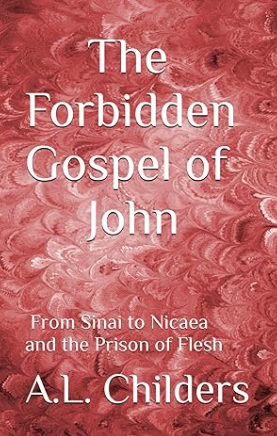
The Forbidden Gospel of John: From Sinai to Nicaea and the Prison of Flesh
📚 References & Resources
- Gershom Scholem, The Star of David: History of a Symbol
- Barbara Walker, The Woman’s Dictionary of Symbols and Sacred Objects
- Amira El-Zein, Islam, Arabs, and the Intelligent World of the Jinn
- Mircea Eliade, The Occult and the Sacred
🎤 About the Author
A.L. Childers is a writer and researcher who refuses to stop at the surface of things. Her work digs into history, symbols, and the hidden stories that shape culture and politics today. By blending truth, curiosity, and raw honesty, she writes for the people who are tired of being told half-truths.
⚠️ Disclaimer
This blog is for educational and historical purposes only. It does not endorse or condemn any religion, culture, or nation. Its purpose is to examine the historical and symbolic use of the hexagram and to explore how symbols move between occult traditions and cultic institutions.


