
On December 21, the world reaches a pause so ancient it predates calendars, religions, and written history. The Winter Solstice arrives—the longest night of the year—when darkness stretches to its fullest and, almost imperceptibly, begins to loosen its grip.
Across cultures, generations, and belief systems, humans have always noticed this night. They marked it not with fear, but with reverence. Fires were lit. Candles were placed in windows. Stories were told. Silence was honored.
Because this night meant something profound:
The light returns—but slowly.

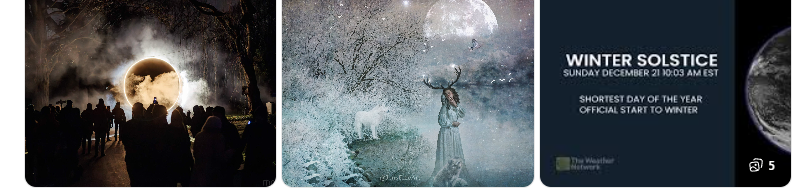
What the Winter Solstice Really Is (Astronomically)
The Winter Solstice occurs when the Earth’s axial tilt positions the Northern Hemisphere farthest from direct sunlight. On this day:
- The Sun reaches 0° Capricorn on the celestial sphere
- Daylight is shortest; night is longest
- From this point forward, days lengthen again—by seconds at first, then minutes, then unmistakably
Contrary to common debate in comment threads, the solstice is not about distance from the Sun (Earth is actually closest in early January). It is about tilt, not orbit.
This astronomical moment has been tracked for thousands of years using stone circles, shadow measurements, and horizon alignments—long before modern instruments existed.
Yule: The Old World Memory of the Solstice
Long before Christmas trees and electric lights, Northern European cultures observed Yule, a solstice festival rooted in survival, symbolism, and hope.
Yule traditions included:
- The Yule Log – burned for protection, fertility, and continuity
- Evergreens – symbols of life persisting through winter
- Feasting – not indulgence, but reassurance against scarcity
- Twelve Nights – a liminal period outside normal time
Yule was not about denying darkness—it was about sitting with it, trusting that it would not last forever.
Mother Night, Omen Days, and the Space Between Years
Many traditions viewed the solstice as Mother Night—a womb-like stillness where the future quietly gestates.
In folk calendars and later Christian-adapted traditions:
- December 21 marked the turning
- December 22–24 were days of waiting, watching, listening
- December 25 symbolized rebirth, awakening, return
These were often called Omen Days or Days Out of Time—periods where intuition, dreams, and reflection were believed to hold meaning.
This explains why the season has always carried a subtle eeriness beneath the celebration. It is not meant to be loud. It is meant to be felt.
Why This Night Still Feels Different
Even now, people sense it:
- Some feel melancholy without knowing why
- Others feel relief, as though something heavy has passed
- Many feel compelled to remember loved ones, losses, or turning points
This is not imagination. Human biology is deeply tied to light cycles. Our ancestors survived by paying attention to them—and the instinct remains.
The longest night invites rest, not resolution.
Reflection, not performance.
Stillness, not answers.
The Solstice and Modern Life
In a world obsessed with speed, productivity, and constant brightness, the Winter Solstice offers something radical:
Permission to slow down.
It reminds us that growth does not happen in full light.
Seeds germinate underground.
Healing happens quietly.
And return is rarely dramatic—it is gradual.
Related Reading from A.L. Childers
If this subject resonates with you, these books by A.L. Childers explore overlapping themes of memory, cycles, ancient symbolism, and the unseen layers beneath modern life:
- Before the Ink Is Dry: On Writing, Wounding, and Choosing Grace
- The Girl the Darkness Raised: A Memoir of Scarcity, Survival, and Becoming
- Healing Stews & Enchanted Brews: Holiday Magic
- Archons: Unveiling the Parasitic Entities Shaping Human Thoughts
- The Witch’s Almanac Cookbook (2026 Edition): Seasonal Recipes, Spells, Rituals & Kitchen Magic
Each examines, in different ways, how old truths persist beneath contemporary systems—and how silence often speaks louder than spectacle.
A Simple Solstice Practice
You do not need rituals, tools, or belief systems to honor this night. But if you wish:
- Dim the lights
- Light a single candle
- Sit quietly for a few minutes
- Ask nothing
- Observe what rises
That is enough.
References & Sources
- National Oceanic and Atmospheric Administration (NOAA) – Solstice explanations
- NASA Earth Observatory – Earth’s axial tilt and seasonal cycles
- The Golden Bough by Sir James Frazer
- Pagan Christmas by Christian Rätsch
- The Stations of the Sun by Ronald Hutton
- European folk calendars and Anglo-Saxon Yule records
Disclaimer
This article is for educational and cultural exploration purposes only. It does not promote or prescribe religious belief, spiritual practice, or medical guidance. Readers are encouraged to engage with the material in a way that aligns with their own values and well-being.
About the Author
A.L. Childers is a multi-genre author known for exploring history, symbolism, cultural memory, and the quiet spaces between official narratives. Her work blends research with reflective storytelling, often examining how ancient truths echo through modern life. She writes across nonfiction, folklore-inspired literature, and social analysis, with many titles available on Amazon.
If this piece spoke to you, consider sharing it with someone who feels the weight—or the beauty—of this night.
The light is returning.
It always does.
Discover more from thehypothyroidismchick
Subscribe to get the latest posts sent to your email.

