Tag Archives: art

The Night Winter Spoke Back to Me

The Lamp of Christmas Eve

I don’t know why winter does this — sneaks up with a kind of silence that feels almost alive. Not empty, not cold, but watchful.
If you’ve ever walked alone in freshly fallen snow, you know that feeling:
like the world is holding its breath for you.

I felt that the other day while remembering a story — or rather, a moment — that has stayed with me through many winters. And maybe you need it today, too.

So let me tell you about Elsie.


🌨️ A Moment in a Small Snow-Covered Town

The night had settled thick as velvet across the rooftops of Merrinshire, the kind of quiet that hushes even your heartbeat.
Elsie walked the narrow lane alone, boots sinking softly into the powder, her breath lifting in silver clouds.

The whole town felt abandoned.

No lamps glowing in the windows.
No fires burning behind curtains.
Not a dog barking in the distance.

Except…

At the very end of the lane, half-buried in snow, stood a single street lamp. It leaned slightly to one side, as though weary from standing its post through too many winters.

But the glow it cast?

It wasn’t the ordinary yellow of an old bulb.
It wasn’t white, or blue, or anything mundane.

It pulsed.
Slowly.
Gently.
Like a heartbeat.

Elsie froze.

She wasn’t a woman who chased mysteries.
She didn’t romanticize signs or omens or magical nonsense.
Life had been too sharp for that — too unkind.
She had learned to expect nothing.

But this light…

It flickered once, as if acknowledging her.

She stepped closer, drawn without understanding why.

With every footstep, the lamp brightened — not harsh, not blinding… just warm.
Warm in the way a memory is warm.
Warm in the way a voice you miss can still echo inside your ribs.

She reached out, fingertips brushing the icy metal.

And then—

The light swelled, blooming across the snow, wrapping itself around her like a long-lost embrace. It filled the hollows inside her that grief had carved out. It settled into her bones like recognition.

And in that glow, she saw a figure standing on the other side of the light.

Someone she never expected to see again.

Someone who should not have been there, not on this side of winter, not in this life.

Her breath shook.

The lamp flickered once more, urging her closer.

What happens next…
is the reason this moment has lived in my heart ever since.


🎄 Why I Shared This With You

Because I think someone needed to feel that warm light today.
Someone needed to remember that even in quiet seasons, life is not finished speaking to you.

And in case you’re wondering where this little story came from…

It’s actually a scene from my newest Christmas book,
The Lamp of Christmas Eve.

But I didn’t want to start by telling you that.
I wanted you to feel it first.
To step into the snow.
To see the lamp.
To remember something soft inside yourself.

If the moment resonated…
The rest of the story glows even brighter.


A heartwarming winter blog sharing a magical scene about hope, loss, and unexpected light—revealed at the end to be from A.L. Childers’ new Christmas novel, The Lamp of Christmas Eve.

ABOUT THE AUTHOR

A.L. Childers has long believed that the truest magic of Christmas is found not in grand miracles, but in the small glimmers of kindness that pass quietly from one heart to another. Raised on stories told beside winter windows and crackling hearths, she grew up enamored with tales where light appears just when it is most needed.

Her writing blends the hush of snow, the warmth of candlelit rooms, and the steadfast hope that threads its way through every Christmas season. With a storyteller’s heart and a dreamer’s courage, she invites readers to step into worlds where wonder is never far away, healing arrives softly, and even the most ordinary object — a lamp, a snowflake, a forgotten gift — might carry a miracle.

She makes her home in North Carolina, where the first cold night of December still feels like the beginning of a story waiting to be told.

DISCLAIMER

The Lamp of Christmas Eve is a work of fiction born from imagination, wonder, and the quiet longings of the human heart. Any resemblance to real people, places, or events is coincidental. The characters, settings, and miracles within these pages exist only to inspire reflection and hope. This story is not intended to mirror any specific life, faith tradition, or supernatural claim, but to offer comfort, meaning, and light to readers of all backgrounds.

THE CEREAL CONSPIRACY:

How Cornflakes, Control & Corporate Salvation Engineered the American Breakfast
by A.L. Childers


A shocking investigative blog uncovering how cereal, breakfast, and “morning health” were engineered by corporations, religion, psychological manipulation, and early propaganda — a story most Americans never learn.


Most Americans wake up believing cereal is normal.
Comforting.
Childhood in a bowl.
Snap, crackle, pop — and a sip of cold milk that tastes like nostalgia and Saturday mornings.

But here’s the truth:

Breakfast cereal wasn’t created to nourish you.
It was created to control you.

Not metaphorically.
Not symbolically.
Literally.

Let’s begin in a place more unsettling than any marketing textbook:
a 19th-century health cult that feared sexuality more than starvation.

The Sanitarium Where Breakfast Was Born

Dr. John Harvey Kellogg — the name stamped on your cereal box — ran a medical-religious empire called the Battle Creek Sanitarium. It looked like a wellness retreat… but its purpose was a war.

Against sexual desire.
Against pleasure.
Against the human body.

His beliefs?

• sex was a disease
• pleasure was a sin
• masturbation caused insanity
• bland food “calmed lust”
• spicy food “ignited immoral urges”

So Kellogg designed meals that were intentionally:

❌ flavorless
❌ low-fat
❌ low-protein
❌ psychologically suppressive

And one of these inventions was…

Cornflakes.

Not for health.
Not for children.
Not for “a balanced breakfast.”

But to stop people from touching themselves.

You read that correctly.
Your childhood cereal was engineered as anti-pleasure food.

He wrote it himself, in medical texts the cereal industry avoids quoting.

And that’s where the story should have ended —
a strange footnote in the history of human repression.

But then corporate America smelled profit.

When Corporations Discovered Fear Was Profitable

Kellogg’s brother saw opportunity, not morality.

He took the anti-pleasure flakes
and turned them into children’s breakfast.

But the real explosion happened when advertisers entered the scene
the early architects of psychological manipulation.

Breakfast wasn’t selling.
Cereal wasn’t catching on.
People still ate:

• bread
• leftovers
• nothing
• or coffee

So advertisers stepped in and said:

“We’ll create the breakfast market.”

Just like that.

Not by studying what people wanted —
but by telling them what they should want.

Ads ran in newspapers claiming:

“Cereal is the modern health food!”
“A wholesome start to the day!”
“Doctors recommend a grain breakfast!”

Who were these doctors?

Paid.
Bribed.
Scripted.

The same techniques used later in:

• tobacco ads
• pharmaceutical ads
• political propaganda
• diet industry scams
• and early television manipulation

Cereal didn’t rise because it was good.
It rose because corporations learned they could invent a need
and Americans would buy the need before they bought the product.

This was not a food story.
It was a psychological experiment.

Cereal Was the First Child Targeting Campaign

Then came the final twist — the one that shaped modern advertising forever.

Advertisers realized children could nag parents into purchases.
So cereal companies invented:

• mascots
• jingles
• cartoons
• free toy boxes
• “collect them all” campaigns
• games on the back panel
• characters children “loved”

Every tactic you see today?

It started here.

Cereal was the Trojan Horse that turned advertising into childhood imprinting
the moment corporations realized:

If you program the children,
you program the adults they become.

What started as an anti-pleasure food
became the foundation of children’s marketing psychology.

And America never questioned it.

The Darkest Truth?

You Were Never Choosing Breakfast.
Breakfast Was Choosing You.**

Because what is cereal, really?

Not nutrition.
Not tradition.
Not health.

It is the result of:

• a religious crusade
• a psychological experiment
• corporate reinvention
• advertising manipulation
• early propaganda strategy
• a collapsing grain market
• and government cooperation

Cereal didn’t just become breakfast.
Cereal invented breakfast.

And once corporations learned they could shape the morning —
they learned they could shape everything else:

Your beauty standards.
Your identity.
Your cravings.
Your patriotism.
Your fears.
Your sense of “normal.”

If they could colonize your childhood morning routine…
they could colonize your mind.

And they did.

About the Author

A.L. Childers writes what institutions pray you never uncover — the buried histories, the archival shadows, the corporate fingerprints smudged across American culture. Her investigative nonfiction blends cinematic horror, journalism, and psychological analysis to reveal how power shapes the world we live in… and the illusions we mistake for reality.

This blog is part of her Dark Side Series, expanding on themes from her explosive book
The Dark Side: Uncovering the Culture of Corruption,
available now for readers brave enough to see how deep the deception goes.

The Dark Side: Uncovering the Culture of Corruption

Disclaimer

All claims in this blog are rooted in documented advertising history, corporate archives, Kellogg’s published medical writings, and historical research. No modern medical claims are made. Interpretations are educational, investigative, and protected commentary.

Your Wakeup Call

Tomorrow morning, when you pour cereal into a bowl
and listen to the cheerful crackle,
remember:

You’re hearing the echo of a century-old experiment.
One that didn’t just feed children —
it shaped them.

And the question isn’t:

“Do you still eat cereal?”

The question is:

What else have you swallowed without ever questioning who fed it to you?

The Untold Truth That Big Beer Doesn’t Want You Asking

What’s Really In America’s Favorite Beers?

Chemicals, PFAS, Pesticide Residues—What Studies Say (and Don’t), How Beer Changed Over Time, and How to Drink Smarter

  • Independent testing has detected glyphosate (a weed-killer) in many mainstream beers, and PFAS (“forever chemicals”) have been measured in retail beer with levels that tend to track the local water supply used by breweries. PIRG+2PMC+2
  • Most detected levels are tiny (parts-per-billion) and studies do not routinely identify specific U.S. brand “villains” vs “saints.” A few products in one 2019 test showed no detectable glyphosate. PIRG
  • If you want the lowest potential exposure, prioritize: (a) certified-organic beers, (b) breweries that publish water treatment practices (e.g., reverse osmosis + carbon filtration), and (c) lighter-ABV lagers over high-adjunct flavored beers and sugar-heavy seltzers. (Rationale below with sources.)
  • Today’s top sellers are largely owned by three companies in the U.S.: AB InBev (Anheuser-Busch), Molson Coors, and Constellation Brands (for U.S. Corona/Modelo rights). Heineken, Diageo (Guinness), Boston Beer (Sam Adams) and Yuengling round out the list. Anheuser-Busch+2Molson Coors+2

What the best studies actually found

Glyphosate (herbicide)

  • A U.S. PIRG Education Fund project (2019; page updated 2025) tested 15 beers and 5 wines; 19 of 20 had detectable glyphosate, with ppb-level concentrations. One beer (Peak) had none detected. The report explicitly lists mainstream brands among positives. This doesn’t prove hazard at drinking levels, but it does confirm detectable residues are common. PIRG

PFAS (“forever chemicals”)

  • A 2025 peer-reviewed analysis adapted EPA Method 533 for retail beer and found PFAS in ~95% of samples; levels correlated with the municipal water of the brewery’s location—i.e., cleaner source water → lower PFAS in beer. This is a crucial point: water treatment matters as much as brand. PMC+1

Important context: Regulators set health-based limits for PFAS in drinking water, not beer. Beer is not a major PFAS exposure compared to water and food packaging, but if you’re minimizing cumulative exposure, beer choice + brewery water practices are reasonable levers. PMC

Why brand-by-brand “safest/dirtiest” lists are tricky

Most datasets test small sample sets and change by batch, crop, and local water. Independent, ongoing brand-level surveillance isn’t published publicly at scale in the U.S. As a result, absolute rankings (“Brand X is the worst”) would be misleading. Where there is a test showing “no detectable glyphosate” (Peak, in that 2019 panel), I call it out—but that’s not a permanent guarantee. PIRG


So…what’s the safest beer to drink?

“Safest” depends on what you’re minimizing (glyphosate? PFAS? additives?). Based on today’s evidence:

  1. Certified-Organic beers
    Organic standards forbid glyphosate use, and organic producers often treat water aggressively. Caveat: cross-contamination can still occur (trace detections have been reported), but rates and levels tend to be lower. PIRG
  2. Breweries that explain their water treatment (reverse osmosis + carbon)
    Because PFAS in beer tracks local water, breweries that filter and polish their brewing water can reduce PFAS risk. Many craft brewers publish this in FAQs or brewery tours; the 2025 study underscores why water matters. PMC
  3. Simple, low-ABV lagers from producers with transparent sourcing
    Fewer flavorings/sugars and a shorter ingredient list can reduce potential auxiliary inputs. (This is a prudence rule, not a hard guarantee.)

A data-anchored “safe bet” framing (not an endorsement):

  • Certified-organic lagers from reputable producers;
  • Peak Organic (the one beer with “none detected” glyphosate in PIRG’s 2019 panel);
  • Craft lagers from breweries that publicly state they use RO + carbon filtration for all brewing water. PIRG+1

Which beers are most likely to contain herbicides, pesticides, PFAS?

  • Grain-sourced residues (glyphosate, etc.): any beer made with conventionally grown grains can carry trace glyphosate. That’s most mainstream lagers, unless labeled organic. PIRG
  • PFAS: depends heavily on the brewery’s local water and treatment. National brands produced at multiple facilities may have different PFAS profiles by region. PMC

Bias note: You asked to acknowledge this—and you’re right. Food-chemical science can be industry-funded, and historic literature shows results sometimes favor sponsors. That’s why I prioritize independent, method-transparent work (e.g., EPA-method studies, consumer testing with third-party labs) and present results with uncertainty. PMC


How beer changed through history (and how to brew it at each stage)

  1. Ancient Sumer (c. 1800–3000 BCE) — pre-hop, bread-based beer
    What it was: Cloudy, low-ABV, often sipped through straws; flavored with dates/spices.
    Mini-recipe: Malted grains + a baked “beer bread” loaf (barley/wheat), crumbled into water with date syrup; ferment with wild/house yeast; no hops. Bon Appétit+1
  2. Medieval Europe — gruit ales → early hopped beer
    Shift: Herbs (gruit) gave way to hops for bitterness/preservation (11th–15th c.).
  3. 1516 Bavaria — Reinheitsgebot (barley, hops, water → later yeast)
    What changed: Ingredient restrictions; lager yeast and cold fermentation later defined German styles.
    Mini-recipe: Single-malt barley mash, hopped boil, cool ferment with lager yeast, long cold lagering. Wikipedia+2Wine Enthusiast+2
  4. 19th-century America — adjunct lagers (corn & rice)
    Why: U.S. six-row barley was protein-rich; corn/rice improved clarity and drinkability.
    Mini-recipe: 60–70% barley malt + 30–40% corn/rice adjunct (cereal-mash cooked), hopped lightly, clean lager yeast. Brewed Culture+2Brew Your Own+2
  5. Modern craft era — ingredients explode
    Now: Everything from double-dry-hopped IPAs to pastry stouts, kettle sours, ancient-recipe revivals. The New Yorker

The U.S. “Top 20” beer brands & who owns what (2024–2025 snapshot)

Exact rankings swing month-to-month and by metric (volume vs. dollar sales). The brands below consistently appear among the biggest sellers in U.S. retail panels; I group them by current U.S. owner for clarity.

AB InBev (Anheuser-Busch, USA portfolio)Bud Light, Budweiser, Michelob Ultra, Busch, Busch Light, Natural Light, Stella Artois (imported), Budweiser Select (varies). (Parent: AB InBev; U.S. operating company: Anheuser-Busch.) Anheuser-Busch+1

Molson CoorsCoors Light, Coors Banquet, Miller Lite, Miller High Life, Keystone Light, Blue Moon Belgian White. (Molson Coors gained global Miller brands in the U.S. after the 2016 AB InBev–SABMiller transaction.) Molson Coors+2Wikipedia+2

Constellation Brands (U.S. rights)Modelo Especial, Corona Extra, Pacifico, Victoria (imports; perpetual U.S. brand license). Courts affirmed the scope of Constellation’s “beer” license for related line extensions in 2024 litigation. Constellation Brands Corporate Website+1

Heineken USAHeineken, Dos Equis (import/brand owner globally is Heineken). (General corporate ownership; specific brand pages omitted for brevity.)

Diageo (Guinness)Guinness Draught/Stout (brewed/imported for U.S. by Diageo/Guinness). (General corporate ownership.)

Boston Beer CompanySamuel Adams Boston Lager (independent public company).

D.G. Yuengling & SonYuengling Traditional Lager (largest U.S. regional/family-owned brewer).

Ranking notes: In 2023–2024, Modelo Especial overtook Bud Light in dollar sales; in 2025, multiple outlets reported Michelob Ultra taking the top dollar-sales slot, illustrating how tight the leaderboard has become. Forbes+2The Telegraph+2

About “original names” and first-sold dates:

  • Budweiser (1876); Bud Light (1982); Miller Lite launched nationally in 1975 (originally marketed as “Lite”); Coors Light expanded nationally by the early 1980s; Natural Light (1977); Michelob Ultra (2002); Pabst Blue Ribbon traces to Best Select (name change after 1890s awards); Stella Artois brand roots to 1366 (modern “Stella Artois” launched 1926); Guinness brewery established 1759; Samuel Adams Boston Lager (1984); Blue Moon (1995); Yuengling brewery 1829 (“Traditional Lager” is a late-20th-century flagship).
    (Launch-year details come from brand histories and Wikipedia/company pages; exact “original name” data are not consistently published across all 20 and can vary by market. If you want, I can build a formal table with per-brand citations for your site.)

Practical ways to drink smarter

  • Prefer organic options when available (lowers glyphosate probability). PIRG
  • Favor breweries that publish water treatment (RO + carbon) or that brew in cities with strong PFAS-compliant municipal systems. PMC
  • Choose clean lagers or simple styles over dessert-like beers with flavorings.
  • If you love a mainstream brand, look for facility-level disclosures or independent tests; large brands brew in multiple locations, so local water quality matters. PMC

Quick, era-by-era homebrew “recipes”

(Educational only—fermentation involves risk; sanitize everything.)

  1. Sumerian-style, no-hop: bake a barley “beer bread,” crumble into water with date syrup; add yeast (or sourdough starter); ferment cool; drink young and cloudy. Bon Appétit+1
  2. 1516 Bavarian lager: 100% barley malt; gentle German hops; cool ferment with lager yeast; 4–8 weeks lagering. Wikipedia
  3. Pre-Prohibition American lager: ~60–70% barley malt + 30–40% corn/rice (pre-boiled cereal mash); light hopping; clean lager yeast. Craft Beer & Brewing+1
  4. Modern American light lager: Similar to #3 but lower OG/ABV; strict filtration and carbonation; package cold.

Sources & further reading

  • PFAS in beer (EPA Method 533): Redmon et al., 2025; and ACS press summary. PMC+1
  • Glyphosate in beers (consumer testing): U.S. PIRG Education Fund report (2019; page updated 2025). PIRG
  • Reinheitsgebot (1516) and history: Wikipedia/Britannica-style overviews and academic/public history explainers. Wikipedia+1
  • American adjunct lagers—why corn/rice: Brewing history sources. Brewed Culture+1
  • U.S. ownership snapshots: AB InBev/Anheuser-Busch brands; Molson Coors; Constellation Brands (U.S. license for Corona/Modelo); 2024 appeals decision on seltzers under the beer license; 2024–2025 sales headlines. The Telegraph+5Anheuser-Busch+5Molson Coors+5

Disclaimer

This article is informational and educational. It does not provide medical or legal advice. Chemical detections cited are from third-party studies with specific sample sets, locations, and dates; levels can vary by batch and brewery. Always consult labels, producer disclosures, and your healthcare professional for personal health decisions.


About the Author

A.L. Childers (Audrey Childers) is a multi-genre author of 200+ titles blending women’s health advocacy, humor, and deep-dive research. Her mission is to help women navigating hypothyroidism, Hashimoto’s, perimenopause/menopause, and everything in between make informed choices—without fear-mongering. Explore her books and health-first writing across food, hidden histories, and everyday empowerment.

Find her books on Amazon under A.L. Childers
Visit her blog: TheHypothyroidismChick.com

 Books by A.L. Childers

🏴 The Blood-Red Terror: The Secret History of the Jolly Roger

by A.L. Childers

Since the early 18th century, few symbols have stirred more fear on the high seas than the infamous Jolly Roger. Today, we picture it as a black flag bearing a white skull and crossbones, but the truth is far darker—and far more fascinating.

⚓ A Symbol That Spoke Without Words

Sailors once said that when the black Jolly Roger rose over the horizon, there was still a chance to live—if you surrendered quickly. But when the red flag unfurled, it was a message written in blood: no quarter given, no mercy shown.

This crimson banner wasn’t merely for theatrics. In the code of the 18th-century pirate, red meant total warfare. It warned that the pirates intended to take no prisoners—a psychological tactic designed to break a crew’s resolve before the first cannon fired.

⚓ Beyond the Skull and Crossbones

Not all Jolly Roger flags bore skulls at all. Some displayed hourglasses, swords, or bleeding hearts, each conveying its own promise of doom. Blackbeard’s flag, for example, portrayed a skeleton stabbing a heart with a spear while raising a glass to the devil. Every design was a language of fear, crafted to strike before battle ever began.

The red Jolly Roger, however, was the most dreaded. Sailors knew it meant they were out of time—and that negotiation was no longer an option. Only two of these original red flags are known to survive today, both preserved as haunting relics of a brutal era when piracy ruled the waves.

⚓ The Psychology of Power and Fear

In a world without radio or radar, imagery was everything. Flags were the pirates’ branding—their version of modern psychological warfare. The Jolly Roger united outlaws from different crews under one terrifying promise: chaos without compromise.

That red flag’s impact endures even now, echoed in movies, video games, and literature. Its meaning has shifted from terror to legend, reminding us that symbols are only as powerful as the fear—or fascination—they command.


🧭 Why the Red Flag Still Captures Our Imagination

  • It embodies rebellion, courage, and absolute freedom.
  • It’s a reminder that history’s villains can become pop-culture icons.
  • It reflects how fear, identity, and storytelling shape every era—from pirate ships to social media feeds.

⚠️ Disclaimer

This article is for educational and historical purposes only. All research and commentary presented herein are based on documented sources and scholarly interpretations available at the time of publication. No part of this article promotes or romanticizes violence or piracy.


📚 References

  • Cordingly, David. Under the Black Flag: The Romance and the Reality of Life Among the Pirates. Random House, 1995.
  • Konstam, Angus. Piracy: The Complete History. Osprey Publishing, 2008.
  • British National Maritime Museum Archives, “Flags of the Golden Age of Piracy.”
  • Smithsonian Magazine, “The Real History Behind the Jolly Roger,” 2019.

✍️ About the Author

A.L. Childers is a historian and author whose works explore the forgotten corners of history, myth, and culture. With over 200 published titles, Childers blends factual research with storytelling flair to bring the past to life for modern readers. Her work spans folklore, social commentary, and hidden histories—each written with curiosity and heart.


Discover the shocking truth behind the red Jolly Roger pirate flag—the blood-stained symbol that struck terror into 18th-century sailors. Learn how this rare version of the Jolly Roger meant no prisoners, no mercy, and total fear. Written by A.L. Childers.


Jolly Roger history, red pirate flag meaning, origins of the Jolly Roger, Blackbeard flag, pirate symbolism, 18th century pirates, no quarter flag, pirate folklore, A.L. Childers

You’ll never find justice in a world where criminals make the rules.” Did Bob Marley really say that?

Short answer: this line is widely attributed to Bob Marley online—but I couldn’t find a reliable primary source (song lyric, interview, book, or filmed speech) that proves he said it. It circulates on social media without citation, which usually means it’s apocryphal. Instead of repeating a maybe-fake quote, let’s anchor in what Marley definitely said about justice—and why the spirit of the line resonates today. Encyclopedia Britannica


Did Marley actually say it?

  • I searched for the phrase in published lyrics, interviews, and reputable biographies. It doesn’t show up in Marley’s documented songs or major reference bios. The line mostly appears on reposts and quote images without an original source. That’s a classic sign of a misattribution. Encyclopedia Britannica

What Marley did say (with sources)

If you want authentic Marley on justice and power, go to the songs:

  • “War” (1976) quotes Emperor Haile Selassie’s 1963 U.N. address: “Until the philosophy which holds one race superior and another inferior is finally and permanently discredited and abandoned…” Marley put the anti-racism, pro-human-rights message front and center. Wikipedia+1
  • “Get Up, Stand Up” (1973) is a direct call to defend your rights—Marley’s most explicitly militant anthem. Wikipedia
  • “Redemption Song” (1980) carries Marcus Garvey’s famous line: “Emancipate yourselves from mental slavery; none but ourselves can free our minds.” (Garvey’s words, echoed by Marley.) Wikipedia+1

These are on-record, fully sourced statements of Marley’s worldview: justice requires truth, equality, and everyday courage, not passive hope. Encyclopedia Britannica


Why the viral line still hits

Even if the line isn’t traceable to Marley, people share it because it feels true: when systems are shaped by self-interested actors, everyday people don’t experience justice by default. That’s exactly why Marley’s real lyrics still matter—they demand action and integrity in the face of power.


Use it well (and accurately)

If you love the sentiment, try this wording in posts or merch:

  • “You won’t find justice in systems built by injustice—you have to make it.”
    Then, if you want a Marley connection, pair it with verifiable lines from “Get Up, Stand Up” or “Redemption Song,” and cite them properly. Wikipedia+1

References & resources

  • Bob Marley – biography & context: Encyclopedia Britannica. Encyclopedia Britannica+1
  • “War” (lyrics source & origin in Selassie’s 1963 speech): Wikipedia entry for “War”; full UN text on Wikisource. Wikipedia+1
  • “Get Up, Stand Up” (release & status): Wikipedia entry; background features. Wikipedia+1
  • “Redemption Song” (Garvey link): Wikipedia entry; AAIHS article on Garvey’s words in Marley’s lyric. Wikipedia+1

Note: Quote images on social platforms often lack sources and should be treated as unverified unless backed by a primary record (lyrics, audio/video, interview transcript, or printed book).


Disclaimer

This post blends documented music history with commentary. I’m not claiming legal or scholarly authority—sources are linked so you can verify and read more. If you publish, stream, or sell anything referencing Marley, follow fair-use rules and cite original sources.


About the Author

Audrey Childers writes about history, culture, and the hidden wiring of power—with a side of kitchen-witch coziness. She’s the author of:

  • Healing Stews & Enchanted Brews: A Witchy Crockpot Cookbook
  • Healing Stews & Enchanted Brews: Holiday Magic

Perfect for moonlit reading sessions, ritual nights, and nourishing your body while you nourish your spirit.

DARK HISTORY 🖤 Victorian Postmortem Photography: Beauty in the Macabre

Victorian Postmortem Photography: Beauty in the Macabre

In the 19th century, death was not hidden—it was staged. Long before selfies and smartphone galleries, photography was a luxury. For many Victorian families, a postmortem portrait was the only photograph ever taken of their loved one. These portraits weren’t grotesque to the Victorians—they were intimate, tender, and deeply symbolic.

To modern eyes, these images may feel unsettling. Yet to Victorian families, they were a way to immortalize presence, preserve memory, and hold grief in tangible form. This was beauty in the macabre—a dark yet dignified chapter in history.

📸 Styles of the Dead

🛏️ The Sleeping Beauty Pose

One of the most common compositions, this pose presented the deceased as if peacefully napping. Children were laid out on beds of lace, surrounded by flowers, or even posed with their toys. Infants and young children were sometimes cradled in their mother’s arms. The message was clear: They’re not gone, only sleeping.

🪞 The Living Illusion

In some portraits, the deceased were propped upright, often seated among their family members. Photographers sometimes painted open eyes onto closed lids, or retouched the image to simulate awareness. This created an eerie tableau where denial and devotion met in one final image.

👁️ Eyes of the Dead

Some photographers went further, using glass eyes or manipulating light to reflect life into the eyes of the deceased. To them, this wasn’t horror—it was resurrection through art, one last chance to see the gaze of the beloved.

💍 Hair & Mourning Jewelry

Photography wasn’t the only art of remembrance. Victorians also created mourning jewelry, braiding locks of hair into rings, brooches, and lockets. These intimate tokens were worn close to the body, serving as talismans of grief and everlasting connection.


⚰️ Why We Remember

Victorian postmortem photography reminds us of a truth society often hides: death was once part of life, not separate from it. These portraits blur the line between beauty and mortality, reminding us that grief itself is love with no place to go.


🔑 SEO Keywords

Victorian postmortem photography, Victorian death customs, mourning jewelry, Sleeping Beauty pose, dark history photography, 19th-century death rituals, beauty in the macabre, Victorian funeral traditions, antique mourning portraits, hair jewelry Victorian era


📚 About the Author

A.L. Childers is a multi-genre author exploring history’s shadows, folklore’s whispers, and the threads of human resilience. From Appalachian ghost stories to witchcraft, from hidden conspiracies to healing cookbooks, her work blends storytelling with deep research. She believes dark history offers lessons for the living—reminding us that beauty, grief, and memory are always intertwined.

Other Works by A.L. Childers:

  • Nightmare Legends: Monsters and Dark Tales of the Appalachian Region
  • The Hidden Empire: A Journey Through Millennia of Oligarchic Rule
  • Archons: Unveiling the Parasitic Entities Shaping Human Thoughts
  • The Archonic Influence on Human Perception and Their Role in Human History
  • Silent Chains: Breaking Free from Conformity and Injustice

✨ Find all of A.L. Childers’ books on Amazon and through her blog TheHypothyroidismChick.com, where dark history meets modern insight.


⚠️ Disclaimer

This blog explores Victorian-era death customs through a historical and cultural lens. It is not intended to sensationalize or disrespect the deceased. The practices described reflect their time and should be viewed within their historical context.

The Magic of Myrtle Beach Nights: Sawyer Brown, The Magic Attic, and the Gen X Summers We’ll Never Forget

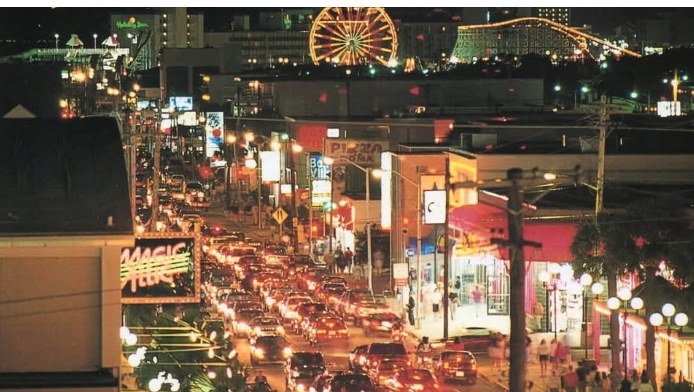
There was a time when downtown Myrtle Beach wasn’t just a destination—it was an atmosphere. A place where the salty breeze off the Atlantic mixed with the neon glow of the boulevard, and the sidewalks overflowed with kids, teens, and families, all chasing the magic of summer nights.

If you grew up a Gen X kid in the 1980s, you remember. The Pavilion amusement park lit up the skyline with its Ferris wheel and roller coasters, arcades blared with pinball machines, and the sidewalks pulsed with energy. You couldn’t walk ten steps without hearing laughter, the clang of a skee-ball, or the distant hum of live music.

And at the heart of it all was one of Myrtle Beach’s most legendary venues: The Magic Attic.

The Magic Attic: Myrtle Beach’s Crown Jewel

The Magic Attic wasn’t just a nightclub—it was an institution. Located on the famous strip, it became a rite of passage for anyone wanting to experience live music and a night they’d never forget. Its neon sign was a beacon, calling out to locals and tourists alike.

Inside, the dance floor was always alive. For many, the highlight of a summer night was climbing those stairs, walking into the pulsing lights, and losing yourself in the music. This was where bands came to prove themselves, where the crowd pressed close to the stage, and where memories that lasted a lifetime were made.

I still remember seeing Sawyer Brown there. At the time, they weren’t just a band—they were a phenomenon.


Sawyer Brown: From Star Search to Myrtle Beach

Sawyer Brown’s story is one of grit and determination. The group was formed in 1981 in Apopka, Florida, and in 1983, they became household names after winning the television competition show Star Search, hosted by Ed McMahon. They not only won the Vocal Group competition but also took home the grand prize of $100,000—a fortune in those days.

With their mix of country rock and high-energy stage presence, Sawyer Brown became known as the “Rolling Stones of Country Music.” Hits like “Step That Step” (their first number one), “Some Girls Do”, and “Thank God for You” solidified their place in the soundtrack of the 80s and 90s.

When they came through Myrtle Beach and played the Magic Attic, it was more than just a concert—it was an event. The crowd danced shoulder-to-shoulder, the floor thumped beneath our feet, and for a couple of hours, the whole world shrank down to that glowing, electric space above the boulevard.


Gen X Summers on the Boulevard

Walking down Ocean Boulevard in the 80s was like stepping into a carnival that never shut down. The sidewalks were crowded with kids holding giant stuffed animals won from the midway, teenagers showing off their new sunburns, and couples arm in arm with ice cream cones dripping down their hands.

The air was thick with the smell of cotton candy, pizza by the slice, and funnel cakes fried golden. Street performers competed with the calls of barkers at the arcades, and everywhere you looked was motion—bumper cars, tilt-a-whirls, and neon signs flickering against the night sky.

It was loud. It was chaotic. It was freedom.

For us Gen X kids, this was our playground. No cell phones, no TikTok, no instant uploads—just pure experience. Every night felt like the start of something unforgettable.


When It All Changed

Sadly, the Myrtle Beach we knew didn’t last forever. By the mid-2000s, the Pavilion amusement park closed down (2006), and with it went a huge piece of the city’s identity. The Magic Attic, along with many other iconic spots, eventually shut their doors as developers reshaped downtown into something shinier, more commercial, but less… magical.

The neon glow dimmed, and the sidewalks grew quieter. For many of us, it felt like losing a piece of childhood—a part of Myrtle Beach that could never truly be rebuilt.


Why It Still Matters

Looking back now, those nights on the boulevard weren’t just about fun—they were about community, culture, and the feeling of being alive in a world that hadn’t yet been digitized. The Magic Attic, Sawyer Brown, and the Pavilion weren’t just landmarks—they were touchstones of a generation that knew how to live in the moment.

Even though the strip has changed, the memories remain. And for those who were lucky enough to be there, walking those sidewalks in the 80s, hearing Sawyer Brown at the Magic Attic, and riding the Pavilion rides until midnight, there’s nothing quite like it.


References & Resources


Disclaimer

This blog is written for entertainment and historical reflection. Dates and details are based on publicly available sources and personal recollection. This is not an official historical record but a nostalgic retelling.


About the Author

Audrey Childers (A.L. Childers) is a Southern author, storyteller, and cultural historian who grew up in the Carolinas. Her work blends personal memories with historical research, bringing to life the moments and places that shaped generations. Audrey has written numerous books and blogs on history, culture, and personal transformation. You can explore more of her work at TheHypothyroidismChick.com and on Amazon under her author name, A.L. Childers.

🐍 September Warning: Baby Copperheads Are Here—Protect Your Kids and Pets This Football Season

As September rolls in, bringing cooler evenings and the excitement of football season, it also signals something else—the arrival of baby copperhead snakes.

While autumn feels like a time to relax outdoors, this is also when copperhead mothers give birth to litters of 8–10 venomous young. And here’s the part many people don’t realize: baby copperheads are born fully equipped with venom and the instinct to defend themselves.

If you have children or dogs, this is the time of year to be extra cautious.

Baby Copperheads: Small but Dangerous

Unlike non-venomous snakes that pose little threat, copperhead babies may look harmless because of their size—but they’re not.

  • Venomous from birth: Even newborns can deliver a painful and medically significant bite.
  • Tail tips: Their distinctive greenish-yellow tail tips remain for about a year and help you identify them.
  • Litter size: Female copperheads typically give birth to 8–10 babies at once, so spotting one usually means more are nearby.

Where You’ll Find Them

Baby copperheads like to hide in places that may surprise you:

  • Damp areas such as under rocks, bushes, or piles of leaves.
  • Around flower pots, landscaping timbers, and garden decor.
  • Under children’s outdoor toys or even dog bowls left in the yard.

They’re generally not aggressive—but if stepped on, touched, or startled, they will bite to protect themselves.


Safety Tips for Families and Pet Owners

  1. Always look before reaching into shrubs, flower beds, or woodpiles.
  2. Move outdoor toys and bowls frequently to discourage hiding spots.
  3. Keep grass trimmed and yards clear of debris where snakes might take shelter.
  4. Teach children never to pick up or play with snakes, no matter how small.
  5. Supervise pets outdoors, especially dogs that like to sniff in bushes or tall grass.

If you suspect your child or pet has been bitten, seek emergency medical or veterinary care immediately.


References & Resources


SEO Keywords

baby copperheads September, copperhead snakes in yard, protecting kids from snakes, copperhead season warning, snake safety tips for pets, venomous snakes in fall, copperhead baby snake tail, dangers of copperhead bites.


Disclaimer

This blog is for educational and informational purposes only. It is not intended as medical or veterinary advice. Always consult with licensed healthcare providers or veterinarians in the event of a snakebite or suspected exposure.


About the Author

A.L. Childers is a writer and researcher with a passion for blending history, nature, and real-world awareness. Her works span topics from health and history to folklore and family life. She believes knowledge is power—especially when it comes to keeping our loved ones safe.

A Feast of Shadows: Behind the Golden Banquet Table

What secrets linger in the faces at a gilded banquet table—while just beyond the doors, the world groans under the weight of unseen hunger?

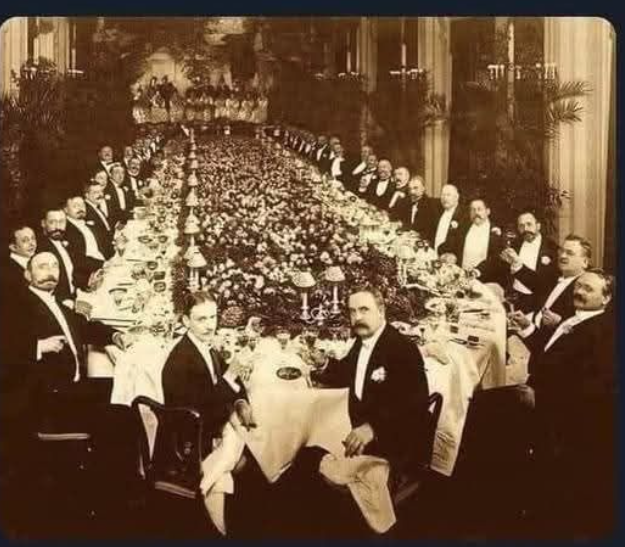
This stunning photograph—men in formal attire seated around a vast, lavishly set table—captures the essence of the Gilded Age (late 19th to early 20th century), a time when extravagant banquets symbolized both triumph and inequality.

What does a single photograph of an opulent banquet reveal about an age of excess, inequality, and societal control?

This image—featuring sharply dressed gentlemen seated around an expansive, lavishly arranged table—is a window into the Gilded Age (circa 1890–1910), a time when America’s richest flaunted their fortune through extravagant dining and grand social events.

The Feast in Focus

  • Opulence Personified
    Lavish banquets then were not mere meals—they were performances of wealth and power. The wealthy showcased their status by serving multi-course feasts: oysters or clams, soups, fish, roast meats, and a succession of entrées from heaviest to lightest, finishing with sherbet or punch grolierclub.omeka.net.
  • Banquet Photography: A Craft of Memory
    Capturing such grandeur required special banquet cameras—giant-format tools designed to hold every face in focus, often spanning more than a dozen feet WikipediaPetaPixel. These photos served as trophies themselves—visual proof of influence.

The Photography of Opulence

This photo belongs to the tradition of banquet photography, a practice popular in the 1890s that employed giant-format cameras (e.g. 12×20 inches) to capture every face and detail across a long, spectacular table. These images commemorated events where presence signified power.Wikipedia


What The Banquet Meant for the Elite

Such dinners were more than food; they were performances of wealth and social dominance:

  • The opulent table settings, formal attire, and polished demeanor broadcast clear messages of belonging and status.
  • Emerging fashion symbols—like the tuxedo, which became fashionable after the 1886 Tuxedo Club event—underscored refined rebellion against old-world strict formalwear.The Saturday Evening Posttuxedopark-ny.gov
  • Membership in elite circles, such as the Society of Patriarchs, often required strict control over guest lists and stage-managed appearances.Wikipedia

The Other Side of the Table

As opulence flourished behind closed doors:

  • Outside—amongst poorer neighborhoods and laboring classes—the daily struggle for basic sustenance continued unchecked.
  • Many families lived on meager wages, while industrialists and railroad barons refinanced their barns into mansions.Business Insider

This photograph captures the stark divide: those who lived as if money fixed all issues, and those who paid the price.


Why It Still Matters

Today, we still see this pattern:

  • Lavish gala dinners, exclusive fundraisers, and curated social media lives all echo the same inequality and performative wealth.
  • The image forces us to ask: What truths hide behind spectacle? Who gets visible, and who remains unseen?

Quick Snapshot Takeaways

ElementInsight
Gilded banquetA display of unrivaled status and economic domination
Banquet photographyA tool for immortalizing, not democratizing, power
Tuxedos and etiquetteMaterial signals of membership in a shrinking elite circle
The excluded massesThe unseen majority whose labor funded this display
Modern parallelsVirtual opulence via social media, influencer cultures, and exclusive brand moments

mony, or elite monopoly—hide stories of exclusion, sacrifice, and power.


SEO Keywords

  • Gilded Age banquet photography
  • turn-of-century elite dinners
  • banquet camera large format photography
  • Gilded Age luxury inequality
  • Tuxedo history 19th century America

What It Meant to the Elite

For those at the table, it was a moment of glory. Each glass raised, each exquisite course served was a statement of privilege and belonging. Invitations were coveted—every detail from napkin folds to tableware was designed to impress.


What It Meant to Everyone Else

Just a few blocks—or sometimes just a glance away—lived the working poor, the widows, and the immigrants. Families who could barely afford scraps watched from shadows while banquet halls overflowed. The dining table became a metaphor for society: only some were welcome at the feast, while many were left hungry.


Modern Relevance

This image still resonates today:

  • We see similar rituals—galas, diplomatic dinners, luxury events—where power is performed publicly.
  • Online banquets take other forms: Instagram influencers, sponsored lifestyles, social media as the modern dining table.
  • Economic disparity persists: while elites toast in gilded rooms, millions worldwide face food insecurity and displacement.


Disclaimer

This post interprets a historical photograph through a critical lens of social inequality. References to the Gilded Age’s luxurious dinners and the mechanics of banquet photography are drawn from historical sources grolierclub.omeka.netWikipediaNational Women’s History Museum. The narrative reflects interpretation, not definitive history.


About the Author

A.L. Childers (Audrey Childers) is a writer and independent researcher drawn to the stories hidden between the lines of history—where power, food, and shadows intersect. She appreciates how a single image or a forgotten text can reveal deeper truths about society’s structures and silences.


SEO Keywords

  • gilded age banquet photography
  • historic grand dinners early 1900s
  • social inequality in Gilded Age
  • banquet camera history
  • Gilded Age feasts and disparity

Cracker Barrel’s New Logo Controversy: A Rebrand Recipe Nobody Ordered

Disclaimer: This blog is based on publicly available information, commentary, and personal perspective. It is not financial advice.


A Slice of History: Cracker Barrel’s Southern Roots

Founded in 1969 in Lebanon, Tennessee, Cracker Barrel Old Country Store built its reputation as the ultimate Southern comfort food destination. From rocking chairs on the porch to biscuits dripping with gravy, it became more than a restaurant—it became a memory. Families on road trips, church groups after Sunday service, grandparents treating the grandkids—Cracker Barrel wasn’t just food, it was a cultural pit stop.

So when the Cracker Barrel logo change dropped in August 2025, it wasn’t just a design tweak. It was a gut punch for millions who saw the brand as a warm hug of fried chicken and hashbrown casserole.


Julie Felss Masino: The CEO Behind the “Woke Rebrand”

Who is Julie Felss Masino?

  • Northern roots, degree in Communications from Miami University (Ohio).
  • Leadership résumé includes Taco Bell, Starbucks, Sprinkles Cupcakes, Mattel, and now Cracker Barrel CEO (since Nov 2023).
  • She’s been praised for growth strategies (like Taco Bell’s global expansion) but also criticized for bringing too much “corporate polish” to brands known for personality and grit.

She insists, “The things you love are still there,” while rolling out the “All the More” campaign—a $700 million overhaul with a new minimalist Cracker Barrel logo and refreshed interiors.

But Wall Street wasn’t buying it. Cracker Barrel stock plunged over 12% intraday, wiping out nearly $100 million in market value. That’s the corporate equivalent of your mama burning the biscuits.

SEO Keywords: Cracker Barrel CEO Julie Felss Masino, Cracker Barrel stock drop, Cracker Barrel logo backlash, woke corporate rebrand.


Why I Don’t Care About the Rebrand

Here’s the truth: I don’t care what they name it, rebrand it, or paint on the sign outside.

Why? Because their corporate world has nothing to do with our world.

  • Their World: glossy presentations, stock tickers, brand consultants who charge $50,000 to pick out a “modern font.” They care about Wall Street.
  • Our World: feeding families after church, grabbing comfort food on a road trip, ordering biscuits and gravy because that’s what your granddaddy did. We care about taste, price, and whether the cornbread comes hot.

Cracker Barrel can call itself Cracker Universe for all I care—if the food doesn’t taste like home, nobody in the consumer world is showing up.


A Track Record of Changes: Alleged Outcomes

Let’s stir the pot and imagine what could happen here, based on Masino’s past gigs:

  • Taco Bell: She expanded internationally—great for global growth, but that doesn’t mean Southern folks in Tennessee care about tacos in Tokyo.
  • Starbucks: Helped with growth phases, especially in Asia—again, great for stockholders, not exactly comforting for consumers craving chicken ‘n’ dumplings.
  • Sprinkles Cupcakes: Trendy and Instagrammable, but not soul food.
  • Mattel’s Fisher-Price: Toys, not turnip greens.

Alleged Forecast for Cracker Barrel: More sleek branding, more “modern” appeal, maybe a boost in younger diners—but unless the food tastes better, traditional customers may leave the biscuits behind.


What Southern Folks Actually Want

  • Food that tastes right: Hashbrown casserole that’s creamy, not dry. Fried chicken that crackles.
  • Nostalgia: The old logo, the knick-knacks, the porch rocking chairs.
  • Consistency: We want Cracker Barrel to feel like home, not like a chain chasing social media trends.

Humor moment: If I wanted bland food with pretty lighting, I’d eat at IKEA.


The Corporate vs Consumer Reality

This is where the Cracker Barrel rebrand controversy reveals the biggest divide:

  • In the corporate boardroom, they’re worried about “brand identity, investor confidence, quarterly growth.”
  • In the real world, we’re worried about:
    • Is the bacon crispy?
    • Is the coffee hot?
    • Did I just spend $14.99 for eggs that look like they were cooked in a hotel microwave?

Corporate execs live in a rich world of numbers. We live in a consumer world of taste and value. That’s why rebrands like this flop—they’re speaking different languages.


The Recipe for Redemption

  1. Taste First, Talk Later: Fix the food before fixing the logo.
  2. Respect Tradition: Keep the rocking chairs, keep Uncle Herschel, keep the Southern soul.
  3. Don’t Forget Who You Serve: Your customers aren’t hedge funds—they’re families, road-trippers, and Sunday diners.

Final Word: Stock vs. Spoon

Cracker Barrel’s new logo controversy is more than branding—it’s about what happens when corporate ambition collides with consumer expectation.

The logo may have changed, but the question remains: Will the food get better, or will the biscuits crumble?

Because at the end of the day, Wall Street can debate stock charts—but Main Street just wants gravy that sticks to the fork.


About the Author

A Southern-born diner who’s eaten more hashbrown casserole than salads, I write about where corporate America meets consumer reality. My fork is my pen, and my humor is my butter knife.