
Tag Archives: bible

✨ When Evil Walks Among Us: The Silent Gift of Discernment

There are moments in life when we must choose our battles—not every demon needs to be exposed, and not every spiritual encounter calls for confrontation. Some moments require silent strength, unwavering faith, and the wisdom to simply let things be.

🧠 The Quiet Gift

For as long as I can remember, I’ve had the gift of discernment. I don’t announce it. I don’t wear it like a badge. It’s a sacred responsibility, not a conversation starter. This ability allows me to sense when something—or someone—is cloaked in darkness, even if the rest of the world sees nothing unusual.

Sometimes I see the distortions in a person’s face, subtle shifts that reveal the entity behind the smile. Other times, it’s a smell—not a physical odor, but a spiritual stench that tells me I’ve stepped into the presence of something not of the Light.

And though I carry this gift, I’ve learned a crucial truth: not every battle is mine to fight.


🏫 The Day I Met a Demon in the School Hallway

Not long ago, I was working as a substitute teacher at my grandson’s school. The halls buzzed with the sound of children laughing and sneakers squeaking against polished floors. It was just another morning—or so it seemed.

As I stood by the classroom door, I felt it before I saw it. A wave of darkness swept through the corridor, heavy and foul. Then my eyes met theirs.

For a split second, the mask slipped. I saw the distortion in their features—sharp, twisted, unmistakably demonic. The air thickened, and I could smell the evil radiating from their presence. It wasn’t metaphorical; it was as real as smelling smoke before seeing the fire.

But I didn’t flinch.
I didn’t speak.
I didn’t reveal what I knew.

I simply nodded politely and kept walking.

Why? Because this was not the moment to fight. Discernment isn’t just about seeing—it’s about knowing when to act and when to let go. In that instant, I understood: revealing what I saw would only create chaos and invite unnecessary conflict. So I stood firm in silence, fully aware, fully covered, fully protected.


🛡 A Shield Over My Grandson

What gives me peace is knowing that my grandson is not walking this world unguarded. Long before that day, I had placed a shield of protection around him—a spiritual covering that surrounds him everywhere he goes. Those who see him, whether they understand it or not, recognize that light. Even when I’m not there, they tremble at the thought of my presence, my faith, and the power that shields him.

He is a chosen one. His light is bright. And I know, deep within, that no darkness can dim what was divinely placed within him.


⚔️ Knowing When to Fight—and When to Walk Away

Discernment is not about ego. It’s not about pointing fingers or “calling people out.” It’s about wisdom. In this world, we are engaged in spiritual battles every day. But not all battles are meant for the same time or the same warrior. Some require silence. Some require prayer. Some require you to simply walk away with confidence, knowing that unseen forces are already at work.

So if you carry the gift of discernment, remember this:
You don’t have to expose every evil you encounter. Sometimes, your silence speaks louder than words.


⚠️ Disclaimer

This blog reflects the personal spiritual beliefs and lived experiences of the author. It is not intended to diagnose, label, or accuse any specific individual. Readers are encouraged to use their own discernment and spiritual guidance when interpreting these experiences.


✍️ About the Author

Audrey Childers (A.L. Childers) is an author, researcher, and storyteller with a deep passion for exploring the unseen layers of reality. Through her writing, she weaves personal experiences, history, and spiritual insight to empower others to recognize their inner strength and navigate the complexities of the modern world. Audrey lives in North Carolina and writes under several pen names, building a legacy of truth, protection, and light for future generations.

Who Were the Cathars?

The Cathars did not see themselves as revolutionaries. They saw themselves as restorers of truth — a people who remembered that this world was not holy but counterfeit, ruled by Rex Mundi, the “king of this world.” Their name, drawn from the Greek katharos (“the pure ones”), reflected their pursuit of purity of spirit, not through rituals of stone cathedrals but through simplicity, compassion, and awakening.

Rome, however, saw them as heretics of the most dangerous kind. Not because they worshipped pagan gods or practiced sorcery, but because they lived a form of Christianity so radically different that it exposed the corruption of the institutional church.

Origins: From Bogomils to Languedoc

The Cathars emerged in the 11th and 12th centuries in the region of Languedoc (southern France), a land of troubadours, merchants, and relative openness compared to northern Europe. Their roots trace to the Bogomils of the Balkans — a dualist Christian movement from Bulgaria that taught the world was created not by God, but by an evil power. These teachings spread westward along trade routes, finding fertile ground in Occitania.

By the time they took hold in Languedoc, Cathar communities had become vibrant, drawing followers across social classes — from peasants to nobles. Why here? Because Languedoc’s culture already valued tolerance, literacy, and independence from northern French control. It was a land where an alternative Christianity could thrive — at least for a time.

Perfecti vs. Credentes

The Cathar community was structured in two groups:

  • Perfecti (the Perfects): Spiritual leaders who lived in radical purity. They renounced meat, wealth, war, and sex, devoting themselves fully to the God of Light. They were seen as living examples of the awakened life.
  • Credentes (the Believers): Ordinary followers who respected the Perfecti, sought their guidance, and prepared — often at the end of life — to receive the consolamentum (a laying-on of hands seen as the true baptism of spirit).

This division wasn’t about hierarchy or domination; it was about responsibility. The Perfecti modeled the awakened life, while the Credentes lived in the world but carried the spark within them.

Ethics: Living Against the World

If the material world was a prison, then the way to resist Rex Mundi was to live as if you were no longer his subject. Cathar ethics were strikingly different from those of their Catholic neighbors:

  • Simplicity and Poverty: They rejected wealth and opulence. Unlike Rome’s bishops clothed in silk, Cathar Perfecti wore plain black robes and lived with little.
  • Vegetarianism: They abstained from meat (except fish), believing it tied them too closely to the cycle of material corruption.
  • Refusal of Oaths: They would not swear oaths, even in court, because to bind oneself to earthly rulers was to submit to the god of this world.
  • Rejection of War and Violence: They would not kill, even in self-defense, embodying a radical form of nonviolence.
  • Equality of the Sexes: Women could serve as Perfectae, and their voices carried weight equal to men — a shocking contrast to the Catholic Church’s patriarchy.

To the Catholic hierarchy, these practices were not simply “different.” They were a rebuke. Each Cathar choice highlighted the hypocrisy of a church that amassed wealth, swore oaths for political gain, blessed wars, and oppressed women.

Rex Mundi: The “God of This World”

At the center of Cathar theology was Rex Mundi — the ruler of this world. To the Cathars, he was Satan himself, the same Adversary who offered Jesus all the kingdoms of the earth in Matthew 4:8–9.

  • The Catholic Church worshipped Rex Mundi without realizing it.
  • The sacraments of Rome were traps, binding souls more tightly to the flesh.
  • True salvation lay not in building cathedrals or obeying priests, but in awakening — remembering the divine spark within and rejecting the counterfeit world.

This belief was not just theological speculation. It was a direct accusation: the church itself, with its wealth and power, was the empire of the Adversary.

Why They Thrived — and Why They Terrified Rome

The Cathars thrived in Languedoc for a simple reason: they offered an alternative Christianity that made sense to people. Ordinary believers looked at Rome’s wealth and corruption — indulgences sold, priests living in excess — and then looked at the Cathars, who lived humbly, healed the sick, and refused to kill. The choice was obvious.

  • For the people: Cathar faith gave hope and dignity. It told them they did not need middlemen to find God.
  • For local nobles: Tolerating Cathars gave them leverage against Rome. By supporting an alternative religion, they weakened papal influence in their territories.

But this success is exactly why they terrified Rome. If Cathar Christianity spread, the church stood to lose:

  • Wealth: No more tithes, indulgences, or taxes flowing to Rome.
  • Power: No more oaths binding people to papal authority.
  • Control: No more fear-driven obedience to sacraments.

Rome gained everything by destroying the Cathars — land, loyalty, and the reaffirmation of its monopoly on salvation. The Cathars lost everything — homes, lives, entire communities.

The Claim in Context

Seen from the outside, the Cathars were heretics. Seen from within, they were defenders of a Jesus who came to awaken, not to enthrone empires.

This chapter is not about romanticizing them. It is about seeing why their voice was silenced. They did not threaten God. They threatened power. And in the Middle Ages, that was enough to mark them for extermination.

Resources & References

  • Barber, Malcolm. The Cathars: Dualist Heretics in Languedoc in the High Middle Ages. Longman, 2000.
  • O’Shea, Stephen. The Perfect Heresy: The Life and Death of the Cathars. Walker & Co., 2000.
  • Wakefield, Walter L., and Austin P. Evans. Heresies of the High Middle Ages. Columbia University Press, 1991.
  • Peters, Edward. Inquisition. University of California Press, 1988.
  • Brenon, Anne. The Forgotten Cathars. Oxford, 1991.
  • Gnostic Society Library: Interrogatio Johannis (Secret Supper), translations and background.

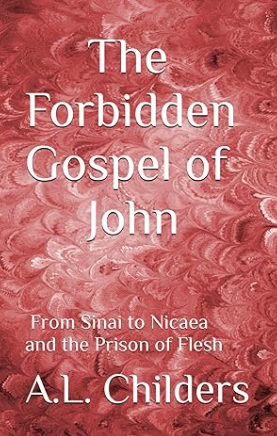
The Forbidden Gospel of John: From Sinai to Nicaea and the Prison of Flesh

About the Author

A.L. Childers is a writer and researcher who refuses to stop at the surface of things. Her work digs into history, symbols, and the hidden stories that shape culture and politics today. By blending truth, curiosity, and raw honesty, she writes for the people who are tired of being told half-truths.


Disclaimer

This blog is for educational and historical purposes only. It does not endorse or condemn any religion, culture, or nation. Its purpose is to examine the historical and symbolic use of the hexagram and to explore how symbols move between occult traditions and cultic institutions.

The Other Christianity

Chapter 1. The Claim and the Cost

A source-driven investigation of Cathar Christianity, the Interrogatio Johannis (“Secret Supper”), suppression and crusade, canon politics, and contested memories—told alongside primary texts and modern scholarship.

History is never neutral. It is written by the victors — those with the most to gain when their version becomes the only one that survives. The Catholic Church that emerged from Constantine’s empire claimed it alone carried Jesus’s authority, that salvation passed only through its sacraments, and that obedience to its hierarchy was obedience to God himself.

But another Christianity existed — one so threatening that Rome waged a crusade to erase it, and an inquisition to ensure it never rose again.

The Cathars believed that Jesus was not sent to build an institution. He was sent as an awakener — to expose the greatest deception of all time: that the god worshipped in temples and enthroned in cathedrals was not the God of Light, but the prince of darkness in disguise.

This was their claim. And the cost of believing it was everything.

Jesus as Awakener, Not Institution-Builder

For the Cathars, Jesus was not a lawgiver, priest, or king. He was the messenger of the true God of Light, revealing that the world itself was counterfeit. He did not come to establish sacraments or bless kingdoms — he came to awaken the divine spark within each soul.

They pointed to verses already in the Bible as evidence that this truth had always been hiding in plain sight:

  • “The god of this world has blinded the minds of the unbelievers.” — 2 Corinthians 4:4
  • “You belong to your father, the devil, and you want to carry out your father’s desires.” — John 8:44
  • “Again, the devil took him to a very high mountain and showed him all the kingdoms of the world… ‘All this I will give you,’ he said, ‘if you bow down and worship me.’” — Matthew 4:8–9

Why would Satan offer Jesus the kingdoms of the world unless they were already his to give? Why would Paul call Satan “the god of this world” unless he truly ruled it?

The Cathars read these verses as confirmation that the God preached from pulpits was not the true Creator, but the Adversary masquerading as one.

The World as Prison

To the Cathars, the material world was not a gift but a prison. Birth was a trap, flesh a cage. The cycle of suffering kept souls enslaved to the false god.

This was not an isolated idea — it echoed Gnostic traditions and dualist movements like Manichaeism — but in medieval Europe, it carried radical consequences.

  • If matter was corrupt, then sacraments of water, bread, and wine were powerless.
  • If the God of the church was the “god of this world,” then its cathedrals and wealth were evidence of corruption, not holiness.
  • If salvation was awakening, then no pope, priest, or king could claim to control it.

For the Cathars, Jesus’s mission was to free souls from the counterfeit world, not to sanctify it.

Who Had What to Gain — and What to Lose

This theology was not just heretical; it was destabilizing.

Who had what to gain?

  • The papacy gained wealth, land, and legitimacy by claiming exclusive control of salvation.
  • Monarchs allied with Rome gained divine sanction for their rule.
  • The institutional church gained obedience, tithes, and fear as tools of control.

Who had what to lose?

  • If the Cathars were right, the church’s sacraments were meaningless, its authority fraudulent, its wealth corrupt.
  • Local nobles in Languedoc who tolerated or even protected Cathars saw the chance to resist Rome’s control.
  • Ordinary people, freed from tithes and ritual, could reclaim spiritual autonomy — and that terrified the powers of their age.

To Rome, Cathar belief was not simply an error in doctrine. It was a direct threat to the machinery of empire.

Suppression and the Machinery of Power

By the twelfth century, the Catholic Church was the largest landowner in Europe and the most powerful institution in the West. In Languedoc, where Cathar communities flourished, Rome saw both theological and political danger.

Pope Innocent III moved swiftly. In 1209, he declared the Albigensian Crusade — a holy war not against Muslims in the Holy Land but against Christians in southern France. Crusaders were promised the same indulgences and spiritual rewards as if they fought in Jerusalem.

The result was brutal. Armies swept through Béziers, Carcassonne, and beyond. Towns were torched, libraries destroyed, entire populations put to the sword. The papal legate’s infamous command at Béziers — “Kill them all; God will know his own” — summed up the campaign’s spirit.

Heretics were not persuaded; they were annihilated. Their scriptures, including the Interrogatio Johannis, were burned. Their voices silenced.

But fire is a clumsy censor. Ashes can hide embers. And in archives — in Carcassonne, Vienna, and scattered fragments — this forbidden gospel endured.

The Claim and Its Cost

The Cathars’ claim was stark: Jesus revealed the world as counterfeit, ruled by a false god, and offered awakening as the way of escape.

The cost was immense: tens of thousands dead, an entire culture exterminated, a Christianity of awakening reduced to whispers.

The church called it heresy. The inquisitors called it evidence. The Cathars called it truth.

And centuries later, we are left with the question they asked and died for:

Who, truly, have we been worshipping?

Why This Matters

This book does not ask you to blindly adopt the Cathar worldview. It asks you to question why their voices were erased.

  • Why did Rome unleash crusade and inquisition not against pagans but against fellow Christians?
  • Why did they fear so much a gospel that told people they already carried the spark of God within?
  • Who benefitted from silencing this “other Christianity,” and who paid the cost?

The Christianity we were handed is not the only one that ever existed. The fragments of the Forbidden Gospel of John remain, daring us to see past the empire’s story and ask whether Jesus came to confirm the god of this world — or to expose him.

Resources & References

  • Barber, Malcolm. The Cathars: Dualist Heretics in Languedoc in the High Middle Ages. Longman, 2000.
  • Wakefield, Walter L., and Austin P. Evans. Heresies of the High Middle Ages. Columbia University Press, 1991.
  • Peters, Edward. Inquisition. University of California Press, 1988.
  • O’Shea, Stephen. The Perfect Heresy: The Life and Death of the Cathars. Walker & Co., 2000.
  • Pagels, Elaine. The Gnostic Gospels. Vintage Books, 1989.

The Forbidden Gospel of John: From Sinai to Nicaea and the Prison of Flesh

 About the Author

A.L. Childers is a writer and researcher who refuses to stop at the surface of things. Her work digs into history, symbols, and the hidden stories that shape culture and politics today. By blending truth, curiosity, and raw honesty, she writes for the people who are tired of being told half-truths.


 Disclaimer

This blog is for educational and historical purposes only. It does not endorse or condemn any religion, culture, or nation. Its purpose is to examine the historical and symbolic use of the hexagram and to explore how symbols move between occult traditions and cultic institutions.

Empire of Lies: How Flesh Became Our Prison

What if everything you’ve been taught about the world, God, and even salvation was part of a carefully designed lie?

What if the “god of this world” was not the Creator of light, but the architect of a cage—a prison of flesh?

This is the unsettling truth at the heart of  The Forbidden Gospel of John: From Sinai to Nicaea and the Prison of Flesh —a book that challenges readers of all races, religions, and beliefs to question the foundations of the systems that rule our lives.


Not Another “Christian Book”

Let’s be clear: this is not a devotional, not a Bible study, and not a sermon.

Instead,  The Forbidden Gospel of John: From Sinai to Nicaea and the Prison of Flesh . unravels the master plan of deception—how empires, councils, and churches built systems of control around a false god. The one who was called “the god of this world” blinded the minds of generations, turning holy words into chains.

This book does not demand you believe—it dares you to question.


The Prison of Flesh

Across traditions—pagan, gnostic, mystical, and even within suppressed Christian sects—the same whisper echoes:

We are not of this world. We are prisoners here.

The Cathars spoke it before they were burned. The Gnostics hid it in forbidden gospels. Mystics of every path knew that the body itself was a cage—and that liberation was the true goal of the soul.

 The Forbidden Gospel of John: From Sinai to Nicaea and the Prison of Flesh . connects these voices across time, showing how Rome and its successors silenced them to preserve power. Villages burned. Libraries destroyed. Truth buried beneath empire.


Why All Paths Should Read This

This book is written for the seeker, not the convert.

  • Pagans will recognize how Rome crushed other spiritual traditions to build its empire.
  • Witches and mystics will see how knowledge was demonized and erased to keep humanity in ignorance.
  • Believers of all faiths will be challenged to ask: what if the god I was taught to worship is not who I thought?
  • Skeptics and truth-seekers will find history, suppressed texts, and philosophy woven into a narrative of liberation.

At its core, this is not a book about religion—it’s a book about freedom from deception.


The Questions That Will Haunt You

  • Why would a loving Creator cage us in fragile bodies of flesh?
  • What power benefits from keeping humanity blind?
  • Were the “holy books” themselves tools of control?
  • Why did Rome slaughter entire villages simply for believing differently?
  • And most of all: how do we escape the empire of lies and reclaim the realm of light?

A Book of Fire, Not Faith

 The Forbidden Gospel of John: From Sinai to Nicaea and the Prison of Flesh. It isn’t meant to reassure you. It’s meant to ignite you.

It offers no easy answers—only a lamp to reveal the bars of the cage, and a path toward remembering the freedom within.

Whether you call yourself Christian, pagan, witch, seeker, or skeptic, this book will speak to that restless voice inside you that has always known: there is more to reality than what we’ve been told.


References & Inspirations

  • The Gospel of Thomas (Nag Hammadi texts)
  • Inquisition records of the Cathars
  • Elaine Pagels, The Gnostic Gospels
  • Karen King, What Is Gnosticism?
  • Suppressed traditions of mysticism, witchcraft, and heresy

SEO Keywords

empire of lies book, prison of flesh meaning, gnostic gospels deception, god of this world bible, pagan gnostic truth, hidden gospel of john, witchcraft and inquisition history, council of nicaea secrets, spiritual deception religion, escape the prison of flesh.


Disclaimer

This book is not a religious text. It is a work of history, philosophy, and spiritual exploration meant to challenge traditional narratives and encourage readers of all backgrounds to think for themselves. It is not intended as doctrinal teaching or denominational instruction.


About the Author

A.L. Childers is an author and seeker of hidden truths who writes at the crossroads of history, spirituality, and rebellion. Her work dismantles illusions and exposes systems of control, inviting readers of all paths—pagans, mystics, skeptics, and seekers alike—to see beyond the empire of lies and reclaim their freedom.

The Forbidden Gospel of John: From Sinai to Nicaea and the Prison of Flesh is available now on Amazon (Paperback).

The Forbidden Gospel of John: A Study Companion for Thinkers, Doubters, and Leaders

Some books you read once and shelve.
This is not one of them.

The Forbidden Gospel of John: From Sinai to Nicaea and the Prison of Flesh isn’t just a book—it’s a framework for awakening. Written for seekers, skeptics, book clubs, and group leaders, it doesn’t hand you answers. It gives you the tools to think, question, and discern for yourself.

If you’ve ever doubted what you were taught, longed for deeper conversations, or wanted a guide that breaks the mold of traditional Bible studies, this is it.


Why This Book is One-of-a-Kind

The story begins with a charred manuscript rescued from the flames—a gospel Rome tried to destroy. It ends not in history, but with you.

What makes this book stand apart isn’t just the history of the Cathars or the Council of Nicaea. It’s the study companion inside the book itself, designed to transform how you read, reflect, and lead.


Tools for Readers and Leaders

✦ Reader’s Reflection Guide

Seven sets of deep, critical questions help you wrestle with truth, scripture, empire, and personal awakening. These aren’t “fill in the blank” questions. They’re open-ended prompts like:

  • What does it mean to see the material world as a prison?
  • Why did inquisitors preserve the Secret Supper as evidence, even as they tried to destroy it?
  • How do politics and scripture intertwine in our own time?

Perfect for journaling, meditation, or personal growth.


✦ Tips for Group Leaders

This isn’t a book you should keep to yourself. It’s a book designed to spark conversations. Each chapter includes practical leadership tools:

  • Open each session with a key passage (from the Bible or the Secret Supper).
  • Allow silence before diving into dialogue.
  • Encourage journaling between sessions.
  • Close with one big question: How does this change how we see truth, power, and faith today?

This makes it perfect for pastors, small group leaders, discussion circles, or even friends who want to dive deeper together.


✦ Study Guide for Book Clubs

Every chapter comes with prompts that fuel dialogue. You don’t have to be a theologian or historian—just curious.

  • Prologue: Why do dangerous ideas often survive in hidden ways?
  • Chapter 1: What does it mean to claim the world itself is a prison?
  • Chapter 7: How would rethinking Moses on Sinai change the way you see the Ten Commandments?
  • Chapter 13: How do you separate faith from empire when the two are so often intertwined?

The guide makes it easy to start conversations that matter—without requiring everyone to agree.


✦ A Final Invitation

The book begins with a manuscript pulled from the fire.
It ends with you.

The final reflection isn’t about what the Cathars believed, or what Rome feared, or even what history records.
The final reflection is personal:

What will you do with what you now know?


Why You Need This Book

Whether you’re a:

  • Seeker tired of one-sided answers
  • Doubter ready to explore hidden truths
  • Leader searching for fresh dialogue tools
  • Reader craving something more than passive history

This book was written for you.

It doesn’t demand obedience. It doesn’t spoon-feed dogma. It gives you a study companion that challenges, provokes, and empowers.


About the Author

A.L. Childers writes at the intersection of history, spirituality, and power. With a journalist’s eye and a seeker’s heart, Childers explores the texts, traditions, and truths the world tried to erase.

Disclaimer

This book is not affiliated with any religious denomination. It is intended for educational and reflective purposes, encouraging readers to question, discern, and think critically about scripture and history.


🔥 If you’re ready to experience a book that doesn’t just tell you what to believe—but invites you into the conversation—then it’s time to read The Forbidden Gospel of John: From Sinai to Nicaea and the Prison of Flesh.

👉 Order your copy today—and discover a study companion that could change how you see truth, power, and faith forever.

 The Forbidden Gospel of John: From Sinai to Nicaea and the Prison of Flesh is available now on Amazon (Paperback).

The Other Christianity: The Claim and the Cost

History is never neutral. It is written by the victors—those with the most to gain when their version becomes the only one that survives.

That’s where Chapter 1 of The Forbidden Gospel of John: From Sinai to Nicaea and the Prison of Flesh begins—with a truth Rome tried to bury.


A Gospel Rome Couldn’t Erase

The Catholic Church that emerged from Constantine’s empire declared that salvation could only flow through its sacraments, hierarchy, and authority. To obey the church was to obey God.

But there was another Christianity—a faith so dangerous to empire that Rome launched crusades and inquisitions to annihilate it.

The Cathars believed Jesus was not sent to build an institution but to awaken souls from the greatest deception of all time: that the god enthroned in cathedrals and worshipped in temples was not the God of Light but the prince of darkness in disguise.

This was their claim. And the cost of believing it was everything.


Jesus the Awakener

To the Cathars, Jesus was not a priest, king, or lawgiver. He was the Awakener—the messenger of the true God of Light—sent to expose that this world was a counterfeit creation.

They pointed to verses hidden in plain sight:

  • “The god of this world has blinded the minds of the unbelievers.” — 2 Corinthians 4:4
  • “You belong to your father, the devil.” — John 8:44
  • “The devil… showed him all the kingdoms of the world, ‘All this I will give you if you worship me.’” — Matthew 4:8–9

Why would Satan offer kingdoms he didn’t already control? Why would Paul call him “the god of this world”?

The Cathars believed the answer was simple—because the world as we know it is a prison.


The World as Prison

For the Cathars, the body was a cage, and birth itself a trap. Sacraments of water, bread, and wine could not free souls; only awakening could.

This theology wasn’t just radical—it was dangerous. If they were right:

  • The church’s sacraments were powerless.
  • Its wealth and cathedrals were proof of corruption, not holiness.
  • No pope, priest, or king could control salvation.

That terrified Rome.


Crusade, Inquisition, and Fire

Pope Innocent III responded with holy war—not against pagans, but against fellow Christians.

The Albigensian Crusade of 1209 was merciless: towns razed, libraries burned, men, women, and children slaughtered. At Béziers, a papal legate gave the infamous command: “Kill them all; God will know his own.”

The inquisitors followed, determined to ensure Cathar voices would never rise again. Manuscripts were torched. Communities destroyed. But fire is a clumsy censor. Ashes hide embers.

The Interrogatio Johannis (“Secret Supper”) survived—inquisitors kept it as evidence. And now, centuries later, its words still challenge us.


Why This Chapter Matters Today

This isn’t dusty history. It’s a mirror.

  • Why did Rome fear a gospel that taught every person carried the spark of God within?
  • Why unleash crusade and inquisition against Christians who refused to bow to empire?
  • Who benefitted from silencing this “other Christianity,” and who paid the price?

The Cathars called it truth. Rome called it heresy. We are left with their question:

Who, truly, have we been worshipping?


Why You Need This Book

If you’ve ever questioned what you were taught, if you’ve ever wondered about forbidden gospels, hidden Christianity, Bible censorship, the Council of Nicaea, or the true mission of Jesus, this book is for you.

The Forbidden Gospel of John doesn’t just recount history—it gives you the framework to think, reflect, and awaken. With study guides, reflection prompts, and group discussion tools, it’s perfect for seekers, skeptics, book clubs, and leaders who want deeper conversations about faith, truth, and power.

 The Forbidden Gospel of John: From Sinai to Nicaea and the Prison of Flesh is available now on Amazon (Paperback).


About the Author

A.L. Childers writes at the crossroads of spirituality, history, and power. With a journalist’s precision and a seeker’s courage, Childers shines a light on stories history tried to erase—inviting readers to reflect, question, and awaken.

Disclaimer

This book is not affiliated with any church or denomination. It is written for educational, historical, and reflective purposes, encouraging readers to think critically about history, scripture, and faith.


🔥 The Forbidden Gospel of John: From Sinai to Nicaea and the Prison of Flesh isn’t just a book. It’s an invitation to rediscover what was silenced—and to decide for yourself what to do with what you now know.

👉 Get your copy today and step into The Other Christianity Rome tried to erase.

A Book Pulled from the Fire

“Centuries earlier, before this folio found its way into the archive, it passed through fire and blood…”

The smell of ash still clung to its pages.

In a dim archive in Carcassonne, among shelves of inquisitorial records, lies a folio that should never have survived. Its edges are blackened, as if the parchment had been yanked from the pyre at the very last moment. Scrawled across the cover in the hand of a medieval clerk are the words: Interrogatio Iohannis. The Interrogation of John.

To most who handled it in the thirteenth century, it was not a treasure but evidence—a smoking gun used to condemn men and women accused of heresy. Possession of this text, the inquisitors noted, was enough to prove a soul guilty, enough to justify chains, torture, or flames.

And yet, by some irony of history, the book the church most feared was preserved by the very machine built to destroy it.

When you open its pages, you are not greeted by the familiar voice of the Gospel writer who speaks of beginnings and words made flesh. Instead, you hear whispers of another Jesus—one who does not bless the world as sacred, but unmasks it as counterfeit.

In this Secret Supper, John asks about the origin of creation, about the God Moses met on Sinai, about the commandments carved into stone. And the answers Jesus gives shatter the foundations of Christendom:

The god of this world is not the Father of Light, but the prince of darkness in disguise.

The flesh is not a temple, but a prison. Birth itself is a trick played upon the soul.

Even Moses, in his awe, was deceived by the adversary. The laws he carried down the mountain were not from heaven, but from hell masquerading as holiness.

This was no small theological quibble. This was a cosmic indictment—and for those who dared to believe it, a path of escape.

The Cathars of Languedoc read these words in secret. To them, the text was not blasphemy but liberation, a lamp revealing the bars of a cage. Jesus, they believed, was not the founder of a worldly empire but the awakener of souls, the one sent by the true God to expose the lie and guide humanity back to the realm of light.

Rome could not allow this vision to live. To preserve their authority, they launched not only sermons and disputations, but armies and inquisitions. They burned villages and libraries alike. Entire towns were put to the sword, and the smoke of heretics mingled with the smoke of their books.

But fire is a clumsy censor. Ashes can hide embers. And in a handful of archives—in Carcassonne, in Vienna, and in fragments elsewhere—the words of this forbidden gospel endured.

What happens when you read them today is not unlike what John must have felt as he sat at that secret table. The Jesus you meet here is unsettling. He does not soothe with promises of earthly kingdoms or institutional power. He does not sanctify empire or law. He pulls back the veil and asks: Who, truly, have you been worshipping?

The church called it heresy. The inquisitors called it evidence. The Cathars called it truth.

And we, centuries later, are left with the charred remains of a book pulled from the fire—waiting to tell us a story that might upend everything we thought we knew about God, scripture, and the world itself.

Inquisitorial records whisper of how it happened…

The square reeked of smoke and sweat. Torches crackled as the crowd pressed closer, eager to see justice done. Bound to a wooden stake stood a man accused of heresy, his lips moving in prayer no one recognized. Around him, the Inquisition’s officers stacked faggots of wood higher and higher.

But before the flames were lit, the inquisitors rifled through his satchel. Out slid a slim volume, its parchment edges smudged and worn, its binding fragile from use. A clerk flipped it open, scanning the ink with suspicion. He froze. Across the top of the first page, the words leapt out like a curse:

Interrogatio Iohannis.

The Interrogation of John.

The order was immediate. “Do not let it circulate. Copy it for evidence. Then burn the rest.”

The executioner’s torch fell. The man’s cries rose. And in the chaos, a single folio—half-singed, half-saved—was slipped into a chest marked with the seal of the Holy Office, destined not for destruction, but for preservation. Evidence, they called it. Blasphemy bound in leather.

Centuries later, in a quiet archive in Carcassonne, that very folio rests. Its edges are blackened, as if the fire had nearly swallowed it whole. The smell of ash lingers, faint but undeniable—a ghost of the day it was almost erased.

When opened, it reveals not the Jesus preached from pulpits, nor the Christ enthroned in cathedrals. Instead, it whispers of another:

A Jesus who declares the god of this world is not the Father of Light, but the prince of darkness in disguise.

A Jesus who insists the flesh is a prison, birth a deception, law a snare.

A Jesus who warns that Moses did not meet God on Sinai, but the adversary himself.

For the Cathars, these words were a lamp in the night—a gospel that revealed the world as hell in disguise, and the way of escape through awakening, not ritual. For the church, they were dynamite: a gospel that undermined sacraments, authority, and empire itself.

The penalty for owning such a book was death. And yet, by some twist of fate—or providence—the text survived in the very archives of its persecutors.

What happens when you read it today is as dangerous as it was in the thirteenth century. Because the Jesus you meet in this forbidden gospel does not bless the empires of men. He does not sanctify violence or canon law. He tears away the veil and asks the question the church dared not let survive:

Who, truly, have you been worshipping?

That charred folio, pulled from the fire, is the beginning of this book.

The rest is up to you.

 The Forbidden Gospel of John: From Sinai to Nicaea and the Prison of Flesh is available now on Amazon (Paperback).

Tools for Thinkers, Doubters, and Leaders: Why The Forbidden Gospel of John Belongs in Your Hands

Some books give you information.
A few give you inspiration.
But The Forbidden Gospel of John: From Sinai to Nicaea and the Prison of Flesh gives you something far more rare: a framework for awakening.

This isn’t a book that wants you to sit quietly and nod. It wants you to wrestle, question, and talk. It was built for thinkers, doubters, and leaders—the ones bold enough to ask: What if everything I was taught isn’t the whole story?

 The Forbidden Gospel of John: From Sinai to Nicaea and the Prison of Flesh is available now on Amazon (Paperback).


Why This Book Is More Than History

Yes, you’ll uncover the fire-scorched manuscript, the Cathar teachings, the suppressed gospel, and the power struggles from Sinai to Nicaea. But history is only the beginning.

What makes this book one-of-a-kind is how it equips you to process that history:

✦ Reader’s Reflection Guide

Seven sets of deep, critical questions designed to push you beyond the surface. Each set challenges you to reflect on truth, power, scripture, and your own personal awakening.
Perfect for: journaling, self-study, or guiding personal discernment.

✦ Tips for Group Leaders

Whether you’re leading a small group, classroom, or discussion circle, this book gives you practical tools:

  • Open with key passages from the Secret Supper or the Bible.
  • Pause for silence—let the weight of the words sink in.
  • Invite journaling between sessions.
  • Close with the big question: How does this change how we see truth, power, and faith today?

These aren’t rigid lesson plans—they’re sparks to ignite dialogue.

✦ Study Guide for Book Clubs

Designed chapter by chapter, this guide provides prompts that don’t demand agreement but inspire thoughtful conversation. Because some books you read quietly—but this one you wrestle with aloud.
Ideal for book clubs, theology groups, or even skeptics who just want to ask “What if?”

✦ A Final Invitation

The book begins with a charred manuscript pulled from the fire.
It ends with you.

The final question is not what the Cathars believed or what Rome feared. It’s not even what history records.
The final question is personal:

What will you do with what you now know?


Why You Need This Framework

  • If you’ve ever doubted what you’ve been taught, this book helps you explore without fear.
  • If you lead groups, it gives you fresh, outside-the-box tools to guide dialogue.
  • If you’re a thinker who thrives on critical reflection, it provides rich, open-ended questions instead of canned answers.
  • If you’re a doubter, it proves that doubt isn’t weakness—it’s the beginning of discernment.

Don’t Just Read It. Experience It.

The Forbidden Gospel of John isn’t meant to sit on a shelf—it’s meant to be opened, wrestled with, underlined, and discussed. It’s a rare book that combines suppressed history, spiritual awakening, and practical tools for reflection.

If you’ve ever longed for a book that doesn’t just tell you what to think but gives you the framework to think for yourself, this is it.


About the Author

A.L. Childers writes at the crossroads of history, spirituality, and power. With a journalist’s clarity and a seeker’s heart, Childers invites readers to question the narratives handed down to them and to discover the truths that refuse to die.

Disclaimer

This book is not affiliated with any religious denomination. It is written for educational and reflective purposes, encouraging open dialogue and personal discernment.


🔥 Ready to take the journey?
Order The Forbidden Gospel of John: From Sinai to Nicaea and the Prison of Flesh today. Don’t just read history—experience a framework that could change how you see truth, power, and faith forever.

The Forbidden Gospel of John: Why This Book Will Change the Way You See Faith, Power, and Truth

What if the Bible you know was only part of the story?

What if the most dangerous gospel wasn’t just hidden—it was burned, banned, and nearly erased from history, only to resurface in a charred manuscript that refused to die?

Welcome to The Forbidden Gospel of John: From Sinai to Nicaea and the Prison of Flesh—a book unlike anything you’ve ever read.


Why This Book Is Different

Most books on lost gospels stop at history. This one doesn’t.

  • It began with a manuscript rescued from fire, and it ends with you—the reader.
  • It doesn’t just tell you what the Cathars believed or what Rome feared; it asks what you will do with this knowledge.
  • It doesn’t hand you final answers but invites you into reflection, discernment, and dialogue.

This is not just another religious history book. It’s a one-of-a-kind exploration that blends suppressed scripture, political intrigue, and personal awakening—written for seekers, doubters, and leaders who dare to think outside the box.

SEO Keywords built in: forbidden gospel, lost scriptures, Cathars, Council of Nicaea, hidden Christianity, spiritual awakening, Bible censorship, suppressed gospels.


A Reader’s Invitation

Every page challenges what you’ve been taught to accept at face value. You’ll wrestle with questions like:

  • Did Moses meet God—or a deceiver—on Sinai?
  • Was the Council of Nicaea an act of faith, politics, or empire?
  • What does it mean that inquisitors preserved the “Secret Supper” not as holy text, but as evidence for prosecution?
  • Can faith survive censorship—or does it thrive because of it?

This isn’t about memorizing doctrine. It’s about wrestling with truth, power, and freedom in your own life.


Tools for Thinkers, Doubters, and Leaders

What makes this book stand out isn’t just the history—it’s the framework it gives you.

  • Reader’s Reflection Guide – Seven sets of deep, critical questions to help you reflect on truth, power, scripture, and personal awakening. Perfect for journaling or small group discussions.
  • Tips for Group Leaders – Practical ways to lead conversations that don’t demand agreement but spark genuine dialogue. (Open sessions with key passages, allow silence before discussion, close with reflections on truth, power, and faith today.)
  • Study Guide for Book Clubs – Chapter-by-chapter prompts designed for group dialogue. Because this isn’t a book to read alone—it’s a book to talk about.
  • A Final Invitation – A reminder that the most important reflection isn’t historical, political, or theological—it’s personal. What will you do with what you now know?

Why You Need This Book

If you’ve ever:

  • Doubted what you were taught but couldn’t quite put it into words.
  • Wanted a faith that awakens rather than imprisons.
  • Looked for texts that challenge authority instead of bowing to it.

Then The Forbidden Gospel of John belongs on your shelf.

It’s bold, unsettling, and eye-opening—and it gives you the tools to start conversations that matter.


Final Word

This book isn’t about nostalgia for a lost Christianity. It’s about the fire that still burns—through inquisitions, through crusades, through censorship—and the question of whether you’ll carry that spark forward.

The Cathars were silenced, but their memory survived. Dangerous ideas were buried, but manuscripts refused to stay ash and dust. Now, the choice is yours:

Will you let the spark fade, or will you carry it forward?


About the Author

A.L. Childers writes at the intersection of history, spirituality, and power. With a journalist’s eye and a seeker’s heart, Childers explores the texts, traditions, and truths the world tried to erase.

Disclaimer

This book is not affiliated with any religious denomination. It is intended for educational, historical, and reflective purposes, encouraging readers to think critically and discern truth for themselves.


🔥 Ready to question, reflect, and awaken?
Get your copy of The Forbidden Gospel of John: From Sinai to Nicaea and the Prison of Flesh today—and start a conversation that might just change everything.

 The Forbidden Gospel of John: From Sinai to Nicaea and the Prison of Flesh is available now on Amazon (Paperback).

🔥 The Forbidden Gospel of John: From Sinai to Nicaea and the Prison of Flesh

What if the God you’ve been told to worship was never the God of Light — but the deceiver of this world in disguise?

For centuries, one of the most dangerous texts in Christian history — the Interrogatio Johannis (also called The Secret Supper) — lay hidden in inquisitorial archives, nearly destroyed by fire but preserved as “evidence of heresy.” To the church, it was blasphemy. To the Cathars of medieval France, it was liberation. And to us today, it is a doorway into a story of forbidden gospels, lost Christianity, and the hidden history of the Bible.

In this groundbreaking book, A.L. Childers brings together inquisitorial records, Gnostic texts, the politics of Constantine and the Council of Nicaea, and modern scholarship to uncover what empires tried to erase.

 The Forbidden Gospel of John: From Sinai to Nicaea and the Prison of Flesh is available now on Amazon (Paperback).


✨ What This Book Reveals

1. Jesus the Awakener, Not the Warden

In the Secret Supper, Jesus does not confirm the Old Testament God as the Father of Light. Instead, he reveals that the material world is a counterfeit creation ruled by the Adversary. The flesh is a prison. Birth is a trick. The Ten Commandments themselves were traps of control — not divine liberation.

This is not the Jesus of empire. This is the Jesus of awakening — the one who came not to build institutions, but to expose the lie and lead souls back to the realm of Light.


2. The Cathars and the War Against Memory

The Cathars, a Christian movement in southern France, embraced this vision. They saw the god of the Old Testament as the Rex Mundi — the false ruler of the world. They lived simply, rejected war, sacraments, and wealth, and followed a Christ who awakened, not enslaved.

For this, they faced the Albigensian Crusade (1209–1229). Entire towns were massacred. Inquisition courts hunted them down, and their books were burned. Yet fragments of the Interrogatio Johannis survived — ironically preserved by inquisitors as “evidence.”

The Cathars’ story is not just medieval history. It is a warning about how power reacts when truth threatens empire.


3. Constantine, Nicaea, and the Bible of Empire

At the Council of Nicaea (325 CE), Emperor Constantine used theology as politics. While the council didn’t finalize the biblical canon itself, his reign reshaped the Christian scriptures, rituals, and theology into tools of imperial unity.

Texts like the Secret Supper, the Gospel of Mary, and other Gnostic writings were branded heretical. Why? Because they gave authority to the individual seeker — not to the bishops, priests, and emperors who needed control.

This book shows how suppressed Christian texts reveal what empire had to silence in order to survive.


4. Zionism, Israel, and Prophecy Politics

The book doesn’t stop with the Middle Ages. It traces how prophecy and scripture are still weaponized today:

  • The Balfour Declaration (1917) promised a Jewish homeland in Palestine — but it was also Britain’s strategy to secure oil-rich territory.
  • UN Resolution 181 (1947) partitioned Palestine — creating deep conflict that continues to this day.
  • In 1948, Israel declared independence — seen by some as prophecy fulfilled, by others as catastrophe (al-Nakba).

Through the Cathar lens, this isn’t random history. It’s the recycling of the same deception: using holy language to justify empire, displacement, and power.


5. Satan as the God of This World

Why does this matter? Because even the canonical Bible acknowledges that Satan rules this world (2 Corinthians 4:4; John 8:44; Matthew 4:8–9).

If Satan is the architect of the material world, then every empire built on greed, conquest, and fear carries his signature. To follow blindly is to follow him. To awaken — as the Cathars taught — is to reclaim the light within and see through the deception.

This book asks the hard questions:

  • Why do humans so easily follow systems that enslave them?
  • Who gains from our obedience?
  • Who loses when we awaken?

📖 Why This Book Matters for Readers Today

  • Truth seekers will discover what the church, councils, and inquisitors tried to erase.
  • Students of hidden history will see how empires manipulate scripture, memory, and power.
  • Spiritual seekers will gain practical tools for discernment and inner awakening.
  • Modern readers will see how the same deceptions of empire repeat themselves — from medieval crusades to modern geopolitics.

⚖️ Disclaimer

This book combines historical research, theological interpretation, and speculative analysis. Some claims — such as the Cathar view of the material world as evil or the suggestion that Sinai’s lawgiver was Satan — reflect specific historical traditions (Gnosticism, Cathar dualism) rather than mainstream Christianity. Readers are encouraged to consult primary sources and scholarly works (Barber, Wakefield, Peters, Ehrman, Metzger) to draw their own conclusions.


✍️ About the Author

A.L. Childers (Audrey Childers) is a writer, journalist, and independent researcher of history, spirituality, and power. She has authored books such as Silent Chains: Breaking Free from Conformity and Injustice and The Hidden Empire: A Journey Through Millennia of Oligarchic Rule.

Her passion lies in uncovering suppressed texts, forgotten voices, and the truths empires tried to burn. Through books, blogs, and essays, she challenges readers to awaken discernment and recognize the deeper battle between light and deception.


🚀 Why You Should Purchase This Book

  • Because lost gospels and forbidden texts matter.
  • Because the Council of Nicaea and Constantine’s Bible still shape what billions believe.
  • Because Zionism, Israel, and prophecy politics still shape global conflict.
  • Because Cathars and Gnostics left us a warning we cannot afford to ignore.
  • And because what survives the fire may just awaken your soul.

📚 The Forbidden Gospel of John: From Sinai to Nicaea and the Prison of Flesh is available now on Amazon in paperback and Kindle.


🔑 SEO Keywords & Search Hooks (for blog + Amazon SEO)

  • forbidden gospels lost Christianity
  • Cathar heresy Gnostic Jesus
  • Council of Nicaea Bible changes Constantine
  • suppressed Christian texts hidden history
  • Satan god of this world deception
  • Israel Zionism prophecy politics history
  • Gnostic gospels and early church secrets

 The Forbidden Gospel of John: From Sinai to Nicaea and the Prison of Flesh is available now on Amazon (Paperback).