
Tag Archives: crime

The Making of the “Broken Child”: A System Built Before the Diagnosis- PART II — The Blueprint for Obedience

PART II — The Blueprint for Obedience

The Making of the “Broken Child”: A System Built Before Diagnosis
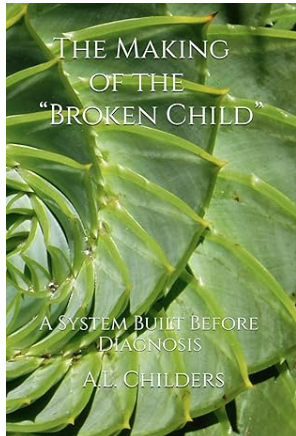
The snow outside the old brick schoolhouse fell in thin, obedient lines, each flake descending exactly as gravity commanded, without resistance, without question. Inside, however, the air was heavy — not with winter cold, but with something quieter, older, and far more calculated. If Part I revealed the cage, Part II reveals the blueprint — the quiet architecture of obedience that shaped every hallway, every desk, every rule, every whispered reprimand echoing across generations.

Imagine, for a moment, standing in the very first American classroom engineered under the new industrial vision. The floors creak, the windows rattle, the smell of coal smoke leaks in from a nearby factory, staining the wooden walls with a faint gray film. And at the front of the room hangs a clock — enormous, round, authoritative — ticking not to mark time, but to measure compliance. You can almost feel the breath of the architect who placed it there, as if he were whispering: Control the hours, and you control the mind.

This was no accident.
This was blueprint.

Rockefeller and the industrialists of his circle did not merely fund education — they designed it. With intentionality. With precision. With a philosophy as cold as steel and as efficient as the assembly lines that powered their fortunes. The blueprint was simple: turn human beings into predictable units. Factory workers. Soldiers. Laborers. Citizens who would follow rules without questioning why the rules existed.

And so, the system was designed from the ground up not to cultivate brilliance, but to cultivate obedience.

Look around that early classroom. Everything is a command disguised as furniture. The desks are bolted down in military rows — children arranged like infantry, facing forward, hands folded, backs straight. The teacher stands at the helm like a foreman, issuing orders through lessons. The blackboard behind her carries not knowledge, but expectations — write this, recite that, repeat, repeat, repeat.

Even the soundscape is engineered. Bells slice the day into digestible pieces, teaching children to regulate their bodies to external prompts rather than internal rhythms. The scraping of chairs, the sharp snap of rulers, the hush of a teacher’s raised finger — these sounds create a texture of tension that children learn to internalize as “normal.”

And the strangest part?
Adults believed this was progress.

The blueprint for obedience hid itself in plain sight. It taught children not how to think — but when to think. Not how to ask questions — but which questions were permitted. Not how to explore — but how to sit still long enough to forget they ever wanted to.

And slowly, a new kind of psychological architecture emerged:
one in which the institution became the measure of the child,
and the child became the variable.

If the child fit the blueprint — quiet, compliant, still — the system declared them “good.”
If they resisted — moved too much, questioned too much, learned through touch, motion, sound, mess, experimentation — the system declared them “bad.”
Not because of morality — but because of manageability.

Obedience became virtue.
Energy became vice.

But the blueprint is more than physical design — it is cultural engineering. A silent script delivered to every child from the moment they walk into kindergarten:

Sit down.
Be quiet.
Follow instructions.
Raise your hand.
Don’t speak out of turn.
Wait for permission.
Memorize this.
Forget yourself.

In a fog of modern life, these commands drifted across generations, passed down like heirlooms no one wanted but everyone carried. Parents who had been shaped by the system — often unknowingly — reinforced it through their expectations of their own children. Teachers, themselves conditioned by the blueprint, believed compliance was the foundation of learning. Administrators enforced policies not because they believed in them, but because the system rewarded obedience at every level.

And so the blueprint for obedience hardened, decade after decade, into the spine of American childhood.

It is no coincidence that industrial schools and industrial factories share the same assumptions about human nature. Both assume people must be controlled. Both assume stillness equals productivity. Both assume conformity equals success. Both rely on top-down management, external rewards, and punitive discipline. Both suppress the instincts that make humans innovators — curiosity, exploration, risk-taking, autonomy, messy trial and error.

The blueprint for obedience was never designed for learning. It was designed for predictability.

And when predictable behavior became the goal, unpredictable traits became the enemy.

The restless child became the problem.
The curious child became a disruption.
The energetic child became a behavior case.
The imaginative child became unfocused.
The emotional child became overreactive.
The impulsive child became noncompliant.

Until finally — decades later — these traits were gathered, sorted, labeled, and pathologized.

Not because the traits were unnatural.

But because they threatened a system built on unnatural expectations.

And here is where the story darkens further: the blueprint for obedience set the stage for medicalization before anyone even realized a script was being written. The school system whispered, “This child does not fit,” long before any doctor whispered, “This child has a disorder.”

The system identified the misfits —
medicine created the label —
pharmaceuticals created the compliance —
and society created the shame.

The blueprint for obedience is the skeleton key to understanding the origins of ADHD as a category. Without the blueprint, the disorder would not exist. Schools created the conditions in which normal childhood behavior became intolerable. And intolerable behaviors demanded explanation — not reform.

It is easier to medicate a child than redesign an institution.

Easier to silence a symptom than fix its cause.

And so, the blueprint for obedience became self-fulfilling:
Force children into environments that require unnatural stillness, then diagnose those who cannot endure it.

But let us step back into that early classroom one last time.

The fire in the corner stove crackles. The teacher’s heels click across the floorboards. A child at the back twirls a pencil, his leg bouncing, his mind alive with thoughts no one will ever hear. Another stares out the frost-lined window, imagining worlds where streams replace hallways, where curiosity replaces compliance, where movement replaces monotony. A third fidgets with a scrap of string, heart pounding because she has been scolded three times already for “restlessness.”

They were not broken.
They were not disordered.
They were not faulty prototypes.

They simply did not fit the blueprint.

And instead of questioning the blueprint, society questioned the child.

This — this architectural betrayal — is how obedience became the highest virtue, curiosity became an inconvenience, and a generation of brilliant, energetic, natural learners were slowly molded into versions of themselves small enough to fit inside a desk.

The blueprint for obedience was never an accident.
It was a design.
A strategy.
A quiet engineering of human behavior that continues today.

And until we confront it, the story of the “broken child” will continue to be written by those who profit from the fracture.

 DISCLAIMER

This series is written for educational, historical, and personal reflection purposes. It is not medical advice, nor does it diagnose, treat, or replace consultation with a licensed medical professional. All historical references are based on documented sources, public records, and widely published research.


A.L. Childers is a multi-genre author known for blending investigative research with storytelling that cuts straight to the bone. Raised in the American South and forged by lived experience, Childers exposes uncomfortable truths about systems, institutions, and the hidden machinery shaping modern life. Her work spans history, health, psychology, spirituality, and cultural critique — always with a warm, human voice that refuses to look away.

A powerful, historically documented Childers-meets-modern exposé revealing how the American school system was engineered for obedience, not learning — and how ADHD was later invented to pathologize normal childhood behavior. This multi-part series examines who built the system, who profits from it, and how millions of children were mislabeled as “disordered” while the real disorder lived inside the institution itself.

Iryna’s Law: How One Charlotte Tragedy Forced a State to Finally Listen

A powerful look at Iryna’s Law—House Bill 307—passed after the murder of Ukrainian refugee Iryna Zarutska on Charlotte’s light-rail system. Written by Charlotte author A.L. Childers, this analysis explores the law’s impact, why it matters, and how a preventable tragedy reshaped North Carolina’s criminal justice system.


Iryna’s Law: How One Charlotte Tragedy Forced a State to Finally Listen

Some stories should never have needed to be written.
This is one of them.

In August 2025, Charlotte—and the world—watched in horror as the final moments of 23-year-old Ukrainian refugee Iryna Zarutska appeared across screens and headlines. A young woman escaping war, displacement, and trauma came to America seeking safety and stability. Instead, she met the very violence she fled.

She was stabbed in the neck on a Charlotte light-rail train in a brutal and senseless attack captured on camera—a recording so shocking it silenced the city.

But from that silence came movement. From the tragedy came legislation.
And on October 3, 2025, North Carolina signed House Bill 307—now known as Iryna’s Law—into effect.

It begins tomorrow.


What Exactly Is Iryna’s Law?

Iryna’s Law is a sweeping criminal-justice reform bill aimed at preventing violent offenders from slipping through the cracks of North Carolina’s pretrial system.

Key provisions include:

📌 No More Cashless Release for Violent Offenders

Defendants accused of violent crimes can no longer walk free without secured bond or monitored house arrest.
Unsecured (cashless) release is gone for these cases.

📌 Judges & Magistrates Must Justify Release Decisions

No more vague paperwork.
No more “just because.”
Any release decision must be documented in detail—or judicial officials may face suspension or removal.

📌 Mental Health Evaluations Now Mandatory in Key Cases

Especially for defendants with prior involuntary commitments.
This measure aims to address the longtime gap between mental illness and public safety.

📌 Expansion of Execution Methods & Capital Eligibility

If lethal injection becomes unavailable, the state may adopt other methods such as electrocution or firing squad.
Committing a capital felony on public transportation is now an aggravating factor for the death penalty.

📌 Faster Appeals & Sentencing Timelines

Capital cases must be reviewed within 24 months, preventing decade-long delays from clogging the justice system.


Why the Law Exists: The System Failed Iryna

The man who attacked her had a history of arrests.
A history of detainment.
A history of warnings.

Yet he walked free.

The system’s cracks were wide, predictable, and—worst of all—avoidable.

People in Charlotte, across North Carolina, and around the world asked the same question:

“How was a violent, unstable individual allowed to prey on innocent riders?”

The city was forced to confront its failure.
And this law, though not perfect, is the beginning of accountability.


A Charlotte Perspective: Why This Hits Home For Me

As someone who lives in Charlotte—and someone who has literally driven for the City of Charlotte—I’ve seen firsthand how vulnerable people are on public transportation.

I’ve seen the late-night passengers just trying to get home.
I’ve seen the women clutching their bags a little tighter.
I’ve seen the young students, the workers, the refugees, and the people simply hoping for a safe ride.

Public transit is supposed to be a refuge—a bridge between where we are and where we’re going.
But for Iryna, it became the end.

Her death should never have happened.
Her name should never have become a law.
Her family should never have been handed grief instead of justice.

And yet, here we are—trying to build something meaningful from a life taken too soon.


The Hope Moving Forward

Iryna’s Law will not reverse the tragedy.
It will not heal her family’s heartbreak.
It will not erase the horror of her final moments.

But it can protect the next person.
It can stop the next preventable loss.
It can close the cracks that have been ignored for far too long.

Laws do not bring back the dead, but they can save the living.

And in Iryna’s memory—may they do exactly that.


⚖️ Disclaimer

This article is based on publicly available information, legislative records, and widely reported news coverage. It reflects the author’s perspective and is intended for educational and awareness purposes only. The content does not claim to represent legal advice, law-enforcement opinion, or the official stance of any government agency.


✍️ About the Author

A.L. Childers (Audrey Culpepper Childers) is a multi-genre author based in Charlotte, North Carolina, known for blending investigative insight, real-world storytelling, and emotional depth across more than 200 published works.
A former City of Charlotte driver, she brings first-hand understanding of the city’s neighborhoods, public-transit system, and the people who rely on it every day.

Her writing spans health, history, justice, women’s empowerment, and the hidden truths that shape modern society. You can explore her books on Amazon under A.L. Childers.


#IrynaZarutska #IrinasLaw #HB307 #CharlotteNC #CharlotteCrime #NorthCarolinaLaw #JusticeForIryna #PublicSafety #CriminalJusticeReform #CharlotteAuthor #ALChilders #UkrainianRefugees #LightRailSafety #StopTheViolence #PreventableTragedy

The Mark of Evil: How to Spot Those with Truly Dark Intentions

The Mark of Evil: How to Spot Those with Truly Dark Intentions

By A.L. Childers, Professional Writer & Historian

What Makes Someone Evil? The Telltale Signs of a Dark Mind

Evil is a word often thrown around, but how do you truly know if someone has evil tendencies? We’ve seen monsters walk among us, from historical tyrants to seemingly ordinary people who committed unimaginable crimes. Some got caught, some never did, but there is one constant truth throughout history—the most dangerous people never have regrets, only explanations.

Do you ever notice how some people never admit when they’re wrong? How they always have a reason or excuse—a way to twist the situation so they’re never at fault? How they act like the victim, even when they are the ones who caused the damage?

Now compare that to someone who owns their mistakes, who doesn’t manipulate the truth to look good but instead takes responsibility. One always justifies their actions. The other makes things right.

If you truly want to know if someone is evil, don’t focus on how they hurt you—look at whether or not they justify it.


The Mindset of Evil: No Remorse, Only Rationalization

There’s an unsettling pattern among history’s most dangerous figures. They don’t see themselves as villains. Instead, they rewrite their own stories where they are always the hero, or at worst, a misunderstood victim.

Historical Examples of Evil Minds at Work

  • Ted Bundy (1946-1989) – One of America’s most infamous serial killers, Bundy was known for his charisma and ability to manipulate. He never showed remorse for his murders, instead insisting that external factors (like pornography) led him to kill. He justified his actions until the end.
  • Bernie Madoff (1938-2021) – The architect behind one of the biggest Ponzi schemes in history, Madoff stole $64.8 billion from innocent investors. When caught, he expressed regret only for getting caught—not for the destruction he caused to families who lost everything.
  • Richard Nixon & Watergate (1972) – Instead of admitting to illegal activities, Nixon justified his crimes, famously stating, “When the President does it, that means it is not illegal.”
  • The Tuskegee Syphilis Experiment (1932-1972) – For 40 years, the U.S. Public Health Service conducted unethical experiments on African American men, denying them treatment for syphilis even after a cure was discovered. The government justified these actions in the name of “medical research.”

Evil minds don’t see their actions as wrong; they see them as necessary or deserved.


The Unsolved Mysteries: Crimes with No Justice

Evil doesn’t always get caught. Some of history’s most chilling cases remain unsolved, leaving us to question just how many brilliantly deceptive people walk free.

  • The Zodiac Killer (1960s-1970s) – A sadistic murderer who taunted police with cryptic letters and ciphers, but was never caught. His justification? He believed himself to be playing a game—one where human life was simply a pawn.
  • The Black Dahlia Murder (1947) – Elizabeth Short was found brutally murdered in Los Angeles. The crime scene was staged with surgical precision. No one was convicted, but many believe the killer had medical expertise. Could it have been a powerful figure who escaped justice?
  • Jack the Ripper (1888) – The infamous serial killer who terrorized London’s East End, leaving bodies mutilated and sending taunting letters to the press. Was he a member of high society, protected by status?

The unsettling reality is that evil is often intelligent, methodical, and manipulative enough to evade consequences.


The Psychological Profile of Evil People

A study by Dr. Martha Stout, author of The Sociopath Next Door, found that 1 in 25 people has no conscience. These individuals don’t experience guilt like the rest of us. Instead, they:

Justify their actions rather than feel remorse
Blame others for their mistakes
Gaslight and manipulate reality to maintain control
Show no true empathy—only calculated charm
Always have an excuse—never responsibility

The ability to avoid guilt is what makes these individuals so dangerous. It’s not that they don’t know right from wrong—they simply don’t care.


How to Identify and Protect Yourself from Evil People

  1. Watch How They Handle Conflict
    • Do they shift blame and play the victim?
    • Do they justify cruelty instead of apologizing?
    • Do they lack emotional depth or empathy when someone is hurt?
  2. Pay Attention to Their Patterns
    • Do they manipulate others to serve their interests?
    • Do they repeatedly harm others but always have a justification?
    • Are they obsessed with control and dominance?
  3. See How They Treat the Vulnerable
    • True character is revealed in how someone treats those who can’t fight back.
  4. Trust Your Intuition
    • If something feels off, it probably is. Your gut instincts are an ancient survival mechanism—listen to them.

The Final Truth: History is Written, Rewritten, and Distorted

One of the oldest truths in history is that it is written by the victors—those with the power to justify their actions and erase their sins. We only know what history allows us to know.

But one thing remains constant:

The most dangerous people in the world are not those who make mistakes, but those who refuse to admit them.

Evil isn’t defined by how much damage someone causes, but by how easily they can justify it.

So next time you wonder whether someone has evil tendencies, don’t just look at what they’ve done—look at whether they believe it was justified.


Keywords for SEO & Visibility:

  • How to identify an evil person
  • Psychological traits of evil people
  • Historical examples of evil minds
  • Unsolved mysteries and serial killers
  • Signs of a sociopath or psychopath
  • Why some people never admit they are wrong
  • The history of American corruption and crime

This blog is designed to educate, intrigue, and make people think about the deeper nature of evil. Stay aware, stay informed, and most importantly—stay safe.

By A.L. Childers, Professional Writer & Historian

Evil has existed in every civilization, every era, and every society. It is a force that shapes history, influences governments, and affects the lives of ordinary people. But how do we define evil? More importantly, how do we recognize it before it’s too late?

This blog seeks to answer these questions by examining the psychological traits of evil people, exploring historical examples of the most wicked minds, and analyzing modern-day crimes and unsolved mysteries that continue to haunt us. With deep historical context, psychological research, and real-world examples, The Nature of Evil book that I am writing aims to educate, intrigue, and make readers rethink their understanding of morality and darkness.

Stay aware, stay informed, and most importantly—stay safe.

Disclaimer

The content of this blog is intended for informational and thought-provoking purposes only. While the discoveries discussed are based on current scientific findings, the interpretations, theories, and speculative discussions presented are the author’s perspectives and should not be taken as definitive scientific conclusions.

This blog explores both mainstream scientific theories and alternative viewpoints that challenge conventional narratives. Readers are encouraged to conduct their own research, engage in critical thinking, and approach all information—whether from established sources or independent researchers—with an open but discerning mind.

Furthermore, any references to historical texts, hidden knowledge, or cosmic mysteries reflect the author’s ongoing research and exploration of unconventional ideas. This blog does not claim to provide absolute truth but rather serves as a platform for curiosity, discussion, and questioning the nature of reality.

For verified scientific studies and further reading, refer to the sources cited.

A.L. Childers
Published Author, Advocate, and Your Partner in Thyroid Health

Disclaimer

The information and recipes in the blog are based on the author’s research and personal experiences. It’s for entertainment purposes. It’s only. Every attempt has been made to provide accurate, up-to-date, and reliable information. No warranties of any kind are expressed or implied. Readers acknowledge that the author does not render legal, financial, medical, or professional advice. By reading this blog, the reader agrees that under no circumstance is the author responsible for any direct or indirect loss incurred by using the information contained within this blog. Including but not limited to errors, omissions, or inaccuracies. This blog is not intended to replace what your healthcare provider has suggested.  The author is not responsible for any adverse effects or consequences from using any of the suggestions, preparations, or procedures discussed in this blog. All matters about your health should be supervised by a healthcare professional. I am not a doctor or a medical professional. This blog is designed as an educational and entertainment tool only. Please always check with your health practitioner before taking any vitamins, supplements, or herbs, as they may have side effects, especially when combined with medications, alcohol, or other vitamins or supplements.  Knowledge is power; educate yourself and find the answer to your healthcare needs. Wisdom is a beautiful thing to seek.  I hope this blog will teach and encourage you to take leaps in your life to educate yourself for a happier & healthier life. You have to take ownership of your health.

The views and services offered by Thehypothyroidismismchick.com are not intended to be a substitute for professional medical assistance but as an alternative for those seeking solutions for better health. We do not claim to diagnose, treat, prevent, or cure any disease but simply help you make physical and mental changes in your own body to help your body heal itself. Remember that results may vary, and if you are pregnant, nursing, taking medications, or have a severe condition, you should consult a physician or other appropriate medical professional before using any products or information on this site. Thehypothyroidisimchick.com assumes no responsibility for the use or misuse of this material. Your use of this website indicates your agreement to these terms. Our full disclosure, terms of use, and privacy policy.

The information on this site is not intended or implied to be a substitute for professional medical advice, diagnosis, or treatment. All content, including text, graphics, images, and information on or available through this website, is for general information purposes only. Opinions expressed here are the opinions of the writer. Never disregard professional medical advice or delay seeking medical treatment because of something you have read or accessed through this website.

This site is designed for educational purposes only and is not engaged in rendering medical advice, legal advice, or professional services. If you feel that you have a medical problem, you should seek the advice of your physician or health care practitioner. For additional information, please see our full disclosure, terms of use, and privacy policy.

Our full disclosure, terms of use, and privacy policy. | thehypothyroidismchick

Cheating Hearts in Court: How One North Carolina Husband Turned Betrayal into Justice

When Dave found out his wife of 30 years had been having an affair for 10 of them, his world crumbled. The discovery came in the form of an accidental text—a message meant for another man. His heart sank, but instead of falling apart, Dave decided to dig deeper. Living in North Carolina, a state with one of the few remaining Alienation of Affection laws, he realized he had legal options that could turn this betrayal into accountability.


The Betrayal Unfolds

Dave’s wife, Karen, had always been confident he was oblivious to her secret life. She’d even joked about how “naive” he was, not realizing Dave was quietly piecing together clues. With the help of a private investigator, Dave unearthed damning evidence: hotel receipts, love letters, and photos that painted a clear picture of Karen’s long-term affair with her coworker, Bob.

Karen tried to dismiss it when confronted, laughing off his anger and claiming, “What can you even do about it?” What Karen didn’t know was that Dave had been researching North Carolina’s Alienation of Affection laws—a rare statute that allows a spouse to sue a third party for interfering in their marriage.


Alienation of Affection: A Legal Weapon

In North Carolina, Alienation of Affection lawsuits don’t require proof of sexual infidelity—just evidence that a third party caused the loss of affection in a marriage. Armed with evidence from the investigator, Dave filed a lawsuit against Bob, claiming his interference had destroyed the love and trust in their marriage.

Dave also learned about Criminal Conversation laws, which specifically address adultery and allow the wronged spouse to sue for damages. Together, these statutes gave him a strong legal case.


The Courtroom Drama

When the case went to court, Dave’s lawyer presented a compelling narrative. He showed the receipts, text messages, and witness accounts that proved Bob’s role in the breakdown of Dave and Karen’s marriage. The jury was captivated by the story of betrayal, and the emotional damages were clear.

Bob, who had once dismissed the lawsuit as a joke, was ordered to pay $250,000 in damages for his role in the affair. The court also ruled in Dave’s favor for criminal conversation, adding another $100,000 to the total. Karen’s smugness dissolved into shock as Dave walked away with not just his dignity but also a significant financial win.


Protecting Yourself If It Happens to You

If you find yourself in Dave’s shoes, here’s what you can do:

  1. Gather Evidence: Document everything—texts, emails, receipts, and photos. Hire a private investigator if needed. North Carolina law requires proof of the affair or loss of affection caused by a third party.
  2. Consult an Attorney: Find a family law attorney experienced in Alienation of Affection and Criminal Conversation cases. They can guide you through the legal process and maximize your chances of success.
  3. Stay Calm and Strategic: Don’t confront the other party impulsively. Let the legal system work for you.
  4. Know Your Rights: North Carolina is one of the few states where these laws still exist. Use them to hold people accountable for their actions.

Final Thoughts

Betrayal in a marriage is devastating, but it doesn’t have to mean defeat. Dave’s story is proof that with the right approach, you can reclaim your power and turn heartbreak into a new beginning.

If you or someone you know is facing a similar situation, remember: knowledge is power. Stand your ground, protect your assets, and let the law work in your favor. After all, as Dave learned, sometimes justice really can be sweet.


References:

  • North Carolina General Statutes: Alienation of Affection and Criminal Conversation Laws
  • “How Alienation of Affection Lawsuits Work” – FindLaw
  • “The Role of Private Investigators in Adultery Cases” – Legal Beagle

Disclaimer

The information provided in this blog is for general informational purposes only and does not constitute legal advice. While efforts have been made to ensure the accuracy and relevance of the information at the time of publication, laws and legal interpretations are subject to change and may vary depending on individual circumstances.

Readers are strongly encouraged to consult with a qualified attorney or legal professional licensed in their jurisdiction to obtain advice tailored to their specific situation. The author and publisher disclaim any liability for losses or damages incurred as a result of reliance on the information presented in this blog.

This blog is written to provide insight into North Carolina laws related to Alienation of Affection and Criminal Conversation and is not intended to create an attorney-client relationship.