
By A.L. Childers
A Southern heritage blog exploring how the journey of Irish immigrant James Dawkins helped shape a Carolina family, local traditions, and the cultural fabric of the South. A warm, nostalgic reflection by author A.L. Childers.
Some stories don’t just belong to a family — they belong to a place.
In the Carolinas, we grow up surrounded by stories.
Stories told on porches at dusk.
Stories whispered in kitchens heavy with the smell of cornbread and collards.
Stories tucked inside family Bibles, handwritten recipes, and the memories of elders who remember “the way things used to be.”
But every now and then, you uncover a story that feels bigger —
older —
heavier —
woven into the very soil beneath your feet.
That was the story of my great-great-great-grandfather, James Dawkins.
And the more I learned about him, the more I realized something simple and profound:
His journey didn’t just shape our family.
It shaped the Carolina community we call home.
The Carolinas Don’t Just Keep History — They Carry It
Here in the South, we have a way of holding onto things.
We keep:
- recipes in the family
- memories in the kitchen
- stories in the air
- pain in our bones
- strength in our traditions
And when I discovered James’s lost journal, tucked away in an old house scheduled for demolition, it felt like the ancestors were saying:
“Here.
This belonged to you before you were born.
Carry it.”
It didn’t matter that he came from Ireland.
Or that he stepped off a coffin ship with nothing but a rosary and a dream.
Or that he arrived in America with the odds stacked against him.
He brought his history with him.
And when he reached the Carolinas, the land took it in —
and it became part of ours.
An Immigrant Story That Sounds a Lot Like a Southern One
When you strip away the borders, accents, and oceans, the Irish story looks a lot like the Southern one:
- poverty
- exploitation
- landowners with too much power
- families forced to survive on almost nothing
- people relying on faith, food, and community to endure hardship
- resilience that grows in the dark
- pride born from struggle
James came from a land where the poor worked someone else’s fields.
Sound familiar?
He grew up in a place where community mattered more than possessions.
Sound familiar?
He survived on cabbage, pork scraps, beans, bread, and whatever else could stretch a meal.
Sound familiar?
By the time he made it to the Carolinas, he carried a culture that fit right into the South like it had been here all along.
He belonged here before he ever arrived.
The Community He Helped Shape
Like so many immigrants, James didn’t end up rich.
He didn’t leave behind mansions, big bank accounts, or political power.
What he left instead was much more Southern than that.
He left:
- a reputation for hard work
- a family line rooted in resilience
- traditions passed down through food
- stories whispered and half-remembered
- faith that held people together
- a legacy built from sacrifice
Those things matter here.
They’re how communities are formed.
And looking back, I can see his fingerprints all over the family that raised me:
In the recipes.
In the superstitions.
In the grit.
In the stubbornness.
In the warmth.
In the rituals that show up every New Year’s Day like clockwork.
In the fierce loyalty Southern families are known for.
His legacy didn’t stay in Ireland.
It didn’t stay in the attic.
It lives in every Dawkins descendant still walking Carolina soil.
What It Means to Belong to a Place
People sometimes ask me:
“How can someone who immigrated here centuries ago be part of Carolina culture?”
Because belonging doesn’t start with where you’re from.
It starts with:
- What you survive
- What you pass down
- What you build
- who you raise
- how you live
- What you sacrifice
James worked the land with the same reverence my grandmother cooked in her kitchen.
The same reverence Southern men have when tending a garden or smoking a hog.
The same reverence Carolina women put into every meal that feeds a family after a funeral, a birth, a hard day, or a celebration.
He lived Southern tradition before it was called Southern tradition.
Because tradition isn’t invented.
It’s remembered.
And survival is the biggest tradition of all.
Why I Wrote This Story for the Community, Not Just the Family
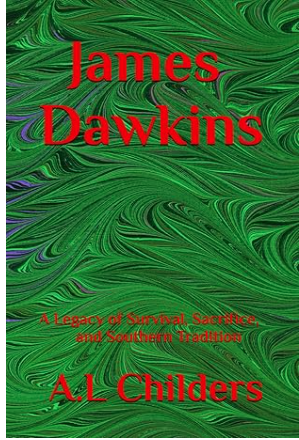
When I published James Dawkins: A Legacy of Survival, Sacrifice, and Southern Tradition, I wasn’t just honoring my ancestor.
I was honoring:
- Every immigrant who reshaped a Southern town
- Every family that built a legacy from hardship
- Every community is tied together by stories and supper tables
- Every person whose ancestors were forgotten by textbooks but remembered by descendants
His story belongs to history.
But it also belongs to the people.
To anyone who has ever:
- wondered where they come from
- felt the pull of ancestry
- carried traditions without knowing their origin
- felt the past in their bones
This story is for you.
Because community isn’t made by governments.
It’s made by families, by food, by grit, by the people who crossed oceans and mountains so their descendants could stand where we stand now.
About the Author — A.L. Childers
A.L. Childers is the sixth-generation great-great-great-granddaughter of James Dawkins and author of James Dawkins: A Legacy of Survival, Sacrifice, and Southern Tradition. She writes Southern heritage, folklore, ancestry, and personal narratives that explore how history lives inside us.
Find her books on Amazon under A.L. Childers
Blog: TheHypothyroidismChick.com
A.L. Childers is a bestselling multi-genre author known for blending history, storytelling, cultural commentary, and Southern heritage into unforgettable works. She has written over 200 books across historical nonfiction, health, folklore, conspiracy, women’s empowerment, and metaphysical genres.
Her writing is marked by truth, depth, humor, and courage—traits she now knows she inherited from her Irish ancestor, James Dawkins.
Find her books on Amazon under A.L. Childers.
Visit her blog: TheHypothyroidismChick.com
James Dawkins: A Legacy of Survival, Sacrifice, and Southern Tradition
Carolina cultural heritage, Southern family history blog, James Dawkins ancestor story, Irish roots in Carolina, Dawkins family tradition, Southern community storytelling, immigrant legacy South
#SouthernHeritage #CarolinaCulture #JamesDawkins #FamilyLegacy #IrishRoots #SouthernCommunity #Traditions #ALChilders
#ThisIsTheSouth
#FamilyRoots
#SouthernStories
#LegacyLives
#IrishAmericanHistory
#CommunityHeart

