Tag Archives: environment

☣️ Toxic Tide: How ‘Forever Chemicals’ Are Creeping Onto North Carolina Beaches

PFAS in Sea Foam, Ocean Pollution, and the Global Fallout of Neglect


🌊 A Shocking Discovery on the Carolina Coast

CAROLINA BEACH, NC — A recent study has sent shockwaves through North Carolina’s coastal communities. According to environmental watchdog group Clean Cape Fear, alarming concentrations of PFAS (per- and polyfluoroalkyl substances)—commonly known as “forever chemicals”—have been found in sea foam samples collected from Oak Island and Carolina Beach State Park.

Unlike typical water contaminants, PFAS don’t easily dissolve. Instead, they float on the surface and accumulate when wind and waves churn seawater into foam, concentrating these persistent pollutants at levels significantly higher than in the surrounding water.

Emily Donovan, co-founder of Clean Cape Fear, voiced public concern:

“A lot of the feedback that we’ve gotten with this research is just really important concerning questions of ‘is it safe to go swimming in the ocean, is it safe to touch the foam?’ and the unfortunate thing right now is we really don’t know.”

🧪 What Exactly Is Sea Foam — and Why Does It Matter?

Sea foam is a natural phenomenon, formed when dissolved organic matter in seawater is agitated by wind and surf. This agitation traps air, creating bubbles that accumulate into foam. Under normal conditions, this foam isn’t dangerous—it’s simply the ocean “frothing” at the surface.

However, when industrial chemicals like PFAS are present in the water, sea foam becomes a concentrated carrier of toxins, capable of clinging to sand, skin, and even entering the air through aerosolization, where microscopic particles are carried by sea spray.

A 2022 study published in Environmental Science & Technology found that PFAS concentrations in sea foam can be hundreds of times higher than in the water itself. This means that children playing on the beach, dogs running through foam, or adults lounging near the surf could unknowingly come into contact with dangerous chemicals.


☢️ Global Fallout: Could Radiation and Industrial Waste Be Adding to the Problem?

While PFAS contamination is primarily linked to local and regional industrial discharges—such as those from chemical manufacturing plants, airports (due to firefighting foams), and wastewater systems—ocean currents don’t respect borders.

1. Fukushima and Trans-Pacific Drift

After the 2011 Fukushima Daiichi nuclear disaster in Japan, radioactive contaminants were released into the Pacific Ocean. While international monitoring agencies like NOAA and the IAEA have reported that radiation levels in U.S. coastal waters remain below harmful thresholds, trace amounts of cesium-134 and cesium-137 isotopes were detected on the West Coast of the U.S. in subsequent years.

Though PFAS and radioactive isotopes are chemically different, their combined presence in marine ecosystems raises concerns about the cumulative impact of global contamination.

2. Industrial Pollution and Ocean Dumping

For decades, corporations around the world have legally and illegally dumped hazardous waste into oceans. Examples include:

  • DuPont and Chemours releasing PFAS into the Cape Fear River in NC for decades.
  • Oil refineries discharging benzene and heavy metals into waterways.
  • Shipping industries releasing bilge water containing chemicals, oil, and plastics.
  • Textile factories in Asia discharging untreated dye and chemical runoff into rivers that feed into the oceans.

Once these pollutants enter the ocean, they travel via currents, settle in sediments, bioaccumulate in marine life, and resurface in unexpected places—like the sea foam of Carolina Beach.


📚 Historical Context: How Did We Get Here?

The term “forever chemicals” refers to PFAS compounds that don’t break down naturally. First developed in the 1940s, PFAS were used in:

  • Non-stick cookware (Teflon)
  • Waterproof clothing
  • Stain-resistant fabrics
  • Firefighting foams
  • Food packaging

For decades, these chemicals were marketed as safe, even as internal studies by manufacturers revealed their persistence and potential health risks. By the 2000s, PFAS had spread globally, found in polar bears, rainwater, drinking water, and human bloodstreams.

The EPA only began taking significant action in the 2010s, issuing health advisories and pressuring companies to phase out certain PFAS. However, many “replacement PFAS” are just as persistent, and no enforceable federal drinking water standard for most PFAS existed until 2024.


🌍 Health Implications of PFAS Exposure

Scientific studies have linked long-term PFAS exposure to:

  • Cancer (kidney, testicular, liver)
  • Thyroid dysfunction
  • Hormone disruption
  • Reduced immune response
  • Reproductive issues
  • Developmental delays in children

Because PFAS can enter the human body through skin contact, inhalation of sea spray, or ingestion, beachgoers in affected areas are right to be concerned.


📝 What Can Be Done?

  1. Avoid direct contact with sea foam, especially for children and pets.
  2. Rinse off thoroughly after visiting beaches known to have PFAS contamination.
  3. Support local advocacy groups like Clean Cape Fear.
  4. Push for stronger regulation and cleanup, including holding polluters accountable.
  5. Stay informed: monitor advisories from state environmental agencies.

🌐 Resources & References

  • Clean Cape Fear: https://cleancapefear.org
  • Environmental Protection Agency (EPA) – PFAS Information: https://www.epa.gov/pfas
  • NOAA Ocean Monitoring Reports
  • Environmental Science & Technology (2022): PFAS Concentration in Coastal Foam
  • NC DEQ – PFAS Testing and Updates: https://deq.nc.gov
  • International Atomic Energy Agency (IAEA) – Fukushima Monitoring Data

📢 SEO Keywords:

PFAS in North Carolina beaches, toxic sea foam, forever chemicals NC coast, Cape Fear River pollution, Fukushima radiation US ocean, PFAS health risks, Oak Island contamination, Carolina Beach State Park PFAS, ocean pollution history, toxic waste dumping examples


⚠️ Disclaimer

This article is for informational and educational purposes only. It is not intended to provide medical or legal advice. Readers are encouraged to consult official environmental health resources and experts for guidance related to PFAS exposure and safety recommendations.


✍️ About the Author – Audrey Childers

Audrey Childers is a writer, researcher, and environmental advocate based in North Carolina. Known for her investigative approach and compelling storytelling, she explores the intersections of health, history, and environmental justice. Through her books and blogs, Audrey sheds light on hidden truths that shape our modern world—empowering readers with knowledge and action.

Toxic PFAS “forever chemicals” have been found in sea foam along NC beaches. Learn the history, dangers, and global pollution sources behind this crisis.

1. Sitting on the Beach (Away from Foam) Is Generally Low-Risk

If you’re just sitting on dry sand or a towel, enjoying the sun while the waves lap at your feet (and you’re not in direct contact with visible sea foam), your exposure to PFAS is likely very minimal.

  • PFAS don’t evaporate into the air like volatile chemicals.
  • Most exposure happens through direct skin contact, ingestion, or inhalation of sea spray near contaminated foam.
  • If you’re positioned a little farther back from the foam line, risk is significantly reduced.

☀️ Pro Tip: Bring a beach chair or mat and sit a few feet back from where foam tends to collect. PFAS often accumulate in the surf zone where bubbles gather, not in clean dry sand.


🌬️ 2. Be Aware of Sea Spray and Wind Direction

PFAS can aerosolize in sea spray—tiny droplets of water carried by wind. This doesn’t mean sitting by the ocean is dangerous, but:

  • If there’s a lot of wind blowing foam or mist toward you, it’s better to move slightly inland.
  • On calm days, the risk is far lower.
  • Children and pets playing right in the foam, however, can have higher exposure due to closer contact and hand-to-mouth behaviors.

🧍‍♀️ 3. Wading in Clear Water vs. Foam

If you decide to walk in shallow water where there’s no visible foam, the PFAS concentration is likely much lower. The concerning levels are mainly in the foam itself, which can contain hundreds of times more PFAS than the surrounding water.

👉 If you do go in the water:

  • Rinse off thoroughly with clean water afterward.
  • Avoid swallowing any seawater.
  • Wash your swimsuit and towel once you’re home.

📌 4. Local Advisories Matter

Keep an eye on updates from:

  • NC Department of Environmental Quality (NC DEQ)
  • Clean Cape Fear
  • EPA PFAS advisories

If they issue warnings about specific beaches or foam events, follow their guidance. Sometimes they’ll recommend avoiding contact during heavy foam blooms but won’t restrict sunbathing or walking near the shore.


⚠️ Bottom Line

Yes, it’s generally safe to sit out, tan, and enjoy the waves at NC beaches — as long as you avoid direct contact with sea foam and heavy sea spray.
🚫 Avoid letting kids or pets play in or near foam.
🚿 Rinse off after beach time to minimize any incidental exposure.

America’s Data-Center Boom: Where They Are, Who Pays—and Who Profits

From social media feeds and cloud backups to AI assistants, our “cloud” lives on the ground—inside thousands of water-hungry, power-intensive data centers. The U.S. now hosts by far the most data centers in the world—over 5,300, roughly 45% of the global total—far ahead of Germany and the UK. StatistaVisual CapitalistBrightlio – Technology Iluminated

As this build-out accelerates for AI, electricity demand is spiking, communities report higher utility bills, and local water supplies are strained—especially in arid regions. U.S. data centers used about 4.4% of national electricity in 2023 and could reach 6.7–12% by 2028, according to the Department of Energy and the IEA. The Department of Energy’s Energy.govIEA+1


Where the Big U.S. Data-Center Hubs Are (and who’s building)

Northern Virginia (Loudoun & Prince William Counties)

  • The world’s largest cluster—often called “Data Center Alley.” Loudoun County alone counts 25+ million sq ft in operation. Loudoun County Economic Development, VA
  • Expansion fights have intensified. In Aug. 2025, a Virginia judge voided the rezoning approval for the Prince William Digital Gateway—planned for 37 centers on ~1,700–2,000 acres—over notice defects, after years of resident pushback over noise, visuals, water, and power. The Washington Post
  • Industry political spending surged as the state weighed new rules; only 1 of 27 bills passed in 2025. Business Insider

Phoenix / Mesa, Arizona

  • A top-tier market in the desert; utilities and cities are now scrutinizing water as AI growth accelerates. CBREBusiness Insider

Dallas–Fort Worth, Texas

  • Construction underway could double the market’s size by 2026. CBRE

Columbus / New Albany, Ohio

Oregon (The Dalles; Hillsboro)

  • Google’s The Dalles: after a 13-month legal fight, the city agreed to disclose water usage records—a flashpoint for transparency around cooling-water withdrawals. Reporters CommitteeCourthouse News

Washington (Quincy)

  • Microsoft operates a massive campus; diesel backup generators and air permits have long been contested due to particulate pollution during testing/outages. State Ecology required health-risk assessments of diesel emissions. Washington State Department of EcologyEcology AppsWIRED

Utah (Eagle Mountain)

Tennessee (Gallatin, near Nashville)

  • Meta opened a large facility; AP/WPLN chronicled how residents near new suburban data centers worry about water demand, diesel emissions, and proximity to homes/schools as projects and new substations push into neighborhoods. WPLN News

South Carolina (Moncks Corner / Berkeley & Dorchester Counties)

  • Google has multiple sites; conservation groups have pressed for water-use disclosure and limits on new groundwater withdrawals. The county acknowledges Google will report annual site-level water usage going forward. Coastal Conservation LeagueDorchester County

North Carolina (Maiden / Lenoir region)

  • Apple’s Maiden data center helped pioneer on-site solar, biogas fuel cells, and a pivot to renewables—but debates continue over grid mix vs. corporate certificates. AppleData Center KnowledgeWIRED+1

Big picture: Primary U.S. markets—Northern Virginia, Phoenix, Dallas, Chicago, Atlanta, Silicon Valley, Columbus—are still expanding, with record-low vacancies and 70% more capacity under construction in 2024 vs. 2023. CBREReuters


What nearby residents report—and what the data shows

1) Higher utility bills & grid stress

  • Utilities are inundated by massive interconnection requests; even projects that never get built can drive expensive upgrades—costs often socialized to ratepayers. The Wall Street Journal
  • In Northern Virginia, >25% of all power already went to data centers in 2023; could reach ~46% by 2030, AP reported (via WPLN). WPLN News

2) Water withdrawals & rate hikes

  • Large centers can use up to ~5 million gallons per day for cooling—comparable to a town of ~50,000 people. AP News
  • Investigations show 40% of U.S. data centers are in high/very-high water-scarcity regions; several Southwest markets tightened rules as AI builds out. Business Insider
  • In Newton County, GA (Meta), local leaders warned of a water deficit by 2030 and 33% residential water-rate increases, according to coverage summarizing water-authority reports and interviews. sjdsGovTech

3) Air & noise pollution

4) Land use, heritage, and property values

  • The now-voided Prince William Digital Gateway plan would have industrialized land by Manassas National Battlefield Park, amplifying concerns over cultural resources and neighborhood character. The Washington Post

5) Jobs: fewer than promised?

  • Even giant facilities often employ fewer than 100 long-term staff; backers cite construction trades and tax rolls as benefits, while residents question trade-offs. WPLN News

Health, Equity, and Environmental Justice

  • Water stress and air pollution hit hardest in lower-income communities near industrial zones. AP and IEA warn that AI-driven build-out will double global data-center electricity demand by 2030, intensifying local burdens unless mitigations scale. IEAS&P Global
  • NAACP and local groups call for transparency, community-benefit agreements, and siting away from homes/schools. (Virginia’s 2025 session showcased the industry’s influence, even as local opposition grows.) Business Insider

Lessons from Tennessee: Land Taken, Health Broken—What’s real?

In practice, most data-center land is acquired via rezoning and private sales, not eminent domain. Still, neighbors describe feeling “forced out” by encroaching industrial uses, substation siting, and round-the-clock noise—especially in Northern Virginia and suburban Nashville. AP/WPLN’s reporting captures how quickly these projects move into neighborhoods, bringing air/noise issues and substation build-outs that alter daily life. WPLN News


Not all news is bad: mitigation that actually helps

  • Water reuse and air cooling: Quincy, WA and Eagle Mountain, UT now recycle process water for parks/industry, cutting potable demand. US EPAMicrosoft LocalEagle Mountain City
  • Transparency wins: The Dalles, OR ended secrecy over Google’s water data—public records will be released going forward. Reporters Committee
  • Planning: CBRE/Cushman data show more projects steering to grids with capacity (e.g., Dallas, Columbus) and adding on-site renewables/efficiency—though demand still outpaces supply. CBREReuters

Quick directory: Major operators & flagship U.S. sites

  • Meta — Gallatin, TN; Eagle Mountain, UT; New Albany, OH; Forest City/Prineville, OR (historical Facebook origin); expanding in multiple states. Community concerns: water, noise, substations; mitigations: reuse, efficiency, restoration projects. WPLN NewsThe Salt Lake Tribune
  • Google — The Dalles & Hillsboro, OR; Council Bluffs, IA; Berkeley/Dorchester Counties, SC. Ongoing debates on water transparency and withdrawals. Reporters CommitteeGoogle Data CentersCoastal Conservation League
  • Microsoft — Quincy, WA; Phoenix metro; Columbus, OH; Atlanta, GA; Dallas–Fort Worth. Long-running discourse around diesel emissions and grid impacts; some reuse projects in WA. Washington State Department of EcologyUS EPA
  • Apple — Maiden, NC; emphasis on renewables and on-site generation, though critics debate how “green” the grid mix is. AppleData Center Knowledge
  • AWS — Northern Virginia; Oregon (Boardman/Morrow County); Phoenix; Dallas; Columbus. Economic-development deals weighed against tax abatements and local burdens. WPLN News

For market-by-market data (vacancy, MW under construction, pricing), see CBRE’s North America Data Center Trends and Cushman & Wakefield’s Global Data Center Market Comparison. CBRE+1Cushman & WakefieldCushwake


What it means for families, farms, and small businesses

  1. Bills & rates: Expect longer interconnection queues and grid upgrades to flow through rates—especially where projects cluster. The Wall Street Journal
  2. Water security: In arid or fast-growing counties, data-center cooling can compete with households and farms unless cities require non-potable sources and reuse. Business Insider
  3. Air/health: Diesel generator testing and added power-plant dispatch can raise local PM2.5/NO₂, linked to asthma and heart disease; enforcement and cleaner backup are key. Ecology Apps
  4. Land & heritage: Without guardrails, farmland and historic landscapes can be industrialized overnight, depressing nearby property values and quality of life. The Washington Post

From “Peasants” to Protectors: A Community Checklist

  • Ask for the numbers (annual power draw and water withdrawals), in writing, and insist on public reporting. The Dalles case shows you can win transparency. Reporters Committee
  • Require non-potable cooling and reuse where feasible; don’t let drinking water bear the load. See Quincy/Eagle Mountain models. US EPAEagle Mountain City
  • Buffer zones from homes/schools; noise caps verified by independent testing. (Prince William convened noise-ordinance work after complaints.) Prince William County Government
  • Community-Benefit Agreements (CBAs): fund air monitors, well-testing, bill relief, and energy-efficiency upgrades for neighbors.
  • Cumulative-impact reviews before rezoning farmland/historic land; avoid piecemeal approvals that hide the true footprint.

Global context: Who has the most?

  • United States leads by a wide margin (≈45% of global sites), followed by Germany and the UK; total global capacity and power demand are projected to more than double by 2030, driven largely by AI. StatistaVisual CapitalistIEA

References & Resources


Disclaimer

This article summarizes public reporting, government documents, and market research to inform readers about data-center siting and community impacts. It is not legal, engineering, or financial advice. Conditions vary by site; consult local experts and primary documents when making decisions.


About the Author

A.L. Childers (Audrey Childers) is a Carolina-born journalist and author focused on health, environment, and corporate power. Her work—spanning books, essays, and The Hypothyroidism Chick blog—connects personal well-being with policy and place.

“Why Filtering Your Tap Water Might Be the Best Health Decision You Make This Year”– Top-Rated Filters, Real Reviews, and the Surprising Truth About What’s in Your Sink

Ensuring access to clean, safe drinking water is essential for health and well-being. Installing a reliable water filter can significantly reduce exposure to contaminants like PFAS, heavy metals, and chlorine, which are prevalent in many municipal water supplies. Filtered tap water not only tastes better but also supports sustainable living by reducing reliance on bottled water.

For those seeking effective water filtration solutions, several top-rated options are available:

Epic Water Pure Pitcher

Removes PFAS & Fluoride

Epic Water Pure Pitcher

$79.00

Amazon.com – Seller + others

★★

4.9

Aquasana Clean Water Machine Countertop Water Filter System

High Capacity

Aquasana Clean Water Machine Countertop Water Filter System

$199.99

Aquasana + others

★★

4.2

Waterdrop 10UA Under Sink Water Filter System

Compact Design

Waterdrop 10UA Under Sink Water Filter System

$53.99

Lowe’s + others

★★

4.5

Culligan ZeroWater 10-Cup Ready-Pour 5-stage Water Filtration Pitcher

5-Stage Filtration

Culligan ZeroWater 10-Cup Ready-Pour 5-stage Water Filtration Pitcher

$32.99

Home Depot + others

★★

4.1

Brita Standard Everyday Water Filter Pitcher

Budget-Friendly

Brita Standard Everyday Water Filter Pitcher

$29.99

Amazon.com + others

★★

4.4

Ask about this

ChatGPT chooses products independently. Learn more

Top Selections Explained:

  1. Epic Water Pure Pitcher
    This pitcher is renowned for its ability to remove up to 99.9% of tap water contaminants, including PFAS and fluoride. Its advanced filtration system ensures clean and great-tasting water, making it a favorite among health-conscious consumers.
  2. Aquasana Clean Water Machine Countertop Water Filter System
    Ideal for households requiring higher water volumes, this system offers rapid filtration and effectively reduces a wide range of contaminants. Its countertop design ensures easy installation without plumbing modifications.
  3. Waterdrop 10UA Under Sink Water Filter System
    This under-sink filter boasts a compact design, making it suitable for kitchens with limited space. It effectively filters out chlorine, heavy metals, and other impurities, ensuring safe drinking water directly from the tap.
  4. Culligan ZeroWater 10-Cup Ready-Pour 5-stage Water Filtration Pitcher
    Featuring a 5-stage filtration process, this pitcher removes virtually all dissolved solids, providing pure-tasting water. Its ready-pour design allows for continuous dispensing without waiting for the filtration process to complete.
  5. Brita Standard Everyday Water Filter Pitcher
    A budget-friendly option, this pitcher effectively reduces chlorine taste and odor, along with other common contaminants. Its large capacity makes it suitable for families, and replacement filters are widely available.

Conclusion

Investing in a quality water filter is a proactive step towards safeguarding your health and that of your family. By reducing exposure to harmful contaminants, you not only improve the taste and quality of your drinking water but also contribute to environmental sustainability by minimizing plastic waste.

Disclaimer: This blog is for informational purposes only and does not constitute medical or professional advice. Always consult with a qualified professional before making decisions related to your health or home infrastructure.

For more insights on health and wellness, visit thehypothyroidism.com.

Favicon

The Hidden Crisis: PFAS Contamination Across America

Per- and polyfluoroalkyl substances (PFAS), often referred to as “forever chemicals,” have emerged as a significant environmental and public health concern across the United States. These synthetic compounds are found in various consumer products and industrial processes, leading to widespread contamination of water sources. In North Carolina, communities have been particularly affected, with PFAS detected in drinking water supplies serving millions. This blog explores the extent of PFAS contamination, its health implications, and the communities most impacted.NC DPH Epidemiology+4The Guardian+4National Ground Water Association+4New York PostNC DPH Epidemiology+16NIEHS+16New York Post+16

PFAS Contamination in North Carolina

North Carolina has been at the forefront of PFAS contamination issues. The Cape Fear River Basin, for instance, has been identified as a significant hotspot. A study revealed that drinking water for at least 2.5 million North Carolinians contains PFAS at levels exceeding federal standards . Counties such as Cumberland, Bladen, Wake, Johnston, Henderson, and Pitt have reported elevated PFAS levels in groundwater, with some measurements far surpassing the Environmental Protection Agency’s (EPA) health advisories .NC DPH EpidemiologyThe Guardian+2New York Post+2People.com+2EWG+1Axios+1WRAL.com

Health Implications

Exposure to PFAS has been linked to various health issues, including increased risks of certain cancers. Research funded by the National Institute of Environmental Health Sciences (NIEHS) indicates associations between PFAS in drinking water and cancers affecting the digestive, respiratory, and endocrine systems . Another study estimates thousands of cancer cases annually in the U.S. attributable to PFAS exposure .Nature+2NIEHS+2PubMed+2News-Medical

PFAS Contamination Nationwide

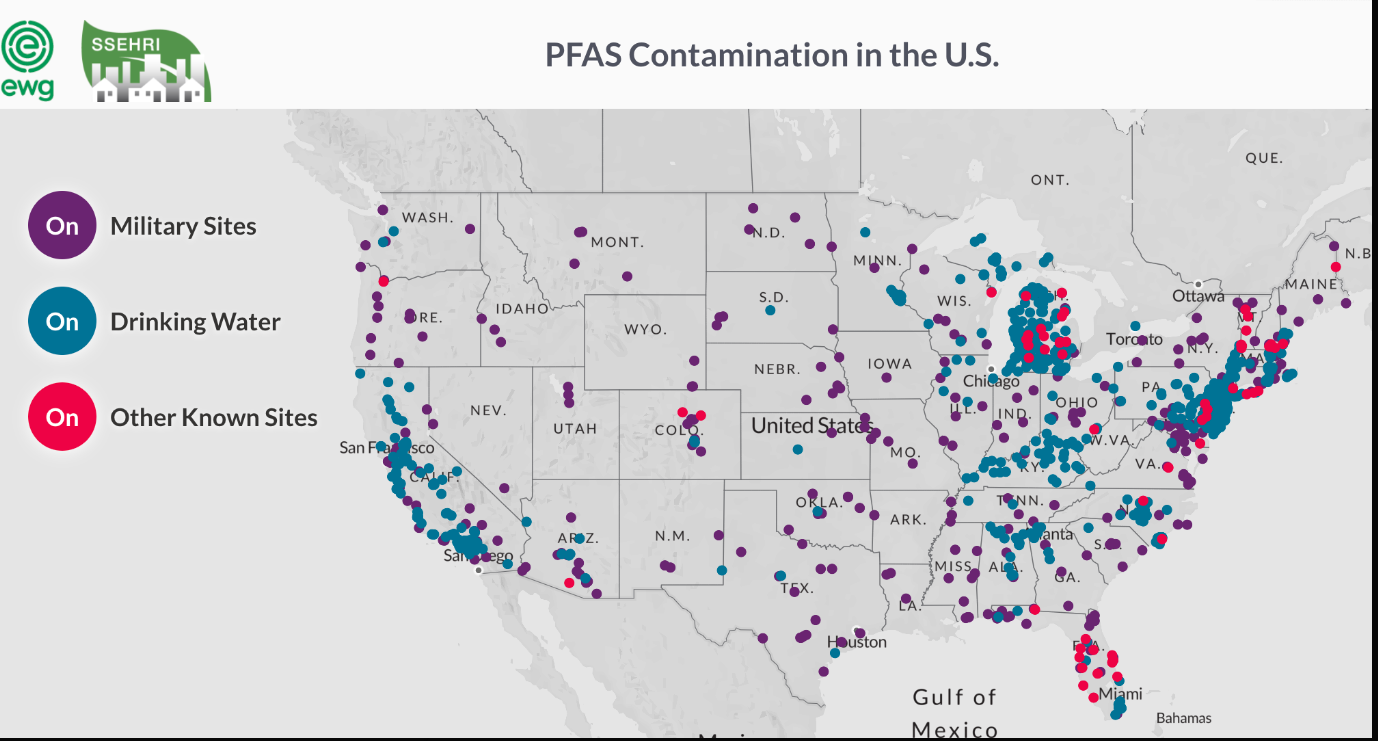
The issue of PFAS contamination is not confined to North Carolina. Across the United States, PFAS have been detected in water systems in all 50 states. The Environmental Working Group (EWG) reports over 8,800 sites with known PFAS contamination . States like Michigan, New Jersey, and California have identified numerous contaminated sites, prompting public health concerns and regulatory actions.EWG+1EWG+1AP News

Industrial Sources and Regulatory Challenges

Industrial facilities are significant contributors to PFAS pollution. In North Carolina, the Chemours Fayetteville Works plant has been under scrutiny for PFAS emissions, with reports indicating that contamination could persist in groundwater for decades . Despite efforts to regulate PFAS, challenges remain. For instance, proposed rules in North Carolina have been criticized for lacking enforceable limits and penalties, relying instead on voluntary compliance by industries .NC DPH Epidemiology+1The Guardian+1WRAL.com

Community Impact and Advocacy

Communities affected by PFAS contamination have expressed frustration over regulatory delays and insufficient action. Advocates in North Carolina have pushed for stricter state legislation in response to federal rollbacks on PFAS regulations . Public awareness and community engagement are crucial in addressing the PFAS crisis, ensuring that affected populations receive the necessary support and resources.North Carolina Health News

Conclusion

PFAS contamination represents a pressing environmental and public health issue in North Carolina and across the United States. The persistence of these chemicals in the environment and their associated health risks underscore the need for comprehensive regulatory measures, industrial accountability, and community advocacy. By staying informed and engaged, we can work towards mitigating the impact of PFAS and safeguarding our water resources for future generations.

Disclaimer: This blog is for informational purposes only and does not constitute legal or medical advice. If you believe you have been exposed to PFAS and are experiencing health issues, please consult with a qualified healthcare professional.

Unraveling Celebrity Privacy, Environmental Hazards, and Public Health in America

In today’s interconnected world, the lives of celebrities often become the subject of public fascination and speculation. Concurrently, pressing issues such as environmental pollution and public health challenges demand our attention. This blog delves into these seemingly disparate topics, exploring the importance of privacy, the impact of environmental decisions on communities, and the broader implications for public health.

The Carter Family’s Commitment to Privacy

Beyoncé and Jay-Z, two of the world’s most renowned artists, have consistently chosen to keep their family life private, especially concerning their twins, Rumi and Sir Carter. This decision has led to various rumors and speculations, particularly about their son, Sir. Some suggest that his limited public appearances are due to potential developmental challenges. However, these claims lack credible evidence and intrude upon the family’s personal boundaries.

In an interview, Beyoncé’s mother, Tina Knowles, described Sir as “very quiet” and “very, very smart,” shedding light on his reserved nature without delving into unfounded speculations. It’s essential to respect the family’s choice to maintain their children’s privacy and avoid perpetuating rumors based on limited information.

Environmental Concerns in Gaston County, North Carolina

While celebrity news captures public interest, pressing environmental issues unfold in communities nationwide. Gaston County, North Carolina, ranks as the fifth most polluted county in the state. The recent approval of a lithium mining project by Piedmont Lithium has raised significant environmental and public health concerns among residents.

Lithium Mining and Its Environmental Impact

Lithium mining, particularly through open-pit methods, poses several environmental risks:

  • Water Contamination: Mining activities can lead to the leaching of harmful substances, such as arsenic, into local water sources. In Gaston County, previous mining operations have left behind contaminated sites, including artificial ponds with high arsenic levels, posing health risks to both humans and wildlife.
  • Air Pollution: The extraction process generates dust and particulate matter, contributing to air quality degradation. Residents near proposed mining sites have expressed concerns about increased dust and its potential health impacts.
  • Ecosystem Disruption: Open-pit mining involves significant land disturbance, leading to habitat destruction and biodiversity loss. The construction of infrastructure, such as conveyor systems to transport extracted materials, further exacerbates environmental degradation.

Community Response and Regulatory Oversight

The approval of the Piedmont Lithium mining permit has been met with opposition from local communities. Residents have voiced concerns about potential water and air pollution, noise, and the overall impact on their quality of life. Trust issues have also emerged, with community members feeling that their concerns are not being adequately addressed by both the company and regulatory bodies.

Public Health Implications: A National Perspective

Environmental pollution has far-reaching effects on public health. Exposure to contaminants in air, water, and soil can lead to various health issues, including respiratory problems, neurological disorders, and developmental challenges in children.

The Role of Environmental Toxins

Studies have shown that exposure to environmental toxins can adversely affect neurological development. Contaminants such as heavy metals, pesticides, and industrial chemicals have been linked to an increased risk of developmental disorders. Ensuring clean air, water, and soil is crucial for safeguarding public health, particularly for vulnerable populations like children.

The Importance of Informed Decision-Making

Public awareness and community engagement are vital in addressing environmental and health challenges. Citizens must advocate for stricter environmental regulations, demand transparency from corporations, and support policies prioritizing public health over industrial interests. By staying informed and involved, communities can influence decisions that impact their environment and health.

Conclusion

The intersection of celebrity privacy, environmental issues, and public health highlights the complex landscape of modern society. While respecting the personal boundaries of public figures like the Carter family, it’s imperative to focus on tangible issues affecting communities nationwide. Environmental pollution, exemplified by the situation in Gaston County, poses significant risks to public health and requires collective action. By prioritizing informed decision-making and community advocacy, we can work towards a healthier and more equitable future for all.

Note: This blog is based on information from various sources, including interviews and environmental reports. For more detailed insights, refer to the following references:

For a deeper understanding of the Carter family’s approach to privacy and the environmental challenges in Gaston County, consider watching the following videos:

Disclaimer: The information provided in this blog is for educational purposes only and reflects the author’s interpretation of the available sources.

Sources and References

📌 Gaston County and Lithium Mining:

📌 Beyoncé and Jay-Z’s Family Privacy:

📌 Environmental and Public Health Concerns in the U.S.:

Money Talks: How Influence Shapes Our Reality

At the end of the day, money runs the show—whether it’s in politics, public health, or even the music industry. Case in point: The buzz surrounding Jay-Z allegedly spending $200 million to push Beyoncé’s country music career. While this claim has been debunked, it highlights a greater truth—those with wealth and power can reshape narratives, industries, and even public perception.

The same is true for our food, environment, and health policies. Corporations and lobbyists don’t just push their agendas; they buy their way into government, influencing regulations that determine what we eat, breathe, and inject into our bodies. Politicians, supposedly “civil servants,” often leave office as millionaires—not because their $200K-$300K salary magically compounded, but because they’re handsomely rewarded for serving corporate interests over the people they claim to represent.

The more toxins they allow into our food, water, and vaccines, the more we rely on medications to fix the very illnesses those toxins create. It’s a vicious cycle—one that fills corporate pockets while leaving the American people sicker, weaker, and more dependent on the same system poisoning them.

Disclaimer: Don’t Come for Me, I’m Just Connecting the Dots

Let’s be clear—I’m not here to get sued. Everything discussed is based on public information, speculation, and well-documented patterns that anyone with an internet connection can look up. If money can buy influence, the least we can do is buy back our health by being informed, asking questions, and refusing to blindly trust the very system profiting from our sickness.

Evolution of Childhood Vaccination Schedules: 1970s to Present

Over the past five decades, the recommended immunization schedule for children in the United States has undergone significant changes, reflecting advancements in medical research and a deeper understanding of disease prevention.

1970s Vaccination Schedule:

  • Diseases Covered: In the early 1970s, vaccines were administered to protect against the following diseases:
    • Diphtheria
    • Tetanus
    • Pertussis (Whooping Cough)
    • Poliomyelitis (Polio)
    • Measles
    • Mumps
    • Rubella
  • Vaccine Administration: The DTP vaccine combined protection against diphtheria, tetanus, and pertussis into a single shot. The MMR vaccine similarly combined measles, mumps, and rubella.
  • Number of Injections: By the time a child reached two years of age, they would have received approximately five injections, with no more than one shot administered during a single visit.

2025 Vaccination Schedule:

  • Expanded Disease Coverage: As of 2025, the immunization schedule has expanded to protect against additional diseases, including:
    • Haemophilus influenzae type b (Hib)
    • Hepatitis A
    • Hepatitis B
    • Varicella (Chickenpox)
    • Pneumococcal Disease
    • Influenza
    • Rotavirus
    • Meningococcal Disease
    • Human Papillomavirus (HPV)
    • COVID-19
  • Combination Vaccines: To address the increase in the number of vaccines, combination vaccines have been developed. These vaccines allow children to receive protection against multiple diseases with a single injection, reducing the total number of shots required.
  • Number of Injections: Despite the broader protection, the use of combination vaccines means that children may receive up to 27 injections by the age of two. However, the number of shots per visit is managed to minimize discomfort and ensure safety.

Key Changes Over Time:

  • Introduction of New Vaccines: Vaccines for diseases such as Hib, hepatitis A and B, varicella, and HPV were introduced in the late 20th and early 21st centuries, leading to their inclusion in the routine immunization schedule.
  • Development of Combination Vaccines: To reduce the number of injections, combination vaccines have been developed, allowing for multiple immunizations in a single shot.
  • Annual Updates: The immunization schedule is reviewed and updated annually to reflect new research findings, emerging public health concerns, and the availability of new vaccines.

These changes underscore the dynamic nature of public health strategies aimed at protecting children from preventable diseases. The evolution of the vaccination schedule reflects ongoing efforts to enhance the effectiveness and efficiency of immunizations, ensuring that children receive comprehensive protection with minimal disruption to their well-being.

Sources:

How Childhood Vaccines Have Changed: 1970s vs. Today

Over the past five decades, the childhood immunization schedule in the United States has dramatically expanded. What was once a short list of required vaccines has grown into a complex schedule that introduces multiple doses of vaccines from infancy to adolescence.

1970s Vaccination Schedule

In the 1970s, children typically received vaccines for the following diseases:

  • Diphtheria, Tetanus, and Pertussis (DTP) – Given as a single shot
  • Polio (OPV/IPV)
  • Measles, Mumps, and Rubella (MMR) – Combined into one vaccine

By the age of two, children received around 5 total injections. These shots were spaced out, often with only one shot per visit to minimize discomfort.

2025 Vaccination Schedule

Today, children receive vaccines for more than 15 diseases, including:

  • Hepatitis A & B
  • Haemophilus Influenzae Type B (Hib)
  • Rotavirus
  • Pneumococcal Disease (PCV)
  • Varicella (Chickenpox)
  • Meningococcal Disease
  • Human Papillomavirus (HPV)
  • Influenza (Yearly)
  • COVID-19 (For eligible age groups)

Now, children may receive up to 27 injections by age two, with multiple shots given at a single visit. Combination vaccines, such as the DTaP-IPV-Hib-HepB vaccine, have been introduced to reduce the number of injections, but the overall vaccine exposure has significantly increased.

What’s Changed?

  1. More Vaccines, Earlier Ages – Babies now receive multiple vaccines within their first year of life, whereas in the 1970s, vaccines were spaced further apart.
  2. Combination Vaccines – Newer vaccines combine multiple antigens in a single shot, reducing the number of injections but increasing exposure to adjuvants and preservatives.
  3. Annual Updates – The schedule is now updated yearly by the CDC and ACIP (Advisory Committee on Immunization Practices), sometimes adding new vaccine requirements for school entry.

Why the Increase?

  • Pharmaceutical companies have developed more vaccines, lobbying for their inclusion in the CDC’s recommended schedule.
  • Government mandates have expanded over time, with many states requiring vaccines for school attendance.
  • The rise in chronic illnesses, autoimmune disorders, and neurodevelopmental conditions has fueled debate over vaccine ingredients and their long-term impact on children’s health.

Sources & References

📌 Historical and Current Vaccine Schedules:

📌 Ingredients & Additives in Vaccines:

📌 Concerns About Increased Vaccinations:

Heavy Metal Exposure from Vaccines: Effects, Signs, and Detoxification

Concerns about heavy metal exposure, particularly from vaccine ingredients like thimerosal (a mercury-based preservative) and aluminum-based adjuvants, have sparked public debate. Understanding how these metals interact with the body, recognizing symptoms of toxicity, and exploring safe detoxification methods are crucial for informed decision-making.


Potential Effects of Heavy Metals in Vaccines

Thimerosal (Ethylmercury)

  • Historically used as a preservative in multi-dose vaccines, thimerosal metabolizes into ethylmercury, a compound that leaves the body faster than methylmercury (the toxic type found in seafood).
  • Research has consistently debunked any connection between thimerosal in vaccines and autism or developmental disorders.
  • Since 2001, thimerosal has been removed or reduced to trace amounts in nearly all childhood vaccines, except for some flu vaccines.

📌 Source: CDC – Thimerosal in Vaccines

Aluminum Adjuvants

  • Aluminum salts are added to some vaccines to enhance the immune response.
  • The amount of aluminum used in vaccines is small compared to daily exposure from food, water, and infant formula.
  • The FDA and World Health Organization (WHO) have deemed these levels safe, though excessive aluminum exposure from other sources can lead to neurological issues.

📌 Source: CHOP – Aluminum in Vaccines


Signs of Heavy Metal Toxicity

While the trace amounts of metals in vaccines are considered safe, high exposure to heavy metals from environmental sources (like pollution, industrial chemicals, or contaminated water) can lead to toxicity. Symptoms in children and adults may include:

Neurological Symptoms

  • Memory problems, developmental delays, learning difficulties
  • Mood swings, irritability, anxiety, depression

Physical Symptoms

  • Chronic fatigue, muscle weakness
  • Joint pain, headaches, dizziness

Digestive Issues

  • Nausea, vomiting, diarrhea
  • Abdominal pain, loss of appetite

📌 Source: NIH – Heavy Metal Toxicity


How to Detox from Heavy Metals

If someone is concerned about heavy metal exposure from environmental sources, here are some ways to help the body remove toxins:

1. Dietary Detox

  • Cilantro & Chlorella: Studies suggest that these help bind and remove metals from the body.
  • Sulfur-Rich Foods: Garlic, onions, and cruciferous vegetables (broccoli, cabbage) support the liver in detoxification.
  • High-Fiber Diet: Whole grains, fruits, and vegetables aid in the excretion of heavy metals.

📌 Source: Medical News Today – Heavy Metal Detox Foods

2. Chelation Therapy (For Severe Cases)

  • A medical treatment where special agents bind to metals in the bloodstream and help remove them via urine.
  • Only recommended for people diagnosed with heavy metal poisoning.

📌 Source: Healthline – Chelation Therapy

3. Hydration & Liver Support

  • Drinking plenty of water supports kidney function in flushing out toxins.
  • Milk thistle & turmeric help the liver process and eliminate toxins.

Conclusion

The trace metals in vaccines are not the same as environmental heavy metal exposure from pollution, lead pipes, or industrial chemicals. Extensive scientific research has shown that vaccines are safe, and metal-related concerns apply more to environmental factors than to vaccines themselves. However, detoxification practices can be beneficial for overall health, especially for those exposed to metals from food, water, or industrial sources.

Final Note: Always consult a healthcare provider before beginning any detox regimen, especially for children.

📌 Additional References:

Disclaimer
The information provided in this blog is for educational and informational purposes only and is not intended as medical advice, diagnosis, or treatment. The content is based on publicly available research, historical data, and opinions on environmental and public health topics.

While every effort has been made to ensure the accuracy and reliability of the information, readers should always consult with licensed medical professionals, toxicologists, or healthcare providers before making any health-related decisions, including detoxification methods, vaccine concerns, or medical treatments.

Additionally, this blog does not claim to provide definitive scientific conclusions on vaccines, environmental toxins, or heavy metal exposure. The intent is to encourage informed discussion and awareness. Readers are encouraged to conduct their own research and refer to official health organizations such as the CDC, FDA, WHO, and NIH for up-to-date and evidence-based medical guidelines.

The author and publisher disclaim any liability, loss, or risk incurred as a consequence, directly or indirectly, from the use or application of any information contained in this blog. This content does not replace professional medical, legal, or financial advice.

Furthermore, all references to public figures, corporations, and government agencies are based on publicly available information and are not meant to defame, misrepresent, or make unverified allegations. Any speculation should be treated as such.

If you are experiencing health concerns or suspect heavy metal toxicity, consult a licensed healthcare professional immediately.

Burning Through Bureaucracy: The Shocking Truth About California’s Wildfire Aid Blockade

Imagine an inferno consuming homes, forests, and lives while reinforcements equipped to fight the flames are stopped miles away—because of emissions certifications. This isn’t fiction; it’s a reality so absurd it feels surreal. Oregon dispatched 60 fire trucks and crews to assist California during its devastating wildfires. Yet, these reinforcements never reached the blaze because they were halted in Sacramento for not meeting California’s smog certification requirements. This blog dives into the facts, the alleged motives behind the delay, and the larger implications of prioritizing bureaucracy over human lives.


1. The Facts: Oregon’s Fire Trucks vs. California’s Emissions Policy

  • What Happened:
    • In the midst of California’s catastrophic wildfires, Oregon dispatched 60 fire trucks and crew members to provide aid.
    • Upon arrival in Sacramento, these trucks were stopped because they did not meet California’s stringent smog certification standards (Sacramento Bee, 2023).
  • California’s Smog Laws:
    • California enforces some of the strictest emissions regulations in the U.S., requiring vehicles, including emergency responders, to pass specific smog tests (California Air Resources Board, CARB).
    • Despite being fully operational and capable of saving lives, the trucks were sidelined until emissions compliance was addressed.

2. The Human Cost of Bureaucracy

  • Lives and Homes Lost:
    • As the fire trucks sat idle, wildfires continued to destroy neighborhoods, forests, and critical infrastructure.
    • The fires displaced thousands and caused millions in damages, raising questions about whether these delays exacerbated the crisis.
  • A System Prioritizing Rules Over Lives:
    • Critics argue that stopping these trucks highlighted the disconnect between regulatory priorities and the urgent need to save lives during natural disasters (LA Times, 2023).

3. Alleged Motives: The Rabbit Hole of Speculation

While emissions tests were the stated reason, some question whether deeper motives were at play.

  • Climate Politics and Control:
    • California has a vested interest in maintaining its image as an environmental leader, even during emergencies. Did this drive the decision to enforce smog tests over immediate aid?
  • Profit Over People:
    • Wildfires are big business, with billions allocated for recovery, rebuilding, and insurance claims. Could delaying aid benefit certain interests tied to these industries? (The New Yorker, 2023).

4. The Bigger Picture: Government Priorities and Human Suffering

This incident highlights a broader issue: the tendency of governments to prioritize policies, profits, and politics over human lives.

  • Examples of Government Missteps:
    • During Hurricane Katrina, delays in federal and state responses exacerbated the crisis, leaving thousands stranded (FEMA After-Action Report, 2006).
    • In 2020, essential medical supplies were held up due to bureaucratic red tape during the COVID-19 pandemic (New York Times, 2020).
  • Humanity Over Policy:
    • Emergencies demand flexibility and prioritization of human welfare over regulatory compliance. The Oregon trucks were fully equipped to save lives—should emissions certifications really have taken precedence?

5. Moving Forward: Solutions to Avoid Future Failures

  • Emergency Policy Reforms:
    • States should adopt exemptions for emergency vehicles during crises to ensure rapid response without bureaucratic delays.
  • Improved Coordination:
    • Federal oversight could ensure that mutual aid agreements between states prioritize action over compliance hurdles.
  • A Call for Accountability:
    • Citizens must demand transparency and accountability from their governments to prevent similar failures in the future.

Conclusion: The Flames of Mismanagement

California’s decision to halt Oregon’s fire trucks is a stark reminder of how bureaucracy can overshadow humanity. Whether driven by misguided priorities or alleged ulterior motives, this incident exposes the urgent need to reexamine how we respond to crises. In the end, saving lives should always come first—no emissions certification required.


Disclaimer

The content of this blog is based on publicly available information, historical examples, and creative interpretation. Allegations and speculations mentioned herein are intended to encourage critical thought and are not presented as definitive truths. Readers are encouraged to explore the references provided and draw their own conclusions.


About the Author

Audrey Childers, writing as A.L. Childers, is a prolific author and researcher known for exposing societal and systemic failures. With over 200 published works, her writings span history, spirituality, and societal critique, challenging readers to question the systems that shape their lives.

Notable works include:

  • The Hidden Empire: A Journey Through Millennia of Oligarchic Rule
  • Archons: Unveiling the Parasitic Entities Shaping Human Thoughts
  • The Anunnaki Prophecy: Humanity’s Forgotten Story

Audrey’s books are available on Amazon and other platforms. Visit her blog, TheHypothyroidismChick.com, for more thought-provoking content.


References

  1. Sacramento Bee, “Oregon Fire Trucks Blocked Over Smog Certifications,” 2023.
  2. California Air Resources Board (CARB), “Emissions Standards for Emergency Vehicles,” 2022.
  3. LA Times, “Wildfire Aid Delayed by Bureaucratic Red Tape,” 2023.
  4. The New Yorker, “The Business of Wildfires,” 2023.
  5. FEMA After-Action Report, “Lessons from Hurricane Katrina,” 2006.
  6. New York Times, “COVID-19 Medical Supplies Held Up by Red Tape,” 2020.

Let me know if you’d like additional details or further refinements!

The Dogs of Chernobyl: A Nuclear Apocalypse and Their Wild New Superpower

When you hear “Chernobyl,” you probably picture desolation—a radioactive wasteland frozen in time since that catastrophic nuclear meltdown on April 26, 1986. What you don’t expect is the idea of thriving life. Yet, in the eerie silence of the Chernobyl Exclusion Zone (CEZ), one group has not only survived but developed what can only be described as a genetic superpower. Meet the dogs of Chernobyl, descendants of the pets left behind when the world’s worst nuclear disaster turned a bustling town into a ghostly no-man’s land.

The Social Media Moment: When I First Heard About the Chernobyl Dogs

I’ll be honest—I came across this story while doom-scrolling through social media one night. A video caught my eye: a scruffy mutt darting between crumbling buildings, tail wagging as if it had just found a hidden stash of kibble. The caption read: “The indestructible dogs of Chernobyl: Proof that nature finds a way.” Hooked, I did what any self-respecting journalist and social media marketer would do—I fell into a rabbit hole of research that led me to Norman J. Kleiman’s groundbreaking study.

A Canine Legacy Born of Tragedy

Let’s rewind. When Chernobyl’s Reactor 4 exploded, spewing radiation into the atmosphere, the nearby population was evacuated almost overnight. Many people were forced to leave behind their pets, who roamed the abandoned streets, oblivious to the invisible danger around them. Fast forward decades, and an estimated 900 stray dogs now call the CEZ home.

These dogs aren’t just surviving; they’re thriving in an environment that would send most living creatures packing. How? That’s the million-dollar question. To find out, Kleiman, an environmental health scientist from Columbia University, and his team ventured into the CEZ to collect blood samples from 116 semi-feral dogs.

The Genetic Jackpot

The results were jaw-dropping. The dogs’ DNA revealed 400 “outlier loci”—genetic anomalies that set them apart from their non-radioactive cousins. Even more astonishing, 52 genes were directly linked to their ability to withstand the CEZ’s toxic cocktail of radiation and environmental hazards. These aren’t your average street dogs. These are mutants, in the most X-Men-like sense of the word.

Kleiman’s research, published in Canine Medicine and Genetics in March 2023, confirmed what seemed like science fiction: the dogs had adapted, evolving over generations to endure chronic radiation exposure. Their mutated genes likely act as armor against the very environment that should have been their doom.

Not Just Dogs: Mutant Wolves and Tree Frogs Join the Party

But wait, there’s more. The dogs aren’t the only creatures flexing their genetic muscles in the CEZ. Researchers have also discovered mutant wolves with uncanny resilience to cancer and Eastern tree frogs with black, radiation-absorbing skin. These animals are nature’s mic drop, proving that life doesn’t just endure—it adapts in ways we’re only beginning to understand.

What This Means for Us

Here’s where it gets even more fascinating (and a little unsettling). If dogs can adapt to extreme radiation, what does this mean for humans? Could our species one day develop similar resilience in the face of nuclear disaster? Kleiman hopes these studies will shed light on the long-term effects of radiation exposure and help us better understand how to protect ourselves.

The Human Paradox

Before you start packing your bags for a post-apocalyptic vacation in Chernobyl, let’s keep it real: the initial explosion was devastating. Thousands of animals—domestic and wild—died horrible deaths. The strays we see today are the exceptions, not the rule. Their story is both a testament to nature’s tenacity and a sobering reminder of the consequences of human error.

The Takeaway

The dogs of Chernobyl are more than survivors—they’re a symbol of resilience in a world that often feels on the brink of collapse. As a historian and journalist, I marvel at how their story connects us to the past while hinting at the possibilities of the future. As a social media marketer, I can’t help but see their viral potential. After all, who doesn’t love a story about scrappy underdogs (pun intended) defying the odds?

So, the next time you scroll past a video of these indestructible pups, take a moment to appreciate the extraordinary science behind their survival. And maybe, just maybe, start thinking about what resilience means in your own life. Because if a dog can evolve to survive a nuclear apocalypse, what’s stopping you from thriving in your own little disaster zone?

Disclaimer

The information and recipes in the blog are based on the author’s research and personal experiences. It’s for entertainment purpIt’s only. Every attempt has been made to provide accurate, up-to-date, and reliable information. No warranties of any kind are expressed or implied. Readers acknowledge that the author does not render legal, financial, medical, or professional advice. By reading this blog, the reader agrees that under no circumstance the author is not responsible for any direct or indirect loss incurred by using the information contained within this blog. Including but not limited to errors, omissions, or inaccuracies. This blog is not intended to replace what your healthcare provider has suggested.  The author is not responsible for any adverse effects or consequences from using any of the suggestions, preparations, or procedures discussed in this blog. All matters about your health should be supervised by a healthcare professional. I am not a doctor or a medical professional. This blog is designed as an educational and entertainment tool only. Please always check with your health practitioner before taking any vitamins, supplements, or herbs, as they may have side effects, especially when combined with medications, alcohol, or other vitamins or supplements.  Knowledge is power, educate yourself and find the answer to your healthcare needs. Wisdom is a beautiful thing to seek.  I hope this blog will teach and encourage you to take leaps in your life to educate yourself for a happier & healthier life. You have to take ownership of your health.

The views and services offered by Thehypothyroidismismchick.com are not intended to be a substitute for professional medical assistance but as an alternative for those seeking solutions for better health. We do not claim to diagnose, treat, prevent, or cure any disease but simply help you make physical and mental changes in your own body to help your body heal itself. Remember that results may vary, and if you are pregnant, nursing, taking medications, or have a severe condition, you should consult a physician or other appropriate medical professional before using any products or information on this site. Thehypothyroidisimchick.com assumes no responsibility for the use or misuse of this material. Your use of this website indicates your agreement to these terms. Our full disclosure, terms of use, and privacy policy.

The information on this site is not intended or implied to be a substitute for professional medical advice, diagnosis, or treatment. All content, including text, graphics, images, and information on or available through this website, is for general information purposes only. Opinions expressed here are the opinions of the writer. Never disregard professional medical advice or delay seeking medical treatment because of something you have read or accessed through this website.

This site is designed for educational purposes only and is not engaged in rendering medical advice, legal advice, or professional services. If you feel that you have a medical problem, you should seek the advice of your physician or health care practitioner. For additional information, please see Our full disclosure, terms of use, and privacy policy.

Our full disclosure, terms of use, and privacy policy. | thehypothyroidismchick

This piece was inspired by timeless wisdom and the understanding that true success lies not in the small battles, but in the pursuit of one’s purpose. –A.L. Childers

The Control of Weather and the Corporate Shield: How Policy Favors Profit Over People

The manipulation of natural elements such as weather is just one facet of a broader system in which corporate interests are protected and prioritized through carefully crafted policies and laws. In the United States, policies are often shaped to benefit large corporations, with laws passed to protect them from legal consequences and ensure their profitability, often at the expense of public health and consumer well-being. This chapter examines how corporations influence government policy, protect their interests through lobbying, and exploit regulatory loopholes, particularly in the food and health industries. Additionally, we explore how corporate practices differ in other countries where stricter regulations protect consumers.

Policies Protecting Corporations: Laws That Favor Profit Over Accountability

Many U.S. corporations, especially those in industries such as food production, pharmaceuticals, and energy, wield significant political power through lobbying and political contributions. Corporate lobbyists work to influence lawmakers, ensuring that regulations and policies benefit their industries, often by weakening consumer protections and shielding companies from lawsuits.

One such law is the Class Action Fairness Act (CAFA) of 2005, which made it more difficult for consumers to file class action lawsuits against large corporations. Before this law, class actions could be tried in state courts, which tended to be more favorable to consumers. However, under CAFA, most class action lawsuits are now moved to federal courts, where the rules are more favorable to corporations. This shift has made it harder for consumers to hold companies accountable for harmful products or practices.

Another example is the Protection of Lawful Commerce in Arms Act (PLCAA), passed in 2005, which grants gun manufacturers immunity from lawsuits when their products are used in crimes. While this law applies specifically to firearms, it set a precedent for shielding other industries from liability. Similar protections exist in industries such as pharmaceuticals and energy, where companies are shielded from certain types of litigation if they follow regulatory guidelines, even if those guidelines are insufficient to protect consumers.

Lobbying and Political Influence: Swaying Votes for Corporate Gain

The lobbying industry plays a significant role in shaping legislation to favor corporate interests. According to OpenSecrets.org, industries such as pharmaceuticals, energy, and food production spend billions of dollars each year lobbying Congress and federal agencies to pass favorable laws and block regulations that could harm their profitability.

For example, the pharmaceutical industry has long been involved in lobbying efforts to influence healthcare policies. One notable instance was the passage of Medicare Part D in 2003, which included a provision that explicitly prohibits Medicare from negotiating drug prices. This clause has resulted in significantly higher prices for prescription drugs, benefiting pharmaceutical companies but burdening taxpayers and patients.

Another example is the Agriculture Improvement Act of 2018, commonly known as the Farm Bill. This bill provided billions in subsidies to agricultural corporations, particularly those that produce corn, soybeans, and other commodity crops. These crops are the building blocks of highly processed foods that contribute to the obesity epidemic and chronic disease. While the Farm Bill benefits agribusiness, it does little to support small farmers or promote healthier diets.

Lobbying groups such as the American Beverage Association have also worked to block efforts to regulate sugar-sweetened beverages, which are a major contributor to diabetes and obesity. When cities like Philadelphia and San Francisco tried to pass soda taxes, lobbyists funded aggressive campaigns to defeat these measures. Although some cities succeeded in passing soda taxes, the beverage industry’s lobbying efforts have largely succeeded in preventing widespread regulation of sugary drinks.

Corporate Immunity and Stockholders’ Interests

One of the reasons corporations are so eager to influence policy is to protect the interests of their stockholders. By crafting laws that protect them from liability or regulatory oversight, corporations ensure that their profits—and thus their stock prices—remain high. For example, the pharmaceutical and medical device industries have long been protected from certain types of lawsuits by laws like the National Childhood Vaccine Injury Act of 1986, which shields vaccine manufacturers from liability in civil lawsuits related to vaccine side effects.

This corporate shield ensures that profits remain steady, and stockholders benefit, even if the products or services provided by the corporation harm consumers. In industries such as healthcare and food, this dynamic has led to a perverse cycle in which consumers are harmed by the very products they consume, while corporations profit from both the initial harm and the treatments required to address it.

International Comparisons: Stricter Regulations Abroad

While corporations in the United States enjoy considerable freedom when it comes to product ingredients and marketing, many other countries have stricter regulations designed to protect consumers from harmful substances. The differences between U.S. and European food regulations, for example, are striking. Here are 10 examples of common food products that contain different ingredients in the U.S. compared to other countries:

  1. Kraft Mac & Cheese
    • U.S.: Contains artificial colors (Yellow 5 and Yellow 6).
    • Europe: Uses natural colorings such as paprika and beta-carotene.
  2. Mountain Dew
    • U.S.: Contains brominated vegetable oil (BVO), a chemical linked to health issues.
    • Europe and Japan: BVO is banned and replaced with safer emulsifiers.
  3. Quaker Oats Chewy Granola Bars
    • U.S.: Contains high-fructose corn syrup.
    • Europe: High-fructose corn syrup is either banned or significantly limited.
  4. Skittles
    • U.S.: Contains artificial colors like Red 40, linked to hyperactivity in children.
    • Europe: Uses natural colorings from fruits and vegetables.
  5. McDonald’s Fries
    • U.S.: Fried in oil containing dimethylpolysiloxane, an anti-foaming agent.
    • U.K.: Uses a simple vegetable oil blend without additives.
  6. Ritz Crackers
    • U.S.: Contains partially hydrogenated oils, a source of trans fats.
    • Canada: Trans fats are banned.
  7. Gatorade
    • U.S.: Contains artificial coloring, including Yellow 5.
    • Europe: Uses natural colors like turmeric.
  8. Frosted Flakes
    • U.S.: Contains BHT (butylated hydroxytoluene), a preservative banned in other countries.
    • U.K.: BHT is banned and not used in food products.
  9. Wheat Thins
    • U.S.: Contains monoglycerides, which can contain trans fats.
    • Europe: Stricter regulations limit the use of harmful additives.
  10. M&M’s
    • U.S.: Contains Red 40 and Yellow 5.
    • Europe: Uses natural colorings like beetroot and paprika.

In these examples, American consumers are exposed to chemicals and additives that have been banned or restricted in other countries due to health concerns. The difference is largely due to stricter consumer protection laws in Europe, where the precautionary principle is more commonly applied. In the U.S., however, corporations are often allowed to use potentially harmful ingredients until they are proven dangerous, a standard that benefits industry over public health.

The Vicious Cycle: Profiting from Poor Health

The food and pharmaceutical industries are two of the most profitable sectors in the U.S. economy, and their success is closely intertwined with the poor health outcomes of the population. This creates a vicious cycle in which corporations profit from making people sick and then profit again from treating the very illnesses they helped cause.

  1. Food Industry Profits: Corporations sell highly processed, nutrient-poor foods filled with sugars, unhealthy fats, and additives, contributing to obesity, heart disease, diabetes, and other chronic conditions.
  2. Pharmaceutical Profits: Once consumers become sick, they require medications to manage their conditions. The pharmaceutical industry profits from drugs to lower cholesterol, control blood sugar, and treat heart disease, among other conditions.
  3. Medical Industry Profits: The healthcare system, including hospitals, medical device companies, and insurance providers, also profits from surgeries, treatments, and long-term management of chronic diseases.

In this cycle, the consumer is both the victim and the source of profit, while stockholders, executives, and corporations continue to benefit financially. The longer the cycle persists, the more entrenched these industries become, and the more difficult it is to reform the system. People’s health is increasingly commodified, with every aspect of illness offering another opportunity for profit.

Conclusion: A System Built for Profit, Not Health

The food and pharmaceutical industries, protected by favorable laws and policies, have created a system where profit margins are prioritized over public health. From lobbying efforts that shape legislation to government subsidies that favor unhealthy products, corporations have rigged the system to ensure their continued dominance. Consumers, meanwhile, pay the price with their health, trapped in a cycle of poor nutrition, chronic illness, and dependency on medications.

While other countries impose stricter regulations to protect their citizens from harmful ingredients, the U.S. continues to allow corporations to put profit before people. Addressing this issue will require a complete overhaul of how food is produced, regulated, and marketed, as well as a shift in healthcare from treating symptoms to promoting true wellness and prevention.

References:

  • “How the Class Action Fairness Act Hurts Consumers,” Public Citizen.
  • Malkan, Stacy, “Behind the Lobbying: How Big Food Influences Policy,” *U.S. Right to

A Storm of Deception: How Government Interests May Be Exploiting Natural Disasters

The recent devastation in the North Carolina mountains has left countless bodies scattered across the landscape—people who have tragically lost their lives due to the destruction brought on by Hurricane Helene. What we are witnessing is beyond heartbreaking; it is an unprecedented disaster that some, including myself, believe was not purely natural. The U.S. government’s interest in the region’s valuable resources—especially lithium and quartz—raises serious questions about the true origins of this disaster. The smell of death lingers in the air, an eerie reminder of the lives that have been lost.

And yet, the silence from mainstream news is deafening. TikTok is the only platform where we are seeing firsthand reports of the devastation, including the disturbing smell from the decomposing bodies, with locals posting videos and updates. Graves were disturbed by the floodwaters, and the dead have literally been unearthed. However, I want to reassure grieving families: our bodies are merely vessels, and those lost in the floods are not trapped in the coffins—they have moved on. But the horror remains, and the questions loom larger than ever.

The Resource Grab: Lithium and Quartz at the Center

There are significant political and economic motives to consider. The areas hardest hit by the hurricane, particularly King Mountain and the surrounding regions, sit atop vast deposits of lithium, a critical resource for the green energy economy. With the world rushing toward electric vehicles and clean energy technologies, lithium is more valuable than ever. Control over these deposits could mean control over the future of global technology. This makes it all the more suspicious that this disaster occurred in precisely the areas that could be prime targets for resource exploitation.

But here’s where it gets worse: if the government declares the affected areas disaster zones, they can invoke eminent domain. This allows the government to seize private property for public use, and here’s the kicker—they only have to pay landowners what the property was worth five years ago, not what it’s worth today. Imagine your home being turned into a watery lot or sliding down the side of a mountain, and in return, you receive a fraction of what it’s truly worth. Meanwhile, corporations can swoop in, establish lithium mines, and extract billions of dollars in resources, leaving the original landowners with nothing but grief and a government check that doesn’t even come close to replacing what they’ve lost.

This is no mere theory. Spruce Pine, North Carolina—the world’s only source of high-purity quartz used to manufacture semiconductors—was also devastated. Quartz from Spruce Pine is essential to the global technology industry. Without it, semiconductor production would halt, crippling everything from smartphones to cars. Yet, not one major news outlet has covered the destruction of this vital resource. Why? Because controlling the semiconductor supply chain gives the U.S. government, and by extension the global elites, immense power over the global economy. The less attention the public pays, the more quietly this power grab can take place.

HAARP and DARPA: Government Weather Manipulation

Let’s go deeper. There are reasons to believe that Hurricane Helene was not a natural occurrence, but rather a disaster engineered for political and economic purposes. The High-Frequency Active Auroral Research Program (HAARP), a government-funded project, has long been suspected of manipulating weather patterns. Established in 1993, HAARP was designed to study the ionosphere but has been linked to more nefarious uses, such as causing earthquakes, manipulating weather, and interfering with global communications.

HAARP, in conjunction with DARPA (the Defense Advanced Research Projects Agency), has the technology to influence natural systems. Declassified military documents, including the U.S. Air Force report “Weather as a Force Multiplier: Owning the Weather in 2025,” outline strategies to use weather as a tool of warfare. This isn’t science fiction—this is documented strategy, and the devastation we’re witnessing in North Carolina may be a direct result of these covert technologies.

I believe the hurricane, and the subsequent destruction, was deliberately created to allow the government to exploit the rich natural resources in these areas. If it were just a typical hurricane, we wouldn’t be seeing the widespread, targeted devastation in regions that just happen to sit on some of the most valuable mineral resources in the world.

Personal Loss and Local Devastation

On a personal level, this disaster has hit home in more ways than one. Wilkes County, where my family owned five acres of hunting land passed down from my father-in-law, is gone. The entire side of the mountain slid down and was washed away, and now that land—so rich in history and sentiment—no longer exists. But as devastating as our loss is, it pales in comparison to what others have faced.

Entire towns have been wiped off the map. Communities that were once vibrant and full of life are now nothing but remnants buried under mud and floodwaters. This isn’t Florida, where hurricanes are expected. This is the North Carolina mountains—this doesn’t happen here. That’s why I firmly believe this disaster was engineered, a calculated move by the government to achieve a deeper agenda. This wasn’t an act of Mother Nature; it was, in my opinion, the result of government intervention.

When I worked as a team lead supervisor opening the first Taco Bell in Black Mountain, I fell in love with the area. We had so much fun getting to know the locals, spending our days off in Asheville, and exploring the beauty of the mountains. Those memories make it even harder to process the destruction happening now. There are people trapped in the mountain areas, caught off guard without any warning. The government response has been slow and inadequate—Kamala Harris, when asked what the administration was doing to help the survivors, offered nothing but silence.

A Deafening Silence from the Media

It’s not just the government’s inaction that’s concerning. The media, too, has remained largely silent on the true extent of the devastation. None of the major news outlets are reporting on this, save for the firsthand accounts circulating on TikTok and Facebook. Locals are posting videos of bodies, ruined homes, and the unimaginable destruction in their communities. Meanwhile, mainstream media continues to focus on everything but the humanitarian disaster unfolding in our mountains.

The stories coming out of these regions are heartbreaking. Graves were disturbed during the floods, and the dead were literally unearthed, adding another layer of horror to an already catastrophic situation. As I mentioned earlier, I want to reassure families that their loved ones are not trapped in the coffins. Our bodies are vessels, and while the disturbance of the graves is upsetting, the souls of those lost have moved on. Still, the pain and loss are unimaginable.

What You Can Do

This disaster is about more than just a hurricane. It’s about power, control, and resource exploitation. The government’s actions—or lack thereof—speak volumes, and the silence from mainstream media suggests there is something they don’t want us to know.

If you want to help:

  • Stay informed by following local accounts on social media like TikTok and Facebook for real-time updates.
  • Question the government’s narrative and the corporate motives behind the disaster response.
  • Demand transparency from your elected officials and local authorities.
  • Share this information with others—don’t let the voices of those affected be drowned out.

This is not just a natural disaster; this is a man-made catastrophe, engineered for profit at the cost of human lives. The truth must come to light, and those responsible must be held accountable.

References:

  • “Weather as a Force Multiplier: Owning the Weather in 2025,” U.S. Air Force report.
  • “Angels Don’t Play This HAARP: Advances in Tesla Technology,” by Dr. Nick Begich.
  • Firsthand reports from TikTok and Facebook documenting the aftermath of Hurricane Helene in North Carolina.
  • City of Belmont Facebook posts on the ongoing Boil Water Advisory and flooding aftermath.

We must stay vigilant, stay informed, and never stop seeking the truth. This is our land, our people, and our future—and it’s time we take it back.

The Difference Between Fat Americans Today Versus 200 Years Ago: A Warning from A.L. Childers

In the last 200 years, America has seen a dramatic shift in what it means to be overweight. Over two centuries ago, being fat was often a symbol of wealth and prosperity. It indicated that one had the financial means to eat well and live comfortably. However, in today’s society, being overweight often points to a far more concerning reality: we are being poisoned by fake foods, harmful medications, and contaminated water. This shift is not just a change in perception but a warning sign of the systemic poisoning of our bodies and minds.

Poison in Our Water

The average tap water is not as safe as many believe. Various chemicals are introduced into our water supply under the guise of sanitation and safety. For example, fluoride is added to prevent tooth decay, but excessive fluoride can lead to skeletal fluorosis, a condition that damages bones and joints. Chlorine, used to kill harmful bacteria, can react with organic matter to form trihalomethanes (THMs), which have been linked to an increased risk of cancer. Moreover, other contaminants such as lead, pesticides, and pharmaceutical residues often find their way into our drinking water, further endangering our health.

The Safe Drinking Water Act (SDWA) of 1974 was established to protect the quality of drinking water in the U.S. by regulating the nation’s public water systems. Despite this, many contaminants still seep through due to industrial activities and agricultural runoff. Policies continue to evolve, but they often lag behind the rapid pace of contamination, and enforcement can be inconsistent, leaving citizens vulnerable.

Poison in Our Air

Air pollution is another silent killer. Corporations release hazardous chemicals into the air, contributing to smog, respiratory diseases, and even changes in our DNA structure. The Clean Air Act of 1970 aimed to control air pollution on a national level. However, despite amendments in 1990 to address issues like acid rain, urban air pollution, and toxic air emissions, many companies exploit loopholes, paying lobbyists to influence policy decisions in their favor.

For instance, the rollback of the Clean Power Plan in 2019 allowed for more lenient regulations on carbon emissions from power plants, exacerbating air quality issues and contributing to climate change. These regulatory changes are often influenced by corporate interests rather than public health concerns, highlighting a significant flaw in our system.

Poison in Our Food

Our food is laden with chemicals from pesticides, herbicides, and preservatives, all designed to enhance appearance, prolong shelf life, and increase yield. Glyphosate, a widely used herbicide, has been linked to cancer, while atrazine, another herbicide, has been shown to disrupt endocrine function and reproductive health.

The impact on our bodies is profound. These chemicals contribute to inflammation, obesity, diabetes, and a host of other chronic diseases. They also lead to costly doctor appointments and treatments that could be avoided with cleaner food sources.

The Food Quality Protection Act (FQPA) of 1996 was introduced to ensure a safer food supply by setting stricter safety standards for pesticides. Despite this, many harmful chemicals still make their way into our food chain due to industrial farming practices and insufficient regulatory oversight.

Poison in Our Meat

Animals raised for consumption are often injected with hormones and antibiotics to promote growth and prevent disease. These substances can remain in the meat, posing health risks to humans. Hormones like rBGH (recombinant bovine growth hormone) used in dairy cows have been linked to cancer, while the overuse of antibiotics contributes to the rise of antibiotic-resistant bacteria, a significant public health threat.

Corporate Influence and Policy

The intersection of corporate interests and public policy is where the root of the problem lies. Corporations invest heavily in lobbying efforts to shape regulations that favor their operations, often at the expense of public health. For example, the Chemical Safety Improvement Act of 2013 was designed to update the Toxic Substances Control Act of 1976, but critics argue that it fell short of adequately protecting consumers from harmful chemicals due to industry influence.

Conclusion

The contrast between the wealthy, well-fed Americans of 200 years ago and today’s chemically burdened population is stark and alarming. It’s a testament to how far we’ve strayed from natural, wholesome living. We must demand greater transparency and stricter regulations to protect our health and well-being. As a society, we need to be vigilant, educated, and proactive in addressing these issues, pushing back against corporate interests that prioritize profit over people. Let’s not be complacent; our health and the future of our nation depend on it.