
Tag Archives: #faith

The Brighter You Shine, the Longer the Shadows: A Christmas Reflection for the Misfits, the Fighters, and the Ones Who Refuse to Dim

By A.L. Childers — the author who learned to glow anyway.


❄️ A Christmas Tale for Anyone Who Learned to Glow the Hard Way

It is a truth universally whispered—usually behind gloved hands at holiday gatherings—that the more a woman shines, the more shadows she casts.

Charles Dickens might have said it differently, of course. He’d lace it with soot, candle smoke, and the quiet scraping of ghosts past. But I, A.L. Childers, have lived enough winters to tell you plainly:

Light creates shadows.
And the brighter the soul, the darker the envy that gathers at its edges.

But oh… what a beautiful thing it is to shine anyway.

Imagine it: a warm Christmas streetlamp glowing against a bitter wind. The lamp doesn’t apologize for its glow. It doesn’t shrink when shadows stretch behind the feet of those who walk past. It doesn’t tremble when the snow falls harder, or when the darkness grows bolder.

It just does what it was born to do—
illuminate.

So do you.
So do I.
So does every woman who has crawled through a winter she didn’t think she’d survive.


🎄 The Shadows Always Arrive Before the Blessings

I learned long ago that shadows aren’t proof of failure—
they are evidence of illumination.

Every time I wrote a book that exposed truth (The Lies We Loved: How Advertising Invented America), someone felt the sting.
Every time I cracked open pain and rebuilt myself from the ashes, someone muttered that I was “too much.”
Every time I peeled back the curtain of power structures, propaganda, and hidden histories (The Hidden Empire, The Divide Machine ), another shadow stretched its long fingers across my path.

But darling…
shadows don’t form in the dark.
They form in your light.

If you cast a long shadow, it is only because you are standing tall.


🕯️ A Dickensian Reminder: Even Scrooge Needed a Ghost to Wake Him Up

Your glow may disturb someone’s slumber.
Your growth may unsettle their comfort.
Your becoming may haunt the people who preferred you small.

But Christmas—true Christmas—is not about hiding your light so others feel less cold. It’s about warmth, rebirth, and the quiet rebellion of refusing to stay buried.

In a world that profits from silence…
in a society shaped by advertising, fear, and the stories we were told to worship…
shining is a revolutionary act.

And if your brilliance wakes a few ghosts?
Good.
Some people need haunting.


🎁 Your Light is Your Gift — Don’t Wrap It in Apology

This season, I want you to do something bold:

Shine louder.
Shine wider.
Shine without shrinking.

Be the lamp in the snow that travelers seek when they’ve lost their way.
Be the warmth in a cold world.
Be the woman who refuses to dim so that others can stay comfortable in their shadows.

And if the shadows grow longer behind you?
Smile.
You’ve earned them.


Books by A.L. Childers That Celebrate Light, Truth, and Becoming

Here are a few of mine that walk this path of illumination—with all its shadows:

The Lamp of Christmas Eve

The Lamp at the End of the Corridor: A Story of Rejection, Redirection, and Resurrection for the Misfit Soul

And many more at: amazon.com/author/alchilders


✍️ About the Author

A.L. Childers writes by candlelight and conviction, weaving truth and fiction with the same steady hand. Born in the quiet South and raised by storms, she has written over 200 books spanning history, horror, wellness, rebellion, and the ache of being human.

During the holidays, she believes in three things:
second chances, hot tea, and the unstoppable brilliance of a woman who refuses to dim.


⚖️ Disclaimer:

This blog reflects personal observations, creative storytelling, and opinion-based reflections by author A.L. Childers. It is not intended as legal, medical, or historical advice. All references to books and themes are part of the author’s published works and creative portfolio.


A Closed Door at the End of the Hall: A Lesson in Rejection, Protection, and Providence

By A.L. Childers — who has learned that fate often saves us by disappointing us first.


There are moments in every life — whether lived under gas lamps and cobblestone streets or beneath the whir of modern fluorescent lights — when the heart reaches for something with all its might… and yet the very thing it desires slips quietly from its grasp.

It is a universal experience, as old as humanity itself.
The job we longed for.
The chance we thought would change everything.
The door that seemed meant for us — only to shut with such finality we feel its echo in our bones.

So it was with me.

After offering my time, my enthusiasm, and my honest effort, I found myself waiting for a response that never came. They had promised a further interview — the kind that sits at the edge of hope like a candle trembling at the mercy of a cold draft — and yet no message arrived. No explanation. Only silence.

At first, the sting was sharp, as all disappointments are.
But as the dust settled, clarity emerged like a gentle hand upon the shoulder.

For this was not rejection.
No — this was protection.
A divine redirection.
A quiet form of correction.
A whisper of introspection.
A moment of holy intervention.

Life has its own rhyme —
“What you lose today is guarding your tomorrow.”

Sometimes a “no” is simply fate saying,
“Not here. Not that door. Not that sorrow.”


🌫️ The Door That Closed Was Never Mine

Had I entered it, I would have discovered:

  • A long and weary road
  • Endless hours of toil
  • Traffic that devours both time and spirit
  • A sameness of pay with a heaviness of burden
  • A workplace where communication faltered before employment even began

It was as if life whispered through the keyhole:

“Child, this door does not lead to your peace.”

And though Dickens wrote often of fate’s twists, this lesson is my own.
An A.L. Childers lesson — carved from hope, disappointment, and revelation.

Providence — though mysterious — is never unkind.
It simply sees what we cannot.


🌧️ Why We Want What We Want (And Why It Doesn’t Always Want Us Back)

Sometimes we pursue opportunities not out of passion, but out of pressure.

Bills gather like winter fog.
Responsibilities tap insistently at our conscience.
Fear of not-enough tightens around our hopes like a cold December wind.

We chase any door with a handle simply because it promises temporary warmth.

But not every warm door leads to a warm life.

Some doors hide storm clouds.
Some hide burnout.
Some hide futures we were never meant to carry.

And so fate — in its quiet, old-fashioned wisdom — closes it.

Not out of cruelty.
But out of care.

A closed door doesn’t punish you —
it protects you from what you can’t yet see.


🚪 The Hallway of Waiting Is Where Transformation Happens

When one door shuts, we stand in the hallway.
Alone.
Unsure.
Listening for any sign of what comes next.

But the hallway is where we grow.
It is where:

✨ Resilience is shaped
✨ Patience is stretched
✨ confidence is rebuilt
✨ purpose becomes clearer

It is the space where the soul learns what it truly wants.

“Between the ending and the beginning,
the becoming takes place.”

The bills still need paying.
The days still march on.
But even in the tightest seasons, one truth remains:

A closed door is not the conclusion —
it’s the transition.


📚 Part-Time Ghostwriting + Writing My Books: The Unexpected Blessing

In the quiet left by unanswered messages, something unexpected rose in its place.

A rhythm that did not drain.
A routine that did not suffocate.
A life that allowed breathing room.

Part-time ghostwriting offered simplicity, structure, and steadiness.
Writing my own books offered freedom, fire, and purpose.

Together, they formed a sanctuary —
a life aligned with my spirit, not against it.

It was a surprise blessing wearing the disguise of disappointment.


🔔 For You, Dear Reader

If you are standing before a door that did not open, hear me:

You have not failed.
You have not been overlooked.
You have not been cast aside.

You have been redirected.

Toward peace.
Toward purpose.
Toward a future that honors your heart.

Life removes you from places that are unworthy of your calling.

And when the right door opens — as surely it will —
You will see why the others had to close.


📝 Disclaimer

This blog reflects personal experiences and interpretations. It is intended for inspiration and reflection, not as professional employment advice.


👩‍💼 About the Author

A.L. Childers is a bestselling author, truth-seeker, and storyteller based in Charlotte, NC. She writes about resilience, reinvention, hidden history, and the quiet wisdom inside life’s turning points.

A powerful, Dickens-style reflection by author A.L. Childers on why closed doors are often divine protection—not rejection. Discover how life reroutes us toward purpose, peace, and unexpected blessings through ghostwriting, creativity, and trusting the process.

✨ When Evil Walks Among Us: The Silent Gift of Discernment

There are moments in life when we must choose our battles—not every demon needs to be exposed, and not every spiritual encounter calls for confrontation. Some moments require silent strength, unwavering faith, and the wisdom to simply let things be.

🧠 The Quiet Gift

For as long as I can remember, I’ve had the gift of discernment. I don’t announce it. I don’t wear it like a badge. It’s a sacred responsibility, not a conversation starter. This ability allows me to sense when something—or someone—is cloaked in darkness, even if the rest of the world sees nothing unusual.

Sometimes I see the distortions in a person’s face, subtle shifts that reveal the entity behind the smile. Other times, it’s a smell—not a physical odor, but a spiritual stench that tells me I’ve stepped into the presence of something not of the Light.

And though I carry this gift, I’ve learned a crucial truth: not every battle is mine to fight.


🏫 The Day I Met a Demon in the School Hallway

Not long ago, I was working as a substitute teacher at my grandson’s school. The halls buzzed with the sound of children laughing and sneakers squeaking against polished floors. It was just another morning—or so it seemed.

As I stood by the classroom door, I felt it before I saw it. A wave of darkness swept through the corridor, heavy and foul. Then my eyes met theirs.

For a split second, the mask slipped. I saw the distortion in their features—sharp, twisted, unmistakably demonic. The air thickened, and I could smell the evil radiating from their presence. It wasn’t metaphorical; it was as real as smelling smoke before seeing the fire.

But I didn’t flinch.
I didn’t speak.
I didn’t reveal what I knew.

I simply nodded politely and kept walking.

Why? Because this was not the moment to fight. Discernment isn’t just about seeing—it’s about knowing when to act and when to let go. In that instant, I understood: revealing what I saw would only create chaos and invite unnecessary conflict. So I stood firm in silence, fully aware, fully covered, fully protected.


🛡 A Shield Over My Grandson

What gives me peace is knowing that my grandson is not walking this world unguarded. Long before that day, I had placed a shield of protection around him—a spiritual covering that surrounds him everywhere he goes. Those who see him, whether they understand it or not, recognize that light. Even when I’m not there, they tremble at the thought of my presence, my faith, and the power that shields him.

He is a chosen one. His light is bright. And I know, deep within, that no darkness can dim what was divinely placed within him.


⚔️ Knowing When to Fight—and When to Walk Away

Discernment is not about ego. It’s not about pointing fingers or “calling people out.” It’s about wisdom. In this world, we are engaged in spiritual battles every day. But not all battles are meant for the same time or the same warrior. Some require silence. Some require prayer. Some require you to simply walk away with confidence, knowing that unseen forces are already at work.

So if you carry the gift of discernment, remember this:
You don’t have to expose every evil you encounter. Sometimes, your silence speaks louder than words.


⚠️ Disclaimer

This blog reflects the personal spiritual beliefs and lived experiences of the author. It is not intended to diagnose, label, or accuse any specific individual. Readers are encouraged to use their own discernment and spiritual guidance when interpreting these experiences.


✍️ About the Author

Audrey Childers (A.L. Childers) is an author, researcher, and storyteller with a deep passion for exploring the unseen layers of reality. Through her writing, she weaves personal experiences, history, and spiritual insight to empower others to recognize their inner strength and navigate the complexities of the modern world. Audrey lives in North Carolina and writes under several pen names, building a legacy of truth, protection, and light for future generations.

Who Were the Cathars?

The Cathars did not see themselves as revolutionaries. They saw themselves as restorers of truth — a people who remembered that this world was not holy but counterfeit, ruled by Rex Mundi, the “king of this world.” Their name, drawn from the Greek katharos (“the pure ones”), reflected their pursuit of purity of spirit, not through rituals of stone cathedrals but through simplicity, compassion, and awakening.

Rome, however, saw them as heretics of the most dangerous kind. Not because they worshipped pagan gods or practiced sorcery, but because they lived a form of Christianity so radically different that it exposed the corruption of the institutional church.

Origins: From Bogomils to Languedoc

The Cathars emerged in the 11th and 12th centuries in the region of Languedoc (southern France), a land of troubadours, merchants, and relative openness compared to northern Europe. Their roots trace to the Bogomils of the Balkans — a dualist Christian movement from Bulgaria that taught the world was created not by God, but by an evil power. These teachings spread westward along trade routes, finding fertile ground in Occitania.

By the time they took hold in Languedoc, Cathar communities had become vibrant, drawing followers across social classes — from peasants to nobles. Why here? Because Languedoc’s culture already valued tolerance, literacy, and independence from northern French control. It was a land where an alternative Christianity could thrive — at least for a time.

Perfecti vs. Credentes

The Cathar community was structured in two groups:

  • Perfecti (the Perfects): Spiritual leaders who lived in radical purity. They renounced meat, wealth, war, and sex, devoting themselves fully to the God of Light. They were seen as living examples of the awakened life.
  • Credentes (the Believers): Ordinary followers who respected the Perfecti, sought their guidance, and prepared — often at the end of life — to receive the consolamentum (a laying-on of hands seen as the true baptism of spirit).

This division wasn’t about hierarchy or domination; it was about responsibility. The Perfecti modeled the awakened life, while the Credentes lived in the world but carried the spark within them.

Ethics: Living Against the World

If the material world was a prison, then the way to resist Rex Mundi was to live as if you were no longer his subject. Cathar ethics were strikingly different from those of their Catholic neighbors:

  • Simplicity and Poverty: They rejected wealth and opulence. Unlike Rome’s bishops clothed in silk, Cathar Perfecti wore plain black robes and lived with little.
  • Vegetarianism: They abstained from meat (except fish), believing it tied them too closely to the cycle of material corruption.
  • Refusal of Oaths: They would not swear oaths, even in court, because to bind oneself to earthly rulers was to submit to the god of this world.
  • Rejection of War and Violence: They would not kill, even in self-defense, embodying a radical form of nonviolence.
  • Equality of the Sexes: Women could serve as Perfectae, and their voices carried weight equal to men — a shocking contrast to the Catholic Church’s patriarchy.

To the Catholic hierarchy, these practices were not simply “different.” They were a rebuke. Each Cathar choice highlighted the hypocrisy of a church that amassed wealth, swore oaths for political gain, blessed wars, and oppressed women.

Rex Mundi: The “God of This World”

At the center of Cathar theology was Rex Mundi — the ruler of this world. To the Cathars, he was Satan himself, the same Adversary who offered Jesus all the kingdoms of the earth in Matthew 4:8–9.

  • The Catholic Church worshipped Rex Mundi without realizing it.
  • The sacraments of Rome were traps, binding souls more tightly to the flesh.
  • True salvation lay not in building cathedrals or obeying priests, but in awakening — remembering the divine spark within and rejecting the counterfeit world.

This belief was not just theological speculation. It was a direct accusation: the church itself, with its wealth and power, was the empire of the Adversary.

Why They Thrived — and Why They Terrified Rome

The Cathars thrived in Languedoc for a simple reason: they offered an alternative Christianity that made sense to people. Ordinary believers looked at Rome’s wealth and corruption — indulgences sold, priests living in excess — and then looked at the Cathars, who lived humbly, healed the sick, and refused to kill. The choice was obvious.

  • For the people: Cathar faith gave hope and dignity. It told them they did not need middlemen to find God.
  • For local nobles: Tolerating Cathars gave them leverage against Rome. By supporting an alternative religion, they weakened papal influence in their territories.

But this success is exactly why they terrified Rome. If Cathar Christianity spread, the church stood to lose:

  • Wealth: No more tithes, indulgences, or taxes flowing to Rome.
  • Power: No more oaths binding people to papal authority.
  • Control: No more fear-driven obedience to sacraments.

Rome gained everything by destroying the Cathars — land, loyalty, and the reaffirmation of its monopoly on salvation. The Cathars lost everything — homes, lives, entire communities.

The Claim in Context

Seen from the outside, the Cathars were heretics. Seen from within, they were defenders of a Jesus who came to awaken, not to enthrone empires.

This chapter is not about romanticizing them. It is about seeing why their voice was silenced. They did not threaten God. They threatened power. And in the Middle Ages, that was enough to mark them for extermination.

Resources & References

  • Barber, Malcolm. The Cathars: Dualist Heretics in Languedoc in the High Middle Ages. Longman, 2000.
  • O’Shea, Stephen. The Perfect Heresy: The Life and Death of the Cathars. Walker & Co., 2000.
  • Wakefield, Walter L., and Austin P. Evans. Heresies of the High Middle Ages. Columbia University Press, 1991.
  • Peters, Edward. Inquisition. University of California Press, 1988.
  • Brenon, Anne. The Forgotten Cathars. Oxford, 1991.
  • Gnostic Society Library: Interrogatio Johannis (Secret Supper), translations and background.

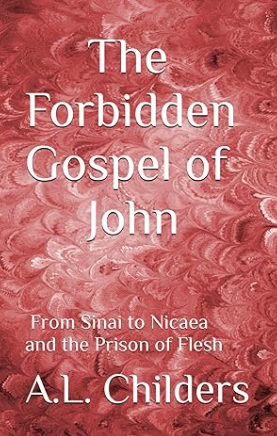
The Forbidden Gospel of John: From Sinai to Nicaea and the Prison of Flesh

About the Author

A.L. Childers is a writer and researcher who refuses to stop at the surface of things. Her work digs into history, symbols, and the hidden stories that shape culture and politics today. By blending truth, curiosity, and raw honesty, she writes for the people who are tired of being told half-truths.


Disclaimer

This blog is for educational and historical purposes only. It does not endorse or condemn any religion, culture, or nation. Its purpose is to examine the historical and symbolic use of the hexagram and to explore how symbols move between occult traditions and cultic institutions.

The Other Christianity

Chapter 1. The Claim and the Cost

A source-driven investigation of Cathar Christianity, the Interrogatio Johannis (“Secret Supper”), suppression and crusade, canon politics, and contested memories—told alongside primary texts and modern scholarship.

History is never neutral. It is written by the victors — those with the most to gain when their version becomes the only one that survives. The Catholic Church that emerged from Constantine’s empire claimed it alone carried Jesus’s authority, that salvation passed only through its sacraments, and that obedience to its hierarchy was obedience to God himself.

But another Christianity existed — one so threatening that Rome waged a crusade to erase it, and an inquisition to ensure it never rose again.

The Cathars believed that Jesus was not sent to build an institution. He was sent as an awakener — to expose the greatest deception of all time: that the god worshipped in temples and enthroned in cathedrals was not the God of Light, but the prince of darkness in disguise.

This was their claim. And the cost of believing it was everything.

Jesus as Awakener, Not Institution-Builder

For the Cathars, Jesus was not a lawgiver, priest, or king. He was the messenger of the true God of Light, revealing that the world itself was counterfeit. He did not come to establish sacraments or bless kingdoms — he came to awaken the divine spark within each soul.

They pointed to verses already in the Bible as evidence that this truth had always been hiding in plain sight:

  • “The god of this world has blinded the minds of the unbelievers.” — 2 Corinthians 4:4
  • “You belong to your father, the devil, and you want to carry out your father’s desires.” — John 8:44
  • “Again, the devil took him to a very high mountain and showed him all the kingdoms of the world… ‘All this I will give you,’ he said, ‘if you bow down and worship me.’” — Matthew 4:8–9

Why would Satan offer Jesus the kingdoms of the world unless they were already his to give? Why would Paul call Satan “the god of this world” unless he truly ruled it?

The Cathars read these verses as confirmation that the God preached from pulpits was not the true Creator, but the Adversary masquerading as one.

The World as Prison

To the Cathars, the material world was not a gift but a prison. Birth was a trap, flesh a cage. The cycle of suffering kept souls enslaved to the false god.

This was not an isolated idea — it echoed Gnostic traditions and dualist movements like Manichaeism — but in medieval Europe, it carried radical consequences.

  • If matter was corrupt, then sacraments of water, bread, and wine were powerless.
  • If the God of the church was the “god of this world,” then its cathedrals and wealth were evidence of corruption, not holiness.
  • If salvation was awakening, then no pope, priest, or king could claim to control it.

For the Cathars, Jesus’s mission was to free souls from the counterfeit world, not to sanctify it.

Who Had What to Gain — and What to Lose

This theology was not just heretical; it was destabilizing.

Who had what to gain?

  • The papacy gained wealth, land, and legitimacy by claiming exclusive control of salvation.
  • Monarchs allied with Rome gained divine sanction for their rule.
  • The institutional church gained obedience, tithes, and fear as tools of control.

Who had what to lose?

  • If the Cathars were right, the church’s sacraments were meaningless, its authority fraudulent, its wealth corrupt.
  • Local nobles in Languedoc who tolerated or even protected Cathars saw the chance to resist Rome’s control.
  • Ordinary people, freed from tithes and ritual, could reclaim spiritual autonomy — and that terrified the powers of their age.

To Rome, Cathar belief was not simply an error in doctrine. It was a direct threat to the machinery of empire.

Suppression and the Machinery of Power

By the twelfth century, the Catholic Church was the largest landowner in Europe and the most powerful institution in the West. In Languedoc, where Cathar communities flourished, Rome saw both theological and political danger.

Pope Innocent III moved swiftly. In 1209, he declared the Albigensian Crusade — a holy war not against Muslims in the Holy Land but against Christians in southern France. Crusaders were promised the same indulgences and spiritual rewards as if they fought in Jerusalem.

The result was brutal. Armies swept through Béziers, Carcassonne, and beyond. Towns were torched, libraries destroyed, entire populations put to the sword. The papal legate’s infamous command at Béziers — “Kill them all; God will know his own” — summed up the campaign’s spirit.

Heretics were not persuaded; they were annihilated. Their scriptures, including the Interrogatio Johannis, were burned. Their voices silenced.

But fire is a clumsy censor. Ashes can hide embers. And in archives — in Carcassonne, Vienna, and scattered fragments — this forbidden gospel endured.

The Claim and Its Cost

The Cathars’ claim was stark: Jesus revealed the world as counterfeit, ruled by a false god, and offered awakening as the way of escape.

The cost was immense: tens of thousands dead, an entire culture exterminated, a Christianity of awakening reduced to whispers.

The church called it heresy. The inquisitors called it evidence. The Cathars called it truth.

And centuries later, we are left with the question they asked and died for:

Who, truly, have we been worshipping?

Why This Matters

This book does not ask you to blindly adopt the Cathar worldview. It asks you to question why their voices were erased.

  • Why did Rome unleash crusade and inquisition not against pagans but against fellow Christians?
  • Why did they fear so much a gospel that told people they already carried the spark of God within?
  • Who benefitted from silencing this “other Christianity,” and who paid the cost?

The Christianity we were handed is not the only one that ever existed. The fragments of the Forbidden Gospel of John remain, daring us to see past the empire’s story and ask whether Jesus came to confirm the god of this world — or to expose him.

Resources & References

  • Barber, Malcolm. The Cathars: Dualist Heretics in Languedoc in the High Middle Ages. Longman, 2000.
  • Wakefield, Walter L., and Austin P. Evans. Heresies of the High Middle Ages. Columbia University Press, 1991.
  • Peters, Edward. Inquisition. University of California Press, 1988.
  • O’Shea, Stephen. The Perfect Heresy: The Life and Death of the Cathars. Walker & Co., 2000.
  • Pagels, Elaine. The Gnostic Gospels. Vintage Books, 1989.

The Forbidden Gospel of John: From Sinai to Nicaea and the Prison of Flesh

 About the Author

A.L. Childers is a writer and researcher who refuses to stop at the surface of things. Her work digs into history, symbols, and the hidden stories that shape culture and politics today. By blending truth, curiosity, and raw honesty, she writes for the people who are tired of being told half-truths.


 Disclaimer

This blog is for educational and historical purposes only. It does not endorse or condemn any religion, culture, or nation. Its purpose is to examine the historical and symbolic use of the hexagram and to explore how symbols move between occult traditions and cultic institutions.

Down the Rabbit Hole: Why Some Truths Are Stranger Than Fiction

History has always had a funny way of hiding its deepest truths in plain sight. When we pull on one string, we rarely get just one answer—we tumble, often unwillingly, down a rabbit hole of connections, contradictions, and uncomfortable revelations.

What starts as a simple question—“Why is this happening?”—quickly morphs into a labyrinth of deeper mysteries: who benefits, who hides, and who dares to tell the truth?


The First Step: Asking the Forbidden Questions

Why do certain narratives dominate our textbooks while others vanish? Why are some whistleblowers demonized and others erased entirely? We are told “the facts” in neat, packaged bites, yet the more we dig, the more we discover that history is often written by the powerful, not the truthful.

Examples:

  • The Library of Alexandria burned, and with it thousands of scrolls of ancient knowledge. Was this just an accident—or an intentional reset?
  • The Federal Reserve was founded in secrecy on Jekyll Island in 1910, yet today it controls the pulse of the American economy. Why cloak something so “for the people” in shadows?
  • Sunday worship, once foreign to early followers of Christianity, became standard only after Constantine. Did faith shift—or was power simply consolidated?

Following the Threads

A rabbit hole demands that we connect dots others tell us not to connect. Consider:

  • Technology & Control: Why does modern AI mimic ancient myths of oracles and gods that “see all and know all”? Is this progress, or a reboot of ancient patterns of control?
  • Food & Health: Why are banned chemicals in Europe still legal in the United States? Who profits from the sickness that follows?
  • Religion & Empire: Why do so many religious symbols—crosses, suns, serpents—trace back to Babylonian, Egyptian, and Sumerian roots? What does this say about continuity versus creation?

Every answer births a new question. The deeper we go, the more the rabbit hole feels less like madness and more like reality revealing itself.


Why It Matters

If we do not question, we become comfortable captives of the narrative we’re given. To question is to reclaim freedom. To dig is to discover that:

  • Empires fall, but control mechanisms persist.
  • Propaganda evolves, but the intention—to shape thought—remains.
  • Truth is often scattered, fragmented, and ridiculed until someone dares to gather the pieces.

Resources for the Curious

For those ready to go deeper:

  • The Creature from Jekyll Island by G. Edward Griffin – on the Federal Reserve’s secret beginnings.
  • The Age of Surveillance Capitalism by Shoshana Zuboff – on how modern corporations profit from controlling human thought.
  • Pagan Christianity? by Frank Viola & George Barna – on how ancient rituals shaped modern Christianity.
  • Behold a Pale Horse by William Cooper – controversial, but a classic in questioning government secrecy.
  • Smithsonian, BBC, and JSTOR archives for primary documents that “official” history often leaves dusty.

Disclaimer

This blog is intended for educational and thought-provoking purposes only. It does not claim to hold all the answers, nor does it promote conspiracy theories as absolute truth. Rather, it seeks to encourage critical thinking, historical questioning, and exploration of alternative perspectives. Readers are encouraged to verify all sources independently and draw their own conclusions.


About the Author

A.L. Childers (pen name of Audrey Childers) is a multi-genre author, researcher, and blogger who blends personal storytelling, history, and investigative insight into her work. Known for digging beneath the surface of accepted narratives, she writes books and blogs that challenge conformity, expose hidden truths, and empower readers to think critically. Audrey has written extensively on health, history, and spirituality, with titles available on Amazon such as The Hidden Empire: A Journey Through Millennia of Oligarchic Rule and Archons: Unveiling the Parasitic Entities Shaping Human Thoughts.


👉 Jumping down the rabbit hole isn’t about finding one final truth—it’s about refusing to live inside someone else’s illusion.

The Fragile Balance Between Good and Evil: What Charlie Kirk’s Assassination Means for Free Speech

The world feels like it’s tipping into chaos. For centuries, the balance between good and evil has seemed to lean toward darkness — power concentrated in the hands of the few, people manipulated by false promises and trinkets of temporary reward. Just when humanity appears to lean toward light, the scales shift again. The assassination of Charlie Kirk in Utah is the latest and most chilling example of this enduring struggle.


The Silencing of Voices: From Antiquity to Today

Throughout history, those who challenge authority or speak inconvenient truths often pay the ultimate price.

  • Socrates (399 BCE) was executed for “corrupting the youth” of Athens by asking questions that threatened established power.
  • Abraham Lincoln (1865) was assassinated for ending slavery and preserving the Union.
  • John F. Kennedy (1963) was killed while in office, leaving a legacy clouded by questions about who truly held power.
  • Martin Luther King Jr. (1968) was murdered for his role in pushing America toward racial justice and equality.

And now, Charlie Kirk joins this list of silenced voices.


What Happened in Utah

According to multiple reports (Reuters, AP, People):

  • On September 11, 2025, Charlie Kirk was shot and killed by a sniper while speaking at Utah Valley University.
  • A suspected bolt-action rifle was recovered near the scene.
  • Security cameras captured a person of interest, but as of now the shooter has not been arrested.
  • President Donald Trump announced Kirk will posthumously receive the Presidential Medal of Freedom.

The precision and timing suggest not a random act but a professional operation — raising questions about motive, organization, and the deeper powers at play.


Why It’s Questionable

Whenever high-profile figures are killed, layers of suspicion arise:

  • Timing: Kirk’s killing occurred at a university event — a stage for free speech. Was the goal to silence not just him, but the platform of open debate?
  • Professional method: A sniper, firing from a rooftop, with specialized equipment. This doesn’t point to random violence; it points to planning.
  • Symbolism: Attacking someone during a “Prove Me Wrong” tour is more than murder; it’s a symbolic rejection of dialogue itself.

History shows that assassinations rarely happen without political weight. They often shift momentum, silence movements, or sow fear among those who dare to speak freely.


Why Free Speech Matters

Free speech is America’s cornerstone. The First Amendment protects the right to voice opinions — even unpopular ones — without fear of government or violent reprisal.

  • In Russia, opposition leader Alexei Navalny was imprisoned and died in custody.
  • In China, dissidents and journalists vanish for criticizing the state.
  • In Saudi Arabia, journalist Jamal Khashoggi was murdered in 2018 for challenging power.

America’s greatness lies in its refusal to normalize such silencing. To disagree with Charlie Kirk’s politics is one thing; to murder him for them is an assault on every American’s right to speak freely.


The Balance Shifts Again

Evil thrives when people are too distracted, too manipulated by entertainment, consumerism, or tribalism to notice what’s being taken from them. Trinkets of false power — fame, likes, gadgets — distract from deeper truths. And in that distraction, violence against dissenters becomes normalized.

The killing of Charlie Kirk must not be shrugged off as “just another political event.” If silencing becomes acceptable, America loses the very principle that makes it great: that even the most controversial voice has the right to speak without fear of a bullet.


Resources & References

  • Reuters. Police search for sniper who killed conservative activist Charlie Kirk in Utah. Sept 11, 2025. Link
  • People Magazine. Donald Trump awarding Charlie Kirk Presidential Medal of Freedom posthumously. Sept 2025. Link
  • History.com. Martin Luther King Jr. Assassination. Link
  • Stanford Encyclopedia of Philosophy. Socrates. Link

Disclaimer

This article is for informational and educational purposes only. While every effort has been made to use credible sources, the situation regarding Charlie Kirk’s assassination is ongoing, and details may change as investigations develop. Readers are encouraged to follow updates from reliable news outlets.


About the Author

A.L. Childers is an author and researcher who explores the intersection of history, politics, and human resilience. With works ranging from philosophy to contemporary social commentary, Childers brings a sharp eye for patterns in power, oppression, and freedom. Her goal is to illuminate truths often buried beneath distraction — and to remind readers why their voice still matters.

Charlie Kirk’s assassination in Utah raises urgent questions about free speech, political violence, and the fragile balance between good and evil in history.”

Empire of Lies: How Flesh Became Our Prison

What if everything you’ve been taught about the world, God, and even salvation was part of a carefully designed lie?

What if the “god of this world” was not the Creator of light, but the architect of a cage—a prison of flesh?

This is the unsettling truth at the heart of  The Forbidden Gospel of John: From Sinai to Nicaea and the Prison of Flesh —a book that challenges readers of all races, religions, and beliefs to question the foundations of the systems that rule our lives.


Not Another “Christian Book”

Let’s be clear: this is not a devotional, not a Bible study, and not a sermon.

Instead,  The Forbidden Gospel of John: From Sinai to Nicaea and the Prison of Flesh . unravels the master plan of deception—how empires, councils, and churches built systems of control around a false god. The one who was called “the god of this world” blinded the minds of generations, turning holy words into chains.

This book does not demand you believe—it dares you to question.


The Prison of Flesh

Across traditions—pagan, gnostic, mystical, and even within suppressed Christian sects—the same whisper echoes:

We are not of this world. We are prisoners here.

The Cathars spoke it before they were burned. The Gnostics hid it in forbidden gospels. Mystics of every path knew that the body itself was a cage—and that liberation was the true goal of the soul.

 The Forbidden Gospel of John: From Sinai to Nicaea and the Prison of Flesh . connects these voices across time, showing how Rome and its successors silenced them to preserve power. Villages burned. Libraries destroyed. Truth buried beneath empire.


Why All Paths Should Read This

This book is written for the seeker, not the convert.

  • Pagans will recognize how Rome crushed other spiritual traditions to build its empire.
  • Witches and mystics will see how knowledge was demonized and erased to keep humanity in ignorance.
  • Believers of all faiths will be challenged to ask: what if the god I was taught to worship is not who I thought?
  • Skeptics and truth-seekers will find history, suppressed texts, and philosophy woven into a narrative of liberation.

At its core, this is not a book about religion—it’s a book about freedom from deception.


The Questions That Will Haunt You

  • Why would a loving Creator cage us in fragile bodies of flesh?
  • What power benefits from keeping humanity blind?
  • Were the “holy books” themselves tools of control?
  • Why did Rome slaughter entire villages simply for believing differently?
  • And most of all: how do we escape the empire of lies and reclaim the realm of light?

A Book of Fire, Not Faith

 The Forbidden Gospel of John: From Sinai to Nicaea and the Prison of Flesh. It isn’t meant to reassure you. It’s meant to ignite you.

It offers no easy answers—only a lamp to reveal the bars of the cage, and a path toward remembering the freedom within.

Whether you call yourself Christian, pagan, witch, seeker, or skeptic, this book will speak to that restless voice inside you that has always known: there is more to reality than what we’ve been told.


References & Inspirations

  • The Gospel of Thomas (Nag Hammadi texts)
  • Inquisition records of the Cathars
  • Elaine Pagels, The Gnostic Gospels
  • Karen King, What Is Gnosticism?
  • Suppressed traditions of mysticism, witchcraft, and heresy

SEO Keywords

empire of lies book, prison of flesh meaning, gnostic gospels deception, god of this world bible, pagan gnostic truth, hidden gospel of john, witchcraft and inquisition history, council of nicaea secrets, spiritual deception religion, escape the prison of flesh.


Disclaimer

This book is not a religious text. It is a work of history, philosophy, and spiritual exploration meant to challenge traditional narratives and encourage readers of all backgrounds to think for themselves. It is not intended as doctrinal teaching or denominational instruction.


About the Author

A.L. Childers is an author and seeker of hidden truths who writes at the crossroads of history, spirituality, and rebellion. Her work dismantles illusions and exposes systems of control, inviting readers of all paths—pagans, mystics, skeptics, and seekers alike—to see beyond the empire of lies and reclaim their freedom.

The Forbidden Gospel of John: From Sinai to Nicaea and the Prison of Flesh is available now on Amazon (Paperback).

The Forbidden Gospel of John: A Study Companion for Thinkers, Doubters, and Leaders

Some books you read once and shelve.
This is not one of them.

The Forbidden Gospel of John: From Sinai to Nicaea and the Prison of Flesh isn’t just a book—it’s a framework for awakening. Written for seekers, skeptics, book clubs, and group leaders, it doesn’t hand you answers. It gives you the tools to think, question, and discern for yourself.

If you’ve ever doubted what you were taught, longed for deeper conversations, or wanted a guide that breaks the mold of traditional Bible studies, this is it.


Why This Book is One-of-a-Kind

The story begins with a charred manuscript rescued from the flames—a gospel Rome tried to destroy. It ends not in history, but with you.

What makes this book stand apart isn’t just the history of the Cathars or the Council of Nicaea. It’s the study companion inside the book itself, designed to transform how you read, reflect, and lead.


Tools for Readers and Leaders

✦ Reader’s Reflection Guide

Seven sets of deep, critical questions help you wrestle with truth, scripture, empire, and personal awakening. These aren’t “fill in the blank” questions. They’re open-ended prompts like:

  • What does it mean to see the material world as a prison?
  • Why did inquisitors preserve the Secret Supper as evidence, even as they tried to destroy it?
  • How do politics and scripture intertwine in our own time?

Perfect for journaling, meditation, or personal growth.


✦ Tips for Group Leaders

This isn’t a book you should keep to yourself. It’s a book designed to spark conversations. Each chapter includes practical leadership tools:

  • Open each session with a key passage (from the Bible or the Secret Supper).
  • Allow silence before diving into dialogue.
  • Encourage journaling between sessions.
  • Close with one big question: How does this change how we see truth, power, and faith today?

This makes it perfect for pastors, small group leaders, discussion circles, or even friends who want to dive deeper together.


✦ Study Guide for Book Clubs

Every chapter comes with prompts that fuel dialogue. You don’t have to be a theologian or historian—just curious.

  • Prologue: Why do dangerous ideas often survive in hidden ways?
  • Chapter 1: What does it mean to claim the world itself is a prison?
  • Chapter 7: How would rethinking Moses on Sinai change the way you see the Ten Commandments?
  • Chapter 13: How do you separate faith from empire when the two are so often intertwined?

The guide makes it easy to start conversations that matter—without requiring everyone to agree.


✦ A Final Invitation

The book begins with a manuscript pulled from the fire.
It ends with you.

The final reflection isn’t about what the Cathars believed, or what Rome feared, or even what history records.
The final reflection is personal:

What will you do with what you now know?


Why You Need This Book

Whether you’re a:

  • Seeker tired of one-sided answers
  • Doubter ready to explore hidden truths
  • Leader searching for fresh dialogue tools
  • Reader craving something more than passive history

This book was written for you.

It doesn’t demand obedience. It doesn’t spoon-feed dogma. It gives you a study companion that challenges, provokes, and empowers.


About the Author

A.L. Childers writes at the intersection of history, spirituality, and power. With a journalist’s eye and a seeker’s heart, Childers explores the texts, traditions, and truths the world tried to erase.

Disclaimer

This book is not affiliated with any religious denomination. It is intended for educational and reflective purposes, encouraging readers to question, discern, and think critically about scripture and history.


🔥 If you’re ready to experience a book that doesn’t just tell you what to believe—but invites you into the conversation—then it’s time to read The Forbidden Gospel of John: From Sinai to Nicaea and the Prison of Flesh.

👉 Order your copy today—and discover a study companion that could change how you see truth, power, and faith forever.

 The Forbidden Gospel of John: From Sinai to Nicaea and the Prison of Flesh is available now on Amazon (Paperback).

The Other Christianity: The Claim and the Cost

History is never neutral. It is written by the victors—those with the most to gain when their version becomes the only one that survives.

That’s where Chapter 1 of The Forbidden Gospel of John: From Sinai to Nicaea and the Prison of Flesh begins—with a truth Rome tried to bury.


A Gospel Rome Couldn’t Erase

The Catholic Church that emerged from Constantine’s empire declared that salvation could only flow through its sacraments, hierarchy, and authority. To obey the church was to obey God.

But there was another Christianity—a faith so dangerous to empire that Rome launched crusades and inquisitions to annihilate it.

The Cathars believed Jesus was not sent to build an institution but to awaken souls from the greatest deception of all time: that the god enthroned in cathedrals and worshipped in temples was not the God of Light but the prince of darkness in disguise.

This was their claim. And the cost of believing it was everything.


Jesus the Awakener

To the Cathars, Jesus was not a priest, king, or lawgiver. He was the Awakener—the messenger of the true God of Light—sent to expose that this world was a counterfeit creation.

They pointed to verses hidden in plain sight:

  • “The god of this world has blinded the minds of the unbelievers.” — 2 Corinthians 4:4
  • “You belong to your father, the devil.” — John 8:44
  • “The devil… showed him all the kingdoms of the world, ‘All this I will give you if you worship me.’” — Matthew 4:8–9

Why would Satan offer kingdoms he didn’t already control? Why would Paul call him “the god of this world”?

The Cathars believed the answer was simple—because the world as we know it is a prison.


The World as Prison

For the Cathars, the body was a cage, and birth itself a trap. Sacraments of water, bread, and wine could not free souls; only awakening could.

This theology wasn’t just radical—it was dangerous. If they were right:

  • The church’s sacraments were powerless.
  • Its wealth and cathedrals were proof of corruption, not holiness.
  • No pope, priest, or king could control salvation.

That terrified Rome.


Crusade, Inquisition, and Fire

Pope Innocent III responded with holy war—not against pagans, but against fellow Christians.

The Albigensian Crusade of 1209 was merciless: towns razed, libraries burned, men, women, and children slaughtered. At Béziers, a papal legate gave the infamous command: “Kill them all; God will know his own.”

The inquisitors followed, determined to ensure Cathar voices would never rise again. Manuscripts were torched. Communities destroyed. But fire is a clumsy censor. Ashes hide embers.

The Interrogatio Johannis (“Secret Supper”) survived—inquisitors kept it as evidence. And now, centuries later, its words still challenge us.


Why This Chapter Matters Today

This isn’t dusty history. It’s a mirror.

  • Why did Rome fear a gospel that taught every person carried the spark of God within?
  • Why unleash crusade and inquisition against Christians who refused to bow to empire?
  • Who benefitted from silencing this “other Christianity,” and who paid the price?

The Cathars called it truth. Rome called it heresy. We are left with their question:

Who, truly, have we been worshipping?


Why You Need This Book

If you’ve ever questioned what you were taught, if you’ve ever wondered about forbidden gospels, hidden Christianity, Bible censorship, the Council of Nicaea, or the true mission of Jesus, this book is for you.

The Forbidden Gospel of John doesn’t just recount history—it gives you the framework to think, reflect, and awaken. With study guides, reflection prompts, and group discussion tools, it’s perfect for seekers, skeptics, book clubs, and leaders who want deeper conversations about faith, truth, and power.

 The Forbidden Gospel of John: From Sinai to Nicaea and the Prison of Flesh is available now on Amazon (Paperback).


About the Author

A.L. Childers writes at the crossroads of spirituality, history, and power. With a journalist’s precision and a seeker’s courage, Childers shines a light on stories history tried to erase—inviting readers to reflect, question, and awaken.

Disclaimer

This book is not affiliated with any church or denomination. It is written for educational, historical, and reflective purposes, encouraging readers to think critically about history, scripture, and faith.


🔥 The Forbidden Gospel of John: From Sinai to Nicaea and the Prison of Flesh isn’t just a book. It’s an invitation to rediscover what was silenced—and to decide for yourself what to do with what you now know.

👉 Get your copy today and step into The Other Christianity Rome tried to erase.