
Tag Archives: #GenXParenting

When Independence Cost a Dollar and a Dream


There are moments in motherhood that arrive quietly but land like thunder.

This was one of them.

My youngest twin—twenty-seven years old—has purchased a home. In this economy. In a time so unforgiving that even the word starter feels like a relic from another century. It is an accomplishment that deserves to be spoken aloud, admired, honored. I am proud of her in the way that fills the chest and tightens the throat at the same time.

And yet—there it is—the ache.

Because pride and grief sometimes share the same chair.

This economy is ruthless. Not difficult. Not inconvenient. Ruthless. It does not reward youth the way it once did. It does not offer freedom cheaply. It does not allow mistakes without punishment. Housing is no longer a milestone—it is a miracle. And watching your child secure something so rare feels like witnessing both victory and loss in a single breath.

When I was sixteen, I left home.

Not dramatically. Not ceremoniously. I simply went. I had my own apartment. A used car. Paid my electric bill. My car insurance. My groceries. I even attended community college. I was free in the way only the young and unafraid can be—free because the world had not yet learned how to price every inch of air.

It wasn’t because I was wealthy. It wasn’t because I was protected. It was because the numbers made sense back then. They no longer do.

Today, a young person can work endlessly and still remain trapped. Rent devours paychecks. Insurance eats ambition. Groceries demand negotiation. Independence has been turned into a luxury item, and no one pretends otherwise.

So her father and I did what parents are rarely praised for doing anymore—we let our children stay.

No rent. No utilities. No pressure—except the kind that builds, not breaks. The only bills they paid were the ones they chose. The rest went into savings. Into preparation. Into a future we knew the world would not hand them gently.

They also went to work where their father works—a union job that pays more than most four-year degrees promise anymore. Thirty-five dollars an hour. Time-and-a-half after eight hours in a day, not forty in a week. Double time after ten. Triple pay on holidays. The kind of structure that once built the middle class and now survives like a rare species.

And because of that—because of planning, patience, and opportunity—she bought a home.

I should be celebrating without pause.

But there’s a part of me that wishes she would stay just a little longer. Stay in the good life. The one I never had offered to me, even though I somehow managed to afford it anyway. Stay in the safety that took generations of trial and error to learn how to provide.

My childhood was… complicated.

My mother was a single parent doing the best she could with the tools she had. But there were too many men passing through the house. Too much instability. Too much responsibility placed on shoulders still learning how to carry themselves. By the time I was ten, I was caring for my younger sister—five years my junior—cleaning the house, feeding her, managing tasks that children should not have to manage.

If I failed, I was punished. If I succeeded, it was expected.

And yet—those years shaped me.

They gave me skills. Grit. Awareness. Independence sharpened early. I learned how to survive before I learned how to rest. I became a true Gen Xer—resourceful, skeptical, self-reliant, allergic to nonsense.

A Scorpio. A free spirit. A wild child who wasn’t taking anyone’s shit.

And I wouldn’t trade it. Not for anything.

How many people can say they were sixteen in the 1980s, paying their own bills, driving their own car, answering to no one but themselves—and still felt free? The eighties were a strange kind of golden hour. Not perfect. Not fair. But possible.

That world is gone.

So when my daughter closes the door on her own home, I stand in the doorway of memory. Proud beyond words. Tender beyond reason. Grateful that she has what I never did—and quietly mourning the simplicity of a time when independence didn’t require permission from a bank, a union contract, and perfect timing.

This is what parenting looks like in an unforgiving economy.

You don’t push them out.
You build a runway.
You give them what you never had.
And when they finally fly, you wave—even as your heart asks them to circle once more.


Disclaimer

This blog reflects personal experience and generational observation. It is not intended to diminish the struggles of any generation or romanticize hardship. Economic conditions vary widely, and individual outcomes are shaped by many factors. This piece is offered as reflection, not prescription.


References & Context

  • U.S. Bureau of Labor Statistics – Historical wage comparisons
  • Federal Reserve Economic Data (FRED) – Housing affordability index
  • Pew Research Center – Generational economic mobility
  • National Association of Realtors – First-time homebuyer trends
  • Economic Policy Institute – Wage growth vs. cost of living (1980s–present)

About the Author

A.L. Childers is a Gen X writer, researcher, and storyteller whose work blends lived experience with cultural reflection. Raised in an era of latchkeys and learned independence, she writes about family, economics, power systems, and the quiet emotional truths that live beneath major life transitions. Her work honors resilience without glorifying struggle and believes deeply in giving the next generation what many never received.


ABOUT THE AUTHOR — A.L. Childers

Audrey Childers is a published author, thyroid advocate, wellness writer, and founder of TheHypothyroidismChick.com.
After years of misdiagnosis, exhaustion, weight gain, and “your labs are normal,” she rebuilt her health — and now helps other women do the same.

Books include:

The Keto Autoimmune Protocol Healing Book for Women

Hashimoto’s Crock-Pot Recipes

 Reset Your Thyroid: 21-Day Meal Plan

A Women’s Holistic Holy Grail Handbook for Hypothyroidism

Fresh & Fabulous Hypothyroidism Body Balance

The Witch’s Almanac Cookbook (2026)

The Lamp of Christmas Eve

The Lamp at the End of the Corridor: A Story of Rejection, Redirection, and Resurrection for the Misfit Soul

The Girl the Darkness Raised: A Memoir of Scarcity, Survival, and Becoming

The Girl in the Mirror Is Thirteen Again: The House That Yelled and the Woman Who Finally Heard Herself 

 Healing Stews & Enchanted Brews (Original Edition)

Healing Stews & Enchanted Brews: Holiday Magic

My Grandmother’s Witchy Medicine Cabinet

Enchanted Realms: A Comprehensive Guide to Witchcraft & Sorcery

Enchanted Realms: A Comprehensive Guide to Witchcraft & Sorcery

Hashimoto’s Crock-Pot Recipes

 Reset Your Thyroid: 21-Day Meal Plan

A Women’s Holistic Holy Grail Handbook for Hypothyroidism

Fresh & Fabulous Hypothyroidism Body Balance

The Lies We Loved : How Advertising Invented America

Archons: Unveiling the Parasitic Entities Shaping Human Thoughts

The Hidden Empire

Nightmare Legends
The Girl the Darkness Raised: A Memoir of Scarcity, Survival, and Becoming

Whispers in the Wires

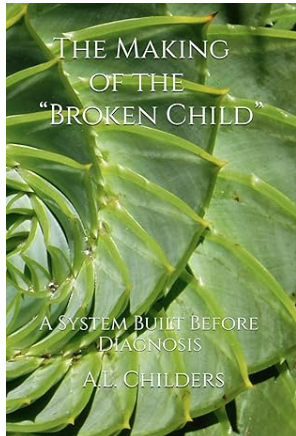
The Making of the “Broken Child”: A System Built Before Diagnosis
Beyond Cars and Cash: Why Unconditional Love Matters Most in Motherhood

When we look back on our lives, the things we once thought were important—money, cars, and clothes—fade into the background. In 30 years, our children won’t remember what brand of jeans we wore or whether we drove the newest SUV. What they will remember is how we made them feel, the lessons we taught them, and whether they felt loved unconditionally.

Motherhood is not measured by material success but by the quiet, everyday choices we make. The late-night feedings, the comforting hugs after a scraped knee, the patience during tantrums, and the words we speak when no one else is listening—these are the moments that shape a child’s sense of self-worth and security.


Why Love Lasts Longer than Luxury

In today’s world, we’re constantly bombarded by messages that tell us we need to “have it all.” Social media highlights expensive vacations, picture-perfect homes, and wardrobes straight out of magazines. But studies show that what truly impacts a child’s long-term happiness and emotional well-being is not wealth—it’s connection, stability, and love.

A child who grows up knowing they are valued for who they are, rather than what they achieve or possess, carries that confidence into adulthood. They don’t remember the toys we couldn’t afford; they remember the warmth of a bedtime story or the comfort of knowing we were always there.


Motherhood Is a Legacy, Not a Lifestyle

Our legacy isn’t built on material possessions but on the memories and values we leave behind. Long after the money is spent and the fashions have changed, the bond between a mother and her child remains.

When your children reflect on their childhood, what do you want them to say? Do you want them to recall stress, busyness, and chasing “the next best thing”? Or do you want them to remember peace, laughter, and the security of unconditional love?

Motherhood isn’t about being perfect—it’s about being present. Even when we’re tired, overwhelmed, or unsure, showing up with love makes all the difference.


Daily Affirmation for Mothers

If you’re struggling with the weight of expectations, try this simple affirmation each morning:

“I release all that no longer serves me. I step boldly into new beginnings, aligned with my highest purpose. My path is clear, my energy is renewed, and abundance flows freely to me. I am a mother who loves unconditionally, and that love is my greatest legacy.”

This daily ritual reminds us that our energy matters more than the things we own.


Conclusion: A Love That Outlives Everything Else

In the end, what matters most is not the size of our bank account but the size of our hearts. Our children won’t remember the car we drove or the clothes we wore—but they will always remember whether we were a source of love, security, and encouragement. That’s the true gift of motherhood.


Disclaimer

This article is for inspirational and educational purposes only. It is not intended to provide medical, psychological, or professional parenting advice. Each family’s circumstances are unique, and readers should use their own judgment and seek professional guidance when needed.


About the Author

Audrey L. Childers (A.L. Childers) is an author, blogger, and advocate for women navigating the challenges of motherhood, health, and self-discovery. Drawing from her personal experiences, she writes heartfelt and thought-provoking works that inspire others to embrace authenticity, healing, and unconditional love. Audrey is the creator behind TheHypothyroidismChick.com and has published multiple books across health, history, and personal empowerment.


SEO Keywords included naturally in the blog: motherhood, unconditional love, parenting, legacy, raising children, family values, positive parenting, mother-child bond, mindful motherhood.

🛋️ “Did You Talk About Me in Therapy?” – A Love Letter from a Nosy Gen X Mom

By A.L. Childers
Author | Mother | Licensed Eavesdropper™

I know this can be a deeply personal matter for many, and I want to say this right out of the gate:

💬 I’m proud that my daughter goes to therapy.
Like, “announce it at brunch with extra mimosa” proud.

She made the decision, as an adult, to take control of her depression and walk her sweet self into a therapist’s office. And she stuck with it. That, to me, is strength. That is bravery. That is self-awareness with a co-pay.

Now… let’s get to the part where I messed it up—because naturally, I had questions.


💬 The Conversation That Proved I’m Still Extra

So after one of her recent sessions, I casually (read: nosily) asked:

“How was therapy today, baby?”

She goes,

“Fine.”
Cue that “don’t start” tone.

I ask:

“Did you talk about me?”
Her:
“No.”
Said with a face that looked like I just asked if she discusses microwave popcorn in there.

So naturally I had to go full Gen X:

“Do you ever talk about me in therapy?”
(She’s clearly wondering if this is a trap.)

Her final “No” felt so definitive, so I’m-not-sure-why-you’d-think-you’re-the-main-character-of-my-trauma-ish that all I could do was reply with:

“Well dang. As a Gen X mom, I think I failed you as a parent if you don’t even complain about me in therapy…”

Then I dramatically fake-sobbed and walked off into the kitchen to overcook something as penance.


🤣 Laughter as Medicine (But Let’s Be Real…)

Listen, I get it. Depression isn’t funny.
Mental health isn’t a punchline.
But moms coping through humor? Oh honey, that’s practically genetic.

I joke because I love. I joke because that’s how I connect with my girls.
And I joke because talking openly about therapy in any way—even if it’s a little awkward or playful—helps make it normal. And that’s the goal.


🧠 Mental Health Is Health. Period.

We’ve come a long way from “just pray about it” or “get some air.”
Mental health care is real, powerful, and life-saving.

If you or someone you love is struggling, there are amazing resources out there:

❤️ Mental Health Resources:

You’re never alone. And therapy isn’t a weakness—it’s a wellness tool. Kind of like yoga, but with less sweating and more insight into your childhood rage.


💖 A Note to My Fellow Parents

If your kids are in therapy, don’t take it personally.
(Unless, of course, you were truly unhinged—then maybe take it a little personally.)

We’re not perfect. We were raising babies while trying to heal from our own childhoods that never talked about feelings unless it involved a belt and a casserole.

If your child is strong enough to ask for help, then guess what?
✨ You probably did something right.


📚 About the Author

A.L. Childers is a Southern-born author, creative truth-slinger, and the force behind The Freckled Oracle™. She writes about life, healing, history, and humor with just enough sass to be a threat and just enough warmth to be invited to the cookout.

Check out her books on everything from thyroid healing to emotional survival at:
📚 Amazon Author Page: amazon.com/author/alchilders

And follow her blog for more laughs, real talk, and life-saving resources:
🌐 TheHypothyroidismChick.com


⚠️ Disclaimer:

This blog is meant to be humorous, heartfelt, and encouraging. It is not medical advice. Depression is a serious condition, and we encourage anyone struggling to reach out to a licensed professional, trusted support system, or emergency services if needed. Therapy is a personal journey—and we’re just out here trying to normalize it with a little laughter and a lot of love.


Output image

Your free printable “Mom Therapy Bingo” card is ready! 🧠💗💬

Click below to download and share it with your email subscribers, social media followers, or Gen X therapy squad:

👉 Download Mom Therapy Bingo Card (PDF)

It’s 8.5″ x 11″ and print-ready—perfect for laughs at brunch, therapy debriefs, or just a little healing humor in the chaos.

Your “Mom, Me & Therapy: A Journaling Companion” printable PDF is ready! 📓💬✨

👉 Download the Journaling Prompts (PDF)

It includes 10 heartfelt, healing, and reflective prompts designed to complement your “Mom Therapy Bingo” card—perfect for self-reflection, email opt-ins, or workshop freebies.

🌼 Want the Laughs and the Healing?

Subscribe below and get your FREE Mom Therapy Bingo Card 🛋️ plus a printable journaling companion packed with thoughtful (and slightly nosy) prompts for working through your inner mama drama.

Because mental health is serious—but healing doesn’t have to be humorless.
You bring the tissues. I’ll bring the sass. 💁‍♀️

👉 Sign up now at TheHypothyroidismChick.com
🔒 No spam. Just soul work and Southern wit.