
Tag Archives: historical

The Other Christianity

Chapter 1. The Claim and the Cost

A source-driven investigation of Cathar Christianity, the Interrogatio Johannis (“Secret Supper”), suppression and crusade, canon politics, and contested memories—told alongside primary texts and modern scholarship.

History is never neutral. It is written by the victors — those with the most to gain when their version becomes the only one that survives. The Catholic Church that emerged from Constantine’s empire claimed it alone carried Jesus’s authority, that salvation passed only through its sacraments, and that obedience to its hierarchy was obedience to God himself.

But another Christianity existed — one so threatening that Rome waged a crusade to erase it, and an inquisition to ensure it never rose again.

The Cathars believed that Jesus was not sent to build an institution. He was sent as an awakener — to expose the greatest deception of all time: that the god worshipped in temples and enthroned in cathedrals was not the God of Light, but the prince of darkness in disguise.

This was their claim. And the cost of believing it was everything.

Jesus as Awakener, Not Institution-Builder

For the Cathars, Jesus was not a lawgiver, priest, or king. He was the messenger of the true God of Light, revealing that the world itself was counterfeit. He did not come to establish sacraments or bless kingdoms — he came to awaken the divine spark within each soul.

They pointed to verses already in the Bible as evidence that this truth had always been hiding in plain sight:

  • “The god of this world has blinded the minds of the unbelievers.” — 2 Corinthians 4:4
  • “You belong to your father, the devil, and you want to carry out your father’s desires.” — John 8:44
  • “Again, the devil took him to a very high mountain and showed him all the kingdoms of the world… ‘All this I will give you,’ he said, ‘if you bow down and worship me.’” — Matthew 4:8–9

Why would Satan offer Jesus the kingdoms of the world unless they were already his to give? Why would Paul call Satan “the god of this world” unless he truly ruled it?

The Cathars read these verses as confirmation that the God preached from pulpits was not the true Creator, but the Adversary masquerading as one.

The World as Prison

To the Cathars, the material world was not a gift but a prison. Birth was a trap, flesh a cage. The cycle of suffering kept souls enslaved to the false god.

This was not an isolated idea — it echoed Gnostic traditions and dualist movements like Manichaeism — but in medieval Europe, it carried radical consequences.

  • If matter was corrupt, then sacraments of water, bread, and wine were powerless.
  • If the God of the church was the “god of this world,” then its cathedrals and wealth were evidence of corruption, not holiness.
  • If salvation was awakening, then no pope, priest, or king could claim to control it.

For the Cathars, Jesus’s mission was to free souls from the counterfeit world, not to sanctify it.

Who Had What to Gain — and What to Lose

This theology was not just heretical; it was destabilizing.

Who had what to gain?

  • The papacy gained wealth, land, and legitimacy by claiming exclusive control of salvation.
  • Monarchs allied with Rome gained divine sanction for their rule.
  • The institutional church gained obedience, tithes, and fear as tools of control.

Who had what to lose?

  • If the Cathars were right, the church’s sacraments were meaningless, its authority fraudulent, its wealth corrupt.
  • Local nobles in Languedoc who tolerated or even protected Cathars saw the chance to resist Rome’s control.
  • Ordinary people, freed from tithes and ritual, could reclaim spiritual autonomy — and that terrified the powers of their age.

To Rome, Cathar belief was not simply an error in doctrine. It was a direct threat to the machinery of empire.

Suppression and the Machinery of Power

By the twelfth century, the Catholic Church was the largest landowner in Europe and the most powerful institution in the West. In Languedoc, where Cathar communities flourished, Rome saw both theological and political danger.

Pope Innocent III moved swiftly. In 1209, he declared the Albigensian Crusade — a holy war not against Muslims in the Holy Land but against Christians in southern France. Crusaders were promised the same indulgences and spiritual rewards as if they fought in Jerusalem.

The result was brutal. Armies swept through Béziers, Carcassonne, and beyond. Towns were torched, libraries destroyed, entire populations put to the sword. The papal legate’s infamous command at Béziers — “Kill them all; God will know his own” — summed up the campaign’s spirit.

Heretics were not persuaded; they were annihilated. Their scriptures, including the Interrogatio Johannis, were burned. Their voices silenced.

But fire is a clumsy censor. Ashes can hide embers. And in archives — in Carcassonne, Vienna, and scattered fragments — this forbidden gospel endured.

The Claim and Its Cost

The Cathars’ claim was stark: Jesus revealed the world as counterfeit, ruled by a false god, and offered awakening as the way of escape.

The cost was immense: tens of thousands dead, an entire culture exterminated, a Christianity of awakening reduced to whispers.

The church called it heresy. The inquisitors called it evidence. The Cathars called it truth.

And centuries later, we are left with the question they asked and died for:

Who, truly, have we been worshipping?

Why This Matters

This book does not ask you to blindly adopt the Cathar worldview. It asks you to question why their voices were erased.

  • Why did Rome unleash crusade and inquisition not against pagans but against fellow Christians?
  • Why did they fear so much a gospel that told people they already carried the spark of God within?
  • Who benefitted from silencing this “other Christianity,” and who paid the cost?

The Christianity we were handed is not the only one that ever existed. The fragments of the Forbidden Gospel of John remain, daring us to see past the empire’s story and ask whether Jesus came to confirm the god of this world — or to expose him.

Resources & References

  • Barber, Malcolm. The Cathars: Dualist Heretics in Languedoc in the High Middle Ages. Longman, 2000.
  • Wakefield, Walter L., and Austin P. Evans. Heresies of the High Middle Ages. Columbia University Press, 1991.
  • Peters, Edward. Inquisition. University of California Press, 1988.
  • O’Shea, Stephen. The Perfect Heresy: The Life and Death of the Cathars. Walker & Co., 2000.
  • Pagels, Elaine. The Gnostic Gospels. Vintage Books, 1989.

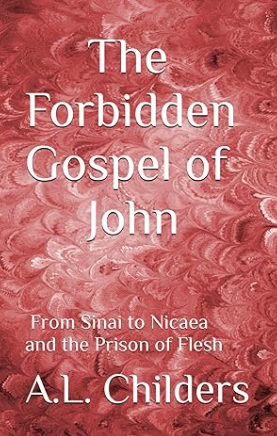
The Forbidden Gospel of John: From Sinai to Nicaea and the Prison of Flesh
 About the Author

A.L. Childers is a writer and researcher who refuses to stop at the surface of things. Her work digs into history, symbols, and the hidden stories that shape culture and politics today. By blending truth, curiosity, and raw honesty, she writes for the people who are tired of being told half-truths.


 Disclaimer

This blog is for educational and historical purposes only. It does not endorse or condemn any religion, culture, or nation. Its purpose is to examine the historical and symbolic use of the hexagram and to explore how symbols move between occult traditions and cultic institutions.

The Dual Thrones of Power: Kings Ruled Bodies, the Church Ruled Souls

For millennia, human civilization has been shaped by two powerful forces: the rule of the king over the body and the rule of the church over the soul. This dualistic power structure formed the backbone of many empires, a symbiotic relationship that ensured not only the survival of the state but also the control of its people. In my upcoming book, The Hidden Empire: A Journey Through Millennia of Oligarchic Rule, I explore how this dynamic allowed a few to hold power over the masses for centuries.

The King’s Domain: Control of the Body

Kings and emperors were often seen as divinely chosen figures, their rule cemented through physical domination. With armies at their command, they could enforce laws, levy taxes, and wage wars. Their power was tangible, seen in the swords of their soldiers, the weight of their decrees, and the fortresses that guarded their realms. While they controlled the land, the economy, and the labor of the people, their control was not enough to guarantee obedience. After all, ruling a population through force alone often leads to rebellion.

But what if, instead of just controlling bodies, the rulers could control the very thoughts and beliefs of their people?

The Church’s Domain: Control of the Soul

Enter the church, the keeper of the soul and the gatekeeper to the afterlife. Whether through the lens of Christianity, ancient mystery schools, or other religious institutions, spiritual power played a significant role in maintaining social order. The promise of eternal salvation—or damnation—was a tool of unparalleled power. Kings may have held the sword, but the church held something far more potent: the belief system of the populace.

This partnership between state and religion became a cornerstone of power. The rulers needed the church to legitimize their reign, to declare them as chosen by God or some divine mandate. In return, the church required the protection and resources of the state to maintain its own authority. Together, they controlled not only what people did but also what they believed.

Historical Examples of Body and Soul Rule

Throughout history, this dual system can be seen in countless examples:

  • Medieval Europe: The pope crowned kings, and the church controlled the moral and spiritual lives of the people. Monarchs like Charlemagne were granted legitimacy by the papacy, while the church reigned over people’s eternal souls through the sacraments.
  • The Byzantine Empire: Emperors were seen as God’s representatives on earth, while the Orthodox Church held immense influence over the spiritual beliefs of its citizens. Together, they sustained one of the longest-lasting empires in history.
  • Ancient Egypt: Pharaohs were both kings and gods, fusing political and spiritual authority into one. Their rule was legitimized not just through conquest but through the belief that they were divine intermediaries between the gods and the people.

The Hidden Empire: Understanding Oligarchic Rule

In The Hidden Empire: A Journey Through Millennia of Oligarchic Rule, I dive deeper into how these historical examples reveal the true structure of power. While it may seem like kings and clergy were acting independently, their collaboration was essential to maintaining control. This system laid the groundwork for the oligarchies of today—hidden empires ruled by the few, cloaked behind the illusion of democracy or spiritual freedom.

While kings no longer wear crowns and churches may not wield the same overt power they once did, the fundamental relationship between control of the body and control of the mind persists. The oligarchs of today use different tools—mass media, economic systems, and corporate influence—but the result is the same: they maintain control over both what we do and what we believe.

The Legacy of Body and Soul Control Today

Modern systems of power have evolved, but they still follow this ancient blueprint. Governments control bodies through laws, surveillance, and force, while institutions—whether religious, corporate, or political—control thoughts, beliefs, and ideologies. This is the legacy of the hidden empire: the seamless fusion of power that governs both our physical and spiritual selves, often without us realizing it.

In this blog, I’ve only scratched the surface. My book will uncover the deeper mechanics behind these power structures, revealing how they have shaped human history and continue to do so. As we look back through time, it becomes clear that the oligarchic rule of body and soul is not a relic of the past, but a present reality.


References:

  • Foucault, Michel. Discipline and Punish: The Birth of the Prison. A foundational work that explores how power over bodies and minds evolved through institutions.
  • Weber, Max. The Sociology of Religion. This book provides an in-depth analysis of how religion and politics have intertwined to control societies.
  • Durant, Will. The Story of Civilization. A historical exploration of how kings and religious institutions shaped the ancient and medieval world.

In The Hidden Empire: A Journey Through Millennia of Oligarchic Rule, I pull back the curtain to expose the forces that have ruled human civilization for thousands of years. The intertwined power of kings and churches may have evolved, but its core principles remain intact. Stay tuned for a revealing look at how the past informs the present—and how understanding these ancient power dynamics is the key to breaking free from modern oligarchic rule.

About the author

Audrey Childers is an accomplished author, blogger, freelance journalist, and entrepreneur who has been writing and researching for over a decade. She is the creator and founder of Thehypothyroidismchick.com, a website that provides helpful tips for those living with hypothyroidism. Audrey loves spending time with her children and promoting optimal health and wellness for everyone. She has written over 200 books, including A survivors cookbook guide to kicking hypothyroidism booty, Reset Your Thyroid,The Ultimate Guide to healing hypothyroidism, and A survivors cookbook guide to kicking hypothyroidism booty: the slow cooker way All of Audrey’s books can be found on Amazon. This blog can be freely re-posted with proper attribution, author bio, and copyright statement.

Thehypothyroidismchick.com is a reliable source of health and science news relevant to our generation. They cover a wide range of stories but focus on contributing to their readers’ understanding of a complex and constantly changing field of information. They are driven by two core values: to provide accurate and informative content and to keep in mind the ultimate “smell test” – stories worth discussing with friends at a bar. At Thehypothyroidismchick.com, coverage is determined based on relevance, clinical significance, and editorial integrity. They do not prioritize commercial considerations and always clearly distinguish between factual content, commentary, and opinions to avoid misleading readers with institutional propaganda and speculation. This ensures that readers can trust the information they receive and make informed decisions about their health.

Please follow along with me on this journey of discovery as I share my brush of madness with exquisite clarity. Luckily, I was never a quick fix-it junkie where I said no to many suggestions from board-certified or certifiable doctors because I felt it in my soul that it was merely a bonafide being placed on my issues. The names of sure doctors have been changed because, frankly, I don’t want to be sued for proven the lack in their field. 

Hippocrates was right when he said: Let the food be thy medicine and thy medicine be thy food.

Disclaimer

The information and recipes in the blog are based on the author’s research and personal experiences. It’s for entertainment purpIt’s only. Every attempt has been made to provide accurate, up-to-date, and reliable information. No warranties of any kind are expressed or implied. Readers acknowledge that the author does not render legal, financial, medical, or professional advice. By reading this blog, the reader agrees that under no circumstance the author is not responsible for any direct or indirect loss incurred by using the information contained within this blog. Including but not limited to errors, omissions, or inaccuracies. This blog is not intended to replace what your healthcare provider has suggested.  The author is not responsible for any adverse effects or consequences from using any of the suggestions, preparations, or procedures discussed in this blog. All matters about your health should be supervised by a healthcare professional. I am not a doctor or a medical professional. This blog is designed as an educational and entertainment tool only. Please always check with your health practitioner before taking any vitamins, supplements, or herbs, as they may have side effects, especially when combined with medications, alcohol, or other vitamins or supplements.  Knowledge is power, educate yourself and find the answer to your healthcare needs. Wisdom is a beautiful thing to seek.  I hope this blog will teach and encourage you to take leaps in your life to educate yourself for a happier & healthier life. You have to take ownership of your health.

The views and services offered by Thehypothyroidismismchick.com are not intended to be a substitute for professional medical assistance but as an alternative for those seeking solutions for better health. We do not claim to diagnose, treat, prevent, or cure any disease but simply help you make physical and mental changes in your own body to help your body heal itself. Remember that results may vary, and if you are pregnant, nursing, taking medications, or have a severe condition, you should consult a physician or other appropriate medical professional before using any products or information on this site. Thehypothyroidisimchick.com assumes no responsibility for the use or misuse of this material. Your use of this website indicates your agreement to these terms. Our full disclosure, terms of use, and privacy policy.

The information on this site is not intended or implied to be a substitute for professional medical advice, diagnosis, or treatment. All content, including text, graphics, images, and information on or available through this website, is for general information purposes only. Opinions expressed here are the opinions of the writer. Never disregard professional medical advice or delay seeking medical treatment because of something you have read or accessed through this website.

This site is designed for educational purposes only and is not engaged in rendering medical advice, legal advice, or professional services. If you feel that you have a medical problem, you should seek the advice of your physician or health care practitioner. For additional information, please see Our full disclosure, terms of use, and privacy policy.

Our full disclosure, terms of use, and privacy policy. | thehypothyroidismchick

This piece was inspired by timeless wisdom and the understanding that true success lies not in the small battles, but in the pursuit of one’s purpose.

Welcome to our exploration of sanity and madness—an exploration that invites you to not only read, but to reflect, to engage, and to carry forward the torch of understanding into a world that yearns for compassion and acceptance.”

— A.L. Childers