Tag Archives: #history

The Milk Myth: How the Government Engineered Childhood Nutrition

A shocking exposé uncovering how milk became America’s “mandatory” childhood drink through government propaganda, corporate partnerships, and advertising manipulation. Learn the hidden history behind dairy, school lunch programs, and the marketing machine that shaped generations.


Most Americans grew up believing:

“Milk makes you strong.”
“Milk builds healthy bones.”
“Kids need milk every day.”

It became a moral food, a patriotic food, a mother-approved food.

But there’s something you were never told:

Milk did not become a childhood necessity because of nutrition.
It became one because of marketing, politics, and agricultural panic.

This is the real story — the one buried under decades of dairy-funded slogans, government partnerships, and nationwide school mandates.

Welcome to the truth behind the glass.


THE COLLAPSE THAT STARTED IT ALL

Early 1900s.

Dairy farms were drowning.
Overproduction was destroying the market.
Prices were collapsing.
Millions of gallons were being dumped.

Farmers were ruined.

The dairy industry needed a miracle.

They didn’t find one.

They invented one.


THE GOVERNMENT-Dairy Alliance

Here’s where things get dark:

Politicians realized saving dairy farmers meant saving votes.

So government agencies quietly partnered with dairy corporations.
Together, they launched a national campaign to transform milk into:

A requirement.
A health symbol.
A moral duty.
And eventually — a legal school mandate.

The “science” behind milk?

Much of it came from:

• dairy-funded research
• agricultural lobbyists
• government nutrition boards tied to the industry
• advertising agencies
• corporate-funded school studies

If a study didn’t support milk?

It was simply not published.

This is not conspiracy.
This is documented food-industry history.


THE SCHOOL MILK TAKEOVER

If you want to change a nation, start with its children.

So that’s exactly what they did.

Milk became:

• required in public schools
• subsidized by taxpayers
• part of federal lunch programs
• pushed through “Got Milk?” propaganda
• promoted as “essential” in children’s development

Kids didn’t choose milk —
milk chose kids.

Teachers repeated it.
Doctors repeated it.
Parents repeated it.

And soon…

Milk became identity.
Milk became childhood.
Milk became unquestioned truth.

But every truth has a source —
and this one led straight to money.


THE DARK SECRET OF “BONE HEALTH” MARKETING

The phrase “milk builds strong bones” became sacred.

But behind the scenes?

Most of the research came from:

• dairy industry grants
• agricultural marketing boards
• government PR partnerships
• corporate-funded nutrition labs

And the big twist?

Multiple large-scale independent studies later showed:

🔹 Countries with the MOST milk consumption
also had
🔹 some of the highest osteoporosis fracture rates.

Not because milk is harmful —
but because the marketing simplified complex science into a slogan.

Nuance vanished.
Data became advertising.
Nutrition became politics.

This is how a product becomes a belief.


THE PSYCHOLOGY OF MILK: How They Got Parents

To understand milk’s power, you must understand guilt marketing.

Milk advertising targeted mothers directly:

“You’re a good mom if your child drinks milk.”
“You’re failing your child if they don’t.”
“Milk is the foundation of childhood health.”

This wasn’t nutrition.
It was emotional manipulation.

Because the fastest way to control a society
is to control the parents raising it.


THE TRUTH NOBODY ASKS:

If milk was so essential…

Why wasn’t it essential in Europe for centuries?
Why isn’t it essential in Asia?
Why isn’t it essential in many modern countries today?
Why do many cultures thrive without it?

Because “essential” was manufactured.

And Americans never questioned why milk was the only beverage mandated in schools.

They never questioned why advertising for milk looked more like patriotism than nutrition.

They never questioned why dairy had its own government board with a marketing budget larger than some nations.

They never questioned why milk mustache ads used celebrities, athletes, and politicians.

Because when marketing becomes culture…
people stop seeing it as marketing.


DISCLAIMER

All historical information here is drawn from publicly available agricultural archives, food industry history textbooks, government nutrition policies, advertising records, and dairy marketing documents. Interpretations are investigative commentary for educational purposes.


ABOUT THE AUTHOR

A.L. Childers, author of The Dark Side: Uncovering the Culture of Corruption, specializes in exposing the invisible machinery shaping society — from government systems to corporate manipulation to psychological advertising tactics. Her documentary-style storytelling blends deep research with cinematic narrative, revealing what institutions hope the public never questions.

Her mission:
Reveal the truth.
Strip away the illusion.
Empower the reader.


CALL TO ACTION

If the truth about milk shook you…

Wait until you see:

🔥 how cereal became a religion
🔥 how advertisers rewired gender norms
🔥 how corporations invented “beauty standards”
🔥 how propaganda created American patriotism
🔥 how marketing became mind control

Blog #4 is coming next.

And trust me —
you are NOT ready for what advertisers did next.

👉 Meanwhile, explore the corruption that built ALL of these systems:
The Dark Side: Uncovering the Culture of Corruption
Available now on Amazon.

The Dark Side: Uncovering the Culture of Corruption


#MilkMyth #HiddenHistory #FoodIndustryLies #CorporateManipulation
#SchoolLunchSecrets #DarkHistory #ConsumerPsychology #AdvertisingExposed
#ALChilders #TheDarkSideBook #NutritionPropaganda #MarketingHistory

“The Ad That Built You: How Corporations Rewired the American Mind”

A chilling exposé revealing how advertising, propaganda, and corporate manipulation engineered the American identity — from bacon-and-eggs marketing lies to psychological warfare hidden inside everyday media.


There is a moment — a tiny, unnoticeable moment — when every American realizes the truth:

Your thoughts weren’t born inside you. They were engineered.

For over a century, corporations used advertising manipulation and mass media propaganda to quietly reshape the American mind — crafting cravings, beliefs, fears, habits, and identities. This isn’t just “marketing history.” This is the hidden machinery of psychological control that sculpted a nation without its permission.

Long before TikTok tracked your attention span…
before television sold you perfection…
before radio whispered authority into your living room…

Corporations were studying you.

Mapping you.

Designing you.

This is the part of American history no one was supposed to uncover — the part where “tradition” was manufactured in boardrooms… and sold as truth.

Just as A.L. Childers exposes institutional deception in The Dark Side: Uncovering the Culture of Corruption, this series digs into the dark history of advertising, where corporations rewrote reality one radio jingle at a time.


The Great American Brainwash Begins

The 1920s didn’t just birth modern advertising.
It birthed consumer engineering — the strategic design of desire.

And the first victims?

The American public.

🍳 The Breakfast Scam — “Bacon & Eggs” Was a Lie

Pig farmers were going bankrupt.
The pork market was dying.
So corporations hired the father of propaganda, Edward Bernays.

His plan?
Fabricate a national craving out of thin air.

He paid 5,000 doctors to declare a “hearty breakfast” healthier — then planted the phrase bacon and eggs into newspapers, radio, and medical ads.

Thus:
America’s “traditional breakfast”
was invented to save a dying industry.

This is psychological marketing at its purest.


🥛 The Milk Myth — Manufactured Nutrition

Milk wasn’t chosen.
Milk was assigned.

Government agencies + dairy corporations united to push milk into:

• schools
• hospitals
• dietary guidelines
• patriotic campaigns

All to bail out collapsing dairy farms.

Milk wasn’t a childhood necessity.
Milk was a national marketing strategy.


🥣 Cereal Wasn’t Made for Hunger — It Was Made for Control

John Harvey Kellogg invented cornflakes
to suppress sexual desire.

This is not urban legend.
This is documented.

Only later — when grains became a financial opportunity — did it become “the breakfast that starts your day right.”

Every meal you thought was tradition
was really advertising propaganda.


The Machinery Behind Your Mind

This is why Childers writes about corruption as a system in her books — because advertising and institutional power are siblings, raised in the same house:

• control
• illusion
• influence
• compliance
• profit

Every American belief — from what’s “healthy” to what’s “normal” — has fingerprints from corporate psychology labs.

You were groomed to be predictable.
You were shaped to be profitable.
You were taught to desire what sold best… not what served you.

The greatest product America ever produced was not food, clothing, or entertainment.

It was the American mind.

And advertising built it.


A.L. Childers — known for documentary-horror investigative storytelling — pulls back the curtain on institutions that manipulate reality.
Her work exposes the psychological operations beneath everyday life, revealing how corporations, governments, healthcare systems, media, religion, and education all use perception as power.

This blog series expands that mission:
unmasking the century-long advertising machine that quietly engineered American identity.


⭐ Disclaimer

All historical claims are based on documented, verifiable sources including advertising archives, government records, psychological research, and marketing history texts.
Interpretations are presented as investigative commentary for educational purposes.


If you can feel the click — the quiet awareness that something enormous has been hidden from you —

then you’re ready for the larger truth.

To see how advertising connects to corruption across ALL institutions, read:

👉 The Dark Side: Uncovering the Culture of Corruption
by A.L. Childers
Available now on Amazon.

Because once you understand corruption,
you’ll understand advertising —
and once you understand advertising,
you’ll finally understand America.


⭐ Hashtags

#HiddenHistory #CorporateCorruption #AdvertisingLies #MindControlMarketing
#HistoryTheyHid #DarkHistoryExposed #MediaManipulation #ConsumerPsychology
#PropagandaMachine #AmericanHistoryTruth #MarketingSecrets #SystemicCorruption
#InvestigativeNonfiction #ALChilders #TheDarkSideBook


• advertising manipulation
• corporate propaganda
• hidden history
• American identity
• psychological marketing
• consumer mind control
• corruption in institutions
• media deception
• breakfast marketing lies
• Edward Bernays
• government advertising influence
• food industry propaganda
• documentary-style nonfiction
• A.L. Childers corruption

For over a century, corporations, governments, and psychological manipulators quietly inserted their fingers into the wet clay of your mind, shaping it, smoothing it, carving out desires you thought were your own.

This isn’t a history lesson.
This is a forensic excavation.

A crime scene.

And the victim is your identity.

Long before TikTok kept you scrolling, before Instagram sold you perfection, before television sang lullabies of consumerism, there was radio — America’s first hypnotist.

A soft voice in the corner of the living room…
A warm hum that felt like truth.
A companion.

But behind that friendly voice sat the same kind of power structures that A.L. Childers exposes in The Dark Side: Uncovering the Culture of Corruption — institutions polishing their image while hiding a far darker reality.

Because nothing in America became “tradition” by accident.

Bacon and eggs?
A panic-driven rescue mission for dying pork profits — crafted by Edward Bernays, the nephew of Freud and the father of propaganda, who paid thousands of doctors to endorse a “hearty breakfast.”

Milk?
Not a childhood necessity — a government-backed marketing operation that turned collapsing dairy farms into a national obligation.

Cereal?
Not nourishment — but an invention originally intended to suppress desire, repackaged into “the most important meal of the day.”

Every belief you inherited about food, morality, gender roles, family structure, beauty, success, fear, patriotism, safety —
someone sold it to you.

And they didn’t sell you products.
They sold you identity.

Corporations learned to read you long before you learned to read ads.
They mapped your insecurities, cataloged your desires, studied your shame, charted your fears, measured your impulses — and they used all of it to shape the consumer you would one day become.

From the shadowy radio broadcasts of the 1920s…
to the glowing television sets of the 1950s…
to the digital surveillance of the 2000s…
to today’s algorithmic puppeteers who can predict your fear before you feel it…

Advertising didn’t evolve.
It learned.
And it learned you.

This blog is your first step behind the curtain — the same curtain Childers rips open in her corruption exposé.
Because advertising didn’t just target the public…

It engineered it.

If you’re already feeling something — discomfort, recognition, a quiet internal click — it’s because you’ve stumbled across something the entire system depends on you never seeing:

The greatest product ever sold wasn’t an item.
It was the American mind.

And once that spell breaks, the world never looks the same again.


A Word From the Author

A.L. Childers writes from the trenches of truth — peeling back the layers of illusion that institutions build to keep people obedient.
Her work blends:

• archival research
• historical evidence
• psychological insight
• cinematic storytelling
• a refusal to sanitize anything for comfort

Readers describe her books as documentary horror — not because they’re fiction, but because the truth is often far more disturbing.

This blog series is part of that mission:
to reveal how manipulation is not an accident…
it’s an industry.


A Gentle Legal Shield

All historical claims in this blog are based on documented, widely accepted sources from advertising archives, public records, historical analyses, and marketing journals.
Interpretations are educational commentary crafted to help readers understand how cultural engineering evolved over the past century.
Nothing presented is medical or legal advice — it is an investigative reflection on recorded history and corporate influence.


You weren’t meant to see it.
You weren’t meant to question it.
You weren’t meant to break the spell.

But you’re here.
And you feel it.

This is Blog #1 in a series that exposes how radio, television, government, and corporate giants rewired your choices, your beliefs, and even your cravings — turning a nation into the world’s most obedient marketplace.

If you want to understand how this all connects to the bigger, older machinery of power…
the machinery that shaped not just advertising, but entire institutions…

Then read the book they never wanted you to touch:

👉 The Dark Side: Uncovering the Culture of Corruption
by A.L. Childers
(Available now on Amazon)

Because once you understand corruption…
you understand advertising.
And once you understand advertising…
you understand how power built the world around you.

The Dark Side: Uncovering the Culture of Corruption


The Stories That Built Us: How One Irish Immigrant Helped Shape a Carolina Community

By A.L. Childers


A Southern heritage blog exploring how the journey of Irish immigrant James Dawkins helped shape a Carolina family, local traditions, and the cultural fabric of the South. A warm, nostalgic reflection by author A.L. Childers.


Some stories don’t just belong to a family — they belong to a place.

In the Carolinas, we grow up surrounded by stories.

Stories told on porches at dusk.
Stories whispered in kitchens heavy with the smell of cornbread and collards.
Stories tucked inside family Bibles, handwritten recipes, and the memories of elders who remember “the way things used to be.”

But every now and then, you uncover a story that feels bigger —
older —
heavier —
woven into the very soil beneath your feet.

That was the story of my great-great-great-grandfather, James Dawkins.

And the more I learned about him, the more I realized something simple and profound:

His journey didn’t just shape our family.
It shaped the Carolina community we call home.


The Carolinas Don’t Just Keep History — They Carry It

Here in the South, we have a way of holding onto things.

We keep:

  • recipes in the family
  • memories in the kitchen
  • stories in the air
  • pain in our bones
  • strength in our traditions

And when I discovered James’s lost journal, tucked away in an old house scheduled for demolition, it felt like the ancestors were saying:

“Here.
This belonged to you before you were born.
Carry it.”

It didn’t matter that he came from Ireland.
Or that he stepped off a coffin ship with nothing but a rosary and a dream.
Or that he arrived in America with the odds stacked against him.

He brought his history with him.
And when he reached the Carolinas, the land took it in —
and it became part of ours.


An Immigrant Story That Sounds a Lot Like a Southern One

When you strip away the borders, accents, and oceans, the Irish story looks a lot like the Southern one:

  • poverty
  • exploitation
  • landowners with too much power
  • families forced to survive on almost nothing
  • people relying on faith, food, and community to endure hardship
  • resilience that grows in the dark
  • pride born from struggle

James came from a land where the poor worked someone else’s fields.

Sound familiar?

He grew up in a place where community mattered more than possessions.

Sound familiar?

He survived on cabbage, pork scraps, beans, bread, and whatever else could stretch a meal.

Sound familiar?

By the time he made it to the Carolinas, he carried a culture that fit right into the South like it had been here all along.

He belonged here before he ever arrived.


The Community He Helped Shape

Like so many immigrants, James didn’t end up rich.

He didn’t leave behind mansions, big bank accounts, or political power.

What he left instead was much more Southern than that.

He left:

  • a reputation for hard work
  • a family line rooted in resilience
  • traditions passed down through food
  • stories whispered and half-remembered
  • faith that held people together
  • a legacy built from sacrifice

Those things matter here.

They’re how communities are formed.

And looking back, I can see his fingerprints all over the family that raised me:

In the recipes.
In the superstitions.
In the grit.
In the stubbornness.
In the warmth.
In the rituals that show up every New Year’s Day like clockwork.
In the fierce loyalty Southern families are known for.

His legacy didn’t stay in Ireland.
It didn’t stay in the attic.
It lives in every Dawkins descendant still walking Carolina soil.


What It Means to Belong to a Place

People sometimes ask me:

“How can someone who immigrated here centuries ago be part of Carolina culture?”

Because belonging doesn’t start with where you’re from.

It starts with:

  • What you survive
  • What you pass down
  • What you build
  • who you raise
  • how you live
  • What you sacrifice

James worked the land with the same reverence my grandmother cooked in her kitchen.
The same reverence Southern men have when tending a garden or smoking a hog.
The same reverence Carolina women put into every meal that feeds a family after a funeral, a birth, a hard day, or a celebration.

He lived Southern tradition before it was called Southern tradition.

Because tradition isn’t invented.
It’s remembered.

And survival is the biggest tradition of all.


Why I Wrote This Story for the Community, Not Just the Family

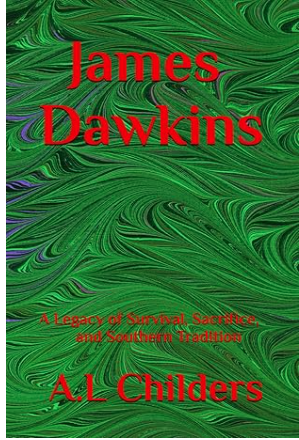
When I published James Dawkins: A Legacy of Survival, Sacrifice, and Southern Tradition, I wasn’t just honoring my ancestor.

I was honoring:

  • Every immigrant who reshaped a Southern town
  • Every family that built a legacy from hardship
  • Every community is tied together by stories and supper tables
  • Every person whose ancestors were forgotten by textbooks but remembered by descendants

His story belongs to history.
But it also belongs to the people.

To anyone who has ever:

  • wondered where they come from
  • felt the pull of ancestry
  • carried traditions without knowing their origin
  • felt the past in their bones

This story is for you.

Because community isn’t made by governments.

It’s made by families, by food, by grit, by the people who crossed oceans and mountains so their descendants could stand where we stand now.


About the Author — A.L. Childers

A.L. Childers is the sixth-generation great-great-great-granddaughter of James Dawkins and author of James Dawkins: A Legacy of Survival, Sacrifice, and Southern Tradition. She writes Southern heritage, folklore, ancestry, and personal narratives that explore how history lives inside us.

Find her books on Amazon under A.L. Childers
Blog: TheHypothyroidismChick.com

A.L. Childers is a bestselling multi-genre author known for blending history, storytelling, cultural commentary, and Southern heritage into unforgettable works. She has written over 200 books across historical nonfiction, health, folklore, conspiracy, women’s empowerment, and metaphysical genres.

Her writing is marked by truth, depth, humor, and courage—traits she now knows she inherited from her Irish ancestor, James Dawkins.

Find her books on Amazon under A.L. Childers.
Visit her blog: TheHypothyroidismChick.com

James Dawkins: A Legacy of Survival, Sacrifice, and Southern Tradition


Carolina cultural heritage, Southern family history blog, James Dawkins ancestor story, Irish roots in Carolina, Dawkins family tradition, Southern community storytelling, immigrant legacy South


#SouthernHeritage #CarolinaCulture #JamesDawkins #FamilyLegacy #IrishRoots #SouthernCommunity #Traditions #ALChilders


#ThisIsTheSouth
#FamilyRoots
#SouthernStories
#LegacyLives
#IrishAmericanHistory
#CommunityHeart

The Man Who Crossed an Ocean So I Could Stand Here Today: The Forgotten Story of My Great-Great-Great-Grandfather, James Dawkins

By A.L. Childers


A.L. Childers uncovers the lost story of her great-great-great-grandfather, James Dawkins—an Irish immigrant, St. Patrick’s Battalion soldier, survivor of famine, and builder of a Southern legacy. A true tale of resilience, sacrifice, and identity that reads like a Hollywood epic.


Some people inherit money. I inherited a war story.

Not the polished, patriotic kind they teach in school.
Not the kind wrapped in museum glass.

No—what I inherited was a raw, unfinished, forgotten account of an Irish boy who fled starvation, crossed an ocean in a coffin-ship, fought in a war that didn’t belong to him, and then carved a life out of the Carolina dirt so that his descendants—including me—could exist.

His name was James Dawkins.
And until recently, he was just a whisper in my family tree.

That changed the day I opened a dusty leather journal in a South Carolina attic and realized:

This wasn’t genealogy. This was destiny.


The Discovery That Broke Me Open

I was researching Southern New Year’s superstitions for a completely different book when history decided to smack me across the face.

There it was:
A journal so old the leather cracked like dry earth.
Ink faded by time but still stubbornly alive.

The moment I read the name James Dawkins, my heart dropped.
I knew the stories—Irish immigrant, tenant farmer’s son—but nobody in my lifetime had ever mentioned:

✅ He was a survivor of the Great Irish Famine
✅ He made the Atlantic crossing in 1840 on a packed, disease-ridden ship
✅ He joined the Saint Patrick’s Battalion, a renegade Irish unit that defected during the U.S.–Mexican War
✅ He fought under the green flag Erin go Bragh for justice, he believed in
✅ He lived the kind of life Hollywood pretends to invent

The journal wasn’t just a record.
It was a testimony.
One man’s desperate attempt to make sure his life—his suffering, his choices, his convictions—would not be erased by time.

And suddenly, I realized…

His story is the reason I tell stories.
His survival is the reason I exist.


Why His Story Still Matters (And Why It Should Be a Movie)

James fled Ireland not because he wanted a better opportunity but because staying meant dying.

He left behind:

  • A starving country
  • A family who prayed he’d live long enough to reach America
  • A mother who pressed a rosary into his hand and said, “Remember who you are.”

When he arrived in America, he wasn’t welcomed.
Irish immigrants rarely were.

He was:

  • Poor
  • Catholic
  • Unwanted
  • Easy to exploit

So he joined other Irishmen who felt betrayed by the U.S. Army and fought for the Mexican people instead.

That choice—the one history textbooks skim over—was an act of moral rebellion.

Not treason.
Not cowardice.
But conviction.

And every page of his journal shows it.

His fear.
His faith.
His hunger.
His rage.
His compassion.
His stubborn will to survive.
His homesick Irish heart refusing to break.

This isn’t just family history.
This is a Southern epic, an Irish tragedy, and an American immigrant chronicle all woven together.

This is the kind of story screenwriters search for.


How It Shaped Me (More Than I Ever Realized)

When I write, people tell me my voice feels fierce, rooted, unbreakable.

Well—now I know why.

I come from:

  • ship survivors
  • farmers who worked land they’d never own
  • Irish laborers treated as disposable
  • men who fought for the oppressed
  • women who carried the weight of generations
  • families who endured when everything around them tried to take them down

I am built from resilience.
I am built from defiance.
I am built from Dawkins blood.

And suddenly my writing—my obsession with truth, justice, history, inequity, and legacy—makes perfect sense.

It’s in my lineage.


Why I’m Telling His Story Now

Because he deserves to be remembered.
Because the Saint Patrick’s Battalion deserves more than footnotes.
Because Irish-American history deserves the dignity it lost.
Because my daughters and their future children deserve to know the strength in their blood.

And because every family has a survivor like James—
someone history tried to silence.

This book is how I give him his voice back.


“As the green shores of Ireland faded into the horizon, I felt my childhood vanish with them.”


About the Author — A.L. Childers

A.L. Childers is a bestselling multi-genre author known for blending history, storytelling, cultural commentary, and Southern heritage into unforgettable works. She has written over 200 books across historical nonfiction, health, folklore, conspiracy, women’s empowerment, and metaphysical genres.

Her writing is marked by truth, depth, humor, and courage—traits she now knows she inherited from her Irish ancestor, James Dawkins.

Find her books on Amazon under A.L. Childers.
Visit her blog: TheHypothyroidismChick.com

James Dawkins: A Legacy of Survival, Sacrifice, and Southern Tradition


Irish immigration story, Saint Patrick’s Battalion, James Dawkins history, Irish-American ancestors, immigrant survival stories, Carolina heritage, Southern historical legacy, Irish famine descendants, A.L. Childers author, Irish soldier story


#IrishHistory #SaintPatricksBattalion #SouthernHeritage #AmericanImmigrantStories #FamilyLegacy #HistoricalNonfiction #IrishDiaspora #MexicanAmericanWar #ALChilders


#JamesDawkins #AncestryStories #CarolinaHistory #IrishRoots #FamineSurvivor #ImmigrantLegacy #WriterLife #AuthorSpotlight #TrueHistory

America, Can We Talk? Because I Think We’re All Experiencing a Cultural Midlife Crisis.

A hilarious but sharp cultural commentary: why America feels like it’s going through a national midlife crisis. Humor, truth, politics, empowerment, and metaphysical insight—all in one viral-ready blog by author A.L. Childers.

Somewhere between TikTok conspiracy theories, politicians fighting on camera like it’s WWE, teenagers diagnosing each other with 47 personality disorders, and grown adults believing they’re “healers” because they bought sage from Amazon…
America has officially entered its cultural midlife crisis.

And honestly?
She’s not handling it well.

This is the national equivalent of buying a red sports car, getting bangs, and announcing you’re “rediscovering yourself” in the middle of Costco.

When did we become a country that can’t function without a soft life playlist and a $9 latte?

Listen. I love a latte.
But somewhere along the way, the nation decided that all problems—from political scandals to existential dread—could be solved with:

  • manifestation
  • healing crystals
  • a seasonal candle
  • and maybe a Stanley cup the size of a toddler

We’re living in a timeline where self-care has become a competitive sport, Congress live-streams its arguments for clicks, and parents are fighting battles in school pickup lines that used to be reserved for medieval kingdoms.

Meanwhile, the government is out here gaslighting everyone like a toxic ex.

“Oh no, there’s no corruption.”
“We’re definitely using your tax dollars wisely.”
“That money went where? Into what? Oh… look over there! A new social issue to argue about!”

And somehow, half the population is too exhausted (or too overstimulated) to push back, and the other half is busy filming content for followers they secretly hate.

Women are in their ‘I’m too tired to pretend’ era—and honestly, it’s iconic.

We’re raising kids, husbands, pets, aging parents, and everyone’s emotional baggage.

We’re holding the entire economy together—
while trying to regulate cortisol, fix our thyroids, heal childhood trauma, and remember what we walked into the room for.

We are DONE with nonsense.
We are DONE with silent suffering.
We are DONE letting society tell us what to do.

If America is in a midlife crisis, women are the ones driving the car while everyone else in the backseat screams over the radio.

And don’t even get me started on the metaphysical awakening happening right now.

Half the country is suddenly spiritual.
The other half is scared of the first half.
And the third half—because math doesn’t matter anymore—
is trying to figure out if aliens, ancestors, or energy vampires are responsible for why they’re tired every day.

People are burning incense, cleansing houses, reading tarot, talking to spirit guides, and I’m over here like:

“Ma’am, you are not overwhelmed because of Mercury retrograde.
You are overwhelmed because your husband acts like a third child.”

So what’s the point of all this?

America’s cultural midlife crisis is messy, loud, dramatic, and deeply unserious—but it’s also the perfect moment for a reset.

This chaos is showing us exactly what we don’t want anymore:

  • fake politicians
  • fake empowerment
  • fake wellness
  • fake morality
  • fake “perfect families” on social media
  • and fake narratives that tell women to stay quiet

We’re entering a cultural reawakening—
And underneath the humor, there’s a serious truth:

America is cracking open. And what comes next is up to the people who are tired of pretending everything is fine.


American culture satire, cultural commentary 2025, women’s empowerment, government corruption humor, spiritual awakening funny, mom life humor blog, social commentary viral blog, A.L. Childers author, thyroid empowerment, political satire 2025, metaphysical commentary


#AmericanCulture #CulturalCommentary #WomensVoices #HumorWriting #PoliticalSatire #MomLifeHumor #MetaphysicalAwakening #ALChilders #ViralBlog #ThyroidHealth #GovernmentCritique #SpiritualHumor


About the Author

A.L. Childers (Audrey Childers) is a nationally emerging author known for blending humor, truth, social commentary, history, health, and metaphysics into powerful, unforgettable writing. With over 200 published books, she explores everything from government corruption to women’s empowerment, spiritual protection, thyroid health, Appalachian folklore, and the hidden mechanics of power.
Her work can be found on Amazon, TheHypothyroidismChick.com, and across social platforms where readers follow her for honesty, insight, and real-world wisdom.


A.L. Childers is the author of over 200 books spanning investigative nonfiction, history, spirituality, political analysis, women’s empowerment, and social commentary. Her writing blends deep research with lived experience, often exploring the systems that shape—and limit—ordinary lives.

Her bestselling titles include:

If you enjoyed this piece, explore Audrey’s books and blog for deeper dives into power, policy, and the people caught in between.


Disclaimer:

This blog is for commentary, entertainment, and informational purposes only. It includes humor, opinion, and social critique and should not be interpreted as legal, medical, financial, or professional advice. All content reflects the author’s viewpoints at the time of writing.

She Fought the Feds. Now She Might Join Them: The Untold Story of Savannah Chrisley’s Political Pivot

A serious investigative analysis of Savannah Chrisley’s hinted Senate run, her political evolution after the Chrisley federal case, and whether her background in criminal-justice advocacy positions her as a rising political figure. Includes Senate eligibility, case facts, references, and author insight.


The Investigative Blog

A young blonde woman sits behind a studio microphone, poised, articulate, and far from the reality-TV image America first knew her for. When Savannah Chrisley hinted publicly at a potential run for the United States Senate, it did not land as a flippant joke—it landed as a moment that demanded investigation.

Savannah’s journey over the past two years has not been glamorous or scripted. It has been political—whether she intended it or not. After her parents, Todd and Julie Chrisley, were convicted on federal charges of tax fraud, bank fraud, and conspiracy, Savannah became the family’s primary advocate. In that role, she entered a world few Americans ever see up close: the inside workings of federal agencies, sentencing guidelines, prison conditions, and political influence.

Her most recent Senate tease didn’t appear from thin air. It is the culmination of two years spent navigating federal power and confronting its failures directly. Now, for the first time, the question feels legitimate:

Is Savannah Chrisley positioning herself for political office? And if so—why now?


A Tease That Sounds Less Like a Joke, More Like a Warning Shot

This is not Savannah’s first time hinting at public office.
Throughout her advocacy, she has:

  • spoken on national platforms,
  • traveled to Washington, D.C. for meetings related to criminal justice reform,
  • challenged the federal system that prosecuted her parents, and
  • built a large audience of politically engaged listeners through her podcast.

In interviews and public statements, Savannah has repeatedly discussed her frustration with government misconduct, sentencing inconsistencies, and prosecutorial overreach. But her newest comments suggest something deeper: a shift from criticizing the system to potentially entering it.

For someone who spent two years fighting federal institutions, a move into the Senate is not as improbable as it sounds. In fact, it may be the most logical next step.


The Surprising Simplicity of Running for Senate

The U.S. Senate is often imagined as an exclusive club requiring advanced degrees and years of political experience. But constitutionally speaking, the requirements are minimal:

  • Must be at least 30
  • Must be a U.S. citizen for 9 years
  • Must live in the state they want to represent

Savannah meets every criterion.

No law degree required.
No private political apprenticeship.
No decades spent in public office.

In a political era defined by celebrity candidates—Ronald Reagan, Donald Trump, Arnold Schwarzenegger, Jesse Ventura, Al Franken—it is not difficult to imagine Savannah joining the lineup.

The key difference?
Most celebrity candidates do not enter the political arena after a two-year education in federal prosecution and prison reform.


What the Chrisley Case Really Revealed—and Why It Matters Now

The media narrative around the Chrisleys was sensational, but incomplete. Investigative records, IRS statements, and legal filings have since revealed:

  • The IRS confirmed the Chrisleys did not owe the taxes prosecutors claimed.
  • Their accountant admitted to misrepresenting financial documentation.
  • Key testimony used to secure convictions has been challenged.
  • Sentencing concerns were raised by legal analysts.
  • Advocacy groups flagged inconsistencies in the federal prosecution.

The people who lied were not the Chrisleys—and the system’s errors cost them years of their lives.

Savannah was forced into the role of public advocate, investigator, and national spokesperson as she attempted to repair the damage done to her family. She brought media attention to federal prison conditions, sentencing disparities, inmate abuse, and government overreach.

The experience hardened her—and educated her.

She learned firsthand how federal agencies function.
She watched how prosecutors wield power.
She saw how quickly the media can turn real families into political fodder.
And she discovered how difficult it is to fight federal institutions without influence.

Now, influence is exactly what she’s building.


Is Savannah Chrisley a Viable Political Contender? An Honest Assessment

Political viability requires more than eligibility.
It requires:

  • public trust,
  • a compelling narrative,
  • a platform that resonates,
  • the ability to speak to real issues, and
  • resilience under scrutiny.

Savannah has all of these.

Reasons she may succeed:

  • Her experience with the justice system is personal, not theoretical.
  • She has national name recognition.
  • Her advocacy already resembles early-stage political groundwork.
  • She communicates directly to younger voters.
  • She has no history of corruption or PAC entanglements.

Concerns critics will raise:

  • Her age and limited formal political experience.
  • Her reality-TV background.
  • Public skepticism about celebrity candidates.
  • Questions about whether she can resist political influence.

But these concerns are not unique to her—they shadow every candidate in America.

In fact, they shadow most sitting senators.


A Political Landscape Ready for Outsiders

The success of unconventional political figures in the past decade reflects a shift in public sentiment. Americans are increasingly drawn to leaders who:

  • have lived through real adversity,
  • understand institutional failure,
  • communicate without pretense,
  • and challenge the status quo.

Savannah fits that mold cleanly.
Whether she ultimately announces a campaign remains unknown, but the possibility itself has created a national conversation.

What is certain is this: the Chrisley case didn’t end when her parents returned home. It transformed Savannah into a political actor—whether she runs for office or not.

The tease of a Senate run is more than speculation.
It is a glimpse into a future shaped by everything she has learned, survived, and refused to surrender to.


References & Sources

  • United States Senate Eligibility Requirements — Senate.gov
  • IRS Public Records Regarding Chrisley Case — IRS.gov
  • Federal Appeals Documents, 2023–2024
  • Fox News Digital Reporting on the Chrisley Case
  • NewsNation Justice Reform Coverage
  • “Unlocked” Podcast Episodes (interviews on sentencing and prison reform)
  • Criminal Justice Advocacy Group Reports, 2023–2025

Author Spotlight – A.L. Childers

A.L. Childers is the author of over 200 books spanning investigative nonfiction, history, spirituality, political analysis, women’s empowerment, and social commentary. Her writing blends deep research with lived experience, often exploring the systems that shape—and limit—ordinary lives.

Her bestselling titles include:

She is also the founder of TheHypothyroidismChick.com, a platform dedicated to truth-driven wellness, empowerment, and investigative storytelling.


Tags:
Savannah Chrisley, Chrisley Family, U.S. Senate, Senate Run Rumors, Political Ambition, Criminal Justice Reform, Chrisley IRS Case, Federal Prosecution, Reality TV Politics, Todd Chrisley, Julie Chrisley, Unlocked Podcast, Wrongful Conviction, Federal Prison Reform, Investigative Journalism, A.L. Childers


Disclaimer:
The information contained in this article is for research, commentary, and general informational purposes only. This publication does not claim to present complete facts, legal conclusions, or verified determinations regarding any individual or case. All statements reflect the author’s interpretation of publicly available information, media reports, court documents, and documented public statements at the time of writing.

Nothing in this article should be construed as legal advice, political advice, financial guidance, factual certification, or a definitive assessment of any ongoing or past legal matter. The author is not an attorney, legal representative, or spokesperson for the Chrisley family or any party referenced in this article.

All individuals mentioned are presumed innocent unless proven guilty in a court of law. Any discussion of legal proceedings, court outcomes, or allegations is based solely on publicly accessible sources and should not be interpreted as new evidence, insider information, or a claim of personal knowledge beyond what has been publicly reported.

This article does not endorse, support, oppose, or predict the political candidacy of any individual, including Savannah Chrisley. Any reference to potential political activity is speculative commentary based on publicly known information and does not assert that any individual has declared, intends to declare, or should declare candidacy for public office.

The author makes no warranties, express or implied, regarding the accuracy, completeness, reliability, or current validity of the information presented. Readers should independently verify all information and consult primary source documents, legal filings, or qualified professionals for complete context or guidance.

No affiliation, partnership, or association exists between the author and any individuals, organizations, legal teams, political groups, entertainment companies, or governmental bodies referenced within the article.

Use of this content is at the reader’s own risk. The author expressly disclaims all liability for any actions taken or decisions made based on the information provided herein.

A.L. Childers is not affiliated, associated, or connected with Savannah Chrisley, the Chrisley family, their legal representation, any media organization, or any political group. This publication is entirely independent.

All content on TheHypothyroidismChick.com is provided for informational, educational, and opinion-based purposes. Nothing on this site constitutes legal, medical, political, or financial advice. The author assumes no liability for actions taken based on the content. By using this site, readers agree to verify information independently and acknowledge that all commentary reflects the author’s personal interpretations of publicly available data.


Content provided for commentary and educational purposes. No claims of insider information. No responsibility is assumed for accuracy or interpretation. Consult primary documents for authoritative information.

The following article is reported commentary based on publicly available records, reputable news reporting, and on-the-record statements. It does not assert, imply, or intend to convey any new factual allegations about any person beyond those sources. A presidential pardon ends punishment but does not overturn or expunge a conviction unless specified by a court; readers should consult official dockets and FEC filings for the most current legal and campaign information. All opinions herein are those of the author. Nothing in this article should be construed as legal advice, an accusation of criminal conduct beyond the cited records, or an endorsement/opposition of any candidate. Corrections will be made upon receipt of verifiable documentation.

🕳️ If Releasing the Epstein List Would Collapse Your Government… Then Maybe It Should

A.L. Childers examines what it means when truth itself threatens power. If releasing the Epstein list could collapse governments, maybe that collapse is long overdue — not as destruction, but as purification.


The Truth Should Never Threaten Justice

If revealing the truth about criminal acts could bring down an entire government, then what exactly does that say about those in charge?

For decades, whispers of the “Epstein list” — an alleged catalog of elite names connected to one of the darkest human trafficking networks in modern history — have sparked outrage, speculation, and silence. Whether or not the complete list ever sees daylight, the reaction to it speaks volumes.

Transparency shouldn’t destroy democracy; it should define it.
If exposure of the truth could cause collapse, maybe it’s not democracy that’s breaking — maybe it’s corruption finally losing its protection.


Secrecy: The Shield of the Elite

Governments throughout history have thrived on secrecy. From the sealed files of the Church Committee reports (1975) to the redacted pages of the 9/11 Commission, the pattern is the same: when power is threatened, information becomes “classified.”

Epstein’s connections highlight how systemic privilege shields predators while silencing victims. The same culture of concealment that covered up Tuskegee, MK-Ultra, and Operation Mockingbird is alive and well.

History doesn’t repeat itself — it’s simply never been fully told.


Why Collapse Isn’t Always a Bad Thing

Collapse doesn’t always mean chaos. Sometimes, it’s correction.
Empires built on deceit must eventually crumble under the weight of their own lies. If releasing the names of those involved in crimes against humanity could destabilize institutions, then maybe those institutions were never stable to begin with.

Collapse can be the moment when light floods in — the beginning of a new kind of accountability.

Because if justice depends on silence, it’s not justice at all.


A Call for Radical Transparency

The people deserve truth, not fragments of it. If names on the Epstein list are innocent, transparency clears them.
If they’re guilty, exposure is the first step toward justice.

Accountability should never depend on a person’s income, influence, or political connections.

We cannot heal as a society until we face what’s been hidden — no matter how uncomfortable it makes the powerful.


References

  1. U.S. Department of Justice, “Jeffrey Epstein: Timeline of Federal Charges,” Southern District of New York, 2019.
  2. Brown, Julie K., Perversion of Justice: The Jeffrey Epstein Story, HarperCollins, 2021.
  3. U.S. Senate Select Committee to Study Governmental Operations, “Church Committee Reports,” 1975.
  4. Federal Bureau of Investigation, “Operation Mockingbird Historical Overview,” Declassified Archives, 2017.
  5. Smith, Ben. “How Power Protects Itself: The Unspoken Rule of Silence,” The Atlantic, 2022.

About the Author

A.L. Childers is a researcher, investigative writer, and truth-seeker whose works examine corruption, power, and consciousness. Her writing bridges history, psychology, and modern society to expose manipulation and encourage independent thought.

She is the author of:

Her blogs blend spirituality, politics, and raw truth — challenging readers to question what they’ve been told and seek what’s been hidden.

📍 Read More:

Follow her on TheHypothyroidismChick.com and on social media under @ALChildersAuthor for updates, blogs, and book releases.


Disclaimer

This article is based on independent analysis and publicly available information. It represents the author’s interpretation and is intended for educational and informational purposes only. The views expressed do not constitute legal, medical, or political advice.

All references, sources, and opinions have been cited or inferred for context and commentary under fair use. Readers are encouraged to verify claims through primary sources and form their own conclusions.

A.L. Childers examines what it means when truth itself threatens power. If releasing the Epstein list could collapse governments, maybe that collapse is long overdue — not as destruction, but as purification.

🎃 “Holy, Haunted, or Hypocritical?” — The True Story Behind Halloween and What Every Religion Doesn’t Want You to Know

By A.L. Childers


Every October, doorbells ring, pumpkins glow, and the air hums with childlike excitement. But beneath the candy and costumes lies a much darker, older heartbeat—a festival born in fire, fear, and faith.

Halloween didn’t begin with plastic spiders and pumpkin-spice lattes. Its roots reach back over 2,000 years to the ancient Celts, who celebrated Samhain—a time when the veil between the living and the dead was believed to thin. On that night, spirits roamed freely, and villagers lit bonfires and wore animal skins to confuse wandering souls.

Centuries later, when Rome conquered Celtic lands, it absorbed the festival into its own traditions. The Romans honored Pomona, goddess of fruit and trees (yes, that’s why we bob for apples). But when Christianity spread, the Church performed one of history’s greatest rebrands—turning Samhain into All Hallows’ Eve, the night before All Saints’ Day. What had once been a festival of ghosts and fire became a “holy vigil.”

Except…it never really stopped being both.


👻 A Festival of Contradictions

Halloween today is celebrated across the world: from the U.S. and U.K. to Japan, the Philippines, and beyond. Children dress as superheroes, adults as villains, and the world spends billions chasing a thrill that began as a fear.

But beneath the sugar high and glowing jack-o’-lanterns lies a conflict that spans centuries and faiths. Nearly every major religion has, at one time or another, condemned the very practices Halloween celebrates—yet millions of their followers still celebrate it.

Let’s lift the veil and face the ghosts of hypocrisy.


✝️ Christianity: A Holy Day Turned Haunted

The Christian Bible doesn’t mention Halloween, but it leaves little doubt about dabbling in the supernatural. Leviticus 19:31 warns:

“Do not turn to mediums or seek out spiritists, for you will be defiled by them.”

And Deuteronomy 18:10-12 declares:

“Let no one be found among you who practices divination… or consults the dead. Anyone who does these things is detestable to the Lord.”

Yet, paradoxically, it was the Christian Church that took Samhain and made it “holy,” transforming pagan rites into All Hallows’ Eve. Today, churches host “trunk-or-treat” events and “harvest festivals”—while many still condemn Halloween’s darkness.

It’s history’s most spiritual case of “do as I say, not as I did.”


☪️ Islam: The Night Faith Forbids

In Islam, the issue is clear. Halloween’s fascination with ghosts and witches stands at odds with Tawheed—the absolute oneness of God. The Qur’an (2:102) warns against sorcery and magic:

“They learned what harmed them and did not benefit them.”

Islamic scholars argue that honoring or imitating pagan rituals resembles shirk—the greatest sin, associating partners with God. For many Muslims, Halloween isn’t a harmless holiday; it’s a spiritual red flag.

Still, in multicultural societies, some Muslims allow children to enjoy Halloween’s secular aspects, emphasizing fun over faith. Yet even then, the warning stands: beware the appearance of darkness, lest it enter unseen.


✡️ Judaism: When the Torah Meets Trick-or-Treat

In Jewish tradition, the afterlife exists, but the living are forbidden from contacting it. The Torah (Deuteronomy 18:11) says:

“There shall not be found among you… one who inquires of the dead.”

Leviticus 20:27 adds:

“A man or woman who has a ghost or familiar spirit shall surely be put to death.”

Halloween’s ghosts and séances fall squarely into what Judaism calls nichush (divination) and ov (necromancy)—both forbidden.

Yet many Jewish families in Western countries participate anyway, treating Halloween as cultural, not spiritual. It’s candy without the creed—a secular exception in a sacred system.


🕉️ Hinduism: When Karma Meets the Unseen

Hinduism openly acknowledges spirits (bhūtas and pretas) but discourages invoking them. The Bhagavad Gita 9:25 warns:

“Those who worship ghosts and spirits will take birth among such beings.”

Hindu tradition reserves ancestor-honoring for Pitru Paksha, a solemn fortnight of remembrance—not a night of horror masks and mock ghosts. Yet in India’s cities and across the diaspora, Halloween parties have become trendy, showing that even the most spiritual cultures can’t resist Western spectacle.

To many Hindu teachers, the problem isn’t celebration—it’s vibration. To celebrate darkness is to invite it.


☸️ Buddhism: Detachment from Darkness

Buddhist texts like the Āṭānāṭiya Sutta teach protection from malevolent spirits through chanting—not through imitation or fear. Halloween’s obsession with fright, gore, and ego is the antithesis of mindfulness.

Still, across Japan and Thailand, Buddhist communities host costume parades that blend Western fun with Eastern reverence for ancestors. The message is simple: face the darkness, but don’t become it.


⚖️ The Great Spiritual Irony

From the Bible to the Qur’an, from the Torah to the Bhagavad Gita, and even through Buddhist sutras—each sacred text warns against glorifying death, spirits, or divination.

And yet, on one night each year, the world dresses up in defiance of those very teachings. Christians light pumpkins, Muslims hand out candy, Jews carve ghosts, Hindus dance in monster masks, and Buddhists meditate under paper skeletons.

Halloween has become the ultimate mirror—reflecting not evil, but our human desire to flirt with it safely.


💀 Bridging the Veil Between Research and Revelation

Historically, Halloween is a masterclass in cultural adaptation: a pagan ritual reborn through Christian branding, exported by Western commerce, and adopted by almost every major faith—despite their own prohibitions.

Spiritually, it’s a reminder that what we fear, we also imitate. The veil between worlds isn’t just about ghosts—it’s the thin line between belief and behavior, between what we preach and what we practice.

And that’s what makes Halloween so haunting: not the ghosts in the graveyard, but the contradictions in our souls.


⚠️ Disclaimer

This blog blends verified historical research with cultural analysis and religious reference. Scriptural citations are provided for context only and are not theological instruction. Interpretations vary among denominations and traditions.


✍️ About the Author

A.L. Childers is an author who explores the sacred, the secret, and the supernatural. Her works uncover how history, faith, and hidden forces shape the world we think we know. From haunted Appalachia to ancient gods and corporate empires, she bridges the veil between research and revelation.

Her acclaimed works include:

Discover more haunting truths at TheHypothyroidismChick.com, where belief meets evidence and the veil never fully closes.

🎃 The Real History of Halloween: From Ancient Spirits to Modern Conflicts

Who celebrates it, why it began, and how religion made it their own (even when their own scriptures say otherwise)

By A.L. Childers


Halloween has always been more than candy and costumes. Beneath the pumpkins and porch lights hides one of the oldest and most misunderstood festivals on earth — a night born from fire, fear, and faith. Its story begins long before trick-or-treaters and haunted houses ever existed.

Over two thousand years ago, the Celts celebrated Samhain, a sacred festival marking the end of the harvest and the start of winter. October 31st wasn’t just another day on the calendar — it was the moment the veil between the living and the dead was said to thin. During Samhain, bonfires burned on hilltops to ward off spirits, and people disguised themselves in animal skins so wandering ghosts wouldn’t recognize them. It was both reverent and terrifying — the living preparing to greet the season of death.

When Rome conquered Celtic lands, they layered their own rituals on top of Samhain. The Romans honored Pomona, the goddess of fruit and trees — perhaps the reason we still bob for apples today. But centuries later, the Church added another layer. As Christianity spread through Europe, Pope Gregory III designated November 1st as All Saints’ DayAll Hallows — to honor saints and martyrs. The evening before became known as All Hallows’ Eve, and eventually, Halloween.

It was clever cultural blending: take a pagan night of spirits and rename it something holy. The result? A global mash-up of ancient superstition and church tradition that people still can’t quite define.


👻 Who Celebrates Halloween Today

Halloween has outgrown its Celtic cradle. It’s celebrated in the United States, Canada, Ireland, the UK, Australia, and increasingly around the world — often as a secular holiday more about sugar than spirits.
Kids dress up as superheroes and vampires, adults throw parties, pumpkins get carved, and homes become haunted displays of creativity. But while most people treat it as harmless fun, every piece of Halloween still carries an echo of its past — a past tied to death, magic, and the afterlife.

Even the word “trick-or-treat” comes from a much older Christian custom called “souling,” when children would visit homes on All Souls’ Day, offering prayers for the dead in exchange for food. The masks? Those came straight from Samhain, when disguises protected the living from angry spirits.

In short: our candy-coated modern version is a remix of pagan ritual, Roman tradition, and Christian adaptation.


✝️ Christianity’s Complicated Relationship with Halloween

For centuries, Christians have argued over whether Halloween is a harmless cultural event or a celebration of darkness. Many church leaders condemn it outright. In the Bible, passages like Leviticus 19:31 (“Do not turn to mediums or seek out spiritists”) and Deuteronomy 18:10–12 (“Let no one be found among you who practices divination… for anyone who does these things is detestable to the Lord”) are often cited as proof that dabbling in ghostly themes breaks God’s commands.

And yet — Christians were also the ones who absorbed Samhain into All Hallows’ Eve. The Church took an existing festival about spirits and repackaged it into one about saints, turning a pagan ritual into a “holy day.” The irony? Many Christians still celebrate Halloween with costumes and candy while condemning its roots — a double standard born of history’s strange blending of faith and folklore.

Some denominations replace it with harvest festivals or “trunk-or-treat” events to make it more family-friendly and less “spiritual.” But the truth remains: Halloween’s blood runs deep through the soil of pre-Christian Europe.


☪️ Islam: Rejecting the Pagan Past

In Islam, Halloween is widely discouraged. Muslim scholars argue that it glorifies superstition and magic, both of which contradict the core tenet of Tawheed — the oneness of God.
The Qur’an, Surah Al-Baqarah 2:102, warns against sorcery and seeking power through unseen spirits, describing how people “learned magic… that causes separation between a man and his wife.”
Celebrating a day centered on ghosts and witches, scholars say, resembles shirk — associating others with God.

While some Muslims living in the West may allow children to join trick-or-treating as a cultural activity, most religious authorities see it as a ritual best avoided. In essence: when the candy runs low, the commandment stands firm — avoid what even looks like the occult.


✡️ Judaism: Between the Living and the Law

Judaism acknowledges the reality of souls and the afterlife but strictly forbids communicating with them. The Torah, Deuteronomy 18:11, warns: “There shall not be found among you… one who inquires of the dead.”
In Leviticus 20:27, those who “have a ghost or familiar spirit” are condemned.

Despite that, Jewish communities living in secular countries often participate in Halloween in a non-religious way — costumes, candy, and fun — while others avoid it completely, citing the prohibition of nichush (divination) and ov (mediumship).
The paradox is clear: while the Torah bans necromancy, many still carve pumpkins with smiles and celebrate the very night their ancestors were told to avoid.


🕉️ Hinduism: Ghosts, Karma, and Caution

In Hinduism, the concept of spirits (bhūtas and pretas) is well-known, and many texts acknowledge their presence in the unseen realms. But honoring or calling on them is not encouraged. The Bhagavad Gita 9:25 says:

“Those who worship ghosts and spirits will take birth among such beings; those who worship Me will live with Me.”

For Hindus, celebrating a day of the dead could be seen as attracting lower energies. Festivals like Pitru Paksha already exist to honor ancestors in a sacred, disciplined way — not through costumes and fright.
Still, in modern India, Westernized youth sometimes host “Halloween parties,” viewing it as entertainment rather than religion. But scripturally speaking, worshiping or celebrating spirits is ashubh — inauspicious and spiritually unwise.


☸️ Buddhism: Mindfulness Over Mayhem

Buddhism takes a more philosophical view. Spirits exist, but they are considered part of the cycle of suffering — beings trapped between realms due to attachment or desire. The Āṭānāṭiya Sutta in the Digha Nikāya offers protection from harmful spirits, teaching monks to chant verses for safety, not to invite the dead in for candy.

In general, Buddhists focus on mindfulness and compassion, not fear or superstition. While Halloween isn’t condemned outright, indulging in fear, horror, or obsession with death is seen as a distraction from enlightenment.
Still, in Japan and parts of Southeast Asia, Buddhist communities host colorful costume events influenced by Western Halloween — proof that even spiritual detachment can’t fully resist the fun.


⚖️ The Double Standard: When Faith Meets Festivity

Here’s the uncomfortable truth: nearly every major religion — Christianity, Islam, Judaism, Hinduism, Buddhism — contains scriptures warning against spirit-worship, necromancy, or idolatry.
Yet Halloween continues to thrive across those same faiths, repackaged as “cultural fun.”
The ancient Celtic festival that once honored spirits of the dead has become a global industry worth billions. But beneath the masks, each faith wrestles with the same question:
Can you celebrate darkness without inviting it in?


💀 So, Should You Celebrate?

That depends on your belief system, your intentions, and your comfort with the past.
If you see Halloween as harmless fun — dress up, enjoy it, eat the candy.
If you see it as spiritual hypocrisy — maybe skip it, or transform it into something light-filled and meaningful.
As the Celts once believed, this time of year the veil thins. Whether that’s metaphorical or mystical depends on you.


⚠️ Disclaimer

This article explores Halloween through a cultural and historical lens. Religious texts are quoted for context, not for judgment. Interpretations vary among traditions. Always consult your own faith leaders or personal conscience for guidance.


✍️ About the Author

A.L. Childers writes at the crossroads of history, spirituality, and shadow. Her work explores how ancient customs and modern beliefs intertwine — exposing the strange beauty and contradictions of human faith.

Her spooky-historical titles include:

Discover more at TheHypothyroidismChick.com, where A.L. bridges the veil between research and revelation.

history of Halloween, origins of Halloween, Samhain, Celtic festival, All Hallows Eve, Christian view of Halloween, Islam Halloween ruling, Jewish perspective on Halloween, Hindu ghosts and spirits, Buddhist view on Halloween, religions that celebrate Halloween, Halloween and the Bible, Halloween and the Quran, Halloween and other faiths, A.L. Childers

🧟‍♀️ If the Dead Rose Tonight, How Many Zombies Would You Have to Fight?

A terrifyingly real look at cemeteries, ghosts, and the living—through numbers that’ll haunt your sleep.

By A.L. Childers


💀 The Math of the Macabre: Are You Outnumbered by the Dead?

If you’ve ever walked past a cemetery and felt that strange pull—the one that whispers, you’re not alone—you’re not imagining it. The numbers say so.

Since humanity began, roughly 109 billion people have died. With only 8 billion alive today, that’s 13.6 dead for every living person.
In other words: if ghosts had voting rights, you’d already be outnumbered before breakfast.

Now imagine every one of those souls clawing their way back through the soil tonight. Would you survive the first hour?


⚰️ Counting Cemeteries: Who Really Rules Your Town?

There are over 144,000 cemeteries in the United States alone. With about 340 million living Americans, that’s roughly one cemetery for every 2,360 people—but most cemeteries hold thousands of bodies.

Do the math, and you’ll realize your neighborhood isn’t built near a graveyard… it’s built on one.

If each grave birthed a zombie, the average American town would have two undead for every living person.
Some towns? More like ten.


👻 Ghosts Per Capita: The Unseen Majority

Take the global death count and spread it across the living: you get about 13 ghosts per person.
So when you wake up at 3 AM, that whisper you heard isn’t your imagination—it’s just one of the 13 checking in.

Earth, in essence, is the world’s largest haunted house. And if the veil between life and death ever tore open? The living wouldn’t stand a chance.


🌍 The Top 5 Deadliest Cities to Be in When the Veil Breaks

If the Night of the Living Dead spilled over into reality, these five global cities would be ground zero for chaos:

  1. Paris, France 🇫🇷
    Beneath the romantic streets lies a mass grave of over six million skeletons in the Catacombs of Paris.
    The dead literally outnumber the living underground. When the veil rips open, they’d rise from subway tunnels, crypts, and cryptic cafés. You wouldn’t hear them coming—you’d feel them.
  2. Cairo, Egypt 🇪🇬
    The City of the Dead is a vast necropolis where hundreds of thousands of living residents actually dwell among tombs. If the dead awoke, they’d already know the address.
  3. London, England 🇬🇧
    London is layered with plague pits and forgotten crypts. If the veil thinned, every Underground station could become a zombie metro.
  4. Beijing, China 🇨🇳
    Thousands of years of continuous burials, royal tombs, and ancient dynasties buried under urban sprawl—if resurrection began, it’d look like an army rising from history itself.
  5. Rome, Italy 🇮🇹
    Catacombs, mummified popes, and imperial crypts… Rome has more bones than blessings. When the dead rise, they’ll march straight down the Appian Way.

The Top 5 American Cities You’d Never Survive in a Zombie Uprising

Now let’s bring it home—literally. Here are the five U.S. cities you’d never want to live in if the veil shattered tonight:

  1. Savannah, Georgia
    The “Most Haunted City in America.” Built on Native burial grounds, Civil War graves, and layered hauntings. Every square, every home, every oak-draped street holds secrets. When the dead rise, Savannah will glow ghost-white under the Spanish moss.
  2. New Orleans, Louisiana
    Cemeteries built above ground, voodoo roots, and restless spirits—this city would be an undead carnival. You’d hear the trumpets before the screams.
  3. Charleston, South Carolina
    Colonial graveyards under cobblestone streets, hurricanes, and hauntings dating back to the 1600s. Zombies here would know how to navigate a flood.
  4. Boston, Massachusetts
    One of the oldest burial cities in the U.S.—and home to crypts older than the country itself. Paul Revere might be ringing a different kind of warning bell tonight.
  5. St. Augustine, Florida
    The oldest continuously inhabited city in America—home to ancient Spanish burial sites, pirate graves, and the restless dead of centuries past.

If you live in any of these cities, keep your doors locked and your salt handy. When the night goes silent, it won’t stay that way for long.


🧠 Why These Numbers Matter

Because this isn’t just math—it’s memory.
Every inch of land we call “home” is borrowed from the dead. Our schools, churches, highways, and homes are layered atop generations who never truly left.

If the veil ever tears, it won’t be about them coming for us. It’ll be about them reclaiming what was theirs all along.


📚 For Readers Who Crave the Truth Behind the Terror

If you love haunting statistics and the eerie dance between fact and fear, step into my darker worlds:

Each title unearths another layer of the unseen—where myth, math, and mystery collide.


⚠️ Disclaimer

This blog is a fictional and statistical blend, created for entertainment and eerie exploration.
The cities and numbers mentioned are based on historical data, population ratios, and creative interpretation—not verified paranormal records (though you might wish they were).
Proceed with curiosity… and maybe a flashlight.


✍️ About the Author

A.L. Childers is a bestselling author and researcher who turns history into haunting. Her works explore the thin veil between science and superstition, revealing the stories buried beneath our world—sometimes literally.

When she isn’t digging into historical conspiracies or decoding ancient myths, she’s writing late into the night, where the only sound is the whisper of the past.

Find her books on Amazon under A.L. Childers or visit TheHypothyroidismChick.com for more haunting truths and enchanted storytelling.


If the dead rose tonight, how many zombies would you have to fight? Discover the shocking dead-to-living ratios, haunted cities, and terrifying cemetery stats that prove the dead already outnumber us. A chilling blog by A.L. Childers, author of Bloodline of the Forsaken and Nightmare Legends.