
Tag Archives: home

When Independence Cost a Dollar and a Dream


There are moments in motherhood that arrive quietly but land like thunder.

This was one of them.

My youngest twin—twenty-seven years old—has purchased a home. In this economy. In a time so unforgiving that even the word starter feels like a relic from another century. It is an accomplishment that deserves to be spoken aloud, admired, honored. I am proud of her in the way that fills the chest and tightens the throat at the same time.

And yet—there it is—the ache.

Because pride and grief sometimes share the same chair.

This economy is ruthless. Not difficult. Not inconvenient. Ruthless. It does not reward youth the way it once did. It does not offer freedom cheaply. It does not allow mistakes without punishment. Housing is no longer a milestone—it is a miracle. And watching your child secure something so rare feels like witnessing both victory and loss in a single breath.

When I was sixteen, I left home.

Not dramatically. Not ceremoniously. I simply went. I had my own apartment. A used car. Paid my electric bill. My car insurance. My groceries. I even attended community college. I was free in the way only the young and unafraid can be—free because the world had not yet learned how to price every inch of air.

It wasn’t because I was wealthy. It wasn’t because I was protected. It was because the numbers made sense back then. They no longer do.

Today, a young person can work endlessly and still remain trapped. Rent devours paychecks. Insurance eats ambition. Groceries demand negotiation. Independence has been turned into a luxury item, and no one pretends otherwise.

So her father and I did what parents are rarely praised for doing anymore—we let our children stay.

No rent. No utilities. No pressure—except the kind that builds, not breaks. The only bills they paid were the ones they chose. The rest went into savings. Into preparation. Into a future we knew the world would not hand them gently.

They also went to work where their father works—a union job that pays more than most four-year degrees promise anymore. Thirty-five dollars an hour. Time-and-a-half after eight hours in a day, not forty in a week. Double time after ten. Triple pay on holidays. The kind of structure that once built the middle class and now survives like a rare species.

And because of that—because of planning, patience, and opportunity—she bought a home.

I should be celebrating without pause.

But there’s a part of me that wishes she would stay just a little longer. Stay in the good life. The one I never had offered to me, even though I somehow managed to afford it anyway. Stay in the safety that took generations of trial and error to learn how to provide.

My childhood was… complicated.

My mother was a single parent doing the best she could with the tools she had. But there were too many men passing through the house. Too much instability. Too much responsibility placed on shoulders still learning how to carry themselves. By the time I was ten, I was caring for my younger sister—five years my junior—cleaning the house, feeding her, managing tasks that children should not have to manage.

If I failed, I was punished. If I succeeded, it was expected.

And yet—those years shaped me.

They gave me skills. Grit. Awareness. Independence sharpened early. I learned how to survive before I learned how to rest. I became a true Gen Xer—resourceful, skeptical, self-reliant, allergic to nonsense.

A Scorpio. A free spirit. A wild child who wasn’t taking anyone’s shit.

And I wouldn’t trade it. Not for anything.

How many people can say they were sixteen in the 1980s, paying their own bills, driving their own car, answering to no one but themselves—and still felt free? The eighties were a strange kind of golden hour. Not perfect. Not fair. But possible.

That world is gone.

So when my daughter closes the door on her own home, I stand in the doorway of memory. Proud beyond words. Tender beyond reason. Grateful that she has what I never did—and quietly mourning the simplicity of a time when independence didn’t require permission from a bank, a union contract, and perfect timing.

This is what parenting looks like in an unforgiving economy.

You don’t push them out.
You build a runway.
You give them what you never had.
And when they finally fly, you wave—even as your heart asks them to circle once more.


Disclaimer

This blog reflects personal experience and generational observation. It is not intended to diminish the struggles of any generation or romanticize hardship. Economic conditions vary widely, and individual outcomes are shaped by many factors. This piece is offered as reflection, not prescription.


References & Context

  • U.S. Bureau of Labor Statistics – Historical wage comparisons
  • Federal Reserve Economic Data (FRED) – Housing affordability index
  • Pew Research Center – Generational economic mobility
  • National Association of Realtors – First-time homebuyer trends
  • Economic Policy Institute – Wage growth vs. cost of living (1980s–present)

About the Author

A.L. Childers is a Gen X writer, researcher, and storyteller whose work blends lived experience with cultural reflection. Raised in an era of latchkeys and learned independence, she writes about family, economics, power systems, and the quiet emotional truths that live beneath major life transitions. Her work honors resilience without glorifying struggle and believes deeply in giving the next generation what many never received.


ABOUT THE AUTHOR — A.L. Childers

Audrey Childers is a published author, thyroid advocate, wellness writer, and founder of TheHypothyroidismChick.com.
After years of misdiagnosis, exhaustion, weight gain, and “your labs are normal,” she rebuilt her health — and now helps other women do the same.

Books include:

The Keto Autoimmune Protocol Healing Book for Women

Hashimoto’s Crock-Pot Recipes

 Reset Your Thyroid: 21-Day Meal Plan

A Women’s Holistic Holy Grail Handbook for Hypothyroidism

Fresh & Fabulous Hypothyroidism Body Balance

The Witch’s Almanac Cookbook (2026)

The Lamp of Christmas Eve

The Lamp at the End of the Corridor: A Story of Rejection, Redirection, and Resurrection for the Misfit Soul

The Girl the Darkness Raised: A Memoir of Scarcity, Survival, and Becoming

The Girl in the Mirror Is Thirteen Again: The House That Yelled and the Woman Who Finally Heard Herself 

 Healing Stews & Enchanted Brews (Original Edition)

Healing Stews & Enchanted Brews: Holiday Magic

My Grandmother’s Witchy Medicine Cabinet

Enchanted Realms: A Comprehensive Guide to Witchcraft & Sorcery

Enchanted Realms: A Comprehensive Guide to Witchcraft & Sorcery

Hashimoto’s Crock-Pot Recipes

 Reset Your Thyroid: 21-Day Meal Plan

A Women’s Holistic Holy Grail Handbook for Hypothyroidism

Fresh & Fabulous Hypothyroidism Body Balance

The Lies We Loved : How Advertising Invented America

Archons: Unveiling the Parasitic Entities Shaping Human Thoughts

The Hidden Empire

Nightmare Legends
The Girl the Darkness Raised: A Memoir of Scarcity, Survival, and Becoming

Whispers in the Wires

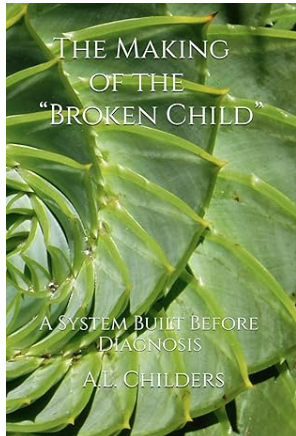
The Making of the “Broken Child”: A System Built Before Diagnosis
When Play Turns Dangerous: The Hidden Risks of Cheap Backyard Playhouses

There’s nothing like sitting around a fire pit on a crisp evening, watching the flames dance while the kids play nearby. That’s exactly what I imagined when I purchased a little wooden toy playhouse for my grandson—the perfect backyard setup. Unfortunately, what should have been a safe and joyful purchase turned into a terrifying lesson on product safety.

The Playhouse That Almost Became a Trap

When the box first arrived, it took forever to put together. My husband is a builder by trade—he knows his way around construction, tools, and proper assembly. But even with his experience, this so-called “kid-friendly” playhouse was a nightmare to assemble.

After we finally got it standing, another problem became immediately obvious: the smell. The chemical odor coming from the wood and paint was so overwhelming that we had to leave it sitting outside for weeks before even letting my grandson near it. This raised major concerns about volatile organic compounds (VOCs) and off-gassing, which are often linked to cheap paints and materials. According to the EPA, VOCs can cause everything from headaches to long-term health issues if children are exposed to them indoors or at high concentrations.

But the real scare came later. As my grandson played, we noticed the structure was wobbly. Within days, parts of it started to loosen, shift, and give way. If we hadn’t been watchful, it could have collapsed right on top of him.

And here’s the most concerning part—it wasn’t just our experience. After doing some digging, I found that many other parents and grandparents had reported the same thing: unstable design, poor-quality screws, hazardous smells, and panels that fall apart under normal use. Several reviews even mentioned injuries when pieces gave way.

The Danger of Cheaply Made Children’s Structures

What happened with our playhouse isn’t just a one-off story. Cheap backyard playhouses, whether made of thin wood or plastic, are often rushed to market without proper safety testing. Common issues include:

  • Structural Instability: Thin panels and weak screws that can’t withstand play.
  • Toxic Materials: Paints, glues, and plastics that release dangerous fumes.
  • Sharp Edges & Gaps: Poorly cut wood or plastic that can cause cuts or pinched fingers.
  • False Advertising: Promises of “sturdy design” that don’t match the product reality.

Consumer watchdogs like Safe Kids Worldwide and the Consumer Product Safety Commission (CPSC) have repeatedly warned about unsafe children’s products. In fact, the CPSC recalled over 3 million child-related items in 2023 alone, many for structural and chemical hazards.

Reviews and Reports from Other Parents

Browsing through product reviews, the pattern is alarming. Parents repeatedly mention:

  • “Toxic smell, had to leave outside for weeks.”
  • “Panels don’t line up, everything wobbles.”
  • “Unsafe for toddlers, could tip over.”
  • “Horrible instructions—took hours and still unsafe.”

These aren’t isolated complaints—they’re a trend. And when multiple families say the same thing, it’s a red flag that needs to be taken seriously.

What Parents Should Do

If you’re considering buying a backyard playhouse, here are a few steps to keep your little ones safe:

  1. Research Before You Buy – Look up not just reviews on the store’s website, but also on independent review platforms like Consumer Reports, Trustpilot, and Reddit parenting communities.
  2. Check for Recalls – Use the CPSC recall database (cpsc.gov/recalls) to see if the item has a history of problems.
  3. Smell Test – If the product reeks of chemicals, don’t let your child use it until it’s fully aired out—or better yet, return it.
  4. Inspect Stability – Even if assembled correctly, push and shake the playhouse yourself before allowing children inside.
  5. Supervision – Never assume “kid-friendly” means safe. Always supervise play, especially with larger toy structures.

Final Thoughts

What was meant to be a sweet gift for my grandson turned out to be a potential death trap. Thankfully, we caught the warning signs early. But not all families are so lucky. As parents and grandparents, we must hold manufacturers accountable and share our stories so others don’t face the same risks.

Disclaimer

This post is based on personal experience and research into consumer safety reports. I am not affiliated with any company or review platform. Always check with official sources like the Consumer Product Safety Commission (CPSC) before purchasing or assembling play equipment.

About the Author

I’m A.L. Childers, a writer, researcher, and grandmother who believes in shining light on hidden dangers—whether in history, health, or everyday products. When I’m not writing books or blogs, you’ll find me around a fire pit, creating memories with my family and making sure the little ones can play safe.


👉 Suggested SEO keywords: unsafe children’s playhouse, backyard playhouse reviews, toxic toy materials, dangerous kids toys, consumer safety playhouse recall, wobbly playhouse danger

The Scent of a Home: Why Every House Has Its Own Story to Tell

“A house is much more than a shelter—it is the place where our memories linger in the walls, where scent is the soul’s secret fingerprint.” — A.L. Childers

Walk into any home—whether a weathered cottage perched on a cliffside, a brownstone tucked in a quiet city lane, or a new build in a freshly paved suburb—and you will find it.
Not the furniture. Not the flooring.
But the scent.

Every house has a smell. And though it may be subtle, it is intimate—an invisible signature whispered by the space itself. It tells the story of its people, its history, its soul.
It’s a truth writers and poets have quietly known for centuries.


The Memory of Scent: What Writers Knew Before Science Proved It

Virginia Woolf once wrote about “the haunting power of objects” in Mrs. Dalloway, describing how a room retains echoes of its past. But what she was really speaking to—before neuroscience had the words—was olfactory memory.

Modern science now confirms that smell is the sense most directly tied to memory and emotion. According to the Harvard Gazette, “scents bypass the thalamus and go straight to the brain’s smell center, which is part of the limbic system—the area so closely associated with memory and emotion.”

In other words, when you walk into your grandmother’s house and catch the faint trace of rose water, or old cedar, or even Aqua Net hairspray—it’s not just nostalgia.
It’s your soul recognizing something sacred.


Homes Hold the People Who’ve Left Them

Charles Dickens once wrote that houses hold “the breath of the last meal eaten, the last cry of joy or sorrow, suspended like dust in the light.” His stories were filled with homes that had personalities—grieving, joyful, secretive. Just as every character had a voice, so did every dwelling.

Many people report walking into a new home and “just knowing” something happened there.
Sometimes it’s warmth, like cinnamon and sunlight.
Other times, it’s cold tile and the metallic scent of sorrow.

These impressions linger far longer than paint.
And far deeper than design.


Your Home Is Your Ritual

Think about it.

  • The smell of bacon and black coffee on Sunday mornings.
  • The lavender spray you mist before bed.
  • The old pine-sol bottle your mother swore by.
  • The musky scent of a childhood bookcase.

These smells, layered one upon the other, become the personality of a home. They are ritual. And they tell a story of those who dwell within.


Even Empty Houses Breathe

In One Hundred Years of Solitude, Gabriel García Márquez wrote of homes that outlived their people, filled with ghosts not seen but sensed. He described spaces where “the smell of damp earth and sorrow” clung to the walls. These weren’t haunted houses in the Hollywood sense—these were homes remembering.

Even empty houses, sealed shut and left to time, have a scent.
Mildew and paper.
Dust and something like grief.
A scent only the living would notice—because houses miss being filled with life.


Why You Should Pay Attention to the Smell of a Home

Real estate agents will tell you: scent sells.

Baking cookies before a showing. Lighting a soft candle. Making a space smell like “home”—these are ancient tricks dressed in modern language.

But what they don’t realize is that this isn’t manipulation. It’s memory in motion.
The right scent doesn’t sell a home—it welcomes you back to it.


A Final Thought from the Author

As I write this, I sit in a space that smells like old paperbacks, rosemary oil, and honey tea. It is not luxurious, but it is mine. And when my children grow, and someday return, I know the scent will hit them before my words do.

They’ll inhale—and without realizing why—they’ll feel safe.

Because that’s the gift of a home’s scent.
It tells us we belong.
It tells us we’re remembered.
It tells us we’re loved.

Even when no one else is there to say it.

A.L. Childers


References & Literary Inspiration:

  • “Smells Ring Bells: How Scents Trigger Memories and Emotions” – Harvard Gazette
  • Mrs. Dalloway by Virginia Woolf
  • David Copperfield and Bleak House by Charles Dickens
  • One Hundred Years of Solitude by Gabriel García Márquez
  • I Know Why the Caged Bird Sings by Maya Angelou (descriptive scent memory passages)
  • The Poetics of Space by Gaston Bachelard (on how spaces hold emotional memory)

Want More Stories Like This?

Join my email list at TheHypothyroidismChick.com or follow me on TikTok @ALChildersOfficial for more insights into life, scent, memory, and the stories homes are dying to tell.

Disclaimer

The content of this blog is intended for informational and thought-provoking purposes only. While the discoveries discussed are based on current scientific findings, the interpretations, theories, and speculative discussions presented are the author’s perspectives and should not be taken as definitive scientific conclusions.

This blog explores both mainstream scientific theories and alternative viewpoints that challenge conventional narratives. Readers are encouraged to conduct their own research, engage in critical thinking, and approach all information—whether from established sources or independent researchers—with an open but discerning mind.

Furthermore, any references to historical texts, hidden knowledge, or cosmic mysteries reflect the author’s ongoing research and exploration of unconventional ideas. This blog does not claim to provide absolute truth but rather serves as a platform for curiosity, discussion, and questioning the nature of reality.

For verified scientific studies and further reading, refer to the sources cited.

A.L. Childers
Published Author, Advocate, and Your Partner in Thyroid Health

Disclaimer

The information and recipes in the blog are based on the author’s research and personal experiences. It’s for entertainment purposes. It’s only. Every attempt has been made to provide accurate, up-to-date, and reliable information. No warranties of any kind are expressed or implied. Readers acknowledge that the author does not render legal, financial, medical, or professional advice. By reading this blog, the reader agrees that under no circumstance is the author responsible for any direct or indirect loss incurred by using the information contained within this blog. Including but not limited to errors, omissions, or inaccuracies. This blog is not intended to replace what your healthcare provider has suggested.  The author is not responsible for any adverse effects or consequences from using any of the suggestions, preparations, or procedures discussed in this blog. All matters about your health should be supervised by a healthcare professional. I am not a doctor or a medical professional. This blog is designed as an educational and entertainment tool only. Please always check with your health practitioner before taking any vitamins, supplements, or herbs, as they may have side effects, especially when combined with medications, alcohol, or other vitamins or supplements.  Knowledge is power; educate yourself and find the answer to your healthcare needs. Wisdom is a beautiful thing to seek.  I hope this blog will teach and encourage you to take leaps in your life to educate yourself for a happier & healthier life. You have to take ownership of your health.

The views and services offered by Thehypothyroidismismchick.com are not intended to be a substitute for professional medical assistance but as an alternative for those seeking solutions for better health. We do not claim to diagnose, treat, prevent, or cure any disease but simply help you make physical and mental changes in your own body to help your body heal itself. Remember that results may vary, and if you are pregnant, nursing, taking medications, or have a severe condition, you should consult a physician or other appropriate medical professional before using any products or information on this site. Thehypothyroidisimchick.com assumes no responsibility for the use or misuse of this material. Your use of this website indicates your agreement to these terms. Our full disclosure, terms of use, and privacy policy.

The information on this site is not intended or implied to be a substitute for professional medical advice, diagnosis, or treatment. All content, including text, graphics, images, and information on or available through this website, is for general information purposes only. Opinions expressed here are the opinions of the writer. Never disregard professional medical advice or delay seeking medical treatment because of something you have read or accessed through this website.

This site is designed for educational purposes only and is not engaged in rendering medical advice, legal advice, or professional services. If you feel that you have a medical problem, you should seek the advice of your physician or health care practitioner. For additional information, please see our full disclosure, terms of use, and privacy policy.

Our full disclosure, terms of use, and privacy policy. | thehypothyroidismchick