
Tag Archives: ireland

The Man Who Crossed an Ocean So I Could Stand Here Today: The Forgotten Story of My Great-Great-Great-Grandfather, James Dawkins

By A.L. Childers


A.L. Childers uncovers the lost story of her great-great-great-grandfather, James Dawkins—an Irish immigrant, St. Patrick’s Battalion soldier, survivor of famine, and builder of a Southern legacy. A true tale of resilience, sacrifice, and identity that reads like a Hollywood epic.


Some people inherit money. I inherited a war story.

Not the polished, patriotic kind they teach in school.
Not the kind wrapped in museum glass.

No—what I inherited was a raw, unfinished, forgotten account of an Irish boy who fled starvation, crossed an ocean in a coffin-ship, fought in a war that didn’t belong to him, and then carved a life out of the Carolina dirt so that his descendants—including me—could exist.

His name was James Dawkins.
And until recently, he was just a whisper in my family tree.

That changed the day I opened a dusty leather journal in a South Carolina attic and realized:

This wasn’t genealogy. This was destiny.


The Discovery That Broke Me Open

I was researching Southern New Year’s superstitions for a completely different book when history decided to smack me across the face.

There it was:
A journal so old the leather cracked like dry earth.
Ink faded by time but still stubbornly alive.

The moment I read the name James Dawkins, my heart dropped.
I knew the stories—Irish immigrant, tenant farmer’s son—but nobody in my lifetime had ever mentioned:

✅ He was a survivor of the Great Irish Famine
✅ He made the Atlantic crossing in 1840 on a packed, disease-ridden ship
✅ He joined the Saint Patrick’s Battalion, a renegade Irish unit that defected during the U.S.–Mexican War
✅ He fought under the green flag Erin go Bragh for justice, he believed in
✅ He lived the kind of life Hollywood pretends to invent

The journal wasn’t just a record.
It was a testimony.
One man’s desperate attempt to make sure his life—his suffering, his choices, his convictions—would not be erased by time.

And suddenly, I realized…

His story is the reason I tell stories.
His survival is the reason I exist.


Why His Story Still Matters (And Why It Should Be a Movie)

James fled Ireland not because he wanted a better opportunity but because staying meant dying.

He left behind:

  • A starving country
  • A family who prayed he’d live long enough to reach America
  • A mother who pressed a rosary into his hand and said, “Remember who you are.”

When he arrived in America, he wasn’t welcomed.
Irish immigrants rarely were.

He was:

  • Poor
  • Catholic
  • Unwanted
  • Easy to exploit

So he joined other Irishmen who felt betrayed by the U.S. Army and fought for the Mexican people instead.

That choice—the one history textbooks skim over—was an act of moral rebellion.

Not treason.
Not cowardice.
But conviction.

And every page of his journal shows it.

His fear.
His faith.
His hunger.
His rage.
His compassion.
His stubborn will to survive.
His homesick Irish heart refusing to break.

This isn’t just family history.
This is a Southern epic, an Irish tragedy, and an American immigrant chronicle all woven together.

This is the kind of story screenwriters search for.


How It Shaped Me (More Than I Ever Realized)

When I write, people tell me my voice feels fierce, rooted, unbreakable.

Well—now I know why.

I come from:

  • ship survivors
  • farmers who worked land they’d never own
  • Irish laborers treated as disposable
  • men who fought for the oppressed
  • women who carried the weight of generations
  • families who endured when everything around them tried to take them down

I am built from resilience.
I am built from defiance.
I am built from Dawkins blood.

And suddenly my writing—my obsession with truth, justice, history, inequity, and legacy—makes perfect sense.

It’s in my lineage.


Why I’m Telling His Story Now

Because he deserves to be remembered.
Because the Saint Patrick’s Battalion deserves more than footnotes.
Because Irish-American history deserves the dignity it lost.
Because my daughters and their future children deserve to know the strength in their blood.

And because every family has a survivor like James—
someone history tried to silence.

This book is how I give him his voice back.


“As the green shores of Ireland faded into the horizon, I felt my childhood vanish with them.”


About the Author — A.L. Childers

A.L. Childers is a bestselling multi-genre author known for blending history, storytelling, cultural commentary, and Southern heritage into unforgettable works. She has written over 200 books across historical nonfiction, health, folklore, conspiracy, women’s empowerment, and metaphysical genres.

Her writing is marked by truth, depth, humor, and courage—traits she now knows she inherited from her Irish ancestor, James Dawkins.

Find her books on Amazon under A.L. Childers.
Visit her blog: TheHypothyroidismChick.com

James Dawkins: A Legacy of Survival, Sacrifice, and Southern Tradition
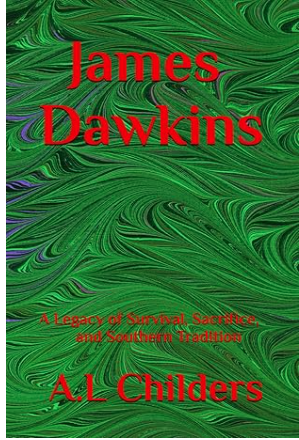


Irish immigration story, Saint Patrick’s Battalion, James Dawkins history, Irish-American ancestors, immigrant survival stories, Carolina heritage, Southern historical legacy, Irish famine descendants, A.L. Childers author, Irish soldier story


#IrishHistory #SaintPatricksBattalion #SouthernHeritage #AmericanImmigrantStories #FamilyLegacy #HistoricalNonfiction #IrishDiaspora #MexicanAmericanWar #ALChilders


#JamesDawkins #AncestryStories #CarolinaHistory #IrishRoots #FamineSurvivor #ImmigrantLegacy #WriterLife #AuthorSpotlight #TrueHistory

Chapter 8: Life Between Battles

Life Between Battles

The days after their first battle passed in a haze of exhaustion and grief. The men of the Saint Patrick’s Battalion worked tirelessly to bury their dead, patch their wounds, and make sense of the lives they had just taken. For James Dawkins, the weight of what he had seen clung to him like a shadow. Every face, every cry of pain, every life lost—it was all etched into his mind, playing on a loop that no amount of distraction could silence.

As he sat near the dying embers of a campfire one evening, James opened his journal, his hands still smudged with dirt and gunpowder. Writing had become his lifeline, a way to make sense of the chaos around him. He dipped his pen into the inkwell and began to write:

“The battlefield is not what they tell you. There is no glory, no honor. Only blood and the sound of men breaking. Today, we buried our brothers. Tomorrow, we will fight again. But what I cannot forget are their faces—men who once laughed beside me now still as the earth they lie beneath. How do we go on from here?”

The Camp Comes Alive

The camp was a strange mixture of mourning and resilience. While some men drank themselves into oblivion to drown out the horrors of war, others clung to rituals and habits that reminded them of home. Samuel Price carved intricate patterns into a piece of wood; his hands steady despite the turmoil in his heart. “Keeps me grounded,” he said when James asked about it. “Gotta keep your hands busy, or your mind will eat you alive.”

Sean O’Donoghue, ever the optimist, had taken to playing his fiddle again, the haunting melodies of Ireland weaving through the camp like a thread connecting them all. Even men who weren’t Irish would gather around to listen, the music reminding them of better days and better places.

One evening, as the firelight flickered, Sean began a lively tune that brought a small smile to James’s lips. “Play something cheerful for once,” James called out, his voice thick with exhaustion but tinged with gratitude.

Sean grinned, his bow dancing across the strings. “Cheerful it is, then! But don’t blame me if it makes you miss the hills of home.”

Stories of the Fallen

It wasn’t just the living who occupied the camp. The memories of the fallen lingered like ghosts, their absence keenly felt. James found himself drawn to the stories of those who had been lost, as if keeping their memories alive was a way to honor them.

There was Patrick McGinty, a farmer’s son from Galway who had a laugh like rolling thunder. He’d been the first to volunteer when Riley called for defectors, saying, “I didn’t leave Ireland to fight for men who hate me.” His death had been swift, a musket ball to the chest, but his spirit lingered in the tales his comrades told.

And then there was Antonio Rivera, a Mexican soldier who had joined the battalion not out of faith or shared heritage, but out of a deep respect for the Irishmen who had chosen to fight for his people. Antonio had been quiet but fiercely loyal, his actions speaking louder than words.

“Antonio saved my life,” Samuel said one night, his voice low and heavy. “Took a bullet that was meant for me. Didn’t even hesitate.” He stared into the fire, his expression unreadable. “How do you repay a debt like that?”

The Weight of Letters Home

The men wrote letters when they could, though the words often felt inadequate. James poured his heart onto the page, writing to his mother with a mixture of honesty and restraint:

“Dear Mam,

I’ve seen things I never thought I’d see, and I’ve done things I’m not sure I’ll ever be able to forget. But I fight for something now, something that feels real. I think you’d understand if you were here, though I pray you never have to know what it’s like. Tell Mary and the little ones I think of them every day. Keep me in your prayers, Mam. It’s all that keeps me going sometimes.”

A Turning Point

It was during these quiet moments between battles that James began to see the battalion as more than just a group of men. They were a family, bound not by blood but by shared experience. The green flag of Erin go Bragh wasn’t just a banner—it was a symbol of their unity, their defiance, their hope.

John Riley, ever the leader, took these moments to remind the men why they fought. “This is bigger than us,” he said one evening, his voice carrying across the camp. “What we do here matters. It’s not just about Mexico, or Ireland, or even ourselves. It’s about standing up against injustice, wherever we see it. It’s about proving that the forgotten, the downtrodden, the oppressed—we are not weak. We are not powerless.”

The men listened, their eyes shining with a mixture of admiration and resolve. James felt a fire ignite in his chest; a sense of purpose that made the sacrifices feel less futile.

A Glimpse of Humanity

Despite the hardships, moments of humanity shone through. A Mexican family, their home destroyed by the war, brought food to the camp one evening—a simple meal of tortillas and beans. The woman, her face lined with worry but softened by a smile, spoke in broken English. “Gracias,” she said, her voice trembling. “You fight for us. For our children.”

James took the plate she offered, his throat tight with emotion. “We fight for more than that,” he said softly. “We fight for a world where your children don’t have to.”

Preparing for the Next Battle

As the days passed, the camp began to stir with anticipation. Another battle loomed on the horizon, and the men of the Saint Patrick’s Battalion prepared themselves. Weapons were cleaned, ammunition counted, and strategies discussed.

James felt a mixture of dread and determination. He knew what was coming—the blood, the chaos, the loss. But he also knew he wouldn’t face it alone. He had his brothers beside him, the green flag above him, and the hope that their fight would mean something.

And as the sun dipped below the horizon, casting the camp in a golden glow, James opened his journal once more. His words were steady, his resolve firm:

“We go to war again. Not as soldiers for hire, but as men who believe in something greater. We fight for faith, for justice, for the chance to prove that we are more than what they see us as. And if I fall, let it be known—I fell fighting for what I believed in.”

The next battle was coming, and James was ready.

Disclaimer

This book, James Dawkins: A Legacy of Survival, Sacrifice, and Southern Tradition, is a blend of historical research, family lore, cultural analysis, and creative storytelling. While great care has been taken to present historical events accurately, some elements—such as personal accounts, conversations, and character perspectives—are dramatized to bring the narrative to life and provide a deeper emotional connection to the events described.

The recipes and traditions included in this book are shared for cultural and educational purposes. They are drawn from personal and regional traditions, as well as historical sources, and may vary depending on individual practices and interpretations.

The author, A.L. Childers, is not a professional historian or genealogist but a passionate writer committed to exploring the cultural and historical roots of Southern experience. This book is not intended to serve as an authoritative historical text but as a celebration of heritage, resilience, and family. Readers seeking in-depth historical analysis are encouraged to consult additional scholarly sources.

The opinions and interpretations expressed in this book are those of the author and do not represent the definitive perspective on any historical or cultural topic. Readers are encouraged to explore their own family histories and cultural traditions, taking inspiration from this work to celebrate and preserve their unique stories.

James Dawkins: A Legacy of Survival, Sacrifice, and Southern Tradition