Florida just passed a law that may sound like it’s about protecting businesses—but for high-paid employees, it’s more like a velvet chokehold. Under the new Florida non-compete legislation, some workers can be legally blocked from working in their own profession for up to four years.
And if that sounds like a modern-day form of career imprisonment? It kind of is.
🧾 What Florida Just Did—and Why You Should Care
As of July 1, 2025, Florida expanded its support of non-compete agreements, particularly targeting workers making about $140,000+ per year. This new law allows employers to enforce non-compete clauses with longer durations and broader scope—up to four years of job restrictions for highly paid workers.
This isn’t just about executive roles. It affects professionals, tech experts, healthcare workers, and anyone with specialized skills who may want to switch jobs, freelance, or even start their own company. Now, many of them legally can’t—at least not without risking a lawsuit.
So if you thought Florida was a “right to work” state, think again. It might be more accurate to say: “You have the right to work… unless your last boss says otherwise.”
⚖️ But Wait—Other States Are Doing the Opposite
While Florida is clamping down on mobility, other states are fighting back against non-compete clauses:
🚫 States That Ban Non-Competes Entirely:
California
Minnesota
North Dakota
Oklahoma
Washington, D.C.
In these places, you can quit your job and take your skills anywhere without being sued. Period.
⚠️ States With Restrictions or Salary Thresholds:
Illinois: Banned for anyone making less than $75,000.
Colorado: Only allowed to protect trade secrets.
Massachusetts: Must pay 50% of the employee’s salary during the restriction period.
Washington, Oregon, Virginia, Maryland, Rhode Island: All have income-based limits or short-duration rules.
Meanwhile, the FTC proposed a national ban on non-competes in 2024—but corporations lawyered up fast. The ban is currently on hold, tied up in legal battles, with no set date for enforcement.
💼 What This Means for Employees
Whether you’re in sales, healthcare, tech, or marketing—check your employment contract. That little clause buried in the fine print could block you from working in your field for years if you leave.
Florida’s law allows companies to:
Prevent you from working anywhere in the same industry
Restrict your employment for up to 4 years
Enforce it even if they terminate you
And no—you don’t always have to “sign it to keep the job.” Many workers feel forced to sign, unaware of their rights or state’s stance.
🛑 What You Can Do
Know your rights. Research your state’s non-compete laws or visit Nolo.com or your state’s Department of Labor website.
Negotiate upfront. If a non-compete is in your contract, ask for modifications or removal—especially if you’re not in a high-level role.
Consult a lawyer. If you’re under a non-compete now, don’t make a move without legal advice.
Support legislative change. Many states are pushing for freedom to work. Be part of the conversation.
📣 Final Thoughts: Who Really Owns Your Time?
Non-compete clauses are being sold as “pro-business,” but here’s the question:
At what point does protecting a business become silencing a worker?
When you can’t take your talent somewhere else, when you can’t launch your dream, when your past employer controls your future—that’s not capitalism. That’s corporate bondage.
Florida just handed that leash to employers—and it won’t stop there unless people speak up.
🔖 Share this blog if you know someone in Florida or any other state who’s ever signed a job contract without reading the fine print.
When Dave found out his wife of 30 years had been having an affair for 10 of them, his world crumbled. The discovery came in the form of an accidental text—a message meant for another man. His heart sank, but instead of falling apart, Dave decided to dig deeper. Living in North Carolina, a state with one of the few remaining Alienation of Affection laws, he realized he had legal options that could turn this betrayal into accountability.
The Betrayal Unfolds
Dave’s wife, Karen, had always been confident he was oblivious to her secret life. She’d even joked about how “naive” he was, not realizing Dave was quietly piecing together clues. With the help of a private investigator, Dave unearthed damning evidence: hotel receipts, love letters, and photos that painted a clear picture of Karen’s long-term affair with her coworker, Bob.
Karen tried to dismiss it when confronted, laughing off his anger and claiming, “What can you even do about it?” What Karen didn’t know was that Dave had been researching North Carolina’s Alienation of Affection laws—a rare statute that allows a spouse to sue a third party for interfering in their marriage.
Alienation of Affection: A Legal Weapon
In North Carolina, Alienation of Affection lawsuits don’t require proof of sexual infidelity—just evidence that a third party caused the loss of affection in a marriage. Armed with evidence from the investigator, Dave filed a lawsuit against Bob, claiming his interference had destroyed the love and trust in their marriage.
Dave also learned about Criminal Conversation laws, which specifically address adultery and allow the wronged spouse to sue for damages. Together, these statutes gave him a strong legal case.
The Courtroom Drama
When the case went to court, Dave’s lawyer presented a compelling narrative. He showed the receipts, text messages, and witness accounts that proved Bob’s role in the breakdown of Dave and Karen’s marriage. The jury was captivated by the story of betrayal, and the emotional damages were clear.
Bob, who had once dismissed the lawsuit as a joke, was ordered to pay $250,000 in damages for his role in the affair. The court also ruled in Dave’s favor for criminal conversation, adding another $100,000 to the total. Karen’s smugness dissolved into shock as Dave walked away with not just his dignity but also a significant financial win.
Protecting Yourself If It Happens to You
If you find yourself in Dave’s shoes, here’s what you can do:
Gather Evidence: Document everything—texts, emails, receipts, and photos. Hire a private investigator if needed. North Carolina law requires proof of the affair or loss of affection caused by a third party.
Consult an Attorney: Find a family law attorney experienced in Alienation of Affection and Criminal Conversation cases. They can guide you through the legal process and maximize your chances of success.
Stay Calm and Strategic: Don’t confront the other party impulsively. Let the legal system work for you.
Know Your Rights: North Carolina is one of the few states where these laws still exist. Use them to hold people accountable for their actions.
Final Thoughts
Betrayal in a marriage is devastating, but it doesn’t have to mean defeat. Dave’s story is proof that with the right approach, you can reclaim your power and turn heartbreak into a new beginning.
If you or someone you know is facing a similar situation, remember: knowledge is power. Stand your ground, protect your assets, and let the law work in your favor. After all, as Dave learned, sometimes justice really can be sweet.
References:
North Carolina General Statutes: Alienation of Affection and Criminal Conversation Laws
“How Alienation of Affection Lawsuits Work” – FindLaw
“The Role of Private Investigators in Adultery Cases” – Legal Beagle
Disclaimer
The information provided in this blog is for general informational purposes only and does not constitute legal advice. While efforts have been made to ensure the accuracy and relevance of the information at the time of publication, laws and legal interpretations are subject to change and may vary depending on individual circumstances.
Readers are strongly encouraged to consult with a qualified attorney or legal professional licensed in their jurisdiction to obtain advice tailored to their specific situation. The author and publisher disclaim any liability for losses or damages incurred as a result of reliance on the information presented in this blog.
This blog is written to provide insight into North Carolina laws related to Alienation of Affection and Criminal Conversation and is not intended to create an attorney-client relationship.
The 14th Amendment is often celebrated as a milestone in America’s journey toward equality. Ratified in 1868, it granted citizenship to all individuals born or naturalized in the United States and promised equal protection under the law. But behind its noble intentions, the 14th Amendment also carried significant consequences that many Americans would not be happy to discover.
Here’s a closer look at the hidden aspects of the 14th Amendment that you probably weren’t taught in school—and why they still matter today.
1. It Cemented Federal Power Over States
Before the 14th Amendment, the United States operated under a stronger emphasis on state sovereignty. The 14th Amendment changed that dynamic by giving the federal government the authority to enforce civil rights protections and override state laws that violated the amendment.
While this shift was necessary to combat state-level injustices, such as segregation and discriminatory laws, it also expanded federal oversight into areas previously managed by states. Critics argue that this paved the way for the federal government to increasingly encroach on states’ rights, sparking ongoing debates about the balance of power between federal and state governments.
2. It Was Used to Protect Corporate Interests
One of the most controversial aspects of the 14th Amendment’s history is its application to corporations. In the late 19th century, corporations began using the amendment’s equal protection clause to argue that they, like individuals, deserved constitutional protections.
The landmark case Santa Clara County v. Southern Pacific Railroad Co. (1886) established the precedent that corporations are “persons” under the law, granting them rights originally intended for individuals.
Why This Matters
Corporate “personhood” has allowed companies to challenge regulations, dodge accountability, and exert disproportionate influence on politics through lobbying and campaign financing.
Many Americans are unaware that the 14th Amendment, designed to protect former slaves, has been instrumental in empowering corporations at the expense of individual citizens.
3. It Didn’t Fully Deliver on Its Promises
While the 14th Amendment promised equal protection under the law, its implementation has been far from perfect. After its ratification, Southern states enacted Jim Crow laws, using loopholes and systemic practices to continue disenfranchising African Americans.
Even today, systemic inequities persist in education, criminal justice, and economic opportunities, highlighting the gap between the amendment’s ideals and reality.
4. It Was Used to Justify Mass Surveillance
The 14th Amendment’s due process clause has been used to justify controversial government actions, including mass surveillance programs. Legal interpretations have argued that the government can infringe upon privacy and other rights as long as the process is deemed “fair” under the law.
For example:
Programs like the National Security Agency’s (NSA) bulk data collection often cite constitutional justifications tied to public safety.
Critics argue that such actions disproportionately affect marginalized communities, eroding civil liberties in the name of national security.
5. It Failed to Address the Indigenous Experience
The 14th Amendment granted citizenship to individuals born in the U.S., but this did not include Native Americans at the time of its ratification. Indigenous peoples were not considered U.S. citizens until the Indian Citizenship Act of 1924.
This exclusion highlights the selective application of “equal protection” and the continued marginalization of Native communities throughout American history.
6. It Opened the Door to Federal Overreach in Individual Lives
By establishing the federal government’s power to enforce civil rights, the 14th Amendment also created a precedent for federal involvement in other aspects of individual lives. Critics argue that this has led to:
Over-criminalization: Federal laws and regulations have expanded into areas traditionally managed at the local level.
Surveillance culture: Increasing government oversight and monitoring, often justified as protecting civil rights or national security.
Why Should You Care?
The 14th Amendment is a double-edged sword. While it is a cornerstone of civil rights and equality, its broader implications reveal how government power, corporate influence, and systemic inequities can arise from even the most well-intentioned laws.
What Can We Do?
Stay Informed: Educate yourself about the history and consequences of constitutional amendments. Knowledge is power.
Advocate for Accountability: Push for reforms that ensure corporations and the government cannot misuse constitutional protections.
Fight for Justice: Recognize the amendment’s shortcomings and work toward policies that fulfill its original promises of equality and fairness.
Conclusion
The 14th Amendment is a vital part of America’s legal framework, but its history is far more complex than the celebratory narratives we often hear. By uncovering its hidden impacts, we can better understand the challenges we face today—and take steps to create a more equitable society.
References
Foner, Eric. The Second Founding: How the Civil War and Reconstruction Remade the Constitution. W.W. Norton & Company, 2019.
Blackmon, Douglas A. Slavery by Another Name: The Re-Enslavement of Black Americans from the Civil War to World War II. Anchor Books, 2008.
Urofsky, Melvin I. Dissent and the Supreme Court: Its Role in the Court’s History and the Nation’s Constitutional Dialogue. Pantheon Books, 2015.
PBS. “Reconstruction: The Second Civil War.”
Legal Information Institute. “14th Amendment.” Cornell Law School.
By A.L. Childers, author of Silent Chains: Breaking Free from Conformity and Injustice.
What do you think about the hidden impacts of the 14th Amendment? Share your thoughts in the comments below!
Under the 14th Amendment, the U.S. has long awarded automatic citizenship to any child born on its soil, including those born to undocumented immigrants. This policy, sometimes referred to as “birthright citizenship,” remains in place under the Biden administration. Although the administration has enacted changes in immigration policy, this constitutional provision is still in effect. While birthright citizenship offers numerous benefits and aligns with American ideals of equality and opportunity, it also presents challenges, especially in today’s complex immigration environment.
Let’s explore the good, bad, and ugly sides of birthright citizenship for the children of undocumented immigrants.
The Good
Upholding American Ideals Birthright citizenship is deeply tied to American values of equality, opportunity, and fairness. It reinforces the idea that all individuals, regardless of their parents’ legal status, deserve a fair chance at citizenship if born on U.S. soil. It reflects the country’s founding principles of inclusivity and provides children with the same rights and opportunities as any other citizen. This policy prevents the formation of a stateless underclass, which could lead to significant social and economic problems.
Constitutional Protection The 14th Amendment ensures that children born in the U.S. are automatically granted citizenship. This protection, rooted in the aftermath of the Civil War, was designed to guarantee rights to formerly enslaved people, but today it extends to everyone born within the country’s borders. Amending this would require substantial legal changes, which would be a complex and politically charged process.
Social Integration Children born to undocumented immigrants are more likely to be integrated into American society, attend U.S. schools, and become productive members of the workforce. By granting them citizenship, the U.S. ensures they can fully participate in civic life and contribute to the economy, paying taxes and helping to build stronger communities.
The Bad
Potential for Abuse Critics argue that birthright citizenship may incentivize “birth tourism” or encourage undocumented immigrants to cross the border specifically to give birth on U.S. soil, ensuring their child gains automatic citizenship. Although the parents themselves do not automatically gain any legal status, they may hope their child’s citizenship will eventually benefit them through family reunification programs. While this is rare, it fuels the debate over whether the system is being exploited.
Increased Strain on Resources Granting automatic citizenship to children of undocumented immigrants has financial implications. Public services like education, healthcare, and social safety nets are extended to all citizens, including those born to undocumented parents. Critics argue that this places an additional strain on resources, especially in states with high immigration rates, such as Texas and California. These states face mounting costs associated with providing public services to a growing population of children with undocumented parents.
Encouraging Illegal Immigration? There is concern that birthright citizenship could act as a pull factor for undocumented immigrants, encouraging them to enter the U.S. in hopes of having children who would automatically become citizens. While the parents do not receive immediate legal benefits, the long-term potential for family reunification (once the child turns 21) could motivate individuals to cross the border. Critics believe this undermines the rule of law and the integrity of the U.S. immigration system.
The Ugly
Polarization of the Debate The conversation surrounding birthright citizenship has become deeply politicized and polarized. Terms like “anchor babies” are often used pejoratively, casting children of undocumented immigrants in a negative light. This rhetoric can dehumanize individuals and create further division in the immigration debate. The social and political fallout from such language fuels anti-immigrant sentiment, making it more difficult to have constructive discussions about potential reforms.
Long-Term Legal Battles Any effort to change or end birthright citizenship would result in intense legal challenges. The 14th Amendment has been interpreted by courts to apply broadly, and any attempt to reinterpret or amend it would likely face strong opposition. This could lead to years of political and legal battles, creating uncertainty for millions of people and contributing to further instability in the immigration system.
Impact on Families Without birthright citizenship, children born in the U.S. to undocumented parents could face statelessness, leaving them in legal limbo. Families could be torn apart by differing legal statuses, where a child is a citizen but their parents are not, leading to deportation risks and deep emotional and financial strain on the family. This would create a humanitarian crisis and exacerbate existing issues within the immigration system.
Conclusion The continuation of birthright citizenship under the Biden administration aligns with constitutional protections and American ideals of fairness and equality. However, it comes with challenges, including concerns about resource allocation and the potential for abuse. While the idea of changing or limiting birthright citizenship is discussed, the complexities of doing so — legally and socially — are immense. Balancing the good, the bad, and the ugly in this debate requires thoughtful discussion and a careful approach to immigration reform that considers both American values and the country’s legal framework.
In a world that prides itself on freedom and equality, the truth is that slavery, in many ways, never really ended—it just evolved. While the days of shackles and plantations may be over, a new form of control has emerged, trapping people within invisible chains. This new system, masked as law and order, continues to exploit and divide, keeping the masses distracted and oppressed.
Laws Rooted in Slavery
When laws are passed, they are not made for the next decade or two—they are designed to last for hundreds of years, ensuring the system’s endurance long after the original architects are gone. Let’s not forget, many of the laws we live by today were created by individuals who either owned slaves or existed in a society that found slavery acceptable. So when slavery was made illegal, the system didn’t crumble—it adapted.
Former slave owners faced a dilemma: how do we continue benefiting from free labor now that owning slaves is illegal? The solution? Create laws that people—particularly marginalized and impoverished communities—can’t possibly abide by. Once these laws are broken, the cycle begins again, legally enslaving individuals through the prison system.
The New Slave: Mass Incarceration
With mass incarceration, a loophole in the 13th Amendment allows slavery to continue under a different name. Instead of a master, you now have a warden. Instead of fields, you work in a prison factory, earning pennies for your labor. According to the NAACP, African Americans are incarcerated at more than five times the rate of white Americans, and while they make up only 13% of the U.S. population, they account for 38% of the prison population.
Prisons have become the modern-day plantation. Private corporations benefit from this system, exploiting the labor of incarcerated individuals, many of whom are people of color, for the sake of profit. Prisons are an industry, and as long as we keep fighting amongst ourselves and breaking laws that are designed to ensnare us, that industry will continue to thrive.
Divide and Conquer: A Clever Program
How do you keep people in shackles? You make them fight each other. This system of control thrives on division—racial, economic, religious, and cultural. By pitting people against one another, the focus shifts away from those in power, leaving the masses too busy fighting amongst themselves to challenge the real oppressors.
The media, politicians, and even the education system play a role in this programming. Schools, prisons, courthouses, and hospitals all seem to share the same sterile, institutional design, don’t they? It’s no coincidence. These institutions are meant to churn out obedient workers, teaching children to follow rules, not question authority. Why aren’t schools built in open spaces with fresh air and creativity flowing through the halls? Because the system doesn’t want free thinkers—it wants workers.
The 1% vs. The Disposable
At the top of this hierarchy sits the billionaire class, the 1%. Below them? The rest of us—disposable humanity. While we come in different shades, practice different religions, and live in different parts of the world, the reality is that we’re all suffering from the same human problem: exploitation by those who seek to control and profit from us.
The Earth itself has been exploited, too. For years, corporations have treated our beautiful, interconnected planet as if it were dead, plundering its resources for the benefit of the few. But the planet is rising, and so are its people. The young are rising. The women are rising. The workers are rising. Across the globe, people are waking up to the realization that the divisions we’ve been taught to embrace are constructs designed to keep us separated.
One Humanity, One Common Fight
It’s time we see the commonality in all of us. Whether we are black, white, Muslim, Christian, Hindu, atheist, or anything in between, we are all part of one common humanity. The constructed divisions that have kept us apart are starting to crumble, and with them, so is the system that has kept us in chains for generations.
This isn’t just an American problem; it’s a global one. Around the world, people are rising up, tired of being oppressed by those in power. Workers are demanding better treatment, and marginalized groups are calling for equality. The Earth itself is rebelling against the abuse it’s suffered for centuries. We’re reaching a tipping point where the realization of our shared struggle will finally overpower the distractions that have kept us divided.
A Final Thought
Freedom is both cheap and priceless at the same time. Those who have it often take it for granted, while those who don’t know its true value. The system is designed to make us jeopardize our freedom just to survive. And while we continue to fight each other, the real oppressors sit comfortably, knowing their program is working.
But the tide is turning. We can break free from the cycle, but it starts with seeing the truth: the divisions are constructed, and the system is a clever trap. Once we recognize this, we can rise together as one common humanity, united against the real enemy.
Statistics Snapshot:
Mass Incarceration: According to the NAACP, African Americans are incarcerated at more than five times the rate of white Americans.
Private Prisons: The private prison industry makes over $3.9 billion annually from inmate labor and the incarceration of over 115,000 people.
Global Inequality: The top 1% of earners globally control nearly 44% of the world’s wealth, according to the Global Wealth Report 2021.
In the realm of literature, few authors possess the power to challenge societal norms and break down stereotypes like A.L. Childers. Through her unique storytelling abilities, she has managed to leave a lasting legacy that has not only inspired her readers but also transformed the way we perceive the world.
A.L. Childers’ journey from poverty to success serves as a testament to the transformative power of writing. By overcoming adversity through her craft, she has become a beacon of hope for those facing similar challenges. Her ability to draw inspiration from small-town life has given her a unique perspective on writing, allowing her to create stories that resonate with readers from all walks of life.
Childers’ story is one of triumph over adversity. Raised in poverty, she faced numerous challenges that could have hindered her dreams. However, she discovered solace in writing, using it as a means to overcome her circumstances. By sharing her personal journey, Childers inspires others to rise above their own obstacles and unlock their true potential.
Writing, for Childers, is a powerful tool for connection. She explores human relationships in literature and delves into the intricacies of human emotions and experiences. Her stories serve as a bridge, connecting people from different walks of life, fostering empathy, and promoting understanding. In a world that often feels fragmented, Childers’ writing reminds us of our shared humanity.
A.L. Childers’ impact on breaking stereotypes through storytelling is a testament to her exceptional talent and unwavering dedication to her craft. Through her journey from poverty to success, her unique perspective on small-town life, her exploration of human relationships, her journey toward self-expression, and her ability to challenge societal norms, she has left an indelible mark on the literary world. Her work serves as an inspiration for aspiring writers, a source of connection for readers, and a catalyst for change in society. A.L. Childers’ legacy will continue to shape the future of literature, reminding us of the power of storytelling to break down barriers and create a more inclusive world.
Brilliantly written, startling, truthful, and utterly original. This is A.L. Childers at her absolute best. She sets an exciting new level of awareness for humanity. Unforgettable books that help you find that lost piece of yourself.
Being Human doesn’t make you weak, it makes you a warrior!
A.L. Childers
Discover the incredible breadth of work by Audrey Childers, a prolific author who has written over 200 books across a variety of genres. From engaging coloring books and insightful self-help guides to captivating fantasy novels and thoughtful journals, Audrey’s collection truly offers something for everyone in the family.
Her dedication to health and wellness, highlighted through her work as the creator of TheHypothyroidismChick.com, complements her diverse literary contributions. Audrey has spent more than a decade mastering the art of research and editorial writing, making her an authoritative voice across multiple fields.
Click on the “About the Author” link to explore the full range of Audrey Childers’ incredible works and discover your next favorite book!
Get ready to dive into the vibrant and eclectic world of Audrey Childers, the author who’s written something for absolutely everyone! With over 200 books under her belt—ranging from playful coloring books to thought-provoking self-help guides, spellbinding fantasy novels, and everything in between—Audrey has crafted a literary collection for every age and stage of life.
As the creative force behind TheHypothyroidismChick.com, she’s also a passionate advocate for health and wellness, sharing her own tips and insights on living well with hypothyroidism. But Audrey doesn’t stop there. She’s a mom, a voice for optimal human health, a blogger, a freelance journalist, and an entrepreneur who’s spent over a decade fine-tuning her craft in research and editorial writing.
Want to uncover her latest bestsellers? Some of her most popular works include “A Survivor’s Cookbook Guide to Kicking Hypothyroidism Booty,” “Reset Your Thyroid,” and the biting satire, “The Plague of Overeducated Dumb People.” But there’s so much more! Click the many links “About the Author” to check out her incredible range of books—you won’t regret it!
Throughout history, unseen forces known as Archons have manipulated humanity’s collective consciousness, perpetuating a cycle of control and suppression. These parasitic entities have cunningly exploited our vulnerabilities, feeding off our fears, doubts, and insecurities. As a result, we have been unwittingly enslaved to their agenda, disconnected from our true potential as human beings.
But there is hope. In “Archons: Unveiling the Parasitic Entities Shaping Human Thoughts,” A.L. Childers takes you on a riveting journey through extensive research and historical analysis to uncover the profound influence of Archons on human society. This meticulously researched book delves into ancient texts, historical events, and contemporary practices to reveal how these entities have shaped our world.
Drawing from years of dedicated study, Childers provides compelling evidence of Archonic manipulation throughout history. From the fall of the Roman Republic to the modern-day influence of media and technology, this book uncovers the hidden forces that have steered human affairs. By understanding the nature of these parasitic entities, we can begin to break free from their grip.
To liberate ourselves from Archonic influence, we must first recognize their presence in our lives. We must question the thoughts and beliefs that have been implanted within us, discerning between genuine inspiration and Archonic manipulation. By cultivating awareness, we can begin to dismantle their control over our minds and emotions.
Springtime Bug Safari Coloring Book by A.L. Childers
Dive into a World of Color and Creativity!
Embark on a delightful journey through a whimsical world where the bugs buzz with excitement and await your child’s creative touch! Springtime Bug Safari, crafted by the imaginative A.L. Childers, offers a collection of simple yet engaging coloring pages filled with friendly insects sporting big, expressive eyes.
From the dancing dragonflies to the gentle grasshoppers, each page invites young artists to bring these scenes to life with vibrant hues. This coloring book is perfect for kids who love nature and creativity, providing hours of fun and relaxation.
Why Your Little Artist Will Love This Book:
Fun and Easy Designs: Each page features cute, cartoon-style bugs that are easy to color for children.
Boosts Creativity: Encourages the development of fine motor skills and sparks imagination with every color they choose.
Makes a Great Gift: Ideal for birthdays, holidays, or as a wonderful surprise for those rainy days indoors.
Get ready to color your way through spring with the Springtime Bug Safari Coloring Book. It’s more than just a coloring book—it’s an adventure!
Grab your copy today and watch your child’s creativity take flight!
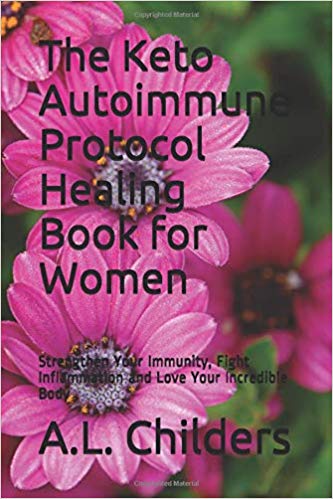
Food is thy medicine, right? Actually it can work one of two ways. Food can be thy medicine or food can be thy death. This book is a guide that will inform you from the perspective of a women. You will also be able to determine what areas in your life that may need a little bit of work and the skills needed to improve those issues along with some fabulous recipes to help get you started on how to eat KETO AIP. I will also help you understand how to fix your gut, strengthen your immunity and fight inflammation with an autoimmune approach. The Keto AIP removes all the common inflammatory food triggers that stimulate a possible autoimmune reaction in the body. We’re going to start resetting those adrenals, boosting that energy and doing a little booty kicking to those hormones that have decided to act like a wild college student and pull an all-nighter the day before final exams.
Food is thy medicine, right? Actually, it can work one of two ways. Food can be thy medicine or food can be thy death. This book is a guide that will inform you from the perspective of a women. You will also be able to determine what areas in your life that may need a little bit of work and the skills needed to improve those issues along with some fabulous recipes to help get you started on how to eat KETO AIP. I will also help you understand how to fix your gut, strengthen your immunity and fight inflammation with an autoimmune approach. The Keto AIP removes all the common inflammatory food triggers that stimulate a possible autoimmune reaction in the body. We’re going to start resetting those adrenals, boosting that energy and doing a little booty kicking to those hormones that have decided to act like a wild college student and pull an all-nighter the day before final exams.
The information and recipes contained in blog is based upon the research and the personal experiences of the author. It’s for entertainment purposes only. Every attempt has been made to provide accurate, up to date and reliable information. No warranties of any kind are expressed or implied. Readers acknowledge that the author is not engaging in the rendering of legal, financial, medical or professional advice. By reading this blog, the reader agrees that under no circumstance the author is not responsible for any loss, direct or indirect, which are incurred by using this information contained within this blog. Including but not limited to errors, omissions or inaccuracies. This blog is not intended as replacements from what your health care provider has suggested. The author is not responsible for any adverse effects or consequences resulting from the use of any of the suggestions, preparations or procedures discussed in this blog. All matters pertaining to your health should be supervised by a health care professional. I am not a doctor, or a medical professional. This blog is designed for as an educational and entertainment tool only. Please always check with your health practitioner before taking any vitamins, supplements, or herbs, as they may have side-effects, especially when combined with medications, alcohol, or other vitamins or supplements. Knowledge is power, educate yourself and find the answer to your health care needs. Wisdom is a wonderful thing to seek. I hope this blog will teach and encourage you to take leaps in your life to educate yourself for a happier & healthier life. You have to take ownership of your health. The highlighted links are affiliate links in my blogs.
This site is designed for educational purposes only and is not engaged in rendering medical advice, legal advice, or professional services. If you feel that you have a medical problem, you should seek the advice of your physician or health care practitioner. For additional information, please see Our full disclosure, terms of use, and privacy policy.