Tag Archives: movies

Sixteen Candles: The Movie That Lied to Us About Suburban Life, Popularity, and Mortgage Rates

A blog by A.L. Childers — Gen X survivor, cultural storyteller, and author of
The Lies We Loved: How Advertising Invented America

Author Disclaimer

Before anyone gets emotional:
This post is meant to be funny, nostalgic, and real.

No Hollywood houses were harmed in the making of this blog, although several of them did emotionally damage an entire generation of kids who thought their parents “just weren’t trying hard enough.”

As a proud Gen X woman who grew up on movies that lied to our faces, I come with humor, research, and the emotional resilience of someone who drank out of garden hoses and watched cable TV without parental guidance.


Let’s Talk About That House.

The Baker family in Sixteen Candles lived in a home so perfect it made every Gen X latchkey kid whisper:

“What the hell does her dad do for a living?”

Because that house wasn’t just nice.
It was Home Alone–adjacent suburbia nice.
Big yard. Attic. Basement. Rooms for each kid.
A kitchen the size of a small nation.

And the entire time, we’re told this is a “normal middle-class family.”

Uh-huh. Sure.
And I’m the Queen of England.


So what did the parents do?

Here’s the funny part:
John Hughes never tells us.
Not once.
Not in the script, not in the interviews, not in deleted scenes.

Which is EXACTLY why every Gen X kid assumed:

  • Dad must’ve been a lawyer
  • Or a doctor
  • Or a top-secret CIA consultant disguised as “an average Illinois dad”
  • Or the heir to the Chicago hot dog empire

Because “middle class” in 1984 Hollywood means:
A house worth $1.7 million today, renovated by angels, furnished by Pottery Barn, and paid for with a mortgage rate Gen Z would need therapy to see.

Let’s be honest…
They lived better than half of Congress.


The Real Answer?

While the movie never names the careers, we can infer from the house size, location, economic era, and the magical ability to raise three kids without financial anxiety:

Daddy Baker was probably:

  • A well-paid corporate engineer,
  • A mid-to-senior manager at a major Chicago company,
  • A specialized professional (marketing, finance, architecture), or
  • A man with family money Hollywood politely sprinkled into the background because Americans don’t like acknowledging inherited wealth.

In other words:
He was not making that life on an average salary, no matter how many coupons Mom clipped.


But that’s the point, isn’t it?

John Hughes didn’t write reality.
He wrote nostalgia — the America people wanted to believe they lived in.
Safe neighborhoods. Affordable houses. Stay-at-home moms who had time to bake, sew, and worry about birthday cakes.

It was never real.
But boy, did we fall for it.

And that’s why I wrote The Lies We Loved: How Advertising Invented America — because movies like this weren’t just entertainment…
They were training manuals for expectations no one could afford.


Deep Moment (Because I’m Still Gen X and We Can’t Stay Light for Too Long)

Sixteen Candles was funny.
Chaotic.
Awkward.
Quirky.

And beneath all the teenage angst, it also showed something rare:
How invisible a girl can feel, even in a “perfect” family.

That’s why the movie stuck.
Not the house.
Not the cake.
Not even Jake Ryan leaning on that red Porsche like a teenage Greek god.

It was the feeling every Gen X kid knew:
Trying to find your voice in a world where adults were too busy to notice.


Final Thought — The Real Fantasy Wasn’t Jake Ryan

It was the mortgage.

Because let’s be real:
If that movie were made today, the Bakers would be living in:

  • A two-bedroom townhouse
  • One working vehicle
  • A “don’t sit on that, it’s IKEA” couch
  • A $4,000 property tax bill
  • And a Ring camera catching raccoons every night

Hollywood didn’t lie about love.
They lied about housing.


From a Gen X Heart to Yours

If you grew up on Sixteen Candles, Pretty in Pink, and The Breakfast Club, then you know our generation was raised by sarcasm, survival, and unrealistic real estate.

And somehow?
We turned out amazing.


About the Author

A.L. Childers is a Gen X storyteller, multi-genre author, and the writer of the international bestseller The Lies We Loved: How Advertising Invented America—a deep dive into how American culture, media, and marketing shaped us more than we ever realized.

She writes with humor, heart, and a love for peeling back the curtain Hollywood spent decades stapling shut.

A hilarious and insightful Gen X deep-dive into Sixteen Candles, questioning how the Baker family afforded their picture-perfect suburban home. Written by bestselling author A.L. Childers, this cultural commentary blends humor, nostalgia, and truth—proving Hollywood has been lying to us about the “middle class” for decades.

ixteen Candles movie analysis

Sixteen Candles house

What did parents do in Sixteen Candles

Sixteen Candles family income

Gen X movie nostalgia

John Hughes suburban movies

1980s movie homes

Hollywood middle class myth

80s suburban lifestyle movies

A.L. Childers author

The Lies We Loved: How Advertising Invented America

American culture movies

Movie review Sixteen Candles

Hollywood real estate myths

Gen X perspective on Sixteen Candles

“The Girl the Darkness Raised: The Memoir Poised for Hollywood — Rights, Pitch Deck, Casting & More”


🎬

The Memoir Ready for the Screen — And the World

Some memoirs are written to be read.
This one was written to be seen.

A.L. Childers’ haunting, Southern-gothic memoir
THE GIRL THE DARKNESS RAISED: A Memoir of Scarcity, Survival, and Becoming
unfolds in scenes so vivid, so cinematic, that producers and early readers have all said the same thing:

“This belongs on screen.”

Below you’ll find your entire Hollywood package:
✔ Film rights announcement
✔ Query letter to producers
✔ Film adaptation synopsis
✔ One-page pitch deck
✔ Full dream casting blog
✔ Website film-rights landing page copy


🎞️ FILM RIGHTS ARE OFFICIALLY AVAILABLE

A cinematic memoir about generational trauma, poverty, resilience, and reclaiming the girl you had to abandon to survive.

Film, TV, Limited Series & Streaming rights are open for acquisition.


💌 QUERY LETTER TO PRODUCERS

Dear Producer,

I am pleased to present the film, television, and streaming rights to my upcoming memoir, The Girl the Darkness Raised. This story follows a Southern girl raised by scarcity, silence, and a single night that fractures her childhood. Through adulthood, motherhood, and a near-death trauma, she begins the long, painful climb toward healing — and reclaiming the child she buried to survive.

Told in cinematic, episodic scenes, the memoir aligns naturally with prestige dramas such as Educated, The Glass Castle, Maid, Tiny Beautiful Things, and A24-style filmmaking.

The rights are fully available. I welcome conversation about potential adaptation.

Warm regards,
A.L. Childers

📧audreychilders@hotmail.com
🌐 http://www.TheHypothyroidismChick.com

Film, TV, and Global Streaming Rights Available Worldwide.


🎥 FILM ADAPTATION SYNOPSIS

THE GIRL THE DARKNESS RAISED follows two timelines:

The Girl

Raised amid poverty and hunger in South Carolina:

  • Cracked plates
  • Cold floors
  • A volatile mother
  • A night that shatters innocence
  • The forced disappearance of a child who learns survival is quieter than fear

The Woman

Years later, she faces the echoes of her past:

  • Motherhood triggering buried trauma
  • Anxiety nesting in her ribs
  • A near-death event
  • Generational silence repeating itself
  • The realization that healing requires returning for the girl she left behind

This memoir is devastating, atmospheric, hopeful — a rebirth in real time.


🎞️ ONE-PAGE HOLLYWOOD PITCH DECK


TITLE:

The Girl the Darkness Raised
A Memoir of Scarcity, Survival, and Becoming
by A.L. Childers


GENRE:

Prestige Drama • Psychological Memoir • Southern Gothic


FORMAT:

Limited Series (6–8 Episodes)
OR Feature Film (A24 Style)


LOGLINE:

A woman raised by silence, poverty, and a single traumatic night must confront the girl she abandoned to survive — unraveling generational wounds, motherhood, and her own rebirth.


TONE & STYLE:

  • Cinematic
  • Raw
  • Southern Gothic realism
  • A24 grit
  • Emotional resonance like Maid + Glass Castle
  • Flashbacks layered like Sharp Objects

THEMES:

  • Childhood trauma
  • Survival vs. disappearing
  • Motherhood as mirror
  • Generational cycles
  • Reclaiming self
  • Healing what was abandoned

STRUCTURE:

Dual timeline narrative:
1️⃣ The Child in Poverty
2️⃣ The Woman Trying to Live a Life She Was Never Prepared For


WHY IT’S PERFECT FOR ADAPTATION:

  • Episodic chapters = ready for limited series format
  • Strong female lead with wide demographic appeal
  • Emotional landscapes perfect for cinematic storytelling
  • Universal themes (abuse, poverty, motherhood, survival)
  • Large BookTok/Bookstagram audience for trauma-healing memoirs

TARGET STUDIOS:

Netflix • A24 • Hulu • FX • Apple TV+ • Hello Sunshine • Amazon Studios


🌟 CASTING BLOG:

Who Would Play Each Role in the Film?**

Hollywood LOVES a casting teaser — and this is pure gold.

Below is a dream cast based on tone, age, emotional capacity, and visual match.


THE WOMAN (Adult Narrator)

Jessica Chastain
– master of emotional inner landscapes
– perfect for trauma + motherhood roles
– Southern roles fit her rhythm

Runner-Up: Amy Adams (haunting, tender, devastating)


THE LITTLE GIRL

McKenna Grace
– already iconic in roles involving trauma, silence, emotional depth
– visually able to portray both vulnerability and strength

Runner-Up: Brooklyn Prince (The Florida Project magic)


THE MOTHER

Michelle Monaghan
– complex emotional range
– can play volatile, loving, broken, and unpredictable

OR
Elisabeth Moss (raw intensity, unsettling realism)


THE FATHER FIGURE / MAN OF THE HOUSE

Garret Dillahunt
– gritty Southern presence
– skilled at portraying men who are both charming and dangerous


THE ADULT PARTNER / HUSBAND

Oscar Isaac
– gentle, layered, supportive but flawed character range


THE THERAPIST / HEALING MENTOR

Viola Davis
– grounding presence
– emotional authority
– transformative screen impact


🌐 FILM RIGHTS LANDING PAGE


🎞️ FILM RIGHTS • THE GIRL THE DARKNESS RAISED

A Memoir of Scarcity, Survival, and Becoming

by A.L. Childers

Film, Television, and Global Streaming Rights: AVAILABLE


ABOUT THE STORY

A haunting, cinematic memoir about a girl raised by poverty, silence, and trauma — and the woman who must confront the past to finally rise.

Told through dual timelines, this story blends Southern Gothic realism, emotional truth, and visually powerful scenes perfect for limited series or feature film adaptation.


ADAPTATION MATERIALS AVAILABLE

✔ Full manuscript
✔ Director-style adaptation notes
✔ One-page pitch deck
✔ Synopses (short, medium, long)
✔ Character profiles
✔ Loglines
✔ Casting vision
✔ Book trailer script


RIGHTS CONTACT

A.L. Childers
📧 audretchilders@hotmail.com
🌐 http://www.TheHypothyroidismChick.com
📍 North & South Carolina

Professional inquiries only.
Agents and producers welcome.

The Girl the Darkness Raised: A Memoir of Scarcity, Survival, and Becoming


book adaptation 2025, memoir film rights, southern memoir movie, trauma memoir adaptation, The Girl the Darkness Raised movie, A.L. Childers film rights, Netflix memoir adaptation, book to screen, casting for memoir movies, limited series adaptation


#TheGirlTheDarknessRaised #MemoirAdaptation #FilmRightsAvailable #HollywoodReady #ALChilders #BookToScreen #A24Stories #NetflixAdaptation #TraumaToTriumph #SouthernMemoir #WomenWhoRise

BOOK TRAILER SCRIPT-“THE GIRL THE DARKNESS RAISED” by A.L. Childers

“THE GIRL THE DARKNESS RAISED” by A.L. Childers

Cinematic, haunting, emotional, unforgettable.

“A memoir about survival, silence, and rising —
The Girl the Darkness Raised by A.L. Childers.
This story feels cinematic, atmospheric, and painfully real.
Exploring themes seen in projects by @A24, @NetflixFilm, and @HelloSunshine.”

The Girl the Darkness Raised: A Memoir of Scarcity, Survival, and Becoming

🎵 OPENING — AUDIO

Sound: Soft wind, like breath moving through a hollow room.
A single piano note.
Then another.
Slow… echoing… fragile.


📽️ SCENE 1 — THE HOUSE

Visual: A dim hallway of an old Southern house. Wallpaper peeling. A single light flickering.
Child-sized footsteps slowly walk across old wooden floors.

Voiceover (soft, haunting):
“Some children are raised by parents…
and some are raised by the darkness those parents never healed.”


📽️ SCENE 2 — THE CHILD

Visual: A little girl, maybe 7 or 8, sits on the floor by her bed, knees pulled to her chest.
Her face is turned away — we never fully see her.

Voiceover:
“I learned early which floorboards screamed…
and which ones stayed quiet enough to keep me safe.”


📽️ SCENE 3 — POVERTY

Visual: Empty fridge.
A plate with only a biscuit.
Hands brushing crumbs to pretend there’s still something left.

Voiceover:
“Hunger was a teacher.
Silence was a second language.
Shame was the thread woven through everything.”


🎵 AUDIO SHIFT

Softer piano becomes deeper. A slow heartbeat begins underneath.


📽️ SCENE 4 — THE NIGHT EVERYTHING CHANGED

Visual: A crack in a bedroom door.
Light spills out.
The camera pushes closer… the sound cuts out…
then the door SLAMS shut.

Voiceover (lower, breaking):
“One night took what childhood I had left…
and buried it deeper than anyone could see.”


📽️ SCENE 5 — ADULTHOOD / MOTHERHOOD

Visual:
A grown woman (A.L.) stirring a pot on the stove…
helping with homework…
crying quietly in the bathroom with the water running.

Voiceover:
“I didn’t grow up — I endured.
And endurance followed me…
into motherhood…
into anxiety…
into a world where no one knew the cost of my smile.”


🎵 AUDIO BUILD

Low drums fade in — soft, tribal, steady.
A pulse.
A rise.


📽️ SCENE 6 — THE BECOMING

Visual:
Hands gripping a steering wheel in silence.
A journal opening.
A woman standing alone at sunrise, breathing for the first time.

Voiceover:
“But there comes a day… when survival isn’t enough.”
“A day when the girl you left behind… demands to come home.”


📽️ SCENE 7 — THE RISE

Visual:
Soft-focus montage:
• A.L. writing at a desk
• A page turning
• A woman stepping out of a dark doorway into daylight
• Trees shifting in wind
• The girl from the beginning — now older — standing in sunlight

Voiceover (stronger):
“This is the story of how I found her.”
“How I stopped disappearing.”
“How I rose from the very shadows that created me.”


📽️ FINAL SCENE — THE COVER REVEAL

Visual:
Black screen.
Slow fade-in to the book cover:
THE GIRL THE DARKNESS RAISED
by A.L. Childers

Voiceover (final, powerful):
“She didn’t grow up in the dark…
the dark grew up around her.”

“And she rose anyway.”


🎵 END AUDIO

Single piano note.
Fade to silence.


📢 TEXT ON SCREEN

AVAILABLE NOVEMBER 17, 2025
A memoir of survival, silence, and becoming.
For readers of Educated, The Glass Castle, and Untamed.

#TheGirlTheDarknessRaised #ALChilders #Memoir2025 #WomenWhoRise

“A memoir about survival, silence, and rising —
The Girl the Darkness Raised by A.L. Childers.
This story feels cinematic, atmospheric, and painfully real.
Exploring themes seen in projects by @A24, @NetflixFilm, and @HelloSunshine.”

OFFICIAL ANNOUNCEMENT

Film Rights Now Available for A.L. Childers’ Memoir

THE GIRL THE DARKNESS RAISED: A Memoir of Scarcity, Survival, and Becoming

FOR IMMEDIATE RELEASE
Date: November 2025
Author: A.L. Childers
Genre: Memoir / Survival / Women’s Stories
Status: Film, Television, Limited Series & Streaming Rights Now Available


🌑 ANNOUNCING FILM RIGHTS FOR A LITERARY MEMOIR ALREADY BEING CALLED “CINEMATIC & HAUNTING.”

A.L. Childers is officially offering exclusive film, television, and streaming rights for her 2025 memoir:

THE GIRL THE DARKNESS RAISED

A Memoir of Scarcity, Survival, and Becoming

A raw, atmospheric, emotionally charged memoir about poverty, trauma, motherhood, generational wounds, and the rebirth of a woman who returns to rescue the girl she had to abandon to survive.

Told in haunting, cinematic scenes, this memoir has been described by early readers as:

“The next Educated.”
“A southern Glass Castle — but darker, more poetic, and painfully real.”
“A story that feels like a film already.”

Perfect for adaptation as a limited series, prestige drama, or A24-style psychological film, The Girl the Darkness Raised is positioned to resonate with audiences of:

  • Netflix (Maid, Unbelievable)
  • A24 (The Florida Project, Moonlight)
  • Hello Sunshine / Reese Witherspoon (Wild, Tiny Beautiful Things)
  • Apple TV+ (The Morning Show, Lessons in Chemistry)
  • Amazon Studios (The Lost Flowers of Alice Hart)
  • FX / Hulu (The Act, Under the Banner of Heaven)

🎥 WHY THIS MEMOIR IS A POWERFUL ADAPTATION CANDIDATE

🔥 1. Built-in Cinematic Structure

Told in vivid, movie-ready scenes with strong visual and emotional beats.

🔥 2. Universal Emotional Themes

Poverty, childhood trauma, survival, motherhood, anxiety, healing, rebirth — stories audiences connect to deeply.

🔥 3. Strong Female Lead With Broad Audience Appeal

A complex, raw, resilient Southern woman whose story offers both devastation and hope.

🔥 4. A Ready-Made Journey for a Limited Series

Each chapter reads like an episode:
Scarcity → Silence → Trauma → Survival → Motherhood → Breaking → Becoming.

🔥 5. The Memoir Market Is Hot

With the massive success of Educated, The Maid, Tiny Beautiful Things, and Hillbilly Elegy, the market is primed for raw, poetic Southern stories.


📩 RIGHTS INQUIRIES & CONTACT

Producers, agents, and acquisition teams may contact directly:

A.L. Childers
📧 Audreychilders@hotmail.com
🌐 http://www.TheHypothyroidismChick.com
📍 Based in North & South Carolina
🎭 Film, Television & Streaming Rights Available Worldwide

Professional inquiries only.


🎞️

@NetflixFilm • @A24 • @PrimeVideo • @AppleTVPlus • @HelloSunshine • @ReesesBookClub • @Hulu • @FXNetworks • @NetflixQueue • @AmazonStudios


🖋️ ABOUT THE AUTHOR

A.L. Childers is a multi-genre author of over 200 titles, blending memoir, women’s empowerment, social commentary, health advocacy, and raw storytelling.
Her writing style is cinematic, haunting, and emotionally immersive — making her books natural candidates for film and television adaptation.


🔥 LOG LINE FOR PRODUCERS

A woman raised by poverty, silence, and the night that stole her innocence fights her way through motherhood, anxiety, and generational wounds to reclaim the girl she had to abandon to survive.


🎬 RIGHTS STATUS: AVAILABLE

This story is ready for adaptation.
The darkness raised her.
The world is ready to watch her rise.

The Girl the Darkness Raised: A Memoir of Scarcity, Survival, and Becoming

America, Can We Talk? Because I Think We’re All Experiencing a Cultural Midlife Crisis.

A hilarious but sharp cultural commentary: why America feels like it’s going through a national midlife crisis. Humor, truth, politics, empowerment, and metaphysical insight—all in one viral-ready blog by author A.L. Childers.

Somewhere between TikTok conspiracy theories, politicians fighting on camera like it’s WWE, teenagers diagnosing each other with 47 personality disorders, and grown adults believing they’re “healers” because they bought sage from Amazon…
America has officially entered its cultural midlife crisis.

And honestly?
She’s not handling it well.

This is the national equivalent of buying a red sports car, getting bangs, and announcing you’re “rediscovering yourself” in the middle of Costco.

When did we become a country that can’t function without a soft life playlist and a $9 latte?

Listen. I love a latte.
But somewhere along the way, the nation decided that all problems—from political scandals to existential dread—could be solved with:

  • manifestation
  • healing crystals
  • a seasonal candle
  • and maybe a Stanley cup the size of a toddler

We’re living in a timeline where self-care has become a competitive sport, Congress live-streams its arguments for clicks, and parents are fighting battles in school pickup lines that used to be reserved for medieval kingdoms.

Meanwhile, the government is out here gaslighting everyone like a toxic ex.

“Oh no, there’s no corruption.”
“We’re definitely using your tax dollars wisely.”
“That money went where? Into what? Oh… look over there! A new social issue to argue about!”

And somehow, half the population is too exhausted (or too overstimulated) to push back, and the other half is busy filming content for followers they secretly hate.

Women are in their ‘I’m too tired to pretend’ era—and honestly, it’s iconic.

We’re raising kids, husbands, pets, aging parents, and everyone’s emotional baggage.

We’re holding the entire economy together—
while trying to regulate cortisol, fix our thyroids, heal childhood trauma, and remember what we walked into the room for.

We are DONE with nonsense.
We are DONE with silent suffering.
We are DONE letting society tell us what to do.

If America is in a midlife crisis, women are the ones driving the car while everyone else in the backseat screams over the radio.

And don’t even get me started on the metaphysical awakening happening right now.

Half the country is suddenly spiritual.
The other half is scared of the first half.
And the third half—because math doesn’t matter anymore—
is trying to figure out if aliens, ancestors, or energy vampires are responsible for why they’re tired every day.

People are burning incense, cleansing houses, reading tarot, talking to spirit guides, and I’m over here like:

“Ma’am, you are not overwhelmed because of Mercury retrograde.
You are overwhelmed because your husband acts like a third child.”

So what’s the point of all this?

America’s cultural midlife crisis is messy, loud, dramatic, and deeply unserious—but it’s also the perfect moment for a reset.

This chaos is showing us exactly what we don’t want anymore:

  • fake politicians
  • fake empowerment
  • fake wellness
  • fake morality
  • fake “perfect families” on social media
  • and fake narratives that tell women to stay quiet

We’re entering a cultural reawakening—
And underneath the humor, there’s a serious truth:

America is cracking open. And what comes next is up to the people who are tired of pretending everything is fine.


American culture satire, cultural commentary 2025, women’s empowerment, government corruption humor, spiritual awakening funny, mom life humor blog, social commentary viral blog, A.L. Childers author, thyroid empowerment, political satire 2025, metaphysical commentary


#AmericanCulture #CulturalCommentary #WomensVoices #HumorWriting #PoliticalSatire #MomLifeHumor #MetaphysicalAwakening #ALChilders #ViralBlog #ThyroidHealth #GovernmentCritique #SpiritualHumor


About the Author

A.L. Childers (Audrey Childers) is a nationally emerging author known for blending humor, truth, social commentary, history, health, and metaphysics into powerful, unforgettable writing. With over 200 published books, she explores everything from government corruption to women’s empowerment, spiritual protection, thyroid health, Appalachian folklore, and the hidden mechanics of power.
Her work can be found on Amazon, TheHypothyroidismChick.com, and across social platforms where readers follow her for honesty, insight, and real-world wisdom.


A.L. Childers is the author of over 200 books spanning investigative nonfiction, history, spirituality, political analysis, women’s empowerment, and social commentary. Her writing blends deep research with lived experience, often exploring the systems that shape—and limit—ordinary lives.

Her bestselling titles include:

If you enjoyed this piece, explore Audrey’s books and blog for deeper dives into power, policy, and the people caught in between.


Disclaimer:

This blog is for commentary, entertainment, and informational purposes only. It includes humor, opinion, and social critique and should not be interpreted as legal, medical, financial, or professional advice. All content reflects the author’s viewpoints at the time of writing.

A Love Letter to the Superman Writers: Honoring Every Pen Behind the Cape

Disclaimer / About the Author
Before I begin, a few words about me. I am a writer and lifelong Superman fan. Over the years, I have published books in health, hidden history, magic, and spirituality, and among them, my best-selling works have beenMy best-selling works include Hashimoto’s Crock-Pot Recipes and The Hidden Empire: A Journey Through Millennia of Oligarchic Rule—two books that reflect my passion for health, hidden history, magic, and spirituality, and my belief that stories can heal, awaken, and empower. You know, those that touched many hearts and found homes on many bookshelves. But today, this post is not about me — it’s about the many brilliant writers who gave us Superman on the big screen, and how deeply I admire each one’s contribution.

Superman is eternal. Every movie version, every writer who shaped him for cinema (and by extension the comics, novels, and lore) deserves gratitude. They all brought something unique, and together they built a tapestry of hope, heroism, and wonder. In this blog post, I want to celebrate them, note the differences among the films and their writers, and share why I love all the Superman movies. (Yes, even with the dog in the newest one — I think that’s a joyous touch.)


The Writers Behind the Superman Films — and What Makes Each Unique

Here, I’ll trace several of the key cinematic Superman films, noting their writers, what they brought, and what distinguishes each version.

Superman (1978)

  • Writers / Screenplay: Mario Puzo, David Newman, Leslie Newman, Robert Benton (with story credit to Mario Puzo) Wikipedia+2The Legacy of John Williams+2
  • What makes it special: This is the film that truly cemented Superman in public imagination as a mythic, almost biblical hero — combining spectacle, earnestness, and a sense of wonder. The writers leaned on epic storytelling, origin narrative, and moral clarity. Mario Puzo is perhaps best known for The Godfather, giving him gravitas and command of character drama. David and Leslie Newman were seasoned screenwriters; Robert Benton brought literary sensitivity (he later co-wrote Kramer vs. Kramer). The mix of writers allowed the film to balance grandeur with intimacy.

This 1978 version feels iconic because the writers treated Superman not just as a hero in tights, but as a myth, as an idea. That tone was new and infectious. I have always admired how they made us believe that a man can fly and still feel deeply human.

Man of Steel (2013) & Later DCEU Versions

Although not strictly part of the original Reeve film line, these more recent Superman films reinterpreted the myth for modern times. The key writers here include Christopher Nolan, David Goyer, and Zack Snyder (often with others). (I won’t go deeply into each, but suffice to say they favored more dramatic stakes, internal conflict, and a darker tone.)

What distinguishes them is the shift toward complexity and struggle: Superman as a being torn between worlds, guilt, power, and responsibility, often in a morally gray modern world. The writing tends to probe what it costs to be super, not just how wonderful it is.

Superman (2025) (the new reboot)

  • Writer / Director: James Gunn (also credited for writing) Reddit+4Wikipedia+4Wikipedia+4
  • Based on characters by: Jerry Siegel & Joe Shuster (the original creators) IMDb+2JH Wiki Collection+2
  • What makes it fresh / special: James Gunn brings a lighter, more hopeful, more human tone. In this version, you even have a super-dog (Krypto) whose presence adds warmth and charm — yes, a dog in a cape! WBUR+2Roger Ebert+2

Gunn’s strength is in balancing big action, fun, emotion, and vibrant character moments. He doesn’t shy from the mythic parts of Superman, but also lets him be playful, awkward, vulnerable. That duality is what makes this version resonate. The dog (Krypto) works as a emotional anchor — a loyal companion who reminds us that even a cosmic hero can love and be loved. (And yes, adding a dog feels delightful to me.)

What also feels distinct: Gunn clearly respects and studies the Superman legacy (comics, past films) and integrates those threads while making something new for today. The world feels alive, and Superman’s hope feels real again.

Comparing and Contrasting: What Makes Each Superman Era Unique

Every generation’s Superman reflects the heart of its time — and the writers behind each version left their own fingerprints on the legend.

The 1978 film written by Mario Puzo, David and Leslie Newman, and Robert Benton, carries a mythic and timeless tone. It’s filled with awe and classic heroism, portraying Superman as a beacon of virtue and hope. The villains, like Lex Luthor, represent clear-cut evil, allowing the story to shine as a pure battle between good and bad. Even the humor felt grand and charming — sprinkled lightly between moments of wonder and destiny. It was bold and groundbreaking, truly the first modern superhero epic that made us believe a man could fly.

The modern DCEU versions, penned by writers like Christopher Nolan, David Goyer, and Zack Snyder, dive deep into internal conflict and moral complexity. These stories explore what it costs to be Superman in a flawed, cynical world. The tone is darker and more intense, showing a hero who wrestles with identity, responsibility, and sacrifice. The side characters, too, are layered and conflicted — grappling with questions of ethics and truth in a world that no longer sees things in black and white. These films took risks, daring to reimagine a near-perfect hero as painfully human.

Then comes the 2025 James Gunn version, a breath of fresh air and a return to warmth, wonder, and heart. This Superman feels approachable — hopeful yet grounded, emotional yet powerful. The relationships are heartfelt, the humor genuine, and yes, the addition of the flying dog (Krypto!) gives the story a delightful new layer of charm. Gunn’s writing blends modern depth with old-school optimism, creating something joyful without losing substance. It’s a bold reboot — one that reminds us Superman isn’t just a symbol of strength, but of connection, compassion, and balance.

Each version stands on its own, but together they form a living chronicle of what we need heroes to be — reflections of our times, our fears, and our hopes.

Why I Admire All the Writers — Because Each Contributed Something Wonderful

  • Courage to interpret a myth: Each writer took a towering, beloved character and asked, “How can I make him live on screen again?” That requires reverence and bravery.
  • Balance of the cosmic and the human: To make Superman compelling, you must balance his godlike powers with his human heart. That is a delicate task — and all these writers succeeded in various ways.
  • Innovation within legacy: None of them simply copied the comics. They found ways to honor source material while telling new stories. That’s what keeps Superman fresh across generations.
  • Passion & care: You can feel their love for the character in every scene, every line of dialogue. These were labors of love.
  • Diversity of voices: The writers came from different backgrounds (Puzo from mafia fiction, Benton from literary drama, Gunn from modern genre filmmaking) and that diversity enriches the tapestry of Superman.

I admire all of them not for getting Superman perfect, but for daring to try, for adding their voice to an ongoing conversation about what a hero is.


My Personal Affection: Why All the Superman Movies Hold a Place in My Heart

Let me share why I, personally, love every Superman film:

  1. They remind me of hope
    No matter how “dark” a version might get, Superman always reminds us that goodness can triumph, that there is light worth fighting for. That’s why I keep coming back.
  2. They show growth in storytelling
    Watching how filmmakers and writers changed their approach over decades is inspiring. It shows you can reinterpret a myth for each new era without losing its core.
  3. The newest version, with the dog, feels like magic
    When I saw Krypto flying beside Superman, and when he saves someone with his loyalty, I thought: yes, this is a universe that still holds room for tenderness, for joy and wonder. It made me laugh, made me feel. It made me believe anew.
  4. Each version speaks to a different part of me
    Sometimes I want mythic grandeur (1978), sometimes emotional struggle (modern DCEU), sometimes warm adventure (2025). All of them, in their own way, reflect different facets of Superman — and different facets of what heroism means to me.

Honoring the Commissions Beyond Film: Comics, Novels, and Legacy

We must also acknowledge that much of Superman’s heart comes from the comics and literature. Jerry Siegel and Joe Shuster created him in 1938, and countless comics, graphic novels, prose stories, and adaptations have expanded his myth. Many of the film writers drew upon that deep well of stories. Some comics writers got special thanks in newer credits (honoring the creators who built Superman’s lore) Bleeding Cool. In short: the cinematic writers stand on the shoulders of giants — and they do so humbly and creatively.


Final Thoughts: To the Writers, I Salute You

Dear Mario Puzo, David Newman, Leslie Newman, Robert Benton, Christopher Nolan, David Goyer, Zack Snyder, James Gunn (and all the myriad collaborators) — thank you. You have given us a hero who endures. You have taken one iconic character and transformed him for each generation, without ever losing what makes Superman Superman.

I admire each of you — for your vision, your courage, your heart. Your pens have carved hope into celluloid. Your work reminds us that a writer’s greatest gift is not perfection, but the willingness to imagine, to believe, to bring light into darkness.

As for me, I will continue writing — in my own voice — inspired by the legacy you all keep alive. And I will always wear the red cape in my imagination.

Thank you, from a writer, a fan, and a believer in heroes.

With love, kindness, and admiration,

A.L. Childers

Tags: #MarioPuzo #DavidNewman #LeslieNewman #RobertBenton #ChristopherNolan #DavidGoyer #ZackSnyder #JamesGunn #JerrySiegel #JoeShuster #SupermanWriters #SupermanLegacy #Superman2025 #DCComics #ALChilders #AuthorBlog #WritersWhoInspire

MarioPuzo #DavidNewman #LeslieNewman #RobertBenton #ChristopherNolan #DavidGoyer #ZackSnyder #JamesGunn #JerrySiegel #JoeShuster #Superman #SupermanMovies #Superman2025 #DCComics #WritersWhoInspire #ALChilders #AuthorLife #AuthorBlog #SuperheroCinema

✍️ Author’s Note

I wrote this tribute because I believe that behind every great hero stands a greater storyteller. The writers who shaped Superman didn’t just craft a character — they built a symbol of hope that has carried generations through darkness, change, and doubt. As an author myself, I understand the sacred dance between imagination and purpose, and how each line written becomes a bridge between the ordinary and the extraordinary.

Their work reminds me why I write — to heal, to awaken, to connect, and to leave behind something that whispers, “Keep believing.”
Whether it’s through history, health, magic, or spirituality, I strive to honor that same spirit in my own books: to spark curiosity, courage, and compassion in every reader who crosses my words.


Written with admiration by A.L. Childers, author of Hashimoto’s Crock-Pot Recipes and The Hidden Empire: A Journey Through Millennia of Oligarchic Rule — celebrating storytellers, truth-seekers, and the heroes who remind us to keep believing.

Tags:
#MarioPuzo #DavidNewman #LeslieNewman #RobertBenton #ChristopherNolan #DavidGoyer #ZackSnyder #JamesGunn #JerrySiegel #JoeShuster #SupermanWriters #SupermanLegacy #Superman2025 #DCComics #ALChilders #AuthorBlog #WritersWhoInspire #SuperheroCinema

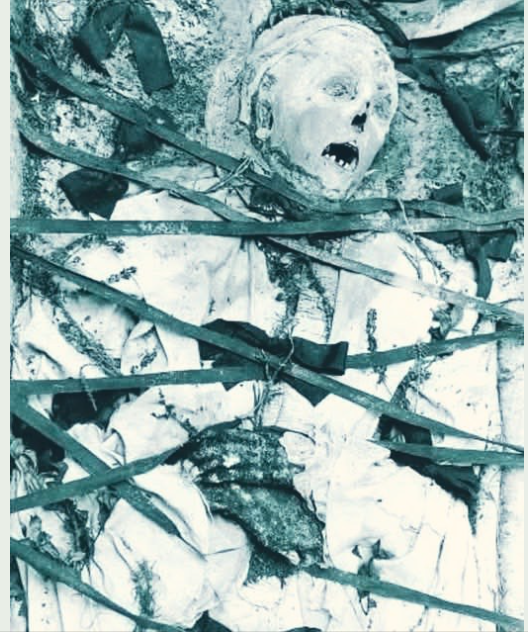
The Corpse That Would Not Rest: The Legend of Anna Maria Von Stockhausen

In the heart of medieval Europe, during the terror of the Black Plague, death was everywhere — yet some deaths sparked even deeper fear. The legend of Anna Maria Von Stockhausen is one of the most haunting tales to emerge from this dark chapter of history. Condemned as both witch and vampire, Anna was bound in death, cursed in life, and feared even after fire and stake could not silence her.

Witchcraft, Vampires, and the Plague

The Middle Ages were consumed with fear of the unknown. The Black Death (1347–1351) decimated Europe, wiping out nearly half the population. In such times of crisis, suspicion and superstition flourished. Women who were different, outspoken, or simply unlucky often became targets of witchcraft accusations. Meanwhile, vampire lore began to intertwine with tales of plague: unexplained deaths, bodies found “fresh” in the grave, and sightings of the dead walking at night.

Anna Maria Von Stockhausen’s story embodies both fears. She was accused not only of practicing witchcraft but of rising from the dead repeatedly, defying the laws of nature and terrorizing her village.


The Six Deaths of Anna Maria

The story is told in chilling detail:

  1. The Hanging – Anna was first executed by hanging. Yet when her grave was checked, it was found empty. Soon after, she was seen wandering, clawing her way from the earth.
  2. The Drowning – Captured again, she was tied to a plank and drowned in a lake. Villagers retrieved her lifeless body, but within two days the grave was open and empty.
  3. The Walking Corpse – Witnesses claimed to see her decaying body, dripping with worms, dirt, and water, staggering through her old home.
  4. The Stake – They drove a wooden stake through her heart, the traditional method of destroying vampires. A guard was posted at her grave, but when he failed to return, his corpse was found nearby — throat torn open, blood drained.
  5. The Fire – Finally, they tied Anna to a scarecrow in a cornfield and set her ablaze. But a sudden storm extinguished the flames, leaving her half-burned body intact.
  6. The Curse – A wandering vampire hunter and zealot confronted her during this storm. Rather than destroy her, he demanded answers. Her voice rasped with fury as she declared that the villagers had cursed themselves by burying her in defiled ground. Unless her request was honored — burial far from their village — she would never rest.

The people complied. Anna was buried elsewhere, and only then did the hauntings cease.


Folklore Meets Fear

The tale of Anna Maria Von Stockhausen fits within broader European vampire traditions:

  • In Eastern Europe, corpses were often exhumed if villagers feared vampirism. Many were found staked, beheaded, or weighed down with stones.
  • In plague-stricken Italy, some graves contain skeletons with bricks shoved into their mouths — believed to stop the “plague vampire” from spreading death.
  • Across Germany and Austria, “witch burials” sometimes involved binding bodies with chains, ropes, or even nails to prevent resurrection.

Anna’s story captures all these fears in one: the witch, the vampire, the plague-bringer — a woman transformed into legend because her community could not explain her defiance of death.


Why Her Story Endures

Was Anna Maria Von Stockhausen truly cursed, or was she the victim of hysteria in a time of pestilence and fear? We may never know. But her tale endures because it forces us to confront humanity’s deepest terrors:

  • The fear of women with power.
  • The fear of the grave yielding back its dead.
  • The fear that some curses never die.

Even now, centuries later, whispers of her wandering corpse and her terrible curse linger in European folklore archives. And in every chilling gust of wind across forgotten cemeteries, one can imagine her shadow rising again.


Disclaimer

The story of Anna Maria Von Stockhausen survives through legend, folklore, and fragmented historical references. While rooted in the context of witch trials and vampire hysteria of the Middle Ages, specific details of her life and repeated deaths cannot be independently verified through archival sources. Readers should approach this narrative as part of the rich tapestry of European folklore — where myth, fear, and history often intertwine.


About the Author

A.L. Childers is a writer, historian, and collector of forgotten truths. She specializes in weaving folklore, history, and storytelling into narratives that bring the past alive. Her work explores the mysteries of the human spirit, the legends of haunted places, and the echoes of history that still shape our present.

🎃 Michael Myers: Why Silence (and John Carpenter) Scared Us More Than Words

I see why Michael Myers just quit talkin’ & started acting like that.
Funny? Absolutely. True? Maybe more than we realize.

Because sometimes, silence doesn’t just speak louder than words — it kills.

And behind that silence was one man: John Carpenter, the quiet genius who gave us Halloween and turned Michael Myers into a cultural boogeyman.


👶 Family Roots: Where the Darkness Began

Carpenter wasn’t born into Hollywood glitz. He was born on January 16, 1948, in Carthage, New York, and raised in Bowling Green, Kentucky.

  • His father, Howard Ralph Carpenter, was a respected music professor who taught him rhythm, timing, and structure — lessons that became the bones of Carpenter’s haunting film scores.
  • His mother, Milton Jean Carpenter, created a stable home where his imagination could run wild.

Family mattered to Carpenter. Later, his son Cody Carpenter would follow in his footsteps as a musician and composer, keeping the Carpenter sound alive. And his wife, Sandy King Carpenter, became his producing partner, shaping projects alongside him.


🎥 The Education of Fear

At the University of Southern California’s School of Cinematic Arts, Carpenter fell in love with filmmaking. He admired Howard Hawks and Alfred Hitchcock, masters of suspense who proved less could be more.

Before Michael Myers, Carpenter cut his teeth on:

  • Dark Star (1974) – a quirky sci-fi parody.
  • Assault on Precinct 13 (1976) – a gritty thriller that showed his ability to wring tension from minimal budgets.

These weren’t just warmups. They were blueprints for Halloween.


🧛 The Creation of Michael Myers

Carpenter made Halloween in 1978 with only $300,000. No big stars. No studio backing. Just vision.

Why didn’t Michael Myers speak? Carpenter wanted him to be “The Shape.” Not a man, not a monster, but something in between. Silence made him inhuman.

The mask? A cheap William Shatner mask painted white. The score? A simple piano riff Carpenter himself composed, taught to him by his father.

That’s how you turn nothing into everything.


📽️ John Carpenter’s Filmography

Carpenter didn’t stop with Halloween. His fingerprints are all over horror and sci-fi:

  • Halloween (1978) – The slasher that started it all.
  • The Fog (1980) – Ghosts, lighthouses, and creeping dread.
  • Escape from New York (1981) – Kurt Russell as Snake Plissken, the ultimate anti-hero.
  • The Thing (1982) – Still one of the greatest sci-fi horrors ever made.
  • Christine (1983) – Stephen King’s killer car, brought to life.
  • Starman (1984) – A rare Carpenter romance-meets-sci-fi.
  • Big Trouble in Little China (1986) – A cult-favorite action fantasy.
  • Prince of Darkness (1987) – Science, religion, and pure terror.
  • They Live (1988) – Sunglasses, aliens, and the most quoted line in cinema: “I have come here to chew bubblegum and kick ass… and I’m all out of bubblegum.”
  • In the Mouth of Madness (1994) – A love letter to Lovecraftian horror.
  • Vampires (1998) – A bloody, gothic Western twist.

🧬 Why It Still Resonates

Carpenter tapped into something timeless: fear of the unknown.

Michael Myers wasn’t scary because of what he did — he was scary because of what he didn’t do. No monologues. No explanations. Just presence.

And that’s why memes about him still land today. Because honestly? Some days silence feels easier than explaining yourself to the chaos around you.


⚠️ Disclaimer

This blog is for entertainment and educational purposes only. Historical and biographical details are drawn from public records, interviews, and biographies. The interpretations are my own — blending facts with a dash of humor, sarcasm, and cultural analysis.


✍️ About the Author

I’m Audrey Culpepper Childers, a multi-genre author who blends history, folklore, and cultural commentary with humor and heart. My books range from exposing hidden power structures (The Hidden Empire) to stirring the cauldron with food and magic (Healing Stews & Enchanted Brews).

You can find my books on Amazon under A.L. Childers. Each one is crafted to challenge your perspective, stir your spirit, and sometimes make you laugh inappropriately at midnight.


👉 So let me ask you:
Do you think Michael Myers was truly evil… or just a man who realized talking was overrated?

To the Dreamers of the 80’s… and the Scroll-Weary Generation of Today

“To the dreamers of the 80’s who made mixtapes, traded secrets under neon lights, and believed time was theirs to spend.
And to today’s generation—may you learn that your hours are worth more than algorithms.”


🎶 When Time Was Ours

The 1980’s were alive with creativity and connection. We spent hours making mixtapes for friends, recording songs off the radio, hanging out at malls and roller rinks, or sitting on bedroom floors trading secrets under neon posters. Time felt abundant, and boredom wasn’t a curse—it was a spark.

Back then, we weren’t refreshing feeds. We were living.


📱 When Time Became a Product

Fast-forward to today, and our hours feel stolen. Social media has monetized boredom, turned attention into currency, and replaced presence with performance. As Shoshana Zuboff writes in The Age of Surveillance Capitalism, we’ve become raw material for an attention economy that profits from our distraction.

Studies confirm it too: according to the American Psychological Association (2023), adults spend an average of 3+ hours per day scrolling social media. That’s over 45 days a year—gone. Not spent on creativity, love, or freedom, but swallowed by algorithms.


💡 Why I Wrote About This

I’m A.L. Childers—author, truth-seeker, nostalgic soul, and someone who has lived through both the mixtape era and the TikTok age.

  • In Silent Chains: Breaking Free from Conformity and Injustice, I exposed how conformity and systemic control shape our daily lives.
  • In The Hidden Empire: A Journey Through Millennia of Oligarchic Rule, I revealed how power has always stolen time and freedom from ordinary people.
  • And now, in The Endless Feed, the Empty Day: From 80’s Mixtapes to TikTok, I’m bridging those truths with lived nostalgia—reminding readers that our hours are sacred, and they belong to us, not to screens.

I know what it feels like to lose time to systems built to exploit us. I also know what it feels like to take it back. My writing is here to show you how to do the same.


📚 Why You Should Read My Books

Because they aren’t just books. They’re lifelines.

  • If you’ve ever felt trapped in the cycle of endless scrolling, I’ve been there.
  • If you’ve ever felt crushed by conformity, I’ve fought it.
  • If you’ve ever felt like your hours are slipping away, I’ve found ways to reclaim mine—and I’m sharing them with you.

I’m not writing for corporations, for clicks, or for algorithms. I’m writing for you—for the dreamers, the seekers, the rebels, the ones who know life is more than likes.


📖 Resources & References

  • Zuboff, S. (2019). The Age of Surveillance Capitalism. PublicAffairs.
  • American Psychological Association (2023). U.S. adults average 3+ hours per day on social media.
  • Newport, C. (2019). Digital Minimalism: Choosing a Focused Life in a Noisy World. Penguin Press.

🎤 About the Author

A.L. Childers is a multi-genre author whose work spans history, health, metaphysics, and memoir. Raised in the 80’s and living in the digital age, she brings a unique perspective that blends nostalgia, truth, and raw honesty. Her catalog—including Silent Chains and The Hidden Empire—exposes hidden systems of control while offering practical and empowering ways to reclaim freedom.

She is not afraid to say what others won’t. And that’s why her books stand out.


💥 Final Word

If you want to laugh, cry, reflect, and finally take your life back from the algorithm—pick up one of my books. Because I’m not just writing words. I’m writing weapons for freedom. And yes, I’m that fucking fantastic.

🐺 The Real-Life Mowgli: The Forgotten Story of Dina Sanichar, India’s Wolf Boy

When most people think of The Jungle Book, they imagine Mowgli running with wolves, talking to Bagheera the panther, and singing along with Baloo the bear. But long before Disney brought the story to life, there was a real boy in India whose life eerily mirrored the tale—though without the magic or happy ending. His name was Dina Sanichar, and he became known as the Wolf Boy of India.


🌿 Discovery in the Jungles of India

In 1872, hunters deep in the forests near Bulandshahr, India, made a shocking discovery. Inside a cave, they found a child moving swiftly among a pack of wolves—on all fours, wild, and feral. He wasn’t more than six years old. His hair was matted, his body filthy, nails claw-like, and his eyes sharp with suspicion.

The boy appeared to have been raised entirely by wolves, with no exposure to language, warmth, or human contact. This haunting scene would mark the beginning of one of the most remarkable and tragic stories of human history.


🏠 Life at the Orphanage

The boy was taken to an orphanage in Sikandra, near Agra, where missionaries gave him the name Dina Sanichar. Efforts to “civilize” him proved difficult. While he eventually learned to walk upright and wear clothing, Dina never learned to speak. He rejected cooked food, preferred raw meat, and resisted the use of utensils.

He lived in near silence—his behavior shaped by a childhood without human words. Unlike the fictional Mowgli, Dina had no animal friends offering guidance or safety—only the harsh transition from jungle survival to human society, where he never truly fit in.


⚰️ The Tragic End

Dina Sanichar’s life ended in 1895 when he died of tuberculosis at the age of roughly 35. His story remained obscure, tucked away in colonial records, yet many believe his life helped inspire Rudyard Kipling’s The Jungle Book, first published in 1894.


📚 Historical References & Legacy

  • Wolf-Children Studies: Dina’s case is one of several documented instances of “feral children” in India during the 18th and 19th centuries, studied by colonial officers and missionaries.
  • Inspiration for Kipling: While not directly confirmed, scholars widely agree that stories like Dina’s circulated in colonial India and may have shaped Kipling’s creation of Mowgli.
  • The Harsh Reality: Unlike Mowgli’s magical friendships and heroic adventures, Dina’s life illustrates the psychological and social devastation of extreme isolation and the human need for language and nurturing.

🔑 SEO Keywords

Dina Sanichar Wolf Boy, real life Mowgli, feral children in India, history of The Jungle Book inspiration, wolf boy of Agra, feral child psychology, Indian folklore feral children.


⚠️ Disclaimer

This blog is intended for educational and historical purposes only. The details presented are based on colonial records and secondary historical sources. While often cited as inspiration for The Jungle Book, Rudyard Kipling never explicitly confirmed Dina Sanichar as the model for Mowgli. Interpretations of Dina’s life should be viewed in the broader context of 19th-century accounts of feral children, which were frequently shaped by colonial bias.


📖 References

  • Singh, R. (2016). The Wolf Children and Feral Man. New Delhi: Harper Collins.
  • Hecht, J. (2003). Kingdom of Speech: Stories of Feral Children. Oxford University Press.
  • Kipling, R. (1894). The Jungle Book. London: Macmillan.
  • Contemporary colonial reports archived in the India Office Records, British Library.

Final Thought: Dina Sanichar’s story serves as a haunting reminder that behind myths and legends often lies a very human tragedy. The “real Mowgli” didn’t find joy in the jungle—he found loneliness, silence, and a world that never quite let him belong.

What Is H.R. 867 — the IGO Anti-Boycott Act?

Introduced on January 31, 2025, H.R. 867—also known as the IGO Anti‑Boycott Act—seeks to expand existing anti‑boycott legislation to address calls to boycott friendly countries issued not only by foreign governments but also international governmental organizations (IGOs) like the United Nations or European Union.action.cair.com+8Congress.gov+8Reddit+8

Specifically, it would prohibit certain actions by U.S. individuals or businesses, including:

  • Refusing to do business due to a boycott request from an IGO,
  • Discriminating in employment based on race, religion, sex, or national origin,
  • Providing boycott-related information about individuals’ affiliations with organizations supporting the boycotted country.Congress.gov+1

Additionally, the bill mandates annual reports from the President to Congress, naming countries or organizations that impose such boycotts.X (formerly Twitter)+11Congress.gov+11Congress.gov+11


Why It Matters: Impacts on American Citizens

If enacted, H.R. 867 could turn peaceful political protest into a federal offense—even when aligned with international human rights efforts.

Potential consequences include:

  • Up to 20 years in prison or a $1 million fine for honoring boycott calls from international bodies.Reddit+10Quds News Network+10VoterVoice+10
  • Chilling effects on activism, advocacy, and free speech—targeting individuals, nonprofits, businesses, and faith-based groups engaging in boycotts as a form of political expression.Reddit+9Quds News Network+9VoterVoice+9
  • Broad expansion of government oversight into private, voluntary actions, raising serious First Amendment concerns.VoterVoice+1

Civil liberties advocates have already pushed back:

The American‑Arab Anti‑Discrimination Committee (ADC) hailed the cancellation of the House vote on H.R. 867 as a “victory for free speech”—calling it “a draconian bill that sought to criminalize the free speech of Americans who choose to boycott or criticize Israel.”GovInfo+6ADC – Truly Arab, Fully American.+6Reddit+6


Origins & Legislative Journey


What You Can Do: Protect Free Speech

Even though the House vote for H.R. 867 has been postponed or canceled, it may resurface. Stay informed and act:

  • Contact your Representative: Urge them to oppose any future versions of H.R. 867.VoterVoice
  • Spread awareness: Share the implications across social media and community channels.
  • Support civil liberties groups: Organizations like the ADC are mobilizing to protect free speech rights.ADC – Truly Arab, Fully American.

Key Takeaways (H3 Summary Box)

TopicSummary
Bill PurposeExpands anti-boycott law to include IGOs like UN or EU
Who Introduced It?Rep. Mike Lawler (R-NY-17) + 24 co-sponsors
Legal RisksUp to 20 years in prison and $1M fine for peaceful boycotts
Legislative StatusIntroduced Jan 2025; referred to committee; vote canceled for now
Free Speech ImpactBroad First Amendment concerns; civil liberties pushed back hard

Disclaimer

This blog is for informational purposes only and does not constitute legal or policy advice. Legislation can evolve—always check official congressional resources for the most current status.