
Tag Archives: NC ghost stories

Haunted Memories of the South: When the Pavilion Fell Silent

There are places in the South where time feels suspended, where history and memory cling to the air. Some are ghost towns swallowed by forest. Others are ridgelines where mysterious lights still dance in the night. And then, there are places where the haunting is not supernatural at all—but emotional.

For many who grew up vacationing along the Grand Strand, Myrtle Beach’s Pavilion Amusement Park was one such place. Its demolition in 2006 marked not just the end of a landmark, but the fading of an era.

A Different Kind of Ghost Story

The Pavilion wasn’t haunted in the traditional sense. But ask anyone who remembers it, and you’ll hear the same tone of voice reserved for lost loves and childhood summers.

  • Before: Myrtle Beach felt safer, lighter, and built on tradition. The sound of carnival rides echoed down Ocean Boulevard. The air carried the smell of popcorn, cotton candy, and sea salt. Families made memories that stretched across generations.
  • After: The rides fell silent. The skyline changed. Progress came in the form of bulldozers, parking lots, and new developments. For many, the Pavilion’s absence felt like a wound—and in its place, Myrtle Beach became a city chasing profit over nostalgia.

This is its own kind of haunting. Not one of spirits, but of memories that linger like ghost lights across the sand.


From Dymond City to Myrtle Beach: The Loss of Place

In our Haunted North Carolina series, we’ve looked at places like Dymond City, a vanished lumber town whose spirit is said to reveal itself as flickering lanterns in the woods. The Brown Mountain Lights glow on mountain ridges. The Maco Light once swayed on phantom rail lines.

Though Myrtle Beach’s Pavilion doesn’t carry ghostly orbs or lantern-bearing phantoms, the sense of loss is eerily similar. A place that once carried life, laughter, and memory is now gone—and in its absence, we are haunted by what once was.


Why We Remember

Whether it’s a ghost town in the mountains or a demolished amusement park on the coast, these stories matter. They remind us of who we were and what we valued. They ask us to reflect on whether we’re honoring our past—or paving over it for something shinier and more profitable.

Places like the Pavilion—and towns like Dymond City—teach us that history isn’t only found in books. It’s in popcorn-scented air, in the glow of neon rides, in the unexplained lights that still flicker through North Carolina’s hills. When those places vanish, we carry their echoes forward, because some part of them refuses to die.


References & Resources


Disclaimer

This blog combines history, folklore, and personal reflection. The stories of ghost lights and hauntings are drawn from oral tradition and reported experiences, while commentary on Myrtle Beach reflects personal perspective and cultural observation. No claims are made against any individual, business, or municipality. Readers are encouraged to view these narratives as part of our shared cultural memory.


About the Author

A.L. Childers is a Southern writer and storyteller who explores the spaces where history and folklore overlap. From the haunted hills of North Carolina to the lost landmarks of Myrtle Beach, her work blends research, nostalgia, and cultural insight. She believes the past never truly disappears—it lingers in memories, in legends, and sometimes, in the faint glow of ghostly lights.

Her upcoming book, Phantoms in the Pines: The Ghost Lights and Legends of North Carolina, will dive deeper into the state’s most mysterious stories, from vanished towns to unexplained phenomena.


SEO Keywords

Myrtle Beach Pavilion history, Myrtle Beach nostalgia, lost Pavilion Myrtle Beach, Dymond City ghost lights, Brown Mountain Lights NC, haunted North Carolina, NC ghost stories, lost Southern landmarks, South Carolina memories

The Ghost Lights of Dymond City: North Carolina’s Forgotten Haunting

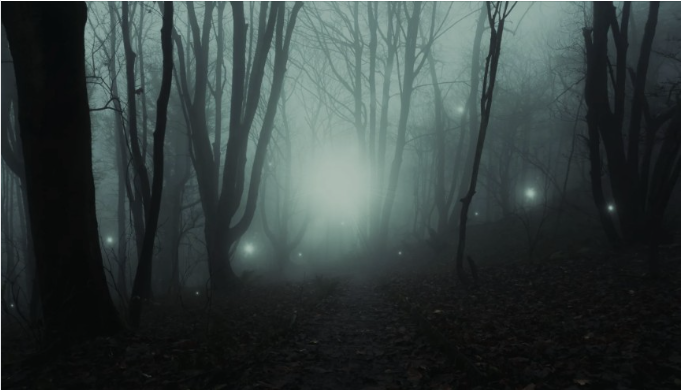
There are places in North Carolina where the past refuses to stay buried, where history and folklore blur into something stranger. One of those places lies just outside Jamesville in Martin County—a vanished timber town known as Dymond City, whose story didn’t end when its buildings burned and its people moved on. In the thick woods along Dymond Hill Road, travelers whisper of ghost lights that still dance in the dark, as if the town itself has a spirit unwilling to let go.

From Timber to Ashes: The Rise and Fall of Dymond City

Dymond City came to life in the late 19th century. The Jamesville and Washington Railroad and Lumber Company, formed in 1868, bought vast tracts of virgin forest in eastern North Carolina. By 1877, the “J & W Line” was complete, carrying timber, freight, and passengers. A community quickly formed—complete with a hotel, school, company store, and rows of houses for the workers.

By the early 1920s, the trees were nearly gone, stripped bare by years of logging. Newer railroads bypassed the area, and the lifeblood of the town drained away. The final blow came in April 1927, when a fire consumed much of what remained: the hotel, the school, and many homes. With its purpose gone and its heart burned out, Dymond City slowly faded. By the 1930s, the railroad tracks were pulled up, the land reclaimed, and the town itself erased from the map.

Except, of course, for the lights.


The Ghost Lights: What People Still See

As the town disappeared, stories began to surface. Travelers on the old road swore they saw lantern-like orbs moving through the woods, bobbing as though carried by invisible hands. Others described blue and orange fireballs, sometimes floating 10–15 feet above the ground, bouncing along the ghostly path where the railroad once ran.

  • Some believe the lights are the spirits of railroad workers still patrolling their tracks, unwilling to abandon their posts.
  • Others think they are the very soul of Dymond City, manifesting in flickers of flame to remind the world it once existed.
  • A few warn that the lights draw closer if you watch too long—that if you see them, you’d better run.

Reports place the lights most often near Dymond Hill Road off NC 171, about ten miles south of Jamesville, a quiet stretch where shadows gather thick and the woods seem alive with memory.


Folklore in Context: Other Lights of North Carolina

Dymond City’s mystery is not alone. North Carolina has long been a state of ghostly lanterns and spectral flames:

  • The Brown Mountain Lights in Burke County have baffled scientists and storytellers for over a century, glowing on mountaintops in hues of white, orange, and blue.
  • The Maco Light near Wilmington once terrified railroad passengers until the tracks were torn up in the 1970s. Locals swore it was the ghost of a signalman, decapitated in a wreck, forever swinging his lantern.

These stories, like that of Dymond City, mix history with haunting, creating a folklore tapestry as much cultural as it is supernatural.


History That Refuses to Fade

What we know for certain:

  • 1868: Jamesville & Washington Railroad and Lumber Company established.
  • 1877: Rail line completed, Dymond City begins to thrive.
  • 1920s: Timber exhausted, population dwindles.
  • April 1927: Fire destroys much of the town.
  • 1930s: Railroad tracks removed; town abandoned.

What we don’t know:

  • When exactly the first reports of the lights began.
  • Whether the lights are natural—swamp gas, reflections, electrical phenomena—or something that science cannot explain.
  • Why so many accounts are eerily consistent, decade after decade, of lantern-like orbs moving where no lanterns should be.

Why These Stories Matter

The ghost lights of Dymond City are more than just a spooky tale. They are a reminder that places, like people, have souls. When a town rises, thrives, and then is erased, its story doesn’t always vanish with it. Sometimes it lingers—flickering on the edge of sight, waiting for someone to remember.

Dymond City is just one of North Carolina’s haunted places. From ghost towns to forgotten railroads, from spectral soldiers to phantom hitchhikers, our state is full of stories that refuse to die.

And perhaps this is just the beginning. There are more hauntings, more whispers, more mysteries still to share.


References & Sources


A Story Still Waiting to Be Told

Dymond City may have burned down nearly a century ago, but its spirit still glows in the Carolina night. And this story is only one chapter in a much larger book—one that gathers the haunted places of North Carolina, the ghost towns swallowed by forests, and the lights and shadows that still move when the living aren’t looking.

If you’ve ever felt the thrill of a ghost story whispered in the dark, you’ll want to keep reading. Because Dymond City’s lights are just the beginning.


SEO Keywords:

North Carolina hauntings, Dymond City ghost lights, haunted towns in North Carolina, Jamesville NC folklore, NC ghost stories, paranormal lights NC, Brown Mountain Lights, Maco Light

Disclaimer

This blog is for informational and storytelling purposes only. The historical details have been drawn from available sources, while the paranormal accounts are based on folklore, oral tradition, and reported experiences. Interpretations of ghostly activity are subjective, and readers are encouraged to view these stories as part of North Carolina’s cultural heritage.


About the Author

A.L. Childers is a storyteller, researcher, and author who brings history to life through the lens of folklore, mystery, and lived experience. With a passion for uncovering forgotten stories—from hidden towns to whispered hauntings—Childers writes with warmth, depth, and curiosity. Her work invites readers to step into the shadows of history and consider what lingers just beyond the veil.

When she isn’t writing about ghostly lights or mysterious legends, she is creating books that blend culture, spirituality, history, and personal insight. Her upcoming work explores the hauntings of North Carolina in full detail, connecting the state’s past with the eerie tales that still captivate us today.