
In the heart of medieval Europe, during the terror of the Black Plague, death was everywhere — yet some deaths sparked even deeper fear. The legend of Anna Maria Von Stockhausen is one of the most haunting tales to emerge from this dark chapter of history. Condemned as both witch and vampire, Anna was bound in death, cursed in life, and feared even after fire and stake could not silence her.
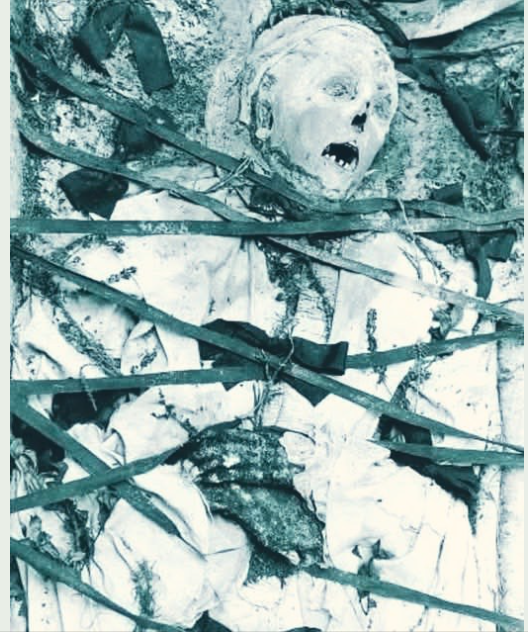
Witchcraft, Vampires, and the Plague
The Middle Ages were consumed with fear of the unknown. The Black Death (1347–1351) decimated Europe, wiping out nearly half the population. In such times of crisis, suspicion and superstition flourished. Women who were different, outspoken, or simply unlucky often became targets of witchcraft accusations. Meanwhile, vampire lore began to intertwine with tales of plague: unexplained deaths, bodies found “fresh” in the grave, and sightings of the dead walking at night.
Anna Maria Von Stockhausen’s story embodies both fears. She was accused not only of practicing witchcraft but of rising from the dead repeatedly, defying the laws of nature and terrorizing her village.
The Six Deaths of Anna Maria
The story is told in chilling detail:
- The Hanging – Anna was first executed by hanging. Yet when her grave was checked, it was found empty. Soon after, she was seen wandering, clawing her way from the earth.
- The Drowning – Captured again, she was tied to a plank and drowned in a lake. Villagers retrieved her lifeless body, but within two days the grave was open and empty.
- The Walking Corpse – Witnesses claimed to see her decaying body, dripping with worms, dirt, and water, staggering through her old home.
- The Stake – They drove a wooden stake through her heart, the traditional method of destroying vampires. A guard was posted at her grave, but when he failed to return, his corpse was found nearby — throat torn open, blood drained.
- The Fire – Finally, they tied Anna to a scarecrow in a cornfield and set her ablaze. But a sudden storm extinguished the flames, leaving her half-burned body intact.
- The Curse – A wandering vampire hunter and zealot confronted her during this storm. Rather than destroy her, he demanded answers. Her voice rasped with fury as she declared that the villagers had cursed themselves by burying her in defiled ground. Unless her request was honored — burial far from their village — she would never rest.
The people complied. Anna was buried elsewhere, and only then did the hauntings cease.
Folklore Meets Fear
The tale of Anna Maria Von Stockhausen fits within broader European vampire traditions:
- In Eastern Europe, corpses were often exhumed if villagers feared vampirism. Many were found staked, beheaded, or weighed down with stones.
- In plague-stricken Italy, some graves contain skeletons with bricks shoved into their mouths — believed to stop the “plague vampire” from spreading death.
- Across Germany and Austria, “witch burials” sometimes involved binding bodies with chains, ropes, or even nails to prevent resurrection.
Anna’s story captures all these fears in one: the witch, the vampire, the plague-bringer — a woman transformed into legend because her community could not explain her defiance of death.
Why Her Story Endures
Was Anna Maria Von Stockhausen truly cursed, or was she the victim of hysteria in a time of pestilence and fear? We may never know. But her tale endures because it forces us to confront humanity’s deepest terrors:
- The fear of women with power.
- The fear of the grave yielding back its dead.
- The fear that some curses never die.
Even now, centuries later, whispers of her wandering corpse and her terrible curse linger in European folklore archives. And in every chilling gust of wind across forgotten cemeteries, one can imagine her shadow rising again.
Disclaimer
The story of Anna Maria Von Stockhausen survives through legend, folklore, and fragmented historical references. While rooted in the context of witch trials and vampire hysteria of the Middle Ages, specific details of her life and repeated deaths cannot be independently verified through archival sources. Readers should approach this narrative as part of the rich tapestry of European folklore — where myth, fear, and history often intertwine.
About the Author
A.L. Childers is a writer, historian, and collector of forgotten truths. She specializes in weaving folklore, history, and storytelling into narratives that bring the past alive. Her work explores the mysteries of the human spirit, the legends of haunted places, and the echoes of history that still shape our present.

