Tag Archives: researcher

The Day I Stopped Demanding My Body to Surrender

(A story about weight, worry, and the quiet power of standing down)


There was a time—somewhere in my forties—when my body and I stopped speaking the same language.

I kept issuing commands.
It kept issuing warnings.

I called it stubbornness.
It called it survival.

I watched the numbers climb as if they were indictments. I measured myself in failures: pounds gained, clothes retired, photographs avoided. I searched for discipline the way one searches a dark house at night—tense, braced, convinced danger was hiding in every corner.

What I did not understand then—what no one explains when they tell you to try harder—is that my body had already been trying harder than I ever could.

It had learned a new job description somewhere between responsibility and burnout, between holding families together and swallowing stress whole.

Protect.
Conserve.
Brace.
Store.
Stay alert.

This wasn’t weakness.
It was intelligence shaped by pressure.

Cortisol, once a short-term messenger, had moved in permanently. Thyroid signals softened like voices speaking through walls. Insulin lost its rhythm. Hormones rewrote their agreements quietly, without ceremony. And my body learned a rule that would govern everything that came after:

Thin is unsafe.
Stored energy is survival.

So when I issued commands, my nervous system heard something else entirely.

Threat detected.

And it responded the only way it knew how—by holding on tighter.

The truth I wish I had known sooner is this: you cannot scare a body into letting go of armor it believes saved your life.

That understanding arrived not as a revelation, but as a sentence—simple, unremarkable, and devastatingly true:

I’m teaching my body it doesn’t have to protect me anymore.

The moment I said it, something shifted. Not dramatically. Not visibly. But internally, like a guard lowering a weapon—not because danger vanished, but because the watch had ended.

This was not surrender.
It was a truce.

I stopped yelling at symptoms like they were moral failings. I stopped interrogating every sensation, every fluctuation, every morning reading as if my body owed me proof of safety on demand. I realized I had been monitoring myself into anxiety—checking not for information, but for reassurance that never lasted.

The scale—that merciless witness—lost its authority. Not because it changed, but because I did.

Instead of asking Why isn’t this working yet?
I asked What if nothing is wrong?

Instead of I need to fix this,
I offered You’ve been carrying us for a long time.

Instead of demanding results,
I built predictability.

Morning came with warmth and routine. A simple bowl of beans—unimpressive, unmarketable, quietly powerful. Food that said: we are fed. We are steady. We are not in danger.

That small act did more than any punishment ever had. Blood sugar steadied before cortisol could spike. The gut spoke calmly to the brain. Bile flowed, inflammation softened, insulin listened again. Nothing flashy. Nothing extreme. Just a body being reminded—day after day—that emergency mode was no longer required.

And the changes, when they came, arrived like whispers.

Bloating eased.
Waists softened.
Clothes told truths the mirror never could.
Cravings lost their urgency.

The scale lagged behind, as it always does when healing comes first. Cortisol needed to come down. Inflammation needed to quiet. The system needed time to believe the threat was over.

But when that switch began to flip, something miraculous happened.

Weight loss became boring.

No drama. No heroics. No white-knuckled restraint. Just a body finally releasing what it no longer needed to carry.

This is the part no one tells you: the goal was never getting back to 140.

The goal was getting back to safety.

And when the nervous system feels safe, metabolism follows—every single time.

If you are standing where I once stood—exhausted, vigilant, convinced you failed because your body did not obey—hear this clearly:

You did not lose control in your forties.
You held everything together.

Your body paid the price so you could keep functioning.

Now it is your turn to let the system stand down. Not with force. Not with fear. But with steadiness. With boring routines. With fewer alarms. With trust.

Say it once, if you need an anchor. Say it quietly, without expectation:

I’m teaching my body it doesn’t have to protect me anymore.

This isn’t a diet.
It’s a ceasefire.

And ceasefires are where rebuilding begins.

The Quiet Practice That Changed Everything

(Five simple recipes, why they work, and what they teach the body)

This wasn’t about food rules.
It was about sending a signal.

Every morning, before the day asked anything of me, I gave my body the same message:

We are fed.
We are steady.
We are not in danger.

That message matters more than calories ever could.


Why Beans (And Why in the Morning)

Beans are not magic.
They are predictable.

They:

  • stabilize blood sugar early
  • reduce cortisol-driven glucose spikes
  • bind bile (which carries inflammatory waste out of the body)
  • support insulin sensitivity
  • calm the gut–brain axis

Morning matters because cortisol is naturally highest then.
This is not about suppressing it — it’s about not amplifying it.


Why We Soak Beans (And Why It’s Not About “Clean Eating”)

Soaking beans:

  • reduces compounds that cause bloating
  • improves mineral absorption
  • makes them gentler on digestion
  • lowers stress on an already taxed system

This isn’t about perfection.
It’s about making nourishment easier to receive.

Counter vs Fridge Soaking (Simple Truth)

  • Navy, cannellini, great northern, black-eyed peas:
    ✔️ safe to soak on the counter 12–24 hours (cool kitchen)
  • Lima (butter) beans:
    ✔️ best soaked in the fridge
    ✔️ counter soak is fine short-term (8–10 hours) if needed

If they smell sour or look foamy — discard.
Otherwise, you’re fine.


When to Eat These

  • Morning only
  • Ideally within 30–60 minutes of waking
  • Before supplements
  • Before stress
  • Before decision-making

This is not fuel for output.
This is permission to stand down.


Five Simple Recipes (Nothing Fancy, Nothing Loud)

1. Butter Bean Morning Bowl

(The most calming option)

Ingredients

  • 1 cup cooked butter (lima) beans
  • Pinch of sea salt
  • Warm water or bean broth

How
Warm gently. Lightly mash. Eat slowly.

Why it helps

  • Excellent bile binding
  • Very low inflammatory response
  • Signals safety to the nervous system
  • Especially supportive during hormonal shifts

Best time
Early morning, on quiet days or high-stress days.


2. Navy Bean Mash

(The steady baseline)

Ingredients

  • 1 cup cooked navy beans
  • Sea salt
  • Optional splash of warm water

How
Mash until smooth and warm.

Why it helps

  • Strong soluble fiber
  • Stabilizes blood sugar
  • Reduces cortisol spikes
  • Easy to digest even when stressed

Best time
Daily staple. This is your “default.”


3. Cannellini Bean & Rice Bowl

(For mornings when stress is already high)

Ingredients

  • ¾ cup cannellini beans
  • ¼ cup plain white rice
  • Sea salt

How
Warm together. Eat calmly.

Why it helps

  • Prevents blood sugar drops
  • Supports adrenal balance
  • Reduces urgency-driven cravings later

Best time
After poor sleep or emotionally heavy days.


4. Great Northern Bean Soup

(For digestion and bile flow)

Ingredients

  • 1 cup great northern beans
  • Warm water or light broth
  • Pinch of salt

How
Heat into a thin soup. Sip and eat.

Why it helps

  • Supports liver and gallbladder flow
  • Reduces inflammatory load
  • Gentle when digestion feels “stuck”

Best time
When bloated, sluggish, or inflamed.


5. Black-Eyed Peas (Plain & Soft)

(Hormone-friendly and grounding)

Ingredients

  • 1 cup fully cooked black-eyed peas
  • Sea salt

How
Warm thoroughly. Chew well.

Why it helps

  • Supports estrogen clearance
  • Gentle endocrine support
  • Traditionally grounding and stabilizing

Best time
During perimenopause or hormonal fluctuation weeks.


What This Is Doing (Even If You Don’t Feel It Yet)

At first, the changes whisper.

  • bloating eases
  • waist softens
  • cravings lose urgency
  • digestion becomes more predictable

The scale lags behind because:

  • cortisol must come down first
  • inflammation must quiet
  • insulin signaling must normalize

But once safety is established?

The body lets go without being forced.


The End Result (The Part That Actually Matters)

This isn’t about beans.

It’s about what they represent.

  • consistency without punishment
  • nourishment without surveillance
  • food without fear

You’re not “trying to lose weight.”

You’re teaching your body:

You don’t have to protect me anymore.

And when the nervous system believes that?

Armor becomes unnecessary.
Holding on becomes optional.
And change becomes boring — in the best possible way.


Disclaimer

This article is for educational and informational purposes only and is not intended to diagnose, treat, or replace medical care. Always consult a qualified healthcare professional before making dietary or lifestyle changes.


About the Author

A.L. Childers is a writer and researcher exploring thyroid health, stress physiology, metabolism, and the unseen ways women’s bodies adapt to survive prolonged responsibility. Her work dismantles blame-based wellness culture and replaces it with compassion, context, and truth.


When Independence Cost a Dollar and a Dream


There are moments in motherhood that arrive quietly but land like thunder.

This was one of them.

My youngest twin—twenty-seven years old—has purchased a home. In this economy. In a time so unforgiving that even the word starter feels like a relic from another century. It is an accomplishment that deserves to be spoken aloud, admired, honored. I am proud of her in the way that fills the chest and tightens the throat at the same time.

And yet—there it is—the ache.

Because pride and grief sometimes share the same chair.

This economy is ruthless. Not difficult. Not inconvenient. Ruthless. It does not reward youth the way it once did. It does not offer freedom cheaply. It does not allow mistakes without punishment. Housing is no longer a milestone—it is a miracle. And watching your child secure something so rare feels like witnessing both victory and loss in a single breath.

When I was sixteen, I left home.

Not dramatically. Not ceremoniously. I simply went. I had my own apartment. A used car. Paid my electric bill. My car insurance. My groceries. I even attended community college. I was free in the way only the young and unafraid can be—free because the world had not yet learned how to price every inch of air.

It wasn’t because I was wealthy. It wasn’t because I was protected. It was because the numbers made sense back then. They no longer do.

Today, a young person can work endlessly and still remain trapped. Rent devours paychecks. Insurance eats ambition. Groceries demand negotiation. Independence has been turned into a luxury item, and no one pretends otherwise.

So her father and I did what parents are rarely praised for doing anymore—we let our children stay.

No rent. No utilities. No pressure—except the kind that builds, not breaks. The only bills they paid were the ones they chose. The rest went into savings. Into preparation. Into a future we knew the world would not hand them gently.

They also went to work where their father works—a union job that pays more than most four-year degrees promise anymore. Thirty-five dollars an hour. Time-and-a-half after eight hours in a day, not forty in a week. Double time after ten. Triple pay on holidays. The kind of structure that once built the middle class and now survives like a rare species.

And because of that—because of planning, patience, and opportunity—she bought a home.

I should be celebrating without pause.

But there’s a part of me that wishes she would stay just a little longer. Stay in the good life. The one I never had offered to me, even though I somehow managed to afford it anyway. Stay in the safety that took generations of trial and error to learn how to provide.

My childhood was… complicated.

My mother was a single parent doing the best she could with the tools she had. But there were too many men passing through the house. Too much instability. Too much responsibility placed on shoulders still learning how to carry themselves. By the time I was ten, I was caring for my younger sister—five years my junior—cleaning the house, feeding her, managing tasks that children should not have to manage.

If I failed, I was punished. If I succeeded, it was expected.

And yet—those years shaped me.

They gave me skills. Grit. Awareness. Independence sharpened early. I learned how to survive before I learned how to rest. I became a true Gen Xer—resourceful, skeptical, self-reliant, allergic to nonsense.

A Scorpio. A free spirit. A wild child who wasn’t taking anyone’s shit.

And I wouldn’t trade it. Not for anything.

How many people can say they were sixteen in the 1980s, paying their own bills, driving their own car, answering to no one but themselves—and still felt free? The eighties were a strange kind of golden hour. Not perfect. Not fair. But possible.

That world is gone.

So when my daughter closes the door on her own home, I stand in the doorway of memory. Proud beyond words. Tender beyond reason. Grateful that she has what I never did—and quietly mourning the simplicity of a time when independence didn’t require permission from a bank, a union contract, and perfect timing.

This is what parenting looks like in an unforgiving economy.

You don’t push them out.
You build a runway.
You give them what you never had.
And when they finally fly, you wave—even as your heart asks them to circle once more.


Disclaimer

This blog reflects personal experience and generational observation. It is not intended to diminish the struggles of any generation or romanticize hardship. Economic conditions vary widely, and individual outcomes are shaped by many factors. This piece is offered as reflection, not prescription.


References & Context

  • U.S. Bureau of Labor Statistics – Historical wage comparisons
  • Federal Reserve Economic Data (FRED) – Housing affordability index
  • Pew Research Center – Generational economic mobility
  • National Association of Realtors – First-time homebuyer trends
  • Economic Policy Institute – Wage growth vs. cost of living (1980s–present)

About the Author

A.L. Childers is a Gen X writer, researcher, and storyteller whose work blends lived experience with cultural reflection. Raised in an era of latchkeys and learned independence, she writes about family, economics, power systems, and the quiet emotional truths that live beneath major life transitions. Her work honors resilience without glorifying struggle and believes deeply in giving the next generation what many never received.


ABOUT THE AUTHOR — A.L. Childers

Audrey Childers is a published author, thyroid advocate, wellness writer, and founder of TheHypothyroidismChick.com.
After years of misdiagnosis, exhaustion, weight gain, and “your labs are normal,” she rebuilt her health — and now helps other women do the same.

Books include:

The Keto Autoimmune Protocol Healing Book for Women

Hashimoto’s Crock-Pot Recipes

 Reset Your Thyroid: 21-Day Meal Plan

A Women’s Holistic Holy Grail Handbook for Hypothyroidism

Fresh & Fabulous Hypothyroidism Body Balance

The Witch’s Almanac Cookbook (2026)

The Lamp of Christmas Eve

The Lamp at the End of the Corridor: A Story of Rejection, Redirection, and Resurrection for the Misfit Soul

The Girl the Darkness Raised: A Memoir of Scarcity, Survival, and Becoming

The Girl in the Mirror Is Thirteen Again: The House That Yelled and the Woman Who Finally Heard Herself 

 Healing Stews & Enchanted Brews (Original Edition)

Healing Stews & Enchanted Brews: Holiday Magic

My Grandmother’s Witchy Medicine Cabinet

Enchanted Realms: A Comprehensive Guide to Witchcraft & Sorcery

Enchanted Realms: A Comprehensive Guide to Witchcraft & Sorcery

Hashimoto’s Crock-Pot Recipes

 Reset Your Thyroid: 21-Day Meal Plan

A Women’s Holistic Holy Grail Handbook for Hypothyroidism

Fresh & Fabulous Hypothyroidism Body Balance

The Lies We Loved : How Advertising Invented America

Archons: Unveiling the Parasitic Entities Shaping Human Thoughts

The Hidden Empire

Nightmare Legends
The Girl the Darkness Raised: A Memoir of Scarcity, Survival, and Becoming

Whispers in the Wires

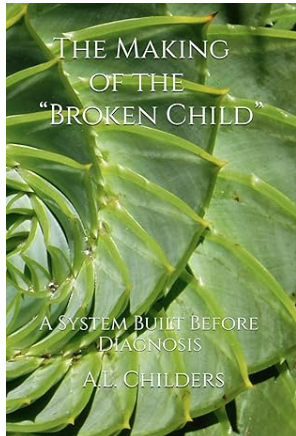
The Making of the “Broken Child”: A System Built Before Diagnosis

Should Marriage Licenses Expire Every 5 Years? A Funny Thought… Backed by Real Stats

Every so often, a comment pops up on social media that’s so funny and so thought-provoking, it deserves its own blog post.

Recently, someone wrote:

“A marriage license should expire every 5 years so you can decide if you even wanna renew it or not.”

😂 Now, after being married for 30 years and raising three kids, I’ve earned the right to laugh and weigh in.

Because honestly… this idea is kind of brilliant — and backed by more reality than you’d think.


📊 Marriage Renewal Cycles: The DMV Meets Netflix

Let’s be real. We renew:

  • Our driver’s licenses every few years 🚗
  • Our Netflix subscriptions monthly 🍿
  • Our car insurance yearly 🚘
  • Our iPhone updates about every 12 seconds 📱

But marriage? We sign one contract in our 20s, with no upgrades, no new terms, no renegotiation — and then hope it still works 30 years later. 😅

According to the CDC’s National Vital Statistics Reports, about 43% of first marriages end within 15 years. And per the U.S. Census Bureau, the median duration of a marriage in the U.S. is 19.8 years.

Meanwhile, psychologists have identified major “relationship satisfaction shifts” at roughly the 7-year, 20-year, and 30-year marks. (Think of them as the “major OS updates” in a long-term relationship.)

👉 So yeah, a 5-year renewal system might not be the worst idea. It would be like:

“✅ Your marriage is set to expire on March 12. Would you like to renew for another 5 seasons or let this series gracefully end?”
🤣


📝 The Real Talk Beneath the Humor

While this idea is funny, it also highlights something serious: relationships do evolve, and the people inside them do change.

A structured “check-in” — whether legal or emotional — could give couples space to reflect, grow, or even amicably part ways, instead of waiting until something breaks beyond repair.

It’s not about replacing commitment with casualness. It’s about updating the contract to reflect reality — something businesses, software, and governments do all the time.


⚠️ Disclaimer

This blog is written with humor and social commentary in mind. It’s not legal advice, relationship therapy, or an official policy recommendation. Statistics and references are provided for context and accuracy. If you’re navigating relationship challenges, please consult a qualified professional or counselor.


📚 References & Resources

  • CDC National Vital Statistics Reports: https://www.cdc.gov/nchs/nvss/
  • U.S. Census Bureau, Current Population Survey — Marriage Duration Data: https://www.census.gov
  • Journal of Marriage and Family — Relationship satisfaction timelines and “seven-year itch” research
  • Pew Research Center — Marriage trends and divorce rates over time

✍️ About the Author

Audrey Childers is a writer, researcher, and storyteller who loves mixing humor with hard truths. With decades of lived experience, a sharp investigative mind, and a soft spot for a good meme, she explores the intersections of history, society, and human behavior. When she’s not writing, you’ll probably find her sipping coffee, laughing at internet comments, or questioning why we renew car tags more often than we check in on our relationships.

🥩🥑 Fat Isn’t Just Fat: How It Talks to Your Cells and Shapes Your Health

For decades, fat was painted as the villain in our diets. But science now reveals something fascinating: fat isn’t just stored energy—it carries instructions that tell your body how to use it. Some fats encourage energy use and fat burning, while others push your body toward storage and disease. Understanding the difference could be the key to preventing conditions like diabetes, heart disease, and metabolic syndrome.


The Two Faces of Fat: Saturated vs. Unsaturated

  • Saturated fats (found in red meat, butter, and cheese) are tough for cells to break down. Your body often “tucks them away” into storage rather than burning them for fuel.
  • Unsaturated fats (like those in olive oil, nuts, and avocados) are easier for your body to use. They not only provide energy but also signal your body to burn more fat overall.

This biochemical difference explains why diets rich in olive oil and plant-based fats—such as the Mediterranean diet—are consistently linked to better heart health and weight management.


When Fat Turns Against You: Insulin Resistance

Too much stored fat comes with a dangerous consequence: insulin resistance. Here’s how it works:

  1. Excess fat signals muscles to stop using glucose (sugar) for energy.
  2. Glucose builds up in the blood, forcing the pancreas to pump out extra insulin.
  3. Over time, the pancreas wears out, blood sugar rises, and type 2 diabetes sets in.

This cascade is why obesity, poor diet, and inactivity are so strongly linked to diabetes risk.


The Power of Movement

The good news? Exercise flips the switch.
When muscle fibers stretch and contract, they open the door for glucose to enter cells—even without insulin’s help. This lowers blood sugar and improves insulin sensitivity.

Unfortunately, weight gain and sedentary habits often go hand-in-hand. Even lab mice fed a high-fat “Western diet” grow pudgy and sluggish, spending more time sitting than scurrying. For humans, the pattern is similar—leading to metabolic syndrome (syndrome X): a dangerous cluster of conditions including insulin resistance, high blood pressure, and heart disease.


How to Outsmart Fat

  1. Prioritize unsaturated fats – Cook with olive oil, snack on nuts, add avocado.
  2. Limit saturated fats – Cut back on processed meats, fried foods, and heavy dairy.
  3. Stay active daily – Even walking improves glucose uptake and insulin sensitivity.
  4. Balance your plate – Pair healthy fats with lean proteins and high-fiber carbs.

Small daily choices add up to big long-term protection.


References & Resources


SEO Keywords

types of fat in diet, saturated vs unsaturated fats, fat and insulin resistance, how fat affects diabetes, metabolic syndrome causes, healthy fats for energy, Western diet risks, how exercise helps insulin resistance.


Disclaimer

This article is for educational purposes only and should not be considered medical advice. Always consult your doctor or a qualified healthcare professional before making changes to your diet, exercise, or medical care plan.


About the Author

A.L. Childers is an author, researcher, and wellness advocate who writes about the intersection of science, history, and everyday life. Drawing from both personal health experiences and professional research, she makes complex topics accessible to readers seeking better health and deeper understanding.

To My Readers: A Warm Message from the Heart

As a writer, researcher, and fellow human navigating this complex world, I want to take a moment to speak directly to you—my readers. Writing is a deeply personal journey, but it’s also one of the most vulnerable acts. When I release a book, I’m sharing a piece of myself, my experiences, my research, and the truths I’ve uncovered so far. But let me be clear: I don’t claim to know it all.

This journey of discovery is just that—a journey. Each of us is on a unique path, finding meaning in our own time and way. If you’ve picked up my book and feel it doesn’t answer all your questions or align with your expectations, I ask for your understanding and encourage you to keep searching. No single book can encapsulate the vast mysteries of life or hold all the answers we seek.

Why I Write
I write to share my perspective, to spark curiosity, and to open doors to new ways of thinking. My words are not the final destination but a stepping stone—an invitation for you to explore further, question deeper, and find what resonates with your own truth.

These books will reflect where I am on my path right now. It’s a snapshot of my growth, my understanding, and my reflections at this point in time. And while it may not speak to everyone in the same way, I hope it plants a seed of thought, a question, or even a challenge that inspires you to dig deeper.

To My Critics
I’ve learned that not everyone will agree with what I write, and that’s okay. We live in a world of diverse perspectives, and healthy debate is a cornerstone of growth. But sometimes, criticism can feel harsh, even cruel. It’s one thing to disagree—it’s another to approach that disagreement with negativity and hostility.

I kindly ask that you approach my work with the same curiosity and open-mindedness that I bring to writing it. If you don’t agree, let that disagreement inspire you to find new information, challenge your assumptions, or even write your own book. Growth comes from exploration, not condemnation.

Let’s Keep Seeking Together
We’re all in this together, navigating the chaos, beauty, and complexity of life. My hope is that this book, and my writing in general, serves as a light along the way—a reminder that we’re all searching, all learning, and all evolving.

If you feel something is missing in my book, let that absence be a spark. Seek out new voices, dive into the unknown, and keep asking the tough questions. Growth is not about finding all the answers; it’s about having the courage to keep searching.

Gratitude for the Journey
To those who have supported my work, thank you. Every book you purchase, every kind of review, and every encouraging word fuels my passion and allows me to continue writing. You are the reason I can keep pursuing this dream, and I am endlessly grateful.

To those who feel compelled to criticize, I appreciate your honesty. But I ask for grace as we all walk this path together. Writing is my way of contributing to the greater conversation, and I hope you’ll engage with it constructively, with curiosity and respect.

Let’s remember: we’re all human, all searching for meaning, and all on different timelines. My book may not provide everything you’re looking for, but it’s my sincere hope that it offers something—a question, a spark, a moment of clarity.

With love, encouragement, and gratitude,
A.L. Childers

What Happens When a Mother Breaks: Gut, Brain, Chemicals & the Unseen War on Women’s Health

No one warns you that one day the ordinary world can turn hostile—stores, scents, cleaning aisles, even the air itself—until suddenly the familiar becomes venom and your own mind becomes the weapon.


There are chapters of a woman’s life that arrive quietly—without ceremony, without warning—and yet divide everything into before and after. Mine began not with catastrophe, but with a whisper: a strange new fear clinging to the edges of motherhood, tightening its grip each day until the world itself felt poisonous. I never imagined that the birth of my twins would be the doorway into a labyrinth of fear I could not name. I never imagined that one day I would stand in the grocery store, frozen, pulse racing, unable to step past the cleaning aisle because the scent of chemicals felt like death reaching for my throat. I never imagined that driving past a store could send my heart spiraling into terror or that touching a doorknob could ignite the “what if” machine that would later become the tyrant of my days.

I had always dreamed an ordinary woman’s dream—raise children, build a small business, cook meals, kiss scraped knees, and maybe someday retire with a soft blanket and a warm porch. But life does not always honor our daydreams. Sometimes it rips the ground from beneath our feet. After my twins were born, I began to lose my footing in ways I couldn’t explain. I felt the shift inside me—the tremor, the crack, the slant of the world—as if something in my body had unlatched itself and let madness seep in.

Was I crazy? The question pulsed through me day and night. My thoughts were not my own. They swarmed around me like bees, stinging every quiet moment with panic. What if I die? Who will raise my girls? What if they touched poison? What if I touched poison? What if this kills us? What if? What if? What if?

It felt like falling into a well with no bottom. And the strangest part? I looked “fine.” I functioned. I smiled. I hid the chaos so well that even my closest friends never fully understood the hell I was living inside.

The world would have gladly labeled me crazy if they knew. Some would have treated me like a witch from another century—stoned, burned, or locked in a padded room if society still allowed it. Others would have slapped a diagnosis on me with the ease of signing a receipt. Doctors offered pills like consolation prizes—antidepressants, antipsychotics, “it’s all in your head” medications—without ever asking why my life had collapsed in the first place.

But something in me refused the quick fix. I felt it in my soul that many of these doctors were only placing a bandage on a bullet wound. They treated the symptom, never the woman. They medicated the smoke but never searched for the fire.

It was motherhood that broke me, yes—but it was also motherhood that made me fight.

In those years I lived in constant fight-or-flight. I cleaned homes for work—me, the woman terrified of chemicals, scrubbing strangers’ kitchens while my heart galloped inside my chest. I would flee jobs I loved because a single bottle of cleaner left out in the open could send my body into a spiral. I would quit opportunities. I would abandon dreams. The world became a maze of dangers and I was trapped inside my own skin.

My only relief came in sips of beer or in the rare Xanax a doctor reluctantly prescribed. And still, I wondered—Why is this happening to me? Why now? Why after childbirth? Why after the diagnosis of hypothyroidism? Why after autoimmune symptoms began to bloom beneath my skin like dark flowers? What broke inside me that I cannot seem to mend?

My salvation came in the most unexpected place—research.

I read late into the night, long after the children slept, searching for clues like a detective desperate to solve her own mystery. My hands shook the first time I read Dr. Mercola’s article on the gut–brain connection and the hidden role of streptococcus and autoimmune chaos in psychiatric disorders like OCD.

Could my mind’s unraveling be the echo of something biological—something happening in the gut rather than the soul? Could childbirth, thyroid dysfunction, infections, toxins, inflammation, and our modern chemical-soaked world all collide in ways doctors refused to acknowledge?

And as I looked around—at the poisoned water, the pesticide-bathed food, the polluted air, the chemical-filled shots and medications—I realized something:

Of course women are sick.
Of course our immune systems are collapsing.
Of course our minds are breaking.

We are living inside a double-edged sword—fed toxins on one side and medicated for the consequences on the other.

The gut, I learned, is not merely a digestive organ. It is a second brain. It makes more serotonin than the brain in your skull. It houses trillions of bacteria that shape mood, thought, hormones, immunity, and survival itself. When the gut breaks, the mind follows. When the gut inflames, the spirit trembles. When the gut leaks, fear leaks with it.

And slowly, painfully, piece by piece—my story began to make sense.

I discovered choline sensitivity. Serotonin deficiencies. Thyroid imbalances. Autoimmune triggers. I learned that the body keeps score in ways far older than language, far deeper than psychology. I learned how chemicals, trauma, hormones, and pregnancy can ignite a wildfire in the brain.

I learned that OCD, for me, wasn’t insanity.
It was injury.
It was inflammation.
It was survival misfiring in the dark.

And perhaps most importantly—I learned that I was not alone.

So I began writing. Books. Recipes. Blogs. Essays. Notes. I wrote because writing was the only way I knew to stitch myself back together. I wrote because the world was too silent about what women endure. I wrote because food became medicine again—bone broth, minerals, fats, herbs, ferments. I wrote because Hippocrates was right: Let food be thy medicine and medicine be thy food.

And now I write this—this sprawling tale of madness and meaning—because someone else out there is quietly falling apart and believing she is the only one.

You are not alone.

Your body is talking.
Your fear has roots.
Your healing has a beginning.

And this moment—right here, right now—
is a moment in time that cannot be erased.
Because you lived it. Because I lived it. Because we are here, reading these words together.

Healing begins with awareness. It grows with questioning. It deepens with rewriting the stories we were told about ourselves. It expands with courage. And it becomes real when we stop hiding.

This is my story.
This is my offering.
This is my moment in time.

And now—maybe—it becomes yours too.


FOLLOW FOR MORE

If this resonated, follow me for more truth-telling, trauma healing, thyroid wisdom, autoimmune insights, women’s stories, and powerful emotional medicine.


If this found you, it was meant for you.

Follow me for more healing, truth, and fire. Share this blog.

If this blog helped you, share it — your friends, sisters, coworkers, and fellow exhausted women need this truth.

Healing happens in community. Let’s grow ours. 

Explore More From A.L. Childers:

 Official Author Website: TheHypothyroidismChick.com

 Amazon Author Page: https://www.amazon.com/author/alchilders

 Featured Books:
 Reset Your Thyroid: 21-Day Meal Plan
• A Woman’s Holistic Holy Grail Handbook for Hypothyroidism & Hashimoto’s
• The Hidden Empire: A Journey Through Millennia of Oligarchic Rule
• The Girl in the Mirror Is Thirteen Again

If you’re not following me yet… you should.

 Subscribe below and get: ( Why not? It’s FREE)

  • New blogs delivered straight to your inbox
  • Behind-the-scenes book updates
  • Early access to new releases
  • Free guides for thyroid healing, emotional wellness, and women’s empowerment
  • Exclusive content I never post publicly

This story is based on personal experience and research.
It is for educational and emotional support,
not medical advice.
Always consult a qualified healthcare provider
for diagnosis, treatment, or medication changes.


AUTHOR BIO —

A.L. Childers is a bestselling author, researcher, and advocate for women’s health, specializing in thyroid disease, autoimmune dysfunction, trauma recovery, and emotional healing. She is the creator of TheHypothyroidismChick.com, where her research-based insights and raw storytelling empower women to reclaim their health. Author of A Survivor’s Cookbook Guide to Kicking Hypothyroidism’s Booty, Reset Your Thyroid, Hypothyroidism Clarity, and many others, she blends science, soul, and survival into every word she writes.


DISCLAIMER

This blog is for educational and entertainment purposes only and reflects the personal experiences and research of the author. It is not medical advice. Always consult a qualified healthcare provider before making changes to medication, diet, supplements, or treatment. The author assumes no liability for decisions made based on this content. By reading this blog, you agree to these terms.


13263952_10209551660887161_2954231304874132931_n