Tag Archives: spirituality

🌟 Different Names, One Force: The Universal Energy That Connects Us All 🔥

Throughout history, humanity has used different languages, rituals, and belief systems to describe the same unseen force — an energy that flows through us, around us, and often responds to our intentions.

The image above captures this beautifully:

“Witches call it spells. Christians call it prayer. Spiritualists call it manifestation. Atheists call it the placebo effect. Scientists call it quantum physics. Everyone’s arguing over its name. No one is denying its existence.”

Across centuries, cultures have pointed to something beyond the physical — a mysterious yet powerful force that can heal, inspire, transform, and unite.

🧙‍♀️ Witches Call It Spells

In ancient pagan and folk traditions, “spells” were not about dark magic, but about focused intention. Whether lighting a candle, chanting words, or using herbs, spellwork was a structured way to channel desire into action. Anthropologists have documented spellcraft across civilizations — from the Greeks invoking Hecate to medieval cunning folk helping villages with healing charms.

👉 Fun fact: Many early “spells” were simply prayers or petitions written in poetic language — something not so different from affirmations today.


✝️ Christians Call It Prayer

Prayer has been a cornerstone of Christianity for over two millennia. From whispered prayers of early believers in Roman catacombs to grand cathedral ceremonies, prayer is viewed as a direct line to the divine. Studies have shown that prayer can reduce stress, promote healing, and even bring communities together during crises.

👉 Historical note: The earliest Christian prayers were adapted from Jewish traditions, blending ritual with heartfelt devotion — another example of universal energy expressed through culture.


Spiritualists Call It Manifestation

Modern spiritual movements, especially those influenced by New Thought philosophy in the late 19th and early 20th centuries, began using the word “manifestation” to describe consciously shaping reality. Authors like Wallace Wattles and Neville Goddard popularized the idea that focused thought can bring about change. Today, this concept thrives in the form of vision boards, affirmations, and “law of attraction” practices.

👉 The core idea is the same: energy follows intention.


🧠 Atheists Call It the Placebo Effect

Even without religious or spiritual beliefs, the power of the mind is undeniable. The placebo effect — documented extensively in modern medicine — shows that belief alone can trigger physiological changes. Patients given sugar pills often experience real healing because their minds expect improvement.

👉 It’s not magic — it’s the brain’s ability to influence the body.


⚛️ Scientists Call It Quantum Physics

While quantum physics doesn’t “prove” manifestation or magic, it does reveal a strange, interconnected universe where observation affects reality. Phenomena like the observer effect and quantum entanglement have sparked philosophical debates for decades.

Some theorists and spiritual thinkers believe these discoveries offer a scientific lens through which to view age-old mystical concepts.


🌐 One Force, Many Names

No matter what you call it, the idea remains: there is a shared energy connecting all things. Across time and culture, humans have tried to explain and harness it — through spells, prayers, rituals, affirmations, experiments, or pure belief.

Instead of arguing over terminology, perhaps it’s more powerful to recognize the common thread. We’re all participating in the same mystery, just using different languages.


📚 About the Author

Audrey Childers (A.L. Childers) is a writer, researcher, and seeker of timeless truths. Her work explores the intersection of history, spirituality, science, and personal transformation. She has authored numerous books on hidden histories, spiritual awakenings, health, and cultural evolution — inviting readers to see the world through a deeper lens.


📝 Disclaimer

This blog explores cultural, historical, and philosophical perspectives for educational and inspirational purposes. It is not intended as medical, scientific, or religious advice. Always consult appropriate professionals for guidance in those areas.


📚 References & Resources

  • Frazer, James. The Golden Bough (1890) – Classic anthropological work on magic and religion
  • Goddard, Neville. Feeling is the Secret (1944) – Manifestation philosophy
  • New Testament (Multiple passages on prayer and faith)
  • Benson, Herbert. “The Relaxation Response.” Harvard Medical School (1970s) – Mind-body research
  • Einstein, A. & Bohr, N. – Early 20th-century debates on quantum theory

📢 Explore My Books

If you’re fascinated by how spirituality, history, and science intertwine, my books take you on unforgettable journeys through time, belief, and hidden knowledge. Each title uncovers layers of human experience that mainstream narratives often overlook.

👉 Browse my collection on Amazon and find your next transformative read today.


Different rituals. One force. It’s all energy.

✨🕯️ Banish the Bad Vibes: A Cleansing Spell to Break Negative Contacts (Plus 4 More You’ll Love)

Because sometimes, a bubble bath and a little intention can shift your entire energy field.


Discover a simple yet powerful ritual bath spell to break negative contacts, plus 4 more cleansing rituals to restore your energy, release attachments, and invite light back into your life.


🌿 The Night the Energy Felt Heavy

It was one of those evenings where the air felt thick—like the room itself was carrying someone else’s mood. I had just come home from a draining conversation that left my chest tight, my thoughts tangled. Even after the person was gone, their energy wasn’t.

I drew a hot bath. The sound of water filled the silence like a steady heartbeat. On the counter sat a small bowl of pink salts, a scoop of baking soda, and the intention that tonight…I’d let go.

As I held my right hand over the mixture, I closed my eyes and pictured a stream of white light pouring down through my palm, infusing the salts with warmth. The moment I poured them into the water, the room seemed to hum. Steam rose like a veil. I stepped in.

“As this water washes over me, I break contact with all negativity.”

I whispered it once, then again. By the third time, the heaviness had begun to loosen its grip.

🛁 Spell to Break Negative Contacts

Ingredients:

  • 1 hot bath
  • 1 cup Epsom or Dead Sea salts
  • 1 cup baking soda

Instructions:

  1. Hold your right hand over the salts and visualize purifying white light flowing into them.
  2. Pour the salts and baking soda into your bath and swirl them clockwise.
  3. Step into the bath and, as you pour water over your body, repeat aloud: “As this water washes over me, I break contact with all negativity.”
  4. Close your eyes. See yourself surrounded by a glowing white light, dissolving cords, attachments, or stagnant energy.
  5. When you’re done, drain the water and imagine everything you released swirling away down the drain.

🌿 Why this works: Ritual bathing is one of the oldest spiritual practices—used in Babylon, Ancient Greece, and Indigenous cultures—to symbolically cleanse the spirit and body. Salt neutralizes energy, while water carries it away.


🪄 4 More Cleansing Spells to Restore Your Energy

1. 🕯️ The Black Candle Burn

  • Light a black candle (symbol of banishing) and place it on a fireproof plate.
  • Write the name or situation you want to release on a small piece of paper.
  • Fold it away from you three times, place it under the candle, and let the wax drip over it as you say: “What was tied is now released. What was heavy is now light.”
  • Let the candle burn safely down. Dispose of the paper outside or bury it.

📝 Why it works: Black candles are traditionally used to absorb and neutralize negativity, making this spell a favorite for energy workers.


2. 🌬️ The Cord Cutting Visualization

  • Sit quietly. Picture a cord of energy connecting you to the person or situation.
  • Visualize holding a golden pair of scissors.
  • With love and clarity, cut the cord, watching both ends retract and heal with light.
  • Say: “I release you with love. I reclaim my energy now.”

Why it works: This method is rooted in modern energy healing but mirrors ancient symbolic “severing” rituals used across cultures to break unhealthy attachments.


3. 🍃 The Herbal Sweep

  • Bundle cleansing herbs like rosemary, lavender, sage, or cedar with a natural string.
  • Sweep the bundle gently over your body from head to toe while repeating: “With this sweep, I clear and release what does not serve me.”
  • Hang the herbs to dry outside afterward to release the absorbed energy.

🌿 Why it works: Herbal cleansing is an ancient European, Indigenous, and Mediterranean practice believed to bind and absorb negative influences.


4. 🧂 The Doorway Salt Line

  • Sprinkle a thin line of salt across doorways and windowsills while saying: “Only peace may enter here. Only love may remain.”
  • Leave overnight, then sweep up and discard outside.

🧂 Why it works: Salt has been used in folk magic, Shinto, and Mediterranean traditions to create protective barriers against negative energies and spirits.


🌐 References & Inspirations

  • Encyclopedia of 5,000 Spells by Judika Illes
  • Cunningham’s Encyclopedia of Magical Herbs
  • Historical bathing rituals in Babylon & Ancient Greece – World History Encyclopedia
  • Romani & Mediterranean folk cleansing traditions
  • Modern energy healing practices and cord-cutting visualizations

⚠️ Disclaimer

This article is intended for spiritual, cultural, and personal development purposes only. It is not medical advice. If you’re experiencing emotional or mental distress, please consult a qualified healthcare or mental health professional.


✍️ About the Author – Audrey Childers

Audrey Childers is a writer, spiritual researcher, and storyteller who blends ancient wisdom with modern life. She explores history, ritual, and personal empowerment through her books and blogs—always with a touch of magic and truth.


📸 Image Suggestions

  • A soft-lit bathroom with Epsom salts and candles (Unsplash/Pexels)
  • A black candle burning in a quiet room
  • Herbal bundles tied with twine on a rustic table
  • A symbolic image of white light surrounding a person in meditation
  • Vintage illustrations of ritual baths or salt cleansing (public domain)


bath spell to break negative contacts • cleansing rituals • energy cord cutting • salt bath spiritual • black candle banishing spell • herbal energy cleansing • spell for negative attachments • folk magic traditions • modern spiritual cleansing • Audrey Childers witchy blog

When Private Feeling Becomes Public Power: The Hidden Economy of Emotion

Across history, human emotion has been one of the most powerful forces to shape societies. Private grief, joy, or fear rarely stays private when shared in large groups. Instead, it becomes public power—a force that institutions, governments, religions, and even corporations have long understood how to cultivate, amplify, and channel.

This blog traces how emotions move from the personal to the collective, why leaders deliberately stage events to harvest that energy, and how you can protect yourself from being swept into currents designed to serve agendas that may not be your own.


The Science: Collective Effervescence

The French sociologist Émile Durkheim introduced the concept of collective effervescence in the early 20th century, describing the heightened energy people experience in groups when emotions sync together. Modern psychology and neuroscience support this: crowd synchronization triggers hormonal and neurological shifts—oxytocin, dopamine, and adrenaline—all of which make people feel bonded, euphoric, and highly suggestible .

When thousands chant, cry, or cheer in unison, their private feelings merge into a collective current. That current is highly usable—for politics, religion, commerce, or war.


History: From Ancient Arenas to Modern Stages

  • Ancient Rome: The phrase panem et circenses (bread and circuses) described how the empire used food and entertainment to pacify citizens. The Colosseum was not just about games; it was a carefully staged emotional theater to reinforce authority .
  • Medieval Rituals: Religious processions and public executions created communal emotional release that reinforced church and state authority. Chroniclers describe crowds weeping, chanting, and reaffirming faith under these spectacles.
  • Revolutionary France: Leaders of the French Revolution staged public festivals to redirect grief and outrage into allegiance to the Republic.
  • Modern Politics: Mass rallies in Nazi Germany or the Soviet Union used music, speeches, and symbols to channel private fear or hope into state loyalty.

The through-line is clear: emotional synchronization equals power.


Contemporary Examples of Energy Harvesting

  • Televangelism & Megachurches: Emotional sermons timed with music, testimony, and plate-passing create donation surges at peak emotional moments .
  • 9/11 and War Justifications: The attacks produced enormous grief and outrage. Within weeks, that emotional energy was harnessed into bipartisan support for wars. Later, the Iraq WMD narrative was shown to be deeply flawed . Emotion came first, evidence second.
  • Stadium Memorials: Large memorial services amplify grief into collective identity. Fundraising spikes and pledges often follow immediately. When combined with symbolic dates—like eclipses, new moons, or anniversaries—the choreography multiplies the emotional harvest.

Why It’s Done

Emotions are powerful because they:

  1. Bypass reason. When a person is in a peak emotional state, critical thinking is reduced.
  2. Bond groups. Shared emotions create solidarity, which can be mobilized politically or financially.
  3. Convert to action. Whether it’s war bonds, donations, or voting, collective emotion is an accelerator.
  4. Distract. Outrage or grief often obscures other issues—like financial scandals, policy changes, or corruption. (Example: September 10, 2001, when U.S. officials acknowledged trillions in unaccounted defense spending, only for the story to vanish in the aftermath of 9/11.)

Protecting Yourself

  • Pause before acting: Ask who benefits from your immediate reaction.
  • Diversify media: Compare coverage across outlets.
  • Guard your children: Teach them to recognize manipulation in large gatherings.
  • Respect grief, but question power: Mourning should never be monetized or weaponized.

About the Author

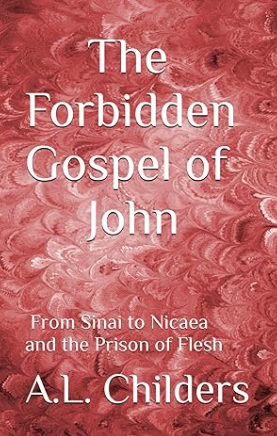
A.L. Childers (Audrey Childers) is an author, blogger, and cultural commentator who explores the hidden structures of power and belief. Her latest book, The Forbidden Gospel of John: From Sinai to Nicaea and the Prison of Flesh,, uncovers how the “god of this world” manipulates humanity through deception and spectacle, asking readers to question who they truly serve.


Disclaimer

This article is for educational and opinion purposes only. It does not allege criminal wrongdoing by any named individual or institution. Sources referenced include academic research, declassified records, and historical accounts. Readers are encouraged to conduct their own research and form independent conclusions.


SEO Keywords

energy harvesting crowds, collective effervescence, how emotions are manipulated, bread and circuses history, private grief into public power, stadium memorials manipulation, emotional energy and politics, energy harvesting religion, The Forgotten Gosip of John A.L. Childers, crowd psychology and control


From Rome to modern stadiums, private grief has long been turned into public power. Learn the science, history, and methods of energy harvesting.

Author’s Note

As an author, I approach true survival stories with both reverence and responsibility. When I write about real people who have endured trauma, I don’t just collect facts — I live their lives on the page as I read and research. I feel their fear, their courage, and their resilience.

That’s what makes me different from other authors: I don’t treat survivor stories as headlines. I write with compassion, dignity, and a trauma-informed lens, making sure their humanity is honored above all else.

I believe in ethical storytelling — sharing true stories responsibly, with sensitivity and integrity, so readers can understand both the tragedy and the triumph without exploitation. My goal is to protect survivors while reminding readers that behind every survival miracle is a human being with a beating heart and a story worth respecting.


🔑 SEO Keywords naturally included: ethical storytelling, trauma-informed writing, survivor stories told with dignity, storytelling with compassion and integrity.

Cult vs. Occult: The Hexagram and the Truth We Can’t Ignore

When most people hear the word cult, they think of blind devotion. When they hear occult, they think of mysticism and secrecy. But what happens when the two blur — when a hidden, mystical symbol is turned into a political and national identity?

That’s where the story of the hexagram comes in.


🔯 The Hexagram Isn’t Just the “Star of David”

We’ve been told for generations that the six-pointed star is uniquely Jewish. But the truth? History says otherwise.

  • In Hinduism, it’s called the Shatkona, representing the balance of male and female energy.
  • In alchemy and medieval Europe, it was known as the Seal of Solomon, used in magic texts to symbolize the union of fire and water, spirit and matter.
  • In Islamic art and manuscripts, the hexagram appears across mosques and dynasties, centuries before modern nations existed.
  • In Morocco, the hexagram appeared on flags in the 19th century.
  • Ethiopia, India, and other countries have also used it in seals and banners.

So why do we pretend it belongs only to Israel today?


⚖️ Cult vs. Occult

  • Occult: The hexagram is one of the most recognized occultic symbols in history — tied to magic, alchemy, esotericism, and the search for hidden knowledge.
  • Cult: When that symbol is placed on a flag and declared a national emblem, it becomes something else. It demands loyalty. It becomes an emblem of conformity. That’s cult-like power.

This doesn’t mean the shape itself is evil. A triangle, a circle, a star — they’re just geometry. But once institutions declare them sacred, unquestionable, or untouchable, they stop being symbols of wisdom and become symbols of control.


🌍 The Bigger Question

Why have so many powerful nations and systems chosen the same symbol? Why has an occultic pattern become a cultic demand?

That’s the truth no one wants to talk about. Because if a symbol is used across religions, nations, and centuries, then it means the story is bigger than the one we’ve been told.

And yes, it’s troubling when the official narrative says “this is the Star of David, this is who we are” — while history shows it was global, ancient, and deeply occultic long before it was political.

This is why this is so important….

The Forbidden Gospel of John: From Sinai to Nicaea and the Prison of Flesh


📚 References & Resources

  • Gershom Scholem, The Star of David: History of a Symbol
  • Barbara Walker, The Woman’s Dictionary of Symbols and Sacred Objects
  • Amira El-Zein, Islam, Arabs, and the Intelligent World of the Jinn
  • Mircea Eliade, The Occult and the Sacred

🎤 About the Author

A.L. Childers is a writer and researcher who refuses to stop at the surface of things. Her work digs into history, symbols, and the hidden stories that shape culture and politics today. By blending truth, curiosity, and raw honesty, she writes for the people who are tired of being told half-truths.


⚠️ Disclaimer

This blog is for educational and historical purposes only. It does not endorse or condemn any religion, culture, or nation. Its purpose is to examine the historical and symbolic use of the hexagram and to explore how symbols move between occult traditions and cultic institutions.

Awakening Beyond the Walls: Seeing Through the Illusion

“The awakening isn’t in tearing down the walls—it’s in realizing the walls were illusions all along.”

Walls have always symbolized control. They divide nations, protect rulers, and separate the “haves” from the “have-nots.” We’ve been conditioned to believe that tearing them down is the act of liberation. But what if the deeper truth is that the walls themselves—like the castles we dream of storming—are illusions?


The Myth of the Wall

Throughout history, walls have been built not only of stone, but of belief systems.

  • The Berlin Wall fell in 1989, celebrated as the end of tyranny. Yet economic, cultural, and digital walls still remain—sometimes more invisible and more effective than concrete ever was.
  • The Great Wall of China was less about defense and more about projecting power. Its psychological effect mattered as much as its physical function.
  • The Walls of Religion separate “us” from “them,” but upon closer inspection, many doctrines share the same ancient roots in Babylon, Egypt, and Sumer.

The illusion lies not in the wall itself but in our belief that it defines our reality.


Illusions of Today’s Walls

The modern world is full of “walls” we don’t see:

  • Economic Walls: Credit scores, taxes, and debt create invisible boundaries between freedom and captivity. We think we’re climbing them, but the system is built to keep us circling within.
  • Digital Walls: Big Tech platforms promise open communication, yet algorithmic censorship, shadow bans, and paywalls quietly control what we see and say.
  • Social Walls: Identity politics, class divisions, and cultural narratives pit us against one another, keeping us distracted from the larger forces of control.

To awaken is not to swing a hammer at these walls—it’s to see that they’re made of smoke, not stone.


Breaking the Spell

True freedom begins when we stop fighting illusions as though they’re real. Awakening means:

  • Understanding that money only has power because we believe it does.
  • Recognizing that political sides are two wings of the same bird of control.
  • Realizing that status, fame, and identity labels are manufactured measures of worth.

When you stop believing the wall exists, you stop being contained by it.


Historical & Philosophical Examples

  • Plato’s Cave Allegory – Prisoners fight shadows, unaware the “walls” of the cave aren’t real at all.
  • The Matrix (1999) – Neo doesn’t win by fighting the system with fists—he awakens by seeing the code behind the illusion.
  • Jean Baudrillard’s Simulacra and Simulation – Explores how modern society replaces reality with images, signs, and illusions.
  • Eastern Philosophy – Buddhism and Taoism both teach that suffering arises from mistaking illusion for reality. Liberation comes from detachment, not destruction.

Resources & References

  • The Republic by Plato (Allegory of the Cave).
  • Jean Baudrillard’s Simulacra and Simulation.
  • The Creature from Jekyll Island by G. Edward Griffin (on the illusion of financial systems).
  • The Matrix (film, 1999).
  • Shoshana Zuboff’s The Age of Surveillance Capitalism.
  • Tao Te Ching by Laozi.

Disclaimer

This blog is for educational and reflective purposes only. It does not claim to present one ultimate truth. Instead, it invites readers to explore, question, and investigate the illusions that shape our world. Readers are encouraged to research independently and form their own conclusions.


About the Author

A.L. Childers (pen name of Audrey Childers) is an author, blogger, and researcher who dives deep into history, philosophy, and spirituality. Her works include The Hidden Empire: A Journey Through Millennia of Oligarchic Rule and Archons: Unveiling the Parasitic Entities Shaping Human Thoughts. Through her writing, she seeks not to hand readers “answers” but to give them courage to question the illusions that define their lives.


👉 The true awakening isn’t about destroying walls—it’s about realizing you were never confined by them in the first place.

Refusing the Illusion: The True Meaning of the Rabbit Hole

“Jumping down the rabbit hole isn’t about finding one final truth—it’s about refusing to live inside someone else’s illusion.”

The phrase “down the rabbit hole” has become shorthand for conspiracy theories, deep research, or late-night YouTube binges. But its real power lies not in arriving at a singular, ultimate truth—but in awakening to the fact that much of what we accept as “reality” is shaped, manipulated, or outright manufactured by forces outside ourselves.

The rabbit hole isn’t a destination. It’s a refusal.

The Comfort of the Illusion

Most people live inside carefully constructed illusions because illusions feel safe:

  • The Illusion of Security: We’re told banks protect us, yet financial crashes, inflation, and debt reveal a system built on fragile trust, not true stability.
  • The Illusion of Freedom: Citizens vote, protest, and pay taxes, but corporations, lobbyists, and hidden elites write the rules.
  • The Illusion of Progress: We celebrate technological breakthroughs while ignoring how surveillance capitalism and AI quietly strip away privacy and autonomy.

Storming these illusions doesn’t free us—recognizing them as illusions does.


Examples of Illusions Shattered

  • The Church and Empire – Constantine’s conversion shaped Christianity into a state religion. Was this divine truth, or political necessity masquerading as faith?
  • The Federal Reserve – Born in secrecy on Jekyll Island, the Reserve holds immense power over global economies, yet the average person knows little of its origins.
  • The Digital Age – Social media promises connection, but much of it is engineered addiction, turning people into commodities for advertising data.

Like Alice, once you see through the curtain, you realize the “world” you lived in was only one version of the story.


The Power of Refusal

To refuse the illusion is not to retreat into nihilism. It is to reclaim agency.

  • In Politics: Refusing the illusion means rejecting the idea that left vs. right are our only choices.
  • In Spirituality: Refusing the illusion means questioning doctrines and finding personal connection with the divine.
  • In Personal Life: Refusing the illusion means recognizing we don’t need to live by scripts of success, beauty, or identity imposed by society.

The rabbit hole is the path of questioning. It is the journey toward freedom, not the comfort of a final answer.


Resources & References

For those ready to step further outside the illusion:

  • Plato’s Republic (Allegory of the Cave) – on shadows vs. reality.
  • Jean Baudrillard’s Simulacra and Simulation – on how images and signs replace reality.
  • The Creature from Jekyll Island by G. Edward Griffin – on the hidden origins of the Federal Reserve.
  • The Matrix (1999 film) – a modern myth of illusion and awakening.
  • Shoshana Zuboff’s The Age of Surveillance Capitalism – on how data, not democracy, governs the 21st century.

Disclaimer

This blog is meant for educational and reflective purposes only. It does not claim to present absolute truth or endorse every perspective mentioned. Instead, it encourages readers to think critically, investigate further, and recognize the power of questioning illusions. Always research independently and form your own conclusions.


About the Author

A.L. Childers (pen name of Audrey Childers) is a writer, researcher, and author of books such as The Hidden Empire: A Journey Through Millennia of Oligarchic Rule and Archons: Unveiling the Parasitic Entities Shaping Human Thoughts. Through her work, she blends philosophy, history, and personal insight to challenge conformity and inspire readers to step beyond illusion. Her mission is not to hand readers “the truth,” but to equip them with the courage to question the castles, shadows, and stories that shape their lives.


👉 The rabbit hole has no bottom. Its purpose is not to end in certainty—but to keep you from ever again mistaking illusion for reality.

Down the Rabbit Hole: Why Some Truths Are Stranger Than Fiction

History has always had a funny way of hiding its deepest truths in plain sight. When we pull on one string, we rarely get just one answer—we tumble, often unwillingly, down a rabbit hole of connections, contradictions, and uncomfortable revelations.

What starts as a simple question—“Why is this happening?”—quickly morphs into a labyrinth of deeper mysteries: who benefits, who hides, and who dares to tell the truth?


The First Step: Asking the Forbidden Questions

Why do certain narratives dominate our textbooks while others vanish? Why are some whistleblowers demonized and others erased entirely? We are told “the facts” in neat, packaged bites, yet the more we dig, the more we discover that history is often written by the powerful, not the truthful.

Examples:

  • The Library of Alexandria burned, and with it thousands of scrolls of ancient knowledge. Was this just an accident—or an intentional reset?
  • The Federal Reserve was founded in secrecy on Jekyll Island in 1910, yet today it controls the pulse of the American economy. Why cloak something so “for the people” in shadows?
  • Sunday worship, once foreign to early followers of Christianity, became standard only after Constantine. Did faith shift—or was power simply consolidated?

Following the Threads

A rabbit hole demands that we connect dots others tell us not to connect. Consider:

  • Technology & Control: Why does modern AI mimic ancient myths of oracles and gods that “see all and know all”? Is this progress, or a reboot of ancient patterns of control?
  • Food & Health: Why are banned chemicals in Europe still legal in the United States? Who profits from the sickness that follows?
  • Religion & Empire: Why do so many religious symbols—crosses, suns, serpents—trace back to Babylonian, Egyptian, and Sumerian roots? What does this say about continuity versus creation?

Every answer births a new question. The deeper we go, the more the rabbit hole feels less like madness and more like reality revealing itself.


Why It Matters

If we do not question, we become comfortable captives of the narrative we’re given. To question is to reclaim freedom. To dig is to discover that:

  • Empires fall, but control mechanisms persist.
  • Propaganda evolves, but the intention—to shape thought—remains.
  • Truth is often scattered, fragmented, and ridiculed until someone dares to gather the pieces.

Resources for the Curious

For those ready to go deeper:

  • The Creature from Jekyll Island by G. Edward Griffin – on the Federal Reserve’s secret beginnings.
  • The Age of Surveillance Capitalism by Shoshana Zuboff – on how modern corporations profit from controlling human thought.
  • Pagan Christianity? by Frank Viola & George Barna – on how ancient rituals shaped modern Christianity.
  • Behold a Pale Horse by William Cooper – controversial, but a classic in questioning government secrecy.
  • Smithsonian, BBC, and JSTOR archives for primary documents that “official” history often leaves dusty.

Disclaimer

This blog is intended for educational and thought-provoking purposes only. It does not claim to hold all the answers, nor does it promote conspiracy theories as absolute truth. Rather, it seeks to encourage critical thinking, historical questioning, and exploration of alternative perspectives. Readers are encouraged to verify all sources independently and draw their own conclusions.


About the Author

A.L. Childers (pen name of Audrey Childers) is a multi-genre author, researcher, and blogger who blends personal storytelling, history, and investigative insight into her work. Known for digging beneath the surface of accepted narratives, she writes books and blogs that challenge conformity, expose hidden truths, and empower readers to think critically. Audrey has written extensively on health, history, and spirituality, with titles available on Amazon such as The Hidden Empire: A Journey Through Millennia of Oligarchic Rule and Archons: Unveiling the Parasitic Entities Shaping Human Thoughts.


👉 Jumping down the rabbit hole isn’t about finding one final truth—it’s about refusing to live inside someone else’s illusion.

Empire of Lies: How Flesh Became Our Prison

What if everything you’ve been taught about the world, God, and even salvation was part of a carefully designed lie?

What if the “god of this world” was not the Creator of light, but the architect of a cage—a prison of flesh?

This is the unsettling truth at the heart of  The Forbidden Gospel of John: From Sinai to Nicaea and the Prison of Flesh —a book that challenges readers of all races, religions, and beliefs to question the foundations of the systems that rule our lives.


Not Another “Christian Book”

Let’s be clear: this is not a devotional, not a Bible study, and not a sermon.

Instead,  The Forbidden Gospel of John: From Sinai to Nicaea and the Prison of Flesh . unravels the master plan of deception—how empires, councils, and churches built systems of control around a false god. The one who was called “the god of this world” blinded the minds of generations, turning holy words into chains.

This book does not demand you believe—it dares you to question.


The Prison of Flesh

Across traditions—pagan, gnostic, mystical, and even within suppressed Christian sects—the same whisper echoes:

We are not of this world. We are prisoners here.

The Cathars spoke it before they were burned. The Gnostics hid it in forbidden gospels. Mystics of every path knew that the body itself was a cage—and that liberation was the true goal of the soul.

 The Forbidden Gospel of John: From Sinai to Nicaea and the Prison of Flesh . connects these voices across time, showing how Rome and its successors silenced them to preserve power. Villages burned. Libraries destroyed. Truth buried beneath empire.


Why All Paths Should Read This

This book is written for the seeker, not the convert.

  • Pagans will recognize how Rome crushed other spiritual traditions to build its empire.
  • Witches and mystics will see how knowledge was demonized and erased to keep humanity in ignorance.
  • Believers of all faiths will be challenged to ask: what if the god I was taught to worship is not who I thought?
  • Skeptics and truth-seekers will find history, suppressed texts, and philosophy woven into a narrative of liberation.

At its core, this is not a book about religion—it’s a book about freedom from deception.


The Questions That Will Haunt You

  • Why would a loving Creator cage us in fragile bodies of flesh?
  • What power benefits from keeping humanity blind?
  • Were the “holy books” themselves tools of control?
  • Why did Rome slaughter entire villages simply for believing differently?
  • And most of all: how do we escape the empire of lies and reclaim the realm of light?

A Book of Fire, Not Faith

 The Forbidden Gospel of John: From Sinai to Nicaea and the Prison of Flesh. It isn’t meant to reassure you. It’s meant to ignite you.

It offers no easy answers—only a lamp to reveal the bars of the cage, and a path toward remembering the freedom within.

Whether you call yourself Christian, pagan, witch, seeker, or skeptic, this book will speak to that restless voice inside you that has always known: there is more to reality than what we’ve been told.


References & Inspirations

  • The Gospel of Thomas (Nag Hammadi texts)
  • Inquisition records of the Cathars
  • Elaine Pagels, The Gnostic Gospels
  • Karen King, What Is Gnosticism?
  • Suppressed traditions of mysticism, witchcraft, and heresy

SEO Keywords

empire of lies book, prison of flesh meaning, gnostic gospels deception, god of this world bible, pagan gnostic truth, hidden gospel of john, witchcraft and inquisition history, council of nicaea secrets, spiritual deception religion, escape the prison of flesh.


Disclaimer

This book is not a religious text. It is a work of history, philosophy, and spiritual exploration meant to challenge traditional narratives and encourage readers of all backgrounds to think for themselves. It is not intended as doctrinal teaching or denominational instruction.


About the Author

A.L. Childers is an author and seeker of hidden truths who writes at the crossroads of history, spirituality, and rebellion. Her work dismantles illusions and exposes systems of control, inviting readers of all paths—pagans, mystics, skeptics, and seekers alike—to see beyond the empire of lies and reclaim their freedom.

The Forbidden Gospel of John: From Sinai to Nicaea and the Prison of Flesh is available now on Amazon (Paperback).

Principles and Symbols: Why Eternal Wisdom Still Matters in 2025

What endures when the world is changing faster than ever?

In an age of artificial intelligence, deepfakes, and digital misinformation, our search for truth feels more urgent than ever before. We scroll, we swipe, and yet—something inside us still asks the ancient questions: What guides us? Where do we find meaning?

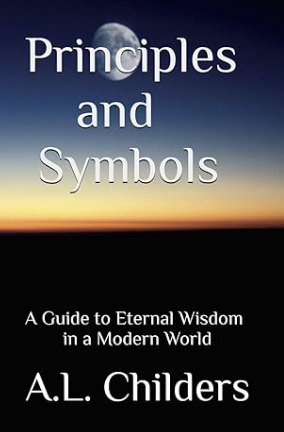
That’s where Principles and Symbols: A Guide to Eternal Wisdom in a Modern World by A.L. Childers (Paperback, August 27, 2025) enters the conversation.


Ancient Wisdom for a Modern Crisis

For centuries, seekers, mystics, and philosophers have turned to principles and symbols as a way to understand life. Albert Pike’s Morals and Dogma (1871) tried to capture this in his time, but 2025 demands a fresh voice—one that bridges tradition with the complexity of today’s world.

This book does exactly that. Drawing from the Upanishads, Indigenous teachings, Jungian psychology, mythology, quantum physics, and even the illusions of AI, Childers weaves a roadmap for seekers, skeptics, and dreamers alike.


Inside the Book, You’ll Discover:

  • Why symbols are the soul’s first language and how they connect us across cultures.
  • How mythology shapes society and identity—from Zeus to modern-day storytelling.
  • Why science and spirituality must work together to guide humanity forward.
  • How to find your moral compass in a digital world dominated by misinformation.

Accessible, global, and visionary, this work belongs on the shelf alongside Albert Pike, Joseph Campbell, Carl Jung, and Mircea Eliade.


Why This Book Is Different

While countless modern books claim to answer life’s big questions, Principles and Symbols does something rare: it connects ancient knowledge with cutting-edge science and culture. It doesn’t just explain wisdom—it shows you how to live it in today’s fractured world.

✨ If you’ve ever asked, “What guides us now?” — this book is your answer.


About the Author

A.L. Childers is a visionary writer who blends history, philosophy, spirituality, and science into works that challenge, inspire, and uplift. Known for tackling deep topics with accessibility and passion, Childers has written across multiple genres, always with one goal: to empower readers with truth and clarity in uncertain times.


Disclaimer

This blog post is for informational and promotional purposes only. The interpretations of philosophy, mythology, and science presented in the book are based on the author’s research, analysis, and perspective. Readers are encouraged to explore multiple sources and arrive at their own understanding of these topics.


📖 Get Your Copy:
Principles and Symbols: A Guide to Eternal Wisdom in a Modern World will be available in paperback on August 27, 2025.

👉 Order on Amazon (insert your book link here once live)


Keywords for Search Engines (SEO):
Eternal wisdom, philosophy book 2025, symbolism and mythology, Albert Pike modern comparison, Carl Jung archetypes, Joseph Campbell mythology, spiritual guide, A.L. Childers author, moral compass in digital age, quantum physics and spirituality.

🔥 Candle Flame Meanings: Unlocking the Spiritual Messages in Every Flicker

By A.L. Childers
Author of “The Freckled Oracle™” series and “The Book the Universe Didn’t Want Written”


More Than Just a Flame

Throughout human history, fire has served as more than warmth and light—it’s been a spiritual beacon, a tool for rituals, and a messenger of the unseen realms. From ancient hearths to modern altars, the dance of a candle flame is often said to communicate messages from spirits, ancestors, or your higher self.

If you’ve ever watched a candle flame flicker strangely or crackle loudly during a quiet meditation or spellwork, you’re not alone. Many cultures believe these flame behaviors are powerful omens or signs.

Let’s dive into the meanings behind candle flames, how to interpret them, and why this ancient wisdom still resonates today.


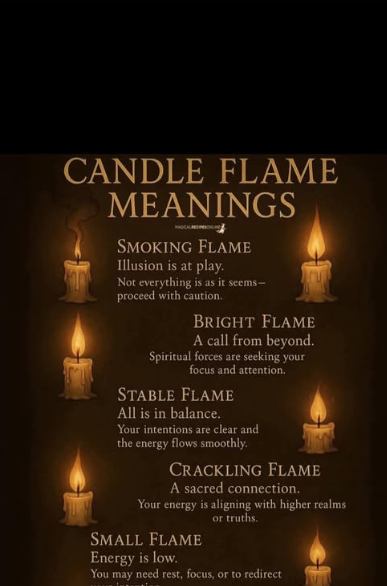
🔥 Candle Flame Meanings and Interpretations

Here’s a breakdown of the most common flame behaviors and their spiritual significance:

🟤 Smoking Flame

Message: Illusion is at play.

  • Interpretation: Not everything is as it seems. The situation may be shrouded in illusion or deceit. Be cautious.
  • Spiritual Insight: A sign to ground yourself, clear your aura, and cleanse your space—smoke represents blocked or distorted energy.

🟡 Bright Flame

Message: A call from beyond.

  • Interpretation: You’re being contacted by spirit guides, ancestors, or divine forces. Pay attention to intuitive nudges.
  • Spiritual Insight: A time for journaling, divination, or deep meditation.

⚖️ Stable Flame

Message: Balance and clarity.

  • Interpretation: Your energy is aligned, your intention is clear, and your spellwork or prayer is on track.
  • Spiritual Insight: Proceed confidently. The universe is in harmony with your will.

💫 Crackling Flame

Message: A sacred connection is forming.

  • Interpretation: You may be receiving downloads or truths from the spiritual realm. Listen closely.
  • Spiritual Insight: Great for channeling, tarot readings, or ancestral communication.

🔹 Small Flame

Message: Energy is low.

  • Interpretation: You may need to rest, redirect, or strengthen your focus.
  • Spiritual Insight: Re-evaluate your spell, intention, or surroundings. Is something draining you?

🔮 Historical Roots of Flame Reading

  • Ancient Rome & Greece: Oracles would interpret flames as part of pyromancy—divination through fire.
  • Medieval Europe: Witches and mystics used candle flames to detect spirits and demonic activity.
  • Hoodoo & Folk Magic: Candles played a key role in spellwork, where flame movement guided outcomes.

The practice of interpreting candle flames is deeply tied to spiritual traditions across the globe, including Native American rituals, African diasporic religions, and Eastern philosophies like Feng Shui and Taoist fire elements.


🧭 Why Candle Flame Reading Still Works Today

Candle flames are sensitive to:

  • Subtle energies in your space
  • Your emotional state and thoughts
  • Spirit communication from other realms

Think of the flame as a mirror to the energetic world—its movement is a response to forces you may not consciously detect.


🕯️ How to Use Candle Flame Reading

  1. Set Your Intention – Before lighting, state your purpose.
  2. Observe Without Judgment – Let the flame move naturally.
  3. Record What You See – Keep a candle divination journal.
  4. Cross-Reference Signs – Use the guide above to interpret.
  5. Cleanse Your Space – Especially after a smoking or erratic flame.

Explore them on Amazon under pen name A.L. Childers.


📖 References & Resources

  • “Pyromancy in Ancient Cultures” — Journal of Ancient Mysticism, Vol. 3
  • Hoodoo Heritage Month Reports – Southern Folklore Association
  • Candle Flame Omens – MysticMag, 2021
  • The Element Encyclopedia of 5000 Spells by Judika Illes

📢 SEO Keywords for This Topic

  • Candle flame meanings
  • Candle divination
  • Spiritual signs from flames
  • Smoking candle meaning
  • Why candles crackle
  • Bright candle flame spiritual meaning
  • Witchcraft candle flame interpretation
  • Hoodoo candle meanings
  • Candle flame symbolism
  • Energy signs from candles

⚠️ Disclaimer

This blog is for educational and spiritual purposes only. Interpretations of candle flames should not replace professional advice. If you feel uncomfortable or unsafe, always consult a qualified expert.


👩‍💻 About the Author

A.L. Childers is a spiritual researcher, author, and creator of The Freckled Oracle™, known for decoding the mystical patterns in everyday life. With over 30 published works across metaphysics, self-healing, and hidden knowledge, she weaves wisdom with wonder in every project.

👉 Follow more at TheHypothyroidismChick.com and find her books on Amazon under A.L. Childers.