
PFAS in Sea Foam, Ocean Pollution, and the Global Fallout of Neglect
🌊 A Shocking Discovery on the Carolina Coast
CAROLINA BEACH, NC — A recent study has sent shockwaves through North Carolina’s coastal communities. According to environmental watchdog group Clean Cape Fear, alarming concentrations of PFAS (per- and polyfluoroalkyl substances)—commonly known as “forever chemicals”—have been found in sea foam samples collected from Oak Island and Carolina Beach State Park.
Unlike typical water contaminants, PFAS don’t easily dissolve. Instead, they float on the surface and accumulate when wind and waves churn seawater into foam, concentrating these persistent pollutants at levels significantly higher than in the surrounding water.
Emily Donovan, co-founder of Clean Cape Fear, voiced public concern:
“A lot of the feedback that we’ve gotten with this research is just really important concerning questions of ‘is it safe to go swimming in the ocean, is it safe to touch the foam?’ and the unfortunate thing right now is we really don’t know.”
🧪 What Exactly Is Sea Foam — and Why Does It Matter?
Sea foam is a natural phenomenon, formed when dissolved organic matter in seawater is agitated by wind and surf. This agitation traps air, creating bubbles that accumulate into foam. Under normal conditions, this foam isn’t dangerous—it’s simply the ocean “frothing” at the surface.
However, when industrial chemicals like PFAS are present in the water, sea foam becomes a concentrated carrier of toxins, capable of clinging to sand, skin, and even entering the air through aerosolization, where microscopic particles are carried by sea spray.
A 2022 study published in Environmental Science & Technology found that PFAS concentrations in sea foam can be hundreds of times higher than in the water itself. This means that children playing on the beach, dogs running through foam, or adults lounging near the surf could unknowingly come into contact with dangerous chemicals.

☢️ Global Fallout: Could Radiation and Industrial Waste Be Adding to the Problem?
While PFAS contamination is primarily linked to local and regional industrial discharges—such as those from chemical manufacturing plants, airports (due to firefighting foams), and wastewater systems—ocean currents don’t respect borders.
1. Fukushima and Trans-Pacific Drift
After the 2011 Fukushima Daiichi nuclear disaster in Japan, radioactive contaminants were released into the Pacific Ocean. While international monitoring agencies like NOAA and the IAEA have reported that radiation levels in U.S. coastal waters remain below harmful thresholds, trace amounts of cesium-134 and cesium-137 isotopes were detected on the West Coast of the U.S. in subsequent years.
Though PFAS and radioactive isotopes are chemically different, their combined presence in marine ecosystems raises concerns about the cumulative impact of global contamination.
2. Industrial Pollution and Ocean Dumping
For decades, corporations around the world have legally and illegally dumped hazardous waste into oceans. Examples include:
- DuPont and Chemours releasing PFAS into the Cape Fear River in NC for decades.
- Oil refineries discharging benzene and heavy metals into waterways.
- Shipping industries releasing bilge water containing chemicals, oil, and plastics.
- Textile factories in Asia discharging untreated dye and chemical runoff into rivers that feed into the oceans.
Once these pollutants enter the ocean, they travel via currents, settle in sediments, bioaccumulate in marine life, and resurface in unexpected places—like the sea foam of Carolina Beach.

📚 Historical Context: How Did We Get Here?
The term “forever chemicals” refers to PFAS compounds that don’t break down naturally. First developed in the 1940s, PFAS were used in:
- Non-stick cookware (Teflon)
- Waterproof clothing
- Stain-resistant fabrics
- Firefighting foams
- Food packaging
For decades, these chemicals were marketed as safe, even as internal studies by manufacturers revealed their persistence and potential health risks. By the 2000s, PFAS had spread globally, found in polar bears, rainwater, drinking water, and human bloodstreams.
The EPA only began taking significant action in the 2010s, issuing health advisories and pressuring companies to phase out certain PFAS. However, many “replacement PFAS” are just as persistent, and no enforceable federal drinking water standard for most PFAS existed until 2024.
🌍 Health Implications of PFAS Exposure
Scientific studies have linked long-term PFAS exposure to:
- Cancer (kidney, testicular, liver)
- Thyroid dysfunction
- Hormone disruption
- Reduced immune response
- Reproductive issues
- Developmental delays in children
Because PFAS can enter the human body through skin contact, inhalation of sea spray, or ingestion, beachgoers in affected areas are right to be concerned.
📝 What Can Be Done?
- Avoid direct contact with sea foam, especially for children and pets.
- Rinse off thoroughly after visiting beaches known to have PFAS contamination.
- Support local advocacy groups like Clean Cape Fear.
- Push for stronger regulation and cleanup, including holding polluters accountable.
- Stay informed: monitor advisories from state environmental agencies.
🌐 Resources & References
- Clean Cape Fear: https://cleancapefear.org
- Environmental Protection Agency (EPA) – PFAS Information: https://www.epa.gov/pfas
- NOAA Ocean Monitoring Reports
- Environmental Science & Technology (2022): PFAS Concentration in Coastal Foam
- NC DEQ – PFAS Testing and Updates: https://deq.nc.gov
- International Atomic Energy Agency (IAEA) – Fukushima Monitoring Data
📢 SEO Keywords:
PFAS in North Carolina beaches, toxic sea foam, forever chemicals NC coast, Cape Fear River pollution, Fukushima radiation US ocean, PFAS health risks, Oak Island contamination, Carolina Beach State Park PFAS, ocean pollution history, toxic waste dumping examples
⚠️ Disclaimer
This article is for informational and educational purposes only. It is not intended to provide medical or legal advice. Readers are encouraged to consult official environmental health resources and experts for guidance related to PFAS exposure and safety recommendations.
✍️ About the Author – Audrey Childers
Audrey Childers is a writer, researcher, and environmental advocate based in North Carolina. Known for her investigative approach and compelling storytelling, she explores the intersections of health, history, and environmental justice. Through her books and blogs, Audrey sheds light on hidden truths that shape our modern world—empowering readers with knowledge and action.
Toxic PFAS “forever chemicals” have been found in sea foam along NC beaches. Learn the history, dangers, and global pollution sources behind this crisis.
1. Sitting on the Beach (Away from Foam) Is Generally Low-Risk
If you’re just sitting on dry sand or a towel, enjoying the sun while the waves lap at your feet (and you’re not in direct contact with visible sea foam), your exposure to PFAS is likely very minimal.
- PFAS don’t evaporate into the air like volatile chemicals.
- Most exposure happens through direct skin contact, ingestion, or inhalation of sea spray near contaminated foam.
- If you’re positioned a little farther back from the foam line, risk is significantly reduced.
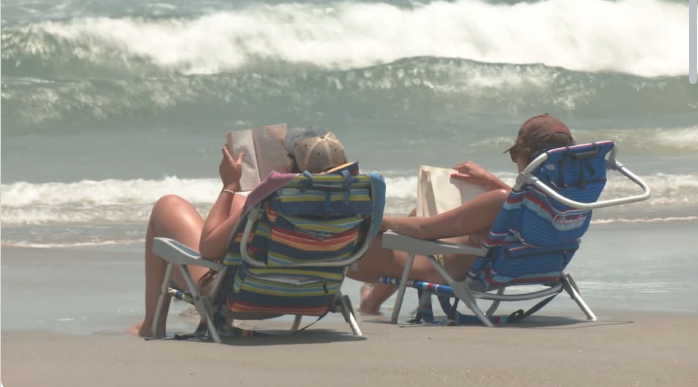
☀️ Pro Tip: Bring a beach chair or mat and sit a few feet back from where foam tends to collect. PFAS often accumulate in the surf zone where bubbles gather, not in clean dry sand.
🌬️ 2. Be Aware of Sea Spray and Wind Direction
PFAS can aerosolize in sea spray—tiny droplets of water carried by wind. This doesn’t mean sitting by the ocean is dangerous, but:
- If there’s a lot of wind blowing foam or mist toward you, it’s better to move slightly inland.
- On calm days, the risk is far lower.
- Children and pets playing right in the foam, however, can have higher exposure due to closer contact and hand-to-mouth behaviors.
🧍♀️ 3. Wading in Clear Water vs. Foam
If you decide to walk in shallow water where there’s no visible foam, the PFAS concentration is likely much lower. The concerning levels are mainly in the foam itself, which can contain hundreds of times more PFAS than the surrounding water.
👉 If you do go in the water:
- Rinse off thoroughly with clean water afterward.
- Avoid swallowing any seawater.
- Wash your swimsuit and towel once you’re home.
📌 4. Local Advisories Matter
Keep an eye on updates from:
- NC Department of Environmental Quality (NC DEQ)
- Clean Cape Fear
- EPA PFAS advisories
If they issue warnings about specific beaches or foam events, follow their guidance. Sometimes they’ll recommend avoiding contact during heavy foam blooms but won’t restrict sunbathing or walking near the shore.
⚠️ Bottom Line
✅ Yes, it’s generally safe to sit out, tan, and enjoy the waves at NC beaches — as long as you avoid direct contact with sea foam and heavy sea spray.
🚫 Avoid letting kids or pets play in or near foam.
🚿 Rinse off after beach time to minimize any incidental exposure.

