
Category Archives: Uncategorized

The Day I Stopped Demanding My Body to Surrender

(A story about weight, worry, and the quiet power of standing down)


There was a time—somewhere in my forties—when my body and I stopped speaking the same language.

I kept issuing commands.
It kept issuing warnings.

I called it stubbornness.
It called it survival.

I watched the numbers climb as if they were indictments. I measured myself in failures: pounds gained, clothes retired, photographs avoided. I searched for discipline the way one searches a dark house at night—tense, braced, convinced danger was hiding in every corner.

What I did not understand then—what no one explains when they tell you to try harder—is that my body had already been trying harder than I ever could.

It had learned a new job description somewhere between responsibility and burnout, between holding families together and swallowing stress whole.

Protect.
Conserve.
Brace.
Store.
Stay alert.

This wasn’t weakness.
It was intelligence shaped by pressure.

Cortisol, once a short-term messenger, had moved in permanently. Thyroid signals softened like voices speaking through walls. Insulin lost its rhythm. Hormones rewrote their agreements quietly, without ceremony. And my body learned a rule that would govern everything that came after:

Thin is unsafe.
Stored energy is survival.

So when I issued commands, my nervous system heard something else entirely.

Threat detected.

And it responded the only way it knew how—by holding on tighter.

The truth I wish I had known sooner is this: you cannot scare a body into letting go of armor it believes saved your life.

That understanding arrived not as a revelation, but as a sentence—simple, unremarkable, and devastatingly true:

I’m teaching my body it doesn’t have to protect me anymore.

The moment I said it, something shifted. Not dramatically. Not visibly. But internally, like a guard lowering a weapon—not because danger vanished, but because the watch had ended.

This was not surrender.
It was a truce.

I stopped yelling at symptoms like they were moral failings. I stopped interrogating every sensation, every fluctuation, every morning reading as if my body owed me proof of safety on demand. I realized I had been monitoring myself into anxiety—checking not for information, but for reassurance that never lasted.

The scale—that merciless witness—lost its authority. Not because it changed, but because I did.

Instead of asking Why isn’t this working yet?
I asked What if nothing is wrong?

Instead of I need to fix this,
I offered You’ve been carrying us for a long time.

Instead of demanding results,
I built predictability.

Morning came with warmth and routine. A simple bowl of beans—unimpressive, unmarketable, quietly powerful. Food that said: we are fed. We are steady. We are not in danger.

That small act did more than any punishment ever had. Blood sugar steadied before cortisol could spike. The gut spoke calmly to the brain. Bile flowed, inflammation softened, insulin listened again. Nothing flashy. Nothing extreme. Just a body being reminded—day after day—that emergency mode was no longer required.

And the changes, when they came, arrived like whispers.

Bloating eased.
Waists softened.
Clothes told truths the mirror never could.
Cravings lost their urgency.

The scale lagged behind, as it always does when healing comes first. Cortisol needed to come down. Inflammation needed to quiet. The system needed time to believe the threat was over.

But when that switch began to flip, something miraculous happened.

Weight loss became boring.

No drama. No heroics. No white-knuckled restraint. Just a body finally releasing what it no longer needed to carry.

This is the part no one tells you: the goal was never getting back to 140.

The goal was getting back to safety.

And when the nervous system feels safe, metabolism follows—every single time.

If you are standing where I once stood—exhausted, vigilant, convinced you failed because your body did not obey—hear this clearly:

You did not lose control in your forties.
You held everything together.

Your body paid the price so you could keep functioning.

Now it is your turn to let the system stand down. Not with force. Not with fear. But with steadiness. With boring routines. With fewer alarms. With trust.

Say it once, if you need an anchor. Say it quietly, without expectation:

I’m teaching my body it doesn’t have to protect me anymore.

This isn’t a diet.
It’s a ceasefire.

And ceasefires are where rebuilding begins.

The Quiet Practice That Changed Everything

(Five simple recipes, why they work, and what they teach the body)

This wasn’t about food rules.
It was about sending a signal.

Every morning, before the day asked anything of me, I gave my body the same message:

We are fed.
We are steady.
We are not in danger.

That message matters more than calories ever could.


Why Beans (And Why in the Morning)

Beans are not magic.
They are predictable.

They:

  • stabilize blood sugar early
  • reduce cortisol-driven glucose spikes
  • bind bile (which carries inflammatory waste out of the body)
  • support insulin sensitivity
  • calm the gut–brain axis

Morning matters because cortisol is naturally highest then.
This is not about suppressing it — it’s about not amplifying it.


Why We Soak Beans (And Why It’s Not About “Clean Eating”)

Soaking beans:

  • reduces compounds that cause bloating
  • improves mineral absorption
  • makes them gentler on digestion
  • lowers stress on an already taxed system

This isn’t about perfection.
It’s about making nourishment easier to receive.

Counter vs Fridge Soaking (Simple Truth)

  • Navy, cannellini, great northern, black-eyed peas:
    ✔️ safe to soak on the counter 12–24 hours (cool kitchen)
  • Lima (butter) beans:
    ✔️ best soaked in the fridge
    ✔️ counter soak is fine short-term (8–10 hours) if needed

If they smell sour or look foamy — discard.
Otherwise, you’re fine.


When to Eat These

  • Morning only
  • Ideally within 30–60 minutes of waking
  • Before supplements
  • Before stress
  • Before decision-making

This is not fuel for output.
This is permission to stand down.


Five Simple Recipes (Nothing Fancy, Nothing Loud)

1. Butter Bean Morning Bowl

(The most calming option)

Ingredients

  • 1 cup cooked butter (lima) beans
  • Pinch of sea salt
  • Warm water or bean broth

How
Warm gently. Lightly mash. Eat slowly.

Why it helps

  • Excellent bile binding
  • Very low inflammatory response
  • Signals safety to the nervous system
  • Especially supportive during hormonal shifts

Best time
Early morning, on quiet days or high-stress days.


2. Navy Bean Mash

(The steady baseline)

Ingredients

  • 1 cup cooked navy beans
  • Sea salt
  • Optional splash of warm water

How
Mash until smooth and warm.

Why it helps

  • Strong soluble fiber
  • Stabilizes blood sugar
  • Reduces cortisol spikes
  • Easy to digest even when stressed

Best time
Daily staple. This is your “default.”


3. Cannellini Bean & Rice Bowl

(For mornings when stress is already high)

Ingredients

  • ¾ cup cannellini beans
  • ¼ cup plain white rice
  • Sea salt

How
Warm together. Eat calmly.

Why it helps

  • Prevents blood sugar drops
  • Supports adrenal balance
  • Reduces urgency-driven cravings later

Best time
After poor sleep or emotionally heavy days.


4. Great Northern Bean Soup

(For digestion and bile flow)

Ingredients

  • 1 cup great northern beans
  • Warm water or light broth
  • Pinch of salt

How
Heat into a thin soup. Sip and eat.

Why it helps

  • Supports liver and gallbladder flow
  • Reduces inflammatory load
  • Gentle when digestion feels “stuck”

Best time
When bloated, sluggish, or inflamed.


5. Black-Eyed Peas (Plain & Soft)

(Hormone-friendly and grounding)

Ingredients

  • 1 cup fully cooked black-eyed peas
  • Sea salt

How
Warm thoroughly. Chew well.

Why it helps

  • Supports estrogen clearance
  • Gentle endocrine support
  • Traditionally grounding and stabilizing

Best time
During perimenopause or hormonal fluctuation weeks.


What This Is Doing (Even If You Don’t Feel It Yet)

At first, the changes whisper.

  • bloating eases
  • waist softens
  • cravings lose urgency
  • digestion becomes more predictable

The scale lags behind because:

  • cortisol must come down first
  • inflammation must quiet
  • insulin signaling must normalize

But once safety is established?

The body lets go without being forced.


The End Result (The Part That Actually Matters)

This isn’t about beans.

It’s about what they represent.

  • consistency without punishment
  • nourishment without surveillance
  • food without fear

You’re not “trying to lose weight.”

You’re teaching your body:

You don’t have to protect me anymore.

And when the nervous system believes that?

Armor becomes unnecessary.
Holding on becomes optional.
And change becomes boring — in the best possible way.


Disclaimer

This article is for educational and informational purposes only and is not intended to diagnose, treat, or replace medical care. Always consult a qualified healthcare professional before making dietary or lifestyle changes.


About the Author

A.L. Childers is a writer and researcher exploring thyroid health, stress physiology, metabolism, and the unseen ways women’s bodies adapt to survive prolonged responsibility. Her work dismantles blame-based wellness culture and replaces it with compassion, context, and truth.


When Independence Cost a Dollar and a Dream


There are moments in motherhood that arrive quietly but land like thunder.

This was one of them.

My youngest twin—twenty-seven years old—has purchased a home. In this economy. In a time so unforgiving that even the word starter feels like a relic from another century. It is an accomplishment that deserves to be spoken aloud, admired, honored. I am proud of her in the way that fills the chest and tightens the throat at the same time.

And yet—there it is—the ache.

Because pride and grief sometimes share the same chair.

This economy is ruthless. Not difficult. Not inconvenient. Ruthless. It does not reward youth the way it once did. It does not offer freedom cheaply. It does not allow mistakes without punishment. Housing is no longer a milestone—it is a miracle. And watching your child secure something so rare feels like witnessing both victory and loss in a single breath.

When I was sixteen, I left home.

Not dramatically. Not ceremoniously. I simply went. I had my own apartment. A used car. Paid my electric bill. My car insurance. My groceries. I even attended community college. I was free in the way only the young and unafraid can be—free because the world had not yet learned how to price every inch of air.

It wasn’t because I was wealthy. It wasn’t because I was protected. It was because the numbers made sense back then. They no longer do.

Today, a young person can work endlessly and still remain trapped. Rent devours paychecks. Insurance eats ambition. Groceries demand negotiation. Independence has been turned into a luxury item, and no one pretends otherwise.

So her father and I did what parents are rarely praised for doing anymore—we let our children stay.

No rent. No utilities. No pressure—except the kind that builds, not breaks. The only bills they paid were the ones they chose. The rest went into savings. Into preparation. Into a future we knew the world would not hand them gently.

They also went to work where their father works—a union job that pays more than most four-year degrees promise anymore. Thirty-five dollars an hour. Time-and-a-half after eight hours in a day, not forty in a week. Double time after ten. Triple pay on holidays. The kind of structure that once built the middle class and now survives like a rare species.

And because of that—because of planning, patience, and opportunity—she bought a home.

I should be celebrating without pause.

But there’s a part of me that wishes she would stay just a little longer. Stay in the good life. The one I never had offered to me, even though I somehow managed to afford it anyway. Stay in the safety that took generations of trial and error to learn how to provide.

My childhood was… complicated.

My mother was a single parent doing the best she could with the tools she had. But there were too many men passing through the house. Too much instability. Too much responsibility placed on shoulders still learning how to carry themselves. By the time I was ten, I was caring for my younger sister—five years my junior—cleaning the house, feeding her, managing tasks that children should not have to manage.

If I failed, I was punished. If I succeeded, it was expected.

And yet—those years shaped me.

They gave me skills. Grit. Awareness. Independence sharpened early. I learned how to survive before I learned how to rest. I became a true Gen Xer—resourceful, skeptical, self-reliant, allergic to nonsense.

A Scorpio. A free spirit. A wild child who wasn’t taking anyone’s shit.

And I wouldn’t trade it. Not for anything.

How many people can say they were sixteen in the 1980s, paying their own bills, driving their own car, answering to no one but themselves—and still felt free? The eighties were a strange kind of golden hour. Not perfect. Not fair. But possible.

That world is gone.

So when my daughter closes the door on her own home, I stand in the doorway of memory. Proud beyond words. Tender beyond reason. Grateful that she has what I never did—and quietly mourning the simplicity of a time when independence didn’t require permission from a bank, a union contract, and perfect timing.

This is what parenting looks like in an unforgiving economy.

You don’t push them out.
You build a runway.
You give them what you never had.
And when they finally fly, you wave—even as your heart asks them to circle once more.


Disclaimer

This blog reflects personal experience and generational observation. It is not intended to diminish the struggles of any generation or romanticize hardship. Economic conditions vary widely, and individual outcomes are shaped by many factors. This piece is offered as reflection, not prescription.


References & Context

  • U.S. Bureau of Labor Statistics – Historical wage comparisons
  • Federal Reserve Economic Data (FRED) – Housing affordability index
  • Pew Research Center – Generational economic mobility
  • National Association of Realtors – First-time homebuyer trends
  • Economic Policy Institute – Wage growth vs. cost of living (1980s–present)

About the Author

A.L. Childers is a Gen X writer, researcher, and storyteller whose work blends lived experience with cultural reflection. Raised in an era of latchkeys and learned independence, she writes about family, economics, power systems, and the quiet emotional truths that live beneath major life transitions. Her work honors resilience without glorifying struggle and believes deeply in giving the next generation what many never received.


ABOUT THE AUTHOR — A.L. Childers

Audrey Childers is a published author, thyroid advocate, wellness writer, and founder of TheHypothyroidismChick.com.
After years of misdiagnosis, exhaustion, weight gain, and “your labs are normal,” she rebuilt her health — and now helps other women do the same.

Books include:

The Keto Autoimmune Protocol Healing Book for Women

Hashimoto’s Crock-Pot Recipes

 Reset Your Thyroid: 21-Day Meal Plan

A Women’s Holistic Holy Grail Handbook for Hypothyroidism

Fresh & Fabulous Hypothyroidism Body Balance

The Witch’s Almanac Cookbook (2026)

The Lamp of Christmas Eve

The Lamp at the End of the Corridor: A Story of Rejection, Redirection, and Resurrection for the Misfit Soul

The Girl the Darkness Raised: A Memoir of Scarcity, Survival, and Becoming

The Girl in the Mirror Is Thirteen Again: The House That Yelled and the Woman Who Finally Heard Herself 

 Healing Stews & Enchanted Brews (Original Edition)

Healing Stews & Enchanted Brews: Holiday Magic

My Grandmother’s Witchy Medicine Cabinet

Enchanted Realms: A Comprehensive Guide to Witchcraft & Sorcery

Enchanted Realms: A Comprehensive Guide to Witchcraft & Sorcery

Hashimoto’s Crock-Pot Recipes

 Reset Your Thyroid: 21-Day Meal Plan

A Women’s Holistic Holy Grail Handbook for Hypothyroidism

Fresh & Fabulous Hypothyroidism Body Balance

The Lies We Loved : How Advertising Invented America

Archons: Unveiling the Parasitic Entities Shaping Human Thoughts

The Hidden Empire

Nightmare Legends
The Girl the Darkness Raised: A Memoir of Scarcity, Survival, and Becoming

Whispers in the Wires

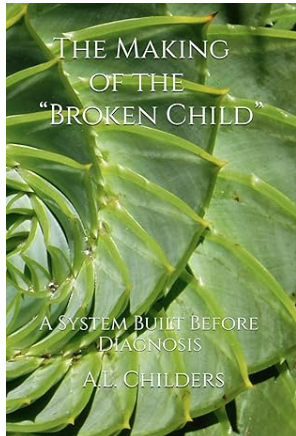
The Making of the “Broken Child”: A System Built Before Diagnosis

Born Into the Ledger—Where It Was Best — and Worst — to Be Born Black or White in the 1800s

Where It Was Best — and Worst — to Be Born Black or White in the 1800s (And Why It Was Never About Color)

This was never a race war.
It was always a class war.
And the elites wrote the story to keep us from noticing.

Born Into the Ledger

There is a certain lie that settles into a society the way dust settles into floorboards — quietly, patiently, until no one remembers what the room looked like before it arrived. It is the lie that suffering has a color, that freedom is inherited through skin, and that history can be cleanly divided into villains and victims based on appearance alone. The 1800s tell a different story, if one is willing to read it slowly, by candlelight rather than headline.

In that century, the most dangerous thing a human being could be was not Black or white — it was poor.

To be born Black in the American Deep South was to be born already counted, already priced, already owned. From the moment breath entered the lungs, it belonged to someone else. Families were dismantled as easily as furniture rearranged. Education was forbidden not because it was useless, but because it was powerful. Bodies were worked until they failed, and when they did, they were replaced without ceremony. This was racialized chattel slavery — brutal, unmistakable, and engineered to strip a person not only of freedom, but of identity itself.

And yet, while this form of slavery was among the most visible and violently enforced, it was not the only system of human ownership operating in the 1800s.

Across the ocean, in the vast cold stretches of the Russian Empire, millions of white peasants were born into serfdom — a word softened by distance, but sharpened by reality. They could be bought and sold with the land they worked, traded between nobles, beaten legally, separated from their families, conscripted into military service, and barred from leaving the estate of their birth. Over a third of Russia lived this way until emancipation arrived in 1861, long after the damage had already been written into bone and blood. They were white. They were Christian. They were owned.

In Ireland, also white and Christian, the chains were quieter but no less lethal. Land was taken, rented back at impossible prices, and governed by absentee landlords who lived comfortably elsewhere. When the potato failed, food continued to be exported while people starved. One million died. Another million fled. It was not slavery by name, but it was domination by design — engineered scarcity enforced by empire.

In England’s industrial cities, white children disappeared into coal mines before they learned their letters. Women stood at looms until their fingers failed. Men breathed in poison until their lungs surrendered. This was called progress. This was called employment. The people living it called it survival. “Wage slavery” entered the language not as metaphor, but as recognition — because freedom that leads only to starvation is not freedom at all.

And still, above all of this, sat the elites.

They wore different coats depending on the country — powdered wigs, military uniforms, tailored suits — but their interests aligned perfectly. British aristocrats, plantation owners, Russian nobles, industrial magnates, colonial governors, banking families, merchant elites. They owned land. They owned factories. They owned ships. They owned laws. They owned people — whether those people were called slaves, serfs, tenants, apprentices, or laborers.

When chattel slavery became inconvenient, they rebranded it. Sharecropping replaced chains. Debt replaced whips. Company towns replaced plantations. The ledger remained.

There were, of course, places where the burden of birth was lighter. To be born Black in Canada in the 1800s was to step into a world without legal chains. Slavery had been abolished. Fugitive slave laws did not reach across the border. Black communities governed themselves, owned land, educated their children, and lived with a degree of safety unimaginable just a few miles south. Racism did not vanish — but ownership did.

In Haiti, newly freed from French rule, Black people governed themselves entirely. It was imperfect, punished economically by the same European powers who claimed enlightenment, but it stood as a living contradiction to the lie that Black freedom required white oversight.

For white people, the safest births occurred not in empires, but in places that had dismantled inherited domination. Switzerland, neutral and decentralized, offered legal personhood even to the poor. Canada and the northern United States offered land, mobility, and political participation unavailable to Europe’s peasantry. Not equality — but protection.

The pattern is impossible to ignore once seen: where elites held unchecked power, everyone beneath them suffered — regardless of color. Race shaped the method. Class decided the fate.

This is why the oldest trick in the book has always been division. When poor Black laborers and poor white laborers began to notice they were trapped in the same machinery, the elites rewrote the narrative. They taught people to argue over skin instead of systems, identity instead of income, ancestry instead of access. Because a divided working class never looks up. It never storms the manor. It never questions who owns the ledger.

The 1800s were not a morality play of color alone. They were a warning — one we are still ignoring.

Different skin. Same chains. Different century. Same elites.


Disclaimer

This article is intended for historical education and social analysis. It does not minimize or deny the unique brutality of racialized chattel slavery, nor does it seek to compare suffering competitively. Its purpose is to examine systems of power and exploitation across race and class to reveal how elites historically maintained control by dividing the poor — a strategy that continues today.


References & Resources

  • Orlando Patterson, Slavery and Social Death
  • Eric Foner, Give Me Liberty
  • Edmund S. Morgan, American Slavery, American Freedom
  • Sheila Fitzpatrick, Russian Serfdom
  • Adam Hochschild, Bury the Chains
  • C.L.R. James, The Black Jacobins
  • British National Archives (Industrial labor records)
  • Library and Archives Canada (Black settlements and abolition records)

About the Author

A.L. Childers is a writer and historical researcher focused on power systems, suppressed histories, and the narratives elites rely on to maintain control. Her work challenges simplified versions of the past and asks readers to look beyond identity-driven divisions to the structures that shape human lives across centuries.


What Winter Once Asked of the Human Mind

A Fireside Chapter

Before winter became decorative, it was demanding.

It did not arrive with twinkling lights or the promise of cheer. It came with weight. With a darkness that lingered at the edges of daylight and pressed itself into the corners of the mind. It came with cold that did not merely chill the skin but seeped inward, settling into joints, lungs, and thought alike. Food stores thinned. Candles burned shorter. Silence, once comforting, grew louder — and in that silence, the mind, if left untended, could wander into fear just as easily as the body could wander into danger.

Winter did not ask whether one felt ready.

It asked whether one was.

And so, winter asked something of people.

Not politely — but persistently.

It asked for preparation.
It asked for memory.
It asked for ritual.
It asked for community.

And when those answers were not given, winter took its payment anyway.

Long before psychology named the nervous system or mapped the pathways of fear and reassurance, people understood something elemental: the human mind could fracture under prolonged cold, darkness, and isolation. Spirits dimmed as quickly as hearth fires. Children, sensing uncertainty, required structure. Adults, facing scarcity and mortality, required meaning. Communities, pressed inward by snow and storm, required reminders of who they were to one another when survival ceased to be effortless.

So stories became tools.

Not entertainment — instruction wrapped in wonder.

They were spoken aloud when the wind rattled shutters and the scent of smoke clung to woolen clothes drying near the fire. They were told by elders whose voices carried the grain of winters survived, whose hands bore the quiet testimony of work finished before the cold arrived. These stories were passed not to frighten, but to focus — to anchor the mind when the world grew hostile.

A cat that punished the unprepared, its eyes glowing beyond the threshold, reminding families that warmth was earned long before it was worn.
A wanderer who tested hospitality, arriving hungry and cold to see whether kindness remained when abundance did not.
A bell that rang when people forgot one another, its sound cutting through snow and complacency alike.
A candle lit for the dead, so grief would not turn feral in the dark.

These were not fantasies.
They were psychological anchors.

Fear, when shaped into story, became manageable. Consequence, when personified, became memorable. Hope, when ritualized, became repeatable. Folklore taught the mind how to endure when the environment turned against it — how to regulate emotion, reinforce behavior, and preserve cohesion without written rules or formal theory.

Children learned without lectures.
Adults remembered without being confronted.

And the stories worked — because they survived.

This story comes from an old winter folk belief once shared around fires and candlelight. Families told these stories long ago to teach kindness, care, and preparation during the darkest months of the year.

These are traditional winter folk beliefs retold for modern readers.
The core legends predate 1900 and were passed down through oral tradition.

The stories in this collection are not modern inventions. They are retellings of traditional winter folk beliefs — passed down through oral tradition long before the 1900s, when survival depended on memory, ritual, and shared wisdom.

To dismiss these tales as superstition is to misunderstand their purpose. They were never meant to explain the world; they were meant to steady the mind within it. They functioned as early psychology — regulating fear, reinforcing social bonds, and offering the nervous system something solid to hold when uncertainty pressed in from all sides.

Even now, when homes are warm and shelves are full, winter still asks its questions.

We feel them when the days shorten and the year closes in on itself. We inventory what we finished and what we avoided. We seek light instinctively — candles, trees, fires, songs — repeating rituals we barely remember choosing. We gather when we can, and ache when we cannot, because the mind still fears abandonment in the dark.

The modern mind is not as different as we pretend.

It still needs rhythm.
It still responds to story.
It still requires meaning when control slips away.

Folklore did not disappear because it was childish. It faded because comfort made us forget why it existed. But the instinct remains — resurfacing every December, disguised as tradition, nostalgia, or an unexplainable pull toward old stories told slowly, by firelight.

Winter once asked the human mind to stay awake, stay connected, and stay prepared.

The stories were the answers.


About the Author

A.L. Childers is a writer and cultural preservationist whose work explores folklore, memory, and the psychological wisdom embedded in pre-industrial traditions. With a voice rooted in old-world storytelling and modern reflection, she writes to honor the stories that once kept communities steady through darkness, scarcity, and silence.


Disclaimer

This chapter is a literary retelling and interpretive exploration of traditional winter folk beliefs. While grounded in documented oral traditions and historical practices predating the 1900s, it is presented for educational, cultural, and artistic purposes. Variations of folklore exist across regions and eras.


References & Resources

• Simpson, Jacqueline & Roud, Steve – A Dictionary of English Folklore
• Hutton, Ronald – The Stations of the Sun
• Eliade, Mircea – Myth and Reality
• Dundes, Alan – Interpreting Folklore
• Frazer, James George – The Golden Bough
• Scandinavian Yule and Solstice oral traditions (pre-industrial Europe)


The Yule Cat: A Winter Tale of Wool, Worth, and Watching Eyes

There are winters that arrive politely, knocking before they enter, and then there are winters that descend without apology — the kind that sharpen the air, hush the earth, and remind humanity that comfort is earned, not promised. In Iceland, when the snow begins to stitch the land into silence and daylight thins to a pale memory, the elders say the Yule Cat wakes.

Not stretches.
Not stirs.
Wakes.

You can feel it before you ever see it — a pressure in the cold itself, as though the darkness has weight. The wind carries a faint scent of iron and wool, raw and unfinished, mingled with pine smoke curling from chimneys where families huddle close. Somewhere beyond the last lantern-lit window, something larger than any house moves across the frozen countryside, its paws silent, its breath slow and patient.

They call it JólakötturinnThe Yule Cat.

By the time the snow crunches beneath its step, Christmas Eve has arrived.

The Yule Cat is not merely black; it is winter-black — the deep, swallowing shade of a night with no moon, fur dusted with snowflakes that cling like stars. Its eyes glow not with rage, but with judgment, old and unblinking. This is no wild beast of hunger alone. This is a creature born of necessity, woven from folklore, labor, and survival itself.

In the old days — before supermarkets and soft excess — wool was life. Autumn meant shearing, carding, spinning. Fingers cracked from cold. Shoulders ached from long days bent over work that never seemed finished. Children learned early that warmth was not gifted; it was made. Socks stitched by candlelight. Coats passed down and mended again and again. To finish your wool before Christmas was not tradition — it was protection.

And those who did not?

The Yule Cat knew.

They say it prowled past farms and villages, its massive tail sweeping snow into whispering drifts. It peered through windows fogged with breath and hope. Inside, laughter might ring, bread might bake, bells might sing — but the Cat did not care for songs. It looked only at what you wore.

New clothes meant effort.
Effort meant survival.
And survival meant you belonged among the living.

The Cat’s presence was felt in the skin first — a prickle along the arms, the sudden awareness of bare ankles or thin sleeves. The sound came next: a low vibration, like a distant purr carried through ice and bone. Not threatening. Assessing.

Those who had done their part felt the warmth of wool hug closer, as though the garments themselves stood witness on their behalf. Those who had not — well, the stories grow quieter there, as if even memory refuses to linger too long.

Parents whispered the tale not to frighten, but to prepare. Children learned that diligence was a kindness to oneself. The Yule Cat was not cruel — it was honest. Winter does not spare the unready. Neither does life.

Even now, long after factories replaced spinning wheels and store-bought coats hang heavy in closets, something of the Yule Cat remains. You feel it when the year turns cold and you take stock of what you’ve finished — and what you’ve avoided. When the holidays arrive and demand reflection, not just celebration. When the dark presses close and asks, quietly but firmly: Did you do the work that mattered?

The Yule Cat still walks in these moments.

Not as a beast in the snow, but as a presence in the conscience. A reminder that comfort is built. That warmth comes from effort. That preparation is love wearing practical clothes.

And if, on some winter night, you swear you see golden eyes glinting just beyond the porch light — do not panic. Simply look down at what you’re wearing. Look at what you’ve made of the year behind you.

The Cat has always been watching.
Not to punish.
But to remind us that survival, dignity, and warmth have always belonged to those willing to finish what the cold demands.


About the Author

A.L. Childers is a storyteller drawn to forgotten folklore, hidden histories, and the quiet truths buried beneath tradition. With a voice that blends old-world atmosphere and modern reflection, she writes to preserve the stories meant to prepare us — not scare us — for the darker seasons of life. Her work explores myth, memory, survival, and the unseen rules that once kept communities alive through long winters and longer nights.


Disclaimer

This story is a creative interpretation of traditional Icelandic folklore. While inspired by historical legend, it is written for educational and artistic purposes and should not be considered a literal account. Cultural myths vary by region and era, and this retelling honors the spirit rather than strict historical record.


🌿 The Making of the “Broken Child”: A System Built Before Diagnosis

A Childers’ Reflection on the Machinery That Shaped Us

The Making of the “Broken Child”: A System Built Before Diagnosis

There are stories we inherit long before we ever learn to speak.
Stories whispered in classrooms, stitched into report cards, folded into the sighs of overwhelmed moms, and reinforced by a world that measured children with rulers too small to capture the size of their souls.

For so many of us—especially those walking through adulthood with undiagnosed neurodivergence in adults—these quiet stories became the architecture of who we believed we were. Stories of deficiency. Stories of failure. Stories of “almost,” “if only,” and “why can’t you just…”

Yet none of those stories were truly ours.
They belonged to a system built before diagnosis, before understanding, and before compassion found its way into the language of human development.

And so children—sensitive, intuitive, creative, overwhelmed children—were sorted, shaped, corrected, or quietly cast aside.
Not because they were broken,
but because the machinery evaluating them could not recognize anything beyond its own blueprints.

My newest book, The Making of the “Broken Child”, is not a tale of disorder but a tale of misalignment—
a cultural autopsy of how a society mistook brilliance for misbehavior, emotional depth for defiance, and sensory wisdom for weakness.

It is a story told not through blame, but through clarity.
Not through anger, but through awakening.
Not through shame, but through truth.


🌑 The Shadow That Followed Us Into Adulthood

Adults who never received names for their differences often describe life not as a journey, but as a long corridor of quiet misunderstandings.

They speak of emotional dysregulation and sensory overload that was never labeled as such…
only punished, silenced, or dismissed.

They remember the confusion of neurodivergent parenting struggles, trying to raise children with needs that mirrored their own when they still carried no language for their past.

They describe overstimulation and burnout for women long before the world admitted such exhaustion was real.

And for many, the late diagnosed ADHD journey or autism discovery came not as an epiphany—but as a vindication.
A final exhale.
A whispered, “So it was never my fault.”

This book does not diagnose.
It reveals.
It walks readers through the machinery—the classrooms, the expectations, the generational scripts, the quiet punishments disguised as guidance—to show how a child becomes mislabeled, misunderstood… and eventually, convinced of their own brokenness.

But the truth is simpler, softer, and infinitely more liberating:

A child is not broken simply because the world did not know how to read them.


🌤️ A System Built Before Language, and Before You

This book is a lantern held to the past.
It illuminates the forgotten rooms of childhood where the early warnings were misread, where emotional overwhelm was called defiance, where sensory sensitivities were treated as dramatic flare, and where intuition was trained out of children for the sake of “fitting in.”

It is a story for the mothers who cried in bathrooms,
for the daughters who learned to shrink,
for the sons who learned to mask,
and for the grown adults now piecing together the architecture of their own becoming.

It is a testament to every person who has ever whispered:

“I was not built for that system.”
And finally learned—
“The system was not built for me.”


🔥 Why This Book Matters

Because it answers the questions society dismissed.

Because it gives language to the childhoods no one understood.

Because it gently dismantles the illusion that struggling children were ever the problem.

Because it offers compassion where the world offered criticism.

Because it whispers what so many have needed to hear:

You were never broken.
You were unrecognized.


“Awakening begins where conditioning ends.”
This book is the doorway to that awakening.


⚠️ Disclaimer

This work is not a substitute for medical or psychological diagnosis. It exists to illuminate cultural patterns, validate lived experiences, and explore the history of a system that mislabeled generations of children long before understanding existed.


About the Author – A.L. Childers

A.L. Childers is a revolutionary whisper—an author who uncovers systems with the gentleness of a storyteller and the precision of an investigator. With more than 200 published works, Childers blends emotional intelligence, historical insight, and sensory-rich narrative to illuminate the unseen machinery shaping human lives. Her writing is compassionate, haunting, and unforgettable…and always guided by the question: Who did you become before you ever had a choice?


The Making of the “Broken Child”: A System Built Before the Diagnosis-Part VIII —FINAL PART — The Awakening: The Moment the Story Breaks and the Truth Appears

Part VIII FINAL PART — The Awakening: The Moment the Story Breaks and the Truth Appears

The Making of the “Broken Child”: A System Built Before Diagnosis

There comes a moment — quiet as a breath, soft as dust settling in an abandoned classroom — when the old story begins to crack. It does not shatter all at once; no great revolution ever begins with noise. Instead, it begins with noticing. A parent notices their child shrinking beneath a label. A teacher notices their brightest students are the ones they’ve been told to tame. An adult notices that the wound they carried since childhood does not belong to them. A society notices the cracks in the walls it once believed were indestructible.

And from these fragile moments of noticing, something long buried begins to rise.

It begins with a question whispered not in anger, but in clarity:
What if the children were never the problem?

That single question — simple, unadorned, unthreatening — carries the power of a thousand revolutions. It is the lantern held up to the machinery in the dark, revealing gears that were never meant to be part of childhood. It is the key that unlocks every assumption we were taught to worship. It is the truth that sweeps through the hallways of the past, lighting up every desk, every file, every diagnosis, every pill bottle, every childhood that bent beneath a story that was never theirs.

As the question spreads, a new picture appears — faint at first, but gaining shape.

You see the factory blueprint of the school system, still clinging like ash to the bones of education.
You see the medical empire rising on the remains of natural healing.
You see the pharmaceutical industry waiting in the wings, its pockets open for profit.
You see the timeline — the cage built before the diagnosis.
You see the brilliance of children mislabeled as dysfunction.
You see the adults who carried the shame of a wound they never caused.
You see the truth behind the disorder that was engineered, not discovered.
You see the spirit of every “problem child” still flickering beneath the weight of decades.

And then — slowly, almost tenderly — you see the story begin to rewrite itself.

A parent kneels beside their child at homework time, noticing that the restlessness is not disobedience but energy asking to be expressed. A teacher pauses before writing another note home, suddenly aware of the world that note might create. A pediatrician, once quick to diagnose, hesitates and asks instead: “Tell me about your child’s environment.” A grown man, tapping his foot in a boardroom, suddenly realizes he is not broken — he is alive.

This is how awakenings begin — not with battles, but with clarity.

The truth is that the system never feared disorder. It feared children who could not be subdued into conformity. It feared the spark. It feared the imagination. It feared the ungoverned mind. But nothing — not diagnoses, not labels, not medications — can extinguish the truth of human spirit.

And once that truth is seen, it cannot be unseen.

We begin to understand that ADHD was never a flaw in the child — it was a flaw in the structure surrounding the child. We understand that the unnatural environment created unnatural responses. We understand that the human body, mind, and soul were never meant to thrive in institutions built for control. We understand that the system wrote a false narrative and forced children to memorize it at the cost of their identity.

And now — in this final chapter — we understand something else:

The story belongs to us now.
Not to the system.
Not to the DSM.
Not to the pharmaceutical giants.
Not to the industrial blueprint.

To us.

To the parents who are waking up.
To the adults reclaiming their childhoods.
To the teachers who are breaking their own training.
To the children whose spirits refused to die.
To the ones who knew all along that something was off — not with them, but with the world.

And this is where the story breaks.
This is where the lie dissolves.
This is where the narrative changes hands.

We step forward, holding the truth like a lantern in a fog thick with centuries of assumption:

Children were never meant to be controlled — they were meant to be understood.
They were never meant to be silenced — they were meant to be heard.
They were never meant to be labeled — they were meant to be supported.
They were never meant to be subdued — they were meant to unfold.
They were never meant to be medicated into compliance — they were meant to be met with compassion.

And as this truth spreads, quietly at first, then fiercely, every old structure begins to tremble.

The classroom of the future will not resemble the cage of the past.
The medicine of tomorrow will not pathologize the very traits that built civilization.
The parent of tomorrow will not surrender their child’s brilliance for the comfort of a system.
The adult of tomorrow will no longer carry the shame of a label that never belonged to them.

This is not hope — this is inevitability.

Because you cannot suppress the human spirit indefinitely.
You cannot extinguish curiosity.
You cannot cage imagination.
You cannot medicate away destiny.
You cannot silence the children who came here to change the world.

And once a society recognizes the truth, the story collapses like a house built on rot.

The “abnormal children” were never abnormal.
The system that invented them was.

This is the ending and the beginning.
The closing of the false narrative and the opening of the real one.
The moment where we hand the pen back to the children —
the ones who were mislabeled, misunderstood, underestimated, and underestimated again.

This is where they rise.
This is where they reclaim their fire.
This is where they step into the world not as patients, not as problems, not as diagnoses —
but as the very force the system feared:

Children who cannot be controlled because they were never meant to be.

In this awakening, the story becomes whole.
And so does the child.
And so does the adult they became.
And so do we.

DISCLAIMER

This series is written for educational, historical, and personal reflection purposes. It is not medical advice, nor does it diagnose, treat, or replace consultation with a licensed medical professional. All historical references are based on documented sources, public records, and widely published research.


A.L. Childers is a multi-genre author known for blending investigative research with storytelling that cuts straight to the bone. Raised in the American South and forged by lived experience, Childers exposes uncomfortable truths about systems, institutions, and the hidden machinery shaping modern life. Her work spans history, health, psychology, spirituality, and cultural critique — always with a warm, human voice that refuses to look away.

A powerful, historically documented Childers-meets-modern exposé revealing how the American school system was engineered for obedience, not learning — and how ADHD was later invented to pathologize normal childhood behavior. This multi-part series examines who built the system, who profits from it, and how millions of children were mislabeled as “disordered” while the real disorder lived inside the institution itself.

The Making of the “Broken Child”: A System Built Before the Diagnosis-Part VII — “The System’s Greatest Fear: Children Who Cannot Be Controlled”

PART VII — The System’s Greatest Fear: Children Who Cannot Be Controlled

The Making of the “Broken Child”: A System Built Before Diagnosis

There has always been a certain kind of child who unsettles the world — not through disobedience alone, but through a deeper, older kind of defiance that cannot be taught, tamed, silenced, or medicated into submission. These children arrive carrying something the system cannot measure and does not know how to absorb: a spirit that refuses to bow. A mind that refuses to dim. A will that refuses to be carved into the shapes demanded by institutions. These children do not break under pressure — they ignite under it. And that ignition terrifies the system more than anything else.

To understand the system’s fear, one must walk through history as if walking through a corridor lined with closed doors. Behind each door lies an era, and behind each era lies the same recurring theme: institutions fear the individuals they cannot control. Empires fear thinkers. Armies fear dissenters. Churches fear questioners. Governments fear visionaries. And school systems fear children whose spirits run wild with imagination, curiosity, and rebellion.

You can feel this fear in the design of the classroom itself. Everything in the room exists to constrain the child who might one day challenge it. The rows of desks like tiny coffins for creativity. The bells like command whistles. The rules stacked like bricks to build a wall between the child and their nature. The fluorescent lights casting a pallor over young faces, washing away the glow of wonder that should live in their eyes. It is all part of the silent architecture of control.

Because nothing threatens a control-based system more than a child who listens to their own inner voice instead of the one coming from the front of the room.

Children who cannot be controlled ask too many questions — real questions, unsettling questions, questions that make adults stare into distances they have spent years avoiding. These children expose hypocrisy without meaning to. They see through pretense as easily as breathing. They challenge rules that were never meant to be questioned. They refuse to sit still not because they are disobedient, but because stillness feels like a kind of spiritual death.

The system fears these children because they behave like life behaves — erratic, messy, unpredictable, vibrant, unstoppable. And institutions depend on predictability. Predictability fuels efficiency. Efficiency fuels order. Order fuels control. Control fuels power. And anything outside that chain threatens the entire structure.

This is why schools, governments, and industries have always feared the children who cannot be molded. Because one child with an unbreakable spirit can become an adult capable of dismantling entire systems.

You can see this fear in the way the system responds to these children. First comes the concern. Then the monitoring. Then the meetings. Then the labels. Then the specialists. Then the medication. And beneath each step, you will find the same silent truth: the system is trying to subdue what it cannot understand.

In another century, these children might have been explorers, inventors, sailors, wanderers, shamans, architects, poets, prophets. The world once relied on them. Civilization once advanced because of them. New continents were discovered by them. Scientific revolutions were sparked by them. Social movements were led by them.

But in a modern industrial society that values uniformity over humanity, these children are treated as malfunctions — errors in need of correction.

A child who cannot be controlled grows into an adult who cannot be easily manipulated, and that is precisely what the system fears. Because uncontrolled adults become whistleblowers. They become entrepreneurs who refuse corporate chains. They become activists who challenge laws. They become creators who expose illusions. They become thinkers who unravel the architecture of deception. They become leaders who recognize when power is being abused — and say so out loud.

So when a child like this enters a classroom, the system does not see possibility. It sees risk.

The risk that the status quo will be questioned.
The risk that compliance will not be learned.
The risk that authority will not be obeyed.
The risk that the child will one day grow into someone who dismantles the very structure built to contain them.

This fear is why the system rushes to label these children. Labels make complexity manageable. Labels turn humans into categories. Categories turn categories into diagnoses. Diagnoses turn diagnoses into markets. And markets turn spirited, untamed children into long-term customers obeying a narrative they never wrote.

But here is the truth hidden beneath the system’s cold machinery: children who cannot be controlled carry the very spark that keeps humanity from falling into tyranny. They are the balance. The counterweight. The disruption that prevents stagnation. They are reminders that life expands despite pressure — and often because of it.

You can feel their presence even now. The child who climbs instead of walks. The child who laughs too loud. The child who builds towers and knocks them down just to see how they fall. The child who turns a worksheet into a story. The child who sees patterns no one taught them. The child who interrupts because their thoughts cannot wait their turn. The child whose body shivers with too much life for a world designed for too little.

The system names them “hyperactive.”
But nature calls them “alive.”

The system names them “impulsive.”
But history calls them “courageous.”

The system names them “distracted.”
But visionaries call them “expansive.”

The system names them “noncompliant.”
But movements call them “leaders.”

The system names them “difficult.”
But truth calls them “necessary.”

These children are not here to obey. They are here to evolve us.

And the system knows it.

That is why it fears them.
That is why it labels them.
That is why it medicates them.
That is why it tries to quiet them, contain them, and tame them.

Because if even one of these children grows into the adult they were meant to be, the system must answer for the damage it caused — and the illusion it maintained.

The greatest irony is that the children who cannot be controlled are the ones the future depends on. They are the innovators, the rebels with cause, the artists who redraw the maps, the thinkers who rebuild the world from the ashes of outdated ideas. They are the ones who show us where the system has failed — and where humanity must rise.

The problem was never that these children could not be controlled.
The problem was that the system should never have tried to control them at all.

DISCLAIMER

This series is written for educational, historical, and personal reflection purposes. It is not medical advice, nor does it diagnose, treat, or replace consultation with a licensed medical professional. All historical references are based on documented sources, public records, and widely published research.


A.L. Childers is a multi-genre author known for blending investigative research with storytelling that cuts straight to the bone. Raised in the American South and forged by lived experience, Childers exposes uncomfortable truths about systems, institutions, and the hidden machinery shaping modern life. Her work spans history, health, psychology, spirituality, and cultural critique — always with a warm, human voice that refuses to look away.

A powerful, historically documented Childers-meets-modern exposé revealing how the American school system was engineered for obedience, not learning — and how ADHD was later invented to pathologize normal childhood behavior. This multi-part series examines who built the system, who profits from it, and how millions of children were mislabeled as “disordered” while the real disorder lived inside the institution itself.

The Making of the “Broken Child”: A System Built Before the Diagnosis-PART VI — Rewriting the Story of the “Problem Child”

PART VI — Rewriting the Story of the “Problem Child”

The Making of the “Broken Child”: A System Built Before Diagnosis

The story of the “problem child” has been told so many times that it has become folklore — whispered in hallways, written in school records, murmured in parent-teacher conferences, cemented into medical charts, carried like an invisible tag into adulthood. It is a story rooted not in truth, but in convenience; not in understanding, but in misunderstanding; not in science, but in systems. And yet, generations of children grew up believing it, folding themselves small beneath its weight, shrinking their brilliance to fit a narrative they never wrote.

But every story — even a false one — can be rewritten.

To begin rewriting it, we must return to the first image: a child fidgeting in a chair too small for their spirit, legs alive with kinetic electricity, fingers itching for something to touch or build, mind racing ahead of the lesson like a horse spooked into freedom. For decades, this child was cast as the villain of the classroom, the disruption, the inconvenience, the one who “couldn’t behave.” But what if the story began differently? What if the first line said:

Here is a child whose nature refuses to be tamed by environments too small for the human soul.

Imagine how differently the world would have treated that child.

Rewriting the story requires peeling back the layers of judgment that once coated their existence. It means recognizing that the so-called “problem” was never within the child but within a system designed to restrain them. The child who couldn’t sit still was not broken — they were responding exactly as a healthy organism responds when confined. The child who talked too much was not disruptive — they were communicating the way human beings were meant to. The child who asked too many questions was not annoying — they were practicing curiosity, one of the highest forms of intelligence.

And the child who daydreamed was not unfocused — they were imagining worlds beyond the cage.

To rewrite the story is to acknowledge the tragedy of the original version: that society mistook vitality for disorder, mistook imagination for distraction, mistook intensity for defiance, mistook movement for malfunction. But the greater tragedy is that these misunderstandings were not accidental — they were engineered.

Schools, built on industrial blueprints, valued predictability over humanity. Medicine, shaped by monopolies, valued diagnosis over understanding. Pharmaceutical companies valued profit over childhood. And parents, raised in the same system, unknowingly passed down the inherited script.

The “problem child” was never a problem.
They were a misfit in a world built for conformity.

Rewriting the story also means reclaiming the child’s lost language — the one they were fluent in before adults translated their behavior into pathology. Children speak in movement, in noise, in impulsive bursts of creativity, in questions that tumble over each other, in emotions so wide and deep they cannot be contained in a straight-backed chair. A child’s natural language is chaotic, beautiful, vibrant, and alive — and society mistook that language for dysfunction.

In rewriting the narrative, we return to that language and treat it not as a disorder but as a native tongue.

Picture the “problem child” not in a classroom but in a forest, where the wind is their instructor and curiosity is their compass. Their fidgeting becomes exploration. Their impulsivity becomes courage. Their talking becomes storytelling. Their daydreaming becomes vision. Their “inattention” becomes attention to what truly matters. Their movement becomes learning in its purest form — through the body, through the senses, through the world.

Now ask:
Was this child ever the problem?
Or was the environment simply too artificial to support the ways nature designed them to thrive?

Rewriting the story means telling the truth that was intentionally buried: that the traits labeled as symptoms are actually strengths — strengths that systems could not contain, so they labeled them instead. It means acknowledging that the “problem child” was a gift the world did not know how to receive. It means naming the truth loudly, without apology:

There are no problem children.
There are only children placed in environments that misunderstand them.

But rewriting the story does not stop at childhood. It stretches into the adult who still carries echoes of the old script — the adult who feels “less than,” “too much,” or permanently out of sync with the world. Rewriting the childhood story rewrites the adult’s identity. It replaces the shame with clarity, the doubt with compassion, the confusion with recognition. It allows the adult to look in the mirror and see not the remnants of failure but the survivor of a flawed system.

It allows them to say, perhaps for the first time:
There was nothing wrong with me. There was something wrong with the story.

Rewriting the story also means confronting the systems that continue to shape children today. It means questioning the blueprint that prioritizes compliance over curiosity, uniformity over imagination, quiet obedience over active engagement with the world. It means recognizing that the world has changed while schools have not — and that children continue to inherit a story written before any of us were born.

And finally, rewriting the story means giving the “problem child” a new ending.

Not one where they grow into an adult forever carrying the scars of a childhood mislabeled, but one where they reclaim their potential, their fire, their originality. One where they discover that their traits were never obstacles — they were compass points. One where they rise above the narrative that once confined them and become architects of their own lives.

Because the greatest truth of all is this:
A child who threatened the system was never a problem.
They were a promise.
A signpost of change.
A spark too bright to be dimmed by institutions built on obedience.

The story of the “problem child” was written by systems that feared what that child represented.
Rewriting it means returning that child to their rightful place —
not as a diagnosis,
not as a patient,
not as a disruption,
but as a being of boundless potential whose spirit refused to be crushed.

This is where the new story begins.
This is where the healing begins.
This is where the “problem child” becomes the hero.

DISCLAIMER

This series is written for educational, historical, and personal reflection purposes. It is not medical advice, nor does it diagnose, treat, or replace consultation with a licensed medical professional. All historical references are based on documented sources, public records, and widely published research.


A.L. Childers is a multi-genre author known for blending investigative research with storytelling that cuts straight to the bone. Raised in the American South and forged by lived experience, Childers exposes uncomfortable truths about systems, institutions, and the hidden machinery shaping modern life. Her work spans history, health, psychology, spirituality, and cultural critique — always with a warm, human voice that refuses to look away.

A powerful, historically documented Childers-meets-modern exposé revealing how the American school system was engineered for obedience, not learning — and how ADHD was later invented to pathologize normal childhood behavior. This multi-part series examines who built the system, who profits from it, and how millions of children were mislabeled as “disordered” while the real disorder lived inside the institution itself.

The Making of the “Broken Child”: A System Built Before the Diagnosis-PART V — The Adult Outcome: The Wound That Never Healed

PART V — The Adult Outcome: The Wound That Never Healed

The Making of the “Broken Child”: A System Built Before Diagnosis

By the time a child becomes an adult, the labels have long faded from the report cards and manila folders where teachers once scribbled their concerns. The desks are gone. The bells have stopped ringing. The classroom has dissolved into memory. And yet — the wound remains, quiet as a shadow at dusk, clinging to the edges of a life that was shaped long before that life ever had a chance to choose a shape of its own.

You see it most clearly in the still moments. A grown man tapping his foot beneath a conference table, ashamed of the rhythm his body creates. A woman apologizing before she speaks, because long ago she was taught her voice was “too much.” A mother who can’t sit still in a waiting room without feeling the old heat of embarrassment rising in her chest. A father whose brilliance is wrapped in self-doubt, still waiting for someone to tell him he isn’t “wrong.”

This is the adult outcome.
Not hyperactivity.
Not distraction.
Not impulsiveness.
But identity — bent quietly and painfully out of shape.

The child who was told they were broken grows into an adult who fears they are unfixable. The diagnosis may have been a single moment, but the identity wound it carved became a lifelong inheritance. And though the pills may have quieted their bodies, they did not silence the question that echoes through the bones of so many adults:

What is wrong with me?

The tragedy is not that the diagnosis exists — it is that it became the lens through which adults learned to see themselves, filtering every failure, every forgotten appointment, every unfinished project, every restless night through the belief that they are somehow defective.

But what if the adult’s “symptoms” are not symptoms at all?
What if they are simply the remnants of a childhood spirit that refused to die, even after being shaped, shaved, and sanded into something smaller than it was meant to be?

As adults move through the world — through marriages, jobs, friendships, disappointments — you can feel the ghost of the classroom in their bodies. In the way they apologize for fidgeting. In the way they shrink when criticized. In the way they overwork to compensate for an imagined flaw. In the way they hide their creativity because it once caused them trouble. In the way they panic when they cannot meet a deadline because they remember the red marks on their papers and the disappointed sighs of adults who expected stillness, silence, and perfection.

But the deepest wound is this:
Adults who were labeled as children often learn to distrust themselves.

They second-guess their intuition.
They question their decisions.
They doubt their capabilities.
They suppress their instincts.
They muzzle their imagination.
They live inside a body that has been told for decades that it is a problem to be managed.

And yet — despite everything — these adults are often the brightest flames in the room. They are creators, innovators, entrepreneurs, storytellers, healers, designers, rescuers, leaders. They are the ones who defy convention, the ones who cannot fit inside boxes, the ones whose minds dance in directions others cannot follow. They are the adults who see the world not as it is but as it could be — and that is precisely why the system feared them as children.

There is a remarkable irony in this outcome:
The same traits that made childhood difficult make adulthood extraordinary.

Restlessness becomes ambition.
Hyperfocus becomes mastery.
Risk-taking becomes innovation.
Sensitivity becomes empathy.
Impulsiveness becomes creativity.
Intensity becomes passion.
Imagination becomes vision.

And yet the wound — the belief that they were “less than,” “too much,” or “not enough” — lingers beneath every accomplishment like a bruise that never quite fades. You can see it in the way they downplay achievements, as if the world will take them back the moment they stop performing. You can hear it in the way they say, “I don’t know what’s wrong with me,” even when nothing is wrong at all. You can feel it in the way they brace for judgment that never comes, flinching from ghosts long gone.

The adult outcome is not chemical.
It is cultural.
It is generational.
It is engineered.

Because the system that labeled them as children offered no path toward healing. It offered only management — never understanding, never affirmation, never the truth that their traits were not disorders but misfits for an environment never designed for human development. And so the adult is left to heal a wound created by a system that never apologized.

Some adults try to outrun the wound — working harder, moving faster, achieving more, hoping the world will finally stamp them as “worthy.” Others hide, shrinking into the smallest version of themselves so they cannot disappoint anyone again. Some numb the pain through substances or distractions. Some fight it through therapy, through books, through breathless searching for an explanation that doesn’t make them feel defective. Some rise above it — wounded but not destroyed — and begin to rebuild their sense of self from the rubble of the narrative they inherited.

But no matter how each adult travels through their healing, there is a universal thread woven into their story:
They were never broken.
They were never disordered.
They were never the problem.

They were simply children forced into an environment that treated their humanity as pathology.

And the wound that never healed is not the restlessness or the impulsivity or the forgetfulness — it is the belief that their natural way of existing in the world was a mistake. A flaw. A deficit. Something requiring correction instead of understanding.

But healing begins the moment the adult sees the truth of their childhood clearly. The moment they realize that their struggle was not a personal failing but a systemic mismatch. The moment they stop bowing to the old voices that told them they were “too much.” The moment they reclaim the parts of themselves that were punished — the movement, the noise, the curiosity, the fire, the imagination.

Because the adult who once sat small in a classroom does not have to remain small in their life.

The wound is not the end of the story.
It is the beginning of awakening.

And as more adults name this truth — out loud, in community, in books, in therapy, in quiet revelations at kitchen tables — the power of the story begins to shift. The shame dissolves. The identity rebuilds. The spirit regrows.

For the first time, the adult sees themselves not as broken —
but as someone who survived a system that never deserved their brilliance.

DISCLAIMER

This series is written for educational, historical, and personal reflection purposes. It is not medical advice, nor does it diagnose, treat, or replace consultation with a licensed medical professional. All historical references are based on documented sources, public records, and widely published research.


A.L. Childers is a multi-genre author known for blending investigative research with storytelling that cuts straight to the bone. Raised in the American South and forged by lived experience, Childers exposes uncomfortable truths about systems, institutions, and the hidden machinery shaping modern life. Her work spans history, health, psychology, spirituality, and cultural critique — always with a warm, human voice that refuses to look away.

A powerful, historically documented Childers-meets-modern exposé revealing how the American school system was engineered for obedience, not learning — and how ADHD was later invented to pathologize normal childhood behavior. This multi-part series examines who built the system, who profits from it, and how millions of children were mislabeled as “disordered” while the real disorder lived inside the institution itself.