Tag Archives: #books

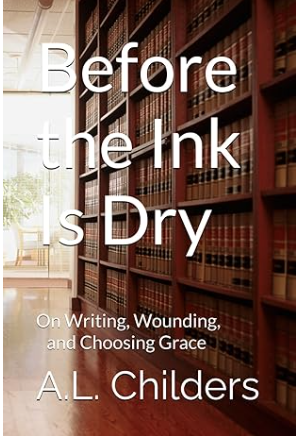
Before the Ink Is Dry is a quiet, incisive book about what happens after a work leaves its creator’s hands.

In a culture that rushes to judgment, demands instant explanation, and rewards certainty over care, this book asks a different set of questions: What does it cost to be misread? Why does reaction feel easier than restraint? And what remains when a writer chooses grace instead of control?

Blending reflective nonfiction with literary observation, A.L. Childers examines the emotional and ethical terrain of authorship—misinterpretation, criticism, silence, and the temptation to defend oneself before understanding has had time to settle. Each chapter moves deliberately, tracing the subtle shifts that occur between creation and reception, exposure and endurance.

This is not a book about winning arguments or managing perception. It is a book about attention—how easily it is lost, how carefully it must be restored, and why restraint is often mistaken for disappearance.

Written for readers who value depth over speed and inquiry over conclusion, Before the Ink Is Dry invites you to slow down, to sit with uncertainty, and to reconsider what it means to remain human in the space between expression and judgment.

It does not rush to resolve.
It does not explain itself into safety.
It lets the ink settle—and leaves it there.

About the Author

A.L. Childers writes literary social commentary that explores power, memory, and belonging in contemporary culture. Her work favors observation over accusation and clarity over performance.

Disclaimer

This book examines cultural patterns and social behavior. It is not intended as commentary on specific individuals or events.

An Invitation to Read Together

Before the Ink Is Dry was written with conversation in mind — not loud debate, but the kind that unfolds slowly, where recognition matters more than resolution. This book does not offer answers so much as it opens space: for memory, for observation, for the quiet social patterns many of us recognize but rarely name.

If you’re part of a book club, reading group, or literary community that values thoughtful discussion, careful reading, and books that trust their audience, this one was written with you in mind. It rewards slow reading and honest conversation, and it lingers long after the final page.

Sometimes the most meaningful discussions begin not with agreement, but with attention.

Before the Ink Is Dry: On Writing, Wounding, and Choosing Grace

From the Author’s Desk: What Happens After a Book Is Finished

Before the Ink Is Dry: On Writing, Wounding, and Choosing Grace

I didn’t expect the quiet to feel this full.

There is a particular stillness that arrives after a book is finished—not when the last sentence is written, but when the work has truly left your hands. When it no longer belongs to drafts or revisions or private certainty. When it enters the world without asking permission and without offering explanations.

At first, that stillness feels unnatural.

For a long time, the work has occupied the foreground of your attention. It has demanded decisions, revisions, patience, and restraint. It has shaped your days. And then, suddenly, it does not need you in the same way. The urgency dissolves, and in its place is space.

This space can feel unsettling.

There is a temptation to fill it quickly—to talk about the book, explain it, contextualize it, hover near it as if proximity might ensure correct handling. The mind looks for evidence that the work has landed, that it is being understood, that it has not disappeared unnoticed.

But something quieter happens if you resist that impulse.

The book begins to stand on its own.

It reads differently once you are no longer inside it. Passages you worried over feel steadier than you remembered. Other lines surprise you—not because they are flawed, but because they sound like someone else now. The work becomes unfamiliar in a useful way.

This unfamiliarity is not loss.

It is separation.

And separation is necessary.

A finished book cannot remain an extension of the writer’s nervous system. It has to develop its own gravity. It has to be allowed to meet readers without supervision, without correction, without the author stepping in to manage every interpretation.

This is difficult for those who care deeply.

Writers are trained to attend—to notice nuance, to anticipate misunderstanding, to refine language until it feels precise. Letting go of that attentiveness can feel irresponsible. But there is a difference between care and control.

After a book is finished, care looks like trust.

Trust that the work can be read slowly by someone you will never meet. Trust that meaning does not collapse simply because it is not immediately clarified. Trust that some readers will find what they need without guidance.

The quiet after completion is not empty. It is observant.

In that quiet, you notice how much of the writing life happens after the work is done—how often the real work is learning when not to speak, when not to shape, when not to intervene. You learn that restraint does not end at publication. It deepens there.

The book, left alone, reveals its endurance.

It doesn’t require constant defense. It doesn’t need to be explained into relevance. It simply exists—waiting for readers who are willing to meet it where it stands, not where the moment demands it be.

This is where writing returns to proportion.

The book is important—but it is not everything. The writer is responsible—but not omnipresent. Life begins to reassert itself. Attention shifts outward again. New questions begin to form, not in response to reception, but in response to living.

The quiet makes room for that.

What happens after a book is finished is not resolution.

It is release.

And release, when practiced without panic, teaches something essential: that the work does not need constant tending to remain alive. Sometimes, the most faithful thing a writer can do is step back and let the pages breathe.

I’m letting it settle.


About the Author

A.L. Childers writes reflective nonfiction and literary essays that explore attention, restraint, authorship, and the quiet forces that shape how work is received. Her writing favors observation over performance and patience over urgency.


Disclaimer

This piece reflects the author’s personal observations and reflections at the time of writing. It is not intended to instruct or persuade, but to invite thoughtful consideration.


Copyright Notice

© A.L. Childers. All rights reserved.
This essay is part of the ongoing From the Author’s Desk series. No portion may be reproduced without permission, except for brief quotations with attribution.

From the Author’s Desk: On Writing Without Urgency

Before the Ink Is Dry: On Writing, Wounding, and Choosing Grace

This is a thought I didn’t want to rush.

I’ve noticed how quickly writing is asked to explain itself now—how little time it’s given to arrive. A sentence is expected to justify its existence before it has fully settled on the page. An idea is measured by how efficiently it can be summarized, shared, or disagreed with. Even reflection is asked to hurry.

I don’t write well in a hurry.

Urgency does something to language. It tightens it. Flattens it. It pushes thought toward conclusion before it’s had time to wander, to double back, to notice what it didn’t know it was looking for. Under urgency, writing becomes a product of pressure rather than attention.

I’ve written that way before. Most of us have. There’s a particular feeling that comes with it—the sense of being slightly ahead of yourself, of speaking before you’ve finished listening to your own thinking. The words may be clear, even sharp, but they don’t linger. They move on quickly, and so does the reader.

What I’ve learned, slowly, is that the work I trust most comes from a different pace.

Not slow for the sake of being slow—but deliberate. Writing that allows a thought to remain unfinished long enough to reveal its edges. Writing that doesn’t rush to be useful. Writing that assumes the reader is capable of patience, even if the culture is not.

This kind of writing asks something of both sides.

It asks the writer to resist the pull of immediacy—to sit with a paragraph longer than feels efficient, to leave a question open rather than closing it neatly. It asks the reader to stay present without being instructed where to land.

That exchange is quieter than urgency. It doesn’t announce itself. It doesn’t compete well with louder voices. But it builds trust.

I’ve come to believe that urgency is rarely about the idea itself. It’s about fear—fear of being overlooked, misread, left behind. Writing without urgency is not a rejection of relevance; it’s a refusal to let fear decide the shape of the work.

Some thoughts need time to stretch.
Some sentences need room to breathe.
Some ideas are damaged by speed.

This space—From the Author’s Desk—exists to honor that. Not as a manifesto, not as instruction, but as practice. A place where writing can arrive without being pushed, and where attention is treated as something worth protecting.

That’s enough for today.

I’ll leave it there.

About the Author

A.L. Childers writes literary social commentary that explores power, memory, and belonging in contemporary culture. Her work favors observation over accusation and clarity over performance.

Disclaimer

This book examines cultural patterns and social behavior. It is not intended as commentary on specific individuals or events.

What Happens When the Room Follows You Online?

The hallway didn’t disappear.
It expanded.

Social media promised reinvention. New audiences. New voices. New rules.

Instead, it rebuilt the room.

Popularity still circulates. Familiar hierarchies still dominate. Pile-ons masquerade as accountability. Certainty is rewarded. Curiosity is not.

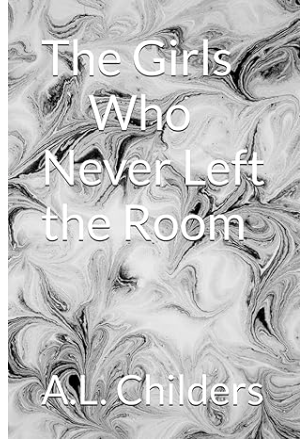
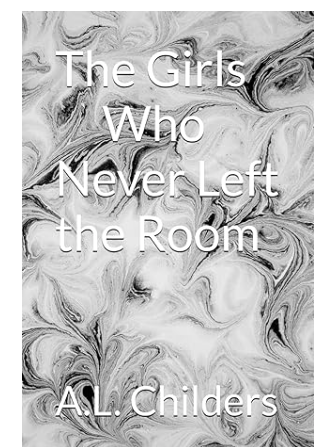
The Girls Who Never Left the Room examines how childhood dynamics migrate seamlessly into adulthood — and how digital spaces amplify what once operated quietly. The same social structures persist, now accelerated by algorithms and performance.

This book is not about online cruelty alone. It is about conditioning. About how early validation teaches people what works — and how rarely that lesson is questioned later.

What happens when the room gains Wi-Fi?

The answer is not chaos.
It is continuity.

The same patterns. Louder. Faster. More public.

This book watches those patterns without outrage. It allows them to speak for themselves. And in doing so, it asks readers to consider not who is being judged — but who is doing the judging, and why it feels so familiar.

About the Author

A.L. Childers writes literary social commentary that explores power, memory, and belonging in contemporary culture. Her work favors observation over accusation and clarity over performance.

Disclaimer

This book examines cultural patterns and social behavior. It is not intended as commentary on specific individuals or events.

An Invitation to Read Together

The Girls Who Never Left the Room was written with conversation in mind — not loud debate, but the kind that unfolds slowly, where recognition matters more than resolution. This book does not offer answers so much as it opens space: for memory, for observation, for the quiet social patterns many of us recognize but rarely name.

If you’re part of a book club, reading group, or literary community that values thoughtful discussion, careful reading, and books that trust their audience, this one was written with you in mind. It rewards slow reading and honest conversation, and it lingers long after the final page.

Sometimes the most meaningful discussions begin not with agreement, but with attention.

Leaving Isn’t Loud — But It Teaches You Everything

Leaving is often mistaken for escape.
In truth, it is an education.

There is a cultural fantasy that leaving fixes everything. That once you exit the room — the town, the hierarchy, the past — clarity arrives fully formed.

It doesn’t.

What leaving actually teaches is contrast.

It shows you how much effort was once spent managing perception. How many rules were learned without instruction. How often endurance was mistaken for strength simply because there were no alternatives.

The Girls Who Never Left the Room traces that education.

This book follows the quiet shift that occurs when a person no longer orients themselves around permission. It explores how early social hierarchies shape identity long after childhood ends — and how leaving those structures does not erase them, but reframes them.

Leaving does not make you superior.
It makes you aware.

The book does not glorify escape or condemn those who stay. Instead, it asks a more honest question: What does distance allow you to see that proximity never could?

For many readers, the recognition is unsettling. For others, it is clarifying. For most, it is both.

This is not a story of triumph.
It is a study of perspective.

And sometimes, perspective is the most lasting form of freedom.

About the Author

A.L. Childers is a literary writer whose work explores memory, power, and social conditioning. She writes with restraint and precision, trusting readers to recognize complexity without instruction.

Disclaimer

This book is not a factual record of specific individuals. It reflects composite experiences and observed patterns intended to examine broader social dynamics.

An Invitation to Read Together

The Girls Who Never Left the Room was written with conversation in mind — not loud debate, but the kind that unfolds slowly, where recognition matters more than resolution. This book does not offer answers so much as it opens space: for memory, for observation, for the quiet social patterns many of us recognize but rarely name.

If you’re part of a book club, reading group, or literary community that values thoughtful discussion, careful reading, and books that trust their audience, this one was written with you in mind. It rewards slow reading and honest conversation, and it lingers long after the final page.

Sometimes the most meaningful discussions begin not with agreement, but with attention.

Some Rooms Don’t Announce Themselves

Some rooms do not raise their voices.
They do not announce rules or assign seats out loud.
They simply teach you — slowly, quietly — who belongs and who must learn how to adapt.

By the time you recognize the room, it has already shaped you.

Most of us believe that childhood spaces lose their influence once we leave them. Classrooms fade. Hallways shrink in memory. Small-town dynamics dissolve into adulthood.

But certain rooms linger.

They return in subtler forms — workplaces where hierarchy masquerades as culture, friendships shaped by unspoken access, online spaces that reward familiarity over growth. These rooms rarely identify themselves. They simply feel familiar, and familiarity has a way of passing for truth.

The Girls Who Never Left the Room was written from inside that recognition.

This book is not about individual grievances or dramatic confrontations. It is about observation. About noticing how class, popularity, and permission are learned early and reinforced quietly over time. About how some people leave rooms and are reshaped by that act — while others remain, defending what once protected them.

The quiet rooms are the most powerful.
They require the least effort to maintain.

This book does not ask readers to indict anyone. It asks them to notice what has gone unnamed — and to consider how often silence is mistaken for neutrality.

Some rooms never announce themselves.
But once seen, they cannot be unseen.

Why This Book Exists

This book exists because social patterns are too often dismissed as personal grudges. Because cruelty is rarely born — it is trained. And because naming a structure calmly can be more unsettling than shouting against it.


About the Author

A.L. Childers writes at the intersection of memory, social observation, and literary restraint. Her work examines class, power, and belonging with clarity and quiet authority, favoring insight over spectacle.

Disclaimer

This work blends memory with social observation. Names and identifying details have been altered or omitted to preserve privacy. The book examines patterns and environments rather than individuals.

An Invitation to Read Together

The Girls Who Never Left the Room was written with conversation in mind — not loud debate, but the kind that unfolds slowly, where recognition matters more than resolution. This book does not offer answers so much as it opens space: for memory, for observation, for the quiet social patterns many of us recognize but rarely name.

If you’re part of a book club, reading group, or literary community that values thoughtful discussion, careful reading, and books that trust their audience, this one was written with you in mind. It rewards slow reading and honest conversation, and it lingers long after the final page.

Sometimes the most meaningful discussions begin not with agreement, but with attention.

Some Rooms Don’t Close When You Leave Them

A Quiet Look at Class, Popularity, and the Power We Carry Forward

Some rooms teach you where to sit.
Others teach you who you’re allowed to become.

Most of us assume we leave those rooms behind when we grow up. Childhood ends. School hallways fade. Names and faces blur into memory.

But some rooms don’t dissolve with time.
They follow us — into workplaces, friendships, online spaces, and adulthood itself.

That is where The Girls Who Never Left the Room begins.


What This Book Is Really About

The Girls Who Never Left the Room is not a memoir in the traditional sense, and it is not a story of villains or redemption arcs.

It is a quiet, incisive examination of class, popularity, and invisible social hierarchies — the ones we absorb early and spend decades either defending or unlearning.

Blending memory with observation, this book explores:

  • How early permission becomes lifelong power
  • Why popularity often hardens instead of softens with age
  • How social hierarchies don’t disappear — they migrate
  • Why some people outgrow rooms, while others never leave them

This is not a book that accuses.
It watches.

It names patterns many of us recognize but rarely articulate — the subtle ways approval, protection, and belonging are distributed, withheld, or weaponized long after childhood ends.


Why This Story Still Matters Now

We like to believe adulthood levels the field.

But social media, public commentary, and digital communities have expanded the hallway — not erased it.

The same dynamics play out:

  • Pile-ons disguised as accountability
  • Familiar hierarchies dressed up as “just opinions”
  • Old power structures given new platforms

What once happened quietly in classrooms now happens loudly online.

And yet, the emotional architecture remains the same.

The Girls Who Never Left the Room asks readers to consider not just who held power — but why it was so comfortable to keep it.


This Is Not a Book About Blame

This book does not explain people away.
It does not excuse harm.
And it does not turn personal history into spectacle.

Instead, it offers something rarer:
distance without cruelty, compassion without denial, and clarity without noise.

It invites readers to sit with an unsettling question long after the final page:

What happens when you outgrow a room — but the room never outgrows you?


Who This Book Is For

This book will resonate if you have ever:

  • Felt the quiet pressure of unspoken social rules
  • Watched old hierarchies reappear in adult spaces
  • Noticed how early validation shapes lifelong identity
  • Outgrown a place — and felt the cost of doing so

It is especially for readers who value literary nonfiction, social observation, and restrained, thoughtful storytelling.


About the Author

A.L. Childers writes at the intersection of memory, social observation, and literary restraint. Her work explores class, power, belonging, and the structures that quietly shape who is protected — and who is expected to move on.

The Girls Who Never Left the Room reflects her commitment to observing patterns clearly, naming them carefully, and knowing when to leave them behind.


Disclaimer

This book blends personal memory with social observation. Names have been changed or removed, details softened where necessary, and composite experiences used to preserve privacy and clarity. This work is not intended as an accusation of individuals, but as an examination of environments, patterns, and cultural dynamics.

Any resemblance to specific persons is coincidental and interpretive rather than literal.


The Day I Stopped Demanding My Body to Surrender

(A story about weight, worry, and the quiet power of standing down)


There was a time—somewhere in my forties—when my body and I stopped speaking the same language.

I kept issuing commands.
It kept issuing warnings.

I called it stubbornness.
It called it survival.

I watched the numbers climb as if they were indictments. I measured myself in failures: pounds gained, clothes retired, photographs avoided. I searched for discipline the way one searches a dark house at night—tense, braced, convinced danger was hiding in every corner.

What I did not understand then—what no one explains when they tell you to try harder—is that my body had already been trying harder than I ever could.

It had learned a new job description somewhere between responsibility and burnout, between holding families together and swallowing stress whole.

Protect.
Conserve.
Brace.
Store.
Stay alert.

This wasn’t weakness.
It was intelligence shaped by pressure.

Cortisol, once a short-term messenger, had moved in permanently. Thyroid signals softened like voices speaking through walls. Insulin lost its rhythm. Hormones rewrote their agreements quietly, without ceremony. And my body learned a rule that would govern everything that came after:

Thin is unsafe.
Stored energy is survival.

So when I issued commands, my nervous system heard something else entirely.

Threat detected.

And it responded the only way it knew how—by holding on tighter.

The truth I wish I had known sooner is this: you cannot scare a body into letting go of armor it believes saved your life.

That understanding arrived not as a revelation, but as a sentence—simple, unremarkable, and devastatingly true:

I’m teaching my body it doesn’t have to protect me anymore.

The moment I said it, something shifted. Not dramatically. Not visibly. But internally, like a guard lowering a weapon—not because danger vanished, but because the watch had ended.

This was not surrender.
It was a truce.

I stopped yelling at symptoms like they were moral failings. I stopped interrogating every sensation, every fluctuation, every morning reading as if my body owed me proof of safety on demand. I realized I had been monitoring myself into anxiety—checking not for information, but for reassurance that never lasted.

The scale—that merciless witness—lost its authority. Not because it changed, but because I did.

Instead of asking Why isn’t this working yet?
I asked What if nothing is wrong?

Instead of I need to fix this,
I offered You’ve been carrying us for a long time.

Instead of demanding results,
I built predictability.

Morning came with warmth and routine. A simple bowl of beans—unimpressive, unmarketable, quietly powerful. Food that said: we are fed. We are steady. We are not in danger.

That small act did more than any punishment ever had. Blood sugar steadied before cortisol could spike. The gut spoke calmly to the brain. Bile flowed, inflammation softened, insulin listened again. Nothing flashy. Nothing extreme. Just a body being reminded—day after day—that emergency mode was no longer required.

And the changes, when they came, arrived like whispers.

Bloating eased.
Waists softened.
Clothes told truths the mirror never could.
Cravings lost their urgency.

The scale lagged behind, as it always does when healing comes first. Cortisol needed to come down. Inflammation needed to quiet. The system needed time to believe the threat was over.

But when that switch began to flip, something miraculous happened.

Weight loss became boring.

No drama. No heroics. No white-knuckled restraint. Just a body finally releasing what it no longer needed to carry.

This is the part no one tells you: the goal was never getting back to 140.

The goal was getting back to safety.

And when the nervous system feels safe, metabolism follows—every single time.

If you are standing where I once stood—exhausted, vigilant, convinced you failed because your body did not obey—hear this clearly:

You did not lose control in your forties.
You held everything together.

Your body paid the price so you could keep functioning.

Now it is your turn to let the system stand down. Not with force. Not with fear. But with steadiness. With boring routines. With fewer alarms. With trust.

Say it once, if you need an anchor. Say it quietly, without expectation:

I’m teaching my body it doesn’t have to protect me anymore.

This isn’t a diet.
It’s a ceasefire.

And ceasefires are where rebuilding begins.

The Quiet Practice That Changed Everything

(Five simple recipes, why they work, and what they teach the body)

This wasn’t about food rules.
It was about sending a signal.

Every morning, before the day asked anything of me, I gave my body the same message:

We are fed.
We are steady.
We are not in danger.

That message matters more than calories ever could.


Why Beans (And Why in the Morning)

Beans are not magic.
They are predictable.

They:

  • stabilize blood sugar early
  • reduce cortisol-driven glucose spikes
  • bind bile (which carries inflammatory waste out of the body)
  • support insulin sensitivity
  • calm the gut–brain axis

Morning matters because cortisol is naturally highest then.
This is not about suppressing it — it’s about not amplifying it.


Why We Soak Beans (And Why It’s Not About “Clean Eating”)

Soaking beans:

  • reduces compounds that cause bloating
  • improves mineral absorption
  • makes them gentler on digestion
  • lowers stress on an already taxed system

This isn’t about perfection.
It’s about making nourishment easier to receive.

Counter vs Fridge Soaking (Simple Truth)

  • Navy, cannellini, great northern, black-eyed peas:
    ✔️ safe to soak on the counter 12–24 hours (cool kitchen)
  • Lima (butter) beans:
    ✔️ best soaked in the fridge
    ✔️ counter soak is fine short-term (8–10 hours) if needed

If they smell sour or look foamy — discard.
Otherwise, you’re fine.


When to Eat These

  • Morning only
  • Ideally within 30–60 minutes of waking
  • Before supplements
  • Before stress
  • Before decision-making

This is not fuel for output.
This is permission to stand down.


Five Simple Recipes (Nothing Fancy, Nothing Loud)

1. Butter Bean Morning Bowl

(The most calming option)

Ingredients

  • 1 cup cooked butter (lima) beans
  • Pinch of sea salt
  • Warm water or bean broth

How
Warm gently. Lightly mash. Eat slowly.

Why it helps

  • Excellent bile binding
  • Very low inflammatory response
  • Signals safety to the nervous system
  • Especially supportive during hormonal shifts

Best time
Early morning, on quiet days or high-stress days.


2. Navy Bean Mash

(The steady baseline)

Ingredients

  • 1 cup cooked navy beans
  • Sea salt
  • Optional splash of warm water

How
Mash until smooth and warm.

Why it helps

  • Strong soluble fiber
  • Stabilizes blood sugar
  • Reduces cortisol spikes
  • Easy to digest even when stressed

Best time
Daily staple. This is your “default.”


3. Cannellini Bean & Rice Bowl

(For mornings when stress is already high)

Ingredients

  • ¾ cup cannellini beans
  • ¼ cup plain white rice
  • Sea salt

How
Warm together. Eat calmly.

Why it helps

  • Prevents blood sugar drops
  • Supports adrenal balance
  • Reduces urgency-driven cravings later

Best time
After poor sleep or emotionally heavy days.


4. Great Northern Bean Soup

(For digestion and bile flow)

Ingredients

  • 1 cup great northern beans
  • Warm water or light broth
  • Pinch of salt

How
Heat into a thin soup. Sip and eat.

Why it helps

  • Supports liver and gallbladder flow
  • Reduces inflammatory load
  • Gentle when digestion feels “stuck”

Best time
When bloated, sluggish, or inflamed.


5. Black-Eyed Peas (Plain & Soft)

(Hormone-friendly and grounding)

Ingredients

  • 1 cup fully cooked black-eyed peas
  • Sea salt

How
Warm thoroughly. Chew well.

Why it helps

  • Supports estrogen clearance
  • Gentle endocrine support
  • Traditionally grounding and stabilizing

Best time
During perimenopause or hormonal fluctuation weeks.


What This Is Doing (Even If You Don’t Feel It Yet)

At first, the changes whisper.

  • bloating eases
  • waist softens
  • cravings lose urgency
  • digestion becomes more predictable

The scale lags behind because:

  • cortisol must come down first
  • inflammation must quiet
  • insulin signaling must normalize

But once safety is established?

The body lets go without being forced.


The End Result (The Part That Actually Matters)

This isn’t about beans.

It’s about what they represent.

  • consistency without punishment
  • nourishment without surveillance
  • food without fear

You’re not “trying to lose weight.”

You’re teaching your body:

You don’t have to protect me anymore.

And when the nervous system believes that?

Armor becomes unnecessary.
Holding on becomes optional.
And change becomes boring — in the best possible way.


Disclaimer

This article is for educational and informational purposes only and is not intended to diagnose, treat, or replace medical care. Always consult a qualified healthcare professional before making dietary or lifestyle changes.


About the Author

A.L. Childers is a writer and researcher exploring thyroid health, stress physiology, metabolism, and the unseen ways women’s bodies adapt to survive prolonged responsibility. Her work dismantles blame-based wellness culture and replaces it with compassion, context, and truth.



When Independence Cost a Dollar and a Dream


There are moments in motherhood that arrive quietly but land like thunder.

This was one of them.

My youngest twin—twenty-seven years old—has purchased a home. In this economy. In a time so unforgiving that even the word starter feels like a relic from another century. It is an accomplishment that deserves to be spoken aloud, admired, honored. I am proud of her in the way that fills the chest and tightens the throat at the same time.

And yet—there it is—the ache.

Because pride and grief sometimes share the same chair.

This economy is ruthless. Not difficult. Not inconvenient. Ruthless. It does not reward youth the way it once did. It does not offer freedom cheaply. It does not allow mistakes without punishment. Housing is no longer a milestone—it is a miracle. And watching your child secure something so rare feels like witnessing both victory and loss in a single breath.

When I was sixteen, I left home.

Not dramatically. Not ceremoniously. I simply went. I had my own apartment. A used car. Paid my electric bill. My car insurance. My groceries. I even attended community college. I was free in the way only the young and unafraid can be—free because the world had not yet learned how to price every inch of air.

It wasn’t because I was wealthy. It wasn’t because I was protected. It was because the numbers made sense back then. They no longer do.

Today, a young person can work endlessly and still remain trapped. Rent devours paychecks. Insurance eats ambition. Groceries demand negotiation. Independence has been turned into a luxury item, and no one pretends otherwise.

So her father and I did what parents are rarely praised for doing anymore—we let our children stay.

No rent. No utilities. No pressure—except the kind that builds, not breaks. The only bills they paid were the ones they chose. The rest went into savings. Into preparation. Into a future we knew the world would not hand them gently.

They also went to work where their father works—a union job that pays more than most four-year degrees promise anymore. Thirty-five dollars an hour. Time-and-a-half after eight hours in a day, not forty in a week. Double time after ten. Triple pay on holidays. The kind of structure that once built the middle class and now survives like a rare species.

And because of that—because of planning, patience, and opportunity—she bought a home.

I should be celebrating without pause.

But there’s a part of me that wishes she would stay just a little longer. Stay in the good life. The one I never had offered to me, even though I somehow managed to afford it anyway. Stay in the safety that took generations of trial and error to learn how to provide.

My childhood was… complicated.

My mother was a single parent doing the best she could with the tools she had. But there were too many men passing through the house. Too much instability. Too much responsibility placed on shoulders still learning how to carry themselves. By the time I was ten, I was caring for my younger sister—five years my junior—cleaning the house, feeding her, managing tasks that children should not have to manage.

If I failed, I was punished. If I succeeded, it was expected.

And yet—those years shaped me.

They gave me skills. Grit. Awareness. Independence sharpened early. I learned how to survive before I learned how to rest. I became a true Gen Xer—resourceful, skeptical, self-reliant, allergic to nonsense.

A Scorpio. A free spirit. A wild child who wasn’t taking anyone’s shit.

And I wouldn’t trade it. Not for anything.

How many people can say they were sixteen in the 1980s, paying their own bills, driving their own car, answering to no one but themselves—and still felt free? The eighties were a strange kind of golden hour. Not perfect. Not fair. But possible.

That world is gone.

So when my daughter closes the door on her own home, I stand in the doorway of memory. Proud beyond words. Tender beyond reason. Grateful that she has what I never did—and quietly mourning the simplicity of a time when independence didn’t require permission from a bank, a union contract, and perfect timing.

This is what parenting looks like in an unforgiving economy.

You don’t push them out.
You build a runway.
You give them what you never had.
And when they finally fly, you wave—even as your heart asks them to circle once more.


Disclaimer

This blog reflects personal experience and generational observation. It is not intended to diminish the struggles of any generation or romanticize hardship. Economic conditions vary widely, and individual outcomes are shaped by many factors. This piece is offered as reflection, not prescription.


References & Context

  • U.S. Bureau of Labor Statistics – Historical wage comparisons
  • Federal Reserve Economic Data (FRED) – Housing affordability index
  • Pew Research Center – Generational economic mobility
  • National Association of Realtors – First-time homebuyer trends
  • Economic Policy Institute – Wage growth vs. cost of living (1980s–present)

About the Author

A.L. Childers is a Gen X writer, researcher, and storyteller whose work blends lived experience with cultural reflection. Raised in an era of latchkeys and learned independence, she writes about family, economics, power systems, and the quiet emotional truths that live beneath major life transitions. Her work honors resilience without glorifying struggle and believes deeply in giving the next generation what many never received.


ABOUT THE AUTHOR — A.L. Childers

Audrey Childers is a published author, thyroid advocate, wellness writer, and founder of TheHypothyroidismChick.com.
After years of misdiagnosis, exhaustion, weight gain, and “your labs are normal,” she rebuilt her health — and now helps other women do the same.

Books include:

The Keto Autoimmune Protocol Healing Book for Women

Hashimoto’s Crock-Pot Recipes

 Reset Your Thyroid: 21-Day Meal Plan

A Women’s Holistic Holy Grail Handbook for Hypothyroidism

Fresh & Fabulous Hypothyroidism Body Balance

The Witch’s Almanac Cookbook (2026)

The Lamp of Christmas Eve

The Lamp at the End of the Corridor: A Story of Rejection, Redirection, and Resurrection for the Misfit Soul

The Girl the Darkness Raised: A Memoir of Scarcity, Survival, and Becoming

The Girl in the Mirror Is Thirteen Again: The House That Yelled and the Woman Who Finally Heard Herself 

 Healing Stews & Enchanted Brews (Original Edition)

Healing Stews & Enchanted Brews: Holiday Magic

My Grandmother’s Witchy Medicine Cabinet

Enchanted Realms: A Comprehensive Guide to Witchcraft & Sorcery

Enchanted Realms: A Comprehensive Guide to Witchcraft & Sorcery

Hashimoto’s Crock-Pot Recipes

 Reset Your Thyroid: 21-Day Meal Plan

A Women’s Holistic Holy Grail Handbook for Hypothyroidism

Fresh & Fabulous Hypothyroidism Body Balance

The Lies We Loved : How Advertising Invented America

Archons: Unveiling the Parasitic Entities Shaping Human Thoughts

The Hidden Empire

Nightmare Legends
The Girl the Darkness Raised: A Memoir of Scarcity, Survival, and Becoming

Whispers in the Wires

The Making of the “Broken Child”: A System Built Before Diagnosis

What Winter Once Asked of the Human Mind

A Fireside Chapter

Before winter became decorative, it was demanding.

It did not arrive with twinkling lights or the promise of cheer. It came with weight. With a darkness that lingered at the edges of daylight and pressed itself into the corners of the mind. It came with cold that did not merely chill the skin but seeped inward, settling into joints, lungs, and thought alike. Food stores thinned. Candles burned shorter. Silence, once comforting, grew louder — and in that silence, the mind, if left untended, could wander into fear just as easily as the body could wander into danger.

Winter did not ask whether one felt ready.

It asked whether one was.

And so, winter asked something of people.

Not politely — but persistently.

It asked for preparation.
It asked for memory.
It asked for ritual.
It asked for community.

And when those answers were not given, winter took its payment anyway.

Long before psychology named the nervous system or mapped the pathways of fear and reassurance, people understood something elemental: the human mind could fracture under prolonged cold, darkness, and isolation. Spirits dimmed as quickly as hearth fires. Children, sensing uncertainty, required structure. Adults, facing scarcity and mortality, required meaning. Communities, pressed inward by snow and storm, required reminders of who they were to one another when survival ceased to be effortless.

So stories became tools.

Not entertainment — instruction wrapped in wonder.

They were spoken aloud when the wind rattled shutters and the scent of smoke clung to woolen clothes drying near the fire. They were told by elders whose voices carried the grain of winters survived, whose hands bore the quiet testimony of work finished before the cold arrived. These stories were passed not to frighten, but to focus — to anchor the mind when the world grew hostile.

A cat that punished the unprepared, its eyes glowing beyond the threshold, reminding families that warmth was earned long before it was worn.
A wanderer who tested hospitality, arriving hungry and cold to see whether kindness remained when abundance did not.
A bell that rang when people forgot one another, its sound cutting through snow and complacency alike.
A candle lit for the dead, so grief would not turn feral in the dark.

These were not fantasies.
They were psychological anchors.

Fear, when shaped into story, became manageable. Consequence, when personified, became memorable. Hope, when ritualized, became repeatable. Folklore taught the mind how to endure when the environment turned against it — how to regulate emotion, reinforce behavior, and preserve cohesion without written rules or formal theory.

Children learned without lectures.
Adults remembered without being confronted.

And the stories worked — because they survived.

This story comes from an old winter folk belief once shared around fires and candlelight. Families told these stories long ago to teach kindness, care, and preparation during the darkest months of the year.

These are traditional winter folk beliefs retold for modern readers.
The core legends predate 1900 and were passed down through oral tradition.

The stories in this collection are not modern inventions. They are retellings of traditional winter folk beliefs — passed down through oral tradition long before the 1900s, when survival depended on memory, ritual, and shared wisdom.

To dismiss these tales as superstition is to misunderstand their purpose. They were never meant to explain the world; they were meant to steady the mind within it. They functioned as early psychology — regulating fear, reinforcing social bonds, and offering the nervous system something solid to hold when uncertainty pressed in from all sides.

Even now, when homes are warm and shelves are full, winter still asks its questions.

We feel them when the days shorten and the year closes in on itself. We inventory what we finished and what we avoided. We seek light instinctively — candles, trees, fires, songs — repeating rituals we barely remember choosing. We gather when we can, and ache when we cannot, because the mind still fears abandonment in the dark.

The modern mind is not as different as we pretend.

It still needs rhythm.
It still responds to story.
It still requires meaning when control slips away.

Folklore did not disappear because it was childish. It faded because comfort made us forget why it existed. But the instinct remains — resurfacing every December, disguised as tradition, nostalgia, or an unexplainable pull toward old stories told slowly, by firelight.

Winter once asked the human mind to stay awake, stay connected, and stay prepared.

The stories were the answers.


About the Author

A.L. Childers is a writer and cultural preservationist whose work explores folklore, memory, and the psychological wisdom embedded in pre-industrial traditions. With a voice rooted in old-world storytelling and modern reflection, she writes to honor the stories that once kept communities steady through darkness, scarcity, and silence.


Disclaimer

This chapter is a literary retelling and interpretive exploration of traditional winter folk beliefs. While grounded in documented oral traditions and historical practices predating the 1900s, it is presented for educational, cultural, and artistic purposes. Variations of folklore exist across regions and eras.


References & Resources

• Simpson, Jacqueline & Roud, Steve – A Dictionary of English Folklore
• Hutton, Ronald – The Stations of the Sun
• Eliade, Mircea – Myth and Reality
• Dundes, Alan – Interpreting Folklore
• Frazer, James George – The Golden Bough
• Scandinavian Yule and Solstice oral traditions (pre-industrial Europe)