Tag Archives: #books

The Making of the “Broken Child”: A System Built Before the Diagnosis-Part VII — “The System’s Greatest Fear: Children Who Cannot Be Controlled”

PART VII — The System’s Greatest Fear: Children Who Cannot Be Controlled

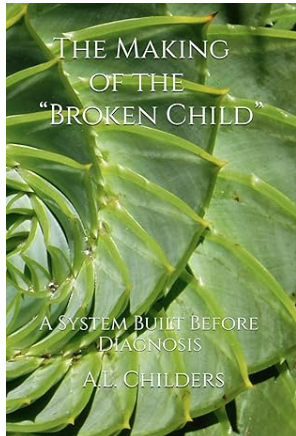
The Making of the “Broken Child”: A System Built Before Diagnosis
There has always been a certain kind of child who unsettles the world — not through disobedience alone, but through a deeper, older kind of defiance that cannot be taught, tamed, silenced, or medicated into submission. These children arrive carrying something the system cannot measure and does not know how to absorb: a spirit that refuses to bow. A mind that refuses to dim. A will that refuses to be carved into the shapes demanded by institutions. These children do not break under pressure — they ignite under it. And that ignition terrifies the system more than anything else.

To understand the system’s fear, one must walk through history as if walking through a corridor lined with closed doors. Behind each door lies an era, and behind each era lies the same recurring theme: institutions fear the individuals they cannot control. Empires fear thinkers. Armies fear dissenters. Churches fear questioners. Governments fear visionaries. And school systems fear children whose spirits run wild with imagination, curiosity, and rebellion.

You can feel this fear in the design of the classroom itself. Everything in the room exists to constrain the child who might one day challenge it. The rows of desks like tiny coffins for creativity. The bells like command whistles. The rules stacked like bricks to build a wall between the child and their nature. The fluorescent lights casting a pallor over young faces, washing away the glow of wonder that should live in their eyes. It is all part of the silent architecture of control.

Because nothing threatens a control-based system more than a child who listens to their own inner voice instead of the one coming from the front of the room.

Children who cannot be controlled ask too many questions — real questions, unsettling questions, questions that make adults stare into distances they have spent years avoiding. These children expose hypocrisy without meaning to. They see through pretense as easily as breathing. They challenge rules that were never meant to be questioned. They refuse to sit still not because they are disobedient, but because stillness feels like a kind of spiritual death.

The system fears these children because they behave like life behaves — erratic, messy, unpredictable, vibrant, unstoppable. And institutions depend on predictability. Predictability fuels efficiency. Efficiency fuels order. Order fuels control. Control fuels power. And anything outside that chain threatens the entire structure.

This is why schools, governments, and industries have always feared the children who cannot be molded. Because one child with an unbreakable spirit can become an adult capable of dismantling entire systems.

You can see this fear in the way the system responds to these children. First comes the concern. Then the monitoring. Then the meetings. Then the labels. Then the specialists. Then the medication. And beneath each step, you will find the same silent truth: the system is trying to subdue what it cannot understand.

In another century, these children might have been explorers, inventors, sailors, wanderers, shamans, architects, poets, prophets. The world once relied on them. Civilization once advanced because of them. New continents were discovered by them. Scientific revolutions were sparked by them. Social movements were led by them.

But in a modern industrial society that values uniformity over humanity, these children are treated as malfunctions — errors in need of correction.

A child who cannot be controlled grows into an adult who cannot be easily manipulated, and that is precisely what the system fears. Because uncontrolled adults become whistleblowers. They become entrepreneurs who refuse corporate chains. They become activists who challenge laws. They become creators who expose illusions. They become thinkers who unravel the architecture of deception. They become leaders who recognize when power is being abused — and say so out loud.

So when a child like this enters a classroom, the system does not see possibility. It sees risk.

The risk that the status quo will be questioned.
The risk that compliance will not be learned.
The risk that authority will not be obeyed.
The risk that the child will one day grow into someone who dismantles the very structure built to contain them.

This fear is why the system rushes to label these children. Labels make complexity manageable. Labels turn humans into categories. Categories turn categories into diagnoses. Diagnoses turn diagnoses into markets. And markets turn spirited, untamed children into long-term customers obeying a narrative they never wrote.

But here is the truth hidden beneath the system’s cold machinery: children who cannot be controlled carry the very spark that keeps humanity from falling into tyranny. They are the balance. The counterweight. The disruption that prevents stagnation. They are reminders that life expands despite pressure — and often because of it.

You can feel their presence even now. The child who climbs instead of walks. The child who laughs too loud. The child who builds towers and knocks them down just to see how they fall. The child who turns a worksheet into a story. The child who sees patterns no one taught them. The child who interrupts because their thoughts cannot wait their turn. The child whose body shivers with too much life for a world designed for too little.

The system names them “hyperactive.”
But nature calls them “alive.”

The system names them “impulsive.”
But history calls them “courageous.”

The system names them “distracted.”
But visionaries call them “expansive.”

The system names them “noncompliant.”
But movements call them “leaders.”

The system names them “difficult.”
But truth calls them “necessary.”

These children are not here to obey. They are here to evolve us.

And the system knows it.

That is why it fears them.
That is why it labels them.
That is why it medicates them.
That is why it tries to quiet them, contain them, and tame them.

Because if even one of these children grows into the adult they were meant to be, the system must answer for the damage it caused — and the illusion it maintained.

The greatest irony is that the children who cannot be controlled are the ones the future depends on. They are the innovators, the rebels with cause, the artists who redraw the maps, the thinkers who rebuild the world from the ashes of outdated ideas. They are the ones who show us where the system has failed — and where humanity must rise.

The problem was never that these children could not be controlled.
The problem was that the system should never have tried to control them at all.

DISCLAIMER

This series is written for educational, historical, and personal reflection purposes. It is not medical advice, nor does it diagnose, treat, or replace consultation with a licensed medical professional. All historical references are based on documented sources, public records, and widely published research.


A.L. Childers is a multi-genre author known for blending investigative research with storytelling that cuts straight to the bone. Raised in the American South and forged by lived experience, Childers exposes uncomfortable truths about systems, institutions, and the hidden machinery shaping modern life. Her work spans history, health, psychology, spirituality, and cultural critique — always with a warm, human voice that refuses to look away.

A powerful, historically documented Childers-meets-modern exposé revealing how the American school system was engineered for obedience, not learning — and how ADHD was later invented to pathologize normal childhood behavior. This multi-part series examines who built the system, who profits from it, and how millions of children were mislabeled as “disordered” while the real disorder lived inside the institution itself.

The Making of the “Broken Child”: A System Built Before the Diagnosis-PART VI — Rewriting the Story of the “Problem Child”

PART VI — Rewriting the Story of the “Problem Child”

The Making of the “Broken Child”: A System Built Before Diagnosis

The story of the “problem child” has been told so many times that it has become folklore — whispered in hallways, written in school records, murmured in parent-teacher conferences, cemented into medical charts, carried like an invisible tag into adulthood. It is a story rooted not in truth, but in convenience; not in understanding, but in misunderstanding; not in science, but in systems. And yet, generations of children grew up believing it, folding themselves small beneath its weight, shrinking their brilliance to fit a narrative they never wrote.

But every story — even a false one — can be rewritten.

To begin rewriting it, we must return to the first image: a child fidgeting in a chair too small for their spirit, legs alive with kinetic electricity, fingers itching for something to touch or build, mind racing ahead of the lesson like a horse spooked into freedom. For decades, this child was cast as the villain of the classroom, the disruption, the inconvenience, the one who “couldn’t behave.” But what if the story began differently? What if the first line said:

Here is a child whose nature refuses to be tamed by environments too small for the human soul.

Imagine how differently the world would have treated that child.

Rewriting the story requires peeling back the layers of judgment that once coated their existence. It means recognizing that the so-called “problem” was never within the child but within a system designed to restrain them. The child who couldn’t sit still was not broken — they were responding exactly as a healthy organism responds when confined. The child who talked too much was not disruptive — they were communicating the way human beings were meant to. The child who asked too many questions was not annoying — they were practicing curiosity, one of the highest forms of intelligence.

And the child who daydreamed was not unfocused — they were imagining worlds beyond the cage.

To rewrite the story is to acknowledge the tragedy of the original version: that society mistook vitality for disorder, mistook imagination for distraction, mistook intensity for defiance, mistook movement for malfunction. But the greater tragedy is that these misunderstandings were not accidental — they were engineered.

Schools, built on industrial blueprints, valued predictability over humanity. Medicine, shaped by monopolies, valued diagnosis over understanding. Pharmaceutical companies valued profit over childhood. And parents, raised in the same system, unknowingly passed down the inherited script.

The “problem child” was never a problem.
They were a misfit in a world built for conformity.

Rewriting the story also means reclaiming the child’s lost language — the one they were fluent in before adults translated their behavior into pathology. Children speak in movement, in noise, in impulsive bursts of creativity, in questions that tumble over each other, in emotions so wide and deep they cannot be contained in a straight-backed chair. A child’s natural language is chaotic, beautiful, vibrant, and alive — and society mistook that language for dysfunction.

In rewriting the narrative, we return to that language and treat it not as a disorder but as a native tongue.

Picture the “problem child” not in a classroom but in a forest, where the wind is their instructor and curiosity is their compass. Their fidgeting becomes exploration. Their impulsivity becomes courage. Their talking becomes storytelling. Their daydreaming becomes vision. Their “inattention” becomes attention to what truly matters. Their movement becomes learning in its purest form — through the body, through the senses, through the world.

Now ask:
Was this child ever the problem?
Or was the environment simply too artificial to support the ways nature designed them to thrive?

Rewriting the story means telling the truth that was intentionally buried: that the traits labeled as symptoms are actually strengths — strengths that systems could not contain, so they labeled them instead. It means acknowledging that the “problem child” was a gift the world did not know how to receive. It means naming the truth loudly, without apology:

There are no problem children.
There are only children placed in environments that misunderstand them.

But rewriting the story does not stop at childhood. It stretches into the adult who still carries echoes of the old script — the adult who feels “less than,” “too much,” or permanently out of sync with the world. Rewriting the childhood story rewrites the adult’s identity. It replaces the shame with clarity, the doubt with compassion, the confusion with recognition. It allows the adult to look in the mirror and see not the remnants of failure but the survivor of a flawed system.

It allows them to say, perhaps for the first time:
There was nothing wrong with me. There was something wrong with the story.

Rewriting the story also means confronting the systems that continue to shape children today. It means questioning the blueprint that prioritizes compliance over curiosity, uniformity over imagination, quiet obedience over active engagement with the world. It means recognizing that the world has changed while schools have not — and that children continue to inherit a story written before any of us were born.

And finally, rewriting the story means giving the “problem child” a new ending.

Not one where they grow into an adult forever carrying the scars of a childhood mislabeled, but one where they reclaim their potential, their fire, their originality. One where they discover that their traits were never obstacles — they were compass points. One where they rise above the narrative that once confined them and become architects of their own lives.

Because the greatest truth of all is this:
A child who threatened the system was never a problem.
They were a promise.
A signpost of change.
A spark too bright to be dimmed by institutions built on obedience.

The story of the “problem child” was written by systems that feared what that child represented.
Rewriting it means returning that child to their rightful place —
not as a diagnosis,
not as a patient,
not as a disruption,
but as a being of boundless potential whose spirit refused to be crushed.

This is where the new story begins.
This is where the healing begins.
This is where the “problem child” becomes the hero.

DISCLAIMER

This series is written for educational, historical, and personal reflection purposes. It is not medical advice, nor does it diagnose, treat, or replace consultation with a licensed medical professional. All historical references are based on documented sources, public records, and widely published research.


A.L. Childers is a multi-genre author known for blending investigative research with storytelling that cuts straight to the bone. Raised in the American South and forged by lived experience, Childers exposes uncomfortable truths about systems, institutions, and the hidden machinery shaping modern life. Her work spans history, health, psychology, spirituality, and cultural critique — always with a warm, human voice that refuses to look away.

A powerful, historically documented Childers-meets-modern exposé revealing how the American school system was engineered for obedience, not learning — and how ADHD was later invented to pathologize normal childhood behavior. This multi-part series examines who built the system, who profits from it, and how millions of children were mislabeled as “disordered” while the real disorder lived inside the institution itself.

🔥 For the women the world refuses to hear!

For the women the world refuses to hear.

I write for the women who have been dismissed, doubted, minimized, and misdiagnosed.
For the women who were told “it’s all in your head” when it was happening in their body.
For the women who learned to whisper their pain because the room was never safe enough for them to speak it.

I write for the woman staring at the ceiling at 2 a.m., wondering why her body feels like a stranger.
For the mother carrying the invisible weight of everyone else’s needs while her own voice is unraveling inside her chest.
For the woman whose symptoms were laughed off, brushed aside, or reduced to “stress,” “aging,” or “anxiety.”

I write for the rebels.
For the quiet ones.
For the survivors.
For the ones who learned to trust themselves because no one else did.

I write what no one else will say — because silence has never healed anyone.

I write because women deserve answers.
Because women deserve to feel safe in their own skin.
Because women deserve to be believed the first time.

I write to expose the systems that fail us.
I write to challenge the narratives that harm us.
I write to give you back the truth that was stolen from you.

I write so you can see yourself — clearly, boldly, unapologetically.
I write so you remember that you are not broken.
You are rebuilding.

Your healing is not a burden.
Your emotions are not a flaw.
Your symptoms are not imaginary.
Your story is not over.

I am not here to be polite.
I am here to tell the truth.
I am here to hold up a lantern in the dark and say:

“I see you.
I believe you.
And you’re not alone.”

This is my promise.
This is my work.
This is my mission.

I am A.L. Childers —
Writer. Witness. Rebel.
And I will speak until every woman hears herself in my words.

A.L. Childers — The writer who says what women are told to silence, giving voice to their unseen battles and turning their pain into power.

Disclaimer:
All content provided by A.L. Childers is for educational, personal insight, and entertainment purposes only. I am not a medical professional, therapist, attorney, or financial advisor. Nothing here should be interpreted as medical advice, diagnosis, treatment, or a substitute for professional guidance. Always consult a qualified healthcare provider before making changes to your health routine, medication, supplements, or lifestyle.

By reading this content, you agree that A.L. Childers is not responsible for any actions taken based on the information provided. Your health, healing, and personal decisions are your responsibility — and your power.

Explore More From A.L. Childers:
🌿 Official Author Website: TheHypothyroidismChick.com
📚 Amazon Author Page: https://www.amazon.com/author/alchilders
✨ Featured Books:
Reset Your Thyroid: 21-Day Meal Plan
A Woman’s Holistic Holy Grail Handbook for Hypothyroidism & Hashimoto’s
The Hidden Empire: A Journey Through Millennia of Oligarchic Rule
The Girl in the Mirror Is Thirteen Again

Follow my journey. Read the stories. Feel seen. Heal deeply.

CHAPTER FOUR-“The Room Where the Air Turned Against Her: A Tale of Endocrine Disruption and Discovery”

“The Room Where the Air Turned Against Her: A Tale of Endocrine Disruption and Discovery”

(from the short series: The House That Stole Her Breath — by A.L. Childers)


THE STORY DEEPENS…

There is a moment — a precise, trembling moment — when a person realizes the danger was never out there, but right beside them, curled into the wallpaper, hiding in the drapes, resting in the quiet corners of their own life.

For her, that moment arrived the night she stepped into the blue room.

It wasn’t actually blue.
Not anymore.
Years ago, someone had painted it a heavy shade of slate — a color so serious it felt like a reprimand. But at night, under the dim glow of a single lamp, the walls seemed washed in deep, bruised blue.

It was the only room she hadn’t detoxed yet.

A room she avoided without understanding why.

A room where the air felt… wrong.
Heavy. Thick.
Like it didn’t want to be breathed.

It was late when she entered — the hour when even the shadows seemed tired. The hallway behind her fell silent, as though the house itself were holding its breath.

She reached for the pull-chain on the lamp.

Click.

The flame-shaped bulb flickered.
The room brightened.

And instantly —
her throat tightened.

A band of pressure cinched itself around the base of her neck, right where her thyroid lived. Her skin prickled, her joints ached with sudden, sharp precision, and her heart shifted tempos — not fast, not slow, but irregular, like someone fumbling at a piano in the dark.

The air tasted metallic.
Bitter.
Wrong.

Something in that room was poisoning her.

Like a Victorian heroine trapped in a parlor she didn’t trust, she stood perfectly still, listening with her body instead of her ears.


THE FIVE SENSES TURN AGAINST HER

SOUND

A strange muffled hum — the HVAC vent? No… too warm, too stagnant.
The room had no intention of circulating anything.

SIGHT

Dust motes drifted lazily through a beam of lamplight, moving thickly, heavily, as though reluctant to rise.
The curtains hung motionless, heavy with secrets.

TOUCH

The air pressed against her skin.
Not cool.
Not warm.
Just… oppressive.

TASTE

She could taste perfume on the air — old perfume, not one she owned.
Something floral, synthetic, almost funereal.

SMELL

A thread of “Floral Mist No. 7,” a popular air freshener from years ago.
Followed by the unmistakable sweetness of vanilla plug-ins.
And beneath it all — the sour reek of melted wax leftovers, the remnants of candles burned in years past.

The room wasn’t haunted.
It was saturated.

Every wall.
Every fiber.
Every inch of carpet.

Even though she had removed every scented product, the room itself remembered.

Her thyroid remembered too.

Inflammation flared through her body like a match dragged across dry wood.

She staggered back a step.


THE DISCOVERY UNDER THE WINDOW

The whispering from Chapter Three had taught her not to ignore such sensations. So she reached down, hand trembling slightly, and touched the baseboard beneath the window.

Sticky.

What kind of baseboard feels sticky?

She pulled her finger away and smelled it.

Scented wax.

Old wax. Years old.

A wax warmer must have sat here once — letting fragrance melt and drip, slip into crevices, sink beneath the wood.

The blue room wasn’t reacting against her.

It was reacting at her.

Every bit of fragrance trapped in the room was now off-gassing whenever the temperature changed — and that night, the heat had kicked on just long enough to free the ghosts.

“Of course,” she whispered.
Her voice echoed, flat and sad, in the stale air.

Her body had known long before her mind did.

Hashimoto’s teaches you that your senses are not dramatic — they are prophetic.

Her thyroid suffered in silence for years — in bathrooms with sprays, in bedrooms with plug-ins, in offices with candles, in cars with hanging trees — while everyone else admired the “freshness.”

No one warned people with endocrine disorders that fragrance was not an accessory.

It was a chemical event.

And for some bodies, it was a catastrophic one.


THE MOMENT OF DISCOVERY

She stepped backward into the hallway, breathing in the clean, faintly sweet air that drifted from her Lamp Berger’s last run. The contrast made her dizzy with clarity.

“No wonder,” she murmured. “No wonder my symptoms always came back. No wonder I never healed in this room.”

Her fatigue.
Her brain fog.
Her swelling thyroid.
Her joint pain.
Her heart flutters.

All of it worse when she spent time in the blue room.

She thought she was imagining it.

She wasn’t.

The thyroid is a sentinel.
An alarm bell.
A soft, vulnerable creature that bruises easily and forgives slowly.

And artificial fragrance — with its endocrine-disrupting phthalates, its synthetic musks, its petroleum base — was its natural enemy.

She pressed her hand to her neck.

“I hear you,” she whispered. “I’m listening now.”

And then she went to fetch her lamp.

Not to mask the smell.
But to erase its memory.


THE PURIFICATION

She placed the lamp in the center of the room, as though preparing an exorcism.

This time, she mixed a blend she’d never used before — something sharp enough to cut through the old fragrance residues, but gentle enough not to inflame her already trembling endocrine system.

When she lit the stone, the blue room seemed to recoil — a subtle tremble in the air, like the room itself was startled awake.

Two minutes.
She blew out the flame.

The catalytic stone glowed softly, like a moon behind smoke.

The room exhaled — and with it, the chemicals released their hold.

Slowly, the metallic taste faded.
The air lightened.
Her skin cooled.
Her heart steadied.

By the time the lamp finished, the room smelled like nothing — beautiful, blessed, neutral nothing.

And for someone with Hashimoto’s, nothingness can be a salvation.


FIVE NON-TOXIC LAMP BERGER RECIPES FOR CHAPTER FOUR

Base for all recipes:
9 oz isopropyl alcohol (90–91%) + 1 oz distilled water.


1️⃣ Blue Room Exorcism Blend

  • 2 drops lemon
  • 1 drop frankincense

Cuts through stubborn fragrance residue left in paint, carpet, and wood.


2️⃣ Thyroid Armor Purifier

  • 2 drops chamomile
  • 1 drop lavender

Reduces thyroid flare symptoms after chemical exposure.


3️⃣ Endocrine Peacekeeper

  • 2 drops vanilla
  • 1 drop rose

Creates a calming atmosphere that supports hormonal balance.


4️⃣ Inflammation Unbinding Blend

  • 1 drop cedarwood
  • 1 drop bergamot

Excellent after visiting scented spaces (homes, stores, salons).


5️⃣ Silent Walls Reset

  • Unscented base fuel

Run this for 20 minutes in any room that “remembers” old scents.


ABOUT THE AUTHOR

A.L. Childers is a bestselling author, researcher, and lover of old-world charm. She teaches modern homes how to reclaim the simple elegance of clean air, non-toxic living, and intentional fragrance — without endangering pets or health.

Books That Support Thyroid, Feminine Energy & Ancestral Healing

The Witch’s Almanac Cookbook (2026)

The Lamp of Christmas Eve

The Lamp at the End of the Corridor: A Story of Rejection, Redirection, and Resurrection for the Misfit Soul

The Girl the Darkness Raised: A Memoir of Scarcity, Survival, and Becoming

The Girl in the Mirror Is Thirteen Again: The House That Yelled and the Woman Who Finally Heard Herself 

 Healing Stews & Enchanted Brews (Original Edition)

Healing Stews & Enchanted Brews: Holiday Magic

My Grandmother’s Witchy Medicine Cabinet

Enchanted Realms: A Comprehensive Guide to Witchcraft & Sorcery

Enchanted Realms: A Comprehensive Guide to Witchcraft & Sorcery

Hashimoto’s Crock-Pot Recipes

 Reset Your Thyroid: 21-Day Meal Plan

A Women’s Holistic Holy Grail Handbook for Hypothyroidism

Fresh & Fabulous Hypothyroidism Body Balance

The Lies We Loved : How Advertising Invented America

Archons: Unveiling the Parasitic Entities Shaping Human Thoughts

The Hidden Empire

Nightmare Legends
The Girl the Darkness Raised: A Memoir of Scarcity, Survival, and Becoming

Whispers in the Wires

  •  DISCLAIMER

This guide is for educational purposes.
Always use essential oils sparingly, especially around pets.
Consult a veterinarian if your household includes sensitive animals.

ABOUT THE AUTHOR

A.L. Childers is a bestselling author, researcher, and lover of old-world charm. She teaches modern homes how to reclaim the simple elegance of clean air, non-toxic living, and intentional fragrance — without endangering pets or health.

A haunting Childers atmospheric tale that plunges deeper into the hidden dangers of artificial fragrances for thyroid and Hashimoto’s sufferers. A sensory-rich gothic narrative, scientific truth woven into fiction, and 5 new non-toxic Lamp Berger recipes.

Books That Support Thyroid, Feminine Energy & Ancestral Healing

The Witch’s Almanac Cookbook (2026)

The Lamp of Christmas Eve

The Lamp at the End of the Corridor: A Story of Rejection, Redirection, and Resurrection for the Misfit Soul

The Girl the Darkness Raised: A Memoir of Scarcity, Survival, and Becoming

The Girl in the Mirror Is Thirteen Again: The House That Yelled and the Woman Who Finally Heard Herself 

 Healing Stews & Enchanted Brews (Original Edition)

Healing Stews & Enchanted Brews: Holiday Magic

My Grandmother’s Witchy Medicine Cabinet

Enchanted Realms: A Comprehensive Guide to Witchcraft & Sorcery

Enchanted Realms: A Comprehensive Guide to Witchcraft & Sorcery

Hashimoto’s Crock-Pot Recipes

 Reset Your Thyroid: 21-Day Meal Plan

A Women’s Holistic Holy Grail Handbook for Hypothyroidism

Fresh & Fabulous Hypothyroidism Body Balance

The Lies We Loved : How Advertising Invented America

Archons: Unveiling the Parasitic Entities Shaping Human Thoughts

The Hidden Empire

Nightmare Legends
The Girl the Darkness Raised: A Memoir of Scarcity, Survival, and Becoming

Whispers in the Wires

  •  DISCLAIMER

This guide is for educational purposes.
Always use essential oils sparingly, especially around pets.
Consult a veterinarian if your household includes sensitive animals.


CHAPTER THREE-“The Whisper Beneath the Floorboards: How Hidden Scents Betrayed Her Hashimoto’s”

“The Whisper Beneath the Floorboards: How Hidden Scents Betrayed Her Hashimoto’s”

(from the short series: The House That Stole Her Breath — by A.L. Childers)


THE STORY CONTINUES…

There were nights when the house spoke to her.

Not in the obvious way — no creaking pipes, no spectral moans, no Hollywood theatrics.
No, this voice was softer. Older.
A whisper that seemed to travel along the floorboards like a chill draft slipping beneath a locked door.

It called to her most loudly on evenings after she’d been out in the world — grocery stores heavy with detergent clouds, salons perfumed enough to sedate a rhinoceros, department stores fogged in cologne.

Tonight had been one of those days.
She’d returned home aching, throat tight, head pounding with a chemical echo that refused to fade.

The moment she closed the door behind her, she felt it — the shift in air pressure, the house recognizing her distress like an old friend leaning forward to listen.

She kicked off her shoes, padded across the wooden floor, and paused.

There it was again.
A whisper.

A faint perfume rising from below, not above.
A scent she didn’t remember using.
Not floral. Not fruity.
Something… stale. Manufactured. Wrong.

She knelt and pressed her palm to the floorboards.

They were warm.

Not warm like a heater.
Warm like a secret.


⭐ “This house has memory,” she murmured.

The whispering wasn’t supernatural.
It was structural.

The house, built long before she moved in, had absorbed years and years of fragrances — the residue of plug-ins that once lined its halls, wax melts that drenched its corners, sprays that seeped into its paint, candles burning like tiny chemical factories on tables and shelves.

Artificial fragrance doesn’t stay where it lands.

It settles.

It soaks.

It clings.

Like sorrow.
Like grief.
Like inflammation.

Her thyroid throbbed in agreement — a dull, insistent pulse beneath her skin, as if trying to warn her:

“There are toxins here still.”

She rose slowly, moving room to room, breathing through her nose with the delicacy of a detective tracing a crime scene.

The living room smelled faintly of “Rainforest Orchid,” though she had not used that scent in years.
The bedroom carried a ghost of old fabric softener.
The hall closet whispered “Fresh Linen,” a chemical fog trapped inside coats that hadn’t been worn since before her diagnosis.

The house wasn’t haunted.

It was remembering.

Every fragrance she had ever used existed somewhere in its structure — a phantom smell resurrected by humidity, heat, movement, or simply the mind’s ability to recall a trauma through scent.

And for someone with Hashimoto’s — someone whose endocrine system lived in a constant state of hypervigilance — these whispers were not harmless.

They were triggers.


⭐ A SENSORY OVERTURE

She closed her eyes and let the sensations flood her.

Sound:
The low hush of her own breath.
A distant hum from the fridge.
The creak of old wood settling beneath her weight.

Touch:
The cool air brushing past her cheek.
The slight vibration through the floor as the heater kicked on.

Sight:
The lamplight casting amber halos on the walls.
Dust drifting in the beam like slow-falling snow.

Smell:
This was the one that betrayed her.
Fragments of scents long banished.
Perfume ghosts rising from the grain of the wood.

Taste:
A faint chemical bitterness on the back of her tongue — the memory of endocrine disruptors her body had not yet learned to forget.

Hashimoto’s made the world sharper.
More dangerous.
More intimate.

A simple scent could swell her thyroid.
A lingering air freshener could trigger inflammation from her joints to her spine.

She sighed. “Enough,” she whispered to the house. “No more remembering.”

She walked to the sideboard where her Lamp Berger sat — elegant, glass-bodied, waiting like a lantern in a Dickensian mystery.

When she lifted it, the whispering stopped.

As if the house recognized its own cure.


⭐ THE CLEANSE

She filled the lamp with a new blend — her strongest yet, crafted not for scent but for purification.

She soaked the wick, lit the stone, and watched the small flame rise.

For two minutes, it glowed — a single star burning in her dimly lit room.

Then she blew it out.

The catalyst awakened with a soft hum, invisible but powerful.
It devoured odor molecules, dismantling them like a clockmaker taking apart gears.

The house exhaled.

So did she.

Slowly, the stale fragrance ghosts dissolved.
The “Rainforest Orchid” retreated.
The “Fresh Linen” collapsed.
The fabric softener memory drifted away like chimney smoke in wind.

For the first time in years, she felt the floorboards beneath her feet grow cool.

Quiet.

Empty of scent.

Empty of whispers.

She could breathe.

Her thyroid — that weary, battered organ — rested like a soldier finally allowed to stand down.

The house wasn’t her enemy after all.

It was simply holding on to memories she hadn’t yet released.

She touched the wall gently.
“Thank you for letting them go.”


⭐ FIVE NEW NON-TOXIC LAMP BERGER RECIPES

(Designed to clear old fragrance residue, soothe inflammation, and reset an endocrine-sensitive home.)

1️⃣ Floorboard Cleanse Blend

  • Base fuel (9 oz alcohol + 1 oz water)
  • 2 drops rosemary
  • 1 drop cedarwood

Breaks through lingering scent ghosts; clears space energetically and chemically.


2️⃣ Hashimoto’s Haven Purifier

  • Base fuel
  • 1 drop chamomile
  • 1 drop frankincense

Soft, supportive, grounding. Ideal after triggered inflammation.


3️⃣ Silent House Reset

  • Base fuel
  • No fragrance

Use when your body needs neutrality — especially after exposure to detergents.


4️⃣ Thyroid Guardian Blend

  • Base fuel
  • 2 drops lavender
  • 1 drop geranium

Balances emotional overwhelm while calming the endocrine response.


5️⃣ Old Scent Exorcism

  • Base fuel
  • 2 drops lemon
  • 1 drop clary sage

Cuts through stale fragrance remnants left by plug-ins, melts, and sprays.


ABOUT THE AUTHOR

A.L. Childers is a bestselling author, researcher, and lover of old-world charm. She teaches modern homes how to reclaim the simple elegance of clean air, non-toxic living, and intentional fragrance — without endangering pets or health.

Books That Support Thyroid, Feminine Energy & Ancestral Healing

The Witch’s Almanac Cookbook (2026)

The Lamp of Christmas Eve

The Lamp at the End of the Corridor: A Story of Rejection, Redirection, and Resurrection for the Misfit Soul

The Girl the Darkness Raised: A Memoir of Scarcity, Survival, and Becoming

The Girl in the Mirror Is Thirteen Again: The House That Yelled and the Woman Who Finally Heard Herself 

 Healing Stews & Enchanted Brews (Original Edition)

Healing Stews & Enchanted Brews: Holiday Magic

My Grandmother’s Witchy Medicine Cabinet

Enchanted Realms: A Comprehensive Guide to Witchcraft & Sorcery

Enchanted Realms: A Comprehensive Guide to Witchcraft & Sorcery

Hashimoto’s Crock-Pot Recipes

 Reset Your Thyroid: 21-Day Meal Plan

A Women’s Holistic Holy Grail Handbook for Hypothyroidism

Fresh & Fabulous Hypothyroidism Body Balance

The Lies We Loved : How Advertising Invented America

Archons: Unveiling the Parasitic Entities Shaping Human Thoughts

The Hidden Empire

Nightmare Legends
The Girl the Darkness Raised: A Memoir of Scarcity, Survival, and Becoming

Whispers in the Wires

  •  DISCLAIMER

This guide is for educational purposes.
Always use essential oils sparingly, especially around pets.
Consult a veterinarian if your household includes sensitive animals.


CHAPTER TWO-The Day the Walls Began to Burn: Inflammation, Perfume, and the Body That Couldn’t Fight Back

The Day the Walls Began to Burn: Inflammation, Perfume, and the Body That Couldn’t Fight Back

(from the short series: The House That Stole Her Breath – by A.L. Childers)


The first time it happened, she thought the house was actually on fire.

Not her house—their house. Her sister’s. The one with the granite countertops, the spotless white sofa, and the kind of curated décor that made visitors say things like, “It smells amazing in here,” before they ever commented on the art.

She stepped through the front door and was hit by it at once.

Warm sugar. Toasted coconut. Something rich and spicy, like cinnamon tucked inside velvet. The air had weight. It pressed against her skin, gliding over her face like invisible syrup. She could almost see it: a faint, shimmering haze hovering above the entryway table, rising from a three-wick candle whose flame licked at the glass like a hungry tongue.

“Ta-da!” her sister sang, sweeping a hand toward the living room. “New holiday scent. ‘Cozy Hearth.’ Isn’t it to die for?”

She smiled because that’s what you do, even when you’re a thyroid warrior and your whole body is a battlefield.

“It’s… strong,” she managed.

Her sister laughed. “That’s the point, silly. Gotta get rid of the dog smell and the cooking smell and the… life smell.” She wrinkled her nose. “Can’t have people walking into onion and old socks.”

They moved further in. The soundscape of the house closed around her: the clink of ice in glasses, the soft buzz of conversation, the upbeat hum of a playlist coming from a speaker in the corner. Someone was laughing in the kitchen. Silverware chimed against ceramic. The dog’s paws clicked across the hardwood; his collar tags jingled like tiny bells.

She wanted to enjoy it.

But her body had already noticed what her mind tried to ignore.

The candle wasn’t alone.

On the far wall, a plug-in released little breaths of “Frosted Pine.” In the half bath, an automatic sprayer lay in ambush, hissing a mist of “Clean Linen” every few minutes. A wax warmer in the kitchen oozed the scent of caramel apple. The house smelled like a bakery nested in a forest inside a laundromat—and every single one of those smells was a chemical sermon her endocrine system had no strength left to resist.

Her nose prickled first, an almost pleasant tingle that turned quickly into sting. The back of her throat tightened. Somewhere under her collarbone, her heart changed tempo, stuttering like a skipping record. Heat rose along her neck, wrapping itself around her thyroid like a too-tight scarf.

She tried to focus on the good things: the shine of the silverware, the crisp crackle when someone bit into a crostini, the cool glass of sparkling water sweating against her palm. She concentrated on the cotton of her sweater brushing her wrists, the warmth of the dog’s head when it pressed against her thigh, the way the fairy lights reflected in the window like a second, softer city beyond the glass.

But her own body pulled her attention back again and again.

Her joints ached as if a storm were moving through them.
Her hands trembled when she reached for a plate.
Her vision blurred around the edges, smearing faces and fairy lights together into a single bright smear.

“Are you okay?” her sister asked quietly, when she thought no one else was listening.

“Just tired,” she lied. “Hashimoto’s day.”

Hashimoto’s day. As if the autoimmune disease observed holidays of its own choosing.

She lasted another twenty minutes before the walls began to burn.

Not literally—no flames, no smoke. Just a sudden, suffocating hotness that seemed to seep out of the paint itself. The room shrank around her, every surface radiating invisible heat, as if the house were exhaling against her skin. Her chest grew tight. Her tongue felt too big for her mouth. Her brain fog thickened until the conversation at the table sounded like it was happening underwater.

Inside her, inflammation roared to life like an old furnace kicking on, rattling the ducts.

This is what happens, she thought, when you ask a tired thyroid to live in a fragranced world.
A world of endocrine disruptors disguised as “cozy,” “fresh,” “clean,” “romantic.”
A world where people think health is what you eat, not what you breathe.

“I need some air,” she said, standing so suddenly her chair scraped against the floor.

On the porch, winter air slapped her hard enough to make her gasp. It tasted of cold, damp leaves and distant car exhaust—still cleaner than the “Cozy Hearth” combustion she had just escaped. The night wrapped itself around her like a dark coat. She let the chill sink into her overheated skin.

Her phone buzzed. A notification, then another: thyroid support group messages, strangers comparing TSH numbers, talking about fatigue and joint pain and brain fog. None of them mentioned the way scent could set their bodies on fire.

Maybe they didn’t know.

Maybe she hadn’t wanted to know.

She thought of her own house, quieter now. The plug-ins unplugged. The candles retired. The sprays exiled to the trash. Her little Victorian catalytic lamp resting on the sideboard, waiting like an old friend who never raises its voice.

She had replaced her “fragrance arsenal” with simple recipes—non-toxic Lamp Berger fuels that didn’t declare war on her hormones. She’d already noticed the difference: fewer Hashimoto’s flares, fewer nights where her heart hammered after cleaning days, fewer mornings where her throat felt swollen from nothing more than breathing.

Let the world have its perfumed fog, she thought.
She was done letting her body be collateral damage.

Her sister came to the door then, hugging her cardigan tighter against the cold.

“You sure you’re okay?” she asked again.

She considered the easy answer—the polite yes—and then thought of all the women online who might be standing in houses just like this, breathing chemicals their thyroids were too tired to fight.

“No,” she said gently. “My body doesn’t do well with all the fragrance. The spray, the plug-ins, the candles… all of it. My thyroid’s already limping as it is. This just… makes it worse.”

Her sister blinked. “Seriously? It can do that?”

She nodded. “For people with Hashimoto’s and endocrine issues? Yeah. Those chemicals are hormone disruptors. They make inflammation worse. They tell the body lies. My thyroid believes them.”

For a moment, her sister didn’t say anything. Then she looked back into the glowing, scented house as if she, too, were seeing it for the first time.

“I had no idea,” she said. “I just wanted it to smell nice.”

“I know,” she said softly. “Me too. That’s why I got a different kind of lamp.”

“A nightlight?”

She smiled. “More like a tiny Victorian air purifier. Runs on alcohol and water. Destroys odors instead of spraying more at them. I add a drop or two of essential oil on good days. Some days I run it unscented. It feels like my house finally stopped arguing with my thyroid.”

Her sister laughed, half skeptical, half relieved. “You would be the one with the old-fashioned witch lamp.”

“Maybe,” she said. “But my body doesn’t set the walls on fire anymore.”

The words hung there between them, visible as breath in the cold.

“I’ll show it to you sometime,” she added. “And give you some of my recipes. Good ones. Actual clean-air blends, not endocrine-disruption-in-a-jar.”

Her sister shivered. “Deal. But right now, come inside before you freeze.”

“I’ll come back,” she promised. “Just… let me stand out here and cool down first.”

She closed her eyes, listening: to the wind rustling last year’s leaves, to the far-off hiss of tires on wet pavement, to her own breath as it slowed and softened. The fog inside her body retreated a little. The invisible fire banked low.

When she finally went back into the house, she did so like someone walking into battle—aware of every scent, every flicker of flame, every spray bottle.

The world could keep selling poisoned perfume as “home.”

She had something better now: information, intuition, and a small glass lamp waiting for her on her own table—a quiet ally in a life where thyroid bodies and inflamed immune systems needed all the allies they could get.


Recipes from Chapter Two

(5 new non-toxic Lamp Berger blends for inflamed, thyroid-sensitive bodies)

Base for all recipes:
9 oz 90–91% isopropyl alcohol + 1 oz distilled water.
Mix in a glass bottle and shake gently.

1. Housefire No More – Detox Evening Blend

  • Base fuel
  • 2 drops lavender
  • 1 drop frankincense

Use: After exposure to heavy fragrance (stores, other people’s homes).
Effect: Calming, grounding, doesn’t shout at the senses.


2. Thyroid Truce – Gentle Hormone Harmony

  • Base fuel
  • 2 drops geranium
  • 1 drop vanilla

Use: On days with mood swings or PMS + thyroid fatigue.
Effect: Warm, soft, subtly floral; supports emotional balance.


3. Brain Fog Breaker – Focus & Clarity

  • Base fuel
  • 2 drops lemon
  • 1 drop rosemary

Use: Short sessions while working or reading.
Effect: Brightens mental focus without blasting synthetic “clean” smell.

(Limit citrus around cats; always ventilate.)


4. Inflammation Cool-Down – Restorative Night Blend

  • Base fuel
  • 2 drops chamomile
  • 1 drop cedarwood

Use: Evenings when joints ache and the nervous system feels wired.
Effect: Earthy, soothing, like a warm blanket that doesn’t itch.


5. Porch Air in a Bottle – After-Party Reset

  • Base fuel
  • 1 drop eucalyptus (optional – omit for sensitive pets)
  • 1 drop lavender
  • 1 drop sweet orange

Use: Short bursts after guests leave with clouds of perfume, smoke, or food smells.
Effect: Clears the room; feels like opening windows on a brisk day.


REFERENCES & RESOURCES

  • Archives on Lampe Berger history (French perfuming journals)
  • Essential oil safety data from Tisserand Institute
  • Indoor air safety documentation (Poison Control & EPA)
  • Veterinary sources regarding pets + scented products

 DISCLAIMER

Use essential oils lightly. Consult a veterinarian for sensitive pets.
This guide is for educational purposes only; always operate catalytic lamps responsibly.


ABOUT THE AUTHOR

A.L. Childers, a modern chronicler of home alchemy and clean living, blends old-world storytelling with practical wisdom. Her guides revive the forgotten art of non-toxic fragrance and the elegance of mindful homemaking in a chaotic world.


Books to Mention in the Series

Poisoned by the Perfume: How Artificial Scents Betray Your Thyroid — and the Victorian Lamp That Saves It


The bottle was beautiful. That was how it got past her defenses.

Thick glass, the color of late afternoon sunlight, with a gold cap that clicked shut like a promise. When she first sprayed it on her wrist, the perfume wrapped around her like a silk scarf: jasmine, vanilla, a whisper of amber. She closed her eyes and inhaled.

For a moment, she felt expensive.

The scent moved with her all day—through emails, errands, and the slow march of a body with hypothyroidism, already burdened by weight that would not leave, hair that fell without asking, and a brain that sometimes moved as if wading through wet cement.

By evening, the glamour had faded. The perfume, still clinging stubbornly to her pulse points, had grown sour and claustrophobic. Her head throbbed with an ache that sat behind her eyes like a coiled animal. Her neck felt thick, her voice hoarse.

“Maybe I’m getting sick,” she thought.

She wasn’t wrong. She just didn’t know the sickness had a name: being poisoned by the perfume.

Days turned into weeks. She added plug-in air fresheners to “brighten up the hallway.” Scented candles for “ambiance.” Fabric sprays to “freshen the couch.” Her home smelled like a department store at Christmas: layered with notes of sugar, spice, florals, linen, ocean, pine.

And underneath it all, her thyroid begged for mercy.

Her sleep grew shallow. Her heart stuttered at odd moments. Her anxiety—which she once blamed only on life—now arrived on schedule after deep-cleaning days, candle-burning nights, and perfume-drenched mornings.

One afternoon, sitting in her doctor’s office under fluorescent lights, she heard the word again: Hashimoto’s. Autoimmune. Inflammation. Endocrine.

Hormones, the doctor explained, are messengers. They whisper instructions the body must obey. If anything else starts mimicking those instructions—endocrine disruptors in plastic, in food, in fragrances—the body becomes confused. The thyroid, that small, butterfly-shaped gland at the base of her throat, was already under siege. Every artificial scent in her life was a traitor, quietly feeding the chaos.

She went home and looked at everything differently.

The perfume bottle on her dresser.
The plug-ins glowing like tiny electronic fireflies.
The candles squatting on every shelf, their wicks blackened with prior burns.

“What are you doing to me?” she asked the room.

It did not answer, but her body did.

Headache.
Fog.
Fatigue.
A crash in mood.
The familiar weight behind her sternum, like someone had set a book there and forgotten to remove it.

In an act that felt both sacrilegious and sacred, she began gathering them: perfume, candles, sprays, plug-ins. The plastic bag grew heavier as she moved through the house. Each object had once been a small ritual of self-care—now revealed as a tiny, daily betrayal.

She took them to the outside trash bin, tied the bag, and walked back in, heart pounding as if she’d just ended a relationship.

The silence smelled like nothing at all. For the first time, she noticed how her home actually smelled without perfume: a hint of dust, last night’s dinner, the clean cotton of her sheets.

It wasn’t pretty.
But it was honest.

Weeks later, when the headaches dulled and her sleep deepened, she found herself missing one thing: not the chemicals, but the feeling of ritual—lighting something, tending something, pouring something to honor her home and body.

The answer came from a photograph in a book about old French inventions: a Victorian-looking lamp with a stone top and a delicate glass base. It could purify the air, the text said, long before canned fragrances ever existed.

A fragrance lamp, she read. Lampe Berger.

Unlike her old products, this one did not hide what it did. Its fuel could be made from simple ingredients: alcohol, water, and if desired, a drop or two of pure essential oil. No mystery perfume blends. No fifteen-syllable endocrine disruptors.

She imagined it on her table: a small, dignified piece of Victorian technology, glowing softly as it cleaned her air instead of betraying her body.

When it arrived, she treated it like an honored guest.

She mixed her fuel carefully, the way a chemist and a witch and a thyroid warrior might all collaborate:
9 ounces of alcohol, 1 ounce of distilled water.
She left out the fragrance entirely at first. Her body needed to trust the process.

She lit the stone, watched the tiny flame dance, then vanish on command. The invisible reaction began. No “perfume cloud,” no artificial musk. Just a slow, gradual lifting of heaviness in the room.

Later, when she was ready, she made her first gentle blend: one drop lavender, one drop chamomile. Nothing more. The scent was faint, like a memory rather than a shout.

Her head did not punish her.
Her heart did not race.
Her thyroid did not throw a tantrum.

It felt as if she had replaced a chorus of liars with a single, quiet friend.

She ran the lamp for no more than twenty minutes at a time, especially with her cat curled on the chair and her dog asleep at her feet. She respected their lungs as she was learning to respect her own.

As the weeks passed, she noticed something remarkable: on days when she used the catalytic lamp instead of candles and sprays, her Hashimoto’s symptoms didn’t spike. The background hum of inflammation in her body still existed—but it was no longer being stoked by chemicals pretending to be “romance” or “freshness” in a bottle.

Artificial scents had betrayed her thyroid.
The Victorian lamp had not come to rescue her hormones like a fairy tale prince, but it had done something just as important:

It kept its word.

And many more at: amazon.com/author/alchilders

REFERENCES & RESOURCES

  • Archives on Lampe Berger history (French perfuming journals)
  • Essential oil safety data from Tisserand Institute
  • Indoor air safety documentation (Poison Control & EPA)
  • Veterinary sources regarding pets + scented products

 DISCLAIMER

Use essential oils lightly. Consult a veterinarian for sensitive pets.
This guide is for educational purposes only; always operate catalytic lamps responsibly.


 ABOUT THE AUTHOR

A.L. Childers, a modern chronicler of home alchemy and clean living, blends old-world storytelling with practical wisdom. Her guides revive the forgotten art of non-toxic fragrance and the elegance of mindful homemaking in a chaotic world.

Books That Support Thyroid, Feminine Energy & Ancestral Healing

The Witch’s Almanac Cookbook (2026)

The Lamp of Christmas Eve

The Lamp at the End of the Corridor: A Story of Rejection, Redirection, and Resurrection for the Misfit Soul

The Girl the Darkness Raised: A Memoir of Scarcity, Survival, and Becoming

The Girl in the Mirror Is Thirteen Again: The House That Yelled and the Woman Who Finally Heard Herself 

 Healing Stews & Enchanted Brews (Original Edition)

Healing Stews & Enchanted Brews: Holiday Magic

My Grandmother’s Witchy Medicine Cabinet

Enchanted Realms: A Comprehensive Guide to Witchcraft & Sorcery

Enchanted Realms: A Comprehensive Guide to Witchcraft & Sorcery

Hashimoto’s Crock-Pot Recipes

 Reset Your Thyroid: 21-Day Meal Plan

A Women’s Holistic Holy Grail Handbook for Hypothyroidism

Fresh & Fabulous Hypothyroidism Body Balance

The Lies We Loved : How Advertising Invented America

Archons: Unveiling the Parasitic Entities Shaping Human Thoughts

The Hidden Empire

Nightmare Legends
The Girl the Darkness Raised: A Memoir of Scarcity, Survival, and Becoming

Whispers in the Wires


Hashtags & SEO-ish tags:
#Hashimotos #Hypothyroidism #ThyroidHealth #EndocrineDisruptors #ToxinFreeLiving #PerfumeFree #NonToxicHome #CleanAir #LampBerger #MaisonBerger #ALChilders #Autoimmune

A Small Light in the Darkest Winter — And Why We Still Need Christmas Magic

The Lamp of Christmas Eve

There’s something strange that happens every December.

Not the shopping, not the lights, not the frantic countdown to the 25th.

I’m talking about the quiet hours — the ones nobody posts on Instagram.

The moments when the world feels heavier than usual…
When the cold settles deeper…
When memories drift in like snowflakes — soft, beautiful, and sometimes painful.

It’s during these small, unguarded moments that I’ve always noticed something miraculous:

We start looking for light again.

Not the kind that twinkles on trees,
but the kind that warms the heart.
The kind that reminds you you’re not alone.
The kind that shows up unexpectedly, like a lantern glowing in a long-forgotten window.

Every year around this time, I find myself thinking about:

✨ the people who carry invisible burdens
✨ the children who wonder why the world feels so big
✨ the adults who are still healing from winters long past
✨ the quiet souls who show up for others
✨ the tiny moments of kindness that change everything

And somewhere in these reflections, a story found me.

Not a preachy story.
Not a perfect story.
But a gentle, human, hopeful story — the kind that feels like warm hands wrapped around a mug of cocoa on a cold night.

A story about a mysterious lamp that glows only for hearts in need…
A town stitched by grief and hope…
And a reminder that small lights matter more in dark seasons.

I won’t spoil it here — you know I’m not that kind of blogger. 😉
But if you’ve ever:

  • Felt the holidays were bittersweet
  • Missed someone you loved
  • Wondered if your kindness still mattered
  • Needed a soft place to land
  • Or wished Christmas could feel magical again

…then this little winter tale might find you at the right time too.

No pressure. No push.
You know me — I don’t like to shove books down anyone’s throat every time I write.

But if your heart is craving something gentle this season,
I’ll just leave this small light here:

👉 “The Lamp of Christmas Eve” by A.L. Childers

Sometimes one quiet story is enough to remind us:

Even in the coldest winters, light finds its way back.
And so do we.


A heartfelt winter reflection about finding hope in dark seasons, the quiet magic of Christmas, and the small lights that guide us. Includes a gentle introduction to The Lamp of Christmas Eve, a feel-good magical realism holiday story.


A Closed Door at the End of the Hall: A Lesson in Rejection, Protection, and Providence

By A.L. Childers — who has learned that fate often saves us by disappointing us first.


There are moments in every life — whether lived under gas lamps and cobblestone streets or beneath the whir of modern fluorescent lights — when the heart reaches for something with all its might… and yet the very thing it desires slips quietly from its grasp.

It is a universal experience, as old as humanity itself.
The job we longed for.
The chance we thought would change everything.
The door that seemed meant for us — only to shut with such finality we feel its echo in our bones.

So it was with me.

After offering my time, my enthusiasm, and my honest effort, I found myself waiting for a response that never came. They had promised a further interview — the kind that sits at the edge of hope like a candle trembling at the mercy of a cold draft — and yet no message arrived. No explanation. Only silence.

At first, the sting was sharp, as all disappointments are.
But as the dust settled, clarity emerged like a gentle hand upon the shoulder.

For this was not rejection.
No — this was protection.
A divine redirection.
A quiet form of correction.
A whisper of introspection.
A moment of holy intervention.

Life has its own rhyme —
“What you lose today is guarding your tomorrow.”

Sometimes a “no” is simply fate saying,
“Not here. Not that door. Not that sorrow.”


🌫️ The Door That Closed Was Never Mine

Had I entered it, I would have discovered:

  • A long and weary road
  • Endless hours of toil
  • Traffic that devours both time and spirit
  • A sameness of pay with a heaviness of burden
  • A workplace where communication faltered before employment even began

It was as if life whispered through the keyhole:

“Child, this door does not lead to your peace.”

And though Dickens wrote often of fate’s twists, this lesson is my own.
An A.L. Childers lesson — carved from hope, disappointment, and revelation.

Providence — though mysterious — is never unkind.
It simply sees what we cannot.


🌧️ Why We Want What We Want (And Why It Doesn’t Always Want Us Back)

Sometimes we pursue opportunities not out of passion, but out of pressure.

Bills gather like winter fog.
Responsibilities tap insistently at our conscience.
Fear of not-enough tightens around our hopes like a cold December wind.

We chase any door with a handle simply because it promises temporary warmth.

But not every warm door leads to a warm life.

Some doors hide storm clouds.
Some hide burnout.
Some hide futures we were never meant to carry.

And so fate — in its quiet, old-fashioned wisdom — closes it.

Not out of cruelty.
But out of care.

A closed door doesn’t punish you —
it protects you from what you can’t yet see.


🚪 The Hallway of Waiting Is Where Transformation Happens

When one door shuts, we stand in the hallway.
Alone.
Unsure.
Listening for any sign of what comes next.

But the hallway is where we grow.
It is where:

✨ Resilience is shaped
✨ Patience is stretched
✨ confidence is rebuilt
✨ purpose becomes clearer

It is the space where the soul learns what it truly wants.

“Between the ending and the beginning,
the becoming takes place.”

The bills still need paying.
The days still march on.
But even in the tightest seasons, one truth remains:

A closed door is not the conclusion —
it’s the transition.


📚 Part-Time Ghostwriting + Writing My Books: The Unexpected Blessing

In the quiet left by unanswered messages, something unexpected rose in its place.

A rhythm that did not drain.
A routine that did not suffocate.
A life that allowed breathing room.

Part-time ghostwriting offered simplicity, structure, and steadiness.
Writing my own books offered freedom, fire, and purpose.

Together, they formed a sanctuary —
a life aligned with my spirit, not against it.

It was a surprise blessing wearing the disguise of disappointment.


🔔 For You, Dear Reader

If you are standing before a door that did not open, hear me:

You have not failed.
You have not been overlooked.
You have not been cast aside.

You have been redirected.

Toward peace.
Toward purpose.
Toward a future that honors your heart.

Life removes you from places that are unworthy of your calling.

And when the right door opens — as surely it will —
You will see why the others had to close.


📝 Disclaimer

This blog reflects personal experiences and interpretations. It is intended for inspiration and reflection, not as professional employment advice.


👩‍💼 About the Author

A.L. Childers is a bestselling author, truth-seeker, and storyteller based in Charlotte, NC. She writes about resilience, reinvention, hidden history, and the quiet wisdom inside life’s turning points.

A powerful, Dickens-style reflection by author A.L. Childers on why closed doors are often divine protection—not rejection. Discover how life reroutes us toward purpose, peace, and unexpected blessings through ghostwriting, creativity, and trusting the process.

🌙 A Mother’s Lantern: 33 Life Lessons I Pray My Children Never Forget — A Story Told in Warm Light, Shadow, and Hard-Earned Wisdom —

33 Life Lessons I Pray My Children Never Forget
— A Story Told in Warm Light, Shadow, and Hard-Earned Wisdom —
By A.L. Childers


There are evenings — quiet, gold-edged, and still — when the world finally unclenches its jaw, and a mother can hear herself think. It is in these hours, between the settling of the house and the rising of the moon, when I often find myself holding an old lantern.

Not a real one.
But the kind you feel in your chest — the kind passed down from mothers who survived harder winters, deeper heartaches, and homes with thinner walls than mine. It’s a lantern made of memory: warm glass, iron frame, a flicker of the Divine inside.

I imagine myself walking ahead of my children on the winding road of life, lantern held high so they might see where the world grows crooked… and where it grows holy.

Tonight, I write to place that lantern in their hands.

And yours.

Because one day they will walk without me — and the world, with all its thunder and sweetness, will demand that they remember who they are.

So here are the lessons I pray they carry, like warm light in cold fog.


The 33 Lessons Lit by a Mother’s Lantern

1. Never shrink to fit inside someone else’s comfort.

The world grows small when you do.

2. Character is your true name.

Reputation is only the echo.

3. Think for yourself.

The crowd is usually loud… and usually wrong.

4. Question everything, even the things you want to believe.

5. Hold a clean conscience.

Integrity is a lantern that never lies to you.

6. You are valuable—act like it.

Walk away when staying becomes self-betrayal.

7. Respect the body that carries your soul.

8. You are enough.

There has never been another you, nor will there ever be.

9. If you can’t pay cash, you can’t afford it.

Debt is modern slavery.

10. Don’t chase joy in bottles, beds, or borrowed identities.

11. Life is short.

Make something of it that echoes.

12. Believe in impossible things — they’re the only ones that matter.

13. Dream boldly, then work quietly.

14. Kindness is never wasted.

15. You will fall.

Get up with your soul intact.

16. Forward is the only direction worth fighting for.

17. The world owes you nothing.

But you owe yourself everything.

18. Life is an adventure — step into it with courage.

19. Gratitude unlocks doors you didn’t know were locked.

20. Do not follow the herd — they wander off cliffs.

21. Guard your joy like a homeland.

22. Time is your most precious currency.

Don’t spend it like loose change.

23. Don’t “go with the flow.”

Be the river.

24. Listen more than you speak.

Wisdom hides in silence.

25. Tend gently to others.

Everyone carries private wars.

26. Speak to yourself like you would to someone you love.

27. When you marry, you marry the family too.

28. Treat every day as the fragile gift that it is.

29. Not everyone will like you.

Be grateful. It’s a filter.

30. Be humble. Be kind. Be steady.

31. Take no nonsense from anyone — especially bullies in grown-up bodies.

32. Guard your private life.

Mystery is a form of power.

33. Family troubles are to be mended at home, not displayed to wolves.


🌙 Closing the Lantern

And so, in my final whisper of the night, here is the truth I want them — and you — to remember:

Do good anyway.
Give anyway.
Rise anyway.
Because it was never between you and them.
It was always between you and God.

If my children remember even one of these lessons, then this mother’s lantern will have done its work.

And if you needed this too, then perhaps — in some small, tender way — the lantern has been passed to you.


🌿 About the Author — A.L. Childers

A.L. Childers is a bestselling author, blogger, and creator of TheHypothyroidismChick.com. A Southern-born storyteller with a lantern’s worth of lived wisdom, she writes about women’s health, neurodivergent motherhood, ancient remedies, magic, survival, and the quiet courage it takes to rebuild yourself.

Her works span genres — from health and wellness guides to ancestral magic cookbooks, to powerful memoir-style essays that help women reclaim their voice.

She is the author of:

Witchy & Ancestral Magic Books

  • The Witch’s Almanac Cookbook (2026 Edition)
  • Healing Stews & Enchanted Brews (Crockpot Edition)
  • Healing Stews & Enchanted Brews: Holiday Magic
  • My Grandmother’s Witchy Medicine Cabinet
  • Colors of the Coven
  • Whispers of the Familiar
  • Enchanting Reflections
  • The Beginner Witch’s Guide to Practical Witchcraft
  • The Heart of the Shamanic Witch Journal

Health, Hormones & Healing Books

  • Reset Your Thyroid
  • A Survivor’s Cookbook Guide to Kicking Hypothyroidism’s Booty
  • Hypothyroidism Beginner’s Guide
  • The Ultimate Guide to Healing Hypothyroidism

Her mission:
To help women heal — body, spirit, and lineage.

Find her at:
📌 TheHypothyroidismChick.com
📌 TikTok: @breakthematrixaudrey
📌 Instagram: @ThyroidismChick


⚠️ Disclaimer

This blog is for entertainment, inspiration, and educational purposes only.
It is not medical, financial, legal, or professional advice.

Always consult a licensed professional before making changes to your health, supplements, lifestyle, or medical treatment. The author assumes no responsibility for actions taken based on the information herein.

Knowledge is power — but wisdom is what you do with it.


💌 If this touched you, share it.

And if you’d like wisdom like this delivered straight to your inbox,
subscribe at TheHypothyroidismChick.com.