Tag Archives: fear

Surviving Menopause in a World That Worships Youth

When Your Body Changes and the World Looks Away

Menopause doesn’t arrive like a visitor.

It intrudes.

One day you wake up and realize the body you’ve lived in your whole life

has begun to turn into something unfamiliar—

a creature molting in slow, messy spirals.

Your skin feels different.

Your face looks different.

Your mood shifts like the weather in tornado season.

Your weight rearranges itself without permission,

like your body is a house being redecorated

by someone who hates you.

It starts quietly:

A hot flash here.

A forgotten word there.

A sudden tearful breakdown in the grocery store parking lot

because they were out of your favorite creamer

and it was the last small thing holding your sanity together.

Then it gets louder.

Your hormones start operating with the precision of a drunk drummer.

Your metabolism quits like it’s clocking out early.

Your waistline expands without warning,

as if fat is being delivered by Amazon Prime

to places you’ve never stored it before.

There’s a moment—

and every woman knows it—

when you catch your reflection and feel a jolt of horror

because for the first time

you don’t recognize the woman in front of you.

Her face is fuller.

Her eyes are tired.

Her jawline softer.

Her neck different.

Her entire presence altered

in a way that feels like a violation.

“Is this me now?”

you whisper at the mirror,

as if asking it permission to still exist.

Youth is currency in this world.

And menopause feels like someone emptying your bank account

without warning.

No one prepares you for the grief.

Not the grief for youth itself—

but the grief for the version of yourself

you thought you’d have a little longer.

You start mourning things that aren’t dead:

Your smaller jeans.

Your faster metabolism.

Your glowing skin.

Your confidence in being looked at without flinching.

Your ability to feel sexy without choking on insecurity.

But the cruelest part?

The world doesn’t mourn with you.

Society treats aging women like expired coupons—

once useful, now ignored.

Men get “distinguished.”

Women get “let go.”

And every time you feel invisible,

every time you feel dismissed,

every time you feel replaced by someone younger

and firmer

and smoother,

another small crack forms inside you.

Menopause is not just physical.

It is a psychological haunting.

Your brain fog becomes a fog inside your identity.

Your mood swings feel like emotional possession.

Your libido disappears like a witness in a mob movie.

Your sleep breaks into fragments—

twenty-minute intervals of sweating, freezing, thrashing, thinking,

regretting, overthinking,

and then sweating again.

Your body becomes a battlefield

against itself.

And let’s talk about weight.

No one warns you how humiliating it feels

to gain weight without “earning” it.

Not from overeating.

Not from binging.

Not from laziness.

Just from existing in a body

whose hormones have declared mutiny.

You try everything:

Keto

Low-carb

Low-calorie

Walking

Starving

Crying

Supplements

Prayers

Threats

Mirrors covered

Mirrors uncovered

Clothes donated

Clothes bought

Clothes returned

Google searches at 2 a.m.

“Is it possible for a woman to gain weight simply by looking at bread?”

Nothing makes it stop.

Your thighs soften.

Your stomach rounds.

Your arms become strangers.

Your face refuses to reflect who you feel like inside.

And here’s the darkest part—

You start to believe you don’t deserve to be seen.

You apologize for existing in pictures.

You hide behind people.

You stop wanting to be touched.

You stop wanting to be looked at.

You avoid going out.

You avoid bathing suit seasons.

You avoid yourself.

The shame settles in your bones.

But somewhere in that shame,

something else grows—

small, quiet, stubborn.

A spark.

Because menopause isn’t just destruction.

It’s transformation.

Like fire.

Yes, it burns everything down.

Your confidence.

Your self-image.

Your sense of control.

Your ability to pretend you’re okay.

But fire isn’t just an ending—

it’s the start of new growth.

A woman at this stage begins to realize

that her worth was never meant to live in her waistline

or her cheekbones

or her youth.

She begins to see the world with sharper eyes,

less patience for bullshit,

and a deeper connection to what actually matters.

Her anger becomes truth.

Her tiredness becomes boundaries.

Her softness becomes wisdom.

Her changing body becomes armor.

She becomes less concerned with being liked

and more concerned with being free.

Menopause does not destroy a woman.

It destroys the version of her

who lived for everyone else’s approval.

The woman who emerges—

slowly, painfully, fiercely—

is someone the world should fear

in the most beautiful way.

Because she no longer exists to be palatable,

or pleasing,

or pretty for someone else’s comfort.

She becomes someone who demands space

even in a world that tried to shrink her.

She becomes the woman who says:

“I am more than what I look like.

I am more than what I lost.

And I will not disappear.”

Menopause did not kill you.

It revealed you.

The world may worship youth

but it fears wisdom.

And this chapter—

this messy, sweaty, aching, infuriating chapter—

is where your wisdom began sharpening its teeth.

The Girl the Darkness Raised: A Memoir of Scarcity, Survival, and Becoming

🎃 “Holy, Haunted, or Hypocritical?” — The True Story Behind Halloween and What Every Religion Doesn’t Want You to Know

By A.L. Childers


Every October, doorbells ring, pumpkins glow, and the air hums with childlike excitement. But beneath the candy and costumes lies a much darker, older heartbeat—a festival born in fire, fear, and faith.

Halloween didn’t begin with plastic spiders and pumpkin-spice lattes. Its roots reach back over 2,000 years to the ancient Celts, who celebrated Samhain—a time when the veil between the living and the dead was believed to thin. On that night, spirits roamed freely, and villagers lit bonfires and wore animal skins to confuse wandering souls.

Centuries later, when Rome conquered Celtic lands, it absorbed the festival into its own traditions. The Romans honored Pomona, goddess of fruit and trees (yes, that’s why we bob for apples). But when Christianity spread, the Church performed one of history’s greatest rebrands—turning Samhain into All Hallows’ Eve, the night before All Saints’ Day. What had once been a festival of ghosts and fire became a “holy vigil.”

Except…it never really stopped being both.


👻 A Festival of Contradictions

Halloween today is celebrated across the world: from the U.S. and U.K. to Japan, the Philippines, and beyond. Children dress as superheroes, adults as villains, and the world spends billions chasing a thrill that began as a fear.

But beneath the sugar high and glowing jack-o’-lanterns lies a conflict that spans centuries and faiths. Nearly every major religion has, at one time or another, condemned the very practices Halloween celebrates—yet millions of their followers still celebrate it.

Let’s lift the veil and face the ghosts of hypocrisy.


✝️ Christianity: A Holy Day Turned Haunted

The Christian Bible doesn’t mention Halloween, but it leaves little doubt about dabbling in the supernatural. Leviticus 19:31 warns:

“Do not turn to mediums or seek out spiritists, for you will be defiled by them.”

And Deuteronomy 18:10-12 declares:

“Let no one be found among you who practices divination… or consults the dead. Anyone who does these things is detestable to the Lord.”

Yet, paradoxically, it was the Christian Church that took Samhain and made it “holy,” transforming pagan rites into All Hallows’ Eve. Today, churches host “trunk-or-treat” events and “harvest festivals”—while many still condemn Halloween’s darkness.

It’s history’s most spiritual case of “do as I say, not as I did.”


☪️ Islam: The Night Faith Forbids

In Islam, the issue is clear. Halloween’s fascination with ghosts and witches stands at odds with Tawheed—the absolute oneness of God. The Qur’an (2:102) warns against sorcery and magic:

“They learned what harmed them and did not benefit them.”

Islamic scholars argue that honoring or imitating pagan rituals resembles shirk—the greatest sin, associating partners with God. For many Muslims, Halloween isn’t a harmless holiday; it’s a spiritual red flag.

Still, in multicultural societies, some Muslims allow children to enjoy Halloween’s secular aspects, emphasizing fun over faith. Yet even then, the warning stands: beware the appearance of darkness, lest it enter unseen.


✡️ Judaism: When the Torah Meets Trick-or-Treat

In Jewish tradition, the afterlife exists, but the living are forbidden from contacting it. The Torah (Deuteronomy 18:11) says:

“There shall not be found among you… one who inquires of the dead.”

Leviticus 20:27 adds:

“A man or woman who has a ghost or familiar spirit shall surely be put to death.”

Halloween’s ghosts and séances fall squarely into what Judaism calls nichush (divination) and ov (necromancy)—both forbidden.

Yet many Jewish families in Western countries participate anyway, treating Halloween as cultural, not spiritual. It’s candy without the creed—a secular exception in a sacred system.


🕉️ Hinduism: When Karma Meets the Unseen

Hinduism openly acknowledges spirits (bhūtas and pretas) but discourages invoking them. The Bhagavad Gita 9:25 warns:

“Those who worship ghosts and spirits will take birth among such beings.”

Hindu tradition reserves ancestor-honoring for Pitru Paksha, a solemn fortnight of remembrance—not a night of horror masks and mock ghosts. Yet in India’s cities and across the diaspora, Halloween parties have become trendy, showing that even the most spiritual cultures can’t resist Western spectacle.

To many Hindu teachers, the problem isn’t celebration—it’s vibration. To celebrate darkness is to invite it.


☸️ Buddhism: Detachment from Darkness

Buddhist texts like the Āṭānāṭiya Sutta teach protection from malevolent spirits through chanting—not through imitation or fear. Halloween’s obsession with fright, gore, and ego is the antithesis of mindfulness.

Still, across Japan and Thailand, Buddhist communities host costume parades that blend Western fun with Eastern reverence for ancestors. The message is simple: face the darkness, but don’t become it.


⚖️ The Great Spiritual Irony

From the Bible to the Qur’an, from the Torah to the Bhagavad Gita, and even through Buddhist sutras—each sacred text warns against glorifying death, spirits, or divination.

And yet, on one night each year, the world dresses up in defiance of those very teachings. Christians light pumpkins, Muslims hand out candy, Jews carve ghosts, Hindus dance in monster masks, and Buddhists meditate under paper skeletons.

Halloween has become the ultimate mirror—reflecting not evil, but our human desire to flirt with it safely.


💀 Bridging the Veil Between Research and Revelation

Historically, Halloween is a masterclass in cultural adaptation: a pagan ritual reborn through Christian branding, exported by Western commerce, and adopted by almost every major faith—despite their own prohibitions.

Spiritually, it’s a reminder that what we fear, we also imitate. The veil between worlds isn’t just about ghosts—it’s the thin line between belief and behavior, between what we preach and what we practice.

And that’s what makes Halloween so haunting: not the ghosts in the graveyard, but the contradictions in our souls.


⚠️ Disclaimer

This blog blends verified historical research with cultural analysis and religious reference. Scriptural citations are provided for context only and are not theological instruction. Interpretations vary among denominations and traditions.


✍️ About the Author

A.L. Childers is an author who explores the sacred, the secret, and the supernatural. Her works uncover how history, faith, and hidden forces shape the world we think we know. From haunted Appalachia to ancient gods and corporate empires, she bridges the veil between research and revelation.

Her acclaimed works include:

Discover more haunting truths at TheHypothyroidismChick.com, where belief meets evidence and the veil never fully closes.

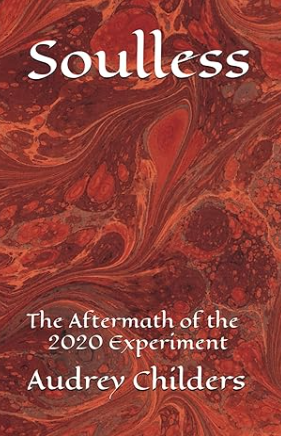
Soulless: The Aftermath of the 2020 Experiment 

Soulless: The Aftermath of the 2020 Experiment

In a world teetering on the edge of dystopia, one resistance stands against the shadows of control.

By A.L. Childers

Book Description:

In 2020, the world changed forever. A global pandemic swept through humanity, and with it, an insidious plan unfolded. “Soulless: The Aftermath of the 2020 Experiment” dives into a chilling narrative where the virus was no accident but a meticulously crafted bioweapon engineered by the world’s most powerful elites. Their aim? Absolute control over every living soul.

When Dr. Elias Kincaid, a brilliant scientist, discovers the dark truth behind the virus, he joins forces with the resistance, a group of determined individuals led by the fearless Diana Hartman, the seasoned warrior Alex Mercer, and the tech-savvy Dr. Evelyn Mercer. Together, they unravel a conspiracy that runs deeper and more sinister than anyone could have imagined.

From clandestine labs hidden deep in the mountains to high-stakes confrontations in fortified bunkers, the resistance fights to expose the elites’ ultimate weapon: a bio-digital hybrid embedded in daily life, influencing thoughts and behaviors. As they battle against time and the remnants of the elites’ forces, the team faces shocking betrayals and revelations that shake them to their core.

Will they succeed in dismantling the elites’ control and restoring freedom to humanity, or will the sinister forces of power and corruption prevail?

Key Highlights:

  • Intense Action: Follow the resistance through heart-pounding raids, daring infiltrations, and explosive confrontations.
  • Gripping Suspense: Uncover layers of conspiracy and deception as the true scope of the elites’ plan is revealed.
  • Complex Characters: Dive into the lives and struggles of a diverse cast, each fighting for a world free from oppression.
  • Thought-Provoking Themes: Explore the ethical dilemmas of genetic manipulation, societal control, and the fight for human autonomy.

Perfect For Fans Of:

  • Dystopian thrillers
  • Conspiracy theories and political intrigue
  • Action-packed adventures
  • Stories of resistance and rebellion

Soulless: The Aftermath of the 2020 Experiment is a gripping tale of courage, defiance, and the unyielding human spirit. Join the resistance in their quest to uncover the truth and fight for a future where humanity can finally reclaim its freedom.

https://www.amazon.com/dp/B0D5HW77CD

Soulless: The Aftermath of the 2020 Experiment

Did a Werewolf Toy with a Couple at Lake Wylie over the Holiday Weekend? “The Night Stalker of Lake Wylie: A Camping Trip Turned Nightmare”

“The Night Stalker of Lake Wylie: A Camping Trip Turned Nightmare”

The holiday weekend at Lake Wylie in North Carolina was supposed to be a peaceful escape for a couple, a chance to reconnect with nature and each other. The day was gorgeous, filled with sunshine and laughter as they enjoyed their time on the water. Little did they know, their idyllic getaway was about to transform into a harrowing ordeal they would never forget.

As dusk fell, they meticulously secured their campsite, confident that no wild animals would disturb their belongings. The campground was fully booked, yet oddly devoid of the usual canine companions. As they settled in for the night, the serene atmosphere took a sinister turn.

The wife, nestled in the main part of the camper, first heard the noise—a strange, guttural growling emanating from outside. She dismissed it as her imagination, a result of their sun-soaked day. Meanwhile, her husband, finishing his shower in the bedroom, emerged with a haunted expression.

“Did you hear that strange growling?” he asked, his voice tinged with unease.

She nodded, trying to rationalize the sound. “I thought it might be a loose dog in the campground.”

His reply sent chills down her spine. “I don’t think it was a dog. It sounded like it was right outside the bathroom window. And that window is ten feet off the ground.”

The growl he described was no ordinary animal sound. It was deep, dark, and otherworldly, reminiscent of the werewolf howls from horror films of the 1980s. The memory of “An American Werewolf in London” flashed through his mind, and a cold dread settled over him.

Brushing it off as a possible side effect of heat exhaustion, they decided to sleep it off. But their uneasy slumber was shattered at 3:30 a.m. by a noise that froze their blood—a slow, deliberate scratching, dragging across the entire length of the camper.

Heart pounding, the wife shook her husband awake. Together, they witnessed a sight that defied explanation. Outside their window, a foggy breath blew, revealing the unmistakable outline of a snout. This was no ordinary animal. It was beyond human, beyond wolf—something monstrous.

Paralyzed with fear, they could only watch as the camper rocked and swayed, though the night was eerily calm. The light scraping continued, almost playful, as if the creature was toying with them, savoring their terror.

Morning brought an unsettling calm. Stepping outside, they expected to find evidence of the nightmare—a footprint, claw marks, anything. But the ground was undisturbed, the camper unscathed. Had they shared a collective hallucination, or was something far more sinister at play?

The couple remains haunted by that night, their minds plagued with unanswered questions. What was the creature that stalked them at Lake Wylie? A werewolf? Something else entirely? One thing is certain—their peaceful camping trip had turned into a terrifying brush with the unknown, leaving them to wonder if they were ever truly safe under the moonlit sky.