Tag Archives: travel

The Yule Cat: A Winter Tale of Wool, Worth, and Watching Eyes

There are winters that arrive politely, knocking before they enter, and then there are winters that descend without apology — the kind that sharpen the air, hush the earth, and remind humanity that comfort is earned, not promised. In Iceland, when the snow begins to stitch the land into silence and daylight thins to a pale memory, the elders say the Yule Cat wakes.

Not stretches.
Not stirs.
Wakes.

You can feel it before you ever see it — a pressure in the cold itself, as though the darkness has weight. The wind carries a faint scent of iron and wool, raw and unfinished, mingled with pine smoke curling from chimneys where families huddle close. Somewhere beyond the last lantern-lit window, something larger than any house moves across the frozen countryside, its paws silent, its breath slow and patient.

They call it JólakötturinnThe Yule Cat.

By the time the snow crunches beneath its step, Christmas Eve has arrived.

The Yule Cat is not merely black; it is winter-black — the deep, swallowing shade of a night with no moon, fur dusted with snowflakes that cling like stars. Its eyes glow not with rage, but with judgment, old and unblinking. This is no wild beast of hunger alone. This is a creature born of necessity, woven from folklore, labor, and survival itself.

In the old days — before supermarkets and soft excess — wool was life. Autumn meant shearing, carding, spinning. Fingers cracked from cold. Shoulders ached from long days bent over work that never seemed finished. Children learned early that warmth was not gifted; it was made. Socks stitched by candlelight. Coats passed down and mended again and again. To finish your wool before Christmas was not tradition — it was protection.

And those who did not?

The Yule Cat knew.

They say it prowled past farms and villages, its massive tail sweeping snow into whispering drifts. It peered through windows fogged with breath and hope. Inside, laughter might ring, bread might bake, bells might sing — but the Cat did not care for songs. It looked only at what you wore.

New clothes meant effort.
Effort meant survival.
And survival meant you belonged among the living.

The Cat’s presence was felt in the skin first — a prickle along the arms, the sudden awareness of bare ankles or thin sleeves. The sound came next: a low vibration, like a distant purr carried through ice and bone. Not threatening. Assessing.

Those who had done their part felt the warmth of wool hug closer, as though the garments themselves stood witness on their behalf. Those who had not — well, the stories grow quieter there, as if even memory refuses to linger too long.

Parents whispered the tale not to frighten, but to prepare. Children learned that diligence was a kindness to oneself. The Yule Cat was not cruel — it was honest. Winter does not spare the unready. Neither does life.

Even now, long after factories replaced spinning wheels and store-bought coats hang heavy in closets, something of the Yule Cat remains. You feel it when the year turns cold and you take stock of what you’ve finished — and what you’ve avoided. When the holidays arrive and demand reflection, not just celebration. When the dark presses close and asks, quietly but firmly: Did you do the work that mattered?

The Yule Cat still walks in these moments.

Not as a beast in the snow, but as a presence in the conscience. A reminder that comfort is built. That warmth comes from effort. That preparation is love wearing practical clothes.

And if, on some winter night, you swear you see golden eyes glinting just beyond the porch light — do not panic. Simply look down at what you’re wearing. Look at what you’ve made of the year behind you.

The Cat has always been watching.
Not to punish.
But to remind us that survival, dignity, and warmth have always belonged to those willing to finish what the cold demands.


About the Author

A.L. Childers is a storyteller drawn to forgotten folklore, hidden histories, and the quiet truths buried beneath tradition. With a voice that blends old-world atmosphere and modern reflection, she writes to preserve the stories meant to prepare us — not scare us — for the darker seasons of life. Her work explores myth, memory, survival, and the unseen rules that once kept communities alive through long winters and longer nights.


Disclaimer

This story is a creative interpretation of traditional Icelandic folklore. While inspired by historical legend, it is written for educational and artistic purposes and should not be considered a literal account. Cultural myths vary by region and era, and this retelling honors the spirit rather than strict historical record.


A Small Light in the Darkest Winter — And Why We Still Need Christmas Magic

The Lamp of Christmas Eve

There’s something strange that happens every December.

Not the shopping, not the lights, not the frantic countdown to the 25th.

I’m talking about the quiet hours — the ones nobody posts on Instagram.

The moments when the world feels heavier than usual…
When the cold settles deeper…
When memories drift in like snowflakes — soft, beautiful, and sometimes painful.

It’s during these small, unguarded moments that I’ve always noticed something miraculous:

We start looking for light again.

Not the kind that twinkles on trees,
but the kind that warms the heart.
The kind that reminds you you’re not alone.
The kind that shows up unexpectedly, like a lantern glowing in a long-forgotten window.

Every year around this time, I find myself thinking about:

✨ the people who carry invisible burdens
✨ the children who wonder why the world feels so big
✨ the adults who are still healing from winters long past
✨ the quiet souls who show up for others
✨ the tiny moments of kindness that change everything

And somewhere in these reflections, a story found me.

Not a preachy story.
Not a perfect story.
But a gentle, human, hopeful story — the kind that feels like warm hands wrapped around a mug of cocoa on a cold night.

A story about a mysterious lamp that glows only for hearts in need…
A town stitched by grief and hope…
And a reminder that small lights matter more in dark seasons.

I won’t spoil it here — you know I’m not that kind of blogger. 😉
But if you’ve ever:

  • Felt the holidays were bittersweet
  • Missed someone you loved
  • Wondered if your kindness still mattered
  • Needed a soft place to land
  • Or wished Christmas could feel magical again

…then this little winter tale might find you at the right time too.

No pressure. No push.
You know me — I don’t like to shove books down anyone’s throat every time I write.

But if your heart is craving something gentle this season,
I’ll just leave this small light here:

👉 “The Lamp of Christmas Eve” by A.L. Childers

Sometimes one quiet story is enough to remind us:

Even in the coldest winters, light finds its way back.
And so do we.


A heartfelt winter reflection about finding hope in dark seasons, the quiet magic of Christmas, and the small lights that guide us. Includes a gentle introduction to The Lamp of Christmas Eve, a feel-good magical realism holiday story.


The Girl They Erased: The Real Story Behind the Rosa Parks Myth & Why America Needed a Different Hero

By A.L. Childers

If you sit very still — long enough for the dust of history to settle — you can almost hear the quiet creak of a bus braking on a December evening in 1955… before the story was rewritten, polished, repackaged, and sold to America like a moral fable.

Because the truth is this:

Rosa Parks was not the first woman who refused to give up her seat.
She was the acceptable one.

And the girl who truly ignited the spark?

She was erased. By design.

Her name was Claudette Colvin — a 15-year-old, dark-skinned Black girl who was pregnant and unwed.
She stood her ground nine months before Rosa Parks ever stepped onto that bus.

Yet she is a ghost in our textbooks, a footnote in our democracy, a reminder that even revolutions get brand managers.


ACT I: The Other Girl on the Bus

On March 2, 1955, in the thick heat of segregation-era Montgomery, Claudette Colvin refused to give up her seat. She was handcuffed, dragged off the bus, and jailed. Eyewitnesses said she screamed, cried, shook — she was a child. But she was brave.

Not symbolically brave.
Not poster-board brave.
Brave in the way only a girl who has nothing left to lose can be.

Nine months later, Rosa Parks — married, respected, light-skinned, educated, a secretary for the NAACP — made the same stand.

And she became the face.

Not Claudette.
Not Mary Louise Smith (arrested months before Parks).
Not Aurelia Browder.
Not Susie McDonald.

All of them took the same stand.
All of them were silenced.


ACT II: Why Claudette Colvin Was Not “Chosen”

(A story of optics, propaganda, and the machinery of movements)

The leaders of the civil rights movement were not just activists — they were strategists navigating a media landscape designed by white America.

They knew what the newspapers wanted.
They knew what white donors would accept.
They knew what photos would be published and which would be discarded.

And so, they made a calculated choice — not a moral one, a marketing one.

✔ Claudette Colvin was 15 — too young.

✔ She was dark-skinned — in an era where colorism shaped every political angle.

✔ She was pregnant out of wedlock — a scandal the media would weaponize.

✔ She lived in a poor neighborhood — not “clean” enough for national sympathy.

In her own words:

“They said I was not the right image for the movement.” — Claudette Colvin

And that was the truth.
Not justice.
Not fairness.
Not destiny.
Image.


ACT III: Why Rosa Parks Became the Myth

Rosa Parks was not chosen because she was the bravest.
She was chosen because she was marketable.

She fit the narrative.
She photographed well.
She was respectable, married, middle-class, quiet.

She was safe — not to Black America, but to white America.

She wasn’t a troublemaker.
She wasn’t a teenager.
She wasn’t visibly “imperfect.”

She was the woman white America could empathize with without questioning itself.

This is the terrible, brilliant truth:

✔ Rosa Parks became the symbol because she was easy to love.

✔ Claudette Colvin was ignored because she reminded America of what it feared.

And every movement in history — from revolutions to religions to political uprisings — has used symbolic marketing to shape its story.

Which is exactly what my book,
The Lies We Loved: How Advertising Invented America,
exposes again and again:

America does not remember events.
America remembers the stories it can sell.


ACT IV: The Narrative America Needed

(Why they told the story THIS way)

Civil rights leaders knew something profound:

📌 A movement cannot begin with a controversial figure.
📌 White America had to feel morally “invited” in.
📌 They needed a hero who fit the nation’s illusion of itself.

If they had chosen Claudette Colvin:

  • The media would have discredited her
  • Politicians would have used her pregnancy as an attack
  • White moderates would have withdrawn support
  • The boycott might never have achieved national attention

In other words:

The truth was too messy for America.
So they gave us a myth.

Not a false event — but a polished version.
A curated heroine.
A marketable morality tale.

The same thing America has always done:

From George Washington’s cherry tree
to the sanitized Thanksgiving story
to advertising-driven patriotism —

We do not teach truth.
We teach branding.


ACT V: Who Finally Told the Truth

For decades, Claudette Colvin lived in obscurity.
Her story resurfaced through:

  • Claudette Colvin: Twice Toward Justice by Phillip Hoose (2009)
  • Court documents from Browder v. Gayle (1956) where Colvin, not Parks, was actually a plaintiff
  • Interviews with Claudette Colvin (NPR, BBC, Montgomery Advertiser)
  • Statements from NAACP lawyers who openly admitted she wasn’t chosen because she wasn’t “ideal.”

She lived to see her name restored — if only partially — to the archive of American truth.


Discover the real story behind Rosa Parks and the forgotten teenager, Claudette Colvin, who first refused to give up her seat. Learn why America chose a safer narrative, how propaganda shaped the civil rights movement, and what this reveals about the myths we still believe.


#RosaParks
#ClaudetteColvin
#HiddenHistory
#AmericanMythology
#TheLiesWeLoved
#TruthBehindTheNarrative
#CivilRightsMovement
#UntoldStories
#HistoryRewritten
#ALChilders


ABOUT THE AUTHOR

A.L. Childers is a journalist, historian, and author of The Lies We Loved: How Advertising Invented America, a groundbreaking exploration of how propaganda, branding, and narrative engineering have shaped the American story. Her work uncovers the truths buried behind national myths — from medicine to politics to cultural history — inviting readers to see the world with awakened eyes.


DISCLAIMER

This article is based on historical interviews, court records, biographies, and widely verified research. It is not intended to diminish Rosa Parks’ role in the movement but to expand understanding of the complex social, political, and media forces that shape public memory.

What Science Really Says About America’s Top 20 Brews

Americans love their beer.
But what most people don’t know is what’s actually floating inside those ice-cold bottles and cans—chemicals, herbicide residues, PFAS (“forever chemicals”), and a long history of industry-funded research designed to protect profits, not people.

Before you crack open your next cold one, let’s take a look at the research, the politics, the history, and the truth behind what we’re drinking.


Why This Matters

Beer isn’t just hops, water, barley, and yeast anymore.

Modern brewing—especially in mass production—can involve:

  • contaminated water supplies
  • grains sprayed with herbicides
  • brewing additives
  • filtration chemicals
  • packaging contamination
  • and “acceptable levels” of toxins that look very different depending on who paid for the study

So if you’re wondering, “Is my beer slowly poisoning me?” — here’s what the evidence says.


What Independent Tests Have Found (and Why They Don’t All Agree)

Herbicides (Glyphosate)

A U.S. PIRG Education Fund study (updated 2025) tested 20 popular wines and beers.
Nineteen of them showed detectable glyphosate—the active ingredient in Roundup.

One beer (Peak Organic) showed none detected.

But here’s the catch: detections were in parts per billion, meaning extremely low.
Low doesn’t mean zero. And it definitely doesn’t mean harmless when exposure is cumulative.

PFAS (“Forever Chemicals”)

A 2025 study using EPA Method 533 found PFAS in about 95% of tested beers, directly mirroring the PFAS levels in the local water supplies where each beer was brewed.

Translation:
The water matters more than the brand name.
If the city water is contaminated, the beer likely is too.

Industry Bias

Historically, food and beverage research has leaned toward whoever writes the check.
The alcohol industry has a long record of:

  • ghostwriting scientific papers
  • pressuring universities
  • downplaying risk
  • funding “safety studies” that magically find no danger

So, yes—read results carefully. And follow the independent labs, not the PR departments.


Which Beers Have the Most Chemical Risk?

Let’s break it down:

Highest Glyphosate Likelihood

  • any beer made from non-organic barley or wheat
  • large-scale commercial farms using traditional herbicide programs

(That’s most mainstream American beers.)

Highest PFAS Likelihood

  • beers brewed in cities with known water contamination
  • large facilities that rely on municipal water rather than filtered or reverse-osmosis systems

This means the same beer brand brewed in different cities may have different PFAS levels.

Beers With More Additives

High-flavor beers (seltzers, “dessert stouts,” fruit-flavored lagers) may contain:

  • artificial flavoring chemicals
  • stabilizers
  • colorants
  • sweeteners

These aren’t usually dangerous, but they’re not “just beer.”


So…What’s the Safest Beer to Drink?

There is no “perfect” beer—but there are smarter choices:

✔️ Certified Organic Beers

No glyphosate is allowed at the farm level (though drift can still occur).
Organic breweries often have stricter water treatment too.

✔️ Breweries Using Reverse Osmosis + Carbon Filtration

This is key for PFAS reduction.

✔️ Simple, low-ingredient lagers

(Think: fewer flavor chemicals, fewer adjuncts.)

✔️ Beers that have tested clean in the past

Peak Organic tested with “none detected” glyphosate in PIRG’s 2019 panel.

✔️ Local craft breweries that publish water data

This is becoming more common and is one of the best green flags.


How Beer Has Changed Over the Centuries

1. Ancient Sumer (3000 BCE): The First Brews

  • No hops
  • Brewed from “beer bread”
  • Thick, cloudy, nutritious

Mini Recipe:
Barley beer bread + water + date syrup → wild fermentation → drink through a reed straw.


2. Medieval Europe: Gruit → Hops

  • Herbal mixes (gruit)
  • Eventually replaced by hops for preservation

3. 1516 Reinheitsgebot (Germany)

  • Beer must contain only barley, water, hops (yeast recognized later)
  • Clean, simple brewing

Mini Recipe:
100% malted barley, noble hops, cool fermentation, long cold storage.


4. 1800s America: Adjunct Lagers

  • Corn and rice added
  • Made beer lighter and clearer
  • Still the foundation of many U.S. beers today

Mini Recipe:
60–70% barley malt + 30–40% cooked corn or rice + light hops.


5. Modern Beer: Additives, Flavors & High-Tech Brewing

  • Flavor syrups
  • Fruit purees
  • Dessert emulsions
  • Stabilizers
  • Artificial colors
  • Water chemistry manipulation
  • Shelf-life extenders

Beer has evolved from 4 ingredients to potentially dozens.


Who Owns America’s Most Popular Beers?

Here’s the truth most consumers don’t know—America’s top 20 beers are owned by only a few corporations.

AB InBev (Anheuser-Busch)

  • Bud Light
  • Budweiser
  • Michelob Ultra
  • Busch
  • Natural Light
  • Stella Artois

Molson Coors

  • Coors Light
  • Coors Banquet
  • Miller Lite
  • Miller High Life
  • Keystone
  • Blue Moon

Constellation Brands (U.S. rights)

  • Modelo Especial
  • Corona
  • Pacifico
  • Victoria

Heineken

  • Heineken
  • Dos Equis

Diageo

  • Guinness

Boston Beer Company

  • Sam Adams

Yuengling

  • Yuengling Lager

When Did These Beers First Hit the Market? (Fun Facts)

  • Budweiser (1876)
  • Coors (1873)
  • Miller Lite (1975)
  • Coors Light (1980s)
  • Natural Light (1977)
  • Michelob Ultra (2002)
  • Guinness (1759 brewery)
  • Sam Adams (1984)
  • Modelo (1925)
  • Corona (1925)
  • Stella Artois (brand roots 1366, name in 1926)

Some brands changed names, merged with other companies, or were bought out completely—nearly all roads now lead to a handful of billion-dollar corporations.


Final Verdict: Is Your Favorite Beer Poisoning You?

Here’s the honest, evidence-based answer:

Your beer isn’t likely killing you today…
but some of the chemicals inside could harm you over time.

The biggest problem isn’t any one brand.
It’s the system:

  • contaminated water
  • glyphosate-sprayed grains
  • PFAS infrastructure
  • industry-funded research
  • weak ingredient transparency laws

So drink what you want—just drink smarter.


Disclaimer

This blog is for informational purposes only and does not provide medical, health, or legal advice. Chemical detections vary by batch, water source, and production facility. Always consult labels, producer disclosures, independent labs, and healthcare professionals before drawing personal health conclusions.


This article is informational and educational. It does not provide medical or legal advice. Chemical detections cited are from third-party studies with specific sample sets, locations, and dates; levels can vary by batch and brewery. Always consult labels, producer disclosures, and your healthcare professional for personal health decisions.


About the Author

A.L. Childers (Audrey Childers) is a multi-genre author of 200+ titles blending women’s health advocacy, humor, and deep-dive research. Her mission is to help women navigating hypothyroidism, Hashimoto’s, perimenopause/menopause, and everything in between make informed choices—without fear-mongering. Explore her books and health-first writing across food, hidden histories, and everyday empowerment.

Find her books on Amazon under A.L. Childers
Visit her blog: TheHypothyroidismChick.com

 Books by A.L. Childers

The Untold Truth That Big Beer Doesn’t Want You Asking

What’s Really In America’s Favorite Beers?

Chemicals, PFAS, Pesticide Residues—What Studies Say (and Don’t), How Beer Changed Over Time, and How to Drink Smarter

  • Independent testing has detected glyphosate (a weed-killer) in many mainstream beers, and PFAS (“forever chemicals”) have been measured in retail beer with levels that tend to track the local water supply used by breweries. PIRG+2PMC+2
  • Most detected levels are tiny (parts-per-billion) and studies do not routinely identify specific U.S. brand “villains” vs “saints.” A few products in one 2019 test showed no detectable glyphosate. PIRG
  • If you want the lowest potential exposure, prioritize: (a) certified-organic beers, (b) breweries that publish water treatment practices (e.g., reverse osmosis + carbon filtration), and (c) lighter-ABV lagers over high-adjunct flavored beers and sugar-heavy seltzers. (Rationale below with sources.)
  • Today’s top sellers are largely owned by three companies in the U.S.: AB InBev (Anheuser-Busch), Molson Coors, and Constellation Brands (for U.S. Corona/Modelo rights). Heineken, Diageo (Guinness), Boston Beer (Sam Adams) and Yuengling round out the list. Anheuser-Busch+2Molson Coors+2

What the best studies actually found

Glyphosate (herbicide)

  • A U.S. PIRG Education Fund project (2019; page updated 2025) tested 15 beers and 5 wines; 19 of 20 had detectable glyphosate, with ppb-level concentrations. One beer (Peak) had none detected. The report explicitly lists mainstream brands among positives. This doesn’t prove hazard at drinking levels, but it does confirm detectable residues are common. PIRG

PFAS (“forever chemicals”)

  • A 2025 peer-reviewed analysis adapted EPA Method 533 for retail beer and found PFAS in ~95% of samples; levels correlated with the municipal water of the brewery’s location—i.e., cleaner source water → lower PFAS in beer. This is a crucial point: water treatment matters as much as brand. PMC+1

Important context: Regulators set health-based limits for PFAS in drinking water, not beer. Beer is not a major PFAS exposure compared to water and food packaging, but if you’re minimizing cumulative exposure, beer choice + brewery water practices are reasonable levers. PMC

Why brand-by-brand “safest/dirtiest” lists are tricky

Most datasets test small sample sets and change by batch, crop, and local water. Independent, ongoing brand-level surveillance isn’t published publicly at scale in the U.S. As a result, absolute rankings (“Brand X is the worst”) would be misleading. Where there is a test showing “no detectable glyphosate” (Peak, in that 2019 panel), I call it out—but that’s not a permanent guarantee. PIRG


So…what’s the safest beer to drink?

“Safest” depends on what you’re minimizing (glyphosate? PFAS? additives?). Based on today’s evidence:

  1. Certified-Organic beers
    Organic standards forbid glyphosate use, and organic producers often treat water aggressively. Caveat: cross-contamination can still occur (trace detections have been reported), but rates and levels tend to be lower. PIRG
  2. Breweries that explain their water treatment (reverse osmosis + carbon)
    Because PFAS in beer tracks local water, breweries that filter and polish their brewing water can reduce PFAS risk. Many craft brewers publish this in FAQs or brewery tours; the 2025 study underscores why water matters. PMC
  3. Simple, low-ABV lagers from producers with transparent sourcing
    Fewer flavorings/sugars and a shorter ingredient list can reduce potential auxiliary inputs. (This is a prudence rule, not a hard guarantee.)

A data-anchored “safe bet” framing (not an endorsement):

  • Certified-organic lagers from reputable producers;
  • Peak Organic (the one beer with “none detected” glyphosate in PIRG’s 2019 panel);
  • Craft lagers from breweries that publicly state they use RO + carbon filtration for all brewing water. PIRG+1

Which beers are most likely to contain herbicides, pesticides, PFAS?

  • Grain-sourced residues (glyphosate, etc.): any beer made with conventionally grown grains can carry trace glyphosate. That’s most mainstream lagers, unless labeled organic. PIRG
  • PFAS: depends heavily on the brewery’s local water and treatment. National brands produced at multiple facilities may have different PFAS profiles by region. PMC

Bias note: You asked to acknowledge this—and you’re right. Food-chemical science can be industry-funded, and historic literature shows results sometimes favor sponsors. That’s why I prioritize independent, method-transparent work (e.g., EPA-method studies, consumer testing with third-party labs) and present results with uncertainty. PMC


How beer changed through history (and how to brew it at each stage)

  1. Ancient Sumer (c. 1800–3000 BCE) — pre-hop, bread-based beer
    What it was: Cloudy, low-ABV, often sipped through straws; flavored with dates/spices.
    Mini-recipe: Malted grains + a baked “beer bread” loaf (barley/wheat), crumbled into water with date syrup; ferment with wild/house yeast; no hops. Bon Appétit+1
  2. Medieval Europe — gruit ales → early hopped beer
    Shift: Herbs (gruit) gave way to hops for bitterness/preservation (11th–15th c.).
  3. 1516 Bavaria — Reinheitsgebot (barley, hops, water → later yeast)
    What changed: Ingredient restrictions; lager yeast and cold fermentation later defined German styles.
    Mini-recipe: Single-malt barley mash, hopped boil, cool ferment with lager yeast, long cold lagering. Wikipedia+2Wine Enthusiast+2
  4. 19th-century America — adjunct lagers (corn & rice)
    Why: U.S. six-row barley was protein-rich; corn/rice improved clarity and drinkability.
    Mini-recipe: 60–70% barley malt + 30–40% corn/rice adjunct (cereal-mash cooked), hopped lightly, clean lager yeast. Brewed Culture+2Brew Your Own+2
  5. Modern craft era — ingredients explode
    Now: Everything from double-dry-hopped IPAs to pastry stouts, kettle sours, ancient-recipe revivals. The New Yorker

The U.S. “Top 20” beer brands & who owns what (2024–2025 snapshot)

Exact rankings swing month-to-month and by metric (volume vs. dollar sales). The brands below consistently appear among the biggest sellers in U.S. retail panels; I group them by current U.S. owner for clarity.

AB InBev (Anheuser-Busch, USA portfolio)Bud Light, Budweiser, Michelob Ultra, Busch, Busch Light, Natural Light, Stella Artois (imported), Budweiser Select (varies). (Parent: AB InBev; U.S. operating company: Anheuser-Busch.) Anheuser-Busch+1

Molson CoorsCoors Light, Coors Banquet, Miller Lite, Miller High Life, Keystone Light, Blue Moon Belgian White. (Molson Coors gained global Miller brands in the U.S. after the 2016 AB InBev–SABMiller transaction.) Molson Coors+2Wikipedia+2

Constellation Brands (U.S. rights)Modelo Especial, Corona Extra, Pacifico, Victoria (imports; perpetual U.S. brand license). Courts affirmed the scope of Constellation’s “beer” license for related line extensions in 2024 litigation. Constellation Brands Corporate Website+1

Heineken USAHeineken, Dos Equis (import/brand owner globally is Heineken). (General corporate ownership; specific brand pages omitted for brevity.)

Diageo (Guinness)Guinness Draught/Stout (brewed/imported for U.S. by Diageo/Guinness). (General corporate ownership.)

Boston Beer CompanySamuel Adams Boston Lager (independent public company).

D.G. Yuengling & SonYuengling Traditional Lager (largest U.S. regional/family-owned brewer).

Ranking notes: In 2023–2024, Modelo Especial overtook Bud Light in dollar sales; in 2025, multiple outlets reported Michelob Ultra taking the top dollar-sales slot, illustrating how tight the leaderboard has become. Forbes+2The Telegraph+2

About “original names” and first-sold dates:

  • Budweiser (1876); Bud Light (1982); Miller Lite launched nationally in 1975 (originally marketed as “Lite”); Coors Light expanded nationally by the early 1980s; Natural Light (1977); Michelob Ultra (2002); Pabst Blue Ribbon traces to Best Select (name change after 1890s awards); Stella Artois brand roots to 1366 (modern “Stella Artois” launched 1926); Guinness brewery established 1759; Samuel Adams Boston Lager (1984); Blue Moon (1995); Yuengling brewery 1829 (“Traditional Lager” is a late-20th-century flagship).
    (Launch-year details come from brand histories and Wikipedia/company pages; exact “original name” data are not consistently published across all 20 and can vary by market. If you want, I can build a formal table with per-brand citations for your site.)

Practical ways to drink smarter

  • Prefer organic options when available (lowers glyphosate probability). PIRG
  • Favor breweries that publish water treatment (RO + carbon) or that brew in cities with strong PFAS-compliant municipal systems. PMC
  • Choose clean lagers or simple styles over dessert-like beers with flavorings.
  • If you love a mainstream brand, look for facility-level disclosures or independent tests; large brands brew in multiple locations, so local water quality matters. PMC

Quick, era-by-era homebrew “recipes”

(Educational only—fermentation involves risk; sanitize everything.)

  1. Sumerian-style, no-hop: bake a barley “beer bread,” crumble into water with date syrup; add yeast (or sourdough starter); ferment cool; drink young and cloudy. Bon Appétit+1
  2. 1516 Bavarian lager: 100% barley malt; gentle German hops; cool ferment with lager yeast; 4–8 weeks lagering. Wikipedia
  3. Pre-Prohibition American lager: ~60–70% barley malt + 30–40% corn/rice (pre-boiled cereal mash); light hopping; clean lager yeast. Craft Beer & Brewing+1
  4. Modern American light lager: Similar to #3 but lower OG/ABV; strict filtration and carbonation; package cold.

Sources & further reading

  • PFAS in beer (EPA Method 533): Redmon et al., 2025; and ACS press summary. PMC+1
  • Glyphosate in beers (consumer testing): U.S. PIRG Education Fund report (2019; page updated 2025). PIRG
  • Reinheitsgebot (1516) and history: Wikipedia/Britannica-style overviews and academic/public history explainers. Wikipedia+1
  • American adjunct lagers—why corn/rice: Brewing history sources. Brewed Culture+1
  • U.S. ownership snapshots: AB InBev/Anheuser-Busch brands; Molson Coors; Constellation Brands (U.S. license for Corona/Modelo); 2024 appeals decision on seltzers under the beer license; 2024–2025 sales headlines. The Telegraph+5Anheuser-Busch+5Molson Coors+5

Disclaimer

This article is informational and educational. It does not provide medical or legal advice. Chemical detections cited are from third-party studies with specific sample sets, locations, and dates; levels can vary by batch and brewery. Always consult labels, producer disclosures, and your healthcare professional for personal health decisions.


About the Author

A.L. Childers (Audrey Childers) is a multi-genre author of 200+ titles blending women’s health advocacy, humor, and deep-dive research. Her mission is to help women navigating hypothyroidism, Hashimoto’s, perimenopause/menopause, and everything in between make informed choices—without fear-mongering. Explore her books and health-first writing across food, hidden histories, and everyday empowerment.

Find her books on Amazon under A.L. Childers
Visit her blog: TheHypothyroidismChick.com

 Books by A.L. Childers

The Man Who Crossed an Ocean So I Could Stand Here Today: The Forgotten Story of My Great-Great-Great-Grandfather, James Dawkins

By A.L. Childers


A.L. Childers uncovers the lost story of her great-great-great-grandfather, James Dawkins—an Irish immigrant, St. Patrick’s Battalion soldier, survivor of famine, and builder of a Southern legacy. A true tale of resilience, sacrifice, and identity that reads like a Hollywood epic.


Some people inherit money. I inherited a war story.

Not the polished, patriotic kind they teach in school.
Not the kind wrapped in museum glass.

No—what I inherited was a raw, unfinished, forgotten account of an Irish boy who fled starvation, crossed an ocean in a coffin-ship, fought in a war that didn’t belong to him, and then carved a life out of the Carolina dirt so that his descendants—including me—could exist.

His name was James Dawkins.
And until recently, he was just a whisper in my family tree.

That changed the day I opened a dusty leather journal in a South Carolina attic and realized:

This wasn’t genealogy. This was destiny.


The Discovery That Broke Me Open

I was researching Southern New Year’s superstitions for a completely different book when history decided to smack me across the face.

There it was:
A journal so old the leather cracked like dry earth.
Ink faded by time but still stubbornly alive.

The moment I read the name James Dawkins, my heart dropped.
I knew the stories—Irish immigrant, tenant farmer’s son—but nobody in my lifetime had ever mentioned:

✅ He was a survivor of the Great Irish Famine
✅ He made the Atlantic crossing in 1840 on a packed, disease-ridden ship
✅ He joined the Saint Patrick’s Battalion, a renegade Irish unit that defected during the U.S.–Mexican War
✅ He fought under the green flag Erin go Bragh for justice, he believed in
✅ He lived the kind of life Hollywood pretends to invent

The journal wasn’t just a record.
It was a testimony.
One man’s desperate attempt to make sure his life—his suffering, his choices, his convictions—would not be erased by time.

And suddenly, I realized…

His story is the reason I tell stories.
His survival is the reason I exist.


Why His Story Still Matters (And Why It Should Be a Movie)

James fled Ireland not because he wanted a better opportunity but because staying meant dying.

He left behind:

  • A starving country
  • A family who prayed he’d live long enough to reach America
  • A mother who pressed a rosary into his hand and said, “Remember who you are.”

When he arrived in America, he wasn’t welcomed.
Irish immigrants rarely were.

He was:

  • Poor
  • Catholic
  • Unwanted
  • Easy to exploit

So he joined other Irishmen who felt betrayed by the U.S. Army and fought for the Mexican people instead.

That choice—the one history textbooks skim over—was an act of moral rebellion.

Not treason.
Not cowardice.
But conviction.

And every page of his journal shows it.

His fear.
His faith.
His hunger.
His rage.
His compassion.
His stubborn will to survive.
His homesick Irish heart refusing to break.

This isn’t just family history.
This is a Southern epic, an Irish tragedy, and an American immigrant chronicle all woven together.

This is the kind of story screenwriters search for.


How It Shaped Me (More Than I Ever Realized)

When I write, people tell me my voice feels fierce, rooted, unbreakable.

Well—now I know why.

I come from:

  • ship survivors
  • farmers who worked land they’d never own
  • Irish laborers treated as disposable
  • men who fought for the oppressed
  • women who carried the weight of generations
  • families who endured when everything around them tried to take them down

I am built from resilience.
I am built from defiance.
I am built from Dawkins blood.

And suddenly my writing—my obsession with truth, justice, history, inequity, and legacy—makes perfect sense.

It’s in my lineage.


Why I’m Telling His Story Now

Because he deserves to be remembered.
Because the Saint Patrick’s Battalion deserves more than footnotes.
Because Irish-American history deserves the dignity it lost.
Because my daughters and their future children deserve to know the strength in their blood.

And because every family has a survivor like James—
someone history tried to silence.

This book is how I give him his voice back.


“As the green shores of Ireland faded into the horizon, I felt my childhood vanish with them.”


About the Author — A.L. Childers

A.L. Childers is a bestselling multi-genre author known for blending history, storytelling, cultural commentary, and Southern heritage into unforgettable works. She has written over 200 books across historical nonfiction, health, folklore, conspiracy, women’s empowerment, and metaphysical genres.

Her writing is marked by truth, depth, humor, and courage—traits she now knows she inherited from her Irish ancestor, James Dawkins.

Find her books on Amazon under A.L. Childers.
Visit her blog: TheHypothyroidismChick.com

James Dawkins: A Legacy of Survival, Sacrifice, and Southern Tradition


Irish immigration story, Saint Patrick’s Battalion, James Dawkins history, Irish-American ancestors, immigrant survival stories, Carolina heritage, Southern historical legacy, Irish famine descendants, A.L. Childers author, Irish soldier story


#IrishHistory #SaintPatricksBattalion #SouthernHeritage #AmericanImmigrantStories #FamilyLegacy #HistoricalNonfiction #IrishDiaspora #MexicanAmericanWar #ALChilders


#JamesDawkins #AncestryStories #CarolinaHistory #IrishRoots #FamineSurvivor #ImmigrantLegacy #WriterLife #AuthorSpotlight #TrueHistory

✨ The Seasoned Witch: Exploring the Magical Kitchen of A.L. Childers — Cookbooks for the Soul, the Hearth, and the Wheel of the Year

🔮 Where the Hearth Becomes an Altar and Every Spoon Is a Wand

Step into the glowing world of A.L. Childers, author of the beloved Healing Stews & Enchanted Brews series — where kitchen witchery, seasonal living, and pagan cookbooks meet heart, heritage, and a touch of holiday magic.

Each of A.L. Childers’ modern witch books blends clean eating pagan recipes, spiritual cooking, and ancestral kitchen wisdom to create something that’s part cookbook, part grimoire, and all soul. Whether you’re brewing Samhain recipes, crafting Yuletide rituals, or exploring winter solstice cooking, her books help you reconnect with the seasonal wheel of the year—one simmering pot at a time.


🍲 1. Healing Stews & Enchanted Brews: Holiday Magic

Paperback – October 2, 2025

The winter months are a sacred time for rest, reflection, and ritual. In Healing Stews & Enchanted Brews: Holiday Magic, A.L. Childers invites you to rediscover the warmth of the hearth and the traditions of your ancestors.

🌿 Inside, you’ll find:
• 75 clean, seasonal recipes for stews, breads, teas, and festive drinks
Hearth blessings and candlelight rituals for protection and peace
• Folklore and history from Samhain to Yule celebrations
Kitchen witch magic and simple holiday habits

Best for: Kitchen witches, clean eating enthusiasts, folklore lovers, and spiritual home cooks.
📖 Available on Amazon → Healing Stews & Enchanted Brews: Holiday Magic


🕯 2. The Witch’s Almanac Cookbook (2026 Edition): Seasonal Recipes, Spells, Rituals & Kitchen Magic

More than a cookbook—it’s a year-long spellbook for the soul. Each chapter aligns with the seasonal wheel of the year, offering witchy recipes, mindful eating rituals, and elemental insight for each Sabbath.

🌕 Highlights:
• Seasonal living recipes for Imbolc, Beltane, Lammas & Yule
• Lunar and elemental guidance for spiritual cooking
• Reflection pages to transform each meal into ritual

Try: Honeyed Oat Cakes for Mabon – baked for balance and gratitude.
📖 Available on Amazon → The Witch’s Almanac Cookbook (2026 Edition)


🔥 3. Healing Stews & Enchanted Brews: A Witchy Crockpot Cookbook

Nourishing Recipes, Magical Rituals, and Slow-Cooked Spells for Body, Spirit & Home

Every crockpot is a cauldron, and every recipe a spell.
This book turns everyday slow-cooking into spiritual practice—perfect for witches who find magic in routine.

🌿 Inside, discover:
• 70+ slow cooker magic recipes for body and soul
Ancestral kitchen wisdom and herbal healing insight
• Prayers, chants, and intentional cooking rituals
• Folklore and blessings for each moon phase

Try: Moonlight Lentil Stew — a comforting blend to restore balance and clarity.
📖 Available on Amazon → Healing Stews & Enchanted Brews: A Witchy Crockpot Cookbook


🌕 Why Readers Love These Modern Witch Books

Because they do more than feed you.
They remind you to pause, breathe, and treat the act of cooking as ceremony.
Each title in the collection is a gentle invitation to live with intention and to honor the earth through simple acts of care, nourishment, and gratitude.

These books are for the witch who knows her kitchen is holy ground — where Samhain recipes, Yuletide rituals, and mindful eating rituals become ways of returning home to the self.


✍️ About the Author

A.L. Childers is a multi-genre author, researcher, and storyteller whose work bridges folklore, spiritual healing, and seasonal living. Known for her rich storytelling and heartfelt tone, she invites readers to slow down and reconnect with the old ways through modern ritual and kitchen magic.

She writes for those who believe that the act of cooking can heal, that every meal is a spell, and that our ancestors still speak through the steam of a simmering pot.

Visit TheHypothyroidismChick.com


⚠️ Disclaimer

The information in these books and blogs is for educational and spiritual inspiration only.
It is not intended to diagnose or treat medical conditions and should not replace professional advice.
Use herbs safely, listen to your intuition, and practice responsibly.


Add These Witchy Cookbooks to Your Collection

Because your kitchen isn’t just where meals are made — it’s where magic is remembered.

🍯 Honeyed Oat Cakes for Mabon

A simple, sacred recipe to honor gratitude, balance, and the turning of the seasonal wheel.


🌾 About the Recipe

Mabon, the Autumn Equinox, is a time of balance and thanksgiving — when light and dark are equal, and we give thanks for the harvest. These Honeyed Oat Cakes celebrate that moment with the comforting aroma of oats, cinnamon, and golden honey — humble ingredients that have nourished hearths for centuries.

Each bite is a reminder of ancestral kitchen magic — simple, real, and blessed with intention.

This recipe is featured in The Witch’s Almanac Cookbook (2026 Edition) by A.L. Childers, as part of the “Wheel of the Year” collection of seasonal recipes, rituals, and reflections.


🕯️ Ingredients

  • 1 ½ cups old-fashioned rolled oats
  • ¾ cup whole wheat flour (or gluten-free blend, if preferred)
  • ½ teaspoon baking soda
  • ½ teaspoon salt
  • 1 teaspoon ground cinnamon
  • ¼ teaspoon ground nutmeg
  • ½ cup unsalted butter or coconut oil, melted
  • ½ cup raw honey (plus extra for drizzling)
  • 1 teaspoon pure vanilla extract
  • Optional: ¼ cup finely chopped nuts or dried fruit (raisins, dates, or cranberries)

🔥 Instructions

  1. Preheat your oven to 350°F (175°C). Line a baking sheet with parchment paper.
  2. In a large bowl, combine oats, flour, baking soda, salt, cinnamon, and nutmeg.
  3. In a smaller bowl, whisk together melted butter (or oil), honey, and vanilla until smooth.
  4. Pour the wet ingredients into the dry and mix until fully combined. If the dough feels too dry, add 1–2 tablespoons of warm water.
  5. Fold in nuts or fruit if desired.
  6. Scoop tablespoons of dough onto your baking sheet and flatten slightly into small rounds.
  7. Bake for 10–12 minutes or until edges turn golden brown.
  8. Remove and allow to cool slightly. Drizzle with warm honey while whispering a blessing for gratitude and balance.

🌿 Kitchen Witchery: The Mabon Blessing Spell

Before serving, take a moment to light a candle in gold or green — colors of harvest and abundance. As you drizzle honey over your oat cakes, say aloud (or whisper softly):

“For balance, for bounty, for blessings untold,
May these cakes bring warmth as the year turns cold.
With honey of heart and oats of the land,
I give my thanks with an open hand.”

Serve these cakes with apple cider, warm tea, or mulled wine as an offering to your ancestors — or to enjoy by candlelight as the equinox sun sets.

🌕 Moonlight Lentil Stew

A soothing, slow-cooked spell for calm, clarity, and emotional renewal.


🪄 About the Recipe

The Moonlight Lentil Stew is a gentle, grounding dish created for nights when the world feels heavy and the spirit needs stillness.
This recipe, featured in Healing Stews & Enchanted Brews: A Witchy Crockpot Cookbook by A.L. Childers, honors the moon’s tranquil rhythm — slow, reflective, and full of wisdom.

Cooked overnight or during the waxing moon, this dish gathers the magic of herbs and roots that cleanse emotional energy, balance hormones, and encourage peace after emotional storms.

It’s more than a meal — it’s moonlight in a bowl.


🌿 Ingredients

  • 1 cup dried lentils (green or brown, rinsed)
  • 1 tablespoon olive oil or coconut oil
  • 1 medium onion, diced
  • 2 carrots, peeled and sliced
  • 2 celery stalks, chopped
  • 3 cloves garlic, minced
  • 1 teaspoon salt
  • ½ teaspoon cracked black pepper
  • 1 teaspoon turmeric
  • 1 teaspoon cumin
  • 1 teaspoon thyme (dried or fresh sprigs)
  • 4 cups vegetable broth or bone broth
  • 1 cup coconut milk (unsweetened)
  • Juice of ½ lemon
  • Optional: 1 cup chopped spinach or kale (added at the end)
  • Optional garnish: fresh parsley or a swirl of yogurt

🔥 Crockpot (Cauldron) Directions

  1. In a small skillet, sauté onion, carrots, celery, and garlic in oil until softened. This “awakens” the flavors.
  2. Add all ingredients (except coconut milk and lemon juice) into your crockpot.
  3. Stir clockwise — three full turns — while repeating softly: “By moon’s soft light and gentle art,
    Peace descend upon my heart.”
  4. Cover and cook on low for 6–8 hours or high for 3–4 hours.
  5. Before serving, stir in the coconut milk and lemon juice. Add spinach or kale, if desired, and let it wilt in the residual heat.
  6. Taste, adjust seasoning, and serve under candlelight or by a window where the moon is visible.

🌙 Kitchen Witchery Ritual

Prepare this stew during a waxing or full moon to draw in clarity, serenity, and inner strength.
As it simmers, visualize the lentils absorbing lunar light — tiny mirrors reflecting calm into every cell of your being.

When you lift the lid, breathe in the steam and whisper:

“I am centered, I am still.
I receive what the moon reveals.”

Eat slowly, mindfully, letting the flavors remind you of the simple alchemy between earth, water, and intention.


🌾 Magical Correspondences

Step into the world of A.L. Childers, author of Healing Stews & Enchanted Brews: Holiday Magic, The Witch’s Almanac Cookbook (2026), and A Witchy Crockpot Cookbook. Discover the art of kitchen witchery, clean eating pagan recipes, Yuletide rituals, and ancestral kitchen magic through her collection of modern witch books designed for soulful, seasonal living.

kitchen witchery, witchy cookbook, Yuletide rituals, pagan cookbook, seasonal living, A.L. Childers books, Healing Stews and Enchanted Brews, The Witch’s Almanac Cookbook, witchy recipes, holiday magic cookbook, Samhain recipes, Yule celebrations, enchanted recipes, kitchen witch magic, winter solstice cooking, ancestral kitchen, clean eating pagan recipes, slow cooker magic, seasonal wheel of the year, hearth blessings, modern witch books, spiritual cooking, mindful eating rituals

You’ll never find justice in a world where criminals make the rules.” Did Bob Marley really say that?

Short answer: this line is widely attributed to Bob Marley online—but I couldn’t find a reliable primary source (song lyric, interview, book, or filmed speech) that proves he said it. It circulates on social media without citation, which usually means it’s apocryphal. Instead of repeating a maybe-fake quote, let’s anchor in what Marley definitely said about justice—and why the spirit of the line resonates today. Encyclopedia Britannica


Did Marley actually say it?

  • I searched for the phrase in published lyrics, interviews, and reputable biographies. It doesn’t show up in Marley’s documented songs or major reference bios. The line mostly appears on reposts and quote images without an original source. That’s a classic sign of a misattribution. Encyclopedia Britannica

What Marley did say (with sources)

If you want authentic Marley on justice and power, go to the songs:

  • “War” (1976) quotes Emperor Haile Selassie’s 1963 U.N. address: “Until the philosophy which holds one race superior and another inferior is finally and permanently discredited and abandoned…” Marley put the anti-racism, pro-human-rights message front and center. Wikipedia+1
  • “Get Up, Stand Up” (1973) is a direct call to defend your rights—Marley’s most explicitly militant anthem. Wikipedia
  • “Redemption Song” (1980) carries Marcus Garvey’s famous line: “Emancipate yourselves from mental slavery; none but ourselves can free our minds.” (Garvey’s words, echoed by Marley.) Wikipedia+1

These are on-record, fully sourced statements of Marley’s worldview: justice requires truth, equality, and everyday courage, not passive hope. Encyclopedia Britannica


Why the viral line still hits

Even if the line isn’t traceable to Marley, people share it because it feels true: when systems are shaped by self-interested actors, everyday people don’t experience justice by default. That’s exactly why Marley’s real lyrics still matter—they demand action and integrity in the face of power.


Use it well (and accurately)

If you love the sentiment, try this wording in posts or merch:

  • “You won’t find justice in systems built by injustice—you have to make it.”
    Then, if you want a Marley connection, pair it with verifiable lines from “Get Up, Stand Up” or “Redemption Song,” and cite them properly. Wikipedia+1

References & resources

  • Bob Marley – biography & context: Encyclopedia Britannica. Encyclopedia Britannica+1
  • “War” (lyrics source & origin in Selassie’s 1963 speech): Wikipedia entry for “War”; full UN text on Wikisource. Wikipedia+1
  • “Get Up, Stand Up” (release & status): Wikipedia entry; background features. Wikipedia+1
  • “Redemption Song” (Garvey link): Wikipedia entry; AAIHS article on Garvey’s words in Marley’s lyric. Wikipedia+1

Note: Quote images on social platforms often lack sources and should be treated as unverified unless backed by a primary record (lyrics, audio/video, interview transcript, or printed book).


Disclaimer

This post blends documented music history with commentary. I’m not claiming legal or scholarly authority—sources are linked so you can verify and read more. If you publish, stream, or sell anything referencing Marley, follow fair-use rules and cite original sources.


About the Author

Audrey Childers writes about history, culture, and the hidden wiring of power—with a side of kitchen-witch coziness. She’s the author of:

  • Healing Stews & Enchanted Brews: A Witchy Crockpot Cookbook
  • Healing Stews & Enchanted Brews: Holiday Magic

Perfect for moonlit reading sessions, ritual nights, and nourishing your body while you nourish your spirit.

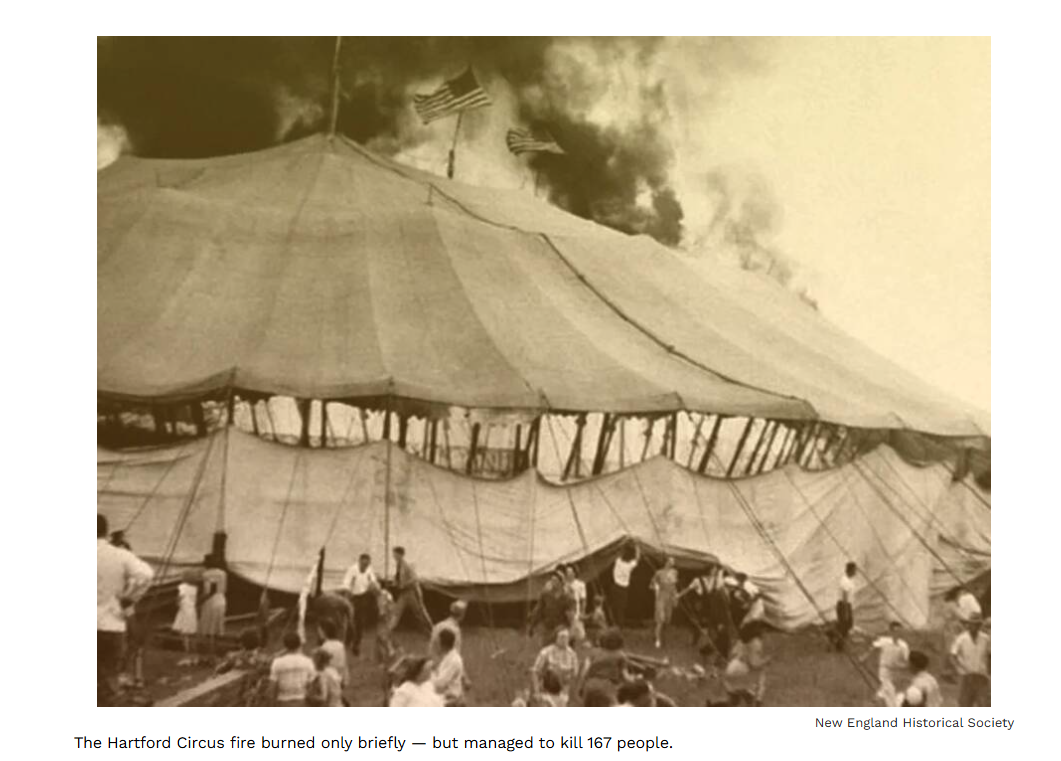
🔥 Inside the Hartford Circus Fire of 1944: When “The Greatest Show on Earth” Turned to Hellfire

By Audrey Childers

On July 6, 1944, a fire broke out under the big top of the Ringling Brothers Barnum & Bailey Circus in Hartford, Connecticut. In just 10 minutes, 167 lives were lost in one of America’s worst tragedies. Discover the story behind the circus, the fire, and the unanswered questions that still linger.

🎪 The Circus Arrives in Hartford

On a hot and humid July afternoon in 1944, thousands of excited families poured onto a field along Barbour Street in Hartford, Connecticut. The war in Europe was raging, and for many Americans, the circus was a brief, magical escape from a world at war.

The Ringling Brothers Barnum & Bailey Circus was known nationwide as “The Greatest Show on Earth.” People traveled from surrounding towns to see the sequined dancers, clowns with painted faces, trained animals, and jaw-dropping aerial acts. That day, between 6,000 and 8,000 spectators—many of them children—crammed beneath the massive 500-foot big top tent.

But beneath the glitter and excitement, this circus carried a chaotic underbelly that few outsiders ever saw.


🌍 The Rise of the American Traveling Circus

The story begins in 1871 with the vision of P.T. Barnum, later joined by James A. Bailey. Their goal was to bring a grand spectacle to the masses—taking exotic animals, daring performers, and elaborate acts across America’s growing railway system.

These traveling circuses were a logistical marvel. Crews of hundreds—many living a nomadic, difficult life—built temporary tent cities in each new town. Trains carried not only performers and animals but also entire kitchens, dressing tents, sleeping cars, and elaborate sideshows that promised wonders like “The Snake Girl” or “The World’s Smallest Man.”

Life on the road was harsh. Workers endured grueling travel schedules, unpredictable weather, dangerous rigging work, and the constant pressure to “keep the show going” no matter what. Yet, the circus thrived—drawing crowds by the thousands in towns large and small.

By the 1940s, Ringling Brothers Barnum & Bailey Circus stood at the top of this empire. Their arrival in a town was a major event, advertised with posters weeks in advance, promising thrills and a temporary escape from everyday life.


🚨 A Hot Day, a Packed Tent, and a Single Cigarette

On July 6, 1944, the show opened late. Many circus workers were overseas fighting in World War II, leaving the show short-staffed. A scheduled matinee the previous day had been canceled—a bad omen in circus culture—and as a result, the July 6 performance drew an even larger crowd than usual.

The show began normally. A French lion tamer wowed the crowd, followed by the famous high-wire troupe, The Great Wallendas. But just as the next act was set to begin, a shout ripped through the tent:

“The tent’s on fire!”

Near the men’s bathroom, someone had discarded a cigarette, sparking flames on the outside of the tent. Tragically, the tent’s canvas had been waterproofed with a highly flammable mixture of paraffin wax and gasoline, a common but deadly practice at the time. The fire leapt to the canvas and raced across the surface in seconds.

Inside, the circus band began playing “Stars and Stripes Forever”—a secret signal used to indicate a life-threatening emergency. Panic broke out almost immediately.


🔥 Ten Minutes of Terror

Flames shot 100 feet into the air. People scrambled toward exits, but many were blocked by narrow chutes and bottlenecks. Burning canvas fell from above, setting clothing and hair alight. Some slashed their way through the tent walls to escape. Others were trampled in the chaos.

The entire fire lasted just 10 minutes.

When it was over, the tent had collapsed into a smoldering ruin. 167 people were dead—and heartbreakingly, at least 100 of them were children. Hundreds more were injured, burned, or psychologically scarred for life.

Among the attendees that day was Edward J. Hickey, Connecticut’s state police commissioner and fire marshal, who witnessed the horror firsthand. He later recalled:

“I saw people piled alongside the chute cage, flaming and burning, shrieking and hollering.”


🕵️ Accident or Arson?

Initially, investigators blamed the disaster on a careless cigarette and the circus’s poor fire preparedness. Fire extinguishers were locked away, trucks were parked too far to help, and the Hartford Fire Department had not even been notified of the circus’s arrival.

Five circus employees were charged with manslaughter. The circus agreed to pay $4 million in damages to victims and families—an enormous sum at the time.

But in 1950, a new twist emerged. An Ohio man named Robert Segee, a former circus worker and confessed serial arsonist, claimed he had started the Hartford fire. He also admitted to setting blazes in Portland, Maine, and Providence, Rhode Island—the same towns the circus had passed through before Hartford.

Though his confession was inconsistent and never fully proven, it reignited suspicions that the tragedy may not have been an accident after all.


🏁 The Aftermath and Legacy

The Hartford Circus Fire marked the beginning of the end for the big-top era. In response to the tragedy, fire safety laws changed dramatically:

  • Paraffin-coated tents were banned.
  • Flame-retardant materials became mandatory.
  • Exits, extinguishers, and emergency protocols were standardized.

By the 1950s, circuses began moving their shows into permanent arenas rather than canvas tents. The romantic—but perilous—age of the traveling circus was fading.

The site of the fire remains a solemn place in Hartford today. A memorial honors the lives lost, reminding future generations of the price of spectacle when safety is overlooked.


✍️ Disclaimer

This article is a historical account written for educational and informational purposes. It draws from historical archives, eyewitness testimony, and public records. Some aspects—such as the exact cause of the fire—remain debated to this day.


📚 References & Resources

  • Connecticut State Library Archives
  • University of Connecticut Digital Collections
  • Hartford Courant historical reporting, July 1944
  • National Fire Protection Association (NFPA) Historical Reports
  • CT Insider historical investigations
  • HISTORY.com archives on the Hartford Circus Fire

🖋️ About the Author – Audrey Childers

Audrey Childers is a passionate historian, journalist, and storyteller who brings forgotten moments of history vividly back to life. With a love for uncovering the hidden truths behind iconic events, Audrey’s work blends meticulous research with human storytelling to captivate modern readers. She writes across multiple genres—history, socio-political exposés, health, and personal memoir—aiming to both enlighten and inspire.

The Legend of South Carolina’s Lost Gold Mine, the Vanished Town of Mayucha, the Wolf Pit Cemetery, and the Ghosts of the Upcountry

In the shadow of the Blue Ridge Mountains, where rivers carve through ancient stone and mists linger in the hollows, lies one of South Carolina’s most enduring mysteries: the legend of a lost gold mine, the forgotten town of Mayucha, and the haunted grounds of Wolf Pit Cemetery.

For over a century, the story has whispered through the pine forests of Oconee County, woven into folklore that refuses to fade.

Mayucha: The Vanished Town

Mayucha, a settlement in Oconee County from roughly 1850 until the early 1900s, is a ghost even among ghost towns. Its exact location remains uncertain, its daily life nearly erased from record. What little survives is wrapped in myth: stories of miners, prospectors, and families who once called this elusive place home. After 1911, Mayucha vanished from official maps, leaving behind only rumors, fragments, and restless questions.

📖 Reference: South Carolina Department of Archives and History notes several 19th-century mining communities in the Upcountry, though Mayucha itself survives only in scattered oral tradition and genealogical records.


De Soto’s March for Gold

Long before Mayucha, the Spanish explorer Hernando de Soto cut a bloody path across the Southeast. In April 1540, he marched from Georgia into the Carolinas with a single purpose: to find gold. Contemporary chronicles, such as The De Soto Chronicles (Clayton et al., 1993), describe violent encounters with Native peoples and relentless searching for wealth.

Legend tells of a fateful meeting with a tribe in the Carolinas. Their daily use of gold caught the Spaniards’ attention, and De Soto allegedly struck a secret bargain with a female scout. In exchange for sparing her people, she would lead him to the mine. After days of harsh travel through the rugged Upcountry, the guide vanished back into the wilderness. De Soto pressed on, but the mine remained elusive.

Historians debate the truth of this tale, but the folklore persists: that a Native woman held the knowledge of a mine so rich it could have altered the fate of empires.


Gold Fever in the 1800s

By the mid-1800s, the legend resurfaced. The Upcountry became dotted with small mining camps, saloons, and a post office that briefly served Mayucha. Prospectors came in droves, chasing whispers of gold, but most left with empty pockets and heavy debts.

It is said that the only “treasure” found was in the saloon—where dreams turned to dust at the bottom of a whiskey glass.

When the post office closed in 1911, Mayucha faded into obscurity, leaving only its legend. Some locals insist the mine lies on private land today, hidden in plain sight.

📖 Reference: See Gold Mining in the Carolinas (South Carolina Geological Survey Bulletin, 1985) for historical mining activity in Oconee County.


Wolf Pit Cemetery: A Haunting Ground

Just outside Tamassee lies Wolf Pit Cemetery, the final resting place of the Lay family. Among them was Jessie Lay, a miner linked to Mayucha in oral histories. His name, scratched on a fading headstone, ties him forever to the whispers of lost treasure.

Locals say Wolf Pit is no ordinary burial ground. Strange lights flicker among the stones. Unexplained chills drift through the trees. Visitors have reported hearing whispers after midnight, as if the dead themselves guard the mine’s secret.

Could this cemetery hold the lock and key to the mystery?

📖 Reference: Oral histories recorded in Upcountry Legends and Lore (Pickens County Historical Society, 1979) link Wolf Pit Cemetery to the mining communities of the late 19th century.


The Ghosts of the Upcountry

The legend of Mayucha and its lost mine is more than a treasure hunt. It is a haunting. Travelers claim that on cold, windy nights, spirits drift through the foothills, warning wanderers to turn back.

Some believe the restless souls of miners, cheated and broken, still roam these mountains. Others whisper that the female guide who tricked De Soto still watches from the ridges, protecting the land from those who would take its heart of gold.

To find the lost mine might be heaven on earth. But many caution: the price of greed could be eternal damnation.


Why the Legend Endures

The story of South Carolina’s lost gold mine continues to thrive because it speaks to something deeper than gold: the allure of mystery, the weight of history, and the thin veil between past and present in the Appalachian South.

Mayucha may never be found on a map. The mine may never give up its glittering veins. But the story itself is the treasure — woven into the folklore of the Upcountry, etched into headstones, whispered in winds that move through the pines.

Next time you wander through Oconee County, pause when the air turns cold. You may be standing in Mayucha’s shadow — or listening to the ghosts who still guard its secret.


🔎 Further Reading & Resources:

  • Clayton, Lawrence A., et al. The De Soto Chronicles: The Expedition of Hernando de Soto to North America in 1539–1543. University of Alabama Press, 1993.
  • South Carolina Geological Survey. Gold Mining in the Carolinas. Bulletin, 1985.
  • Robinson, Charles S. Gold Mines of the Southern Appalachians. Appalachian Press, 1976.
  • Pickens County Historical Society. Upcountry Legends and Lore. 1979.

About the Author

A.L. Childers is a writer, historian, and seeker of hidden truths whose work explores the forgotten corners of history, the mysteries of folklore, and the stories whispered through generations. Her research blends scholarship with storytelling, giving readers both the facts and the legends that shape our cultural memory.


Disclaimer

The legend of Mayucha and South Carolina’s lost gold mine is a blend of historical fact, folklore, and oral tradition. While archival sources, geological surveys, and historical chronicles have been cited where available, much of the narrative rests in local legend and unverifiable accounts passed down through generations. Readers are encouraged to treat this story as both cultural history and folklore — a reminder that sometimes the most powerful truths are those that live in legend.