Tag Archives: #summer

The Untold Truth That Big Beer Doesn’t Want You Asking

What’s Really In America’s Favorite Beers?

Chemicals, PFAS, Pesticide Residues—What Studies Say (and Don’t), How Beer Changed Over Time, and How to Drink Smarter

  • Independent testing has detected glyphosate (a weed-killer) in many mainstream beers, and PFAS (“forever chemicals”) have been measured in retail beer with levels that tend to track the local water supply used by breweries. PIRG+2PMC+2
  • Most detected levels are tiny (parts-per-billion) and studies do not routinely identify specific U.S. brand “villains” vs “saints.” A few products in one 2019 test showed no detectable glyphosate. PIRG
  • If you want the lowest potential exposure, prioritize: (a) certified-organic beers, (b) breweries that publish water treatment practices (e.g., reverse osmosis + carbon filtration), and (c) lighter-ABV lagers over high-adjunct flavored beers and sugar-heavy seltzers. (Rationale below with sources.)
  • Today’s top sellers are largely owned by three companies in the U.S.: AB InBev (Anheuser-Busch), Molson Coors, and Constellation Brands (for U.S. Corona/Modelo rights). Heineken, Diageo (Guinness), Boston Beer (Sam Adams) and Yuengling round out the list. Anheuser-Busch+2Molson Coors+2

What the best studies actually found

Glyphosate (herbicide)

  • A U.S. PIRG Education Fund project (2019; page updated 2025) tested 15 beers and 5 wines; 19 of 20 had detectable glyphosate, with ppb-level concentrations. One beer (Peak) had none detected. The report explicitly lists mainstream brands among positives. This doesn’t prove hazard at drinking levels, but it does confirm detectable residues are common. PIRG

PFAS (“forever chemicals”)

  • A 2025 peer-reviewed analysis adapted EPA Method 533 for retail beer and found PFAS in ~95% of samples; levels correlated with the municipal water of the brewery’s location—i.e., cleaner source water → lower PFAS in beer. This is a crucial point: water treatment matters as much as brand. PMC+1

Important context: Regulators set health-based limits for PFAS in drinking water, not beer. Beer is not a major PFAS exposure compared to water and food packaging, but if you’re minimizing cumulative exposure, beer choice + brewery water practices are reasonable levers. PMC

Why brand-by-brand “safest/dirtiest” lists are tricky

Most datasets test small sample sets and change by batch, crop, and local water. Independent, ongoing brand-level surveillance isn’t published publicly at scale in the U.S. As a result, absolute rankings (“Brand X is the worst”) would be misleading. Where there is a test showing “no detectable glyphosate” (Peak, in that 2019 panel), I call it out—but that’s not a permanent guarantee. PIRG


So…what’s the safest beer to drink?

“Safest” depends on what you’re minimizing (glyphosate? PFAS? additives?). Based on today’s evidence:

  1. Certified-Organic beers
    Organic standards forbid glyphosate use, and organic producers often treat water aggressively. Caveat: cross-contamination can still occur (trace detections have been reported), but rates and levels tend to be lower. PIRG
  2. Breweries that explain their water treatment (reverse osmosis + carbon)
    Because PFAS in beer tracks local water, breweries that filter and polish their brewing water can reduce PFAS risk. Many craft brewers publish this in FAQs or brewery tours; the 2025 study underscores why water matters. PMC
  3. Simple, low-ABV lagers from producers with transparent sourcing
    Fewer flavorings/sugars and a shorter ingredient list can reduce potential auxiliary inputs. (This is a prudence rule, not a hard guarantee.)

A data-anchored “safe bet” framing (not an endorsement):

  • Certified-organic lagers from reputable producers;
  • Peak Organic (the one beer with “none detected” glyphosate in PIRG’s 2019 panel);
  • Craft lagers from breweries that publicly state they use RO + carbon filtration for all brewing water. PIRG+1

Which beers are most likely to contain herbicides, pesticides, PFAS?

  • Grain-sourced residues (glyphosate, etc.): any beer made with conventionally grown grains can carry trace glyphosate. That’s most mainstream lagers, unless labeled organic. PIRG
  • PFAS: depends heavily on the brewery’s local water and treatment. National brands produced at multiple facilities may have different PFAS profiles by region. PMC

Bias note: You asked to acknowledge this—and you’re right. Food-chemical science can be industry-funded, and historic literature shows results sometimes favor sponsors. That’s why I prioritize independent, method-transparent work (e.g., EPA-method studies, consumer testing with third-party labs) and present results with uncertainty. PMC


How beer changed through history (and how to brew it at each stage)

  1. Ancient Sumer (c. 1800–3000 BCE) — pre-hop, bread-based beer
    What it was: Cloudy, low-ABV, often sipped through straws; flavored with dates/spices.
    Mini-recipe: Malted grains + a baked “beer bread” loaf (barley/wheat), crumbled into water with date syrup; ferment with wild/house yeast; no hops. Bon Appétit+1
  2. Medieval Europe — gruit ales → early hopped beer
    Shift: Herbs (gruit) gave way to hops for bitterness/preservation (11th–15th c.).
  3. 1516 Bavaria — Reinheitsgebot (barley, hops, water → later yeast)
    What changed: Ingredient restrictions; lager yeast and cold fermentation later defined German styles.
    Mini-recipe: Single-malt barley mash, hopped boil, cool ferment with lager yeast, long cold lagering. Wikipedia+2Wine Enthusiast+2
  4. 19th-century America — adjunct lagers (corn & rice)
    Why: U.S. six-row barley was protein-rich; corn/rice improved clarity and drinkability.
    Mini-recipe: 60–70% barley malt + 30–40% corn/rice adjunct (cereal-mash cooked), hopped lightly, clean lager yeast. Brewed Culture+2Brew Your Own+2
  5. Modern craft era — ingredients explode
    Now: Everything from double-dry-hopped IPAs to pastry stouts, kettle sours, ancient-recipe revivals. The New Yorker

The U.S. “Top 20” beer brands & who owns what (2024–2025 snapshot)

Exact rankings swing month-to-month and by metric (volume vs. dollar sales). The brands below consistently appear among the biggest sellers in U.S. retail panels; I group them by current U.S. owner for clarity.

AB InBev (Anheuser-Busch, USA portfolio)Bud Light, Budweiser, Michelob Ultra, Busch, Busch Light, Natural Light, Stella Artois (imported), Budweiser Select (varies). (Parent: AB InBev; U.S. operating company: Anheuser-Busch.) Anheuser-Busch+1

Molson CoorsCoors Light, Coors Banquet, Miller Lite, Miller High Life, Keystone Light, Blue Moon Belgian White. (Molson Coors gained global Miller brands in the U.S. after the 2016 AB InBev–SABMiller transaction.) Molson Coors+2Wikipedia+2

Constellation Brands (U.S. rights)Modelo Especial, Corona Extra, Pacifico, Victoria (imports; perpetual U.S. brand license). Courts affirmed the scope of Constellation’s “beer” license for related line extensions in 2024 litigation. Constellation Brands Corporate Website+1

Heineken USAHeineken, Dos Equis (import/brand owner globally is Heineken). (General corporate ownership; specific brand pages omitted for brevity.)

Diageo (Guinness)Guinness Draught/Stout (brewed/imported for U.S. by Diageo/Guinness). (General corporate ownership.)

Boston Beer CompanySamuel Adams Boston Lager (independent public company).

D.G. Yuengling & SonYuengling Traditional Lager (largest U.S. regional/family-owned brewer).

Ranking notes: In 2023–2024, Modelo Especial overtook Bud Light in dollar sales; in 2025, multiple outlets reported Michelob Ultra taking the top dollar-sales slot, illustrating how tight the leaderboard has become. Forbes+2The Telegraph+2

About “original names” and first-sold dates:

  • Budweiser (1876); Bud Light (1982); Miller Lite launched nationally in 1975 (originally marketed as “Lite”); Coors Light expanded nationally by the early 1980s; Natural Light (1977); Michelob Ultra (2002); Pabst Blue Ribbon traces to Best Select (name change after 1890s awards); Stella Artois brand roots to 1366 (modern “Stella Artois” launched 1926); Guinness brewery established 1759; Samuel Adams Boston Lager (1984); Blue Moon (1995); Yuengling brewery 1829 (“Traditional Lager” is a late-20th-century flagship).
    (Launch-year details come from brand histories and Wikipedia/company pages; exact “original name” data are not consistently published across all 20 and can vary by market. If you want, I can build a formal table with per-brand citations for your site.)

Practical ways to drink smarter

  • Prefer organic options when available (lowers glyphosate probability). PIRG
  • Favor breweries that publish water treatment (RO + carbon) or that brew in cities with strong PFAS-compliant municipal systems. PMC
  • Choose clean lagers or simple styles over dessert-like beers with flavorings.
  • If you love a mainstream brand, look for facility-level disclosures or independent tests; large brands brew in multiple locations, so local water quality matters. PMC

Quick, era-by-era homebrew “recipes”

(Educational only—fermentation involves risk; sanitize everything.)

  1. Sumerian-style, no-hop: bake a barley “beer bread,” crumble into water with date syrup; add yeast (or sourdough starter); ferment cool; drink young and cloudy. Bon Appétit+1
  2. 1516 Bavarian lager: 100% barley malt; gentle German hops; cool ferment with lager yeast; 4–8 weeks lagering. Wikipedia
  3. Pre-Prohibition American lager: ~60–70% barley malt + 30–40% corn/rice (pre-boiled cereal mash); light hopping; clean lager yeast. Craft Beer & Brewing+1
  4. Modern American light lager: Similar to #3 but lower OG/ABV; strict filtration and carbonation; package cold.

Sources & further reading

  • PFAS in beer (EPA Method 533): Redmon et al., 2025; and ACS press summary. PMC+1
  • Glyphosate in beers (consumer testing): U.S. PIRG Education Fund report (2019; page updated 2025). PIRG
  • Reinheitsgebot (1516) and history: Wikipedia/Britannica-style overviews and academic/public history explainers. Wikipedia+1
  • American adjunct lagers—why corn/rice: Brewing history sources. Brewed Culture+1
  • U.S. ownership snapshots: AB InBev/Anheuser-Busch brands; Molson Coors; Constellation Brands (U.S. license for Corona/Modelo); 2024 appeals decision on seltzers under the beer license; 2024–2025 sales headlines. The Telegraph+5Anheuser-Busch+5Molson Coors+5

Disclaimer

This article is informational and educational. It does not provide medical or legal advice. Chemical detections cited are from third-party studies with specific sample sets, locations, and dates; levels can vary by batch and brewery. Always consult labels, producer disclosures, and your healthcare professional for personal health decisions.


About the Author

A.L. Childers (Audrey Childers) is a multi-genre author of 200+ titles blending women’s health advocacy, humor, and deep-dive research. Her mission is to help women navigating hypothyroidism, Hashimoto’s, perimenopause/menopause, and everything in between make informed choices—without fear-mongering. Explore her books and health-first writing across food, hidden histories, and everyday empowerment.

Find her books on Amazon under A.L. Childers
Visit her blog: TheHypothyroidismChick.com

 Books by A.L. Childers

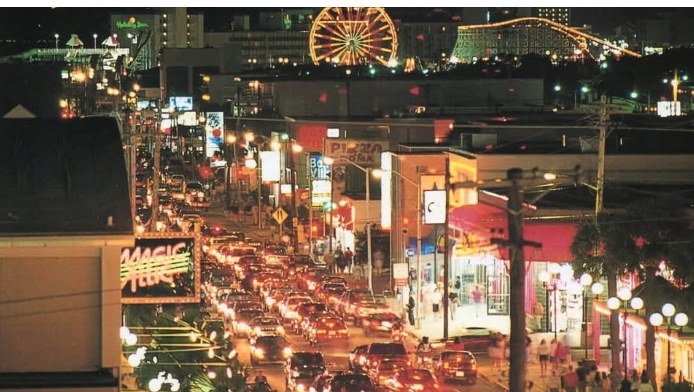
The Magic of Myrtle Beach Nights: Sawyer Brown, The Magic Attic, and the Gen X Summers We’ll Never Forget

There was a time when downtown Myrtle Beach wasn’t just a destination—it was an atmosphere. A place where the salty breeze off the Atlantic mixed with the neon glow of the boulevard, and the sidewalks overflowed with kids, teens, and families, all chasing the magic of summer nights.

If you grew up a Gen X kid in the 1980s, you remember. The Pavilion amusement park lit up the skyline with its Ferris wheel and roller coasters, arcades blared with pinball machines, and the sidewalks pulsed with energy. You couldn’t walk ten steps without hearing laughter, the clang of a skee-ball, or the distant hum of live music.

And at the heart of it all was one of Myrtle Beach’s most legendary venues: The Magic Attic.

The Magic Attic: Myrtle Beach’s Crown Jewel

The Magic Attic wasn’t just a nightclub—it was an institution. Located on the famous strip, it became a rite of passage for anyone wanting to experience live music and a night they’d never forget. Its neon sign was a beacon, calling out to locals and tourists alike.

Inside, the dance floor was always alive. For many, the highlight of a summer night was climbing those stairs, walking into the pulsing lights, and losing yourself in the music. This was where bands came to prove themselves, where the crowd pressed close to the stage, and where memories that lasted a lifetime were made.

I still remember seeing Sawyer Brown there. At the time, they weren’t just a band—they were a phenomenon.


Sawyer Brown: From Star Search to Myrtle Beach

Sawyer Brown’s story is one of grit and determination. The group was formed in 1981 in Apopka, Florida, and in 1983, they became household names after winning the television competition show Star Search, hosted by Ed McMahon. They not only won the Vocal Group competition but also took home the grand prize of $100,000—a fortune in those days.

With their mix of country rock and high-energy stage presence, Sawyer Brown became known as the “Rolling Stones of Country Music.” Hits like “Step That Step” (their first number one), “Some Girls Do”, and “Thank God for You” solidified their place in the soundtrack of the 80s and 90s.

When they came through Myrtle Beach and played the Magic Attic, it was more than just a concert—it was an event. The crowd danced shoulder-to-shoulder, the floor thumped beneath our feet, and for a couple of hours, the whole world shrank down to that glowing, electric space above the boulevard.


Gen X Summers on the Boulevard

Walking down Ocean Boulevard in the 80s was like stepping into a carnival that never shut down. The sidewalks were crowded with kids holding giant stuffed animals won from the midway, teenagers showing off their new sunburns, and couples arm in arm with ice cream cones dripping down their hands.

The air was thick with the smell of cotton candy, pizza by the slice, and funnel cakes fried golden. Street performers competed with the calls of barkers at the arcades, and everywhere you looked was motion—bumper cars, tilt-a-whirls, and neon signs flickering against the night sky.

It was loud. It was chaotic. It was freedom.

For us Gen X kids, this was our playground. No cell phones, no TikTok, no instant uploads—just pure experience. Every night felt like the start of something unforgettable.


When It All Changed

Sadly, the Myrtle Beach we knew didn’t last forever. By the mid-2000s, the Pavilion amusement park closed down (2006), and with it went a huge piece of the city’s identity. The Magic Attic, along with many other iconic spots, eventually shut their doors as developers reshaped downtown into something shinier, more commercial, but less… magical.

The neon glow dimmed, and the sidewalks grew quieter. For many of us, it felt like losing a piece of childhood—a part of Myrtle Beach that could never truly be rebuilt.


Why It Still Matters

Looking back now, those nights on the boulevard weren’t just about fun—they were about community, culture, and the feeling of being alive in a world that hadn’t yet been digitized. The Magic Attic, Sawyer Brown, and the Pavilion weren’t just landmarks—they were touchstones of a generation that knew how to live in the moment.

Even though the strip has changed, the memories remain. And for those who were lucky enough to be there, walking those sidewalks in the 80s, hearing Sawyer Brown at the Magic Attic, and riding the Pavilion rides until midnight, there’s nothing quite like it.


References & Resources


Disclaimer

This blog is written for entertainment and historical reflection. Dates and details are based on publicly available sources and personal recollection. This is not an official historical record but a nostalgic retelling.


About the Author

Audrey Childers (A.L. Childers) is a Southern author, storyteller, and cultural historian who grew up in the Carolinas. Her work blends personal memories with historical research, bringing to life the moments and places that shaped generations. Audrey has written numerous books and blogs on history, culture, and personal transformation. You can explore more of her work at TheHypothyroidismChick.com and on Amazon under her author name, A.L. Childers.

Cracker Barrel’s New Logo Controversy: A Rebrand Recipe Nobody Ordered

Disclaimer: This blog is based on publicly available information, commentary, and personal perspective. It is not financial advice.


A Slice of History: Cracker Barrel’s Southern Roots

Founded in 1969 in Lebanon, Tennessee, Cracker Barrel Old Country Store built its reputation as the ultimate Southern comfort food destination. From rocking chairs on the porch to biscuits dripping with gravy, it became more than a restaurant—it became a memory. Families on road trips, church groups after Sunday service, grandparents treating the grandkids—Cracker Barrel wasn’t just food, it was a cultural pit stop.

So when the Cracker Barrel logo change dropped in August 2025, it wasn’t just a design tweak. It was a gut punch for millions who saw the brand as a warm hug of fried chicken and hashbrown casserole.


Julie Felss Masino: The CEO Behind the “Woke Rebrand”

Who is Julie Felss Masino?

  • Northern roots, degree in Communications from Miami University (Ohio).
  • Leadership résumé includes Taco Bell, Starbucks, Sprinkles Cupcakes, Mattel, and now Cracker Barrel CEO (since Nov 2023).
  • She’s been praised for growth strategies (like Taco Bell’s global expansion) but also criticized for bringing too much “corporate polish” to brands known for personality and grit.

She insists, “The things you love are still there,” while rolling out the “All the More” campaign—a $700 million overhaul with a new minimalist Cracker Barrel logo and refreshed interiors.

But Wall Street wasn’t buying it. Cracker Barrel stock plunged over 12% intraday, wiping out nearly $100 million in market value. That’s the corporate equivalent of your mama burning the biscuits.

SEO Keywords: Cracker Barrel CEO Julie Felss Masino, Cracker Barrel stock drop, Cracker Barrel logo backlash, woke corporate rebrand.


Why I Don’t Care About the Rebrand

Here’s the truth: I don’t care what they name it, rebrand it, or paint on the sign outside.

Why? Because their corporate world has nothing to do with our world.

  • Their World: glossy presentations, stock tickers, brand consultants who charge $50,000 to pick out a “modern font.” They care about Wall Street.
  • Our World: feeding families after church, grabbing comfort food on a road trip, ordering biscuits and gravy because that’s what your granddaddy did. We care about taste, price, and whether the cornbread comes hot.

Cracker Barrel can call itself Cracker Universe for all I care—if the food doesn’t taste like home, nobody in the consumer world is showing up.


A Track Record of Changes: Alleged Outcomes

Let’s stir the pot and imagine what could happen here, based on Masino’s past gigs:

  • Taco Bell: She expanded internationally—great for global growth, but that doesn’t mean Southern folks in Tennessee care about tacos in Tokyo.
  • Starbucks: Helped with growth phases, especially in Asia—again, great for stockholders, not exactly comforting for consumers craving chicken ‘n’ dumplings.
  • Sprinkles Cupcakes: Trendy and Instagrammable, but not soul food.
  • Mattel’s Fisher-Price: Toys, not turnip greens.

Alleged Forecast for Cracker Barrel: More sleek branding, more “modern” appeal, maybe a boost in younger diners—but unless the food tastes better, traditional customers may leave the biscuits behind.


What Southern Folks Actually Want

  • Food that tastes right: Hashbrown casserole that’s creamy, not dry. Fried chicken that crackles.
  • Nostalgia: The old logo, the knick-knacks, the porch rocking chairs.
  • Consistency: We want Cracker Barrel to feel like home, not like a chain chasing social media trends.

Humor moment: If I wanted bland food with pretty lighting, I’d eat at IKEA.


The Corporate vs Consumer Reality

This is where the Cracker Barrel rebrand controversy reveals the biggest divide:

  • In the corporate boardroom, they’re worried about “brand identity, investor confidence, quarterly growth.”
  • In the real world, we’re worried about:
    • Is the bacon crispy?
    • Is the coffee hot?
    • Did I just spend $14.99 for eggs that look like they were cooked in a hotel microwave?

Corporate execs live in a rich world of numbers. We live in a consumer world of taste and value. That’s why rebrands like this flop—they’re speaking different languages.


The Recipe for Redemption

  1. Taste First, Talk Later: Fix the food before fixing the logo.
  2. Respect Tradition: Keep the rocking chairs, keep Uncle Herschel, keep the Southern soul.
  3. Don’t Forget Who You Serve: Your customers aren’t hedge funds—they’re families, road-trippers, and Sunday diners.

Final Word: Stock vs. Spoon

Cracker Barrel’s new logo controversy is more than branding—it’s about what happens when corporate ambition collides with consumer expectation.

The logo may have changed, but the question remains: Will the food get better, or will the biscuits crumble?

Because at the end of the day, Wall Street can debate stock charts—but Main Street just wants gravy that sticks to the fork.


About the Author

A Southern-born diner who’s eaten more hashbrown casserole than salads, I write about where corporate America meets consumer reality. My fork is my pen, and my humor is my butter knife.

Breaking the Body Fat Code: Why Some of Us Are Fatter in Certain Area’s, More Than others. Here’s Your Answer!

weightlosswar

Have you ever wondered why people respond differently to diets?

In the last fifty years what has changed in our society? We have the same predisposition genetics as our grandparents.  We are unique and come in all different shapes and sizes.

We can’t blame is all on genetics being unhealthy solely on the DNA that was passed down to us. Everyone’s genetic makeup is different. It’s like your fingerprints.

I was always the tall, skinny, flat chested , flat butt girl in school. I remember being plagued at school for being too skinny. Having no shape. While other school mates were well endowed with large boobs, hippy hips and a nice rounder booty.   Our metabolisms certainly dictate how we use energy and our genetics can dictate how we are shaped but what has started to interests me more-so lately is  why we store fat on certain areas of our bodies when others don’t.

These questions have confused and frustrated people and health care practitioners for decades. But why is it so confusing? One thing we have learned is each of us are unique and have our very own biochemistry that sets us apart from everyone else. Although we might share the same common traits and perhaps the same overlapping metabolic tendencies. We can’t continue to say that one-size-fits-all when it comes to our very own unique body chemistry.  There are over 7 billion people on this planet and we come in all different shapes, colors and sizes. With this being said wouldn’t  you think the one-size-fits-all- approach to losing weight wouldn’t work since we are  we are all unique.

Why is it that one person can eat all they want and never gain an inch, while someone else gains weight just looking at food? The fact is some people are wired to simply burn fat better than others. There are sneaky little things in your body that can halt your weight loss success.

Where you store your body fat isn’t a topic most of us women like to discuss but I feel it is one that will enlighten you and help you more on your journey to a better healthier you.

Every cell in our body responds to the foods we eat, the products we put on our bodies and the household chemicals that we come in contact with every day. Although some of us were born with the predisposition genetics as our parents that gives us our hair color, eye color, height and if we are pear shaped, apple shaped, straight or hourglass this doesn’t mean we can’t win the battle when it comes to our hormones. Our hormones have a direct impact on every major system in our body.  Remember our bodies love balance. Everything has a domino affect so we have to try to figure-out that balance in what our individual body needs are. Whether it be the more fiber , fixing our gut, helping our skin get more moisture, speeding up our metabolism so we can get out of that fat storage mode and into the fat burning mode.

After researching many hours on this topic, I’ve found that where your body stores fat is hint to what is going on with you internally with your hormones. As our hormone levels change with age, pregnancy, exercise, eating habits, or other life events, fat adjusts itself to our every changing hormonal events and places itself in different area’s in our body.  Our hormones have a direct impact on how much body fat we store and where it is stored on our bodies.  Wouldn’t it be wonderful to know what approach to take to fix those thunder thighs or that muffin top?   Now even with this information its just a stepping stone of knowledge to better equip you a healthier you. So what exactly does it mean to have fat stored in certain area’s of your body and not others?

Love handles/belly:  Love handles often means that you are way to stressed out and when your stressed out it raises your cortisol levels.  it could also be a indicator that you might have adrenal fatigue.  Cortisol adds fat around my mid-section. You are eating to much sugar where you become insulin resistant. If your body is in  constant elevated levels of insulin (a hormone that regulates the metabolism of carbohydrates in the bloodstream) it will accumulate around your mid section. A lack of sleep also may lead to metabolic issues and help encourage those love handles. It also could mean you have  elevated estrogen levels and more insulin production. So what do you need to do? Stop eating crap, those processed carbs and avoid sugar, even the fake sugars which are even more horrible for you. You should also go easy on the exercise, sometimes if you exercise more it adds more cortisol to your body so you are fighting a losing battle, try yoga, more sleep, meditation, Pilates , planks,  lifting weights and walking are good ways to start. Don’t forget fat gained around the waist is dangerous in terms of it increases the risk of heart disease, diabetes and other chronic diseases. My book Reset your Thyroid . This is a 21-day Meal plan to reset your thyroid and jump start your weight loss journey. It is filled with 21 breakfast recipes, 21 lunch recipes and 21 dinner recipes. They are packed full of nutrients, healthy fats and proteins. All are easy to make and I’ve done all the thinking for you! 

Thighs: Sometimes its our genetic bone structure that was passed down from our parents that gives us more hips or fatter thighs than the next person and other times it can mean that we have elevated estrogen levels. This is the female sex hormone. Thigh fat is a little harder to burn off than belly fat. You can also have fluid retention in your thighs. So many think that fluid retention only takes place only in the abdomen but that isn’t true It actually occurs all over your body. So what do you need to do? Start drinking your daily needed allowance of water. Your body weight and divide it by two. that’s the least amount of water to drink per day and please don’t drink it all in one sitting. there is a think called water toxicity and it will kill you. Space out your water consumption. Choose better skin care products in my blog 21 Successful Tips on Clean Beauty Swaps. I share with your what skin care products are healthier. You want to avoid chemicals such as BPA ( that can be found in plastic containers, water bottles and pretty much anything plastic unless it states BPA FREE) , parabens or phthalates. Your food should be 100% organic and you most defiantly should be avoiding all soy products like the black plague. let’s not forget that getting in a good nights sleep will also help to improve your estrogen levels.  In my book , A Survivor’s Cookbook Guide to Kicking Hypothyroidism’s Booty, I’ve included clean food recipes, recipes for your home and body that are super easy to make, who doesn’t want a healthier home?

Back of Arms: This could mean that you have  lower testosterone levels as well as an excess insulin.Women do have a small amount of testosterone in our adrenal glands and ovaries although this is thought as a male hormone.  Start eating more avocados, as in healthy fats  and fatty fish such as salmon can help improve this area. Try to  avoid all red meat and all dairy products. Start trying to lift some weights.  Building muscle through weight lifting can and may also increase testosterone levels.

Upper Back: This could mean you have lower levels of Thyroxine and higher levels of insulin. Thyroxine  is a thyroid hormone that plays a role with your metabolism and calorie burning rate and this hormone is secreted into our bloodstream.  You can help boost your thyroxine naturally by eating foods such as shellfish, seafood and cruciferous vegetables, avoiding gluten and soy, and increasing healthy fat intake.

Our metabolism does not decide to burn or store body fat based on calories. It makes these decisions based on the hormones those calories trigger. That is why the quality of calories matters so much….higher-quality calories trigger body-fat-burning hormones while low-quality calories trigger body-fat-storing hormones.

– The Smarter Science of Slim

As the conclusion,  Body fat is important necessity for life. It is our source of energy and it stores some much needed nutrients, a major ingredient in brain tissue.  Moreover, it provides a padding to protect internal organs and insulates the body against the cold.  But yet, getting too fat (more than 30 percent body fat in females and 25 percent in males) can be dangerous and is  associated with increased risk of disease and premature death, regardless of where the fat is stored in the body. As a American society, we are tipping the scales to the point that obesity is now a national health epidemic.

Think about this each time you eat, hormones are released into your body and the type of calories consumed (i.e. fat, carbohydrates or protein) determines which hormones are released and where it is placed throughout your body.  The only way to achieve your goal is to start eating to cater to your bodies needs. Along with proper exercise. I’ve given you all solutions to fight that fat storage on those certain areas of your  body part. I  suggest eating a particular way to combat the hormone imbalances and I know for a fact that if you put forth the effort it will be easily attainable.

There are no shortcuts, stop eating so much sugar, fake foods, exercise more and eat more leafy green vegetables!

Please check out my other books online @ Amazon, Barnes n Noble or Books a Million.   

Food is thy medicine, right? Actually, it can work one of two ways. Food can be thy medicine or food can be thy death. This book is a guide that will inform you from the perspective of a women. You will also be able to determine what areas in your life that may need a little bit of work and the skills needed to improve those issues along with some fabulous recipes to help get you started on how to eat KETO AIP. I will also help you understand how to fix your gut, strengthen your immunity and fight inflammation with an autoimmune approach. The Keto AIP removes all the common inflammatory food triggers that stimulate a possible autoimmune reaction in the body. We’re going to start resetting those adrenals, boosting that energy and doing a little booty kicking to those hormones that have decided to act like a wild college student and pull an all-nighter the day before final exams.

The Keto Autoimmune Protocol Healing Book for Women: Strengthen Your Immunity, Fight Inflammation and Love Your Incredible Body

theketoautoimmunebookcover

A Women’s Holistic Holy Grail Handbook for Hypothyroidism and Hashimoto’s: How I healed my Hypothyroidism and Autoimmune Disorder with Personalized Nutrition

Poisoned Profit

Holiday Hypothyroidism

Finally a Holiday cookbook that will have you sincerely appreciating all the hard work that I put into creating it. This cookbook not only has recipes that caters to your hypothyroidism but the recipes are extremely easy to prepare while still being delicious as they promote your health, help you begin to heal, and you’re eating cleaner on top of it all. These recipes can be used year-round not only around the holidays and will be a great addition to your library. I hope you find this Holiday book a godsend to the particularly crazy holiday season. This book includes a good variety of recipes that I know you will find to be delicious, full of flavor, healthy and just perfect for your Thanksgiving and Christmas dinner table. From appetizers to main meals, side dishes and desserts these recipes are just wonderfully delicious. I am not kidding when I tell you that the recipe options in this book are endless and you won’t be disappointed! You will be able to find that perfect recipe in this book that makes your taste buds soar, fits your dietary needs and has your family bragging on your cooking skills. They may even think you secretly took lessons from Gordon Ramsay or Julia Childs

holidaybookpicture

Hashimoto’s crock-pot recipes: Added Bonus: How I put my Hashimoto’s into remission

There’s nothing like the aroma of a home-cooked dinner welcoming you at the door. No time to be in the kitchen? The wonderful thing about a crock pot is you have little prep time. You won’t have to stand over a hot stove cooking your food and it’s perfect for those hectic days. We all want that convenience! Do you need foods that promote thyroid health? You can start today healing your body from the inside out. Over 101 wholesome and nourishing Hashimoto’s fighting recipes that will cater to your mind, body and soul. This helpful book will start to guide you in the right direction along with a step by step plan that is clear and doable.
It’s not about being skinny, it’s about energy, vitality & feeling good when you look in the mirror.

hashimotoscrockpotrecipepicture

Kicking Hypothyroidism’s booty, The Slow Cooker way: 101 Slow Cooker recipes!

I wanted to create a user-friendly handbook to help anyone affected by this disorder. I’ve seen many doctors over the years and none offered me ideas on diet change. I’ve included recipes, ideas on solutions for a healthier home, what you should be eating and shouldn’t, how to shed those extra pounds, regain your self-confidence and vitality back into your life. I want you to feel strong, sexy, and beautiful. This is my heartfelt guide to you. Together, once again, you can start to gain that wonderful life that you deserve. I am a student in this thing called life. I want to be remembered as a pioneer who thought, imagined, and inspired. What we feel at times is the impossible or unthinkable. Life is a wonderful journey.

asurvivorsguidetokickinghypothyroidismslowcooker

 A Survivors Cookbook Guide to Kicking Hypothyroidism’s booty.

Do you need foods that promote your thyroid health? Let’s heal your body from the inside out. We’ve all heard that our gut is called the “second-brain”. Given how closely the two interact with each other one thing you may not realize is your emotions and weight gain can start in the gut. Your gut and digestion can also cause you to hold onto that excess weight and just feel lousy. I’ve included 101 hypothyroidism fighting recipes that cook themselves. Our main concern is kicking hypothyroidism’s booty. I hope this book inspires you to use your slow cooker more often and create your own new recipes. Let’s together shed those extra pounds, regain your self-confidence and vitality back into your life.

asurvivorspicture

Reset Your Thyroid, 21 day Meal plan Thyroid reboot

This is a 21-day Meal plan to reset your thyroid and jump start your weight loss journey. It is filled with 21 breakfast recipes, 21 lunch recipes and 21 dinner recipes. They are packed full of nutrients, healthy fats and proteins. All are easy to make and I’ve done all the thinking for you! All you have to do is prepare the foods and eat. It takes 21 days to form a new habit, it will most likely take that long for your mind and body to stop opposing your new lifestyle change. Three weeks really isn’t a very long time. If you find yourself in a rut and coming up with excuses. You can regain control by reminding yourself that you only have to do it for 21 days. Motivate yourself to exercise. Choose something you honestly like to do and won’t loathe at least 3 times a week. Create an exercise plan that seems easy to accomplish. (And, stick to it!) Give yourself a chance and commit to yourself to stay with the program for 21 days.

resetyourthyroid

Hypothyroidism Clarity

Hypothyroidism clarity is designed to help give you FREEDOM and EMPOWERMENT. I’m sharing the EXACT STEPS I’ve used to overcome my eating issues WITHOUT dieting. All the recipes are specially crafted to be easy, super delicious and they have been kid tested-mother approved. A family-friendly way to eat that your entire family will enjoy. This book contains wonderfully crafted hypothyroidism recipes for your home and body that will help transform you and your family’s life.

hypothyroidismclarity

Hypothyroidism: The beginners Guide

This book thanks everyone suffering from hypothyroidism and looking for answers. Hypothyroidism is the kind of disease that carries a bit of mystery with it. This book is not for readers looking for quick answers. There is not one size fits all. You have to be in charge of your health. I didn’t write this book to sell you any “snake oil” in a bottle. I’ve written this book to be an eye opener for you and to share with you what I have learned on my journey. The solutions in this book has helped so many people. There are many incredible holistic practitioners, authors and researchers with experience and expertise in this area. I’ve done my best to pull from all their expertise, as well as my own knowledge and clinical experience. I want to make it easy for you to find the answers quickly, all in the one place, because I’m all too familiar with that awful side effects of hypothyroidism. I certainly don’t want you to have to spend years finding solutions, like I did. I also what you to understand that there isn’t an easy “one pill” solution, but the “one pill” approach that our current medical system is using is NOT WORKING because the underlying cause for hypothyroidism is not being addressed. Get ready to go on a journey of discovery where you are going to learn how everything ties into one. A lack of knowledge is a lack of power.

hypothyroidismthebeginnersguide

Secrets to my Hypothyroidism Success: A personal guide to Hypothyroidism freedom

I wish somebody had given me a step-by-step road-map back when I was first diagnosed with hypothyroidism. The solutions in this book has helped so many people. I’ve done my best to pull from all their expertise, as well as my own knowledge and clinical experience. I want to make it easy for you to find the answers quickly, all in the one place, because I’m all too familiar with that awful side effects of hypothyroidism. I certainly don’t want you to have to spend years finding solutions, like I did. I also want you to understand that there isn’t an easy “one pill” solution, but the “one pill” approach that our current medical system is using is NOT WORKING because the underlying cause for hypothyroidism is not being addressed. Knowledge is power, educate yourself and find the answer to your health care needs. Wisdom is a wonderful thing to seek. I hope this book will teach and encourage you to take leaps in your life to educate yourself for a happier & healthier life. You have to take ownership of your health

secretstomyhypothyroidismsuccess

The Best Little Hypothyroidism Autumn Cookbook

I wanted to create a fall cookbook for those of us suffering from hypothyroidism that makes you feel as if you’re inviting an old friend in for coffee. If you’ve been considering switching to a hypothyroidism diet, you may be wondering if you have to give up your favorite foods along with flavor. This is far from the truth. Switching to a hypothyroidism diet means that you are catering to heal your thyroid. You can still enjoy your favorite fall recipes following a hypothyroidism diet- you’ll just need to learn what substitutions you will need to make to create wonderful fall hypothyroidism recipes. This is where this book that I’ve written for you comes into play. In this book, you will find a collection of many fall favorite recipes that you and your family are sure to love. If you’ve ever considered a hypothyroidism diet, this recipe book is a great starting resource.

thebestlittlehypothyroidismcookbook

Audrey Childers is a published author, blogger, freelance journalist and an entrepreneur with over a decade of experience in research and editorial writing. She is also the creator and founder of the website the hypothyroidismchick.com. Where you can find great tips on everyday living with hypothyroidism. She enjoys raising her children and being a voice for optimal human health and wellness.

13263952_10209551660887161_2954231304874132931_n

Audrey Childers is a published author, blogger, freelance journalist and an entrepreneur with over a decade of experience in research and editorial writing. She is also the creator and founder of the website Thehypothyroidismchick.com. Where you can find great tips on everyday living with hypothyroidism. She enjoys raising her children and being a voice for optimal human health and wellness. She is the published author of : A survivors cookbook guide to kicking hypothyroidism booty, Reset your Thyroid, The Ultimate guide to healing hypothyroidism,  A survivors cookbook guide to kicking hypothyroidism booty: the slow cooker way.  and Secrets to my Hypothyroidism Success:: A Personal Guide to Hypothyroidism Freedom. 

   You can find all these books on Amazon.  You can also find her actively involved in her Facebook Group : Healing Hypothyroidism. This blog may be re-posted freely with proper attribution, author bio, and this copyright statement.

Disclaimer

The information and recipes contained in blog is based upon the research and the personal experiences of the author. It’s for entertainment purposes only. Every attempt has been made to provide accurate, up to date and reliable information. No warranties of any kind are expressed or implied. Readers acknowledge that the author is not engaging in the rendering of legal, financial, medical or professional advice. By reading this blog, the reader agrees that under no circumstance the author is not responsible for any loss, direct or indirect, which are incurred by using this information contained within this blog. Including but not limited to errors, omissions or inaccuracies. This blog is not intended as replacements from what your health care provider has suggested.  The author is not responsible for any adverse effects or consequences resulting from the use of any of the suggestions, preparations or procedures discussed in this blog. All matters pertaining to your health should be supervised by a health care professional. I am not a doctor, or a medical professional. This blog is designed for as an educational and entertainment tool only. Please always check with your health practitioner before taking any vitamins, supplements, or herbs, as they may have side-effects, especially when combined with medications, alcohol, or other vitamins or supplements.  Knowledge is power, educate yourself and find the answer to your health care needs. Wisdom is a wonderful thing to seek.  I hope this blog will teach and encourage you to take leaps in your life to educate yourself for a happier & healthier life. You have to take ownership of your health.

References:

WebMD. Body fat measurement: Percentage vs. body mass. 2017. http://www.webmd.com/diet/features/body-fat-measurement#1

http://www.pnas.org/

http://thesmarterscienceofslim.com/up-close-and-personal-with-the-hormone-insulin/

http://www.metaboliceffect.com/hormonal-body-fat-signatures/

http://www.yourweightlossaid.com/hormones-causing-weight-gain/

tips1