Tag Archives: #christmas

What Winter Once Asked of the Human Mind

A Fireside Chapter

Before winter became decorative, it was demanding.

It did not arrive with twinkling lights or the promise of cheer. It came with weight. With a darkness that lingered at the edges of daylight and pressed itself into the corners of the mind. It came with cold that did not merely chill the skin but seeped inward, settling into joints, lungs, and thought alike. Food stores thinned. Candles burned shorter. Silence, once comforting, grew louder — and in that silence, the mind, if left untended, could wander into fear just as easily as the body could wander into danger.

Winter did not ask whether one felt ready.

It asked whether one was.

And so, winter asked something of people.

Not politely — but persistently.

It asked for preparation.
It asked for memory.
It asked for ritual.
It asked for community.

And when those answers were not given, winter took its payment anyway.

Long before psychology named the nervous system or mapped the pathways of fear and reassurance, people understood something elemental: the human mind could fracture under prolonged cold, darkness, and isolation. Spirits dimmed as quickly as hearth fires. Children, sensing uncertainty, required structure. Adults, facing scarcity and mortality, required meaning. Communities, pressed inward by snow and storm, required reminders of who they were to one another when survival ceased to be effortless.

So stories became tools.

Not entertainment — instruction wrapped in wonder.

They were spoken aloud when the wind rattled shutters and the scent of smoke clung to woolen clothes drying near the fire. They were told by elders whose voices carried the grain of winters survived, whose hands bore the quiet testimony of work finished before the cold arrived. These stories were passed not to frighten, but to focus — to anchor the mind when the world grew hostile.

A cat that punished the unprepared, its eyes glowing beyond the threshold, reminding families that warmth was earned long before it was worn.
A wanderer who tested hospitality, arriving hungry and cold to see whether kindness remained when abundance did not.
A bell that rang when people forgot one another, its sound cutting through snow and complacency alike.
A candle lit for the dead, so grief would not turn feral in the dark.

These were not fantasies.
They were psychological anchors.

Fear, when shaped into story, became manageable. Consequence, when personified, became memorable. Hope, when ritualized, became repeatable. Folklore taught the mind how to endure when the environment turned against it — how to regulate emotion, reinforce behavior, and preserve cohesion without written rules or formal theory.

Children learned without lectures.
Adults remembered without being confronted.

And the stories worked — because they survived.

This story comes from an old winter folk belief once shared around fires and candlelight. Families told these stories long ago to teach kindness, care, and preparation during the darkest months of the year.

These are traditional winter folk beliefs retold for modern readers.
The core legends predate 1900 and were passed down through oral tradition.

The stories in this collection are not modern inventions. They are retellings of traditional winter folk beliefs — passed down through oral tradition long before the 1900s, when survival depended on memory, ritual, and shared wisdom.

To dismiss these tales as superstition is to misunderstand their purpose. They were never meant to explain the world; they were meant to steady the mind within it. They functioned as early psychology — regulating fear, reinforcing social bonds, and offering the nervous system something solid to hold when uncertainty pressed in from all sides.

Even now, when homes are warm and shelves are full, winter still asks its questions.

We feel them when the days shorten and the year closes in on itself. We inventory what we finished and what we avoided. We seek light instinctively — candles, trees, fires, songs — repeating rituals we barely remember choosing. We gather when we can, and ache when we cannot, because the mind still fears abandonment in the dark.

The modern mind is not as different as we pretend.

It still needs rhythm.
It still responds to story.
It still requires meaning when control slips away.

Folklore did not disappear because it was childish. It faded because comfort made us forget why it existed. But the instinct remains — resurfacing every December, disguised as tradition, nostalgia, or an unexplainable pull toward old stories told slowly, by firelight.

Winter once asked the human mind to stay awake, stay connected, and stay prepared.

The stories were the answers.


About the Author

A.L. Childers is a writer and cultural preservationist whose work explores folklore, memory, and the psychological wisdom embedded in pre-industrial traditions. With a voice rooted in old-world storytelling and modern reflection, she writes to honor the stories that once kept communities steady through darkness, scarcity, and silence.


Disclaimer

This chapter is a literary retelling and interpretive exploration of traditional winter folk beliefs. While grounded in documented oral traditions and historical practices predating the 1900s, it is presented for educational, cultural, and artistic purposes. Variations of folklore exist across regions and eras.


References & Resources

• Simpson, Jacqueline & Roud, Steve – A Dictionary of English Folklore
• Hutton, Ronald – The Stations of the Sun
• Eliade, Mircea – Myth and Reality
• Dundes, Alan – Interpreting Folklore
• Frazer, James George – The Golden Bough
• Scandinavian Yule and Solstice oral traditions (pre-industrial Europe)


The Yule Cat: A Winter Tale of Wool, Worth, and Watching Eyes

There are winters that arrive politely, knocking before they enter, and then there are winters that descend without apology — the kind that sharpen the air, hush the earth, and remind humanity that comfort is earned, not promised. In Iceland, when the snow begins to stitch the land into silence and daylight thins to a pale memory, the elders say the Yule Cat wakes.

Not stretches.
Not stirs.
Wakes.

You can feel it before you ever see it — a pressure in the cold itself, as though the darkness has weight. The wind carries a faint scent of iron and wool, raw and unfinished, mingled with pine smoke curling from chimneys where families huddle close. Somewhere beyond the last lantern-lit window, something larger than any house moves across the frozen countryside, its paws silent, its breath slow and patient.

They call it JólakötturinnThe Yule Cat.

By the time the snow crunches beneath its step, Christmas Eve has arrived.

The Yule Cat is not merely black; it is winter-black — the deep, swallowing shade of a night with no moon, fur dusted with snowflakes that cling like stars. Its eyes glow not with rage, but with judgment, old and unblinking. This is no wild beast of hunger alone. This is a creature born of necessity, woven from folklore, labor, and survival itself.

In the old days — before supermarkets and soft excess — wool was life. Autumn meant shearing, carding, spinning. Fingers cracked from cold. Shoulders ached from long days bent over work that never seemed finished. Children learned early that warmth was not gifted; it was made. Socks stitched by candlelight. Coats passed down and mended again and again. To finish your wool before Christmas was not tradition — it was protection.

And those who did not?

The Yule Cat knew.

They say it prowled past farms and villages, its massive tail sweeping snow into whispering drifts. It peered through windows fogged with breath and hope. Inside, laughter might ring, bread might bake, bells might sing — but the Cat did not care for songs. It looked only at what you wore.

New clothes meant effort.
Effort meant survival.
And survival meant you belonged among the living.

The Cat’s presence was felt in the skin first — a prickle along the arms, the sudden awareness of bare ankles or thin sleeves. The sound came next: a low vibration, like a distant purr carried through ice and bone. Not threatening. Assessing.

Those who had done their part felt the warmth of wool hug closer, as though the garments themselves stood witness on their behalf. Those who had not — well, the stories grow quieter there, as if even memory refuses to linger too long.

Parents whispered the tale not to frighten, but to prepare. Children learned that diligence was a kindness to oneself. The Yule Cat was not cruel — it was honest. Winter does not spare the unready. Neither does life.

Even now, long after factories replaced spinning wheels and store-bought coats hang heavy in closets, something of the Yule Cat remains. You feel it when the year turns cold and you take stock of what you’ve finished — and what you’ve avoided. When the holidays arrive and demand reflection, not just celebration. When the dark presses close and asks, quietly but firmly: Did you do the work that mattered?

The Yule Cat still walks in these moments.

Not as a beast in the snow, but as a presence in the conscience. A reminder that comfort is built. That warmth comes from effort. That preparation is love wearing practical clothes.

And if, on some winter night, you swear you see golden eyes glinting just beyond the porch light — do not panic. Simply look down at what you’re wearing. Look at what you’ve made of the year behind you.

The Cat has always been watching.
Not to punish.
But to remind us that survival, dignity, and warmth have always belonged to those willing to finish what the cold demands.


About the Author

A.L. Childers is a storyteller drawn to forgotten folklore, hidden histories, and the quiet truths buried beneath tradition. With a voice that blends old-world atmosphere and modern reflection, she writes to preserve the stories meant to prepare us — not scare us — for the darker seasons of life. Her work explores myth, memory, survival, and the unseen rules that once kept communities alive through long winters and longer nights.


Disclaimer

This story is a creative interpretation of traditional Icelandic folklore. While inspired by historical legend, it is written for educational and artistic purposes and should not be considered a literal account. Cultural myths vary by region and era, and this retelling honors the spirit rather than strict historical record.


A Small Light in the Darkest Winter — And Why We Still Need Christmas Magic

The Lamp of Christmas Eve

There’s something strange that happens every December.

Not the shopping, not the lights, not the frantic countdown to the 25th.

I’m talking about the quiet hours — the ones nobody posts on Instagram.

The moments when the world feels heavier than usual…
When the cold settles deeper…
When memories drift in like snowflakes — soft, beautiful, and sometimes painful.

It’s during these small, unguarded moments that I’ve always noticed something miraculous:

We start looking for light again.

Not the kind that twinkles on trees,
but the kind that warms the heart.
The kind that reminds you you’re not alone.
The kind that shows up unexpectedly, like a lantern glowing in a long-forgotten window.

Every year around this time, I find myself thinking about:

✨ the people who carry invisible burdens
✨ the children who wonder why the world feels so big
✨ the adults who are still healing from winters long past
✨ the quiet souls who show up for others
✨ the tiny moments of kindness that change everything

And somewhere in these reflections, a story found me.

Not a preachy story.
Not a perfect story.
But a gentle, human, hopeful story — the kind that feels like warm hands wrapped around a mug of cocoa on a cold night.

A story about a mysterious lamp that glows only for hearts in need…
A town stitched by grief and hope…
And a reminder that small lights matter more in dark seasons.

I won’t spoil it here — you know I’m not that kind of blogger. 😉
But if you’ve ever:

  • Felt the holidays were bittersweet
  • Missed someone you loved
  • Wondered if your kindness still mattered
  • Needed a soft place to land
  • Or wished Christmas could feel magical again

…then this little winter tale might find you at the right time too.

No pressure. No push.
You know me — I don’t like to shove books down anyone’s throat every time I write.

But if your heart is craving something gentle this season,
I’ll just leave this small light here:

👉 “The Lamp of Christmas Eve” by A.L. Childers

Sometimes one quiet story is enough to remind us:

Even in the coldest winters, light finds its way back.
And so do we.


A heartfelt winter reflection about finding hope in dark seasons, the quiet magic of Christmas, and the small lights that guide us. Includes a gentle introduction to The Lamp of Christmas Eve, a feel-good magical realism holiday story.


What You Didn’t Know About Constantine and Early Christianity

What You Didn’t Know About Constantine and Early Christianity

Constantine’s Ploy: How Christianity Became a Tool for Social Control

Few figures in history wield as much influence over the shaping of Christianity as Constantine the Great. While most know him as the Roman Emperor who legalized Christianity, few delve into the labyrinth of secrets surrounding his motives, his personal beliefs, and the far-reaching consequences of his reign. In this article, we’ll uncover what you didn’t know about Constantine and early Christianity—and perhaps even challenge some long-held beliefs.

1. Constantine Wasn’t Baptized Until His Deathbed

It’s often assumed that Constantine was a devout Christian throughout his life, but the truth is more nuanced. Constantine remained unbaptized for most of his reign and only received the sacrament on his deathbed in 337 AD. Scholars speculate that this was a strategic move: by delaying baptism, Constantine ensured that his sins—both personal and political—were absolved before death. This raises an interesting question: Was his embrace of Christianity purely spiritual, or was it calculated for political expediency?


2. The Vision of the Cross: Was It Divine or Political?

The legend of Constantine’s vision before the Battle of the Milvian Bridge in 312 AD is well-known. He reportedly saw a cross in the sky accompanied by the words In hoc signo vinces (“In this sign, you will conquer”). But did this event really happen, or was it propaganda?

Some historians suggest that Constantine’s vision was less divine and more of a crafted narrative to unite his armies under a single banner. Remember, this was a time of immense religious diversity, with paganism, Mithraism, and Christianity all vying for dominance. By aligning himself with Christianity, Constantine cleverly solidified his power base among Christians while positioning himself as divinely chosen.


3. The Council of Nicaea: A Power Play?

The First Council of Nicaea in 325 AD is often celebrated as a pivotal moment in Christianity, where the Nicene Creed was established. However, many don’t realize that Constantine convened the council not out of theological devotion but to quell growing divisions within the Christian community.

One major controversy discussed at Nicaea was the nature of Christ—was he divine, human, or both? The debate led to the condemnation of Arianism, a belief that Christ was subordinate to God the Father. But Constantine’s primary goal wasn’t theological purity; it was political unity. A divided Christianity threatened the stability of his empire, and the council was his way of ensuring a unified church that supported his rule.


4. Constantine Didn’t Fully Abandon Paganism

While Constantine is often hailed as the first Christian emperor, his reign was steeped in pagan symbolism. Coins minted during his rule featured the sun god Sol Invictus, a deity associated with the cult of Mithras. Even the choice of December 25th to celebrate Christ’s birth likely stems from the pagan festival of Sol Invictus.

This blending of pagan and Christian traditions was no accident. Constantine’s empire was vast and diverse, and syncretism was a way to maintain harmony among his subjects. Could it be that Constantine’s “Christianity” was more about politics than faith?


5. Constantine’s Mother, Helena: The Hidden Power Behind the Throne

Saint Helena, Constantine’s mother, played a significant role in shaping his religious policies. A devout Christian, Helena is credited with discovering the True Cross in Jerusalem. Her influence on Constantine cannot be overstated; many historians believe that her fervent faith was a driving force behind Constantine’s eventual embrace of Christianity.

Helena’s journey to the Holy Land and her role in establishing key Christian sites cemented her legacy. But was her influence entirely benign? Some speculate that Helena’s discoveries were politically motivated, aimed at legitimizing Constantine’s rule by associating it with divine providence.


6. The Dark Side of Constantine’s Reign

While Constantine is celebrated for legalizing Christianity, his reign wasn’t without controversy. He ordered the execution of his eldest son Crispus and his wife Fausta under mysterious circumstances. Some believe this act was a calculated move to consolidate power, while others suggest it was motivated by paranoia.

How does this align with the image of Constantine as a Christian emperor? Perhaps it’s a stark reminder that even those hailed as divine instruments are still deeply human—and deeply flawed.


7. The Shift from Sunday to “The Lord’s Day”

Did you know that Constantine officially decreed Sunday as a day of rest in 321 AD? This wasn’t merely a Christian innovation but a strategic adaptation of the pagan reverence for Sol Invictus. By aligning Sunday worship with existing traditions, Constantine ensured a smoother transition for pagans converting to Christianity.

This decision not only solidified Sunday as “The Lord’s Day” but also laid the groundwork for the eventual dominance of Christianity in Western culture.


8. Constantine’s Legacy: A Mixed Bag

Constantine’s impact on Christianity is undeniable. He provided the faith with a platform to flourish, ended persecution, and established a framework for Christian theology. But his motives and methods remain subjects of debate. Was he a visionary leader chosen by God, or a shrewd politician who used religion as a tool for control?


Why This Matters Today

Constantine’s story is more than just history—it’s a mirror reflecting the complexities of faith, power, and human ambition. As A.L. Childers masterfully explores in The Seven Trials of the Soul (available on Amazon), understanding the interplay between spiritual growth and worldly power is essential for navigating our own lives.

Constantine’s journey challenges us to question the motivations behind our leaders, the origins of our traditions, and the ways in which power shapes belief. If you’re intrigued by these themes, The Seven Trials of the Soul delves deeper into the spiritual and historical dynamics that continue to shape humanity.


Constantine’s Ploy: How Christianity Became a Tool for Social Control

References

  • Eusebius of Caesarea, Life of Constantine
  • A.L. Childers, The Seven Trials of the Soul
  • Gibbon, Edward, The Decline and Fall of the Roman Empire
  • Barnes, Timothy D., Constantine and Eusebius

This article was written by A.L. Childers, whose books continue to challenge and inspire readers worldwide. Dive into her works and discover the fascinating intersections of history, spirituality, and human ambition.

(Discover more at Amazon.com—search “A.L. Childers”)

Disclaimer

This blog combines historical analysis, spiritual exploration, and creative interpretation. While every effort has been made to provide accurate references and insights, readers are encouraged to explore these topics further and draw their own conclusions.


About the Author

Audrey Childers, writing as A.L. Childers, is an acclaimed author and researcher with a passion for uncovering hidden truths and connecting history to modern realities. With over 200 books to her name, her works delve into topics like spirituality, societal inequality, and historical analysis, challenging readers to think critically about the world around them.

Notable works include:

  • The Hidden Empire: A Journey Through Millennia of Oligarchic Rule
  • Archons: Unveiling the Parasitic Entities Shaping Human Thoughts
  • The Anunnaki Prophecy: Humanity’s Forgotten Story

Audrey’s books are available on Amazon and other major platforms. Visit her blog, TheHypothyroidismChick.com, to explore more of her thought-provoking content.


References

  1. Pagels, Elaine. The Gnostic Gospels.
  2. Beard, Mary. SPQR: A History of Ancient Rome.
  3. Perkins, John. Confessions of an Economic Hitman.
  4. Griffin, G. Edward. The Creature from Jekyll Island: A Second Look at the Federal Reserve.
  5. The Nag Hammadi Library.
  6. Carbon Disclosure Project Report, 2023.
  7. Federal Reserve Report, 2023.
  8. OpenSecrets.org, Lobbying Expenditures, 2022.

Let me know if you’d like further refinements or additional details!

Chapter 2: Winter Solstice Celebrations: Delving into the Pagan Roots of Christmas

The Winter Solstice and its Significance in Pagan Traditions

The winter solstice, also known as Yule, holds a significant place in pagan traditions and is deeply rooted in ancient beliefs and customs. As Christians, it is crucial for us to understand the origins of this celebration and how it has influenced our modern holiday traditions.

In pagan traditions, the winter solstice marks the longest night of the year and the rebirth of the sun. It symbolizes hope, renewal, and the triumph of light over darkness. Many of the customs associated with the winter solstice have found their way into our Christmas celebrations.

One of the most recognizable pagan customs is the use of evergreen trees. Pagans believed that evergreen trees had special powers as they remained green throughout the winter when other trees shed their leaves. The practice of decorating evergreen trees with lights and ornaments can be traced back to pagan rituals honoring the sun god.

The Yule log is another pagan tradition that has been incorporated into Christmas celebrations. Pagans would bring a large log into their homes and burn it for twelve days to symbolize the lengthening of daylight. This practice is mirrored in the twelve days of Christmas.

Additionally, the exchange of gifts during Christmas can be linked to the Roman festival of Saturnalia, which coincided with the winter solstice. During this festival, gifts were exchanged as a symbol of goodwill and generosity.

Understanding the pagan origins of these traditions does not diminish the significance of Christmas for Christians. Instead, it allows us to appreciate the rich tapestry of history that has contributed to our modern holiday celebrations. It reminds us that Christianity has a long history of incorporating and transforming pagan customs to align with our beliefs.

By exploring the pagan roots of the winter solstice, we can deepen our understanding of the holiday season and engage in meaningful conversations with others who may not share our beliefs. We can also reflect on the true meaning of Christmas and the light that Jesus brings into our lives during the darkest time of the year.

In conclusion, the winter solstice holds great significance in pagan traditions and has influenced our modern holiday celebrations. As Christians, it is important to acknowledge and understand the pagan origins of these customs, as it allows us to appreciate the broader cultural and historical context of our traditions. By understanding the pagan roots of the winter solstice, we can enrich our own faith and engage in meaningful dialogue with others.

Tracing the Evolution of Christmas from Pagan Festivals

The fascinating journey of Christmas and uncover its hidden pagan origins. As Christians, it is essential to understand the historical context of our holiday traditions, especially when they intertwine with ancient pagan festivals. By exploring the roots of Christmas, we can gain a deeper appreciation for its true meaning and purpose.

Winter Solstice Celebrations: Delve into the pagan roots of Christmas and explore traditional rituals and customs associated with the winter solstice. Discover how early Christians strategically aligned the birth of Jesus with this pre-existing festival, in order to attract and convert pagans to Christianity. By understanding the significance of the winter solstice, we can better comprehend why Christmas falls on December 25th.

Samhain Traditions: Explore the pagan origins of Halloween and discover ancient practices associated with this festival of the dead. Understand how early Christians incorporated elements of Samhain into All Hallows’ Eve, transforming it into a time to honor saints and martyrs. By tracing the evolution of Halloween, we can celebrate it in a way that aligns with our Christian faith.

May Day Festivities: Uncover the pagan origins of May Day and explore traditional celebrations such as maypole dancing and flower crowning. Learn how early Christians adapted these customs to honor Mary, the mother of Jesus. By understanding the connection between May Day and Christianity, we can participate in these festivities with a renewed sense of purpose.

Harvest Festivals: Dive into the pagan roots of Thanksgiving and explore ancient harvest festivals that celebrated the abundance of the land. Discover how early Christians transformed these pagan rituals into a time of gratitude and thanksgiving to God. By tracing the evolution of Thanksgiving, we can fully embrace the spirit of this holiday as followers of Christ.

Beltane Rituals: Discover the pagan origins of May 1st and explore ancient fertility rituals and traditions associated with Beltane. Understand how early Christians reinterpreted these rituals to emphasize the gift of life through Christ. By exploring the pagan roots of Beltane, we can appreciate the Christian message of hope and renewal during this time.

By unraveling the hidden pagan origins of American holiday traditions, we can celebrate Christmas and other festivals with a renewed sense of faith and understanding. Let us embrace these traditions, not as remnants of ancient paganism, but as opportunities to celebrate our Christian faith and share the love of Christ with others.

Traditional Rituals and Customs Associated with the Winter Solstice

The pagan roots of Christmas and explore the traditional rituals and customs associated with the winter solstice. As Christians, it is important for us to understand the origins of our holiday traditions and how they have been influenced by ancient pagan festivals.

The winter solstice, also known as Yule, marks the shortest day and longest night of the year. This astronomical event has been observed and celebrated by various cultures for centuries. One of the most significant pagan customs associated with the winter solstice is the lighting of candles or bonfires to symbolize the return of light and hope during the darkest time of the year. This tradition has been incorporated into our modern Christmas celebrations through the lighting of Advent candles.

Another ancient ritual associated with the winter solstice is the decoration of evergreen trees. Pagan cultures believed that evergreen trees symbolized eternal life and rebirth. The practice of bringing evergreen trees into our homes during Christmas originates from this pagan belief. Today, we decorate these trees with lights, ornaments, and garlands to celebrate the birth of Jesus Christ.

Furthermore, the exchange of gifts during Christmas can be traced back to ancient Roman festivals like Saturnalia and the gift-giving traditions of the Norse god Odin. These pagan customs were later assimilated into Christian celebrations of the birth of Jesus, emphasizing the act of giving and sharing.

While it is important to acknowledge the pagan origins of these traditions, as Christians, we can also view them through a different lens. We can see how these ancient practices, which celebrated the return of light and life, can be seen as symbols of the birth of Jesus, the true light of the world.

By understanding the pagan roots of our holiday traditions, we can appreciate their rich history and cultural significance. We can also use this knowledge to deepen our faith and find ways to incorporate meaningful Christian symbolism into our celebrations.

In the next chapters, we will continue to explore the pagan origins of other American holiday traditions, such as Halloween, Thanksgiving, and Easter. By uncovering these hidden connections, we can gain a deeper understanding of our own traditions and strengthen our Christian faith.

Disclaimer

The information and recipes contained in blog is based upon the research and the personal experiences of the author. It’s for entertainment purposes only. Every attempt has been made to provide accurate, up to date and reliable information. No warranties of any kind are expressed or implied. Readers acknowledge that the author is not engaging in the rendering of legal, financial, medical or professional advice. By reading this blog, the reader agrees that under no circumstance the author is not responsible for any loss, direct or indirect, which are incurred by using this information contained within this blog. Including but not limited to errors, omissions or inaccuracies. This blog is not intended as replacements from what your health care provider has suggested.  The author is not responsible for any adverse effects or consequences resulting from the use of any of the suggestions, preparations or procedures discussed in this blog. All matters pertaining to your health should be supervised by a health care professional. I am not a doctor, or a medical professional. This blog is designed for as an educational and entertainment tool only. Please always check with your health practitioner before taking any vitamins, supplements, or herbs, as they may have side-effects, especially when combined with medications, alcohol, or other vitamins or supplements.  Knowledge is power, educate yourself and find the answer to your health care needs. Wisdom is a wonderful thing to seek.  I hope this blog will teach and encourage you to take leaps in your life to educate yourself for a happier & healthier life. You have to take ownership of your health. The highlighted links are affiliate links in my blogs.

This site is designed for educational purposes only and is not engaged in rendering medical advice, legal advice, or professional services. If you feel that you have a medical problem, you should seek the advice of your physician or health care practitioner. For additional information, please see Our full disclosure, terms of use, and privacy policy.

Our full disclosure, terms of use, and privacy policy. | thehypothyroidismchick

I Hope You Like it old School Cause I ain’t Playing With this Hypothyroidism No More.

12968093_10209143914333752_7503512854962499329_oThis hypothyroidism is no joke. People play with it all the time. But why? It completely fucks with your life. Sorry to be so blunt but it does. As diseases go, you would think that it would be a cinch to diagnose and pretty straightforward to treat. Each of us are unique individuals with different sensitivities. None of  has the same exact routine as far as what foods we eat, what chemicals we are exposed to and what medications we take but yet we all are similar when it comes to our thyroids not working properly. Why is that?


See we have to understand is when  your thyroid isn’t working properly it can wreck havoc on your life. Your thyroid is responsible for so many things. It regulates  your metabolism, makes energy, adjusts your mood, helps you sleep, even helps aid in good digestion but your see this is where you come into play. Like anything else in life you get back what you give. Start today following my tips and you will start healing your thyroid naturally.

Your body is an awesome design but there is a complex balance between everything. It’s like a domino. One thing in your  body that is overworked   can cause a major shift in how things operate. Sometimes we have to do a little pruning of the branches, in order for the tree to be healthy again. There is not one size fits all.

I know, there is a information overload and most people are confused as to where to start.  You can start by taking ownership of your health. I wanted you to understand or get a idea of how everything has a part to play in your body. I am on a  path to help you, lead you and inform you through this terrible illness. Being diagnosed with hypothyroidism isn’t just here take this pill and it will fix your issues. Hypothyroidism has a root cause. Once you start addressing the root of your problems then your body can start healing itself. Your body is an awesome design but there is a complex balance between everything. It’s a domino affect. If you have something in your body that is overworked  it will cause a major shift in your body. Don’t worry the good news is it can be healed.

One of the biggest issues is that many patients are being under treated or under dosed.

Not all medications are created equal. Trust and believe that! Also, medications can interact with other medications or interfere with how your body works.  Sort of like help one thing but hinder another.

So much of our lives revolve around food. Its a staple everywhere from ads on social media to mouth watering  commercials  on television. I am a major foodie to the point where all of my books are about food! I blog about food all the time. Food is certainly a social lubricant at meetings, family gatherings,  award dinners, and basically every function you must attend but loathe with every being of your fiber. Food understands our emotions in ways no words will never. It certainly makes it easier to bear and a lot less painful with the understanding  that something tasty might be at that gathering that you are dragging yourself to attend.   It’s all fun and games until we step on that scale , we can’t button our pants or our skin starts to break out with acne like we are hormonal teenagers . What we eat should be fun, healthy, healing, sometimes funky and always fresh.

A least less talked about area that people seem to ignore is starting to become more widely recognized. It’s food sensitivities. Most of the time these sensitivities seem to be more of a annoyance and not an immediate and/or severe allergic reaction. Therefore more people with food sensitivities are willing to annoy it, never look into their symptom’s without realizing that it can actually be disastrous to their health. More doctors, mainstream media journals and clinical practices are starting to realize how if they can start to identify and remove the  food sensitivities it can and will improve the  overall health and well-being of a individual. Thus, leading to a much better quality of life.
200088_1961135186835_5269736_n

A food sensitivity has a  delayed allergic reaction. Food sensitivities trigger the delayed antibody response after being consumed.  For example, there are four different antibodies involved in a delayed reaction. IgG, IgA, IgM, and IgD — each of which can have a different and significant effect on our immune system.

Sometimes the delayed response can take up to three weeks before symptoms may appear. This makes it very hard to pin point which food, pollen, or substance is the cause of your symptoms! Some of the more common health concerns that can be triggered by a food sensitivity are:

  • Digestive disorders (gas, bloating, cramping, diarrhea, nausea)
  • Migraines
  • Weight gain
  • Mood/Attention disorder (anxiety, depression, irritability, hyperactivity, lack of concentration)
  • Joint pain/muscle stiffness
  • Skin conditions (itching, redness, swelling, eczema, rashes)
  • Lung conditions (Asthma, Bronchitis)
  • Loss of memory
  • Fatigue
  • General malaise

Americans are in such a pathetic health crisis. We have the abundance of everything at our finger tips but yet we 1 in 3 people are on some sort of medication. It doesn’t matter if it’s Prescribed or over the counter. Meanwhile, there are people around the world who are in better health than the average American and they don’t have to be on some sort of medication but yet they seem to be in  their correct body mass index. New York Times best-selling author and Blue Zones Founder  Dan Buettner has written a book called: The Blue Zone Solution in his book he speaks about how people in these blue zones are living to be over 100 years old.  We are in such a state of denial. Every Cell in your body responds to the foods you consume.  These foods have a direct impact on your hormones and in return your hormones have a direct impact on every major system in your body. So many of us have these crazy phantom-like health problems.  Our body is lacking certain nutrients that heavily influence the function of every cell in our body while certain foods can inhibit your body’s ability to absorb the replacement nutrients needed.

Did you know that products we use every day may contain toxic chemicals and has been linked to women’s health issues? They are hidden endocrine disruptors and are very tricky chemicals that play havoc on our bodies. “We are all routinely exposed to endocrine disruptors, and this has the potential to significantly harm the health of our youth,” said Renee Sharp, EWG’s director of research. “It’s important to do what we can to avoid them, but at the same time we can’t shop our way out of the problem. We need to have a real chemical policy reform.” The longer the length of ingredients on your food label means how much more unhealthy it is for you to consume. When an item contains a host of ingredients that most likely you cant even pronounce or remember to spell you can bet your lucky dollar that the natural nutrients are long gone. These highly processed frank n foods are very difficult for the body to break down and some of the chemicals will become stored in your body. Look at it another way. When is the last time that you seen a  Azodicarbonamide grazing in a field or  Sodium benzoate being grown in a garden?

  • Artificial Sweeteners. …
  • High Fructose Corn Syrup. …
  • Monosodium Glutamate (MSG / E621) …
  • Trans Fat. …
  • Common Food Dyes. …
  • Sodium Sulfite (E221) …
  • Sodium Nitrate/Sodium Nitrite. …
  • BHA And BHT (E320)

Many different underlying reasons can play a role. We do know that hypothyroidism is a chronic condition of an underactive thyroid and affects millions of Americans. Environmental chemicals and toxins, pesticides, BPA, thyroid endocrine disruptors, iodine imbalance, other medications, fluoride, overuse of soy products, cigarette smoking, and gluten intolerance. All of these play a very important role in your thyroid health. A nonprofit group called Beyond Pesticides warns that some 60 percent of pesticides used today have been shown to affect the thyroid gland’s production of T3 and T4 hormones. Commercially available insecticides and fungicides have also been involved. Even dental x-rays have been linked to an increased risk of thyroid disorders.

Hypothyroidism means what exactly?

Hypothyroidism means your thyroid is not making enough thyroid hormone. Your thyroid is a butterfly-shaped gland in the front of your throat. It makes the hormones that control the way your body uses energy. Basically, our thyroid hormone tells all the cells in our bodies how busy they should be. Our bodies will go into overdrive with too much thyroid hormone (hyperthyroidism) and our bodies slow down with too little thyroid hormone (hypothyroidism). The most common causes of hypothyroidism worldwide is dietary and environmental. The most common cause of hypothyroidism is dietary and environmental! What does that mean exactly? That means you need to be eat to cater to your thyroid and stop using all these harmful chemicals to clean your home with and put on your body! It’s not hard. Yes, a little adjustment will be needed but isn’t everything we do in life for the better of our health worth a little inconvenience until it becomes a habit?

“You must realize that the thyroid has a relationship with all the hormones. It’s a very complex balance and there is no straight forward treatment of just treating your thyroid alone. 1st you must make sure your adrenal glands are in total support. Adrenal fatigue is a very common amongst people with hypothyroidism.  Next you have to get your cortisol levels stabilized. Having hypothyroidism your cortisol levels are already above average. Next finding the right medication for you. Everyone is different it isn’t an easy one size fits all task.”  

So this bullshit is up to you!

Start following my plan & listen to your body!!

3006_1163540167458_5209095_n

You have to start removing the thyroid suppressive foods that are in your diet and instead focus on the right foods that stimulate your thyroid to produce an abundant amount of thyroid hormone to keep your cells happy and healthy. When you eat foods full of thyroid suppressive toxins its just like throwing fuel on the fire. This will only continue to drain you of your energy, continue to make your symptoms worse, promote even more inflammation in  your body, contribute to a leaky gut and further damage your thyroid.

Listen to me when I say  there’s a major disconnect between what YOU believe to be healthy foods and what research tells us is healthy. In fact, many of the health foods today that people go out of their way to eat daily are extremely thyroid suppressive.

It seems that the  testing for thyroid is a dead end road at times  with the test appearing to be normal but you has all the symptoms. Get this, your blood work can look just fine but there is major resistance at the receptor site. Most practitioners are unfamiliar with natural treatments for the thyroid and the meds they give sometimes just don’t work. Some  doctors just don’t have a lot of experience with alternative treatments. Endocrinologists have the training to diagnose and treat hormone imbalances and problems by helping to restore the normal balance of hormones in the body. This is where you come into play. You have to take control of  your health! Your gut’s ability to digest and absorb critical nutrients is very important for proper thyroid hormone health.

I am telling you to not fucking listen to what they are saying… Do your own research… learn how to read test results and become your own health advocate!! No body else will do it for you but you…

disclaimer:::::::::::::::: Bitches::::::::::::::::::: Listen::::::::::::::::  I am here to help & educate. I am not a medical doctor nor  your personal guru specialist. …. You’ve got to do this!

A full thyroid panel for hypothyroidism should at least include these 7 key thyroid lab tests:
TSH
Free T4
Free T3
Reverse T3
Thyroid Peroxidase Antibodies
Thyroglobulin Antibodies
Reverse T3
hippocratesquote

How Is Hypothyroidism Diagnosed?

If you have symptoms of hypothyroidism, your doctor will order blood tests to check hormone levels. Lower-than-normal T4 levels usually mean you have hypothyroidism.
However, some people may have increased TSH levels while having normal T4 levels. This is called subclinical (mild) hypothyroidism. It is believed to be an early stage of hypothyroidism. If your test results or physical exam of the thyroid are abnormal, your doctor may order a thyroid ultrasound, or thyroid scan, to check for nodules or inflammation.

 I want to thank you  for reading my latest blog.  Please let me know if you need any support with it. 

Only  you know how you feel………….. dot..dot…dot….dot…dot…. need I say more?

Thehypothyroidismchick.com is committed to providing information on natural and alternative health, but I am not a health care professional. All material provided by my website is for informational purposes only, and is not to be taken as medical advice or recommendation. Any health concern or condition should be addressed by a doctor or other appropriate health care professional. The information and opinions found on this website are written based on the best data available at the time of writing, and are believed to be accurate according to the best of my discernment .

If your serious about fighting hyperthyroidism.. Purchase one of my books…. Research this !   Teach yourself….

AFFILIATE DISCLAIMER

Links on this website may lead you to a product or service that provides an affiliate commission to the owners of this site should you make a purchase. In no way does any affiliate relationship ever factor into a recommendation, or alter the integrity of the information we provide.

13174004_10209401864022333_8099428204256179437_n
Audrey Childers is a published author, blogger, freelance journalist and an entrepreneur with over a decade of experience in research and editorial writing. She is also the creator and founder of the website the hypothyroidismchick.com. Where you can find great tips on everyday living with hypothyroidism. She enjoys raising her children and being a voice for optimal human health and wellness. She is the published author of : A survivors cookbook guide to kicking hypothyroidism booty, Reset your Thyroid, The Ultimate guide to healing hypothyroidism ,  A survivors cookbook guide to kicking hypothyroidism booty: the slow cooker way ,   Hypothyroidism Clarity: How to transition your family  and  Hypothyroidism: The Beginners Guide: How to stop surviving and start thriving. You can find all these books on Amazon.  You can also find her actively involved in her Facebook Group : Healing Hypothyroidism Support Group. This blog may be re-posted freely with proper attribution, author bio, and this copyright statement.

Disclaimer

The information and recipes contained in blog is based upon the research and the personal experiences of the author. It’s for entertainment purposes only. Every attempt has been made to provide accurate, up to date and reliable information. No warranties of any kind are expressed or implied. Readers acknowledge that the author is not engaging in the rendering of legal, financial, medical or professional advice. By reading this blog, the reader agrees that under no circumstance the author is not responsible for any loss, direct or indirect, which are incurred by using this information contained within this blog. Including but not limited to errors, omissions or inaccuracies. This blog is not intended as replacements from what your health care provider has suggested.  The author is not responsible for any adverse effects or consequences resulting from the use of any of the suggestions, preparations or procedures discussed in this blog. All matters pertaining to your health should be supervised by a health care professional. I am not a doctor, or a medical professional. This blog is designed for as an educational and entertainment tool only. Please always check with your health practitioner before taking any vitamins, supplements, or herbs, as they may have side-effects, especially when combined with medications, alcohol, or other vitamins or supplements.  Knowledge is power, educate yourself and find the answer to your health care needs. Wisdom is a wonderful thing to seek.  I hope this blog will teach and encourage you to take leaps in your life to educate yourself for a happier & healthier life. You have to take ownership of your health.

Christmas: A True Ancient Holiday

Most Americans today are unaware that Christmas was banned in Boston from 1659 to 1681.”America and England helped pass laws making it illegal to observe Christmas, believing it was an insult to God to honor a day associated with ancient paganism.

Christmas is both a sacred religious holiday and a worldwide cultural and commercial phenomenon. For two thousand years, people around the world have been observing it with traditions and practices that are both religious and nonreligious in nature. Christians celebrate Christmas Day as the anniversary of the birth of Jesus of Nazareth. These traditions include exchanging gifts, decorating Christmas trees, attending church, sharing meals with family and friends and, of course, waiting for Santa Claus to arrive. December 25–Christmas Day–has been a federal holiday in the United States since 1870.

Many of us scramble to put up our decorations and buy presents that we cannot afford, while preparing for our Christmas celebrations  not really knowing about the holiday’s real significance.  If you did know the REAL history, would you continue to celebrate? Most people just follow the masses. I am guilty of following and not researching the truth in why we do things. It has become a grand Holiday with love, laughter and joy. Would you stop your celebrations if you knew that Christmas has nothing to do with Christ being born on December 25. In fact, its proven that Jesus was indeed born in the Spring.

An Ancient Holiday

The middle of winter has long been a time for celebrations around the world. Hundreds of years before the birth of our lord Jesus, early Europeans celebrated light and birth in the darkest days of winter. Many peoples rejoiced during the winter solstice which is December 21. Happy to have the worst part of the winter  behind them and they can look forward to longer days and extended hours of sunlight.

In Scandinavia, the Norse celebrated Yule from December 21, the winter solstice, through January. In recognition of the return of the sun, fathers and sons would bring home large logs, which they would set on fire. The people would feast until the log burned out, which could take as many as 12 days. The Norse believed that each spark from the fire represented a new pig or calf that would be born during the coming year.

The end of December was a perfect time for celebration in most areas of Europe. At that time of year, most cattle were slaughtered so they would not have to be fed during the winter. For many, it was the only time of year when they had a supply of fresh meat. In addition, most wine and beer made during the year was finally fermented and ready for drinking.

In Germany, people honored the pagan god Oden during the mid-winter holiday. Germans were terrified of Oden, as they believed he made nocturnal flights through the sky to observe his people, and then decide who would prosper or perish. Because of his presence, many people chose to stay inside.


In the early years of Christianity, Easter was the main holiday; the birth of Jesus was not celebrated. In the fourth century, church officials decided to institute the birth of Jesus as a holiday. Unfortunately, the Bible does not mention date for his birth (a fact Puritans later pointed out in order to deny the legitimacy of the celebration). Although some evidence suggests that his birth may have occurred in the spring (why would shepherds be herding in the middle of winter?), Pope Julius I chose December 25. It is commonly believed that the church chose this date in an effort to adopt and absorb the traditions of the pagan Saturnalia festival.

The Origin of Christmas Tree

Just as early Christians recruited Roman pagans by associating Christmas with the Saturnalia, so too worshippers of the Asheira cult and its offshoots were recruited by the Church sanctioning “Christmas Trees”.[7]  Pagans had long worshipped trees in the forest, or brought them into their homes and decorated them, and this observance was adopted and painted with a Christian veneer by the Church.

  1. The Origin of Mistletoe Norse mythology recounts how the god Balder was killed using a mistletoe arrow by his rival god Hoder while fighting for the female Nanna.  Druid rituals use mistletoe to poison their human sacrificial victim.[8] The Christian custom of “kissing under the mistletoe” is a later synthesis of the sexual license of Saturnalia with the Druidic sacrificial cult.[9]
  2. The Origin of Christmas Presents In pre-Christian Rome, the emperors compelled their most despised citizens to bring offerings and gifts during the Saturnalia (in December) and Kalends (in January).  Later, this ritual expanded to include gift-giving among the general populace.  The Catholic Church gave this custom a Christian flavor by re-rooting it in the supposed gift-giving of Saint Nicholas (see below).[10]
  3. The Origin of Santa Claus
  4. Nicholas was born in Parara, Turkey in 270 CE and later became Bishop of Myra.  He died in 345 CE on December 6th.  He was only named a saint in the 19th century.
  5. Nicholas was among the most senior bishops who convened the Council of Nicaea in 325 CE and created the New Testament.  The text they produced portrayed Jews as “the children of the devil”[11] who sentenced Jesus to death.
  6. In 1087, a group of sailors who idolized Nicholas moved his bones from Turkey to a sanctuary in Bari, Italy.  There Nicholas supplanted a female boon-giving deity called The Grandmother, or Pasqua Epiphania, who used to fill the children’s stockings with her gifts.  The Grandmother was ousted from her shrine at Bari, which became the center of the Nicholas cult.  Members of this group gave each other gifts during a pageant they conducted annually on the anniversary of Nicholas’ death, December 6.
  7. The Nicholas cult spread north until it was adopted by German and Celtic pagans.  These groups worshipped a pantheon led by Woden –their chief god and the father of Thor, Balder, and Tiw.  Woden had a long, white beard and rode a horse through the heavens one evening each Autumn.  When Nicholas merged with Woden, he shed his Mediterranean appearance, grew a beard, mounted a flying horse, rescheduled his flight for December, and donned heavy winter clothing.
  8. In a bid for pagan adherents in Northern Europe, the Catholic Church adopted the Nicholas cult and taught that he did (and they should) distribute gifts on December 25th instead of December 6th.
  9. In 1809, the novelist Washington Irving (most famous his The Legend of Sleepy Hollow and Rip Van Winkle) wrote a satire of Dutch culture entitled Knickerbocker History.  The satire refers several times to the white bearded, flying-horse riding Saint Nicholas using his Dutch name, Santa Claus.
  10. Dr. Clement Moore, a professor at Union Seminary, read Knickerbocker History, and in 1822 he published a poem based on the character Santa Claus: “Twas the night before Christmas, when all through the house, not a creature was stirring, not even a mouse.  The stockings were hung by the chimney with care, in the hope that Saint Nicholas soon would be there…”  Moore innovated by portraying a Santa with eight reindeer who descended through chimneys.
  11. The Bavarian illustrator Thomas Nast almost completed the modern picture of Santa Claus.  From 1862 through 1886, based on Moore’s poem, Nast drew more than 2,200 cartoon images of Santa for Harper’s Weekly.  Before Nast, Saint Nicholas had been pictured as everything from a stern looking bishop to a gnome-like figure in a frock.  Nast also gave Santa a home at the North Pole, his workshop filled with elves, and his list of the good and bad children of the world.  All Santa was missing was his red outfit.
  12. In 1931, the Coca Cola Corporation contracted the Swedish commercial artist Haddon Sundblom to create a coke-drinking Santa.  Sundblom modeled his Santa on his friend Lou Prentice, chosen for his cheerful, chubby face.  The corporation insisted that Santa’s fur-trimmed suit be bright, Coca Cola red.  And Santa was born – a blend of Christian crusader, pagan god, and commercial idol.
  • Each year, 30-35 million real Christmas trees are sold in the United States alone. There are 21,000 Christmas tree growers in the United States, and trees usually grow for about 15 years before they are sold.
  • Today, in the Greek and Russian orthodox churches, Christmas is celebrated 13 days after the 25th, which is also referred to as the Epiphany or Three Kings Day. This is the day it is believed that the three wise men finally found Jesus in the manger.
  • In the Middle Ages, Christmas celebrations were rowdy and raucous—a lot like today’s Mardi Gras parties.
  • From 1659 to 1681, the celebration of Christmas was outlawed in Boston, and law-breakers were fined five shillings.
  • Christmas was declared a federal holiday in the United States on June 26, 1870.
  • The first eggnog made in the United States was consumed in Captain John Smith’s 1607 Jamestown settlement.
  • Poinsettia plants are named after Joel R. Poinsett, an American minister to Mexico, who brought the red-and-green plant from Mexico to America in 1828.
  • The Salvation Army has been sending Santa Claus-clad donation collectors into the streets since the 1890s.
  • Rudolph, “the most famous reindeer of all,” was the product of Robert L. May’s imagination in 1939. The copywriter wrote a poem about the reindeer to help lure customers into the Montgomery Ward department store.
  • Construction workers started the Rockefeller Center Christmas tree tradition in 1931.

Is  Christmas  really a monstrous holiday with a horrible history and meaning? What does Christmas really mean to you?


I want to thank you  for reading my latest blog.  Please let me know if you need any support with it.  Otherwise, are we friends on Facebook yet?  If not let’s do that now, healing Hypothyroidism.   I like to connect on a more personal level there and often; offer social media only products that can only be accessed on my page and share daily updates along with recipes. Remember sharing is caring. Please share and post a comment to this blog! I would love to hear from you. Sign up for my blogs @ thehypothyroidismchick.com .  You can also  Follow me on instagram @ Thyroidismchick or Follow me on twitter @Thyroidismchick.

Health and Happiness,

Audrey
XoXo


Audrey Childers is a published author, blogger, freelance journalist and an entrepreneur with over a decade of experience in research and editorial writing. She is also the creator and founder of the website the hypothyroidismchick.com. Where you can find great tips on everyday living with hypothyroidism. She enjoys raising her children and being a voice for optimal human health and wellness. She is the published author of : A survivors cookbook guide to kicking hypothyroidism booty, Reset your Thyroid, The Ultimate guide to healing hypothyroidism ,  A survivors cookbook guide to kicking hypothyroidism booty: the slow cooker way ,   Hypothyroidism Clarity: How to transition your family  and  Hypothyroidism: The Beginners Guide: How to stop surviving and start thriving. You can find all these books on Amazon.  You can also find her actively involved in her Facebook Group : Healing Hypothyroidism Support Group. This blog may be re-posted freely with proper attribution, author bio, and this copyright statement.

Disclaimer

The information and recipes contained in blog is based upon the research and the personal experiences of the author. It’s for entertainment purposes only. Every attempt has been made to provide accurate, up to date and reliable information. No warranties of any kind are expressed or implied. Readers acknowledge that the author is not engaging in the rendering of legal, financial, medical or professional advice. By reading this blog, the reader agrees that under no circumstance the author is not responsible for any loss, direct or indirect, which are incurred by using this information contained within this blog. Including but not limited to errors, omissions or inaccuracies. This blog is not intended as replacements from what your health care provider has suggested.  The author is not responsible for any adverse effects or consequences resulting from the use of any of the suggestions, preparations or procedures discussed in this blog. All matters pertaining to your health should be supervised by a health care professional. I am not a doctor, or a medical professional. This blog is designed for as an educational and entertainment tool only. Please always check with your health practitioner before taking any vitamins, supplements, or herbs, as they may have side-effects, especially when combined with medications, alcohol, or other vitamins or supplements.  Knowledge is power, educate yourself and find the answer to your health care needs. Wisdom is a wonderful thing to seek.  I hope this blog will teach and encourage you to take leaps in your life to educate yourself for a happier & healthier life. You have to take ownership of your health.

http://www.history.com/topics/christmas/history-of-Christmas

http://www.livescience.com/32891-why-was-christmas-banned-in-america-.html

http://www.biblicalarchaeology.org/daily/biblical-topics/new-testament/how-december-25-became-christmas/

SOURCES

[1] Addison G. Wright, Roland E. Murphy, Joseph A. Fitzmyer, “A History of Israel” in The Jerome Biblical Commentary, (Prentice Hall: Englewood Cliffs, NJ, 1990), p. 1247.

[2] The first mention of a Nativity feast appears in the Philocalian calendar, a Roman document from 354 CE, which lists December 25th as the day of Jesus’ birth.

[3] Increase Mather, A Testimony against Several Prophane and Superstitious Customs, Now Practiced by Some in New England (London, 1687), p. 35.  See also Stephen Nissenbaum, The Battle for Christmas: A Cultural History of America’s Most Cherished Holiday, New York: Vintage Books, 1997, p. 4.

[4] Nissenbaum, p. 3.

[5] David I. Kertzer, The Popes Against the Jews: The Vatican’s Role in the Rise of Modern Anti-Semitism, New York: Alfred A. Knopf, 2001, p. 74.

[6] Kertzer, p. 33, 74-5.

[7] Clement Miles, Christmas Customs and Traditions: Their History and Significance, New York: Dover Publications, 1976, pp. 178, 263-271.

[8] Miles, p. 273.

[9] Miles, p. 274-5.

[10] Miles, pp. 276-279.

[11] John 8:44

Notes

a. See Jonathan Klawans, “Was Jesus’ Last Supper a Seder?” Bible Review, October 2001.

b. See the following Bible Review articles: David R. Cartlidge, “The Christian Apocrypha: Preserved in Art,” Bible Review, June 1997; Ronald F. Hock, “The Favored One,” Bible Review, June 2001; and Charles W. Hedrick, “The 34 Gospels,” Bible Review, June 2002.

c. For more on dating the year of Jesus’ birth, see Leonara Neville, “Fixing the Millennium,” Archaeology Odyssey, January/February 2002.

d. The ancients were familiar with the 9-month gestation period based on the observance of women’s menstrual cycles, pregnancies and miscarriages.

e. In the West (and eventually everywhere), the Easter celebration was later shifted from the actual day to the following Sunday. The insistence of the eastern Christians in keeping Easter on the actual 14th day caused a major debate within the church, with the easterners sometimes referred to as the Quartodecimans, or “Fourteenthers.”

1. Origen, Homily on Leviticus 8.

2. Clement, Stromateis 1.21.145. In addition, Christians in Clement’s native Egypt seem to have known a commemoration of Jesus’ baptism—sometimes understood as the moment of his divine choice, and hence as an alternate “incarnation” story—on the same date (Stromateis 1.21.146). See further on this point Thomas J. Talley, Origins of the Liturgical Year, 2nd ed. (Collegeville, MN: Liturgical Press, 1991), pp. 118–120, drawing on Roland H. Bainton, “Basilidian Chronology and New Testament Interpretation,” Journal of Biblical Literature 42 (1923), pp. 81–134; and now especially Gabriele Winkler, “The Appearance of the Light at the Baptism of Jesus and the Origins of the Feast of the Epiphany,” in Maxwell Johnson, ed., Between Memory and Hope: Readings on the Liturgical Year (Collegeville, MN: Liturgical Press, 2000), pp. 291–347.

3. The Philocalian Calendar.

4. Scholars of liturgical history in the English-speaking world are particularly skeptical of the “solstice” connection; see Susan K. Roll, “The Origins of Christmas: The State of the Question,” in Between Memory and Hope: Readings on the Liturgical Year (Collegeville, MN: Liturgical Press, 2000), pp. 273–290, especially pp. 289–290.

5. A gloss on a manuscript of Dionysius Bar Salibi, d. 1171; see Talley, Origins, pp. 101–102.

6. Prominent among these was Paul Ernst Jablonski; on the history of scholarship, see especially Roll, “The Origins of Christmas,” pp. 277–283.

7. For example, Gregory of Nazianzen, Oratio 38; John Chrysostom, In Diem Natalem.

8. Louis Duchesne, Origines du culte Chrétien, 5th ed. (Paris: Thorin et Fontemoing, 1925), pp. 275–279; and Talley, Origins.

9. Tertullian, Adversus Iudaeos 8.

10. There are other relevant texts for this element of argument, including Hippolytus and the (pseudo-Cyprianic) De pascha computus; see Talley, Origins, pp. 86, 90–91.

11. De solstitia et aequinoctia conceptionis et nativitatis domini nostri iesu christi et iohannis baptistae.

12. Augustine, Sermon 202.

13. Epiphanius is quoted in Talley, Origins, p. 98.

14. b. Rosh Hashanah 10b–11a.

15. Talley, Origins, pp. 81–82.

16. On the two theories as false alternatives, see Roll, “Origins of Christmas.”

Image result for christmas


..

Give Yourself The Gift of Health This Christmas

Image result for christmas & health

Christmas is fast approaching. It’s coming towards the end of another year. I’ve learned so much over this past few years. You are very POWERFUL and AMAZING  when you can begin to  fuel your body with good health, whole foods and the right nutrition.

Let’s start off 2017 with putting our own health as a #1 priority!

Food is not just calories it is information. It talks to your DNA and tells it what to do. Your most powerful tool to change your health is your fork. You should eat foods that nourish your body and not hinder it. Hypothyroidism does have a root cause. Once you start addressing the root of your problems then your body can start healing itself. Your body is an awesome design but there is a complex balance between everything.  In all of my books, I give you the blueprint to start reshaping your mind and body.

Image result for christmas & health


“if you eat right, the pants won’t be tight”

Click on the link below and order a book for yourself today.

Please check out my other books online @ Amazon, Barnes n Noble or Books a Million.    

Holiday Hypothyroidism

Finally a Holiday cookbook that will have you sincerely appreciating all the hard work that I put into creating it. This cookbook not only has recipes that caters to your hypothyroidism but the recipes are extremely easy to prepare while still being delicious as they promote your health, help you begin to heal, and you’re eating cleaner on top of it all. These recipes can be used year-round not only around the holidays and will be a great addition to your library. I hope you find this Holiday book a godsend to the particularly crazy holiday season. This book includes a good variety of recipes that I know you will find to be delicious, full of flavor, healthy and just perfect for your Thanksgiving and Christmas dinner table. From appetizers to main meals, side dishes and desserts these recipes are just wonderfully delicious. I am not kidding when I tell you that the recipe options in this book are endless and you won’t be disappointed! You will be able to find that perfect recipe in this book that makes your taste buds soar, fits your dietary needs and has your family bragging on your cooking skills. They may even think you secretly took lessons from Gordon Ramsay or Julia Childs

holidaybookpicture

Secrets to my Hypothyroidism Success: A personal guide to Hypothyroidism freedom

I wish somebody had given me a step-by-step road-map back when I was first diagnosed with hypothyroidism. The solutions in this book has helped so many people. I’ve done my best to pull from all their expertise, as well as my own knowledge and clinical experience. I want to make it easy for you to find the answers quickly, all in the one place, because I’m all too familiar with that awful side effects of hypothyroidism. I certainly don’t want you to have to spend years finding solutions, like I did. I also want you to understand that there isn’t an easy “one pill” solution, but the “one pill” approach that our current medical system is using is NOT WORKING because the underlying cause for hypothyroidism is not being addressed. Knowledge is power, educate yourself and find the answer to your health care needs. Wisdom is a wonderful thing to seek. I hope this book will teach and encourage you to take leaps in your life to educate yourself for a happier & healthier life. You have to take ownership of your health

secretstomyhypothyroidismsuccess

The Best Little Hypothyroidism Autumn Cookbook

I wanted to create a fall cookbook for those of us suffering from hypothyroidism that makes you feel as if you’re inviting an old friend in for coffee. If you’ve been considering switching to a hypothyroidism diet, you may be wondering if you have to give up your favorite foods along with flavor. This is far from the truth. Switching to a hypothyroidism diet means that you are catering to heal your thyroid. You can still enjoy your favorite fall recipes following a hypothyroidism diet- you’ll just need to learn what substitutions you will need to make to create wonderful fall hypothyroidism recipes. This is where this book that I’ve written for you comes into play. In this book, you will find a collection of many fall favorite recipes that you and your family are sure to love. If you’ve ever considered a hypothyroidism diet, this recipe book is a great starting resource.

thebestlittlehypothyroidismcookbook

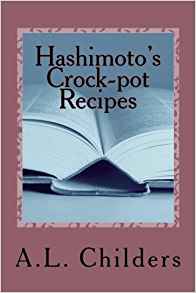
Hashimoto’s crock-pot recipes: Added Bonus: How I put my Hashimoto’s into remission

There’s nothing like the aroma of a home-cooked dinner welcoming you at the door. No time to be in the kitchen? The wonderful thing about a crock pot is you have little prep time. You won’t have to stand over a hot stove cooking your food and it’s perfect for those hectic days. We all want that convenience! Do you need foods that promote thyroid health? You can start today healing your body from the inside out. Over 101 wholesome and nourishing Hashimoto’s fighting recipes that will cater to your mind, body and soul. This helpful book will start to guide you in the right direction along with a step by step plan that is clear and doable.
It’s not about being skinny, it’s about energy, vitality & feeling good when you look in the mirror.

hashimotoscrockpotrecipepicture


 A Survivors Cookbook Guide to Kicking Hypothyroidism’s booty.

Do you need foods that promote your thyroid health? Let’s heal your body from the inside out. We’ve all heard that our gut is called the “second-brain”. Given how closely the two interact with each other one thing you may not realize is your emotions and weight gain can start in the gut. Your gut and digestion can also cause you to hold onto that excess weight and just feel lousy. I’ve included 101 hypothyroidism fighting recipes that cook themselves. Our main concern is kicking hypothyroidism’s booty. I hope this book inspires you to use your slow cooker more often and create your own new recipes. Let’s together shed those extra pounds, regain your self-confidence and vitality back into your life.

asurvivorspicture

Hypothyroidism: The beginners Guide

This book thanks everyone suffering from hypothyroidism and looking for answers. Hypothyroidism is the kind of disease that carries a bit of mystery with it. This book is not for readers looking for quick answers. There is not one size fits all. You have to be in charge of your health. I didn’t write this book to sell you any “snake oil” in a bottle. I’ve written this book to be an eye opener for you and to share with you what I have learned on my journey. The solutions in this book has helped so many people. There are many incredible holistic practitioners, authors and researchers with experience and expertise in this area. I’ve done my best to pull from all their expertise, as well as my own knowledge and clinical experience. I want to make it easy for you to find the answers quickly, all in the one place, because I’m all too familiar with that awful side effects of hypothyroidism. I certainly don’t want you to have to spend years finding solutions, like I did. I also what you to understand that there isn’t an easy “one pill” solution, but the “one pill” approach that our current medical system is using is NOT WORKING because the underlying cause for hypothyroidism is not being addressed. Get ready to go on a journey of discovery where you are going to learn how everything ties into one. A lack of knowledge is a lack of power.

hypothyroidismthebeginnersguide

Kicking Hypothyroidism’s booty, The Slow Cooker way: 101 Slow Cooker recipes!

I wanted to create a user-friendly handbook to help anyone affected by this disorder. I’ve seen many doctors over the years and none offered me ideas on diet change. I’ve included recipes, ideas on solutions for a healthier home, what you should be eating and shouldn’t, how to shed those extra pounds, regain your self-confidence and vitality back into your life. I want you to feel strong, sexy, and beautiful. This is my heartfelt guide to you. Together, once again, you can start to gain that wonderful life that you deserve. I am a student in this thing called life. I want to be remembered as a pioneer who thought, imagined, and inspired. What we feel at times is the impossible or unthinkable. Life is a wonderful journey.

asurvivorsguidetokickinghypothyroidismslowcooker

Reset Your Thyroid, 21 day Meal plan Thyroid reboot

This is a 21-day Meal plan to reset your thyroid and jump start your weight loss journey. It is filled with 21 breakfast recipes, 21 lunch recipes and 21 dinner recipes. They are packed full of nutrients, healthy fats and proteins. All are easy to make and I’ve done all the thinking for you! All you have to do is prepare the foods and eat. It takes 21 days to form a new habit, it will most likely take that long for your mind and body to stop opposing your new lifestyle change. Three weeks really isn’t a very long time. If you find yourself in a rut and coming up with excuses. You can regain control by reminding yourself that you only have to do it for 21 days. Motivate yourself to exercise. Choose something you honestly like to do and won’t loathe at least 3 times a week. Create an exercise plan that seems easy to accomplish. (And, stick to it!) Give yourself a chance and commit to yourself to stay with the program for 21 days.

resetyourthyroid

Hypothyroidism Clarity

Hypothyroidism clarity is designed to help give you FREEDOM and EMPOWERMENT. I’m sharing the EXACT STEPS I’ve used to overcome my eating issues WITHOUT dieting. All the recipes are specially crafted to be easy, super delicious and they have been kid tested-mother approved. A family-friendly way to eat that your entire family will enjoy. This book contains wonderfully crafted hypothyroidism recipes for your home and body that will help transform you and your family’s life.

hypothyroidismclarity


Audrey Childers is a published author, blogger, freelance journalist and an entrepreneur with over a decade of experience in research and editorial writing. She is also the creator and founder of the website the hypothyroidismchick.com. Where you can find great tips on everyday living with hypothyroidism. She enjoys raising her children and being a voice for optimal human health and wellness. She is the published author of : A survivors cookbook guide to kicking hypothyroidism booty, Reset your Thyroid, The Ultimate guide to healing hypothyroidism ,  A survivors cookbook guide to kicking hypothyroidism booty: the slow cooker way ,   Hypothyroidism Clarity: How to transition your family  and  Hypothyroidism: The Beginners Guide: How to stop surviving and start thriving. You can find all these books on Amazon.  You can also find her actively involved in her Facebook Group : Healing Hypothyroidism Support Group.

Image result for christmas & health